Can a power bank start a fire on a plane? The risks of flying with portable chargers
Packing safely reduces the risk of an ‘intense fire that is difficult to extinguish’, says UK aviation authority
 Tekef
Tekef
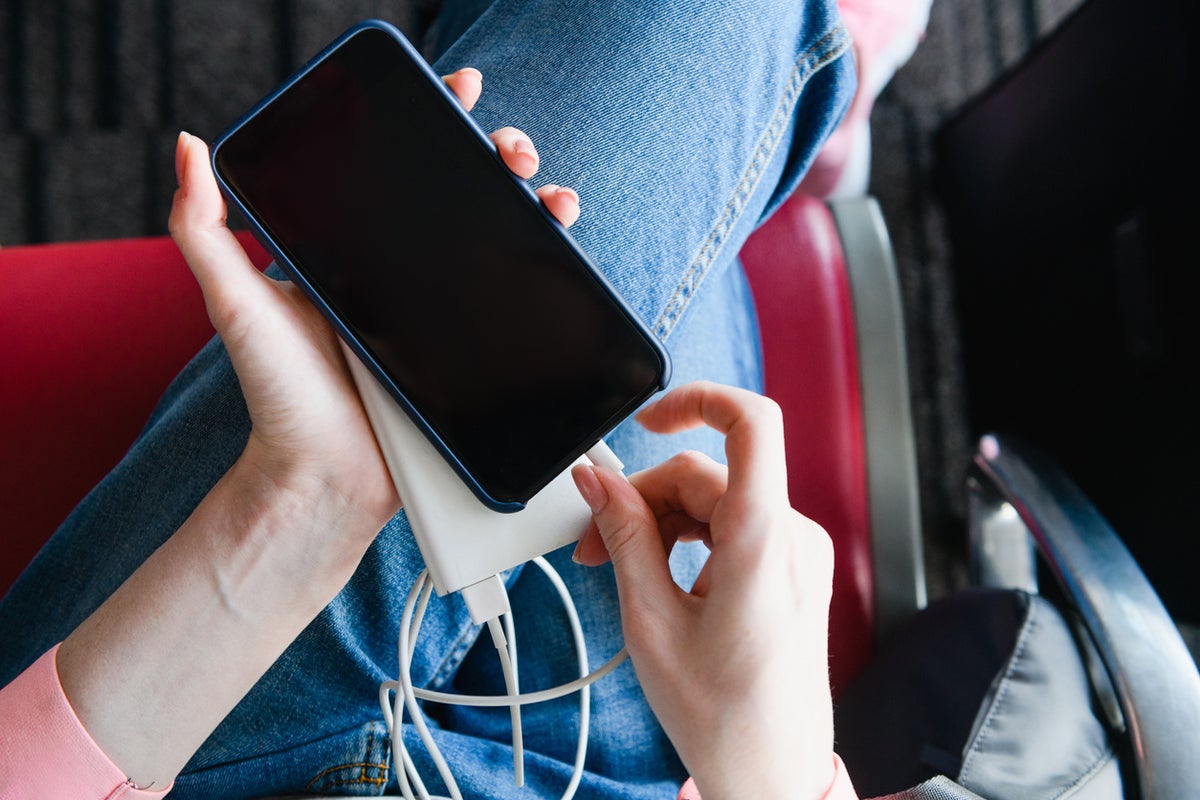
Aviation regulators are warning travellers to pack power banks safely this summer, following a rise in flight diversions caused by faulty devices.
The UK Civil Aviation Authority (CAA) said packing safely “reduces risk” of an “intense fire that is difficult to extinguish”.
Glenn Bradley, head of flight operations at the CAA, explained: “Lithium batteries power lots of everyday electronics, from vapes and mobile phones to cameras and power banks. If they become faulty or damaged, they can cause an intense fire that is difficult to extinguish.
“Flying is by far the safest way to travel, and we want to keep it that way. Packing safely reduces risk.”
Last week, an easyJet flight headed to London was diverted to Rome as a precaution after a passenger alerted crew to a power bank that was charging in someone’s luggage.
Flight EZY2618 from Hurghada to Luton had to be rescheduled to the following day due to crew-hours restrictions, which delayed the plane overnight in Italy.
Generally, the CAA says no more than two “individually protected spare batteries” per person may be carried on a flight.
Power banks must fly with a passenger, not in checked baggage, warns the CAA.
Jonathan Nicholson from the CAA said that restrictions such as not putting the devices in checked luggage were not “somebody being pedantic”, with passengers urged “to do the right thing”, reported BBC News.
Nicolson told the outlet that a growth in the popularity of portable chargers and vapes was behind the rise in incidents.
He said: “I wouldn't want to be the passenger who packed it in the wrong place and ended up with all the other passengers in the wrong city because the flight was diverted.”
Lithium-ion batteries commonly found inside power banks pose a fire risk to aircraft and confined cabin spaces if damaged.
Bradley added: “Keeping battery-powered items with you will make your flight safer for you and the other passengers you’re flying with.”
The devices must also not be recharged or used to charge other portable electronic devices while on board an aircraft.
According to data from US-based non-profit safety organisation UL Standards & Engagement (ULSE), an average of two flights per week experienced a thermal runaway incident in 2024, with one in five incidents resulting in a diversion, evacuation or return to gate.
ULSE added that thermal runaway incidents in air cargo rose 40 per cent between 2021 and 2025.
Read more: Can I take my portable charger on a flight?




























.jpg&h=630&w=1200&q=100&v=1a56ad72fe&c=1)