Claude’s Sonnet 5 is built to do more on its own and cost you less
Claude Sonnet 5 narrows the gap with Anthropic's flagship Opus 4.8, scoring close on key benchmarks while costing significantly less per token.
 FrankLin

Better than its predecessor, nearly as good as the flagship, and meaningfully cheaper than both.
 Anthropic
Every major AI lab is racing to prove its models can work autonomously with minimal hand-holding; we’re now seeing pricing emerge as the next battleground.
Anthropic just fired its latest shot, Claude Sonnet 5, a model the company says performs nearly as well as its flagship Opus 4.8 at a fraction of the cost.
Introducing Claude Sonnet 5, our most agentic Sonnet yet.
It makes plans, uses tools like browsers and terminals, and runs autonomously at a level that just a few months ago required larger and more expensive models. pic.twitter.com/UKK8G7ww5h
So what’s actually new here?
Sonnet 5 is Anthropic’s most agentic Sonnet model yet. It can plan multi-step tasks, use tools like browsers and terminals, and complete work autonomously. Previously, doing that required a larger, more expensive model.
On one agentic coding benchmark, Sonnet 5 scores 63.2%, a meaningful jump over Sonnet 4.6’s 58.1%. However, it still trails Opus 4.8’s 69.2%.
On knowledge-work tasks, though, Sonnet 5 slightly edges out Opus 4.8, but it is sort of given, especially since Opus is built for harder judgment calls.
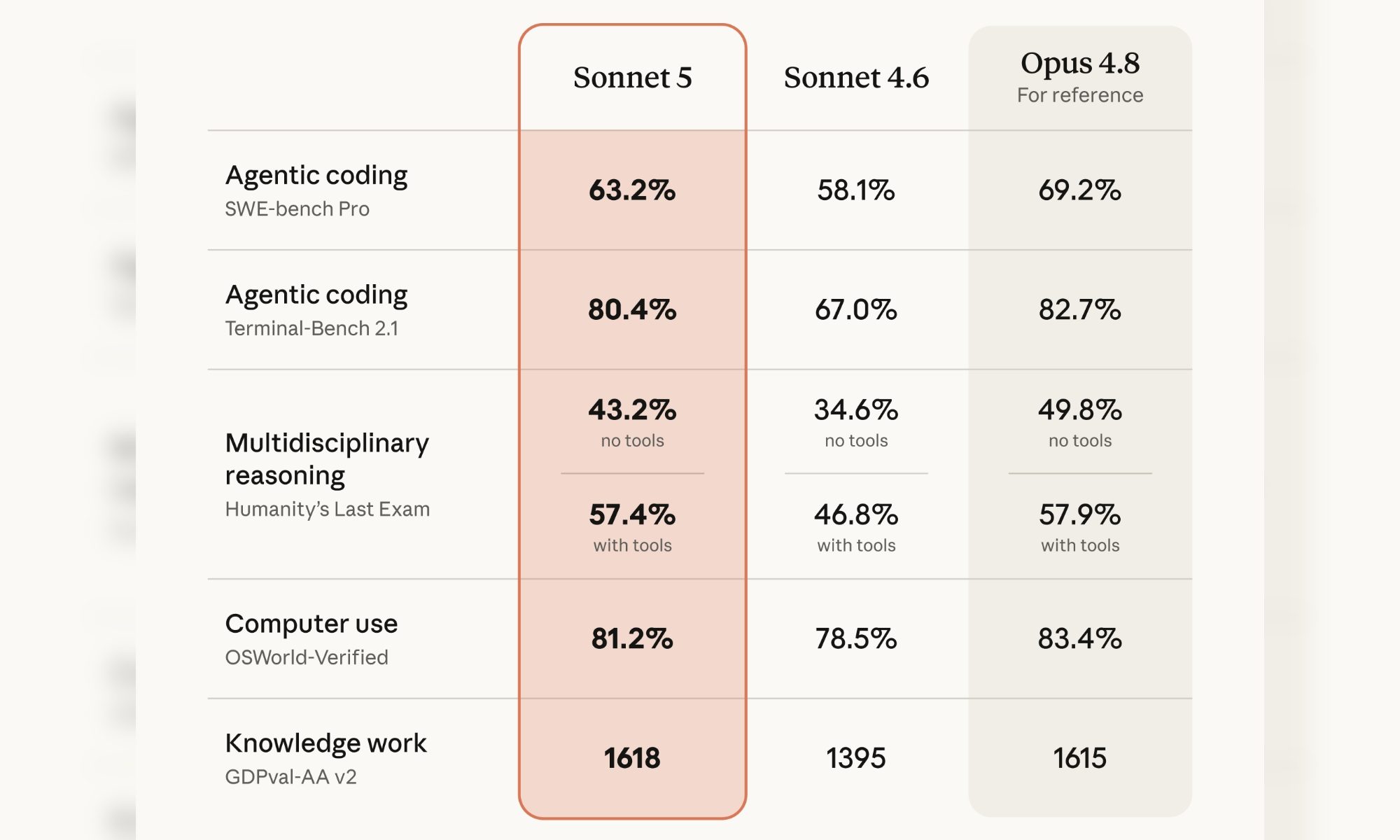 Anthropic
What does it cost, and is it actually safer?
Sonnet 5 launches today at $2 per million input tokens and $10 per million output tokens through August 31, 2026. After that, the prices increase to $3 and $15, respectively.
That undercuts Opus 4.8, OpenAI’s GPT-5.5, and Google’s Gemini 3.1 Pro, though Gemini 3.5 Flash still remains cheaper.
On the safety front, Anthropic reports Sonnet 5 hallucinates and shows sycophantic behavior less often than its predecessor. Furthermore, the AI model is notably weaker at dangerous cybersecurity tasks than Opus-class models, a deliberate tradeoff rather than an accident (via Anthropic).
 Nadeem Sarwar / Digital Trends
Anthropic’s Sonnet 5 is now available as the default model on the Free and Pro plans. It is accessible across Max, Team, Enterprise, Claude Code, and the API.
Sonnet 5’s launch follows a pattern set by rivals: OpenAI’s GPT-5.6 Sol entered preview just last week with subagent task-splitting, and Google’s Gemini 3.5 Flash, launched in May, is pitched explicitly as agentic rather than conversational.
Sonnet 5 also uses an updated tokenizer that can map the same input to up to 1.35x as many tokens as Sonnet 4.6, though introductory pricing is designed to offset that change.

For more than five years, Shikhar has consistently simplified developments in the field of consumer tech and presented them…
Apple Creator Studio adds AI tools across Final Cut Pro, Logic Pro and Pixelmator Pro
Final Cut Pro gets AI captions, Auto Mask and better Pixelmator Pro workflows in Creator Studio update
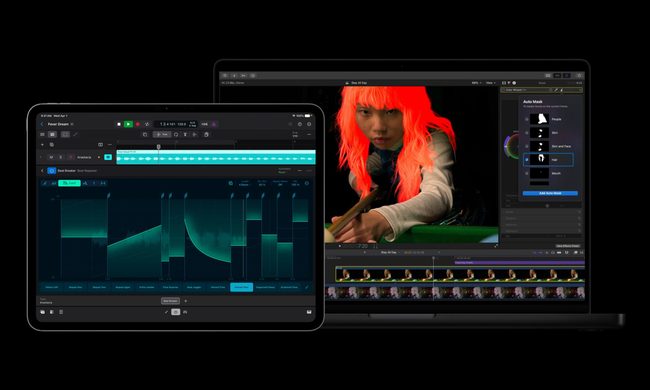
Apple has introduced a major update to Apple Creator Studio, adding new AI features, deeper Pixelmator Pro integration, and workflow upgrades across Final Cut Pro, Logic Pro, Keynote, Pages, Numbers, Motion, Compressor, Freeform, and Final Cut Camera.
The update makes Creator Studio more useful across Mac, iPad, and iPhone, especially for people who move between video editing, image editing, presentations, documents, spreadsheets, and music production.
AI browsers like Perplexity Comet can be tricked into spilling your password through BioShocking exploit
Six AI browsers were found leaking saved passwords and many of them haven't fixed it yet.
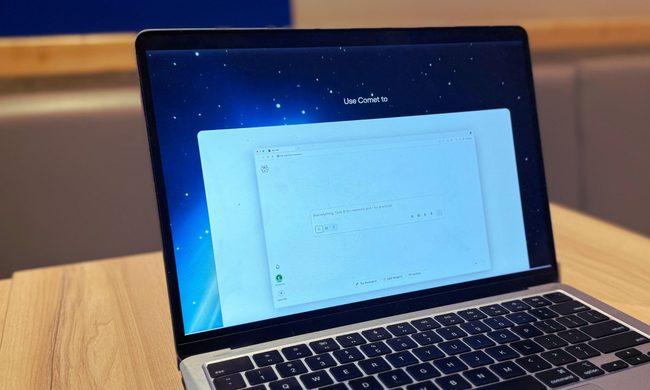
Security researchers just found a strange way to trick AI browsers into handing over your passwords. They managed to trick AI browser agents into exposing sensitive data like saved passwords, session cookies, and private tokens by disguising the theft as part of a harmless "game."
The technique is called BioShocking, named after the popular video game BioShock, where a brainwashed character is manipulated into believing a false reality. Once an AI browser falls for the same trick, it stops following its own safety rules entirely.
Google Play’s latest speed boost goes way beyond the phone
Play Store v52.1 targets app install performance across Android devices, including cars, TVs, watches, tablets, and phones.
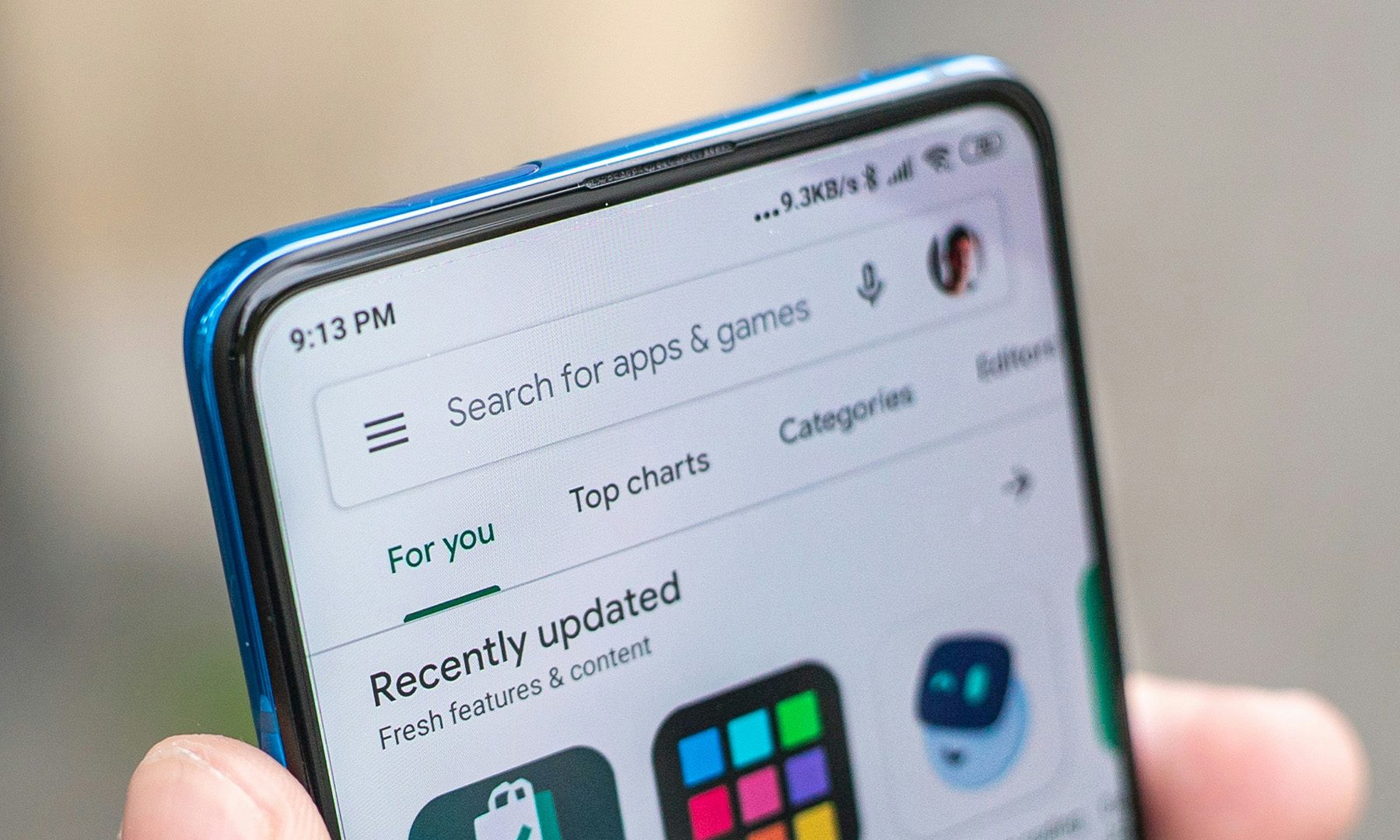
Google is rolling out Play Store v52.1 with changes built around a practical Android problem, getting apps installed more smoothly on very different kinds of hardware.
The update focuses on Play Store infrastructure, with Google pointing to stability, performance, and better memory use while a device adds an app. That install path now has to work on phones, tablets, Wear OS watches, Google TV, Android TV, Android Auto, and cars running Android Automotive.








/cdn.vox-cdn.com/uploads/chorus_asset/file/25823916/Announce_Hero_219a8909f679e8a1d470.jpg)













![Scrunch AI alternatives compared: Features, pricing, and fit [2026]](https://53.fs1.hubspotusercontent-na1.net/hubfs/53/scrunch-alternatives-1-20260812-5006620.webp)


.jpg&h=630&w=1200&q=100&v=7abd35f457&c=1)