Future Flowers
Miranda Mellis’s new novel imagines a detoxifying world and a daughter’s quest to find her mother. The post Future Flowers appeared first on Tricycle: The Buddhist Review.
 JaneWalter

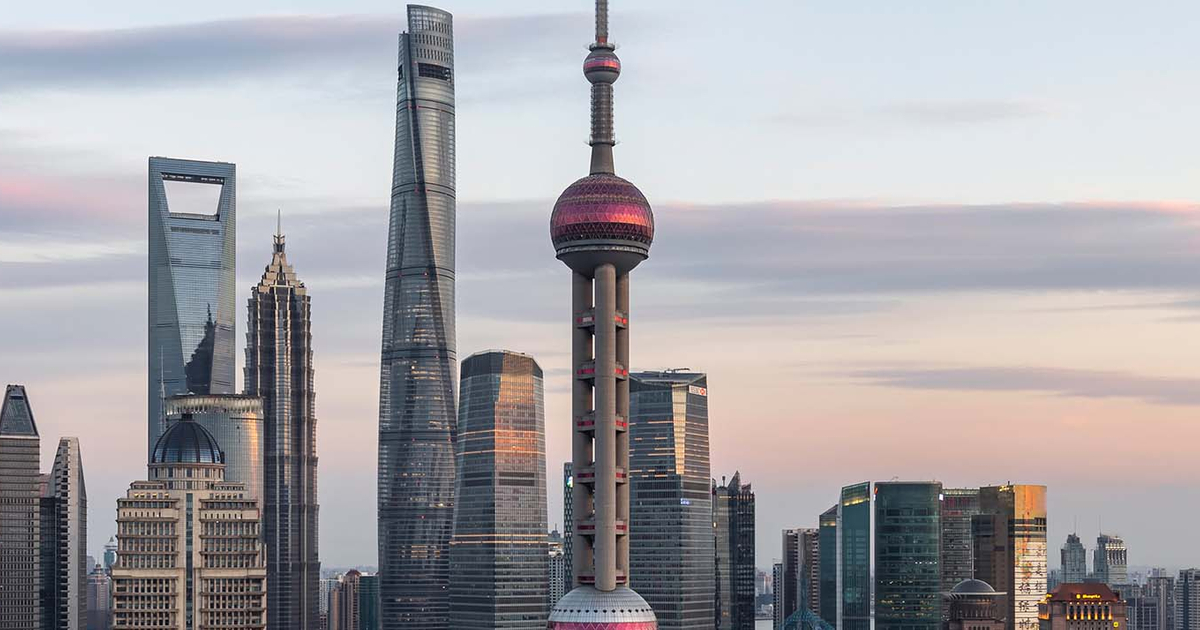
When seven heads of state are spontaneously decapitated, seven enormous skyscraper flowers suddenly burst from the soil in their place. The unexpected blossoming allows the social fabric to mend and the earth to regenerate after decades of environmental degradation, spawning new forms of life and art.
Thus begins Miranda Mellis’s new novel Crocosmia. Named after the flower that sprouts in its opening, Crocosmia is a work of speculative fiction that follows Maya’s recollections of her mother Jane, an artist whose work sparks the “Great Turning.” As Maya unearths memories of an upbringing spent among anarchist nuns and in rural isolation, she discovers the possibilities of renewal embedded in moments of disintegration and catastrophe.
Crocosmia builds on Mellis’s experience studying at Naropa University and the Upaya Zen Center, where she learned the contemplative practices that she incorporates into her writing and teaching at the Evergreen State College. She is the author of numerous novellas and poetry collections, and was a founding coeditor of Encyclopedia Project.
Tricycle spoke with Mellis about the Buddhist threads in Crocosmia, experiments in collective living, and the role of speculative fiction in reconciling contradiction and instigating social change.
This interview has been edited for length and clarity.
To start off, could you tell me a little bit about the title of your novel? What role does the crocosmia flower play in the book, and how did you settle on it? The crocosmia is a beautiful flower that hails from the western grasslands of Africa. It’s on long green stems and it fluoresces in multiple red flowers on a single stem. The flowers are very, very red.
When we think about novels, one lens through which we can look at them is in light of palette—whether affective or tonal. The palette of Crocosmia is red for multiple reasons, and one of them is the idea of a yet-to-be-achieved communism, or a horizon of communism that I describe in the novel using a pun: the “redemption of red.” So the crocosmia flower has a metaphoric quality that I needed to convey that idea, both because it is red and because it has a many-in-one type of fluorescence. It doesn’t bloom in a single flower; there are many flowers on one stem. The other thing about the crocosmia is that it’s tall. They grow taller and taller. And then there’s, of course, the Latin name, which is luciferous, “bringer of light,” which adds the pagan energy of the fallen angel figure.
So this beautiful flower holds all these meanings that can pervade or pollinate the story, even if one doesn’t know all these things about it. Plenty of people have said to me, “What’s this word you made up?” It sounds like a made-up word, but it is a real flower, and also a beautiful word that has a musicality to it that I like. It also includes the idea of the cosmic, the cosmos.
The flower has a specific ecopoetic quality, too, because flowers decay. Decay comes up in the book; it’s a process in ecology that can be applied to politics. Systems and power structures need to fall away and decay so that other things can flower and come into being. That’s a theme in the story—the main obstacle to flourishing is the refusal of the tyrannical heads of state to let their power decay. They hold on to power at all costs, at the most violent and deadly costs for ecosystems, for peoples, for creatures. Central to the narrative is a composting or recycling of power that results in flowering. There’s that metaphor again—the flowering of possibility is imbricated with decay and that which allows for it, as, for example, the bracket fungi does in forest ecosystems, helping dying wood to break down and returning nutrients to the soil.
I love the idea of decay and flowering as concurrent processes. You can see both at work in the novel, which imagines a future of “detoxified land, deacidified oceans, [and] reparative mentalities” that you call the “Great Turning,” following the Buddhist ecologist and activist Joanna Macy. Could you talk a bit about the Great Turning and Macy’s influence on you? One of the ways I feel I’ve been affected by her work, which is sort of sui generis, is that, in addition to being a translator of Rilke, a Buddhist practitioner, and a deep ecologist, she was also a creator of ritual and ceremony. “The Work That Reconnects,” the “grief work” that she would do in spaces that had been disastrously toxified, gave people the ability to grieve in a ritualized way aimed at repair. I think the idea of ritual as a container for suffering, a space in which grief can be worked on together as a matter of social ecology, is really important. No small part of the problems we face are affective and emotional, and not just political. It’s hard to disentangle them.
Macy’s work has always reminded me of speculative fiction or sci-fi, because it involves a kind of imaginative world-ing. You might, for example, take a superfund site where there’s nuclear waste, and turn it into a monastery where people generationally pass on knowledge of how to remediate, detoxify, guard, protect, and contain the waste. These kinds of techniques are a way of practicing stewardship in a holistic way, and they are also incredibly sci-fi. Macy was a storyteller who was making her own stories come true. She was imagining utopian ways forward that were about incorporating suffering rather than skipping over it. That kind of spiritual work is also aesthetic—it is carried out through the senses, through aesthesis.
The Great Turning is Macy positing that we can get through this civilizational bottleneck, that we can turn climate change around. I see it as a counter to the dystopian imaginaries that proliferate today for very understandable reasons. Somebody could do a study of the ratio of dystopias to utopias—even ambiguous or ambivalent utopias—imagined in mass culture. I would guess that the utopian takes up a much smaller amount of cultural space. That has implications for our imaginative ability to think our way forward.
It’s interesting that you use the example of a monastery, since much of Crocosmia takes place at what you call an “Anarchstery,” a monastic commune inhabited by anarchist nuns. Where did this idea come from? Right, the “Anarchstery of the Sisters Rosas Parks and Luxemburg.” The name is playing with two people in the Great Turning’s pantheon, as it were, Rosa Parks and Rosa Luxemburg. The nuns who live there call themselves the “noons” or the “nuns” or the “no ones,” a wordplay that opens up the identity category of the nun and draws out other possibilities.
The Anarchstery is a place where the two main characters of Crocosmia, Jane and Maya, can spend time and spell out their vision of other possible ways of living. I’m drawing from some of my own lived experiences from growing up collectively in San Francisco in the ’70s and from going on Buddhist retreats.
There have been a lot of these kinds of small communities—be they religious or political—that pool resources and skills to live in a nonhierarchical, egalitarian way. One of the reasons I think retreat centers work so well is that there is so much dedicated time and space for contemplative practice, which clears the heart and allows people to make decisions and get things done domestically in effective ways. One of the experiments going on in religious communities involves asking, “What if we abolished class and redistributed labor so that everybody works a little bit, rather than some working constantly and others hardly at all?”
One of the experiments going on in religious communities involves asking, “What if we abolished class and redistributed labor so that everybody works a little bit, rather than some working constantly and others hardly at all?”
The Anarchstery similarly imagines a space where people can come and live in this way for a period of time without needing any money, just bringing their willingness to participate in the life of the community. I imagine the Anarchstery as an iteration of what Ivan Illich calls the “learning society,” a community whose goal is learning and cooperating as opposed to accumulating capital or defending territory.
The novel’s two main characters, Maya and her mother Jane, go to live in this Anarchstery, and each of them has a very different response to the damaged world in which they live. Could you talk about the tension between Maya and Jane’s attitudes? One way of understanding storytelling is in terms of desire. Characters are propelled by desire; that can be what moves a story, among other things. Jane’s desire is for world-historical transformation and an overcoming of patriarchal warlordism, and Maya’s desire is for Jane, her mother. Another difference between them is that Jane embodies the vita activa, the life of action, and Maya embodies the vita contemplativa, the life of contemplation. Psychologically, you could say Maya is reacting to her mother by withdrawing into solitude and contemplation.
There’s a tension between them, but that tension is also the product of Western metaphysics, of a false divide between body and mind, between action and contemplation, between materialism and mysticism. In this story, a question is how these seeming opposites may be reunified or overcome on some level. What seems like a contradiction may not be a contradiction at all. What seems like two sides may be one plane, like a Möbius strip.
How do you see that tension being reconciled in the novel? It isn’t really reconciled philosophically, although narratively, Maya and Jane do come back together toward the end as Jane is dying. They go through something together that melts away delusions, confusions, and defenses, which, in my experience, can be one of the fruits of accompanying people at the end of life, though not always.
I think it’s up to the reader, and me, too, to take the tension between action and contemplation and keep thinking with it. The socially engaged Buddhism of someone like Thich Nhat Hanh sees no contradiction between the need for social action and spiritual ethical practice. These things are one and the same—in both cases we’re talking about liberation. In the chaplaincy training at the Upaya Zen Center I heard it framed this way: Enlightenment is enlightened action.
While we’re on the subject of Maya and Jane, could you speak about the significance of their names? There’s a meditation in the story on Maya’s name:
“She [Jane] named her baby Maya in honor of the prophesy the old man had taught her, and after the Vedic term for illusion, and after Vladimir Mayakovsky, Maya’s alleged grandfather and tutelary spirit.” [Mayakovsky, a real poet who wrote How Are Verses Made?, was a Soviet who became very disillusioned with Stalin.] “The name told the child everything about who she was, where she was. Each Maya within the proper name Maya encountered another Maya that had nothing to do with the other, yet something occurred between the three that didn’t occur within any one of the Mayas, a conversation outside and between each one of them, just as she lived outside and between other lives, in the strewn condition of the flying root, thrown, diasporic, seeking and never finding home. The proper name ‘Jane’ held within it the genius of the begetting gene, not to mention the dedicated aspiration not to cause a single harm—the Jain nuns would wear masks so as not to accidentally inhale an insect, would gently sweep the ground in front of them, not to step on one.”
There’s another moment in the story where Jane uses the word “tertiary,” and Maya asks her what it means, so Jane tells her to look it up. Maya gets lost reading the dictionary, looking at the etymologies of all these words and the branching proliferation of meanings. The story is like that, too, percolated with branching meanings at various levels. The characters’ names are part of the playful metaphysics of the story, involving the Vedic term for illusion and the begetting genius of the Jain nuns. All these elements can become part of how the story registers, both musically and conceptually.
Their names also connect to the tension we were talking about earlier. “Maya,” which means illusion, relates to the contemplative life understood as a piercing of illusion, while “Jane” recalls Jain ideas of nonviolence and therefore relates to Jane’s political vision. Oliver, you just shed light on something for me! Another of the contradictions the novel deals with is that between violence and nonviolence. The “violence” that Jane enacts is purely imaginative because it is so committed to nonviolence, and yet that violence somehow also happens at the same time that it is purely projective through the artwork, a film that she creates to help bring about the Great Turning. It is projected literally and figuratively. It is imaginary, imagined, and real all at the same time.
Contradiction plays such a key role in Crocosmia. At one point toward the end of the novel, Maya reads koans (contradictory ideas designed to elicit breakthroughs in understanding) from the Book of Equanimity as Jane is dying. On the last page of the novel you also cite Simone Weil’s words that “contradiction is the criterion of the real.” Why is contradiction so central to the novel? One way to think about a novel is as a staging of contradiction. How does it do that? By being polyphonic, or heteroglossic, many-tongued; by having different voices, different perspectives. In literary studies we would make reference to Mikhail Bakhtin here. This doesn’t mean that fiction doesn’t make arguments, or engage in rhetoric, but rather that it makes arguments through multiplicities, multiple voices. Unlike a form of discourse which seeks to resolve contradiction, the novel, as an elaborate parable, gets to play with and even heighten contradiction and uncertainty through story.
Italo Calvino writes that a story is either like a flame or a crystal: It is either like a system or an intense energy. Crystals have a constant tendency to add facets, to keep faceting, to be prismatic, diffracting, to see one thing through another, through another, et cetera. The novel can partake of this property through its inhabiting of multiplicity.
Do you think Crocosmia is closer to the crystal or the flame in Calvino’s framework? It may be both, although the crystal, especially this idea of proliferating facets, has been more useful or evocative to me as a permission and as a model. Although that model of endless proliferation also presents a danger—you have to stop somewhere, right?
The idea of multiple voices is so alive in the style of your writing, which is poetic and organic, but also at times quite dense, employing a lot of technical language. I know that style is not something you necessarily decide on, but I’m curious if you have any reflections on your writing style. I understand my style to be philosophical, speculative, essayistic, phenomenological—to be interested in the granularity of experience, in the sensorium, in slowing way down to digress and tarry with sense memory, and immanent sensory experience and to think with experience. One writer I love is Alphonso Lingis, a phenomenologist whose writing I have learned a lot from. Another is Michael Taussig, who works between storytelling, philosophy, and anthropology. I come out of training in experimental fiction, working with Thalia Field as a student. I started out very young as a poet, and only wrote poems for a really long time; I only started writing stories in my 30s. So I had this long practice of working at the level of the line and the word, the music of language. I haven’t always felt so interested in plot. But a story may not need a plot; it might be moved forward by means of a consciousness making observations, noticing things. That wandering mind that we observe in meditation becomes wonderful material for narrative.
Jane is an artist in the novel, like you, and one of the key events in Crocosmia is when she makes an artwork that alchemically transforms the world, bringing about this Great Turning through a magical act. I’m curious to hear more about what role you think art plays in bringing those sorts of new realities into being. I think one of the things that art does is step in where the social fabric is frayed to remind us of what is possible, and to imaginatively enact care. So many artists enact processes and forms that have as their horizon the world as it could and should be, a place where people are cared for and where justice is possible. For example, my friend Cassie Thornton created a project called The Hologram, which is a peer-to-peer health forum where people help each other with health issues in small groups.
Artmaking also necessarily slows us down—bracketing the productivist, commercial aspects of art. There is the whole notion of a medium, of mediating, of taking something up in a medium to slow it down. Anything that slows us down, whether it’s an art practice or a seminar or a retreat, is something that we really, really need.
Crocosmia seems to be set in a not-too-distant future. What do you think separates our world from the world of Crocosmia? Many elements of Crocosmia’s world are already present in our world, in the numberless beings who are and have been working on ecological remediation, social remediation, abolition, and decarceration in every sector, in education, health care, law, ceremony. . . . In every arena there are people who have the vision and hope of repair, of connection, of sanity, of healing, guided by love. The imaginary of Crocosmia is building upon these praxes.
That said, there are a lot of things that separate the world of Crocosmia from our world. In the logic of the book, what stands in our way is patriarchal, militaristic, colonializing capitalism, and the state form insofar as it serves those ends. One will need political, revolutionary, psychoanalytic, spiritual, and scientific skills and practices for the transformations we need.
What might a psychoanalytic communism look like? Compare Frantz Fanon, and the institutional psychotherapy movement associated with Saint-Alban in WWII. We’ve had industrial and state forms of communism, and we’ve had some social democracies that seem like they work very well in certain instances and milieus. How can we create a communism that is inflected by the psychoanalytic, metaphysical, and spiritual in unprecedentedly liberatory ways?
Did Buddhist practice inform the writing of Crocosmia at all? I know you studied at Naropa University and the Upaya Zen Center. It’s a complex process to render interiority and consciousness in fiction. Meditation lets us observe linguistic consciousness, among other things. It lets us see how language leaps around and has gaps and doubles back on itself and modifies and qualifies and ruminates. I think that the practice of observing and dropping thought, or seeing how our own thought is papanca (conceptual proliferation), allows us to better convey the subtleties of characters’ thoughts on the page. In my descriptions of Maya’s experiences as a contemplative, I was drawing on my own experiences of retreat discovering what can happen after days of silence.
There’s a Buddhist and an ecological principle that says that consciousness is not simply within us but is between us and all around us. Crocosmia is working with that idea, and in that sense is connected to my own reading of Buddhism.