
HSBC Marketing Strategy & Campaigns: How the Global Bank Builds Trust and Loyalty
When you speak of the international finance world, HSBC is a towering giant, its name a shorthand for financial marketing tactics with a presence in more than 65 countries. But underneath this front of success lies a captivating tale...
 BigThink

Overview of HSBC Marketing Approach
The financial services giant operates a multifaceted marketing strategy surrounding the 4Ps of marketing – product, price, place, and promotion. This strategic approach has enabled HSBC to establish a formidable global presence and cater to the various needs of its customers, including private banking, wealth management and retail banking, investment banking & global banking, and commercial banking.
When it comes to pricing decisions, HSBC combines factors such as customer loyalty, product usage, and risk management into its pricing strategy. This subtle approach allows the bank to tailor its pricing strategies to specific customer segments and market conditions, maximizing both customer satisfaction & profitability.
What’s more, the bank’s promotional activities focus on brand awareness, customer engagement, and digital marketing campaigns – in addition to traditional methods and sponsorships.
What’s more, the bank’s promotional activities focus on brand awareness, customer engagement, and digital marketing campaigns – in addition to traditional methods and sponsorships. Additionally, its marketing strategy is firmly rooted in customer satisfaction and long-term relationships, tailoring its product offerings, and promotional activities accordingly. This customer-centric approach has enabled HSBC to have a market capitalization of approximately 116.6 billion euros.
The Evolution of HSBC Marketing Strategy
Our ambition is to be the preferred international financial partner for our clients.
Noel Quinn, Group Chief ExecutiveTo unlock the secrets of HSBC’s marketing approach, we must embark on a tour through time, immersing ourselves in the revolutionary era that redefines its connection with its global target.
The marketing strategy of The World’s Local Bank has undergone a phenomenal transformation, reflecting the needs of its audience and the entire financial terrain. In its productive years, HSBC relied on conventional/traditional marketing channels, like print and TV ads, to reach its audience. However, as the internet and social media emerged as the prior communication tools, HSBC shifted its focus toward digital marketing, evolving as an adopter of this revolutionary approach.
The bank’s earlier adoption of social media proved to be a stroke of marketing genius. By showing a strong presence on popular platforms like Facebook, Twitter, and Instagram, the bank humanized its brand, crafting a direct line of communication with its target. In other words, HSBC did what it needed to do on social media as a fintech company.
As we can see in the same manner in PayPal’s marketing strategy, through engaging content, interactive campaigns, and personalized interactions, HSBC cultivated a sense of community.
Through the years, HSBC has become one of the pioneers of mobile banking by crafting UX-powered platforms & apps that seamlessly integrate with its digital marketing efforts. This approach delivered customers convenience, allowing them to access their finances anytime, anywhere. For instance, the HSBC mobile app quickly evolved into a universal tool, further setting its position at the forefront of digital banking.
HSBC’s Branding and Positioning in the Global Market
Time to explore the brand’s core values.
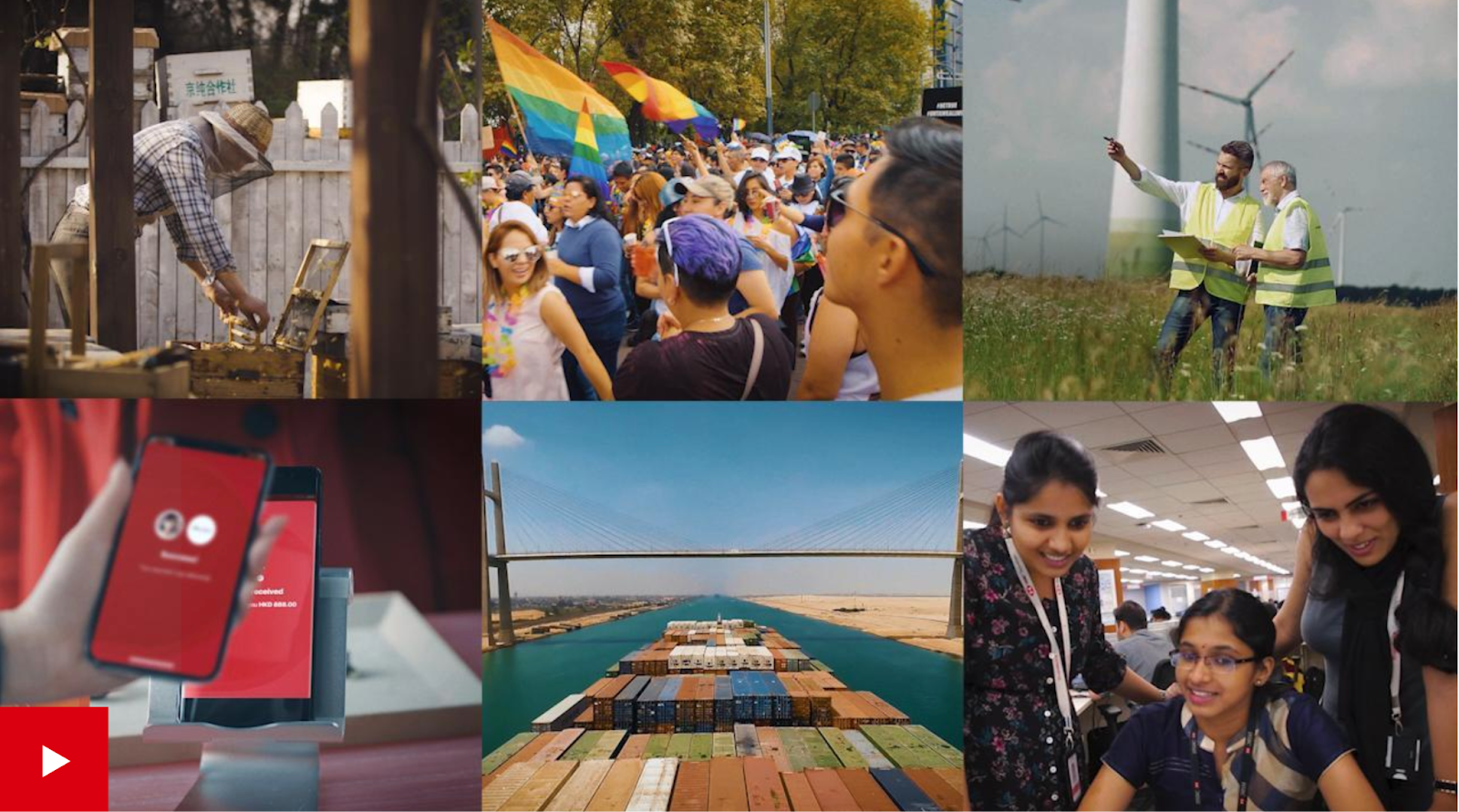
At the heart of HSBC’s brand lies a dedication to supporting its customers to reach their economic objectives. The bank’s brand essence is encapsulated in its tagline, The World’s Local Bank, reflecting its ability to deliver global reach while maintaining a deep understanding of local markets & needs.

Noteworthy efforts include global marketing campaigns, strategic sponsorship programs with entities like Formula One and The Rugby World Cup, and a robust digital presence, all contributing to brand visibility & customer engagement. In the international market, HSBC’s brand is characterized by dependability and expertise with local insights and a dedication to innovation and customer-centricity.
Source: https://www.hsbc.com/
HSBC’s efforts regarding tech & innovation not only reflect a dedication to staying at the forefront of the financial industry and set the bank as a modern plus accessible banking solution. So much so that, the well-known bank is operating a dynamic & inclusive work culture, encouraging its employees to focus on skill development for the future.
That approach, of course, strengthens the internal capabilities while enhancing the brand’s image as a forward-thinking institution that invests in the growth and well-being of its people worldwide.
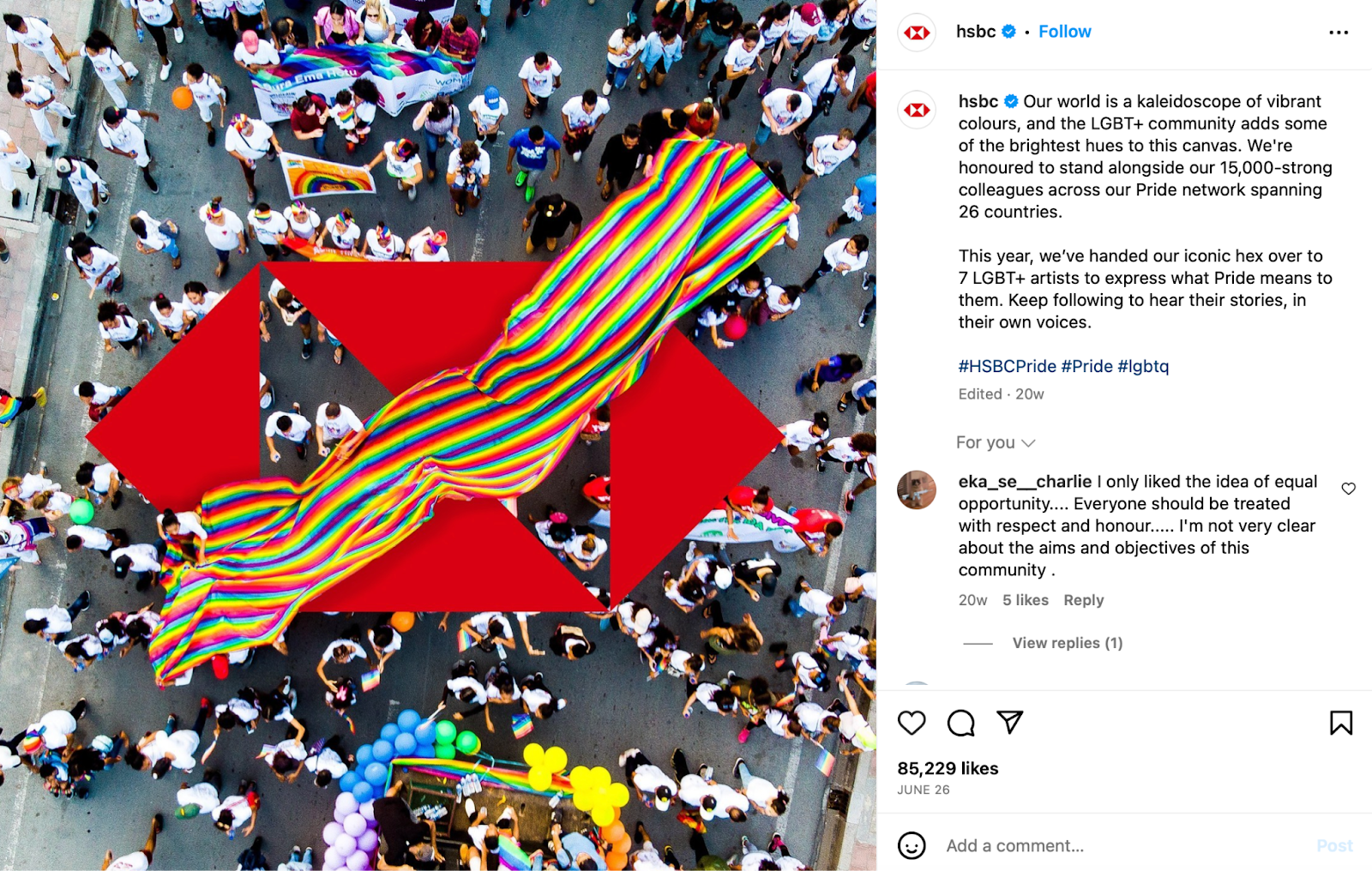
What’s more, HSBC’s dedication to sustainability is supported by its financial performance, with total assets reaching US$3.091 trillion as of June 2023 and a customer base of approximately 45 million worldwide. The brand’s valuation at US$12.7 billion not only highlights its financial prowess but also solidifies its position as one of the most valuable financial brands globally.
HSBC SWOT Analysis
| Strengths Colossal Global Scale: Strong global banking brand with deep roots in Asia, the UK, and international trade networks. Market Leadership: Dominant, leading positions in Hong Kong and the United Kingdom—two of its most critical revenue engines. Diversified Revenue Moat: Balanced financial stream across corporate banking, wealth management, retail banking, transaction banking, and global markets. Wealth Management Magnet: Strong wealth acceleration opportunities, particularly among affluent, premier, and high-net-worth international clients. Solid Revenue Performance: Revenue rose 4% to $68.3bn, supported heavily by wealth fee income and wholesale transaction banking. | Opportunities Asia Wealth Megatrend: Capitalizing on explosive wealth growth across Hong Kong, Singapore, and mainland China connectivity. Cross-Border Trade Dominance: Leveraging HSBC’s unmatched global footprint to capture cross-border trade flows and international payment networks. Digital Banking & AI Shift: Transforming customer onboarding, compliance monitoring, and automation via its newly appointed Chief AI Officer. Strategic Core Focus: Deeper capital concentration on named high-growth priority markets: Hong Kong, the UK, transaction banking, and wealth. Operational Overhaul: Driving massive structural simplification and cost efficiencies as the bank restructures around fewer, clearer business lines. |
| Weaknesses Geographic Concentration Risk: High, systemic exposure to Asia and China-linked headwinds, including volatile Hong Kong real estate and Bank of Communications-related impacts. Structural Complexity: Historically dense and labyrinthine global corporate structure, though actively undergoing simplification. Notable Financial Pressures: Reported profit before tax fell by $2.4bn to $29.9bn, negatively impacted by notable impairment charges and disposal costs. Investment Banking Retrenchment: Ongoing friction from winding down and scaling back parts of M&A and equities operations across Europe and the Americas. Compliance & Operational Vulnerabilities: Constant regulatory exposure, tightening financial crime controls, cyber risk parameters, and volatile geopolitical exposure. | Threats Geopolitical Strains: Escalating global trade friction, sanctions risk, Western regulatory oversight, and localized political instability surrounding China-Hong Kong corridors. Interest-Rate Macro Shifts: Margin pressures acting on net interest income (NII) as central banks exit the historic high-rate macro cycle. Aggressive Industry Disruption: Intense, relentless market share pressure from global legacy institutions, fintechs, private banks, and digital neobanks. Credit Cycle Traps: Evolving China property downturns and negative credit-cycle ripples that directly affect reported financial results. Customer Churn Pressures: Heightened switching friction in retail banking segments where agile, digital-first competitors outpace legacy speed and fees. |
HSBC Target Market
HSBC’s strongest consumer target is not the mass-market banking customer alone (as you may predict). In that section, we’ll focus on the HSBC target market and look closer at the core audience.
Affluent individuals and high-income professionalsHSBC mainly appeals to customers who need more than basic banking. These are executives, entrepreneurs, senior professionals, investors, and families with growing wealth who need support with savings, investments, mortgages, credit cards, insurance, and long-term financial planning. Internationally mobile customers
A major part of HSBC’s audience is made up of people who live, work, study, or do business across countries. This includes expatriates, international students, overseas workers, and families managing money in more than one market. Premier and wealth-management clients
HSBC targets customers who want a more personal banking relationship. These clients often look for wealth advice, investment products, retirement planning, foreign currency services, and priority banking support. Business owners and entrepreneurs
HSBC is also highly relevant for founders, family-business owners, and entrepreneurs who need both personal and business banking. These customers may need lending, business accounts, international payments, trade finance, and advice as their companies grow. Small and medium-sized businesses with international ambitions
HSBC is a natural fit for SMEs that import, export, or work with suppliers and customers in other countries. These businesses need practical support with cash flow, foreign exchange, working capital, supplier payments, and cross-border trade. Large corporations and multinational companies
HSBC serves major companies that operate across several markets. These clients need global cash management, financing, treasury services, risk management, trade finance, and access to international capital markets. Institutional and government clients
The bank also targets financial institutions, public-sector bodies, investors, and government-linked organizations. These clients usually need advanced services such as securities, markets access, liquidity management, and large-scale financing. Customers in key global markets
HSBC’s strongest target regions include Hong Kong, the UK, mainland China, Singapore, the Middle East, and major trade corridors between Asia, Europe, and global financial hubs. The bank is especially attractive to customers whose financial lives are connected to these markets.
In simple terms, HSBC’s target market is people and businesses with international financial needs. Its strongest audience is not just anyone looking for a bank, but customers who value global access, trusted financial guidance, wealth services, and cross-border banking support.
Key Components of HSBC’s Marketing Strategy
As mentioned, HSBC’s marketing strategy revolves around designating a robust brand identity, segmenting its customer base, using various digital marketing channels, and making data-driven decisions.
We also know that the global bank invests in advertising campaigns and marketing efforts that showcase its global reach, financial expertise, and unwavering commitment to customer service. More specifically? Keep reading.
Customer-Centric Approaches in HSBC’s Strategy
We are equally committed to ensuring there are no unnecessary barriers to finance for our customers. We aim to create a welcoming, inclusive, and accessible banking experience.
HSBC Holdings Annual Report and Accounts 2022As users already know and experience, the marketing strategy of HSBC Bank is deeply rooted in customer-centricity. So much so that the marketing team of the finance institution places the needs of its customers & prospects at the heart of every decision.
Understanding the audience and its financial objectives, HSBC segments its customer base. While doing so, the bank analyzes customers’ behavior patterns and tailors its marketing strategy accordingly – offerings, service interactions, messages, etc. And that kind of customer-centered marketing approach brings a sense of connection and trust.
Relatedly, the bank is known for prioritizing customer engagement & experience; by encouraging ongoing interactions beyond standard banking operations. The bank actively reaches customers (and prospects) via various channels – website, mobile app, social media platforms, and in-person interactions. Here is a related statement:
For our customers and colleagues, we improved the accessibility of our public websites, mobile applications, and internal systems. AbilityNet, the digital accessibility charity, benchmarked HSBC as having the most accessible website compared with other local competitor banks in 10 of 13 of our key Wealth and Personal Banking markets.
HSBC Holdings Annual Report and Accounts 2022That approach helps the HSBC customer help team to assemble feedback, address concerns promptly, and provide timely updates on relevant financial matters.
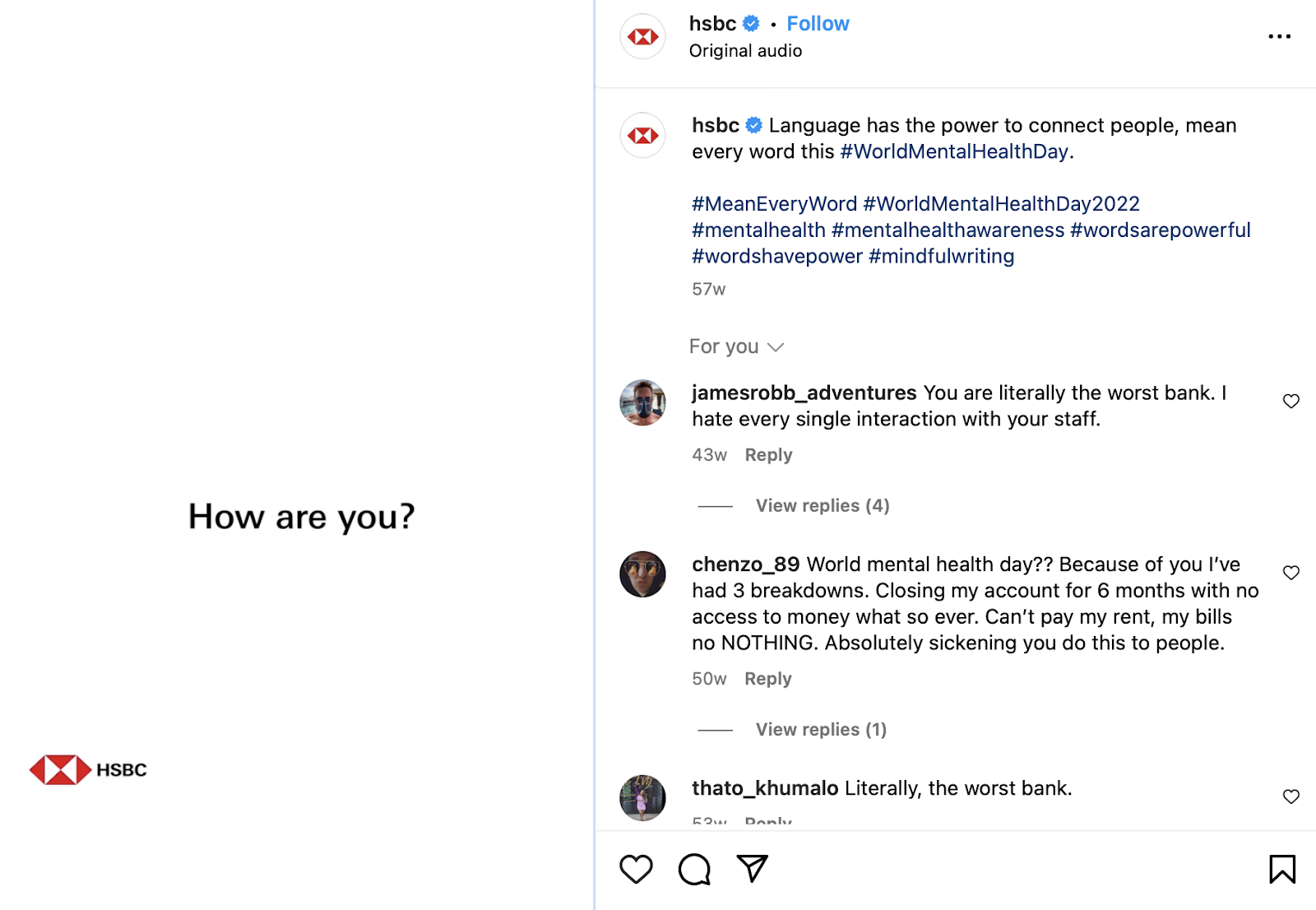
It is also known that the bank is transforming its entire digital systems, both external and internal, to be accessible. According to the bank’s annual report, HSBC engaged over 2K colleagues in digital accessibility awareness, sponsored by the takeoff of a “digital accessibility hub.” The hub acquired the best digital accessibility award at the previous year’s Digital Impact Awards.
Product and Service Innovation at HSBC
Another key element supporting HSBC’s marketing strategy involves the continuous development of new products and services tailored to meet the needs of its customers. In recent years, the bank has made remarkable progress in various areas.
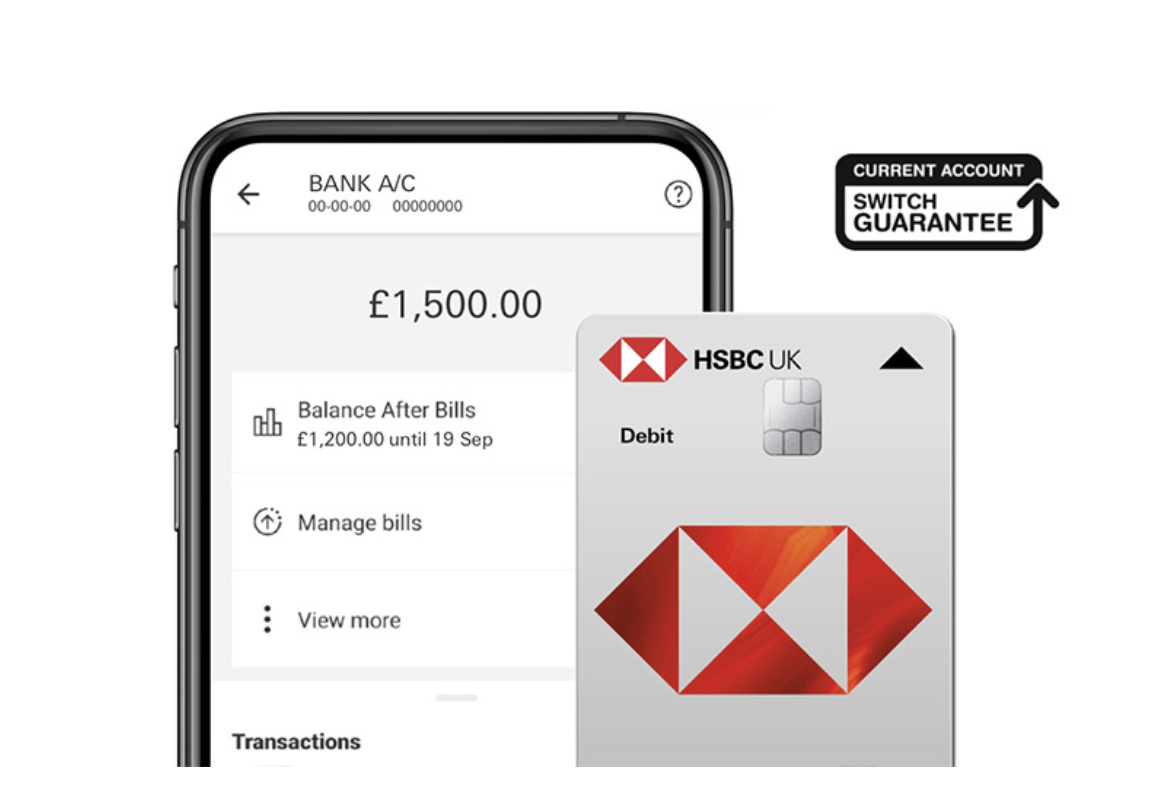
As one of them, the bank has dedicated noteworthy resources to improve its digital banking platforms, offering customers a seamless way to manage their finances.
Source: https://www.hsbc.com/
HSBC offers various investment options & solutions to help its customers meet their long-term financial needs & objectives. The bank’s investment advisors provide personalized advice and guidance to help customers make informed investment decisions.
Digital Transformation in HSBC’s Marketing
It’s a general fact now that financial institutions should stay ahead of the curve by embracing digital transformation with open arms; like HSBC does. With an annual ICT spending of $10.5 billion in 2022, the global finance powerhouse is showcasing its commitment to revolutionizing the banking landscape. From acquiring cutting-edge software to partnering with top-tier ICT service providers and finance marketing agencies, HSBC is leaving no stone unturned in its quest to deliver a seamless and personalized banking experience for its customers across the globe.
Leveraging Technology for Enhanced Customer Experience
As we develop our content strategy, we can assess our customers’ need for certain information by promoting key articles, research, or topics, and seeing what kind of response we get. This kind of insight is invaluable in our mission to become more customer-centric.
Amanda Rendle Global Head of Marketing, Commercial Banking, and Global Banking and MarketsAs mentioned above, HSBC, became one of the pioneers of digital banking; in previous years, the bank launched its digital-only bank, a standalone platform that provides a seamless and convenient banking experience.
The move which aims to cater to the evolving needs of tech-savvy customers, eliminated the need for physical interactions in money transferring, account opening, and more. In addition to offering a convenient banking experience to customers, that kind of banking option allowed users to access their accounts through all digital platforms.
Simultaneously, the bank started investing in enhancing its mobile app within its marketing strategy, with its improved security features & user-friendly interface which allows customers to manage their entire finances on the go – account management, bill payments, money transfers, and custom financial insights.
At that point, we also need to mention the bank’s data-driven approach. As a huge part of HSBC’s digital marketing strategy, data analytics, and artificial intelligence has been used for a remarkable time to gain deeper insights into customer behavior, preferences, and financial needs. These insights enable the finance giant to customize its offerings and services to each customer.
Finally, financial cooperation actively explores the potential of blockchain and distributed ledger technology (DLT) to improve its operational processes while offering full transparency. In that way, HSBC executes supply chain operations and complies with regulations.
HSBC’s Global Marketing Strategy
From now on, we’ve highlighted that HSBC’s global marketing strategy is a dynamic approach that reflects the bank’s commitment to comprehending its diverse customer base across the globe. But how can they do that? Start exploring.
Adapting to Diverse Markets: HSBC’s Regional Strategies
HSBC’s success (both digital and corporational) stems, in part, from its knack for tailoring strategies to the unique characteristics of the markets it serves. The bank acknowledges that each region shows its blend of economic, cultural, and regulatory factors, necessitating a slight approach to marketing and business strategies.
For instance, in Asia (China, India, and Southeast Asia), the bank has customized its offerings to align with the features of the Asian market; like providing Shariah-compliant products in Muslim-majority countries in the region. What’s more, in that region, the bank offers products like UnionPay debit/credit cards while supporting economic growth via products like microfinance loans.
Similarly, in the United Kingdom, France, Spain, and other European countries, HSBC delivers specialized solutions such as wealth management. As for the United States, Canada, and Mexico, the bank offers a diverse range of retail banking services by focusing on local preferences.
To get insights about local preferences, the bank uses HSBC Global Network, boasting over 6K branches in more than 70 countries, which stands out as an element.
Building a Global Brand: Lessons from HSBC
Lesson #1 – “The World’s Local Bank” Positioning: HSBC emphasizes its capacity to provide both global reach and local expertise, placing itself as a long-time & trusted partner for customers guiding the world of finance.
Lesson #2 – Building Sponsorship & Partnerships: The banking corporation strategically associates with organizations and events that align with its brand values plus target audience preferences, raising brand awareness and gaining visibility.
Lesson #3 – Local Insights and Cultural Sensitivity: As key players in the marketing mix of HSBC, local understanding and cultural sensitivity ensure the bank’s marketing campaigns are relevant, respectful, and effective in diverse markets.
Lesson #4 – Multi-channel Marketing Approach: By utilizing its international network and understanding, the finance corporation operates a multi-channel marketing approach, using a mix of traditional and digital channels to reach its target.
Lesson #5 – Bold Brand Identity and Messaging: Through its global marketing efforts, HSBC has successfully established a cohesive brand image with consistent messaging and a recognizable brand identity.
HSBC is also known for its track record of creativity in its digital marketing efforts. Let’s take a look at some of the HSBC campaigns.
HSBC’s Most Successful Campaigns
We know that banking can often feel incredibly cold, transactional, and detached from the realities of everyday life.
When we sat down to curate this specific selection for HSBC campaigns, our core philosophy was to look past the balance sheets and isolate exactly how a global financial institution earns a spot in people’s lives.
We deliberately avoided looking for standard, feature-driven product ads; we filtered for pivotal moments where the bank stopped talking like a corporate entity and started speaking like a thoughtful global citizen. Our selection approach focused on finding a delicate balance: historic foundational ideas that redefined cross-cultural communication, deeply human narratives about what it actually means to feel a sense of belonging, and real, transparent case studies where massive capital is actively used to solve existential global problems.
We chose this lineup to show how a brand can build genuine trust by being both fiercely local in its empathy and undeniably authoritative in its global impact.
The Home To So Much More
The campaign created by well-known Wunderman Thompson refers to HSBC UK’s brand values, emphasizing openness and connection just after Brexit. The campaign with the tagline “We are not an island. We’re home to so much more,” delves into the idea of home and its true significance.

Why It Worked
This ad leaned into a highly nuanced, culturally relevant conversation around diversity and belonging. By validating the mixed heritages of millions of people, the bank’s tone felt incredibly warm, human, and modern. By shifting the focus from net worth to cultural identity, HSBC showed a genuine understanding of its audience, earning massive trust during a highly fragmented post-Brexit social landscape.The World’s Local Bank
The campaign achieved notable success by highlighting the company’s capacity to offer a combination of global reach and local expertise, striking a chord with customers in markets globally. The campaign effectively utilized a range of digital channels, such as social media, video content, and targeted advertising, to communicate that HSBC comprehends and addresses the distinct needs of its customers in diverse regions.
Why It Worked
What we love most about this classic strategy is that HSBC didn’t establish its global authority by bragging about its size. Instead, they proved it through cultural humility. It told small business owners and international travelers alike: “We know the rules of the ground wherever you want to go,” building an ironclad layer of trust that generic global banks simply couldn’t replicate.Borders
Another HSBC X Wunderman Thompson collaboration, “Borders” focuses on breaking down barriers and fostering global connections. In addition to highlighting the importance of human interaction and the bank’s role in it, the emotional digital marketing campaign showcases HSBC’s commitment to understanding and serving its global customer base.
Why That HSBC Campaign Worked
Consumers have developed a very healthy skepticism toward corporate “greenwashing.” This campaign worked because it bypassed vague promises and put a hard, measurable figure—$1 trillion—on the table. It turned an abstract environmental concept into an accountable, transparent financial roadmap.Bryson DeChambeau’s Challenge
That fast-paced experiential sports video created to celebrate the title partnership of the HSBC LIV Golf Hong Kong tournament.
The video features major champion Bryson DeChambeau taking on an extreme, one-of-a-kind hole-in-one challenge right in the middle of Hong Kong’s famous Victoria Harbour.
Set against the city’s iconic, hyper-modern skyline, DeChambeau attempts to land a ball onto a custom-built floating green in the water, using specially designed eco-friendly, biodegradable golf balls that dissolve safely without harming the marine environment.
Why It Worked
This campaign shows an incredibly refreshing side of the bank. By partnering with the high-energy LIV Golf league and utilizing an entertaining, YouTube-style challenge format, HSBC adapted its tone to connect authentically with a younger, tech-forward demographic without losing its premium feel. Even in a fun, high-profile publicity stunt, the brand kept its values intact.Viktor Axelsen – Discovering What It Means to Be Viktorious
A cinematic, documentary-style brand film featuring two-time Olympic badminton gold medalist and HSBC global brand ambassador Viktor Axelsen.
The film takes a quiet, reflective look at his personal journey and mindset. Axelsen speaks candidly about the intense mental pressure of staying at the top, his deep connection to the global badminton community, and how it’s about the resilience it takes to get back up on the community courts every single day and inspire the next generation.
Why That Campaign Worked
By letting a world-class athlete drop his guard and talk about vulnerability, mental pressure, and community, the bank creates a powerful emotional bridge. HSBC’s long-standing global partnership with the Badminton World Federation (BWF) shows an authoritative commitment to sustainable, long-term community development.Transition to Net Zero – Etihad Airways
This documentary-style corporate case study video goes behind the scenes of global aviation to show sustainable finance in action.
The video outlines how HSBC acted as the joint structural arranger to help Etihad Airways secure a US$1.2 billion sustainability-linked loan—a historic first for global aviation.
Through clean graphics and interviews with financial experts, the ad explains the rigorous framework behind the deal: Etihad’s interest rates are directly tied to hitting strict, independently verified ESG targets, meaning the airline literally saves money on its debt if it successfully reduces its carbon footprint.




























.jpg&h=630&w=1200&q=100&v=c0f97a310e&c=1)
