Inside Diesel Advertising Campaigns: A Fashion Strategy Does Not Play It Safe
Diesel advertising quickly stands apart when you study fashion marketing long enough, because while most brands play it safe—hiring beautiful models, shooting in gorgeous locations, and saying something vaguely aspirational—Diesel has done the exact opposite; it’s been provocative, political,...
 Troov
Troov
Diesel advertising quickly stands apart when you study fashion marketing long enough, because while most brands play it safe—hiring beautiful models, shooting in gorgeous locations, and saying something vaguely aspirational—Diesel has done the exact opposite; it’s been provocative, political, self-aware, and sometimes flat-out weird. And guess what?
It worked spectacularly.
In this blog, I’m going to walk through the most important Diesel advertising campaigns across every channel (print, TV, outdoor, digital, and social media) because these are exactly the kinds of bold, culture-led strategies that leading fashion digital marketing companies understand how to execute. Whether you’re running a fashion startup in Milan, a denim label in New York, or a lifestyle brand in Istanbul, Diesel’s marketing playbook has something to teach you.
Let’s get into it.
What’s Inside
Quick Introduction to Diesel Marketing: The Brand Behind the Bravery Top Diesel Advertising Campaigns Campaign #1: “Be Stupid” Campaign #2: “Go With the Flaw” Campaign #3: “Go With the Fake” Campaign #4: “Be A Follower” Campaign #5: “Spirit of the Brave” Campaign #6: Diesel × CASETiFY Campaign #7: “#MakeLoveNotWalls” Diesel’s Social Media Strategy: The Full Picture FAQ about Diesel Advertising CampaignsQuick Introduction to Diesel Marketing: The Brand Behind the Bravery
Before we get into the campaigns themselves, it’s worth understanding who Diesel is and why its advertising strategy differs from the competition.
Diesel was founded in 1978 by Renzo Rosso in Breganze, Italy. The brand started as a denim company and quickly became known for vintage-washed jeans at a time when polished, pristine denim was the norm. By the late 1980s and early 1990s, Diesel jeans advertising had become something of a cultural conversation.
The Cannes International Advertising Festival named Renzo Rosso as its Advertiser of the Year for 1998, which tells you everything you need to know. This was a jeans brand beating out global consumer giants to claim one of advertising’s most prestigious honors.
Diesel at the Cannes Lions International Advertising Festival won the Grand Prix Award in 1997, 2001, and 2010. Three Grand Prix wins. Three. Most brands would be thrilled to be nominated once.
Today, Diesel operates in more than 80 countries with roughly 5,000 points of sale globally. Diesel clothes can cost anywhere between $100 and $2000. This is a premium brand targeting urban consumers who are willing to pay for identity, not just fabric, which makes smart advertising not just a nice-to-have, but an existential necessity.
And Diesel’s marketing strategy? It’s quite beyond traditional moves; forget flashy names, young figures, and “perfect faces.”
Let’s be more specific.
Top Diesel Advertising Campaigns
At that point, I need to say that Diesel has always done things a little differently when it comes to advertising.
While most fashion brands stick to polished visuals and safe messaging, Diesel’s campaigns tend to be more playful, cheeky, and sometimes even a bit controversial, as I stated in the previous section.
In other words, they don’t just show you the clothes at all. They tell a story, make a joke, or comment on what’s happening in the world around us. Take a quick look at Diesel’s influencer collaboration with Terri / Tereska for the #ForSuccessfulLiving campaign. Does it look like a usual fashion advertisement at all?
So, over the years, this approach has helped Diesel create campaigns that people remember long after the season is over. In this section, I invite you to take a look at some of Diesel’s advertising campaigns (the most talked-about ones)
Campaign #1: “Be Stupid”
Of all the Diesel jeans advertising campaigns, “Be Stupid” is probably the most studied, referenced, and debated in marketing classrooms around the world. And for good reason.
Developed at global advertising agency Anomaly, the campaign includes online, press, and outdoor advertisements featuring “stupid” acts, a digital recruitment campaign for the Diesel music video/2010 catalogue, and viral activity outlining the company’s “Stupid” philosophy.
Some of the campaign’s copywriting was genuinely brilliant:
“Smart plans. Stupid improvises. Smart sees what there is. Stupid sees what there could be. Stupid might fail. Smart doesn’t even try. Smart critiques. Stupid creates. Smart may have the answers, but stupid has all the interesting questions.”
On the experiential side, in partnership with Spotify and Dazed & Confused, Diesel hosted a “Noah’s Ark” event. According to the statement on A Taste of Space:
Diesel’s campaign celebrated stupidity as a liberating antidote to intelligence. Being stupid is at the centre of a relentless pursuit of a regret-free life. If we weren’t stupid we wouldn’t be able to fail, take risks, progress or even be truly brilliant.
As part of their campaign Diesel wanted to encourage stupid behaviour for one night only. We created Noah’s Ark, in which 300 competition winners in Kigu animal costumes came and expressed their most stupid animalistic side.
The social media component was also ahead of its time. The campaign used Foursquare (the location-based platform that was huge in 2010 as you may know) to create check-in points and community engagement. There was a Facebook activation called “Facepark” that brought social connection back into the real world.
So, the “Be Stupid” campaign nails a particular cultural moment.” Diesel showed that taking a risk and failing is better than a safer, smarter way of doing things.
The best part? The campaign won the Cannes Lions Grand Prix in 2010. It generated massive earned media globally and is still referenced in brand strategy conversations 15 years later.
Campaign #2: “Go With the Flaw”
Launched in September 2017, “Go with the Flaw” was actually a cinematic short film directed by François Rousselet, the same director responsible for music videos for Madonna, Snoop Dogg, and The Rolling Stones.
The Diesel ad featured characters who proudly displayed their perceived imperfections: crooked eyes, unibrows, and mismatched features. As the campaign’s artistic director, Nicola Formichetti put it:
Being unique is much more beautiful than being perfect.
The campaign’s strategic insight was sharp: social media had created a global epidemic of performed perfection. Diesel decided to celebrate the rough edges instead.
The execution was genuinely multi-channel. The Diesel advertising campaign included:
A massive print and outdoor campaign running globally on billboards, in magazines, and across transit media. Hundreds of influencers across different markets created localized content around the Go with the Flaw concept. Catwalk and in-store activations; the campaign ran throughout Diesel stores globally, with in-store executions celebrating uniqueness. Tinder ads. Diesel ran hyper-targeted ads specifically built for Tinder, celebrating the “flawed” qualities people might try to hide on dating profiles.And then came the Instagram moment that everyone talked about. On the day the campaign launched, Diesel deleted their entire Instagram account and started fresh.
The brand released a statement saying:
“We think perfection is boring, and especially on Instagram everybody seeks perfection. Perfect photo, perfect picture, perfect life. And we are just tired of it. So we decided to delete everything for an imperfect new beginning.”
As you can predict, the Diesel campaign earned 3 Shortlists in Industry Craft and Print at Cannes Lions 2018, plus 1 Silver in Print and Outdoor at ADCI 2018.
Campaign #3: “Go With the Fake”
Here is another Diesel advertising campaign, but this time, I’m talking about millions of social impressions in just 7 days.
Back in 2018, during New York Fashion Week, Diesel secretly opened a store on the corner of Canal Street and Broadway. The store was called “DEISEL.” It was a deliberate misspelling of the brand’s name.
The interiors were designed to look authentically shoddy and cluttered. Two actors were hired to play suspicious shopkeepers. And, unsuspecting shoppers wandered in, examined the merchandise, and some were confused: the goods looked genuinely high quality for what appeared to be a knockoff shop. A few pointed out the misspelling. Others bought items anyway, impressed by the quality even from what they assumed was a counterfeit brand.
The twist about that campaign? Every single item in the store was an authentic, one-of-a-kind piece specially crafted by Diesel’s own design team, labelled as “DEISEL” with fake branding. The customers who bought them without knowing were taking home genuine collector’s items.
During New York Fashion Week, Diesel let the secret out. The store immediately sold out. Then DEISEL launched online, and the internet collectively lost its mind.
Andy Bird, Chief Creative Officer at Publicis, reflected on the boldness of the move:
There aren’t many brands that would take a calculated risk like this, but because they kind of know that they already have the cachet with the past history of advertising, they’ve always been a bit more adventurous and it fits perfectly with their outlook.
And yes, that advertising campaign of Diesel proved one more time that the brand does not play it safe.
Campaign #4: “Be A Follower”
As you may remember, by early 2019, influencer marketing had completely taken over fashion advertising. Every brand was pouring budget into Instagram, hiring influencers, and trying to appear as native as possible to the platform’s aesthetic.
And Diesel did the exact opposite. They built their entire SS19 Diesel jeans advertising campaign around mocking influencer culture. The premise was straightforward but sharp: everybody wants to be an influencer today. But do influencers actually have better lives? The campaign’s answer was an unambiguous no.
The message was articulated perfectly by Diesel and Publicis Italy’s creative team:
Through this campaign, Diesel took the attention away from social media’s influential elite, and gave it to the 99%. It’s a celebration of those who don’t try too hard. It’s a reminder that real successful living is an effortless art.
And Diesel went further still. They launched “SIDE:BIZ.” It was actually a loyalty program framed explicitly as a follow-up to the Be A Follower campaign. SIDE:BIZ gave regular customers affiliate codes and discount access, turning brand loyalists into a genuine revenue-driving network.
So, it was influencer marketing turned inside out.
Campaign #5: “Spirit of the Brave”
Speaking of Influencers and flashy names… Here is a Diesel advertising campaign with a well-known figure: Neymar Jr. But in its own style.
Actually, most celebrity collaborations follow a predictable script: a famous person poses in a nice outfit, holds the bottle at a flattering angle, and looks aspirational. And yes, Diesel did it completely differently.
Spirit of the Brave was the first time Diesel Fragrances ever collaborated with an athlete. And it also represented the first time a spokesperson was involved in all aspects of a fragrance’s creation, from the very beginning of development through to the global launch. The bottle was inspired directly by one of Neymar’s tattoos: a roaring lion on his fist, representing strength and leadership.
The Diesel campaign launched on May 19, 2019 simultaneously in more than 40 countries. For the French market specifically, agency Buzzman developed a targeted organic strategy connecting the fragrance to esports, sports, and street culture communities; the subcultures most aligned with Neymar’s audience.
And… Spirit of the Brave became one of the summer “hits” among male fragrances in selective retail in France.
Campaign #6: Diesel × CASETiFY
Now, let’s see a 2026-dated campaign.
This is one of Diesel’s most strategically interesting recent moves, and it’s a masterclass in how a fashion brand can expand its presence without diluting its identity.
CASETiFY, you may know, is the Hong Kong-based tech accessories brand that has turned phone cases, chargers, and power banks into genuine lifestyle objects. Their collaborations sell out regularly, and their audiences skew young, global, and digitally native.
The collaboration & campaign extended Diesel’s aesthetic into a new object category without requiring new retail infrastructure. A 19-year-old who can’t yet afford a pair of Diesel jeans can buy a Diesel phone case for $40 and be part of the brand universe. This is how you build tomorrow’s premium customer.
What’s more, the launch strategy was digital-native from the start. CASETiFY’s Co-Lab app, wishlist sign-ups, priority access windows — these are tools designed for an audience that lives on their phones and treats product drops like events. Diesel’s visual content was designed to work on Instagram and TikTok, not just in display advertising.
Campaign #7: “#MakeLoveNotWalls”
This Diesel advertising campaign is a textbook case study in how a brand can take a political stance without it feeling like opportunism.
Shot by legendary photographer David LaChapelle and art-directed by Nicola Formichetti, the “#MakeLoveNotWalls” campaign launched during New York Fashion Week in February 2017. It was weeks after Donald Trump’s inauguration and the first iteration of the travel ban.
The images were unmistakable: a diverse, joyful cast featuring a gay wedding, a rainbow-colored tank, and bold imagery of inclusivity and love. And it differentiated itself from the Diesel jeans advertising we are used to seeing.
As Formichetti explained:
At Diesel, we have a strong position against hate and more than ever we want the world to know that. Love and togetherness is crucial in creating a society we all want to live in.
The reason this campaign worked is that Diesel had been making socially conscious, politically aware campaigns since 1991. In other words, brand activism only works when it’s consistent with the brand’s historical identity.
You can’t talk about diesel advertising campaigns without talking about how Diesel has used (and subverted) social media.
They’ve used it, satirized it, deleted it, rebuilt it, and turned it into a performance marketing machine. In other words, Diesel’s digital marketing strategy does not try to win the game, as the other fashion brands do. While every other fashion brand is optimizing for reach, followers, and algorithm-friendly content, Diesel is asking a different question:
“What does this medium say about us, and how do we say something true through it, or about it?”
As Creative Director, Glenn Martens put it candidly regarding Diesel’s social media strategy:
In 2025, a creative director has to be a socialite, has to be the king of social media and there’s so many more things that all my colleagues and I have to do outside of that runway. We are just consuming visuals and we don’t really have the time to go deep into the clothes, the storytelling, the construction, where it comes from. It just needs to be like a hit.”
Diesel’s response to that pressure isn’t to give in to it. Actually, Diesel’s Instagram (@diesel) currently has 3 million followers and 2,644 posts, a modest number for a global premium brand. Compare that to fast fashion giants with 20–50 million followers, and you start to see the intentionality. Diesel doesn’t chase follower count. They chase cultural weight.
Remember the Instagram deletion; after that, Diesel rebuilt their Instagram with a different ethos: rawer, less polished, more confrontational. Instead of aspirational lifestyle imagery, posts celebrated flaws, oddity, and authenticity. The grid became a rolling gallery of real people with real imperfections.
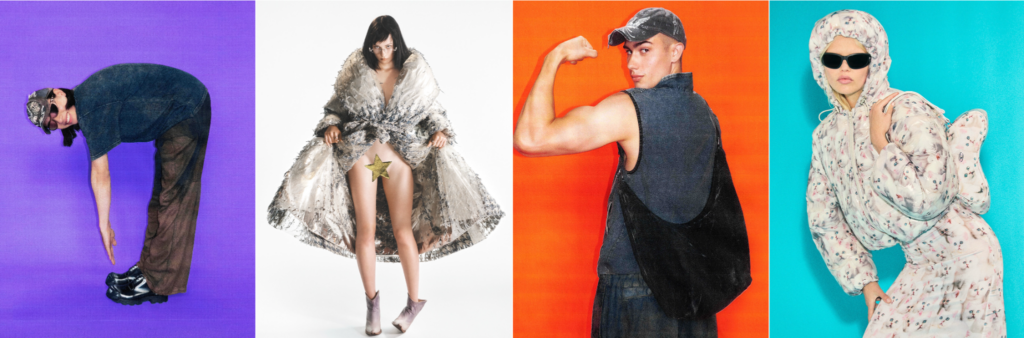
Source: https://www.instagram.com/diesel/
However, under Glenn Martens, Diesel’s Instagram has been used systematically around fashion weeks. Actually, one of the most important things Martens has done for Diesel’s social media strategy since taking over in 2020 is transform the runway show from a closed, industry-only event into an open, socially distributed experience. And it’s a great way to use social media for fashion, no doubt.
What’s more, the brand uses Instagram as its primary channel for collaboration reveals: the Savage × Fenty capsule, the Diesel × CASETiFY drops, and celebrity campaign reveals all debut on Instagram first.
What about TikTok? Diesel’s TikTok presence (@diesel) tells an interesting story: 397,800 followers and 6.3 million likes. Diesel doesn’t post daily TikToks chasing the algorithm; but when they post, it performs.
And… The main question: What does Diesel’s social media strategy say about fashion marketing in a nutshell?
The consistent lesson running through every era of Diesel’s social media presence is that the brands that win on social are the ones who use the platform to say something true.
It means Diesel’s social media isn’t particularly polished. The account doesn’t post seven times a week. The follower count isn’t industry-leading. But the content is consistently interesting, consistently shareable, and consistently in service of something bigger than a product shot.
FAQ about Diesel Advertising Campaigns
What defines Diesel advertising compared to traditional fashion advertising?
Diesel uses advertising to make cultural statements, challenge social norms, and engage with the actual world its audience is living in. Where traditional fashion advertising tries to show you a better version of yourself, Diesel advertising tries to tell you something true about the world, often in a way that makes you laugh or think or both. What’s more, Diesel uses irony as a structural tool. “For Successful Living,” “Be Stupid,” “Enjoy Before Returning” and more are ironic. Traditional fashion advertising doesn’t do irony.
And finally: Diesel’s advertising has always been integrated in a way that traditional fashion advertising isn’t. The “Be Stupid” campaign ran simultaneously on billboards, in magazines, on early social platforms, at an experiential event in London, and via digital activations on Foursquare. The “Go With the Fake” pop-up in Canal Street was simultaneously a physical experience, a PR event, a social media campaign, and a film.
What are the most iconic Diesel advertising campaigns and why did they stand out?
“For Successful Living” stands out because it broke new ground by tackling topics like race, sexuality, and politics at a time when fashion stayed silent. “Be Stupid” turned the word “stupid” into a symbol of courage and sparked global buzz. “Go With the Fake” grabbed millions of impressions and sold out in just 24 hours from a Canal Street pop-up. “Be A Follower” drove real business results with customer-run SIDE: BIZ stores and a jump in online sales in its first week. “Then there’s Go With the Flaw” which deleted Diesel’s Instagram in a move no playbook would suggest, and worked precisely because it was so unexpected.How do Diesel advertising campaigns use provocation to drive brand relevance?
Diesel’s advertising provokes with purpose. Not by creating controversy that weakens the brand, its campaigns consistently tap into cultural tensions in ways that reinforce what Diesel stands for. The playbook is simple but effective: identify something your audience genuinely cares about, respond in a way that’s emotionally honest or playfully disruptive, and launch it at peak cultural moments like Fashion Week or Valentine’s Day to maximize attention without increasing media spend. The provocation grabs headlines, but the philosophy behind it builds lasting brand relevance.
Why does Diesel advertising focus more on cultural commentary than product features?
Diesel focuses on cultural commentary over product features because features don’t build loyalty—values do. Since 1991, Diesel advertising has positioned the brand both as a maker of well-made jeans (like many other brands) and as a symbol of individuality and non-conformity, turning each purchase into a personal statement about how you see the world. While product benefits can quickly become outdated, values-driven positioning is far more durable.
How has Diesel adapted its advertising campaigns for digital and social media platforms?
As I stated above, Diesel has adapted to digital and social media by breaking the rules. It means, Diesel has turned platform norms into creative opportunities, from deleting its Instagram in 2017 as a campaign stunt to mocking influencer culture in 2019 while using it to power SIDE:BIZ. More recently, under Glenn Martens, the brand has transformed fashion shows into large-scale, social-first experiences designed to generate crowd-driven content, while continuing to invest in cinematic short films that stand out in crowded feeds.









![Media Buying 101: What It Is and How It Works [+ 14 Platforms to Use]](https://www.hubspot.com/hubfs/media-buying-1-20250115-5695026.webp)










.jpg&h=630&w=1200&q=100&v=c0f97a310e&c=1)