Lenovo’s next ThinkBook could stretch sideways into a portable ultrawide setup
A newly surfaced Lenovo design points to a ThinkBook with a horizontally expanding screen, potentially bringing the company’s ultrawide rollable experiments to its productivity-focused laptop family.
 BigThink
Your next ThinkBook could literally grow more screen when work gets crowded
 Lenovo ThinkBook Plus Rollable
Luke Larsen / Digital Trends
Lenovo ThinkBook Plus Rollable
Luke Larsen / Digital Trends
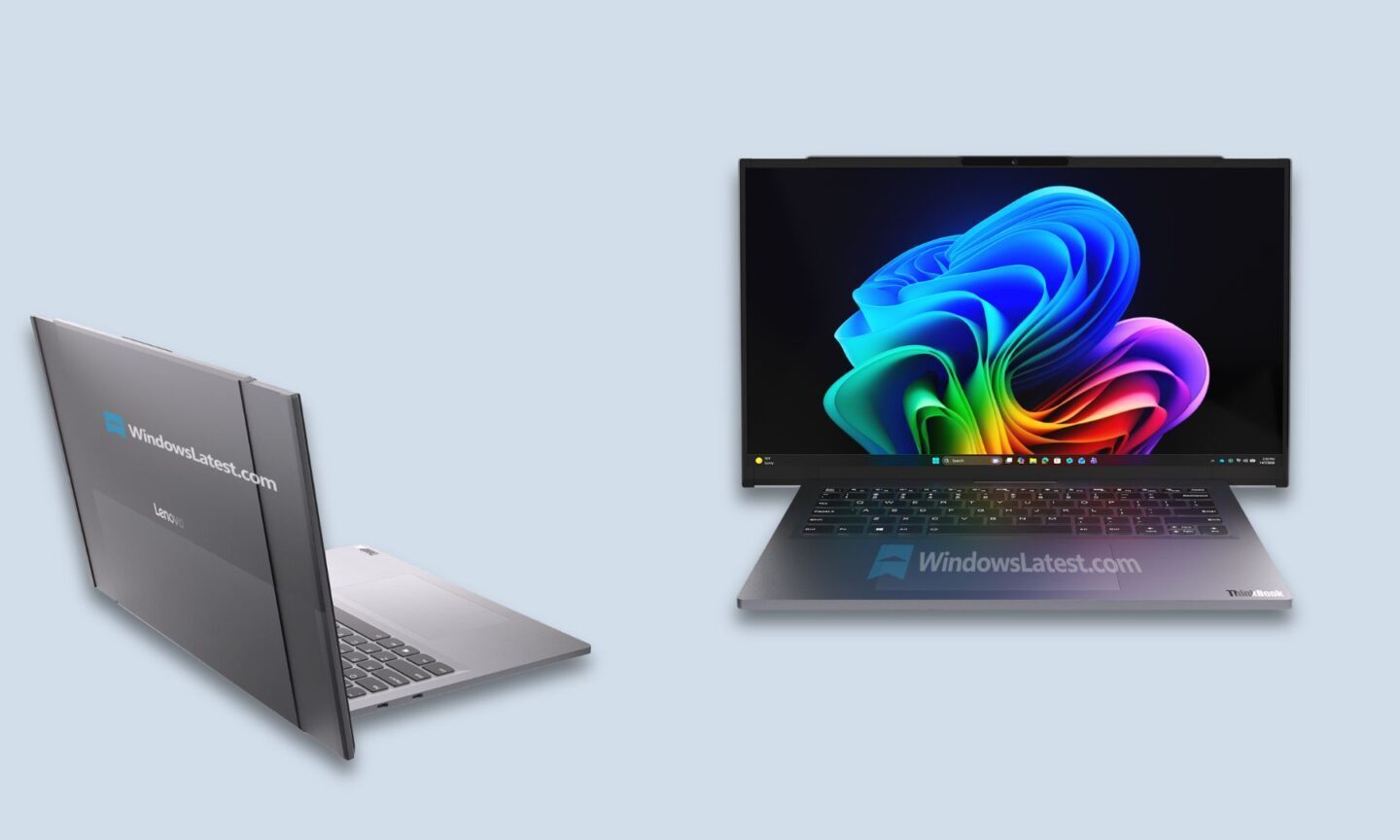
Lenovo apparently hasn’t finished asking how much screen it can squeeze into a laptop bag. A new report from WindowsLatest points to a Lenovo ThinkBook design with a display capable of expanding horizontally, potentially giving users considerably more desktop space without making the laptop permanently enormous.
The design appears connected to a Lenovo patent covering a laptop computer shown in multiple configurations. The patent was filed in August 2024 and granted in the US on March 10, 2026, with Lenovo Beijing listed as the assignee.
This filing illustrates the machine in second and third usage configurations, suggesting a chassis designed to change shape rather than remain at one fixed screen size. There is plenty we still don’t know, so we don’t have any official details like its panel specifications, pricing, or hardware details.
 WindowsLatest
Lenovo has already proven this idea can work
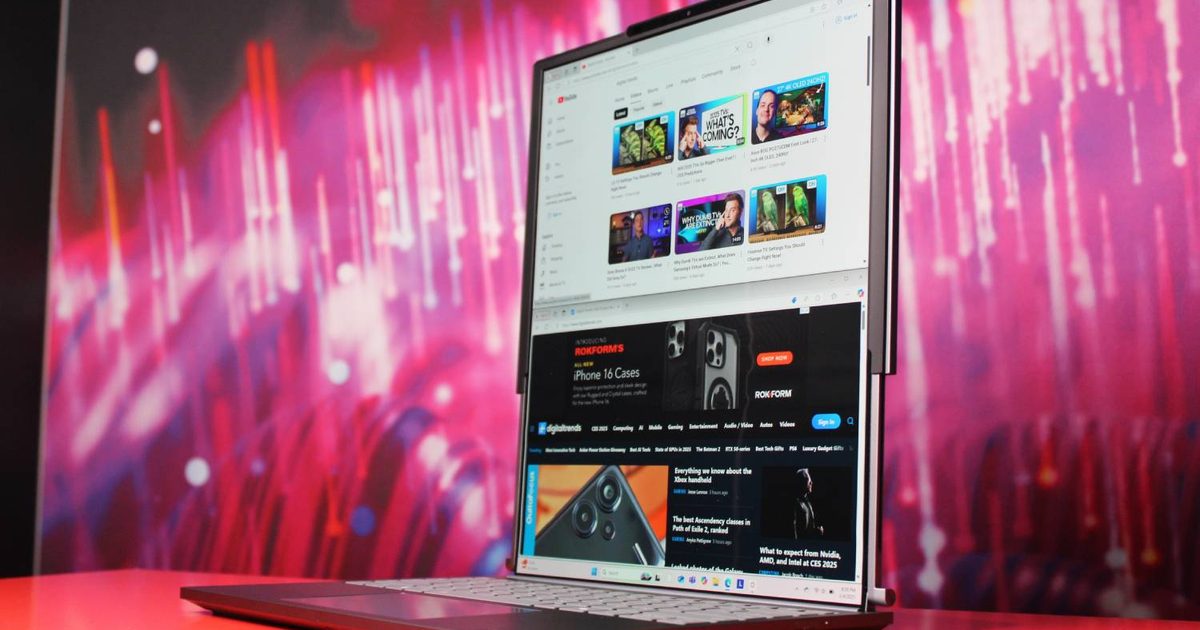
A horizontally growing ThinkBook would be a natural next step for a company that has spent the last few years redefining laptop screens. The ThinkBook Plus Gen 6 Rollable became an actual product after beginning life as an experiment. Its 14-inch OLED mechanically extends upward to 16.7 inches, adding roughly 50% more display area for webpages, spreadsheets, coding, and vertically stacked windows.
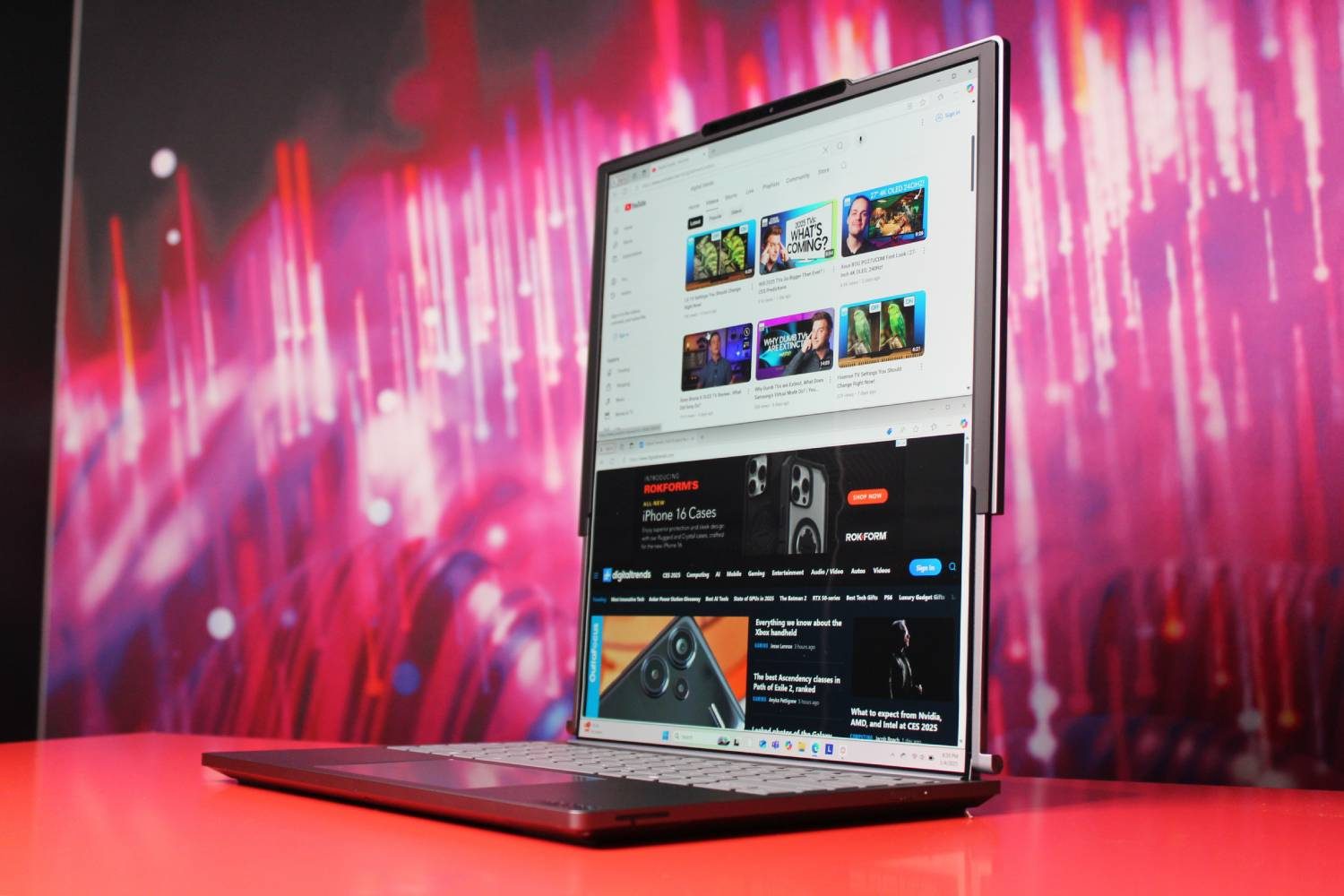 Lenovo ThinkBook Plus Rollable Luke Larsen / Digital Trends
Lenovo’s own documentation confirms that users can extend the screen with a keyboard shortcut or an upward hand gesture. Horizontal expansion would solve a different problem. More width could give you room for two or three windows side by side, longer video-editing timelines, or an ultrawide workspace without carrying a portable monitor.
Lenovo has already built the crazier version
 WindowsLatest
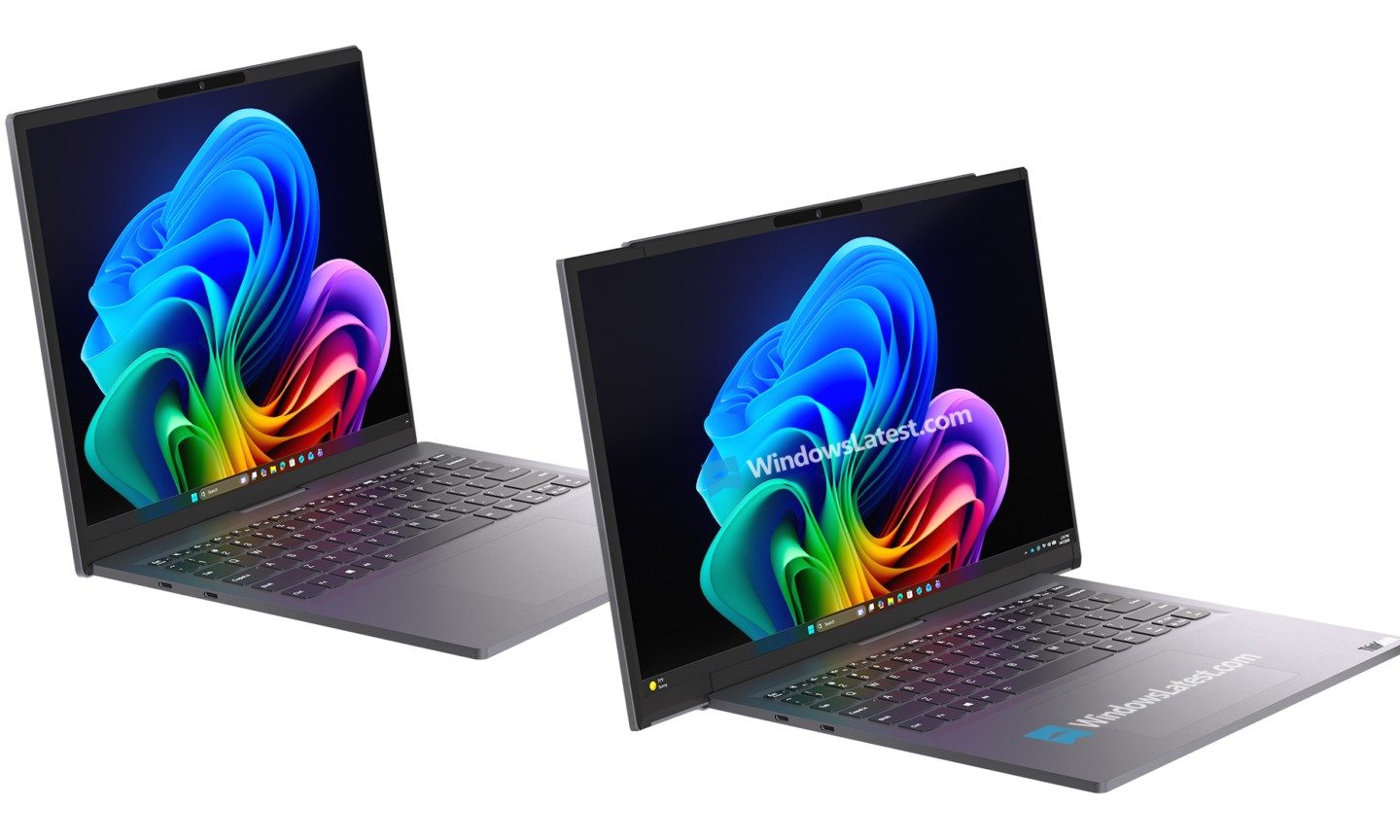
At CES 2026, Lenovo demonstrated the Legion Pro Rollable, whose 16-inch OLED physically expands sideways to 21.5 inches and eventually 24 inches. Lenovo describes it as a proof of concept, using the additional width primarily for ultrawide gaming.
The prototype still has rough edges. Lenovo has engineering work left before a horizontal rollable becomes an ordinary production laptop. A ThinkBook version could give that technology a much “broader” purpose. Lenovo already sells a vertically expanding productivity laptop and has demonstrated a horizontally expanding gaming one. Turning the latter idea into a productivity-focused ThinkBook suddenly doesn’t sound quite so wild.

Vikhyaat Vivek is a tech journalist and reviewer with seven years of experience covering consumer hardware, with a focus on…
I didn’t realize how much Finder was slowing me down until I switched to Bloom
Turns out my file manager was the productivity leak I never saw coming.
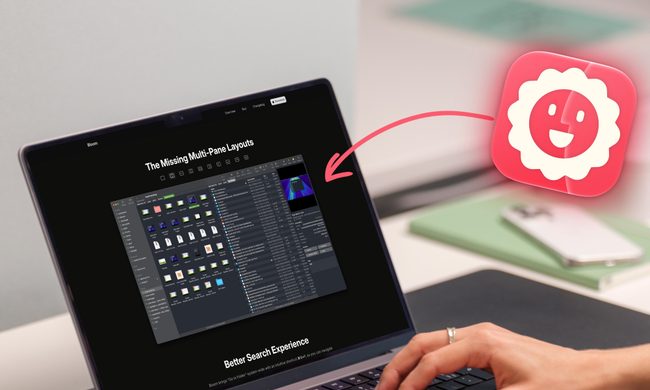
I have used Finder for as long as I have owned a Mac, and for most of that time, I never gave it a second thought. You open a window, dig through some folders, drag a file where it needs to go, and move on with your day. That's just how it works, right?
Except it should not. Constantly opening new windows to move a file from one folder to another, waiting on searches that dig through my entire drive when I only want results from one folder, resizing the same columns over and over because they never remember their width (this one is especially galling) should not be normal.
Microsoft just found another way to make PCs more expensive, because apparently they weren’t pricey enough
Between pricier chips and now pricier Windows licenses, maybe it really is time to give Linux a shot.
PC buyers are getting squeezed from every side this year, and it is not just memory and chips driving up the cost of your next computer. According to a Taiwanese publication, United Daily News, Microsoft has quietly raised its Windows OEM licensing fees, and the hike is steeper than usual.
This could make PC prices climb another 5% this quarter. As if the AI-fueled RAM and chipset crisis was not enough, PC buyers are getting another price hike, and the sad part is that they won’t even get anything extra for it.
Google is testing an AI-first homepage, and the Search button is reportedly taking a back seat
A quietly spotted redesign shows Google testing life without its own Search button.

For years, the Search button has been an integral part of the Google Search experience. However, right now, typing "google.com" into a browser is reportedly bringing up a new simplified layout that doesn’t include the Search button anymore (for a select group of signed-out users).
It appears that the search giant is testing a new, AI-first layout with three dedicated buttons, which are new for traditional Google Search users, but familiar for those who use the Gemini chatbot on a regular basis.

















.jpg&h=630&w=1200&q=100&v=c0f97a310e&c=1)