48 Volts, Big Impact: The Quiet Revolution Powering Modern Vehicles
The global automotive landscape is undergoing its most significant transformation in decades. While full battery-electric vehicles dominate headlines, an equally powerful—but quieter—revolution is underway inside millions of emerging models: the rise of 48-volt (48V) systems. These mid-voltage architectures are...
 Lynk
Lynk
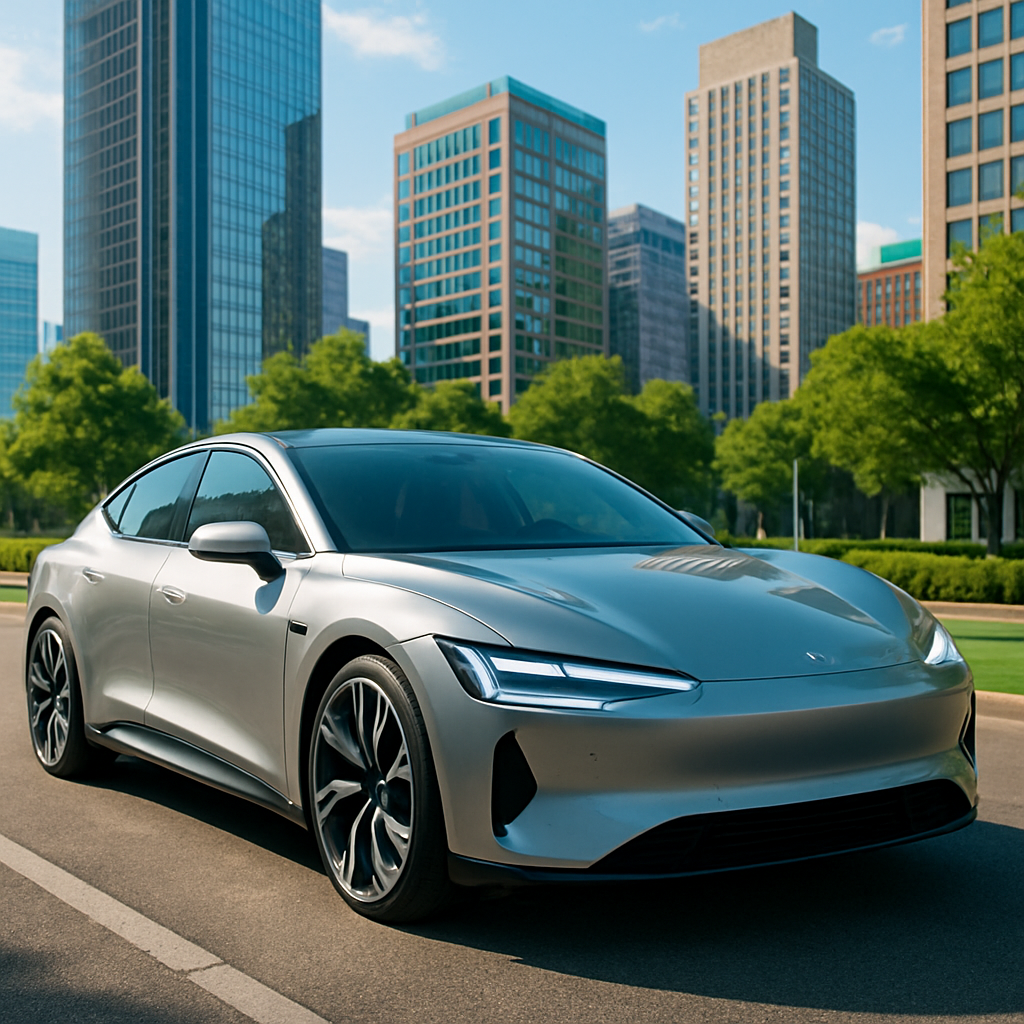
According to BIS Research, The Automotive 48V Systems Market was valued at $9.66 billion in 2024 and is expected to grow at a strong CAGR of 15.98% between 2025 and 2035. Growth is driven by rising adoption of 48V mild-hybrid systems, stricter emission regulations, and automakers’ focus on improving fuel efficiency without the high costs of full electrification. The market is projected to reach about $11.2 billion in 2025, cross $23.5 billion by 2030, and expand rapidly in the early 2030s as 48V architectures become standard across passenger and light commercial vehicles. By 2035, the market is forecast to reach approximately $49.6 billion, more than five times its 2024 size, positioning 48V systems as a key transitional technology between conventional ICE vehicles and full electric platforms. Traditional vehicles rely on a 12V electrical system. But as power demands rise — electric turbos, advanced ADAS, active suspension — 12V simply can’t keep up. Enter the 48-volt architecture, a sweet spot that offers: This makes 48V systems ideal for Mild Hybrid Electric Vehicles (MHEVs), enabling fuel economy gains of 10–15% with minimal battery mass. A modern 48V system typically integrates: Collectively, these components create a compact, efficient powertrain enhancement that significantly improves drivability while lowering emissions. The versatility of 48V systems is a major factor behind their rapid global adoption. Key applications include: This broad applicability makes 48V systems suitable for everything from compact cars to luxury SUVs and commercial vehicles. Global adoption is accelerating, but with distinct regional dynamics: As emissions norms tighten globally, 48V technologies will play a major compliance role — especially for mid-priced vehicle segments. The BIS Research forecast, a 5× market expansion through 2035, reflects three core trends: With vehicle platforms increasingly designed for multi-powertrain flexibility, 48V integration is set to become standard rather than optional. These suppliers are now developing: The ecosystem is maturing rapidly—making 48V a strategic platform, not just a feature. Recent industry updates highlight the rising momentum: These innovations signal that 48V is expanding beyond powertrain efficiency—it is becoming central to overall vehicle energy management. While full EVs continue to rise, 48V systems will remain vital for at least the next decade because they offer: 48-volt systems are more than a steppingstone; they are a crucial enabler of global electrification. By offering a practical blend of efficiency, performance, and affordability, 48V technology is reshaping vehicle design and accelerating the transition to lower-emission mobility. The global automotive landscape is undergoing its most significant transformation in decades. While full battery-electric vehicles dominate headlines, an equally powerful—but quieter—revolution is underway inside millions of emerging models: the rise of 48-volt (48V) systems. These mid-voltage architectures are becoming the backbone of next-generation mild hybrids, offering higher efficiency, lower emissions, and performance boosts without the cost of full electrification.
What Exactly Is a 48V System—and Why Is It a Game Changer?
Inside the 48V Ecosystem: The Technology That Makes It Work
The Applications Transforming Vehicle Performance
Who’s Leading the 48V Surge?
Why 48V Systems Are Scaling Faster Than Ever
Who’s Powering the 48V Revolution?
Leading companies shaping the market include:
Bosch – advanced BSG and battery innovations
Valeo – 48V electric motors and power electronics
Continental – integrated 48V drivetrain modules
Denso, MAHLE, Delphi – power conversion and thermal systems
What’s New in 2024–2025? Fresh Developments You Should Know
The Road Ahead: Why 48V Is Here to Stay
Final Thoughts: 48V is the Bridge to a Smarter, Cleaner Automotive Future











![How AI Is Set To Impact Marketers [Infographic]](https://imgproxy.divecdn.com/ncyA9Lg_YuHT4zn9qtTju-sXyJhQ5kT0ZkJ80Hjv2tM/g:ce/rs:fit:770:435/Z3M6Ly9kaXZlc2l0ZS1zdG9yYWdlL2RpdmVpbWFnZS9mdXR1cmVfb2ZfYWlfbGlua2VkaW5fMi5wbmc=.webp)
_1.png)