7 Airline Marketing Campaigns that Everyone is Still Talking About
Airline marketing campaigns face an almost impossible task. In a digital world where every route, fare, and aircraft seat can be compared in seconds, what is it that makes a campaign memorable enough to actually shape passenger preference? Let’s...
 ShanonG
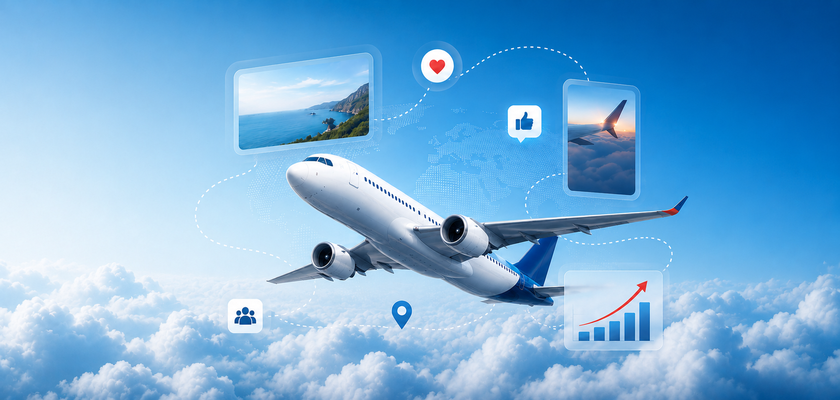
Airline marketing campaigns face an almost impossible task. In a digital world where every route, fare, and aircraft seat can be compared in seconds, what is it that makes a campaign memorable enough to actually shape passenger preference?
Let’s be completely honest: air travel isn’t always a walk in the park. Between the frantic sprint to the boarding gate, the silent, passive-aggressive battle for the middle armrest, and the inevitable delays, flying can sometimes feel more like an endurance sport than a getaway. Yet, somehow, airlines have a spectacular knack for making us fall in love with the idea of the journey long before we ever pack a suitcase.
For marketers, agencies, and brands, airline advertising is one of the clearest, most unforgiving tests of modern brand building. Airlines sell a high-consideration service with thin margins, operational risk, emotional stakes, seasonal demand, and fierce price comparison.
Yet the best airline marketing campaigns do more than fill seats. They create cultural memory, strengthen trust, and give travelers a genuine reason to choose one carrier when all the other alternatives look identical on a search screen.
This battle for attention is only getting tighter. The category keeps growing, with IATA reporting that full-year global passenger demand rose 5.3%, while the full-year load factor reached a record 83.6%. This means airline marketers are competing in a high-demand market where even the smallest improvements in preference, conversion, loyalty, and repeat booking translate into serious commercial value.
In this blog, we’ll pull back the cabin curtain on the industry’s most iconic flights of creative genius. We’ll break down the top airline marketing campaigns that everyone is still talking about, examine the strategy behind why they worked, and unpack the key lessons that any brand can learn from them.
Inside Top Airline Marketing Campaigns
What Makes an Airline Marketing Campaign Successful? 7 Best Airline Marketing Campaigns That Changed the Industry WestJet – Christmas Miracle: Real-time Giving (2014) British Airways India – A Ticket to Visit Mum (2014) Air New Zealand – The Most Epic Safety Video Ever Made #AirNZSafetyVideo (2015) Jet2 – Nothing Beats a Jet2holiday (2024) Turkish Airlines – Fly with Europe’s Best (2024) WestJet – Where Your Story Takes Off | Second Honeymoon (2025) Emirates – We’re Back! (2026) Common Marketing Strategies Used by Leading Airlines Airline Advertising Channels That Deliver the Best Results American Airlines vs Southwest Airlines Marketing Strategy How Airlines Build Brand Loyalty Through Marketing How to Measure the Success of an Airline Marketing Campaign FAQ about Airline Marketing CampaignsWhat Makes an Airline Marketing Campaign Successful?
A successful airline campaign begins with brand truth. Stephen Shaw’s Airline Marketing and Management makes a point that still holds:
Airline brand positioning must begin with the airline’s business strategy and the needs of its target customers. Business travelers respond to tangible values such as punctuality, reliability, and frequency, while leisure travelers often place price and value high in their choice criteria. Shaw also names Southwest Airlines as a clear example of value-for-money positioning in the leisure market.
That is why the strongest airline marketing campaigns rarely rely on creativity alone. They connect the message to a real customer need: getting home, feeling safe, saving money, escaping routine, earning status, or feeling cared for when travel feels stressful.
Shaw also states that advertising can promote corporate image and brand values, build sub-brands, communicate route or aircraft changes, and sell tactical offers such as discounted fares or bonus frequent flyer miles. The same source stresses that all good advertising campaigns need clear objectives, success criteria, senior alignment, and integration with sponsorships, database marketing, and other communication methods.
That gives a useful standard. A successful airline campaign should have:
A clear role in the funnel, from awareness to direct booking. A message grounded in customer need. A brand promise the airline can actually deliver. A channel mix that fits the behavior of the traveler. A measurement model set before launch. A creative idea simple enough to travel across media.As we stated above, airline campaigns carry a special burden: people buy reassurance, timing, service, status, and the promise that the airline will get them where they need to be. Shaw warns that airline advertising must be honest because travelers are not fooled by false service claims, especially frequent business travelers.
That is the foundation. Now let’s look at the best airline marketing campaigns and what made them stand out.
7 Best Airline Marketing Campaigns That Changed the Industry
Before we review the campaigns, we should explain how we chose them.
We selected these campaigns using five criteria:
emotional clarity, creative distinctiveness, channel fit (traditional, tv, online, social media etc.), measurable impact where reliable data is available, transferability for travel marketers.In other words, we looked for campaigns that gave brands, marketers, and agencies lessons they can apply across travel, hospitality, tourism, and lifestyle categories.
We also included recent work because airline marketing is changing fast. TikTok audio, creator participation, airline loyalty data, premium brand storytelling, OOH, YouTube, and owned booking ecosystems all now shape the way travelers discover, compare, and buy.
WestJet – Christmas Miracle: Real-time Giving (2014)
WestJet’s Christmas Miracle is a real-time emotional activation built around surprise, generosity, and the airport experience itself.
The campaign, with 50M views just on YouTube, places a digital Santa in the passenger journey, asks travelers what they want for Christmas, and then turns those wishes into real gifts waiting at baggage claim.
This is an experiential campaign, a social video campaign, and a PR campaign at the same time. It transforms a routine airport moment into a brand story about care. It also shows the value of making the product environment part of the campaign.
It uses airport activation, YouTube, social sharing, earned media, PR, and employee participation. WestJet also builds a broader holiday platform around the idea of giving, with later Christmas Miracle activity involving community partners and volunteers. In one official WestJet Christmas Miracle initiative, more than 700 WestJetters volunteered with Ronald McDonald House Charities Canada.
Why this campaign worked
This campaign felt like the brand doing something for travelers. That mattered because “care” is one of the most valuable but hardest-to-prove airline brand values.Key takeaway for travel marketers
Do not limit airline marketing campaigns to media placements. The airport, the staff, the boarding process, the luggage belt, and the destination arrival can all become creative channels when the idea is strong enough.British Airways India – A Ticket to Visit Mum (2014)
Here is a great example of emotional storytelling. The film centers on the relationship between a mother and her son abroad, using food, memory, and distance to make the flight feel like a bridge back to family.
The campaign uses online film, YouTube, social media, targeted digital distribution, PR, and likely route-focused conversion activity around travel in India. Ogilvy’s official case report states that the campaign performed “so well.”
Why this campaign worked
It worked because it found the “true need” behind a booking. The campaign also connected emotion to commercial movement. Ogilvy reports that ticket sales from North America to India on ba.com increased 65%, and British Airways’ share of the route rose from 5% to 38%. Those are the kinds of results that make emotional storytelling credible in a performance-minded boardroom.Key takeaway for travel marketers
Use audience specificity to make emotion sharper. “Visit family” is broad. “Visit Mum after years away from India” is specific, human, and much harder to ignore.Air New Zealand – The Most Epic Safety Video Ever Made #AirNZSafetyVideo (2015)
Here is our favorite campaign!
Air New Zealand’s “The Most Epic Safety Video Ever Made” turns mandatory safety instructions into destination entertainment. The campaign draws on the world of The Hobbit & Lord of the Rings, New Zealand’s landscapes, film tourism, and celebrity cameos to make passengers actively want to watch content they might normally ignore.
The campaign is a safety video, yes, but also a tourism campaign, a film partnership, and a social video asset in one. It uses New Zealand as a brand advantage.
The campaign, featuring Sir Peter Jackson, Elijah Wood, and Sylvester McCoy, uses in-flight video, YouTube, social media, earned media, entertainment partnerships, PR, and destination marketing.
Why this campaign worked
It made a compulsory message feel voluntary. That is rare. The campaign had functional content to deliver, but it wrapped that content in entertainment, fandom, and destination desire. It also earned scale. The video had been viewed 26 million times on YouTube as of 2026.Key takeaway for travel marketers
Do not separate utility from brand. Safety instructions, booking confirmations, check-in emails, app notifications, and route pages can all carry brand value when designed with imagination.Jet2 – Nothing Beats a Jet2holiday (2024)
If you scrolled through social media during the 2024–2026 summer seasons, there is no way you missed Jet2’s ad.”
Jet2’s “Nothing Beats a Jet2holiday” is a package-holiday brand campaign that becomes a social audio phenomenon. The campaign’s upbeat line and Jess Glynne soundtrack become a TikTok meme format, often paired with chaotic travel clips and vacation mishaps.
This is a classic example of a brand asset escaping paid media and becoming participatory culture. The jingle, voiceover, and line become instantly recognizable, which gives the airline and holiday brand high recall inside a fast-moving social platform.
The campaign uses television, social media, TikTok, audio branding, user-generated content, creator remixing, and promotional activation.
Why this campaign worked
Even though the airline campaign was not backed by a big idea or production, it worked! Because the brand asset was simple, repeatable, and emotionally flexible. The original message is positive, but the internet gave it a second life by using it ironically against travel chaos. Jet2 did not fight that tension. It joined the conversation. Social media does not always use creative assets exactly as planned. The win comes when the brand recognizes the behavior, participates with good timing, and lets audiences extend the idea.Key takeaway for marketers
Invest in distinctive brand assets that people can repeat. A line, sound, color, character, or rhythm can create more memory than a long list of benefits.Turkish Airlines – Fly with Europe’s Best (2024)
This is a brand-stature campaign, featuring Jose Mourinho. It takes an external recognition and turns it into a concise travel proposition: choose the airline recognized as Europe’s best.
The Turkish Airlines marketing campaign uses YouTube, social media, sports sponsorship adjacency, celebrity-led creative, PR, and digital video distribution. The claim has credible support: Turkish Airlines was named Best Airline in Europe at the 2024 Skytrax World Airline Awards.
Why this campaign worked
Awards can feel passive when they sit on a website footer. Here, the award becomes the campaign idea. The use of football culture also expanded the emotional field. Turkish Airlines associated the brand with European competition, ambition, and global movement. That helped the campaign feel larger than a standard airline proof-point ad.Key takeaway for travel marketers
Proof needs creative packaging. Awards, rankings, reviews, route networks, and service credentials become more valuable when they are turned into clear campaign language.WestJet – Where Your Story Takes Off | Second Honeymoon (2025)
WestJet’s “Where your story takes off” platform positions travel as the beginning of personal stories. The “Second Honeymoon” execution uses a relatable human truth: parents escaping routine, taking a trip without the kids, and rediscovering rest.
So, we can say that this is a brand platform campaign with humorous lifestyle storytelling. It uses OOH, 360° creative, YouTube, social media, paid video, and brand platform messaging. The “Second Honeymoon” execution also appears on WestJet’s owned social and video channels.
Put your tray tables up, return your seats to their upright position and let’s embark on your next great story together. Because no matter where you decide to write it, we know the perfect place to start. WestJet. Where your story takes off.
Why this campaign worked
It made the traveler the center of the story (obviously.) The airline became the enabler, not the main character and that gave the campaign broader emotional range and made it easier for audiences to project their own lives into the message. The humor also gave the idea freshness. Travel advertising often shows perfect beaches and polished smiles. This campaign said sometimes the best trip is the one where adults finally sleep, reconnect, and feel like themselves again.Key takeaway for travel marketers
A strong brand platform should create many stories. So, “Where your story takes off” gives WestJet room to speak to families, couples, solo travelers, reunions, holidays, and business trips under one flexible idea.Emirates – We’re Back! (2026)
Let’s close the best airline ads page with a confidence-led campaign built around return, reconnection, and global scale.
“We’re Back” presents Emirates as a premium carrier returning with presence and reach. The campaign appears across video and TV ad tracking sources, with iSpot listing an Emirates “We’re Back!” TV spot.
And yes, this is a brand reassurance campaign, with more than 95 million views. It does not need complicated storytelling. The message is direct: Emirates is present, global, and ready to carry travelers again. It uses YouTube, television, social media, digital video, and owned route messaging. Emirates also uses “We’re back” language in owned destination pages tied to route returns, including Nigeria and Lagos service pages announcing the carrier’s return from 1 October 2024.
Why this campaign worked
It worked because the message was simple and confident. Airline travelers often need reassurance before they need poetry. The campaign gave them a clear cue that the brand is active, connected, and operating at scale. It also matched Emirates’ premium brand codes: polished visuals, global ambition, and calm assurance. That fit mattered. A comeback message only works when the audience already has strong memory structures for the brand.Key takeaway for travel marketers
When the market context is uncertain, simplicity can outperform complexity. Clear availability, clear confidence, and clear network strength can become a compelling airline marketing campaign.For a broader look at the Emirates marketing strategy; how the airline builds premium perception through brand positioning, global destinations, and campaign activity.
Common Marketing Strategies Used by Leading Airlines
The best airline marketing campaigns above look very different, but they use many of the same strategic ingredients.
Empathy-led marketing & human-centric narrative
Airline purchases are functional, but travel motivations are emotional. British Airways sells a route to India, yet the campaign is about a son returning to his mother. WestJet sells flights, yet its Christmas Miracle is about surprise and care, as we mentioned while explaining the campaigns.
This is where travel brands can learn from Shaw’s distinction between apparent and true customer needs. Airline brand positioning should account for what travelers say they want and the deeper motivations behind their behavior.
Destination-focused campaigns
Air New Zealand shows how destination can become a media asset. The airline uses New Zealand’s film identity and landscapes (the Lord of the Rings universe) to make even safety content carry tourism value.
Loyalty program marketing
Frequent flyer programs are no longer just retention tools. They are data, media, partnership, credit card, and customer experience platforms.
Shaw notes that frequent flyer programs provide a valuable source of volunteered customer data, making it easier for airlines to connect demographic information with activity data such as routes, class of service, and fare types.
American Airlines shows the commercial weight of this strategy. In its 2025 results, American reported that AAdvantage enrollments grew 7% year over year and co-branded credit card spend grew 8% year over year. Its annual report also states that cash payments from co-branded credit cards and other partners reached $6.2 billion in 2025.
Seasonal promotions
Airlines are deeply seasonal businesses. Holiday campaigns, summer travel pushes, winter sun promotions, and route-specific fare sales all matter.
Shaw explains that advertising can support short-term objectives such as new route announcements, aircraft changes, special offers, discounted fares, and bonus frequent flyer miles. The key is to make sure tactical promotions do not dilute the brand idea.
Jet2 shows the new reality: a paid campaign may become most valuable when audiences remix it. Social engagement is not only about posting brand content. It is about creating assets people can use, share, parody, and recognize.
Influencer and creator partnerships
Airlines increasingly use creators to show destinations, cabins, lounges, family travel, loyalty hacks, and premium experiences. The strongest creator partnerships work when the creator adds lived credibility to the trip.
Personalization
Personalization is especially important in airline marketing because travelers differ by route, trip purpose, family status, loyalty tier, flexibility, fare sensitivity, and timing.
Shaw’s work on database marketing is still useful here. He argues that database marketing allows finer segmentation and more targeted messages than broad media advertising, especially when airlines know route behavior, class of service, and customer needs.
Mobile-first customer experience
The mobile booking path, app check-in, seat selection, push notifications, loyalty wallet, and disruption messaging all affect brand perception.
So, mobile behavior keeps rising in travel.
Airline Advertising Channels That Deliver the Best Results
No single channel wins every airline brief. The best channel mix depends on objective, market, audience, season, and route economics.
TelevisionTelevision still works for broad brand building, emotional storytelling, and premium perception. Shaw notes that sound and pictures can communicate in ways print media cannot, although production timelines can be long.
YouTubeYouTube is essential for airline films because it supports long-form storytelling, global reach, search visibility, and shareability. WestJet, British Airways, Air New Zealand, Turkish Airlines, and Emirates all use YouTube as a primary home for campaign assets.
Social MediaSocial platforms are critical for campaign spread, creator participation, UGC, and real-time response. Jet2’s TikTok growth shows how brand assets can become social language when they are easy to repeat.
Search AdsSearch captures intent. When travelers search for “flights to New York,” “cheap flights to Dubai,” or “business class to Istanbul,” the brand must convert existing demand. Search is less glamorous than film, but it often closes the loop.
Display AdsDisplay helps with retargeting, fare reminders, route launches, loyalty program pushes, and destination inspiration. It works best when linked to audience behavior and booking data.
Airport AdvertisingAirport media reaches travelers in context. It is especially useful for premium cabins, lounges, credit card partnerships, route launches, and brand trust. It also reaches business travelers at a moment when travel decisions feel immediate.
Email MarketingEmail remains one of the strongest owned channels for airline marketing because it can combine loyalty data, route history, fare alerts, and seasonal promotions. Shaw warns, however, that database marketing must be professional, integrated, and grounded in accurate data.
Mobile AppsAirline apps are becoming retention engines. They support booking, check-in, disruption alerts, ancillary upsell, loyalty status, boarding passes, seat upgrades, and personalized offers.
Out-of-HomeOOH works well when the creative is simple, visual, and contextually placed. WestJet’s 2025 platform shows how OOH can carry human storytelling in a travel category where many decisions start with imagination before search begins.
But here is the catch: having the ultimate marketing toolkit is only half the battle. A high-converting channel is only as good as the story you tell through it. To see how this actually plays out in the real world, we don’t have to look any further than the friendly skies of domestic travel. By pitting American Airlines against Southwest Airlines, we get a front-row seat to how two industry giants take the exact same advertising playbook, but fly it in completely opposite directions to win over very different crowds.
American Airlines vs Southwest Airlines Marketing Strategy
| Brand positioning | Large-network carrier with global reach, alliances, premium cabins, and AAdvantage loyalty strength. | Value-led, historically low-cost, customer-friendly, domestic-heavy brand with simple travel cues. |
| Target audience | Business travelers, premium travelers, international travelers, loyalty members, co-brand card customers, and leisure travelers. | Leisure travelers, domestic travelers, price-conscious customers, families, and small-business travelers. |
| Advertising style | More focused on scale, network, loyalty, status, and service benefits. An american airlines marketing campaign often connects travel utility with loyalty value. | More conversational and value-led. A southwest airlines marketing campaign often uses warmth, humor, simplicity, and customer-friendly language. |
| Loyalty programs | AAdvantage is central to retention, partnerships, and co-branded card economics. | Rapid Rewards is designed to drive revenue through new members, cardholders, more business from current customers, and partnerships. |
| Customer experience | Built around network access, loyalty recognition, cabin options, partnerships, and digital tools. | Built around ease, value, domestic convenience, and a long-standing service personality, though 2025 changes adjusted several long-known policies. |
| Digital marketing approach | Strong use of loyalty data, app engagement, fare merchandising, and partner economics. | Strong use of fare messaging, loyalty offers, app booking, email, and customer communications around policy changes. |
| Social media strategy | Polished, service-led, operational, and loyalty-focused. | More casual, humorous, and personality-driven. |
Southwest’s positioning is well documented in Shaw’s airline marketing analysis. He identifies Southwest as an example of leisure-market value-for-money positioning, with safety and acceptable punctuality still essential. Shaw also explains Southwest’s cost-leader model through operational choices such as Boeing 737 commonality and use of less congested airports, including Dallas Love Field and Chicago Midway.
Southwest is also going through a visible marketing and customer experience transition. Reporting in 2025 noted that the airline ended free checked bags for many customers on flights booked after May 27, 2025, while also moving toward assigned seats, a basic fare, and changes to rewards and credits. For marketers, that creates a brand challenge: when a brand has been loved for specific policies, any shift needs careful communication.
Now, let’s talk about building loyalty in these circumstances.
How Airlines Build Brand Loyalty Through Marketing
Airline loyalty is built through repeated proof. How?
Frequent flyer programs
Frequent flyer programs give airlines a structured way to reward behavior, gather data, and personalize offers. Shaw argues that relationship marketing is broader than frequent flyer schemes, but those programs can provide valuable customer data and recognition mechanisms.
Customer retention
Retention depends on trust, route fit, pricing, service recovery, app usability, and recognition. A traveler may forgive a delay. They are less likely to forgive poor communication during that delay.
Personalized offers
Airlines have unusually rich intent and behavior data: destinations searched, routes flown, cabin preference, loyalty tier, travel companions, card usage, baggage behavior, and upgrade patterns. Shaw emphasizes that airlines need demographic, needs, and activity information to send relevant marketing communication.
Partnerships
Credit cards, hotels, rental cars, events, tourism boards, sports properties, and entertainment franchises can all strengthen loyalty. American’s co-brand economics show how large this can become, with $6.2 billion in cash payments from co-branded credit cards and other partners in 2025.
Brand trust
Trust is the airline marketer’s real currency. Safety, punctuality, baggage handling, transparency, and service recovery do more for loyalty than any claim that customers do not experience as true.
Customer experience
Every customer touchpoint is marketing: app design, gate announcements, crew behavior, refund process, loyalty emails, boarding order, lounge experience, and baggage updates.
WestJet’s Christmas work shows the value of making care visible. Community initiatives, employee involvement, cause partnerships, and local destination storytelling can make an airline feel less transactional.
How to Measure the Success of an Airline Marketing Campaign
Measurement should be set before the campaign goes live. It is clear that campaigns need objectives and monitoring, and that results should be tracked against the campaign’s specific purpose.
Here are the core metrics airline marketers should use.
Customer acquisition cost
CAC measures how much the airline spends to acquire a new customer or booking. It is especially useful for paid search, paid social, affiliate, display, and market-entry campaigns.Loyalty program growth
Measure new member enrollments, active members, tier progression, partner earn, redemption behavior, credit card acquisition, and repeat booking frequency.Booking conversion rate
This tracks how well campaign traffic turns into bookings. Marketers should look at conversion by route, market, device, fare type, and audience segment.Customer lifetime value
CLV is essential for airlines because the first booking may be less valuable than the long-term traveler relationship. A student traveler may become a business traveler. A family holiday buyer may become a yearly package customer.Load factor impact
Load factor measures how full flights are. IATA’s record 83.6% global full-year load factor in 2025 shows why this metric matters: airlines already operate in a high-utilization environment, so campaign impact on specific flights and routes needs close tracking.Brand awareness
Brand campaigns need awareness, recall, favorability, and consideration tracking. Shaw notes that brand-building advertising often requires research into awareness, attitudes, recall, and changes over time.Return on ad spend
ROAS matters for fare promotions, route pushes, retargeting, and package holiday campaigns. It should be paired with margin, not only revenue, because not every seat sold carries the same value.Repeat bookings
Repeat bookings show that the campaign did not only create attention. It moved customers into a longer relationship with the airline.FAQ about Airline Marketing Campaigns
What makes an airline marketing campaign successful?
A successful airline marketing campaign connects a real customer need to a credible airline promise. It has clear objectives, strong creative, channel fit, honest claims, and a measurement plan. As we mentioned before, airline advertising works best when it is tied to brand values the airline can deliver in the real travel experience.
What are the best airline marketing campaigns of all time?
Some of the best airline marketing campaigns include WestJet’s “Christmas Miracle,” British Airways India’s “A Ticket to Visit Mum,” Air New Zealand’s “The Most Epic Safety Video Ever Made,” Jet2’s “Nothing Beats a Jet2holiday,” Turkish Airlines’ “Fly with Europe’s Best,” WestJet’s “Where your story takes off,” and Emirates’ “We’re Back!”
How does American Airlines market its services?
American Airlines markets through network reach, loyalty, digital booking, AAdvantage, co-branded credit cards, route communication, and service messaging. Its loyalty engine is especially important: AAdvantage enrollments grew 7% year over year in 2025, and co-branded card spend grew 8% year over year.
How is Southwest Airlines’ marketing strategy different from other airlines?
Southwest has historically focused on value, simplicity, friendly service, and operational cost advantages. Shaw identifies Southwest as an example of value-for-money positioning for leisure travelers. That makes its marketing more personality-led and value-led than many network-carrier campaigns.
Which marketing channels work best for airline advertising?
The strongest airline advertising channels are television, YouTube, social media, search, display, airport media, email, mobile apps, and OOH. The right mix depends on the objective. Brand campaigns often need TV, YouTube, OOH, and social. Booking campaigns often need search, display, email, retargeting, and app messaging.
How do airlines attract and retain loyal customers?
Airlines attract and retain loyal customers through frequent flyer programs, personalized offers, useful partnerships, strong service recovery, reliable communication, transparent pricing, and customer experience. Loyalty grows when the airline recognizes the traveler and delivers the promise made in the campaign.










.jpg)