9 Designer Tricks That Instantly Make a Bedroom Feel Bigger
From layout to lighting, the changes that actually work. The post 9 Designer Tricks That Instantly Make a Bedroom Feel Bigger appeared first on Camille Styles.
 Astrong
We may receive a portion of sales if you purchase a product through a link in this article.
If your bedroom feels cramped, cluttered, or smaller than it should, the solution usually isn’t more space—it’s a few smarter design decisions. The way your furniture is arranged, how your eye moves through the room, and even the scale of your lighting can make a noticeable difference in how spacious it feels.
We’re all drawn to those impossibly charming spaces: the Paris apartment, the cozy but perfectly arranged bedroom, and the ones that feel light-filled and effortless even when they’re not especially big. The fact that they work has nothing to do with square footage. Instead, it’s because everything inside them feels considered.
That’s the shift: creating a bedroom that feels bigger is about how the space functions—and how it makes you feel when you’re in it. The easiest solve? Remove what’s getting in the way.
Small Shifts That Make Your Bedroom Feel Bigger—Fast
Sure, it’s subtle, but in practice, it’s what changes everything. If your bedroom feels smaller than it should, a few thoughtful shifts can change how the entire space reads—fast. Start here:
1. Leave at least one area intentionally open. A room feels bigger when not every corner is trying to do something.
2. Remove one piece of furniture you don’t actually need. If it’s not essential, it’s taking up visual space.
3. Choose fewer, better-proportioned pieces. Oversized furniture closes a room in faster than you think.
4. Keep surfaces intentionally clear. Not empty—just free of anything that doesn’t need to be there.
5. Use lighting that gives the room breathing room. Think slimmer lamps, sconces, or anything that doesn’t crowd the surface it sits on.
6. Draw the eye upward. Artwork, vertical lines, or even higher curtain placement can subtly expand the space.
7. Let your bed have space on at least one side. Even a small gap can make the layout feel more open.
8. Stick to a more tonal color palette. When colors flow, the eye moves more easily—and the room feels larger.
9. Use mirrors to reflect light, not just fill a wall. Placement matters more than size.
10. Keep sightlines clear from the doorway inward. What you see first shapes how spacious the room feels.
These shifts might feel small, but they’re the same principles designers use to make a space feel considered, balanced, and more expansive. To take it a step further, I asked designers how they approach small bedrooms. Take out your notepad (and prepare your Pinterest board). These small bedroom design tips are gold.

9 Designer-Approved Ways to Make a Bedroom Feel Bigger
1. Start With Less Than You Think You Need
The fastest way to make a small bedroom feel bigger is to remove what isn’t essential.
It sounds obvious, but it’s where most spaces go wrong—trying to fit in one more chair, one more surface, one more piece that doesn’t quite have a role. As designer Katie Raffetto puts it, “less is more,” especially in a bedroom.
If it’s not helping you sleep, store, or soften the space, it’s likely adding visual noise.
Strip the room back to what you actually use—a bed, a place to set things down, lighting that works—and let everything else be intentional.
A bedroom feels bigger the moment it stops trying to be anything other than a bedroom.
2. Rethink the Scale of Your Furniture
In a small bedroom, the issue isn’t always how much you have—it’s how much space your furniture takes up.
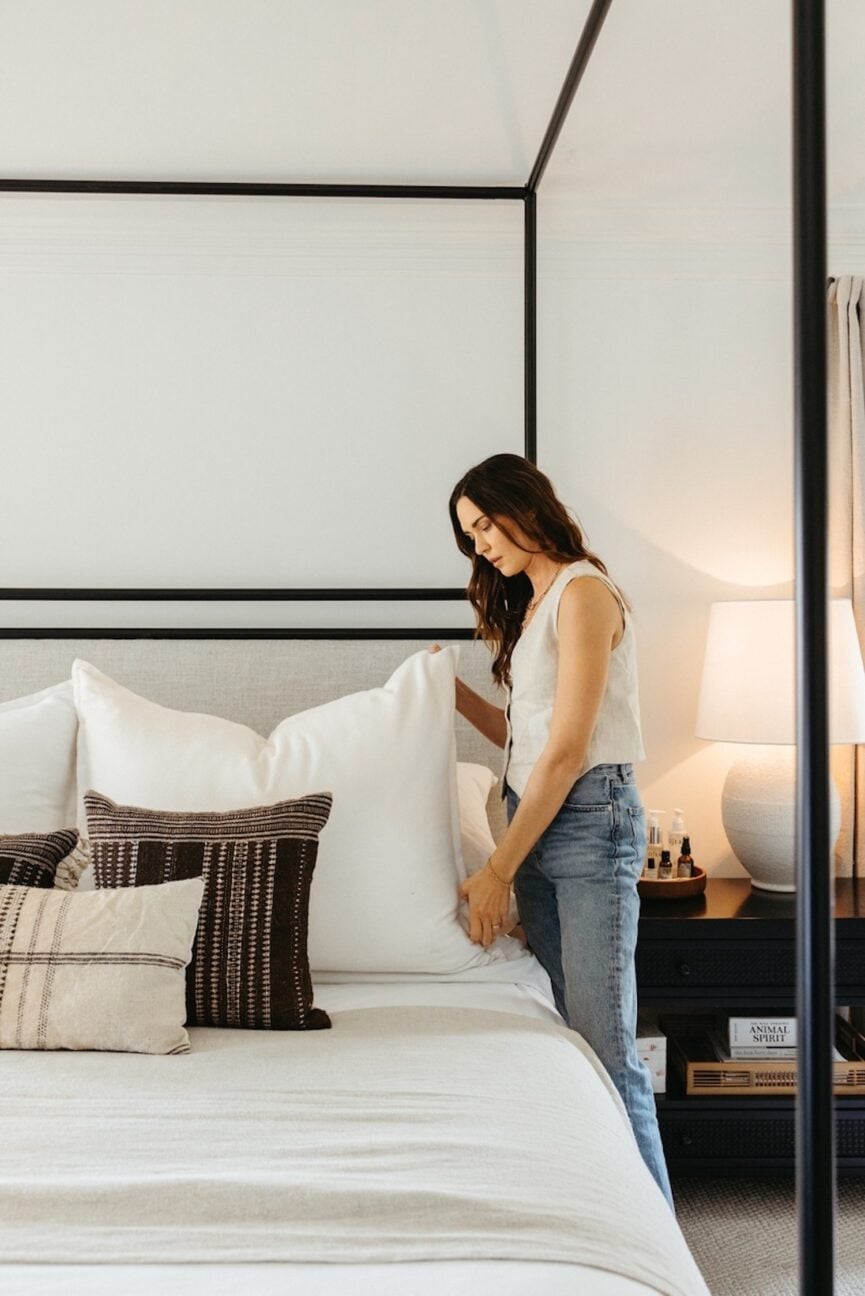
A queen bed might feel like the default, but if it leaves you with barely any room to move, it’s working against the space. The same goes for bulky nightstands, oversized dressers, or anything that sits heavy in the room. Even creating space on just one side of the bed can make the entire layout feel more open.
Designer Cameron Johnson refers to this as “space engineering”—making decisions that create room around your furniture, not just filling the room with it. Sometimes that means choosing a smaller bed, a narrower nightstand, or a piece that can serve more than one function.

3. Use Color to Your Advantage (Not Just for Aesthetics)
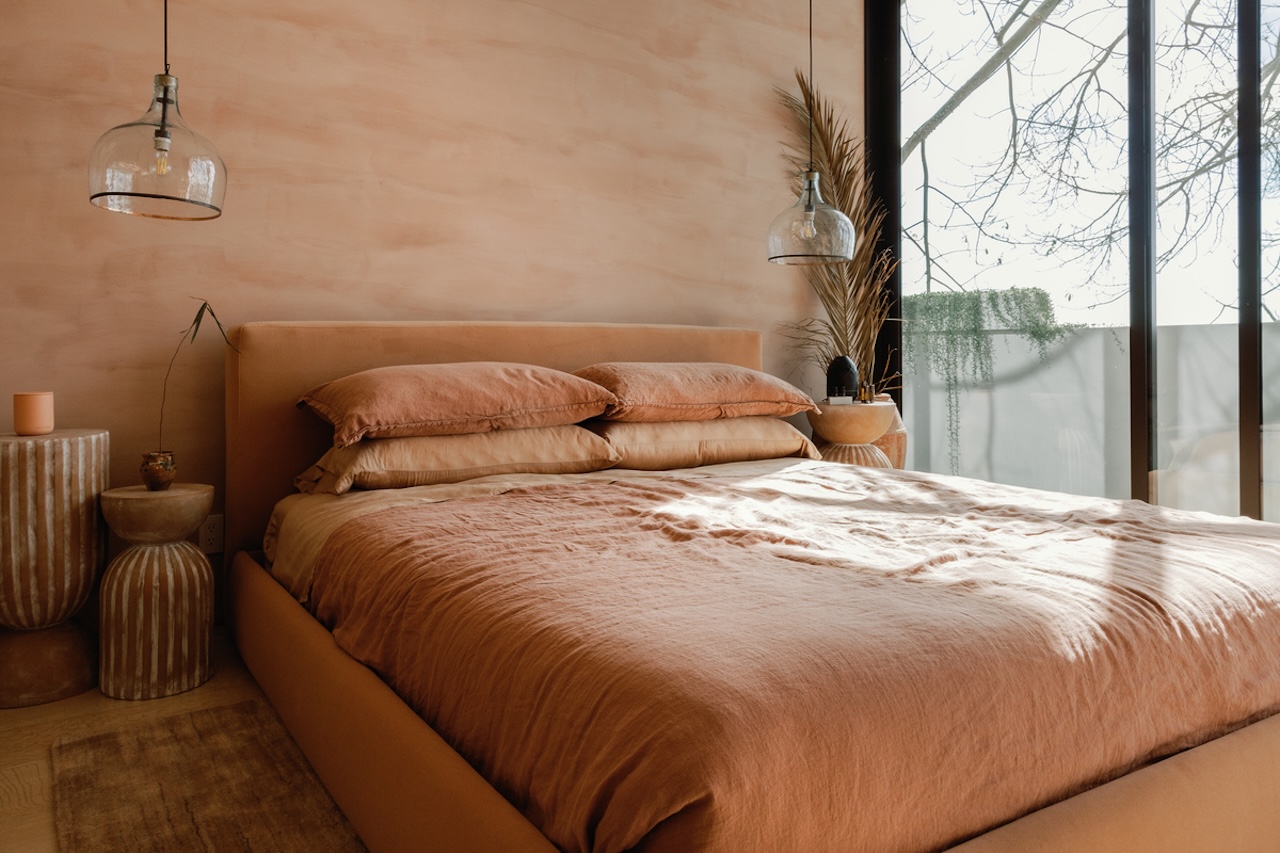
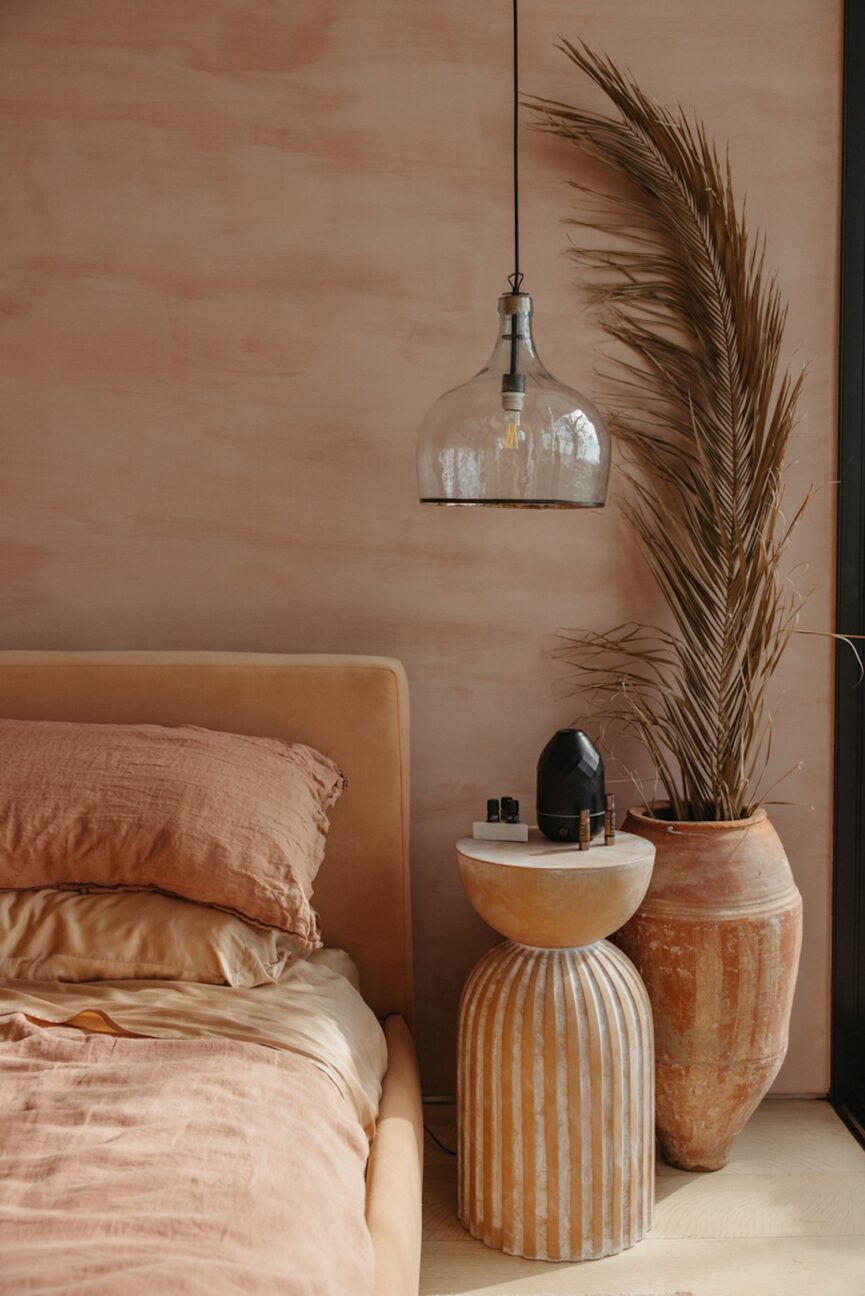
Color doesn’t just change how a room looks—it changes how it feels. In smaller bedrooms, there’s often a tendency to default to all white in hopes of making the space feel bigger. But according to Raffetto, leaning into deeper, more saturated tones can actually create the opposite effect—in a good way. “Dark colors allow you to lean into the coziness,” she says, turning the room into something that feels intentional rather than constrained.
The key is consistency. When your palette feels cohesive—whether it’s light and tonal or rich and layered—the eye moves more fluidly through the space. And that sense of visual continuity can make a room feel larger, not smaller. A room feels bigger when your eye isn’t constantly stopping to process contrast.
4. Keep Your Sightlines Clear
What you see first when you walk into your bedroom sets the tone for how the entire space feels. If your line of sight is blocked—by bulky furniture, clutter, or awkward layout—the room immediately reads as smaller. But when that path is open, even a compact space can feel noticeably more expansive.
Designers often think about this as creating a clear visual entry point. The less your eye has to work to understand the space, the bigger it feels.

5. Draw the Eye Upward
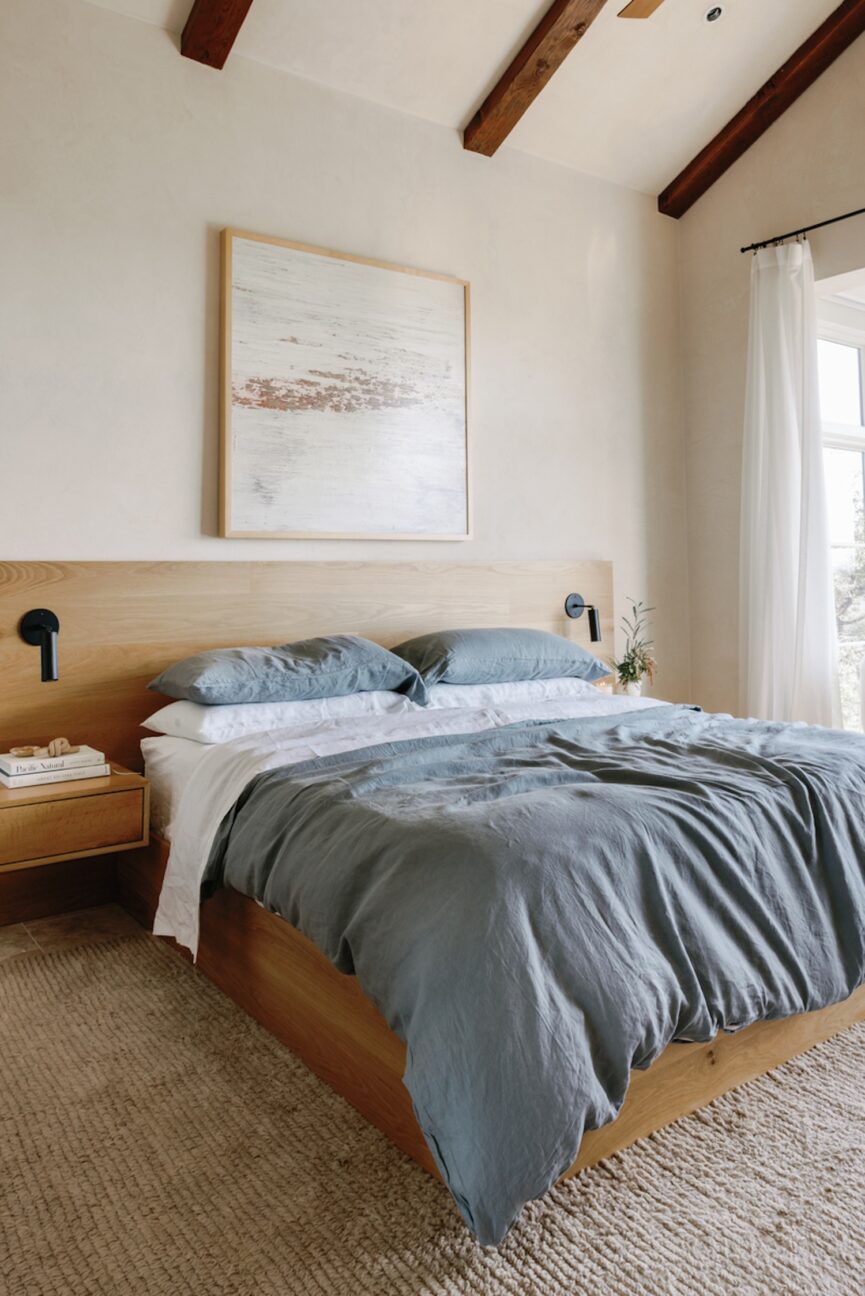
One of the simplest ways to make a bedroom feel bigger is to change where the eye goes. When everything sits at the same level—low furniture, low art placement, nothing pulling your gaze upward—the room can start to feel compressed. Designers counter this by using vertical space to create a sense of expansion.
That might look like hanging artwork slightly higher than expected, extending the visual height of your headboard, or mounting curtains closer to the ceiling to elongate the walls. As Johnson notes, even something as simple as placing art above the bed can help “extend the headboard” and shift how the room is perceived.
It’s a subtle trick, but it works: when your eye travels up, the room opens with it.
6. Use Mirrors With Intention
Mirrors are often recommended for small spaces—but how you use them matters more than simply having one.
Placed thoughtfully, a mirror can reflect natural light, extend a sightline, or create the illusion of depth. Placed randomly, it just becomes another object on the wall. Again, you’re not filling the space for the sake of it. The goal is to amplify what’s already working.

7. Choose Pieces That Do More Than One Thing
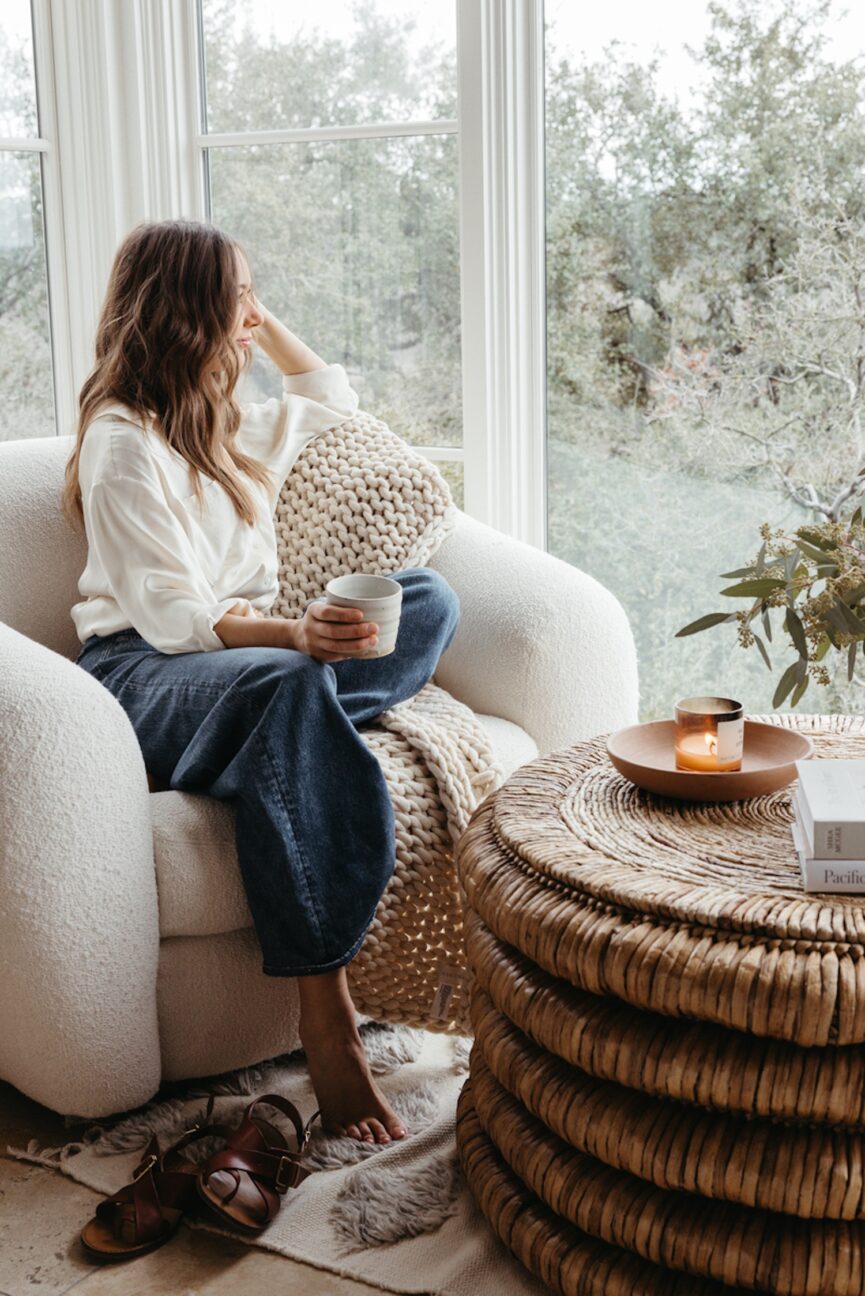
In a smaller bedroom, every piece should earn its place. When square footage is limited, adding more furniture isn’t the answer—choosing smarter furniture is. Pieces that can serve multiple functions allow you to get what you need from the space without visually crowding it.
Raffetto suggests something as simple as placing a dresser next to the bed so it doubles as a nightstand. Johnson echoes this approach, pointing to bed frames with built-in storage as a way to eliminate the need for additional pieces.
8. Be Intentional With Lighting
Lighting has a bigger impact on how spacious a room feels than most people realize. Oversized lamps and bulky fixtures can take over a surface, making everything around them feel tighter. Raffetto recommends choosing streamlined lighting—slimmer lamps or wall-mounted sconces—that give your furniture room to breathe.
It’s also about placement. When light is distributed thoughtfully, it softens the edges of the room and reduces visual clutter. When it’s not, even a well-designed space can start to feel crowded.

9. Design for a Room That Feels Resolved
Editing a room down is only half the equation. The other half is knowing when it feels complete.
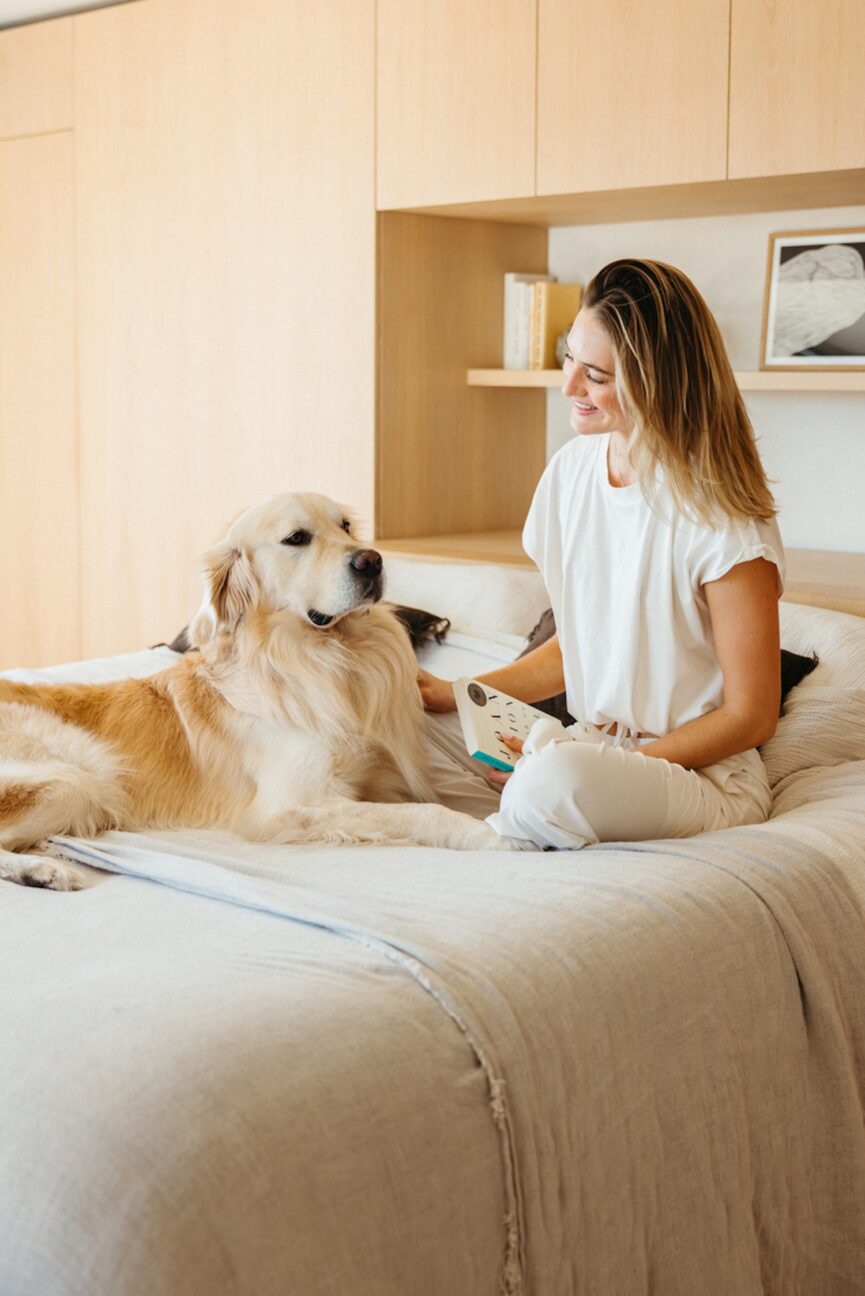
A space can be minimal and still feel unfinished. The difference comes down to how the elements work together. When a room feels resolved, your eye isn’t jumping from object to object or looking for what’s missing—it can settle.
Designers create this sense of closure through a few intentional choices: curtains that frame the room, a rug that grounds the bed, and a mirror that reflects light into the space. Not more pieces—just the right ones, placed with purpose.
The One Thing That Makes a Bedroom Feel Smaller
Most bedrooms don’t feel small because of their size. They feel small because too many things are competing for attention. When every surface is filled, every corner is doing something, and every piece of furniture is slightly too big or slightly out of place, the room starts to feel visually crowded—even if there’s technically enough space.
Designers think about this differently. It’s about centering in on what the room doesn’t need. Because the moment your eye has space to move—to land, to rest—the entire room opens up.
This post was last updated on April 8, 2026, to include new insights.


















.jpg&h=630&w=1200&q=100&v=c0f97a310e&c=1)