A Gentle Guide to Reducing Inflammation Through Everyday Habits
Flush out those toxins. The post A Gentle Guide to Reducing Inflammation Through Everyday Habits appeared first on Camille Styles.
 Kass
Kass

We may receive a portion of sales if you purchase a product through a link in this article.
If you’re coming off the holiday season feeling more moody, bloated, or just “off,” you’re in good company. In my work as a nutrition consultant, I see this pattern with clients every year: December happens (life gets fuller, routines loosen, more sugar, etc.), and the body does its best to keep up—until it can’t anymore. The result? Low-grade, chronic inflammation. And it’s often the thing that leaves us feeling out of whack in January. That’s exactly why we’re sharing gentle, sustainable ways to help calm inflammation. Here’s to feeling more like yourself in no time.
Featured image from our interview with Radhi Devlukia-Shetty by Michelle Nash.

Not All Inflammation Is Bad
Talk about an unfair reputation. Yes, too much (chronic) inflammation isn’t good. But “inflammation” has become one of those words that feels almost villainous in the wellness world. To set the record straight, inflammation is your body’s built-in repair system. It’s what rushes in when you catch a cold or cut your finger. We need this response to function well! The problem arises when inflammation lingers longer than it should. It becomes low-grade and chronic (i.e., leaky gut) rather than temporary and protective.
Nourishing Anti-Inflammatory Foods
One of the things I’ve learned—both personally and professionally—is that reducing inflammation doesn’t work well from a place of restriction. Instead, it’s far more effective (and sustainable) to think in terms of nourishment. Add, rather than subtract! In my own kitchen and with my clients, I focus on filling plates with foods that naturally support the body:
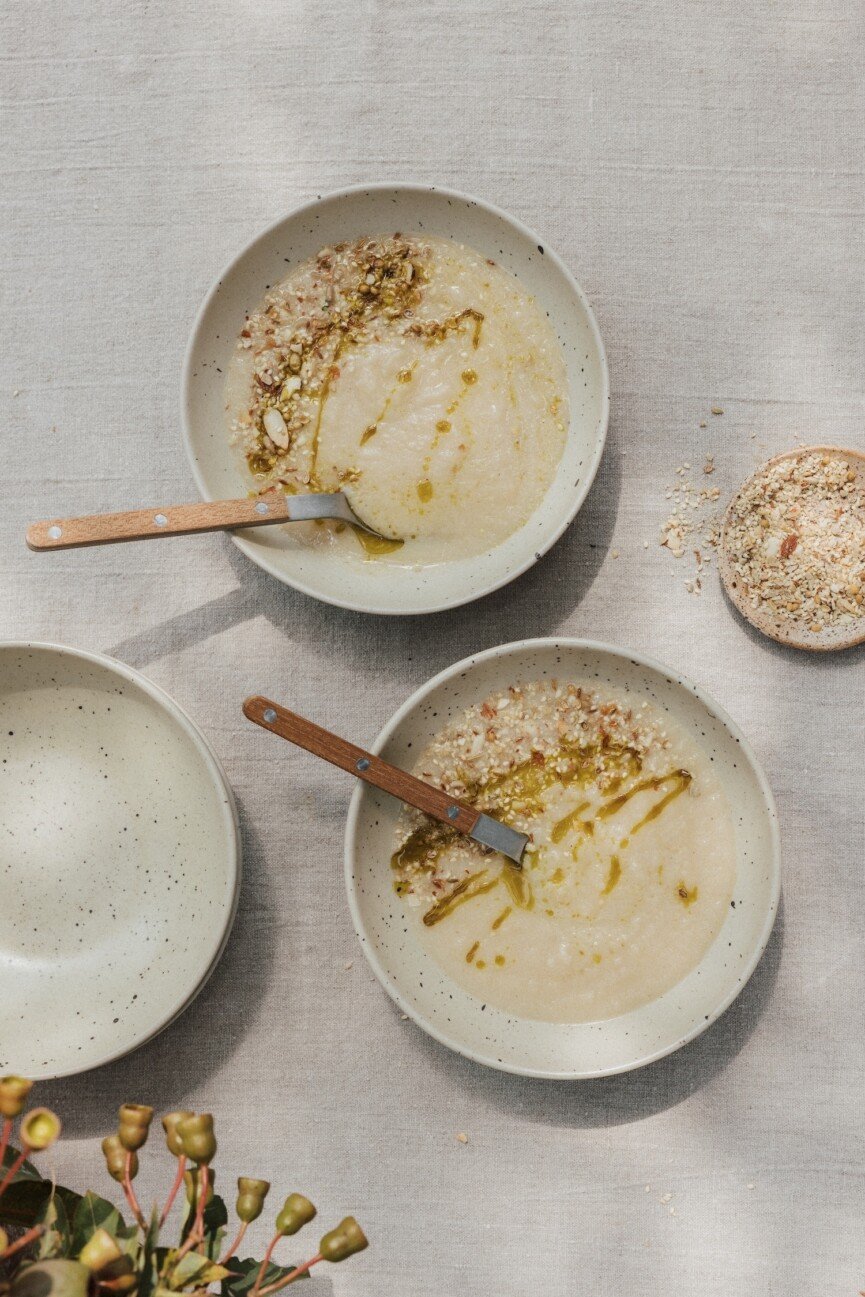
Lots of (cooked) leafy greens Colorful, seasonal veggies (right now that’s beets, carrots, and squash) Berries Fatty fish Olives Avocado Nuts and seeds Anything fermented (like yogurt or kimchi) Warming spices (like turmeric, ginger, garlic, and cinnamon)The goal is to consistently choose foods that help your body feel calmer. Emphasis on consistently.
8 Recipes to Support Anti-Inflammatory Living
Some of my favorite recipes for anti-inflammatory living are equal parts colorful and comforting. These meals make learning how to reduce inflammation feel incredibly nourishing! Plus, they’re quick enough for the busyness of everyday life:
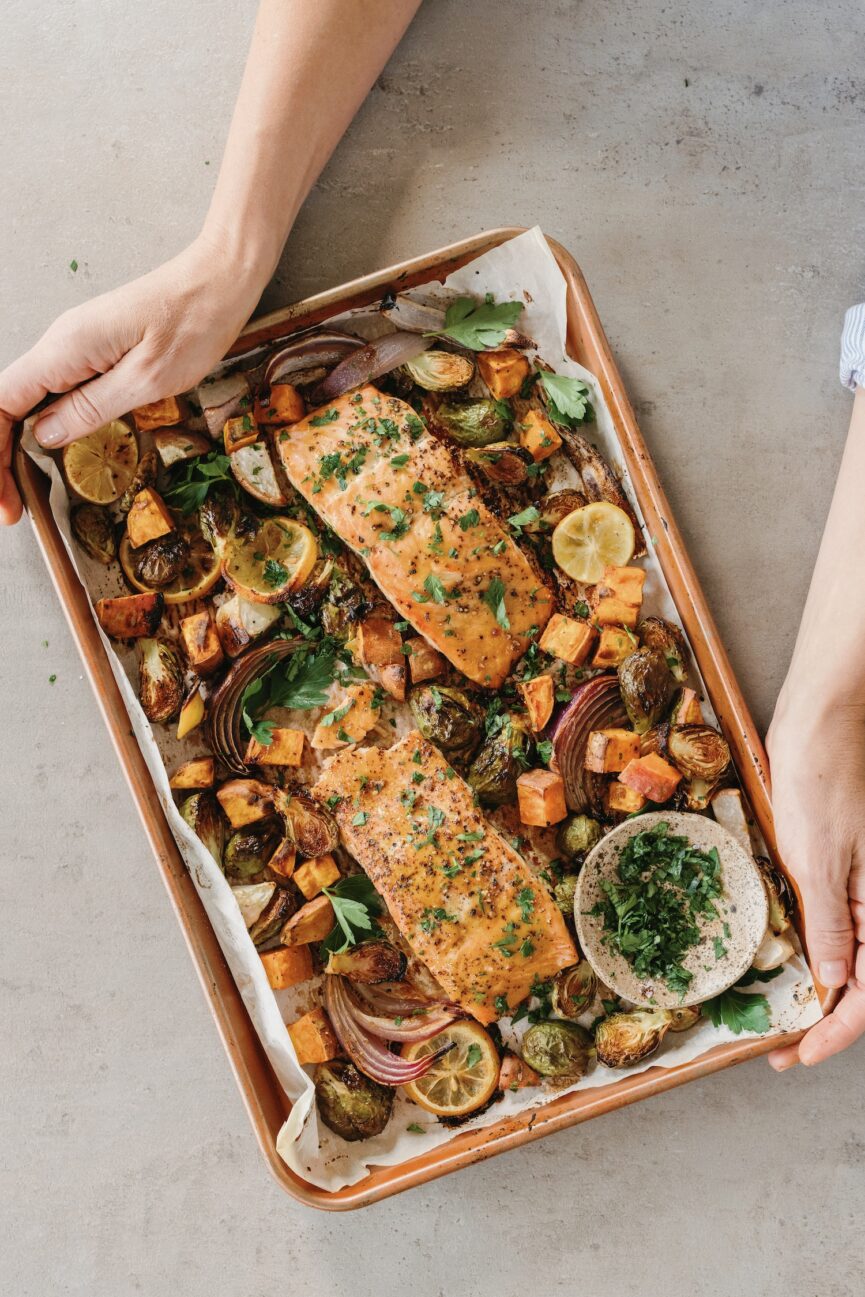
Bright kale and citrus salad Baked salmon with roasted vegetables Pumpkin overnight oats Coconut curry soup Fig and tahini smoothie Green goddess pasta High-protein berry yogurt parfait Turmeric chicken immunity soup
Stress and Inflammation Go Hand-in-Hand
You can eat all the “right” foods, but if your nervous system is constantly in fight-or-flight, your body will still hold onto inflammation. That’s why figuring out how to reduce inflammation often starts with slowing down. For me, that looks like a few daily rituals: pausing for three slow breaths before I eat and humming in the shower. Simple, doable, repeatable. With clients, I often recommend the same. Those small signals of safety are what really help the body shift out of a stressed, inflammatory state.
Gentle Movement to Boost Circulation
Movement has been one of my most reliable tools for reducing inflammation naturally. Gentle, consistent movement improves circulation, supports the lymphatic system, and helps the body clear out metabolic waste. I’m a big believer that working out doesn’t have to be intense to be effective. Daily walks, slow yoga, body weight exercises, or even a few minutes of dancing in the kitchen all count. When I’m feeling especially inflamed or run-down, I lean into softer movement rather than pushing myself harder.
Don’t Underestimate Sleep and Hydration
In my work, sleep and hydration are two of the most underrated (and most powerful) pieces of how to reduce inflammation. When we’re sleep deprived, stress hormones rise, and inflammation follows. I’ve seen huge shifts in clients’ energy, digestion, and even skin simply from prioritizing 7–9 hours of quality sleep. Hydration is just as essential: water helps the body flush out daily toxins from air pollution, heavy metals, and environmental exposure. I always keep a water bottle nearby (with electrolytes for extra minerals!).
Easy Daily Habits
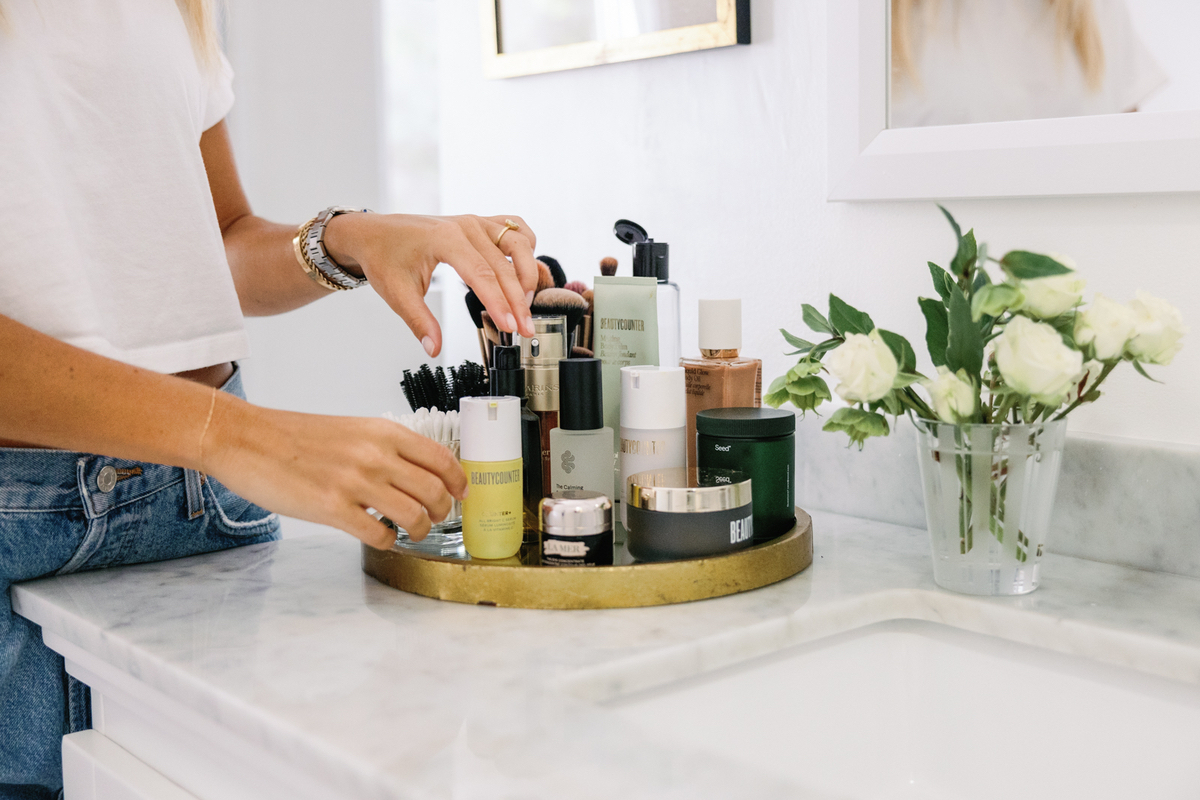
Reducing inflammation doesn’t require a complete lifestyle overhaul. Small habits add up! In my own life, that looks like choosing cleaner personal care products, filtering my drinking water, and being mindful about household cleaners. With clients, I focus on practical changes: more whole foods, regular movement, better sleep (loving this AG1 sleep support), and manageable stress rituals. These aren’t flashy habits, but they’re the ones that consistently make people feel better in their bodies.

This post was last updated on January 24, 2026, to include new insights.



















![AI Overviews: How Freshpet Stands Out in SEO & GEO [Webinar] via @sejournal, @hethr_campbell](https://cdn.searchenginejournal.com/wp-content/uploads/2026/08/ap-3-846.png)