AEO vs SEO vs GEO: Key Differences, Strategies, and What Actually Works in 2026
You’ve seen the acronyms everywhere: SEO, AEO, GEO. Before starting, here’s the quick answer: none of these acronyms is replacing the others, but the relationship between them has changed completely. This guide tells you exactly what each one means,...
 Tfoso
Tfoso

You’ve seen the acronyms everywhere: SEO, AEO, GEO.
Before starting, here’s the quick answer: none of these acronyms is replacing the others, but the relationship between them has changed completely. This guide tells you exactly what each one means, how they differ, and what actually works in 2026, in the digital marketing ecosystem.
Inside SEO vs GEO vs AEO
What Is SEO, AEO, and GEO? Quick Definitions SEO vs AEO vs GEO: What’s the Real Difference? Answer Engine Optimization (AEO) vs Traditional SEO GEO vs SEO vs AEO: A New Layer of Visibility How Search Has Changed: From Rankings to Selection AEO Strategies vs Traditional SEO Effectiveness Core Strategies: SEO vs AEO vs GEO When to Use SEO, AEO, or GEO Common Mistakes When Transitioning from SEO to AEO/GEO FAQ about SEO vs AEO vs GEOWhat Is SEO, AEO, and GEO? Quick Definitions
Let me keep this “simple” before we go deep, because the confusion starts here.
SEO (Search Engine Optimization) (as you already know) is the practice of making your content rank higher in traditional search engine results pages, primarily Google.
It’s about keywords, backlinks, technical structure, and authority signals.
👉🏻The goal is a click: you show up in a list of blue links, and the user chooses yours.
AEO (Answer Engine Optimization) is the practice of structuring your content so it gets extracted as a direct answer by AI-powered search features; Google AI Overviews, featured snippets, People Also Ask boxes, Bing Copilot, and voice assistants.
The user may never visit your site, but your brand just answered their question.
👉🏻So, you’re not competing for a click in a list; you’re competing to be the answer.
GEO (Generative Engine Optimization) is the newest layer. Introduced formally in a landmark 2023 paper from Princeton University researchers Aggarwal et al., GEO is the practice of optimizing content so that generative AI systems (ChatGPT, Perplexity, Google Gemini, Claude) select and cite your content when synthesizing responses from multiple sources.
👉🏻Where AEO targets specific SERP features on Google, GEO targets the entire ecosystem of AI engines that now answer questions without a traditional search results page at all.
It’s best to think of the three as layers (not competitors!):
SEO is the foundation. AEO is the answer layer on top of traditional search. GEO is the system layer on top of everything. It’s where AI engines decide whose content is worth synthesizing in the first place.SEO vs AEO vs GEO: What’s the Real Difference?
You may think that the difference is technical. However, it’s a difference in intent architecture.
Let’s break it down by the core question each discipline answers.
| Core question | How do I rank? | How do I get cited as an answer? | How do I get selected by AI systems? |
| Primary goal | Rankings + clicks | Featured in direct answers | Inclusion in AI-synthesized responses |
| Success metric | CTR, rank position, traffic | Snippet capture rate, voice coverage | Citation share, AI mention rate, brand inclusion |
| Target platform | Google, Bing SERPs | AI Overviews, snippets, voice assistants | ChatGPT, Perplexity, Gemini, Claude, Copilot |
| Key signals | Keywords, backlinks, Core Web Vitals | Structured data, FAQ schema, E-E-A-T | Entity authority, citations, information gain, consensus |
| User action assumed | User clicks a link | User reads answer without clicking | User receives AI-synthesized answer |
| Content format wins | Long-form, keyword-rich pages | Concise, question-answer structured content | Authoritative, well-cited, entity-rich content |
As you can see clearly, there is no war between these three: You can win at SEO (ranking #1) and still be invisible in AI answers. You can win at AEO (appearing in featured snippets) and still be excluded from ChatGPT’s synthesis.
And yes, each layer requires its own strategy, but they share a common foundation.
Answer Engine Optimization (AEO) vs Traditional SEO
Let’s start with a bold truth: 65% of searches now end without a single click to a website. That means users are getting their answers on the results page itself.
At that point, remember:
Traditional SEO was built for a world where search meant: type a query → see a list of links → choose one → read the page.
Actually that funnel worked beautifully for two decades. Then Google started injecting direct answers at the top of results pages. Featured snippets in 2014. Knowledge panels. People Also Ask boxes. Voice search pulling a single answer from Siri or Alexa. And then, in 2023, Google AI Overviews.
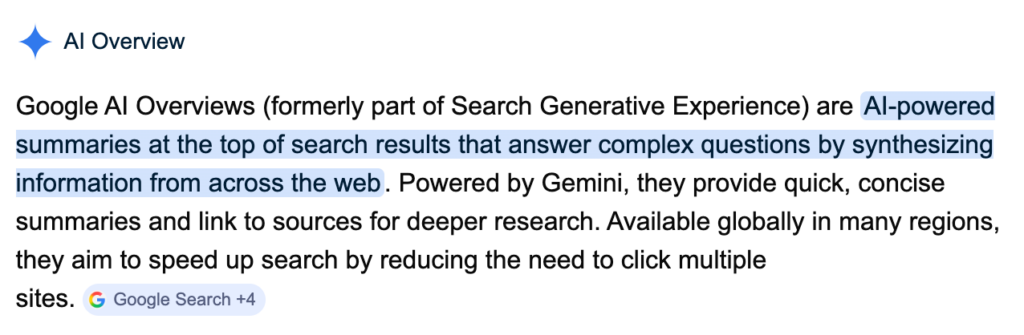
Think about what that means for a brand that has spent years optimizing for click-through rate. They can be ranking #1 and still have no traffic from that query, because the AI summary at the top already answered the user’s question.
AEO emerged as the structured response to this shift. No more asking “what keywords should my page rank for?” AEO asks:
What questions are my users actually asking, and can my content be extracted as the answer?
So, the format changes completely. Traditional SEO content is written to be read by a human who clicked in. AEO content is written to be extracted by a machine and presented to a human who may never visit the site.
Where AEO outperforms traditional SEO is in conversion quality. Yes, you may get fewer clicks. But the visitors who do reach your site through AI-powered discovery are significantly more valuable. So much so that, according to Coursera, there is a 4.4× higher conversion rate for visitors arriving via AI search compared to traditional organic search. It means fewer visitors, but far more qualified ones.
Here, you may need to rethink your KPIs. A brand that dropped from 50,000 monthly visits to 35,000 because of AI Overviews, but whose conversion rate tripled, may actually be in a better position than the raw traffic numbers suggest. This is the AEO vs SEO effectiveness debate in a nutshell: it’s totally about traffic vs influence.
GEO vs SEO vs AEO: A New Layer of Visibility
If SEO is about being findable and AEO is about being quoted in Google’s search features, GEO is about something more fundamental: being selected as trustworthy source material by the AI models.
As we stated in our blog titled What is a GEO Agency?, Generative Engine Optimization is a bunch of symptoms working together to “satisfy queries by synthesizing information from multiple sources and summarizing them using LLMs.”
And what makes GEO conceptually different from both SEO and AEO?
SEO is about ranking in a “list (you know, it’s Google most of time.) There’s a clear winner (position #1).
🧩The metric is rank.
AEO is about capturing a slot. Google extracts one featured snippet. You either have it or you don’t.
🧩The metric is snippet ownership rate.
GEO is about being included in a synthesis. A generative AI model is reading dozens of sources and constructing a single answer.
🧩The metric is citation inclusion and mention frequency across AI platforms.
What’s more, the GEO research identified that traditional SEO tactics “have little to no effect on generative engines.” This is a crucial finding for any agency running playbooks built on keyword density and backlink volume alone.
Okay, then, what does work? How to improve visibility in generative engine responses?
Adding citations and authoritative statistics, Using persuasive writing styles, Improving fluency and presenting information with a clear consensus-building structure.How Search Has Changed: From Rankings to Selection
Let’s pause for a moment and face an uncomfortable truth that every agency, marketer, and brand owner needs to hear in 2026:
The model of “rank high, get clicks, convert traffic” is no longer the sole strategy. And for many query types, it’s no longer even the primary game.
The shift happened in three waves, you may remember:
Wave 1: Zero-click SERPs (2014–2020). Google started answering questions directly on the results page. Featured snippets, knowledge panels, local pack results. Traffic began leaking from organic results, but no one had a name for what was happening. Wave 2: AI Overviews (2023–2024). Google deployed AI-generated summaries at the top of results for an increasing share of queries. Our member agency, Amsive‘s study of 700,000 keywords across 10 websites found non-branded keywords experiencing CTR drops of nearly 20% when AI Overviews were present. Wave 3: Parallel AI search ecosystems (2024–present). ChatGPT, Perplexity, Gemini, Claude, Copilot… They’re where a growing segment of the population starts their information journey.According to the Pew Research Center’s March 2026 update, the daily integration of AI into American life has surged, with 31% of U.S. adults now interact with AI multiple times a day. This trend is most pronounced among the digital-native demographic, as approximately 38% of young adults aged 18–29 now report using AI tools as their primary method for accessing information.
AEO Strategies vs Traditional SEO Effectiveness
So, which approach delivers stronger results today?
As we mentioned above, the difference comes down to how visibility is defined.
Traditional SEO still drives traffic volume, performing well when users explore and compare. AEO drives answer ownership, capturing users when they want immediate resolution.Not clear enough?
Here is a comparison of AEO strategies versus traditional SEO effectiveness:
| Keyword-optimized long-form content | ✅ High | ⚠️ Medium | Good for ranking; not optimally structured for extraction |
| Technical SEO (speed, CWV) | ✅ High | ✅ High | Foundation requirement for both; crawlability matters for AI too |
| Backlink acquisition | ✅ High | ⚠️ Medium | Domain authority matters, but AI selection has additional signals |
| FAQ schema markup | ⚠️ Medium | ✅ High | 3× more likely to be cited in AI answers with proper schema |
| Concise 40-word summaries | ⚠️ Low | ✅ High | AI extraction preference; clear answer-first format wins |
| E-E-A-T signals | ✅ High | ✅ High | Critical across all layers; non-negotiable for YMYL |
| Structured citations | ⚠️ Low | ✅ High | Citations significantly improve AI visibility & trust |
| Entity optimization | ⚠️ Medium | ✅ High | Improves AI citation likelihood by 35%+ |
| Question-based headers | ⚠️ Medium | ✅ High | Mirrors user queries; dramatically improves extraction |
| Content distribution (PR) | ✅ High | ✅ High | Consensus signals require content to appear widely |
As we wrap up this section, we want to emphasize that there is no absolute trade-off between AEO strategies and traditional SEO. The majority of AEO improvements (like better E-E-A-T, stronger structured data, clearer content structure) also help your traditional SEO rankings.
Core Strategies: SEO vs AEO vs GEO
Before moving forward, we need to clearly align on how these approaches differ at a strategic level.
Here’s a quick comparison to anchor the discussion:
| Ranking-Based | Answer-Based | Selection-Based |
| Keyword research + semantic topic clusters On-page optimization (title, meta, H-tags) Technical SEO: Core Web Vitals Backlink acquisition and domain authority Internal linking architecture Content freshness + historical optimization Local SEO: GBP, citations Structured data for rich results | Question-first content architecture 40–50 word direct answer paragraphs FAQPage, HowTo, and Speakable schema Definitions, glossaries, comparison pages Conversational headers (Real queries) People Also Ask (PAA) targeting Voice-search-optimized phrasing E-E-A-T: author bios & credentials | Entity optimization: Brand & products In-content citations & statistics Consensus signals: PR & Wikipedia Multi-platform distribution (News/Forums) Authoritative, persuasive writing style JSON-LD for AI machine readability Brand mention monitoring on AI Domain-specific tone (Law/Health/Finance) |
SEO Strategies (Ranking-Based)
Despite the fact that there are numerous rumors that SEO is dead, actually it is not. What’s dead is the lazy version of it: stuffing keywords, farming low-quality backlinks, and calling it a strategy.
Modern SEO has three pillars that haven’t changed:
Keywords & Semantic ClustersThe shift from “rank for this keyword” to “own this topic” is the single most important evolution in SEO strategy over the past five years. In practice, this means building a cluster of interlinked content, a pillar page that covers the broad topic authoritatively, surrounded by cluster pages that go deep on specific subtopics. Each piece reinforces the others. The result is that Google (and increasingly AI systems) sees your domain as the authoritative home for that subject area.
Keyword research in 2026 should start with intent mapping. A query with 200 monthly searches and clear commercial intent is worth more than a query with 20,000 searches and zero purchase signal.
Tools like Semrush, Ahrefs, and Google’s own Search Console remain essential here, but the output should be a content architecture plan.
What most teams miss: Long-tail, question-based keywords are the bridge between SEO and AEO. Ranking for “how to waterproof a basement” is both an SEO win (traffic) and an AEO opportunity (AI extraction). These two disciplines are closest to each other in the keyword-research layer.
Backlinks & Domain AuthorityBacklinks remain one of the strongest signals in Google’s ranking algorithm. This is not debated seriously by anyone actually doing SEO at scale.
What has changed is how links are earned and evaluated. A single contextual link from a highly relevant, authoritative publication in your industry is worth more than 50 directory listings. Quality of the linking domain, relevance of the context, and natural anchor text distribution are the dimensions that matter.
The linkbuilding strategies that still work in 2026: original research that journalists want to cite, useful tools and calculators that attract natural links, expert contributions to authoritative publications, digital PR campaigns built around data stories, and strategic partnerships with complementary brands.
What doesn’t work anymore: paid link schemes, low-quality guest post networks, and any tactic that looks automated to a human reviewer. Because Google’s spam detection has gotten very good at exactly that.
Technical SEOIn 2026, the priorities are: Core Web Vitals (Largest Contentful Paint under 2.5s, Cumulative Layout Shift under 0.1, Interaction to Next Paint under 200ms), mobile-first rendering, clean URL architecture, comprehensive XML sitemaps, proper canonical tags, structured data without errors, and HTTPS security. None of these are new, but many sites still fail them.
What is newer is the importance of AI-crawlability alongside traditional Googlebot crawlability. Generative AI systems, when using retrieval-based approaches, need to be able to access and parse your content cleanly. JavaScript-heavy SPAs with no server-side rendering, paywalls without sampling, and content buried in inaccessible tabs or accordions all reduce your GEO visibility as much as your SEO visibility.
AEO Strategies (Answer-Based)
Actually, AI systems and answer engines don’t read your content the way a human does. They scan for extractable answers. They look for content that is structured, clear, and can be served directly as a response to a specific question.
Writing for AEO is, in a very literal sense, writing for a machine that needs to be able to pull a self-contained answer out of your page without reading the surrounding context.
The foundational AEO content tactic is deceptively simple: answer the question first, then elaborate. Every section of your content that targets a question-based query should open with a 40–50 word direct answer that fully addresses the question in a standalone sentence or two. Then expand with explanation, examples, and context.
This structure serves both featured snippet extraction (Google grabs that opening paragraph) and voice search (voice assistants read the first clean answer they find).
A practical content audit approach: go through your existing top-performing pages and ask — “if someone asked the question this page targets, where exactly would the AI extract an answer from?” If you can’t point to a clean 40–60 word passage within the first two paragraphs of each section, you have an AEO gap to fix. This is usually faster than writing new content and often yields faster AI visibility improvements.
Other AEO strategies?
FAQs: the highest-ROI AEO investment Definitions & glossaries: the long-tail AEO goldmine Conversational headers & voice searchGEO Strategies (Selection-Based)
GEO is more complex because you’re no longer optimizing for an algorithm that runs on your page. You’re building the conditions under which AI systems that have already formed opinions about your industry choose to include you.
According to the Generative Engine Optimization paper by Aggarwal:
GEO strategies that involve well-designed textual enhancements are capable of boosting source visibility by up to 40% in generative engine responses. Adding citations and quotations significantly improves visibility — and these optimizations are domain dependent, requiring a change in the nature of optimization per topic area.
What is that “entity optimization?”
In the knowledge architecture that AI systems use, there are “entities.” They are real-world things with defined attributes: people, brands, products, places, concepts, and there are documents. The goal of GEO entity optimization is to make your brand, your key people, and your core products into well-defined, “described entities” that AI systems can reliably recognize and reference.
This means several concrete actions:
First, your brand’s Wikipedia page (or, for smaller brands, a well-structured Wikipedia-style entry somewhere else on the web) needs to exist and accurately describe what you do. AI systems lean heavily on Wikipedia as a ground truth source. Second, your Google Knowledge Panel needs to be claimed and accurately populated. Third, your key personnel should have well-maintained LinkedIn profiles, speaker bios on industry sites, and ideally author pages on authoritative publications. When an AI system sees your founder’s name appear consistently associated with your brand and your area of expertise across dozens of independent sources, that’s entity recognition in action.There are also trust signals.
AI systems look at what signals your content and your web presence emit. Trust signals in GEO are the structured, verifiable claims your content makes about its own credibility. And, yes, they need to be explicit.
The E-E-A-T framework (Experience, Expertise, Authoritativeness, Trustworthiness) is the most important trust signal architecture for GEO.
Experience: Demonstrating first-hand knowledge, such as case studies, real examples, original data, and first-person expertise. Expertise: Credentialed authors: real names, real bios, real publication histories. Authoritativeness: Your domain is widely cited and linked to by other authoritative sources in your field. Trustworthiness: Accurate information, clear sourcing, no manipulative tactics, updated content, and HTTPS.When it comes to GEO strategies, we need to mention consensus signals—in other words, “get the web to agree with you.”
AI systems (including AI agents) form views about topics based on what the collective web says. If every credible source in your industry says your brand is a leading provider of X, that consensus is what gets you included in AI answers about X. If only your own website says that, you’re invisible to AI synthesis regardless of how well-structured your content is.
Building consensus signals means investing in digital PR. In that case, partnering with a GEO agency allows brands to manufacture “consensus signals strategically.” By securing brand mentions across news outlets, industry publications, and community forums, agencies create a distributed digital footprint that proves to AI systems that a brand is a trusted leader.
Pricing for GEO services is generally structured around the depth of the authority-building required, offering tiered options that range from performance-based placements to comprehensive monthly retainers focused on increasing a brand’s visibility within AI-generated responses.
When to Use SEO, AEO, or GEO
The real answer is: you need all three, but the emphasis shifts based on what you’re trying to accomplish. Here’s how to think about it practically.
| E-commerce product pages | SEO | AEO | Click + conversion intent; schema markup for rich results |
| “How do I…” / “What is…” queries | AEO | SEO | High AI Overview capture rate; answer-format content wins |
| Brand reputation + comparisons | GEO | AEO | AI synthesizes brand comparisons; entity authority critical |
| Local business visibility | SEO | AEO | Map packs + local queries; GMB + structured local data |
| Voice search / smart speakers | AEO | GEO | Voice pulls single answers; concise AEO-format content essential |
| Category / Thought leadership | GEO | AEO | ChatGPT/Perplexity recommendations; entity + trust signals dominate |
| New website / building authority | SEO | AEO | Foundation-first; GEO can’t work without SEO base authority |
| B2B SaaS / complex evaluation | GEO | SEO | B2B buyers use AI for vendor research; inclusion in synthesis critical |
The funnel framing is also useful:
SEO dominates BOFU (bottom of funnel) where intent is high and clicks matter. AEO dominates TOFU (top of funnel) where awareness is forming and AI Overviews capture early research behavior. GEO operates at the “AI layer,” which sits above all funnel stages, because AI systems are being consulted at every stage of the decision journey, from initial research through to final vendor comparison.A practical prioritization rule for agencies:
If your client has zero SEO foundation (poor technical health, no domain authority, no content), start with SEO. If they have solid SEO but are seeing traffic declines despite strong rankings, the problem is probably AEO. If they have strong rankings and good snippet presence but aren’t appearing in ChatGPT or Perplexity answers about their category, the gap is GEO.Common Mistakes When Transitioning from SEO to AEO/GEO
Here are the most common and most “expensive mistakes” when transitioning from SEO to AEO or GEO.
Mistake #1: Thinking “more content” is the answer
Publishing 100 new articles because someone said “GEO needs content” is the most common and most wasteful response to the new landscape. Numerous research papers on AI have found that traditional content-volume strategies have little to no effect on generative engines.
What matters is how well each piece of content is structured, cited, and distributed. Ten well-constructed, entity-rich, authoritatively cited pieces will outperform 100 keyword-stuffed blog posts every single time in AI visibility.
Mistake #2: Ignoring the trust layer
Brands spend enormous resources on content production and keyword optimization, then publish everything under “Admin” with no author bio, no credentials, no cited sources, and no organizational authority signals.
In 2026, it’s a fundamental visibility problem. AI systems like Google’s AI Overviews are designed to prioritize E-E-A-T signals. If your content doesn’t demonstrate that a real, credentialed human wrote it based on real expertise and real experience, you’re invisible to the systems that now control discovery.
Add author credentials. Cite your sources. Date your content. Link to primary research. Build the trust layer.Mistake #3: Treating distribution as optional
GEO is a consensus problem. AI models learn what’s authoritative by observing where content is consistently referenced across many independent, high-quality sources.
A brilliant piece of content that lives only on your own domain, linked to by nobody, mentioned nowhere, will not be included in AI syntheses.
You need PR. You need digital mentions. You need Wikipedia-adjacent presence. You need your brand name to appear in association with your expertise across contexts.Mistake #4: Measuring only with old KPIs
If you’re only tracking organic sessions and keyword rankings, you’re flying blind in 2026. You need to add:
AI citation share (how often does your brand appear in ChatGPT/Perplexity responses about your category?), AI Overview impression rate (are you being cited in Google’s AI summaries?), Xero-click impression value (how many times is your answer being shown even without a click?), Assisted conversion attribution from AI-driven discovery.Many brands are performing better than their traffic numbers suggest, and some are performing worse than their ranking reports suggest. You need both views.
What about measuring tracking success in generative research? Check out our GEO KPI blog.
Mistake #5: Building AEO on broken SEO foundations
AEO and GEO cannot compensate for fundamental SEO problems.
If your site has poor Core Web Vitals, thin technical implementation, or content that Google can’t crawl properly, adding FAQ schema and answer-format paragraphs won’t rescue your AI visibility.
Answer engines and generative AI systems still need to be able to access your content. So, we can say that technical SEO is the floor; AEO and GEO are the walls and ceiling.
FAQ about SEO vs AEO vs GEO
What is the difference between SEO, AEO, and GEO?
SEO (Search Engine Optimization) focuses on ranking your pages higher in traditional search results to earn clicks. AEO (Answer Engine Optimization) focuses on structuring content so it can be extracted and displayed as a direct answer in Google AI Overviews, featured snippets, and voice assistants, often without a click. On the other hand, GEO (Generative Engine Optimization) focuses on making your content trustworthy and authoritative enough to be selected and cited by generative AI systems like ChatGPT, Perplexity, and Gemini when they synthesize responses from multiple sources. They are complementary layers.
Is answer engine optimization replacing traditional SEO?
The short answer is no. AEO is expanding what SEO means. The technical foundations of SEO (like crawlability, site speed, domain authority) remain essential for AEO to work. What AEO changes is the format and intent of your content strategy, shifting focus from purely click-driven ranking to answer-ready structured content. Brands that abandon SEO for AEO will find their AEO performance suffers too, since answer engines and AI systems still prioritize authoritative, well-indexed domains.
Which is more effective: AEO strategies or traditional SEO?
They’re effective for different outcomes, so “more effective” depends on your goal. Traditional SEO drives higher traffic volume through clicks. For informational queries, brand awareness, and voice search, AEO outperforms traditional SEO. For transactional, commercial, and local queries, traditional SEO still dominates. The most effective strategy in 2026 integrates both, using each where it excels.
How does GEO combine SEO and AEO into a unified strategy?
GEO is best understood as the strategic layer that encompasses both. It requires the technical authority built through SEO (strong domain, high-quality backlinks, clean technical implementation), the answer-clarity developed through AEO (concise answers, structured data, FAQ formats), and adds a third layer unique to generative engines: entity authority, citation density within content, multi-platform distribution, and consensus signals. A GEO strategy is not SEO + AEO + some extras. Actually, it’s a fundamentally different question: “How do I become the source that AI systems trust when synthesizing answers in my category?”
When should a business focus on SEO vs AEO vs GEO?
If your site has poor technical health or low domain authority, prioritize SEO first, it’s the foundation everything else builds on. If you have solid SEO but you’re seeing traffic drops despite maintained rankings (a common 2025–2026 symptom), the gap is usually AEO. It means your content isn’t structured for AI extraction. If you have strong SEO and AEO but your brand doesn’t appear when people ask ChatGPT or Perplexity about your category, the gap is GEO, you need entity authority, content distribution, and trust-signal investment. In most cases, all three require ongoing attention simultaneously.