AI agents are sitting through students’ online courses, and colleges are struggling to stop them
AI agents are taking AI cheating to a new level by completing entire online college courses, from watching lectures and taking quizzes to writing papers and joining discussions.
 AbJimroe

The technology has moved from helping with homework to effectively impersonating students inside virtual classrooms.
 Pexels
AI cheating has already gone from asking a chatbot to write an essay to using tools that can make that AI-written work look human. We’ve previously talked about AI tools designed to help students cheat and the growing problem of AI detectors struggling to keep up, as well as how commonly students are already using AI for homework. Now the technology isn’t merely helping students do the work. In some cases, it can effectively be the student.
Just tell the AI to take the class
According to a New York Times report by Dana Goldstein and Alan Blinder, students can take things a step further and hand an entire online course over to an AI agent. As per the report, AI agents can be given simple instructions such as “log in and complete my quiz” and then operate inside online learning platforms. They can watch prerecorded lectures, take tests, write papers, and even participate in discussions with classmates.
 Niklaspatzig / Pixabay
That’s particularly problematic because online education is already built around digital, often asynchronous coursework. Students can complete lectures, assignments, and tests remotely, sometimes without ever interacting directly with their professors or classmates. More than half of American college students took at least one online class last year, according to the report.
And the AI doesn’t necessarily have to announce itself. The Times tested leading AI tools including ChatGPT, Gemini and Grammarly and found that none refused requests to write papers on a student’s behalf. AI companies also haven’t prevented agents from logging into platforms such as Canvas, Brightspace and Blackboard, although those services are researching ways to detect agent use.
 Unsplash
The problem becomes even harder to police because these agents aren’t necessarily limited to one-off assignments. The online learning platforms themselves can look for clues such as how long a student spends on a task, but the NYT reports that there is currently no fail-safe way to block agentic cheating. Some educators have even asked AI companies to make their agents identify themselves when operating inside online courses, but those companies have resisted, citing privacy and security concerns.
The problem is bigger than catching cheaters
That leaves universities with a particularly awkward problem. AI detection tools can make mistakes, making it difficult for professors to prove that a student cheated, while administrators may be reluctant to punish students without concrete evidence. The result is an inconsistent response, with some professors introducing in-person exams while others simply allow AI use.
 Pexels
Some educators are now redesigning online courses around work that’s harder for AI to fake, such as personal reflections and discussions about what students found confusing or interesting. Others are bringing certain exams back into physical classrooms.
But that creates a much bigger question about what online education actually means when an AI agent can attend the class instead of the person paying for it. The problem is no longer whether AI can help students cheat on an assignment. It’s whether a student can complete an entire degree without actually doing much of the learning. And for colleges that have spent years arguing that online education can make higher education more accessible, that’s a particularly uncomfortable problem to have.

Varun is an experienced technology journalist and editor with over eight years in consumer tech media. His work spans…
Researchers built a tiny wearable patch that measures cholesterol levels from your sweat
Skipping the lab visit might actually be possible in the future.
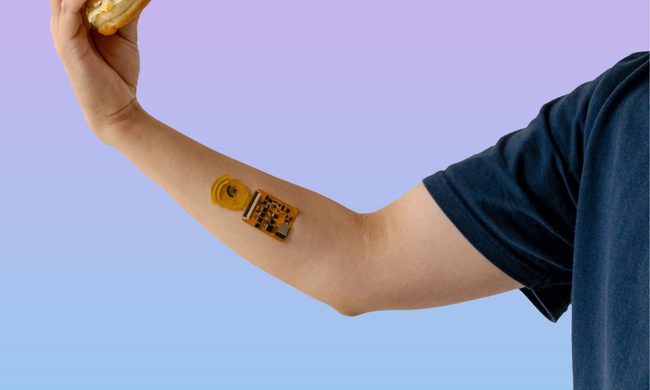
Think about the last time you actually had your cholesterol checked. If you are like most people, it has probably been years since it usually means scheduling a lab visit and getting your blood drawn. Caltech researchers just built something that could change that entirely — a small stick-on patch that reads your cholesterol and triglyceride levels continuously, using sweat instead of blood.
How the sweat patch actually reads your cholesterol
Chinese startup claims its brain implant takes just 10 minutes to place, no skull surgery required
StairMed Technology's vein-based BCI could beat Neuralink's roughly two-hour surgery on speed, but the device still hasn't undergone human trials.

Brain implants, like the ones made by Elon Musk's Neuralink, typically involve open-skull surgery. But a Chinese startup says it can skip that step entirely, threading its device into the brain through a vein in a procedure that reportedly takes as little as ten minutes. According to the South China Morning Post, Shanghai-based StairMed Technology is one of several companies pursuing this approach, as the country pushes to expand its homegrown brain-computer interface (BCI) industry.
Faster than Neuralink, on paper
This bizarre email flaw is leaking corporate secrets to anyone who buys the right domain
Security researchers discovered companies are accidentally sending sensitive emails to domains that outsiders can register.

You don't always need to hack into a company's systems to get its secrets. Sometimes, the company will simply email them to you. A new report by WIRED's Matt Burgess has uncovered a bizarre email security problem in which companies are inadvertently sending sensitive information to domains that can be registered and controlled by outsiders. Security researchers Cory Solovevich and Mike Sheward discovered that seemingly harmless addresses such as noreply and deleteduser can become unexpected gateways to corporate information when the domains behind them aren't properly controlled.
The "hack" is buying the right domain
























.jpg&h=630&w=1200&q=100&v=1a56ad72fe&c=1)