Collagen vs. Colostrum: Benefits, Differences & How to Choose
And can you take both?
 UsenB
UsenB

Registered Dietitian Nutritionist
Image by Alessio Bogani / Stocksy April 02, 2026 When it comes to supplements that support skin, hair, and joints, collagen and colostrum are often (and should be) on your radar. While these supplements may sport similar claims, they actually work in very different ways. Understanding how each one functions can help you decide which aligns with your goals. Here’s what you need to know about both of these popular supplements, and how to pick which one (or if both) is right for you.
Collagen
Collagen is the most abundant protein in the body, forming the structural framework of skin, bones, tendons, ligaments, and cartilage. In supplement form, it usually comes as hydrolyzed collagen peptides, which are easier for the body to absorb.*
Collagen supplements specifically provide the amino acids the body needs to build collagen protein internally, including glycine, proline, and hydroxyproline, which support connective tissue repair and maintenance.*
Collagen supplements have been extensively studied for their role in skin, joint, and muscle health (which are detailed in a new review of 100+ studies). These supplements help:
Collagen is not a complete protein (and it won’t replace your dietary protein needs or act like a whey protein powder). But it does offer a targeted way to give your body the specific amino acids it needs for skin, joints, and connective tissue (especially as your body’s natural collagen production declines with age).*
Colostrum
What colostrum does:
It’s important to note that the impact of bovine colostrum supplements on human health has not been as extensively studied in the same way that collagen has. While you may hear anecdotally that people have noticed, say, better hair health since starting colostrum (and it very well may!), it hasn’t been clinically studied in that capacity yet. How to get the most out of your colostrum supplement
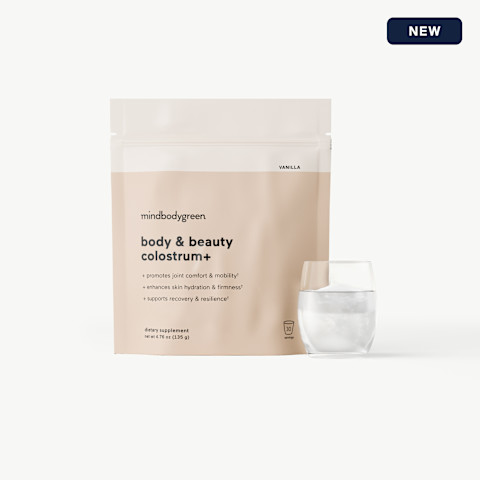
If you are looking for a colostrum supplement that also supports skin and joint health, opt for something like mindbodygreen’s body & beauty colostrum+. This powder combines 2 grams of ethically sourced bovine colostrum with 300 milligrams of Ovoderm®.
Which one should you take?
Some people even combine the two for an even more comprehensive approach..
Yes, you can even take body & beauty colostrum in the same routine as a collagen supplement. While these supplements have overlapping skin and joint benefits, they target those areas in different ways.
The takeaway
Collagen and colostrum support your body in very different ways. Collagen provides the amino acids your skin, joints, and connective tissues need to stay strong and resilient, while colostrum delivers a mix of bioactive compounds that support gut health, immunity, and overall recovery.*
Depending on your goals, you can choose one or even combine them to cover key parts of your overall health.
If you are pregnant, breastfeeding, or taking medications, consult with your doctor before starting a supplement routine. It is always optimal to consult with a health care provider when considering what supplements are right for you.