
Dhyana Mudra: Meaning, How to Do It, Benefits & Meditation Guide
Dhyana Mudra is a simple hand gesture used in meditation to bring the mind into a calm and steady state. It is commonly practised in yoga to support focus, awareness, and inner stillness. It is performed by placing the...
 UsenB
UsenB
>>Download Yoga Mudras Free PDF!
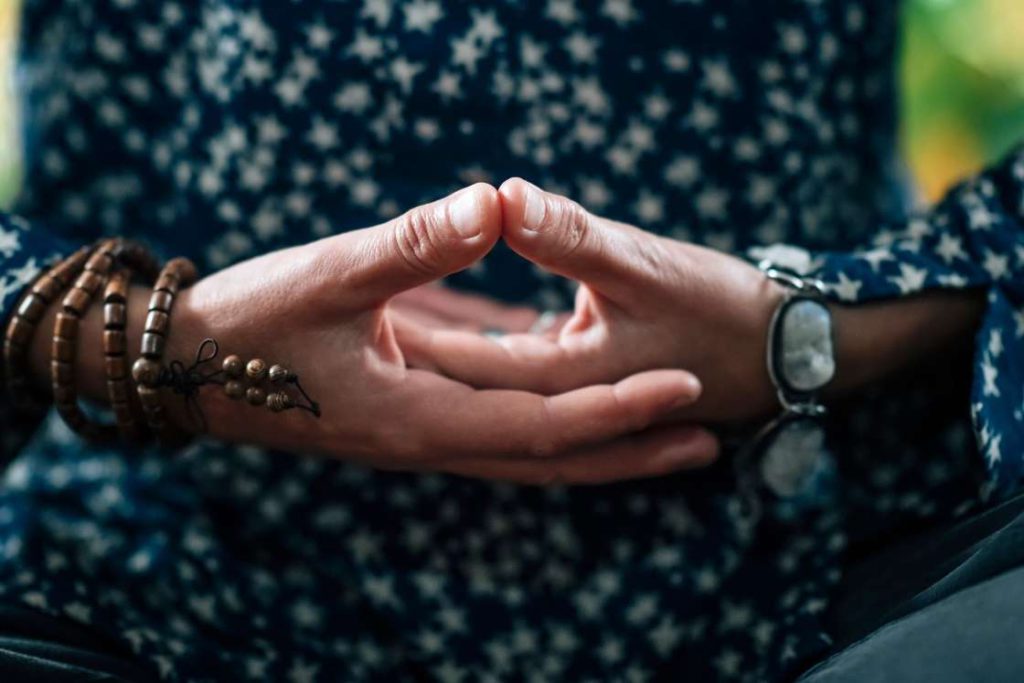 Image Source: Canva
Dhyana Mudra is a simple hand gesture used in meditation to bring the mind into a calm and steady state. It is commonly practised in yoga to support focus, awareness, and inner stillness.
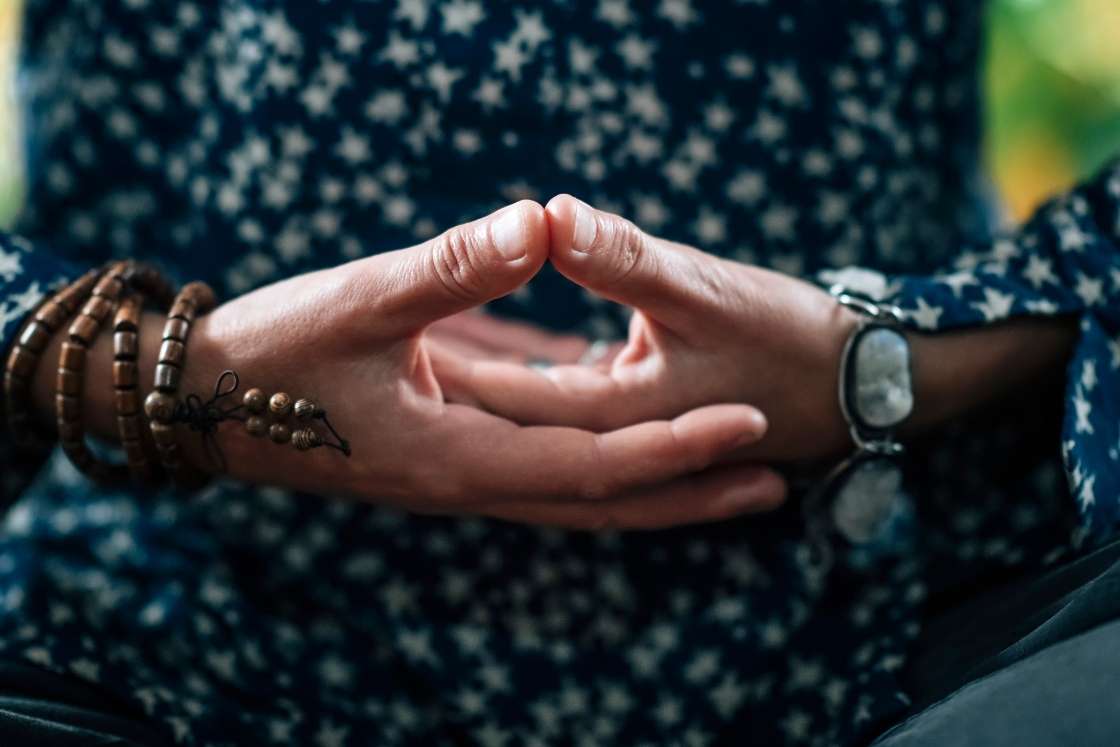
It is performed by placing the right hand over the left hand, with the tips of both thumbs gently touching to form a subtle triangular shape.
This hand position helps improve concentration and balances the dual nature of the mind, as all five elements (Panch Tatva) are believed to come together in this gesture.
In yogic philosophy, Dhyana refers to a continuous flow of awareness without distraction:
Tatra pratyaya-ikatānatā dhyānam
When there is an uninterrupted flow of thoughts and awareness, the Dhyana (meditation) arises.
~ Yoga Sutra of Patanjali [Chapter 3. Verse 2]
Meaning
The word Dhyana comes from two Sanskrit roots: Dhi (mind or awareness) and Yana (path or process). Together, Dhyana means the practice of focused awareness or meditation.
In yoga philosophy, Dhyana is one of the eight limbs described by Patanjali. It refers to a state where the mind flows continuously in one direction without distraction.
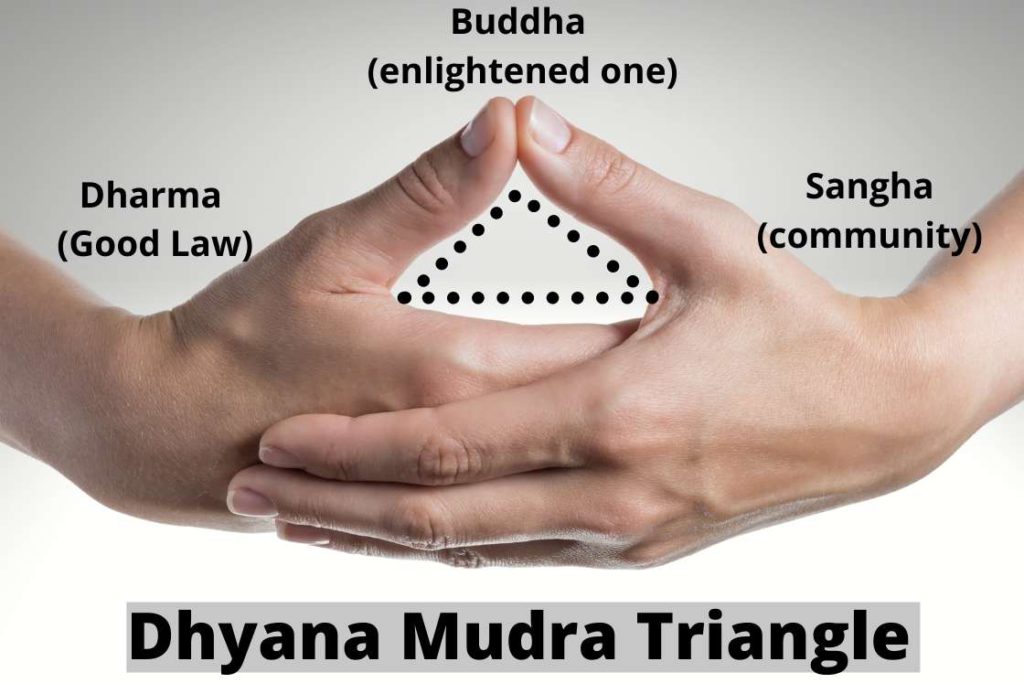
Dhyana Mudra represents this meditative state through the hands. The gentle joining of the thumbs creates a triangular shape, symbolising balance, stability, and inner awareness.
It is often compared with Gyan Mudra, which is also used in meditation. While both support concentration, Dhyana Mudra is more commonly associated with deeper stillness and sustained awareness.
In Buddhist tradition, this mudra is seen in the meditation posture of Gautama Buddha during his enlightenment under the Bodhi tree. However, its roots go back even earlier in yogic practices, where it was used to deepen meditation and awareness.
Symbolic Representation
 dhyana mudra representation. Image Source: Canva
In the Buddist aspect, the triangle formed by joining thumb tips in Dhyana Mudra represents the three jewels of Buddhism: Buddha, Sangha (community), and dharma (Good law).
Besides, the right hand signifies knowledge, wisdom, and awareness and the left-hand represents the fantasy of existence in this world. When the right hand is placed over the left hand in Dhyana Mudra, it represents the dominance of knowledge and awareness over the illusions created by the world.
It also indicates the balance of dualities (solar and lunar energy, hot and cold, masculine and feminine energies) in the body. The whole gesture signifies the balance of all the elements and soul.
How to Do Dhyana Mudra (Steps)
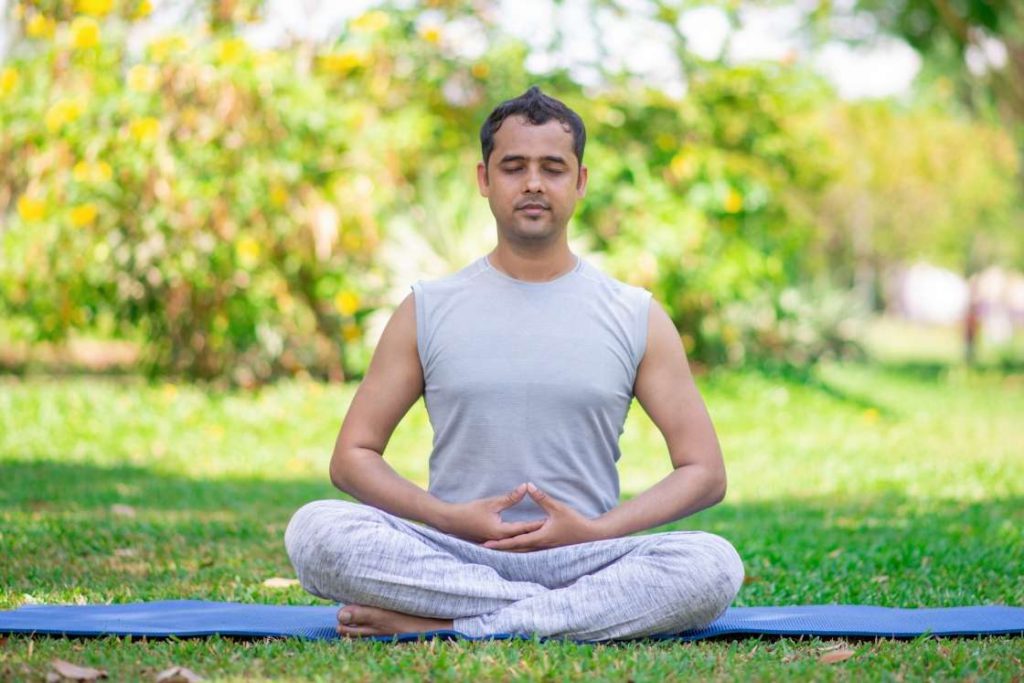 Image Source: Canva
Sit in a comfortable yoga pose such as Sukhasana or Padmasana. Make sure to keep your spine straight.
Rest your left hand on the lap, palm facing upwards.
Now, place the back of your right hand over the left-hand keeping fingers aligned to each other and stretched fully.
Then, touch the tip of the thumbs of both hands together. This will form a triangle like structure with your hands and thumb.
Now, gently close your eyes and take deep and slow breaths.
Hold this hand position unmoved for at least 15 minutes. Once you are done, open your eyes slowly and then release the mudra smoothly.
Image Source: Canva
Sit in a comfortable yoga pose such as Sukhasana or Padmasana. Make sure to keep your spine straight.
Rest your left hand on the lap, palm facing upwards.
Now, place the back of your right hand over the left-hand keeping fingers aligned to each other and stretched fully.
Then, touch the tip of the thumbs of both hands together. This will form a triangle like structure with your hands and thumb.
Now, gently close your eyes and take deep and slow breaths.
Hold this hand position unmoved for at least 15 minutes. Once you are done, open your eyes slowly and then release the mudra smoothly.
Variation
Dhyana mudra can be performed with a little variation. In this variation, the sitting posture is the same as above, but the position of the hand is slightly different.
Curl the index finger to touch the tip of the thumb. It will make a circle like Gyan Mudra’s hands, do this with both hands simultaneously. Now, keeping the palms upwards, put left hand on the lap and right-hand palm over left hand’s palm (three fingers aligning to each other).This is the alternate method of finger arrangement. The rest of the process remains the same as above.
Additional Tips
While holding hands in Dhyan Mudra, one can Chant OM for better concentration. This will take awareness to a deeper level. It is best to perform this mudra in conjunction with the pranayama. This will increase the quality of meditation.It is always preferred to perform this mudra in the morning time, with a fresh mind. However, If you face any difficulty performing it in the morning, you can perform it at any other hour of the day.
Try to perform Dhyana Mudra at least 45 minutes a day. If you feel it difficult to do in a single sitting, you can perform it 3 times a day (10-15 minutes each session).
Benefits of Dhyana Mudra
As the name suggests, Dhyana mudra is specially designed to deepen the levels of meditation. Consequently, it is very helpful in the spiritual journey. While practicing this mudra, the left and right parts of the body, as well as the brain, are active. As a result, the practice of Dhyana Mudra brings balance between the left and right regions of the brain, as well as, the body. This mudra brings calmness and relaxation to the mind. Thus, it reduces negative emotions such as anger, anxiety, depression, stress, etc. Moreover, this mudra stimulates the Ida and Pingla Nadis (astral channel) of the body. This makes you attentive and focused. When one practices Dhyana Mudra regularly, it keeps him/her away from all the physical and mental illness.Conclusion
Dhyana Mudra reminds us that meditation does not always need effort, but steadiness. This simple hand gesture supports inner stillness, balance, and awareness.
Practised regularly, it can gently guide the mind toward clarity and a more peaceful state of being.




























.jpg&h=630&w=1200&q=100&v=c0f97a310e&c=1)