Email List Hygiene for Agencies: What to Do and How Often
Email list hygiene is the ongoing process of keeping a subscriber list accurate, permissioned, and engaged. That means removing invalid addresses, acting on bounces and spam complaints, and removing contacts who have been inactive for a long time. For...
 Konoly
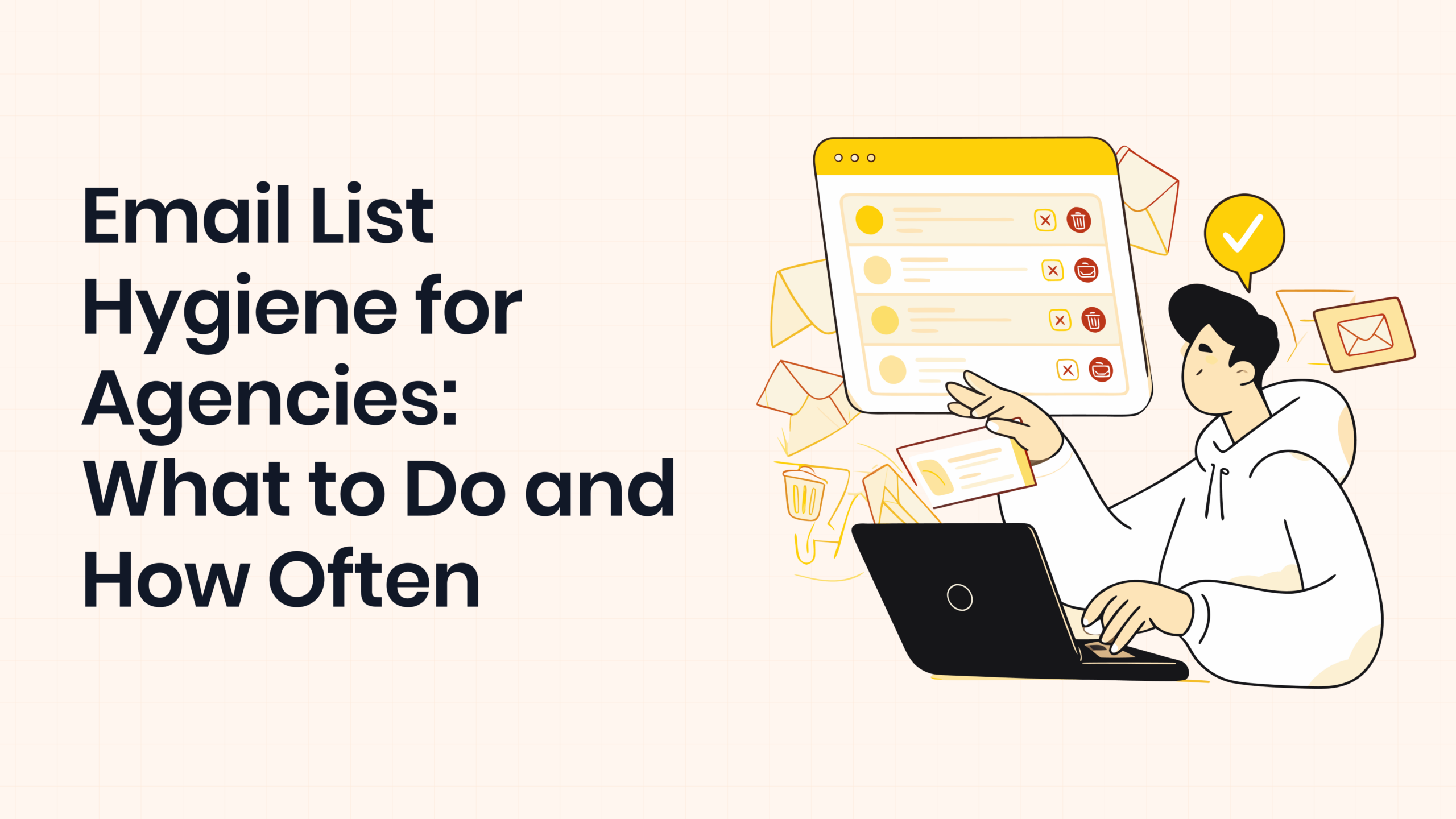
Email list hygiene is the ongoing process of keeping a subscriber list accurate, permissioned, and engaged. That means removing invalid addresses, acting on bounces and spam complaints, and removing contacts who have been inactive for a long time.
For agencies, there’s a second layer to it. It also means making sure one client’s messy list doesn’t quietly damage another client’s sending reputation.
If you run email campaigns for more than one brand, you already know this isn’t a “clean it once and forget it” job. Every new client import carries some risk. Shared sending infrastructure can create problems across accounts. And when a client asks why campaign performance has dropped, the answer may be hiding in a list nobody has reviewed in months.
This guide explains what list hygiene covers, why it’s harder for agencies than for a single in-house team, and exactly what to do and how often to do it.
What Is Email List Hygiene?
Most articles reduce list hygiene to remove bad emails. That’s part of it, but there’s more to it. A better way to understand email list hygiene is through five connected areas:
Acquisition hygiene looks at how an address entered your system in the first place. Was it a form fill, an event scan, a purchase, or a sales upload? The source can tell you a lot about the quality and risk of that contact.Address hygiene asks whether the mailbox is technically real. Does it pass syntax and domain checks? Is it a duplicate? I Is it a disposable or role-based address that may not belong in a marketing list?
Permission hygiene asks whether the person is still allowed to receive this message. Did they unsubscribe somewhere you haven’t synced yet? Did they previously mark one of your emails as spam?
Engagement hygiene looks at whether a contact is still showing signs of interest.A contact who hasn’t opened, clicked, or logged into a product in six months is telling you something.
Infrastructure hygiene asks whether one sender’s behavior could affect another sender using the same setup. This is the layer most single-brand guides skip entirely, and it’s the one agencies can’t afford to.
You’ll also see terms such as list scrubbing, data hygiene, or database hygiene used in similar contexts. For agencies, however, infrastructure deserves extra attention.
Managing several clients across shared systems creates risks that an in-house team working with a single brand may not face.
Why This Is Harder for Agencies Than for a Single Brand
According to Validity’s benchmark data, global inbox placement was around 86% in 2023, dropped to 83.5% in 2024, and climbed back to roughly 87.2% in 2025. Even in 2025, about one in eight legitimate emails still didn’t reach the inbox.
The numbers are lower in industries many agencies work with. Software senders averaged 80.9% inbox placement in 2024, while business services averaged 76.7%. Both were below the global average.
Mailbox provider requirements add another challenge. Gmail and Yahoo require bulk senders to authenticate their emails, support one-click unsubscribe for marketing messages, and keep spam complaint rates below 0.3%. Microsoft introduced similar authentication requirements for high-volume Outlook.com senders in 2025. For agencies managing multiple client domains, each client’s sender reputation and compliance need to be monitored separately.
Then there’s the risk of shared infrastructure. A bad client import, bot-filled signup form, or aggressive campaign can affect other clients if they share sending IPs, tracking domains, or other parts of the sending setup. This is why infrastructure hygiene needs more attention when you’re managing email for several brands.
Email List Hygiene Best Practices
These list hygiene best practices apply whether you’re managing one list or fifty. For agencies, the difference is that these practices need to stay consistent across every client account and system.
Clean Up How Addresses Get In
Track the source of every contact: form fill, event scan, purchase, sales upload, partner list, or CRM migration. “Client provided” isn’t enough. Without knowing where the contacts came from, it’s harder to assess the quality of the data.
For higher-risk sources such as giveaways, gated content, or affiliate traffic, confirmed opt-in can help verify that the person owns the address and wants to hear from you.
Public forms also need bot protection, rate limiting, and duplicate detection. These checks help stop fake or low-quality addresses from entering the list in the first place. Email validation at signup can add another check before questionable addresses reach your database.
Verify Before You Import, Not After You Get Flagged
Verification should be risk-based. There’s little reason to verify an active, healthy list every month. Instead, verify new external imports, dormant lists, data from events or partners, or sources showing an unusual increase in bounces.
Verification can tell you whether an email address is technically valid. It can’t tell you whether the person wants to receive your emails. A verified address isn’t proof of permission, so verification shouldn’t replace proper consent and source tracking.
Suppress Immediately, Not on a Schedule
Hard bounces, spam complaints, and unsubscribes should be suppressed as soon as they happen. Yahoo expects promotional opt-outs to be honored within two days. CAN-SPAM allows ten business days, but following the shorter window is safer.
Keep a minimal suppression record after someone unsubscribes instead of deleting it completely. Otherwise, a future CRM import could add the contact back to your marketing list.
For agencies, suppression also needs to sync across every system that holds the client’s data, including the ESP, CRM, and CDP. If an unsubscribe updates in only one system, that contact could still receive emails from another.
Manage Engagement Before It Hurts Sender Reputation
Segment contacts based on their engagement: active, cooling, eligible for re-engagement, and suppressed. Move cooling contacts to a lower sending frequency before suppressing them completely. You can also run a short re-engagement sequence before suppressing contacts who remain inactive.
Don’t rely on opens alone, especially for B2B or SaaS clients. Apple’s Mail Privacy Protection can record opens without someone actually reading the email. Corporate security tools can also scan links or load content automatically. Look at clicks, replies, conversions, and product activity such as logins or trial usage to get a clearer picture of engagement.
What to Do and How Often
There’s no universal rule for how often you should clean an email list. A fixed schedule such as every 90 days doesn’t account for when problems actually happen.
List hygiene should respond to events, data sources, and subscriber behavior, with regular audits to catch anything missed along the way.
Here’s a practical schedule agencies can follow:

There’s no single date when you need to “clean the whole list.” The goal is to prevent list quality issues from damaging sender reputation. An inactive contact can remain in the CRM for sales or customer service while being suppressed from promotional emails. These are separate decisions.
Managing List Hygiene Across Multiple Clients
This is where list hygiene becomes more complex for agencies than for a single brand.
Separate client domains don’t automatically share reputation, but they can share risk through IP pools, tracking domains, DKIM identities, or an ESP account used across multiple clients. Sender reputation and shared infrastructure aren’t the same thing, so agencies need to monitor both.
A practical setup can include:
A separate subaccount for each client Client-specific authenticated sending and tracking domains Separate transactional and promotional streams A way to pause one client’s sending without affecting othersThis should start during client onboarding. Before the first major send, review historical bounce and spam complaint rates, past ESP suspensions, existing suppression lists, and how recently the contacts have been emailed. If a client can’t clearly explain where the list came from, start with smaller, monitored sends rather than sending to the full list immediately.
The agency should also have the authority to pause sending when authentication fails, bounce rates spike after a new import, or a client wants to re-add someone who has unsubscribed. Include this authority in the client agreement so account managers can act before the issue affects sender reputation.
How to Choose Email List Hygiene Software for Your Agency
Most email list hygiene software serves two main purposes. Verification tools identify invalid addresses and other potential issues before you send. Engagement and suppression tools, often built into your ESP, handle bounces, spam complaints, unsubscribes, and re-engagement.
For agencies, the right tool also needs to work across multiple client accounts. Before choosing one, consider:
Does it clearly distinguish between valid, invalid, and uncertain addresses? Can you keep each client’s lists and data separate? Does it integrate with the ESPs and CRMs you already use? Can it handle bulk verification across large client lists? Does the pricing make sense as your client volume grows?The right option also depends on what you already have in your email stack. Some agencies only need a verification tool, while others may prefer to manage list health and campaigns in one place.
A few email list hygiene software options to consider include:
VitaMail: Combines email verification with list management, campaign creation, sending, and deliverability tools, making it suitable for agencies that want to manage more of the email process in one platform. ZeroBounce: Offers email verification and list cleaning alongside additional deliverability tools. NeverBounce: Focuses primarily on email verification and works well for teams that already have an ESP or campaign platform. Validity: Provides broader deliverability monitoring and inbox placement tools for teams managing more complex email programs.No tool replaces a consistent email list hygiene process. The software should make that process easier to manage across multiple clients, not become the process itself.
Email List Hygiene Services: Build In-House or Bring in Outside Help
Whether you manage list hygiene in-house or use list hygiene services depends on your agency’s resources, client volume, and deliverability needs.
An in-house approach makes sense when someone on your team owns deliverability and you manage enough client accounts to justify the tools and processes involved.
Outside support can be useful when:
Recovering from an ESP suspension or blocklist issue Onboarding a client with unclear data sources or no suppression history Managing more client accounts than your team can monitor consistently Investigating ongoing deliverability problems that you can’t identify internallyA good service should go beyond a one-time verification check. Depending on the scope, it may help with suppression management, engagement analysis, sender reputation, and sending infrastructure. Before choosing a provider, make sure its services match the problem you’re trying to solve.
Common Email List Hygiene Mistakes
Most list hygiene problems don’t come from one major mistake. They usually build up through small decisions that seem harmless at the time, especially when agencies are managing multiple client accounts.
Keeping a large list just for the numbers. List size means little if many contacts bounce, complain, or haven’t engaged in a long time. Keeping these contacts on the promotional list can hurt sender reputation without adding much value.
Buying email lists. Purchased lists often come with unclear consent and data quality. They can also contain outdated addresses or spam traps, increasing the risk of bounces, complaints, and deliverability problems.
Relying on verification alone. Verification can tell you whether an email address is technically valid. It doesn’t confirm that the person gave permission to receive your marketing emails.
Assuming every agency client shares the same reputation. Separate client domains don’t automatically share sender reputation. However, clients can still share risk through IP pools, tracking domains, or other sending infrastructure. Keeping client infrastructure separate where appropriate helps contain those risks.
Final Thoughts
Email list hygiene isn’t a task you finish and cross off. It should be part of how an agency manages client accounts every day.
Set clear rules for verification, suppression, engagement reviews, and client onboarding. Make sure your team can pause sending when something goes wrong. With those processes in place, you can catch list quality issues before they turn into larger deliverability problems.
Frequently Asked Questions
What are the best tools for email list hygiene?
The best tool depends on what your agency needs. VitaMail combines email verification with list management, campaign creation, sending, and deliverability tools. ZeroBounce and NeverBounce are options for standalone email verification, while Validity offers broader deliverability monitoring and inbox placement tools.
How often should agencies clean their email lists?
There’s no single schedule that works for every client. Hard bounces, spam complaints, and unsubscribes should be handled immediately. Review engagement monthly and run a broader data, consent, and infrastructure audit quarterly. New client imports and dormant lists should also be checked before sending.
Is buying an email list a good idea?
Generally, no. Purchased lists often have unclear consent and may contain outdated addresses or spam traps. This increases the risk of bounces, spam complaints, and deliverability problems. Legal requirements also vary depending on the jurisdiction and how the data was collected.
No. Separate sending domains don’t automatically share the same reputation. However, clients can share risk through IP pools, tracking domains, and other sending infrastructure. Agencies should separate client infrastructure where appropriate to limit that risk.
What is email scrubbing?
Email scrubbing generally refers to cleaning a contact list by identifying and removing or suppressing invalid, bounced, duplicate, or inactive addresses. It’s one part of the broader email list hygiene process.
Are email addresses valuable?
Their value depends on their quality. A permissioned, deliverable, and engaged contact is more useful than a large number of inactive or invalid addresses. List size alone doesn’t make an email database valuable.









-4757.jpg)