From the Academy: Unpacking the Abhidharma
Buddhism’s ultimate guide to reality and mind The post From the Academy: Unpacking the Abhidharma appeared first on Tricycle: The Buddhist Review.
 Lynk
Lynk
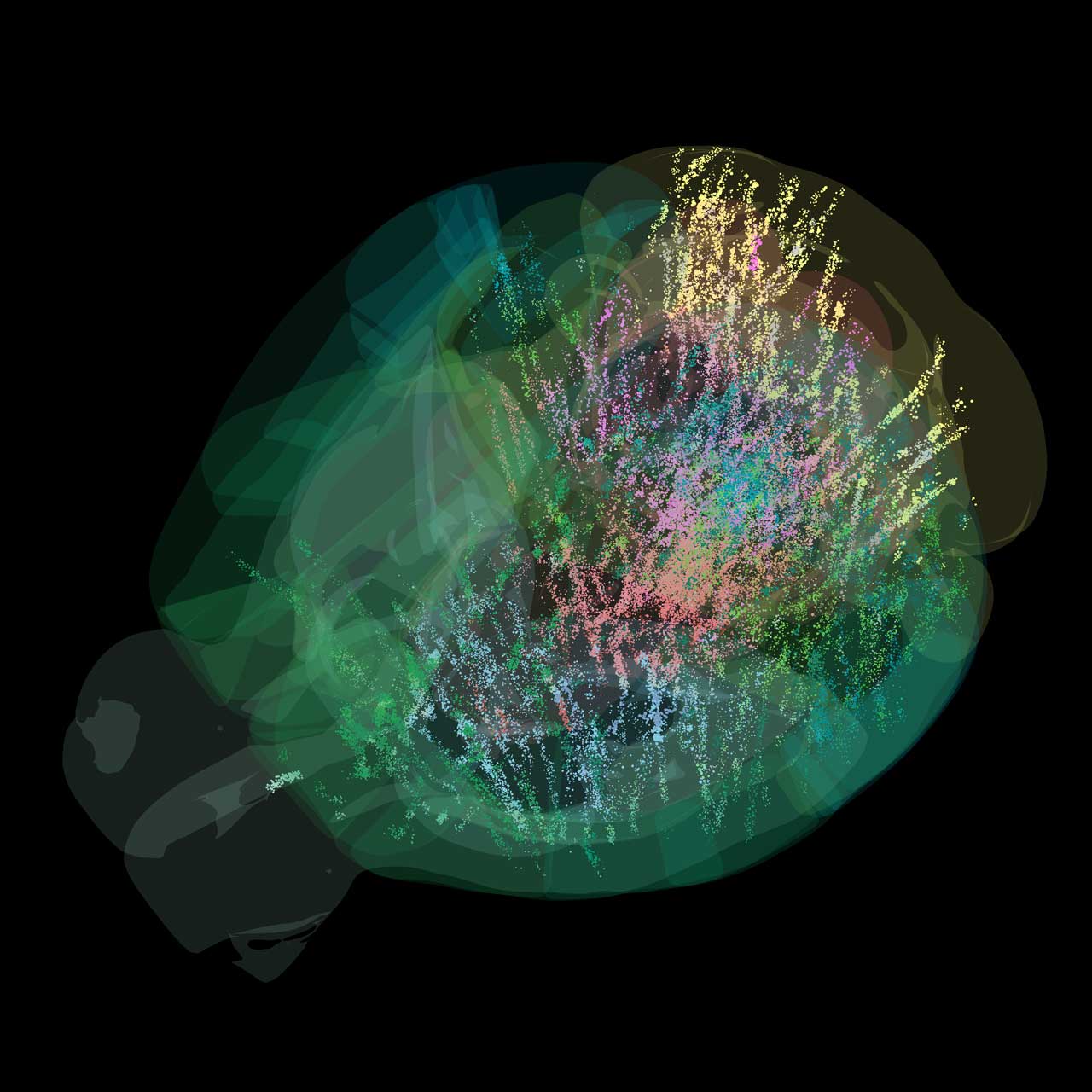
Buddhism’s ultimate guide to reality and mind
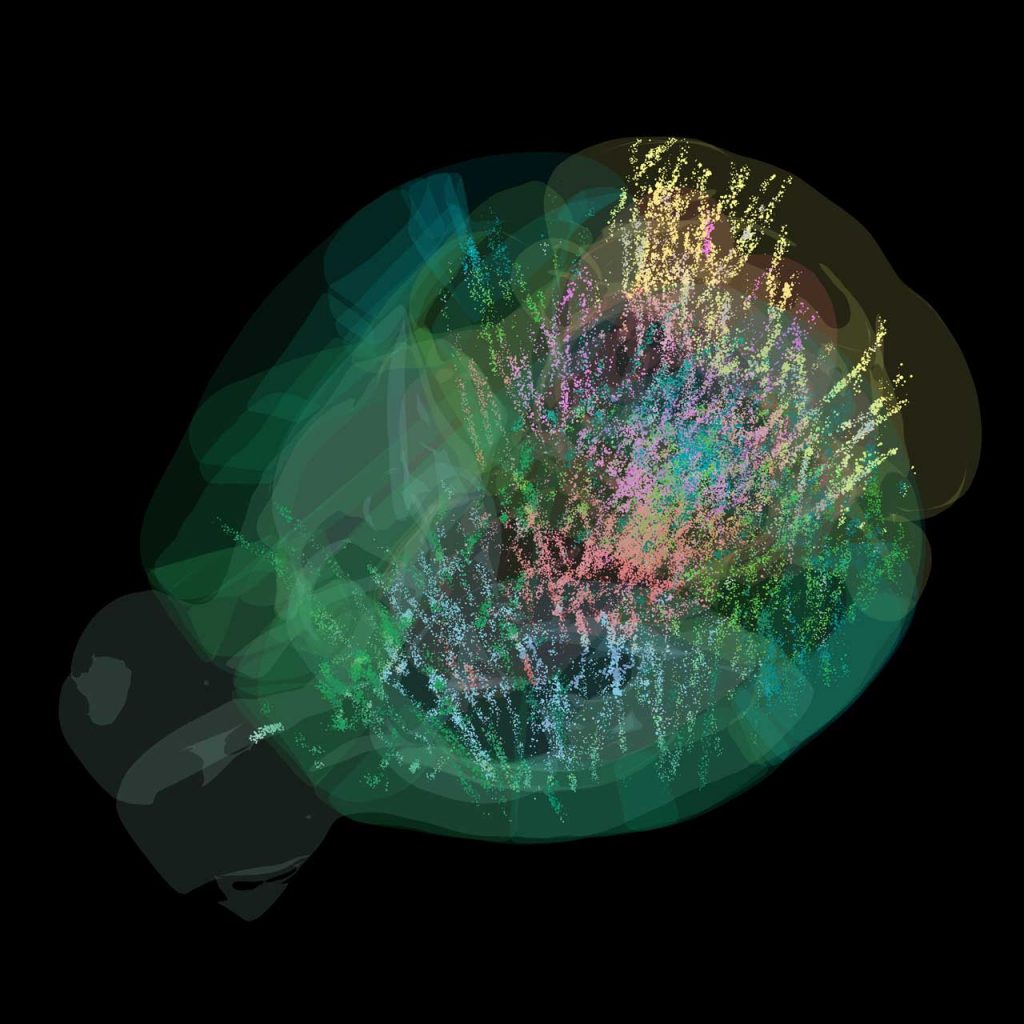 A new brain map of a mouse that shows neurons linearly scaled according to their firing rate, 2025. | Dan Birman / International Brain Laboratory
From the Academy is a monthly email newsletter for Premium subscribers, developed in collaboration with Tricycle’s resident Ho Family Foundation Buddhism Public Scholar. Each issue offers a scholarly take on a key topic in Buddhist thought and practice, with further readings and videos for exploration. Select issues are published here for the wider Tricycle community.
If you’ve spent any time with Tricycle, you’ve encountered the abhidharma cited in articles about meditation, consciousness, and Buddhist psychology, but the texts themselves probably remain oddly unfamiliar. The abhidharma (Skt.; Pali: abhidhamma)—the “higher” or “further” dharma—is one of the three divisions of the Buddhist canon, alongside the sutras (discourses) and the vinaya (monastic codes). Dating from about the 3rd century BCE onward, abhidharma texts organize the Buddha’s teachings into comprehensive lists and offer highly technical and philosophical explanations of causality and perception as outlined in the sutras.
A variety of abhidharma views are preserved in texts such as the Pali canon’s Dhammasangaṇi and the famous scholar-monk Vasubandhu’s commentary, the Abhidharmakosakarika, a critical summary and reinterpretation of earlier doctrines. Abhidharma commentaries are often abstract and dense, yet they provide a valuable theoretical framework for meditation practice.
According to the sutras, the Buddha skillfully tailored his teachings to specific audiences. Although sutras always begin with Thus have I heard, their content varies widely and often appears inconsistent. For later Buddhists, questions emerged: How should the abstract ideas found in the sutras be applied to real-world experience? What are the best ways of contemplating impermanence or nonself? What has definitive or ultimate meaning, and what is provisional? Such questions persistently challenged scholars and monastics to clarify the Buddha’s intentions.
In their commentaries on the sutras, early abhidharma scholars created new rubrics for organizing the topics addressed by the Buddha. List-making was a popular strategy, and anyone familiar with the abhidharma knows that there are exhaustive lists of four of this, seven of that, and twelve of those. These oral teachings were eventually compiled and written down, heralding a new era of Buddhist scholasticism and polemics. The rigorous debates surrounding the abhidharma laid the foundation for the ongoing commentarial tradition.
 Burmese-Pali manuscript of Mahaniddesa, an abhidharma-style commentary text | Image courtesy Welcome Collection / Attribution 4.0 International
What’s in a Dharma?
Of particular interest to abhidharma scholars was further clarifying the Buddha’s teachings on the nature of reality. They understood compounded items (like tables and chairs) as collections of smaller constituent parts, and they concluded that the only things that ultimately exist are dharmas—the physical and mental “factors” or “phenomena” that underlie everyday objects and cognition. Accordingly, they described each moment of consciousness as the rapid coarising of seven universal mental factors (sensory contact, sensation, perception, volition, concentration, vitality, and attention). Different systems might agree on the number of mental dharmas (fifty-two) and material elements (twenty-eight) but disagree on other aspects. Thus, enumerating the dharmas became an occasion to make more lists! Competing theories about the nature of dharmas—particularly their temporal duration—are difficult to follow without extensive knowledge of abhidharma theory.
A Living Tradition of Study and Practice
Abhidharma literature continues to shape modern Buddhism. Its analysis of cognitive processes and the causal relationships among dharmas informs contemporary mindfulness practices, and Buddhist and non-Buddhist teachers draw on such abhidharma lists as the fifty-two mental factors (which includes both beneficial and detrimental states) to understand psychological patterns, emotions, and ethical choices. For practitioners, the abhidharma is a reminder that careful examination of mind and reality has always been a cornerstone of the Buddhist path—study and meditation are not as separate as they may seem.
Additional Resources
Noa Ronkin, “Abhidharma,” in Stanford Encyclopedia of Philosophy, substantive update March 31, 2026. A free overview of abhidharma philosophy, covering dharma theory, momentariness, causation, and epistemology across the major schools. Beth Jacobs, The Original Buddhist Psychology: What the Abhidharma Tells Us about How We Think, Feel, and Experience Life, 2017. A clinical psychologist and Zen practitioner, Jacobs brings the insights of the abhidharma and contemporary consciousness studies into everyday experience. Read Tricycle’s interview with Beth Jacobs. Nyanaponika Thera, Abhidhamma Studies: Buddhist Explorations of Consciousness and Time, edited and introduction by Bhikkhu Bodhi, 1948/1998. A classic work by one of the 20th century’s most famous Theravada scholars that explores the abhidhamma as a living resource for philosophical inquiry and meditation practice. Steven Goodman, The Buddhist Psychology of Awakening: An In-Depth Guide to Abhidharma, 2020. Goodman offers a practical guide to the Indo-Tibetan system of abhidharma analysis of mental patterns and habitual tendencies, with exercises connecting them to practice.
Thank you for subscribing to Tricycle! As a nonprofit, we depend on readers like you to keep Buddhist teachings and practices widely available.
This article is only for Subscribers!
Subscribe now to read this article and get immediate access to everything else.
Already a subscriber? Log in.