
Interconnectedness and the Freedom of Not Blaming
A Colombian Zen monk invokes a Daoist parable in a teaching on the inherent emptiness of our conditioned ways of looking at life. The post Interconnectedness and the Freedom of Not Blaming appeared first on Tricycle: The Buddhist Review.
 JimMin
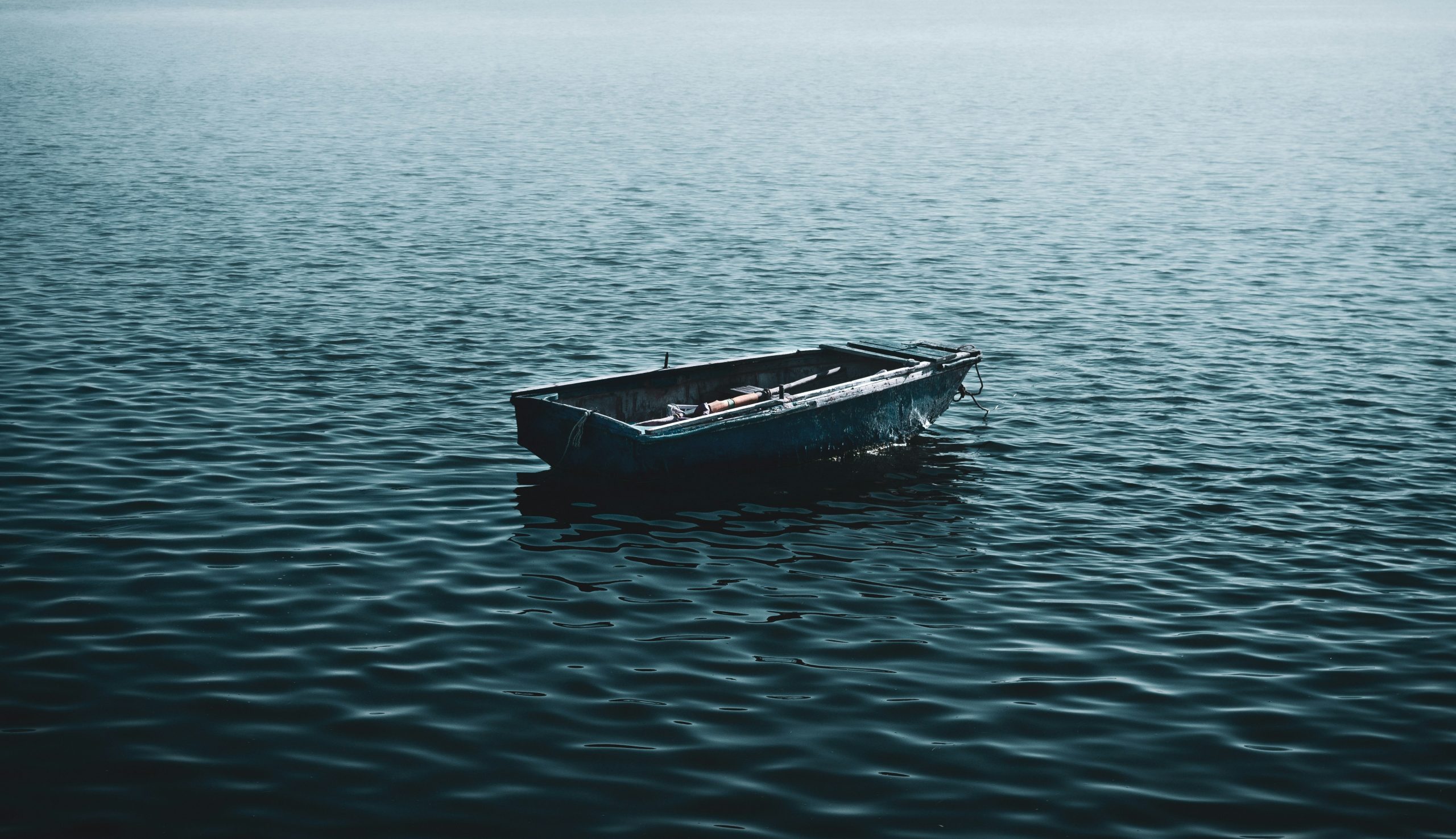
Let me tell a story inspired by the Chinese Daoist sage Zhuangzi.
Imagine you’re in a small boat on a calm ocean bay, simply enjoying yourself as you feel the cool breeze beneath the warm sun. Then, all of a sudden, you notice another boat approaching. It is clear from where you are that the driver is able to see you, so you relax, trusting that this person will easily avoid running into your boat. But as it approaches, it seems to have no intention of changing its course, and it’s coming directly at you. You begin jumping and screaming but to no effect. It keeps coming as if you weren’t there, leaving you no option but to jump into the water just before it hits your boat, which is left miraculously undamaged.
You stick your head out of the water, consumed by anger, and yell, “How can you be so stupid? Do you think the ocean belongs to you?! I hope you crash and sink a thousand times, jerk!”
But as you open your eyes, you realize that there was no one behind the wheel. It was a drifting boat, and you can’t help but feel a bit silly and laugh at the whole situation.*
This story may seem simple, yet it offers a surprisingly deep expression of interconnectedness and the emptiness of self.
When we look at the actions of other beings, it seems to us that they are independent agents acting from their own will and volition, completely separate selves existing on their own. But are they really?
A drifting boat exists and acts in accordance with the different causes and conditions of the environment: the tide, the waves, the breeze. These conditions affect its different mechanisms, which in turn produce movement. If we don’t realize that no one is at the wheel, especially in calm conditions, we can easily assume the existence of a driver and attribute every movement to him or her. And yet it is the interaction of many elements that is animating the boat.
We tend to look at the world in very simplistic ways, believing completely in our automatic perceptions without question. We’re profoundly shortsighted and have no idea that we are.
Another common example is the waves and the ocean. Can we tell where a wave ends and the ocean begins?
Not really, but we do come up with an artificial boundary, agree upon it, then forget that we made it up, and end up believing in a separation that wasn’t really there to begin with. If we take the view of division, it may look like the waves act independently from one another, but it doesn’t take much to realize that this is not the case. Upon closer examination, it’s obvious that there is an incredibly complex process taking place of which we’re aware only on the surface. By looking more deeply, we can see that the whole ocean is behind each wave, that each wave is the whole ocean.
When we interact with other humans, we’re also aware of only a minute fraction of what’s really going on. The actions and words that come out of them are dependent on innumerable factors that we can’t see: the culture they grew up in, the treatment they received from their parents, their access to education, even whether they had an argument with their spouse or skipped breakfast that morning! If we trace this interconnectedness all the way back, we eventually arrive at nothing less than the beginning of the universe itself—as extraordinary as that may seem. But the judgments we make tend to come from our own shortsighted perceptions and conditioned ways of looking at life.
The judgments we make tend to come from our own shortsighted perceptions and conditioned ways of looking at life.
Other humans are not just independently acting agents; they are like waves in the ocean that arise due to innumerable causes and conditions. They are expressions of interconnectedness, and therefore empty of any independent, separate self-nature.
Now, the purpose of this understanding is not to make our interactions impossibly complex, since we can never know all the factors that are at play. Rather, it is an invitation to let go of our automatic, conditioned responses, and open ourselves to the mystery, to what Zen calls “not knowing.”
The problem is that when we really open ourselves, we begin to experience the vastness and unfathomable nature of reality, and we often prefer to stick with our narrow judgments rather than abide in such vastness and mystery.
Our narrow judgments are very quick at placing others in small boxes. “Oh, this person is such a ________.” After a one-minute interaction, we have already decided that we completely “know” this person. But if we take the view of interconnectedness and emptiness of self, then the person is no longer just an isolated, easily defined entity. They are like a wave in the ocean, a unique expression of the interconnectedness of the entire universe manifesting right before our eyes.
And if we turn that view toward ourselves, we can realize that we, too, are unique expressions of that interconnectedness. Then the whole situation shifts, from isolated individuals bumping into each other like solid rocks, to waves flowing into each other, dancing together in the vast ocean of being.
I should say, though, that for our sense of separate self (sometimes referred to as the ego), there’s something very disappointing about this wisdom perspective: It robs the ego of the delicious, juicy feeling of . . . blaming. That comforting relief that arises when the ego believes it has finally found the definite cause of the problem, freeing itself from uncertainty and unhooking itself from any responsibility so that it can say, “It’s your fault!” Ahh . . . how good that feels.
I should also say that this is a completely natural human reaction. We learn it from everyone around us, and it satisfies, at least temporarily, our desire to move away from what feels uncomfortable and arrive at a quick solution. Yet it turns out that we’re paying a high price for it. Without realizing it, we’re trading an artificial comfort for the realization of our true nature.
When we blame—not just others but also ourselves—we’re taking the imprecise view of separation to be the truth. Just like in the boat story, we assume there’s a separate entity in charge when there isn’t one. If we’re going to blame someone, we have to blame the entire ocean; we have to blame the entire universe.
Needless to say, this view also threatens our ego in the opposite direction. Just as we can’t fully blame others, or even ourselves, we also can’t take full credit for our achievements. If we look deeply, we’ll see that they, too, are the result of the entire interconnected universe.
Just as we can’t fully blame others, or even ourselves, we also can’t take full credit for our achievements. If we look deeply, we’ll see that they, too, are the result of the entire interconnected universe.
The purpose of this view is not to disempower us or relieve us of any sense of responsibility, leaving everything to “the universe.” Even after realizing this absolute perspective, we still need to navigate the conventional world, populated by apparently separate beings. The difference is that now we see there’s much more to life than the view of division, and that we have access to the boundlessness of the universe right here and now. We can then let that view grow within us, supporting us in acting for the benefit of all beings, because we now know that their essence and ours is the same: waves of emptiness in the vast ocean of being.
Maybe there will come a time when this view is no longer limited to a small number of awakened individuals but instead becomes the dominant understanding of our society. Then we might treat those who do wrong with less punishment and more understanding, realizing that it is not entirely their fault. And those who are in positions of privilege might share more, realizing that everyone has contributed to it—an enlightened society based on the view of interconnectedness, filled with the natural wisdom and compassion that arise from it.
*This is a variation of the “Empty Boat” story by Zhuangzi. Burton Watson, The Complete Works of Zhuangzi, Columbia University Press, Chapter 20, “The Mountain Tree.”























.jpg&h=630&w=1200&q=100&v=1a56ad72fe&c=1)


