New Research on the Transformative Power of Thich Nhat Hanh’s Teachings
In a world facing multiple, intersecting crises, Thich Nhat Hanh’s vision offers a powerful invitation: to connect inner awareness with meaningful action.
 JimMin
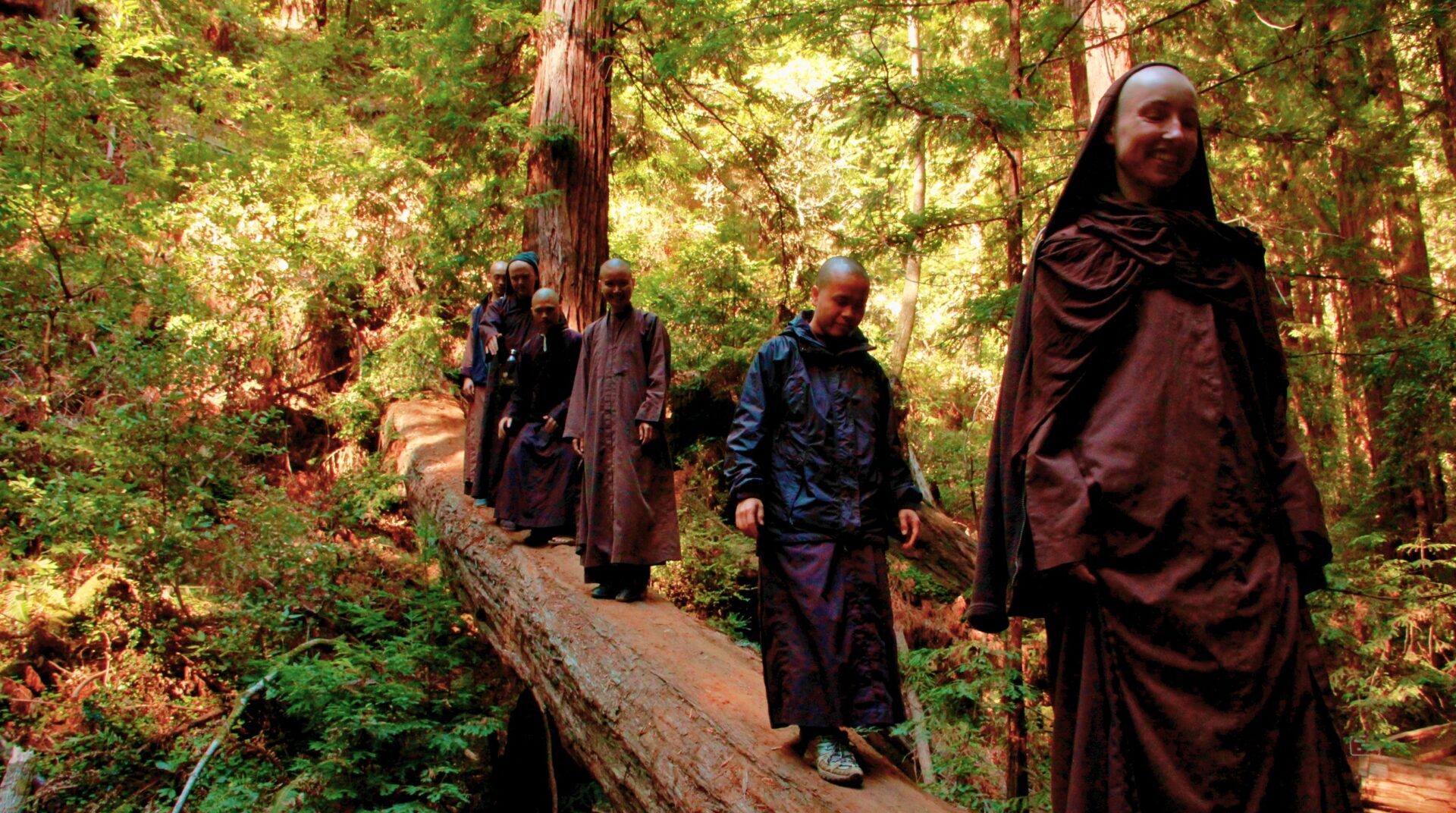
Meditation is not to escape from society, but to come back to ourselves and see what is going on. Once there is seeing, there must be acting. With mindfulness we know what to do and what not to do to help.
— Thich Nhat Hanh
This article and the research shared here are inspired by the Plum Village online course, Zen and the Art of Saving the Planet (ZASP) – you can join the next ZASP course cohort starting 18 October, 2026.
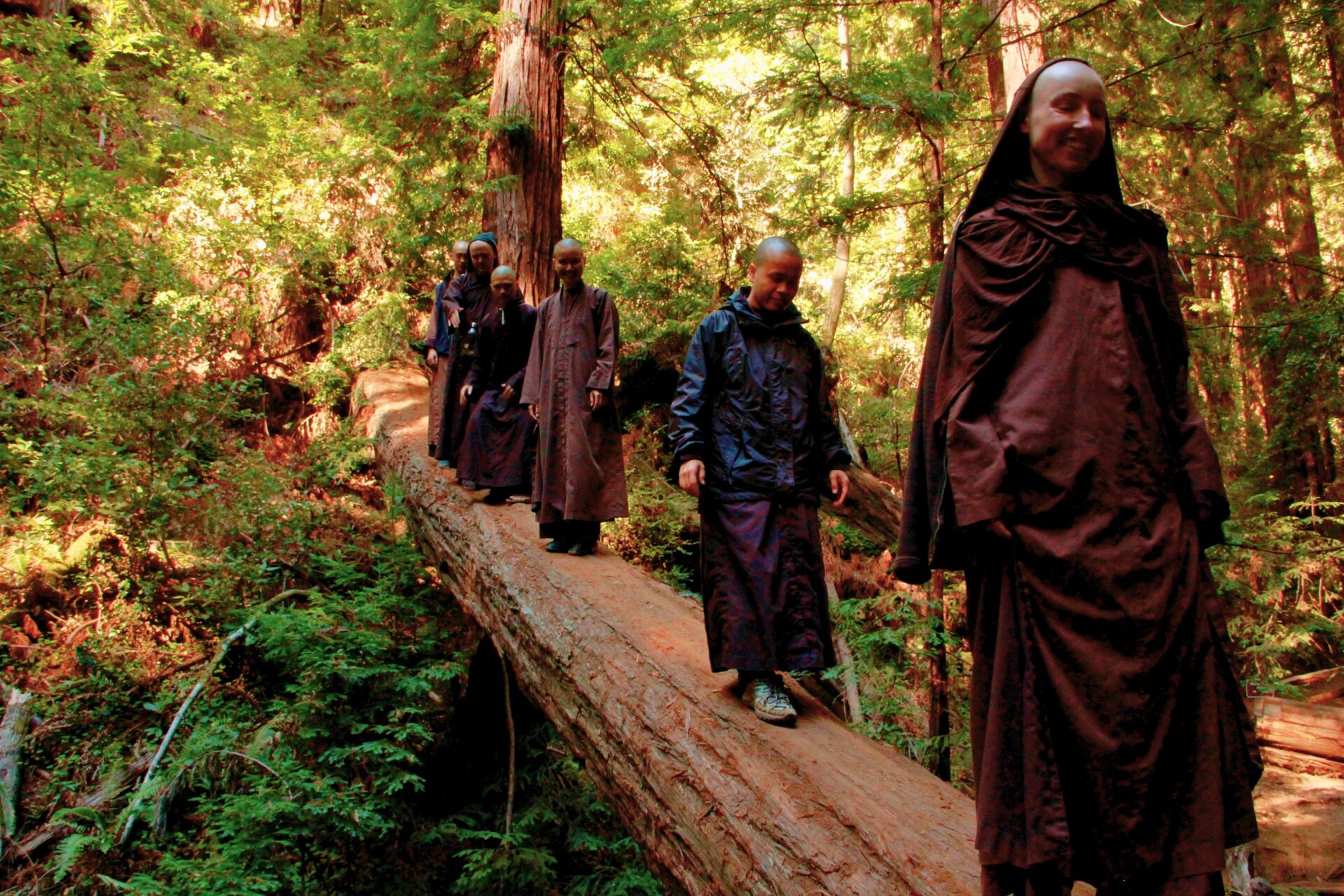 Connecting with Mother Earth in the Redwoods.
In a world facing multiple, intersecting crises, Thich Nhat Hanh’s vision offers a powerful invitation: to connect inner awareness with meaningful action. What happens when we bring greater mindfulness to the way we understand—and respond to—the challenges around us? And how might cultivating our inner capacities help us navigate the complexity of today’s world and contribute to wider social transformation?
A new peer-reviewed study by Professor Christine Wamsler explores these questions via the experiences of practitioners who engaged with Thich Nhat Hanh’s teachings through the Zen and the Art of Saving the Planet (ZASP) online course, based on his book of the same name. Her study, “The Seeds We Sow: From Polycrisis and -Isms to Interbeing and Societal Transformation,” was recently published in the Journal of Awareness-Based Systems Change (accessible here).
The article highlights the important role of Thay’s teachings in strengthening participants’ resilience, fostering sustained engagement, and supporting societal transformation by addressing the deeper drivers of today’s polycrisis. The findings are striking: around 60% of participants reported reduced climate anxiety and increased resilience, while 76% reported increased connection, hope, empowerment, and coping. In addition, approximately 85% described meaningful transformations in self-awareness, meaning-making, hope, agency, and engagement.
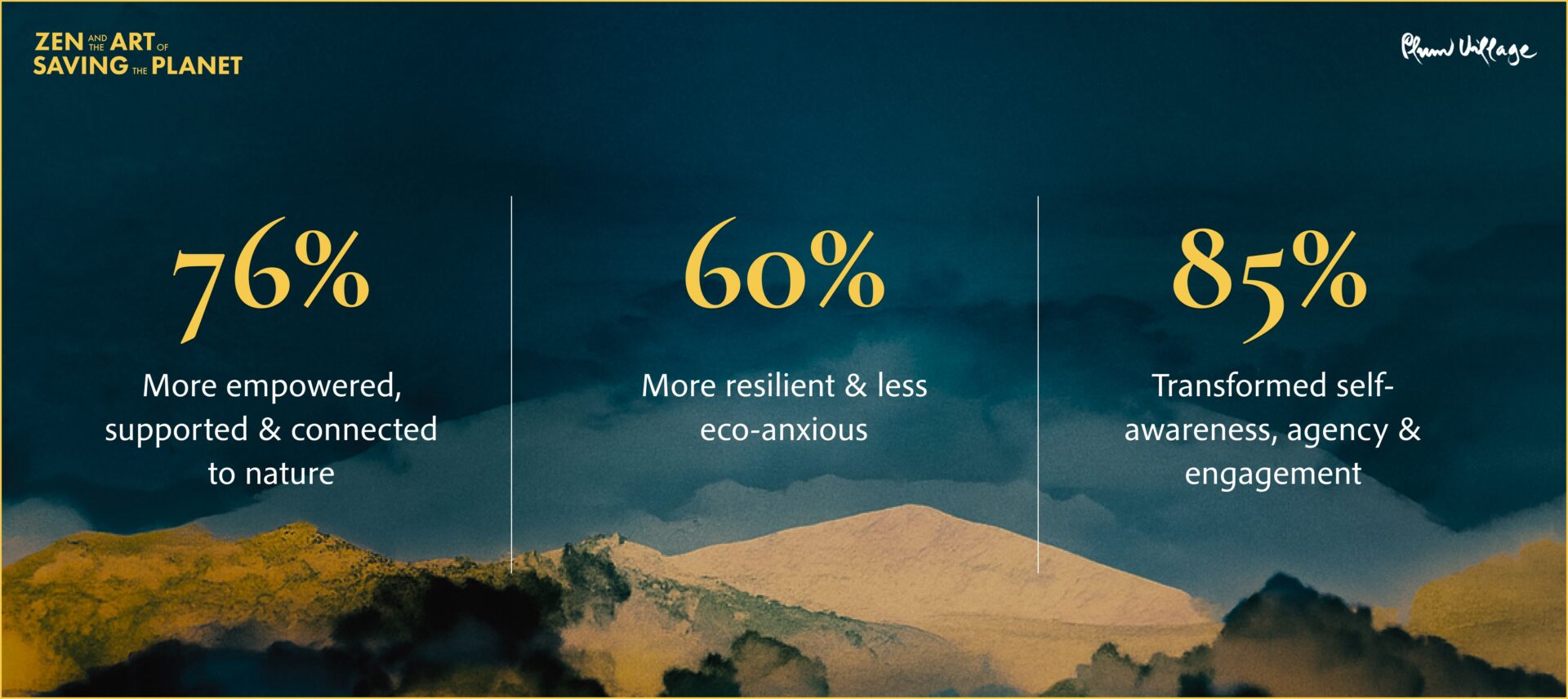
At a time when societies are increasingly under pressure, these findings offer an important guidepost for how Plum Village teachings and practices can contribute to wider societal change.
How do we make sense of today’s world?
The findings point to important changes in how those who have taken the ZASP course make sense of themselves and the world around them. Professor Wamsler’s research identifies five important shifts in participants’ meaning-making:
Reframing identity through interconnectedness and interbeingShifting towards relational values and worldviewsEmbracing suffering as transformative Reframing understandings of time, mortality and continuity Integrating contradiction and complexityParticipants reported for instance experiencing themselves as more than individual selves and described a deepened sense of unity with oneself, the Earth, and all beings. Several participants used phrases such as “being nature” or “more than human,” and reported powerful experiences of “coming back to their bodies.”
These findings show what many of us have experienced: that through sustained practice, we can find new ways of engaging with our inner worlds and making sense of our experiences—shaping, in turn, how we respond to the world around us. The way we make meaning shapes how we see the world—and, ultimately, how we act within it.
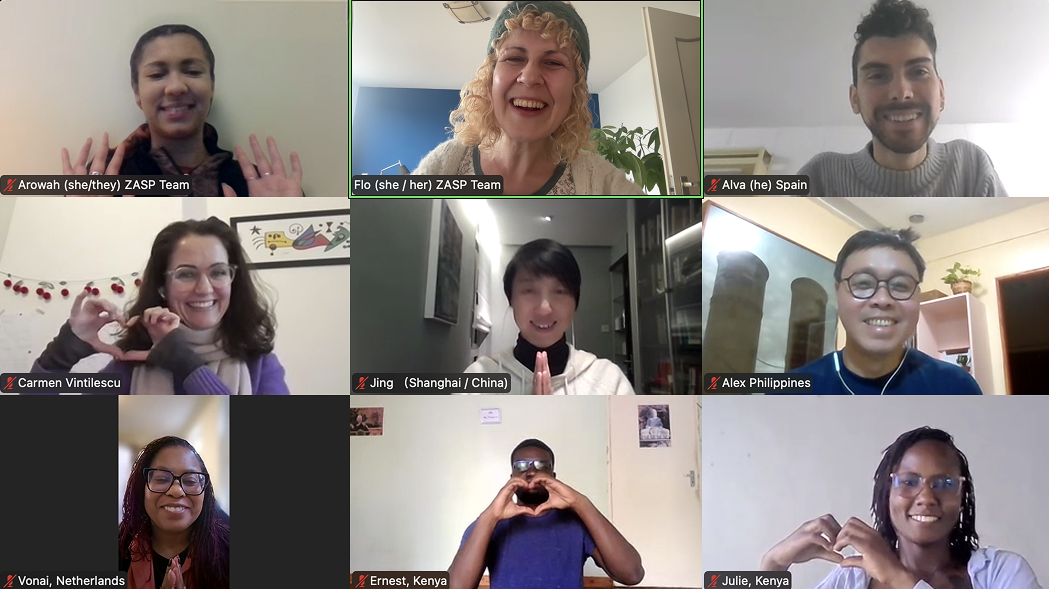 ZASP community builders in a recent cohort of the Zen and the Art of Saving the Planet online course.
Why is this research important for Plum Village?
We asked Brother Phap Linh to reflect on what these findings mean for Plum Village and its wider vision of inner and societal transformation, and he shared the following: “I have been jumping up and down and raving about this paper ever since I first read it, and also telling everyone I know to go and look at it.”
For me, it’s the first time I’ve seen our theory of change properly understood in the scientific world — and not only understood, but communicated in a way that will make it intelligible to many others.
For Brother Phap Linh, what makes the research particularly significant is that it captures something that has often been difficult to communicate in scientific terms: “As far as I’m aware, this is the first time a scientist has really understood how our spiritual technology actually works. I want to thank Christine for this gift—for her understanding and precise articulation of what we’re ‘up to,’ because until now it has been incredibly rare.”
He highlights how the findings expand how Plum Village’s impact and methodology can be understood by researchers: “In the wider scientific community, Plum Village retreats still tend to be framed as ‘mindfulness interventions.’ This framing is problematic because it hides two key assumptions. First, that mindfulness is already known and understood—e.g. ‘mindfulness is a specialized brain function that may support emotional self-regulation, resilience, and stress-management.’ Second, that mindfulness is presumed to be the ‘active ingredient,’ of any observed effect. What really sets Christine’s paper apart is that it highlights worldview change—from materialist-individualist to relational—in other words learning and applying the insight of interbeing, as a key component of the transformation and healing we observe over and over in our retreats.”
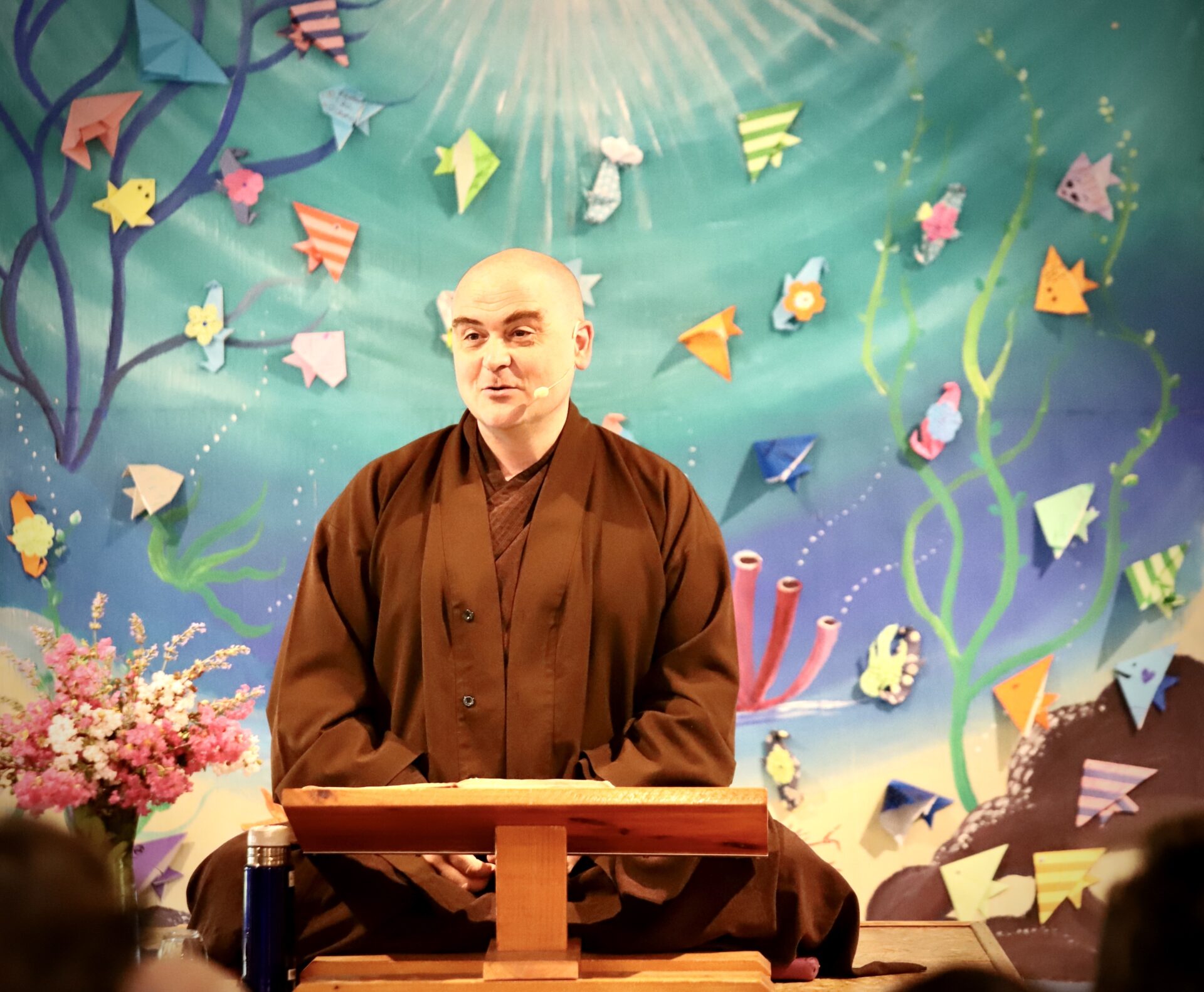 Brother Phap Linh offering a Dharma talk during the Summer Family Opening retreat in Plum Village in 2025.
What role does inner change have in wider system change? And what impact could this research have?
As Professor Christine Wamsler reflects:
Inner and outer change are not separate steps, where one produces the other. They are deeply interconnected and mutually shaping. At the heart of this perspective is a powerful—and uncomfortable—insight: today’s polycrisis can be understood as a reflection of a deeper human crisis, characterised by separation from ourselves, from others, from nature, and from the sacred.
“This separation is not simply a matter of individual cognition or choice. It is embedded in institutions, cultures, and the social conditions in which our minds and ways of relating develop. This is why simply providing people with more information about our crises has never been enough, and never will be. Transformation requires not only new cognitive knowledge, but also new forms of social, emotional, relational, and embodied learning—through experimentation, reflection, and contemplative practice.”
“Working with the ZASP team on this research was deeply meaningful for me. I am deeply grateful for everyone’s openness and support in helping to bring this study to life.”
The research has also sparked new meaningful dialogues and discussions within the wider community of scholars and practitioners working in the emerging field of inner transformation for sustainability (see, for example, here).
The study therefore contributes not only new empirical insights into Thay’s teachings, but also to a growing body of knowledge and a broader narrative shift towards recognizing inner and outer transformation as interconnected dimensions of climate and sustainability work.
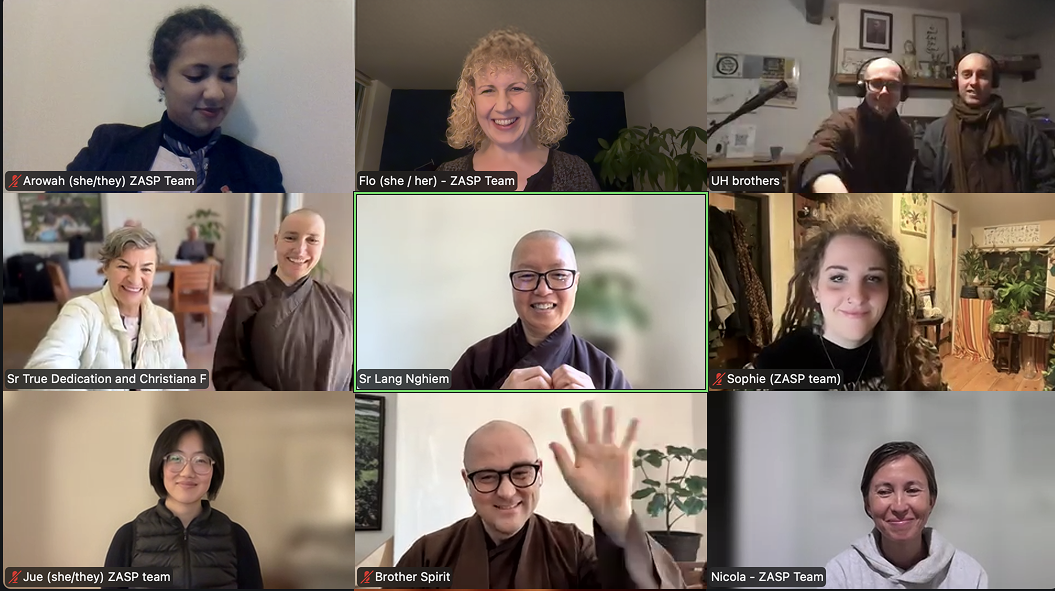 Our beloved ZASP team and family in the Dawn cohort of the Zen and the Art of Saving the Planet online course
Resources
ZASP course: plumvillage.org/zaspZen and the Art of Saving the Planet bookResearch paper available hereConnect with Christine Wamsler and Lund University Centre for Sustainability StudiesJoin Brother Phap Linh in conversation with Kate Raworth at a free online event on 24th September: Inner Change for Systems ChangeWe would love to invite you to join us for the upcoming Earth cohort of the Zen and the Art of Saving the Planet online course from 18 October to 6 December, 2026. Full details and registration are available here.