Paris teams up with ‘French Banksy’ and Daft Punk star for free new tourist attraction
Visitors are invited to step inside and sniff history
 Tfoso
Tfoso
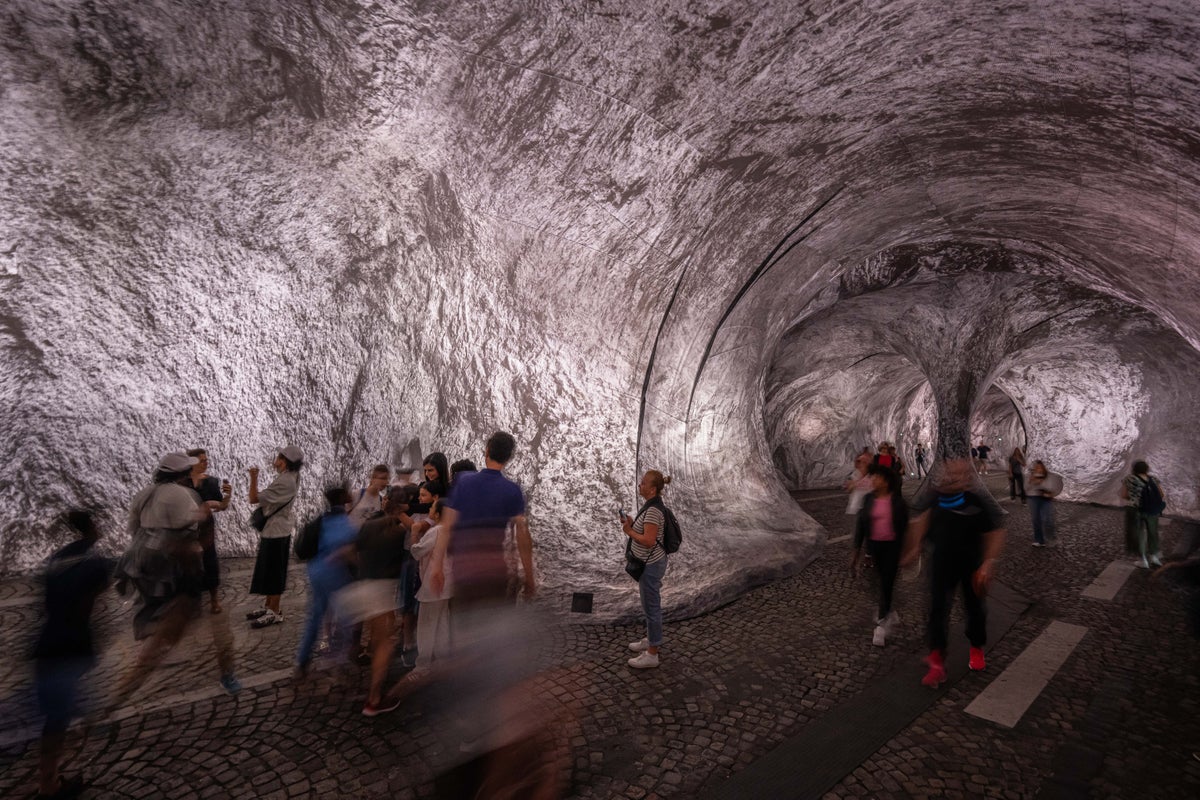
For weeks, a colossal black mountain loomed over the Seine, obscuring Paris’s oldest bridge, the Pont Neuf. On Monday evening, its doors finally opened, inviting visitors into a monumental art installation.
Inside, the air carries a distinct scent of earth after rain — damp ancient stone, cellar walls, perhaps a trace of smoke.
Visitors step from the bright riverfront into a dark passage, where glowing photographs of caves line the walls and a low electronic pulse seems to breathe through the space. Beneath it all, the old cobblestones of the Pont Neuf subtly rise and fall underfoot, adding to the immersive experience.
This temporary transformation, dubbed the Pont Neuf Cavern, is the brainchild of French street artist JR, often hailed as the ”French Banksy.' Crafted largely from printed fabric and air, it reimagines the 17th-century bridge as an artificial cavern, soaring 18 meters (59 feet) above the river.
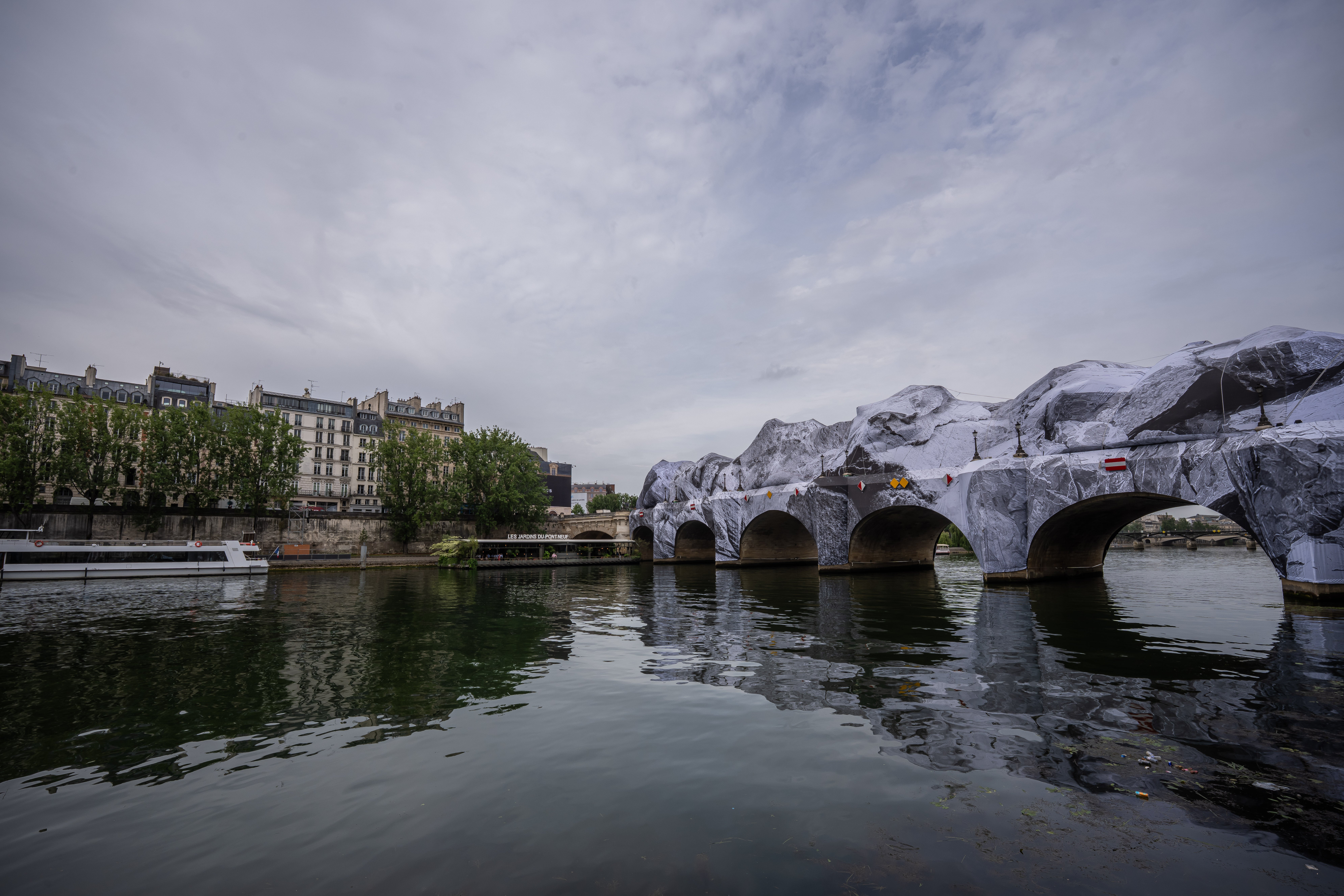
"It feels like the city has disappeared," remarked Léa Martin, a 22-year-old art student from Lyon, on Tuesday.
"You know the river is right outside, but for a moment you’re somewhere ancient." The Pont Neuf Cavern offers free, round-the-clock access through June 28.
Paris steps in and sniffs history
The smell is central to the illusion.
Olfactory expert Sarah Bouasse created two shifting scents: drawing on geosmin and isoborneol, compounds associated with the aroma released when rain strikes dry earth.
It changes along the crossing: first wet earth and mineral dampness, then something warmer, smokier and faintly animal.
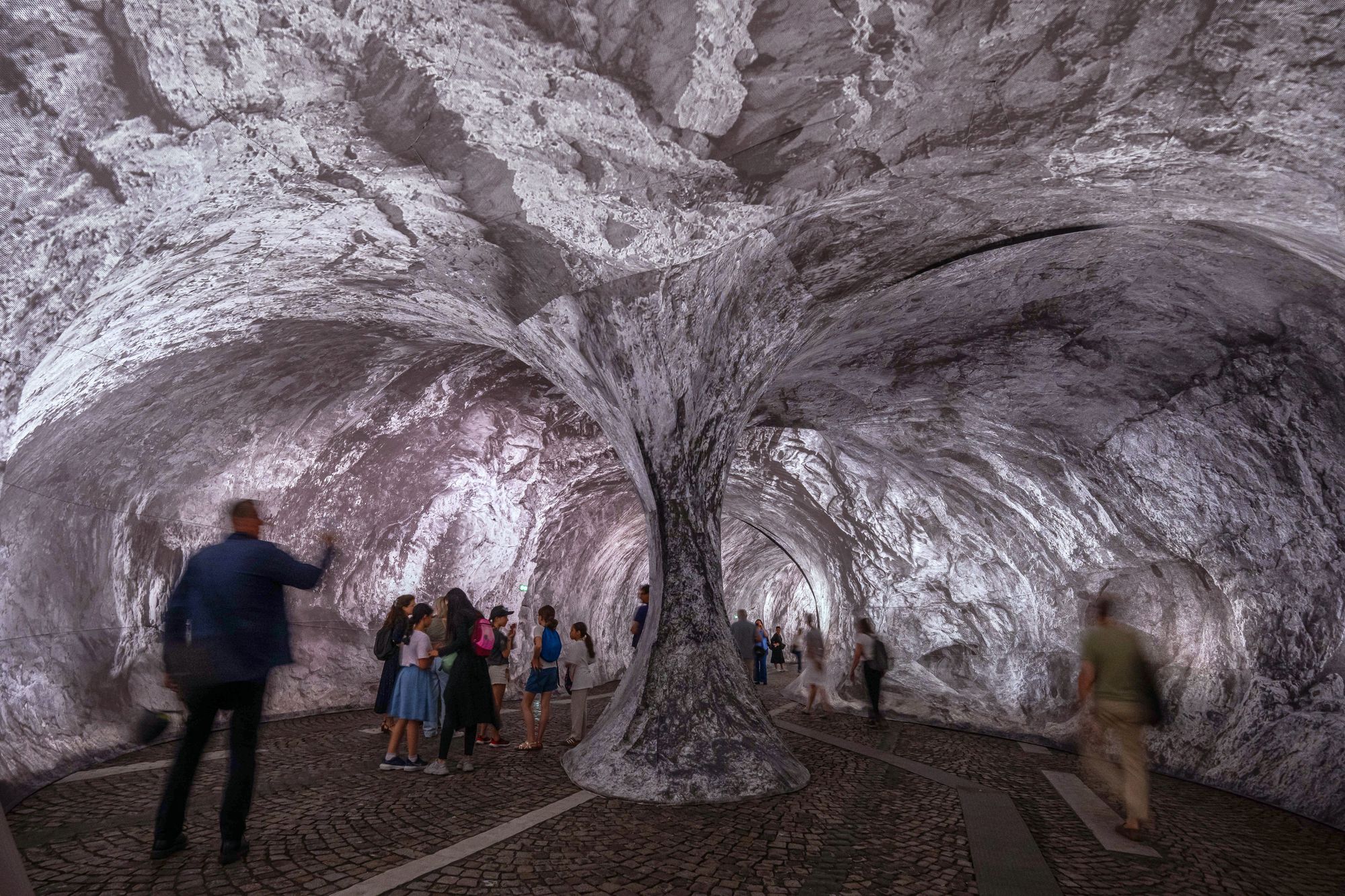
“Usually I cross here without looking up once,” said Michel Dupré, a 67-year-old retiree, blinking as he emerged into daylight. “Today I felt the stones under my feet. And smelled them too. It makes you walk like a child again.”
A sound installation by Thomas Bangalter, formerly of the French electronic duo Daft Punk, accompanies the work, filling the cavern with low rumbles, echoes and pulses.
Completed in 1607, the Pont Neuf — despite its name, “New Bridge” — is the oldest bridge still standing in Paris.
JR’s installation asks people to experience the familiar crossing through their noses, ears and feet.
It also pays tribute to Christo and Jeanne-Claude, whose 1985 wrapping of the bridge in pale golden fabric drew an estimated 3 million visitors.
Their work covered the Pont Neuf in light.
The dark side
JR sends visitors into darkness.
“You enter into the darkness,” he has said, “and emerge into the light on the other side.”
Visitors can also raise their phones to activate an augmented-reality experience developed with tech company Snap.
Digital bats trail light through the cave, passing bodies leave ghostly traces and a dancer materializes in space.
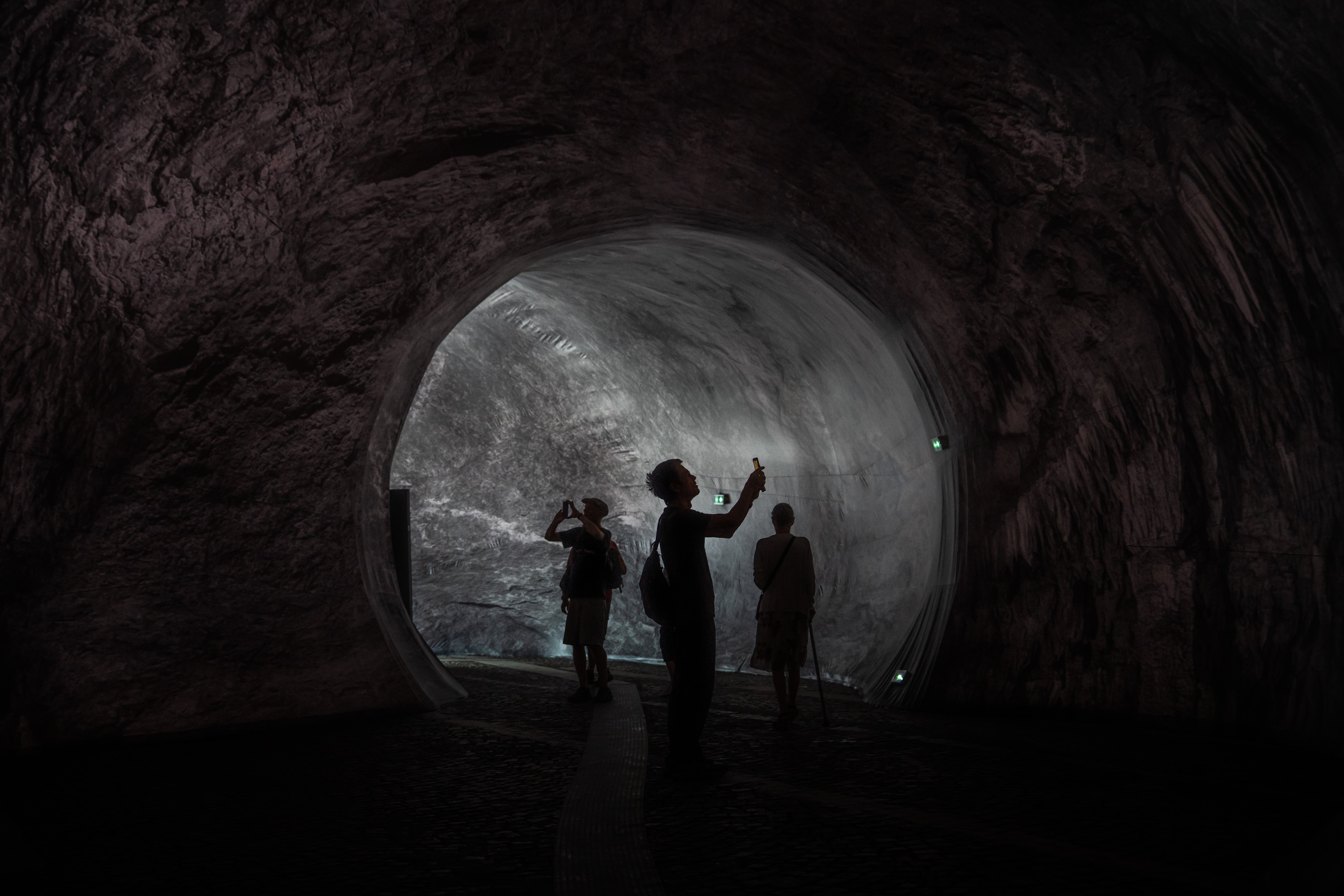
JR has linked the work to Plato’s allegory of the cave, in which prisoners mistake shadows for reality. Today’s cave walls, he argues, are screens and the algorithms that shape what people see. Yet the installation’s strongest effects require no phone.
“It’s completely strange,” said Nadia Benali, 34, smiling beside the artificial cliffs. “Paris needs things that make people stop.”
When the cave closes, its fabric will be reused or recycled.
The mountain will vanish, traffic will return and the Pont Neuf — older than the French Revolution — will emerge into the light once more.