SEO Tips and Strategies for Franchises: A Guide for 2026
Key Takeaways Operating a franchise is a fantastic way to start a business. Not only are people already aware of your brand, but you get the support and backing of a well-established organization and a pre-existing customer base ready...
 Tfoso
Tfoso
Key Takeaways
Franchise SEO is the practice of optimizing your online presence so each franchise location ranks higher in search engine results and AI Overviews. SEO for franchises requires balancing brand consistency across locations with the need for each branch to stand out independently in its local market. Core tactics include targeting local keywords, creating unique location pages, setting up a Google Business Profile for every branch, and maintaining accurate name, address, phone number (NAP) citations. AI Overviews now influence a majority of local searches, and thin or duplicate location pages tend to get filtered out. That means each page needs unique content and visible experience, expertise, authoritativeness, and trustworthiness (E-E-A-T) signals. SEO is a long-term play. Pair it with a solid technical audit and a franchise pay-per-click (PPC) strategy to cover ground that organic search alone can’t quickly reach.Operating a franchise is a fantastic way to start a business.
Not only are people already aware of your brand, but you get the support and backing of a well-established organization and a pre-existing customer base ready to buy.
However, consistent effort is essential for long-term success.
Franchise SEO is essential for ranking in search engine results and AI Overviews, increasing your reach to new customers. About 60 percent of searches result in zero clicks due to the growing appearance of AI Overviews. Franchisees need to understand both traditional and modern SEO tactics to truly expand their audience.
In this article, I’ll explain SEO for franchise businesses, how it differs from standard SEO, and up-to-date strategies to help your franchise stand out.
What Is Franchise SEO?
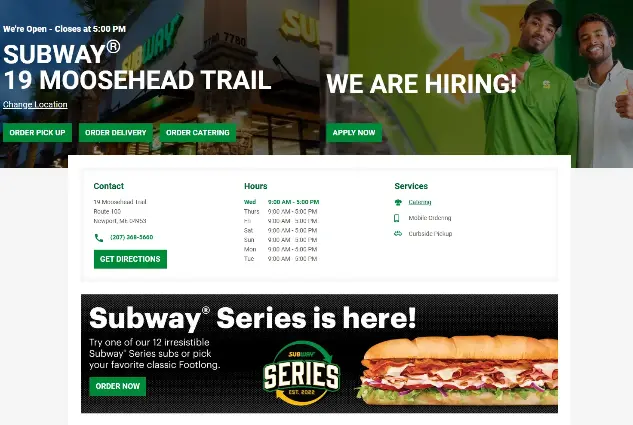
Franchise search engine optimization (SEO) is when you optimize your online presence to make your franchise business stand out in search engines like Google, Bing, and Yahoo, as well as in AI search tools like ChatGPT, Google’s AI Overviews, and Perplexity.
Key franchise SEO tips include:
Optimizing your website for local keywords Creating website content to appeal to customers and localizing the content when relevant Getting backlinks from relevant local websites Encouraging customers to submit reviews of your business Ensuring your website loads quickly and is mobile responsive (52.3 percent of global website traffic comes from mobile devices)With franchises, there’s a lot of competition. You’re not only up against other brands but potentially competing branches in the same franchise.
Given that almost three-quarters of people use Google to find local business information, the higher you can rank in the search engine results, the better.
Whether you run one franchise or 20, implementing effective SEO for your franchise website means more organic traffic. That, in turn, leads to more store visits, sales, and profits.
Franchise SEO vs. Regular SEO: What’s the Difference?
Standard SEO focuses on keywords and content for a single website or a company as a whole.
Local SEO for franchises is a specialized form of SEO that focuses on optimizing each franchise location. Local SEO is typically a large part of this strategy. That includes making sure that each site contains the correct information, such as address and contact details, and is formatted correctly.
SEO for franchise websites can be tricky, as you need to optimize each location independently.
If you manage multiple franchise locations, you also need to consider your website’s structure and how all your location pages work together. After all, you don’t want to promote one location at the expense of another.
With franchise SEO, people tend to search for more niche, location-specific keywords. You need to consider their search intent to optimize your website properly.
Challenges With Franchise SEO
While effective franchise SEO is rewarding, it presents unique challenges.
Here’s what to watch for:
The risk of duplicate content. Franchise locations often use similar content across their websites, which can lead to duplicate content issues in the search results. It’s essential to keep duplicate content to a minimum. Building local content. With SEO for your franchise, you need to balance standard SEO with local SEO. You have to make each location stand out for its own area while keeping every site within brand guidelines. Brand inconsistency. Franchises need to have a cohesive look and feel. While it’s important for your stores to rank as high as possible, they also need to share a consistent brand identity. AI Overview visibility. With AI Overviews appearing for 57 percent of local searches. To be cited in these results, each location needs unique, credible content rather than boilerplate copied across sites.Use These SEO Strategies for Your Franchise
Now that we understand the differences between standard and franchise SEO, let’s look deeper into some strategies to help your franchise succeed.
The first step is to identify and research the keywords most relevant to your franchise.
Consider:
Your target audience. What keywords are they most likely to use? Your location. You want to target local keywords and terms. Your competitors. What keywords do they rank for? Search intent. Are customers looking for information, or are they ready to buy?Plenty of tools can help you find and research the right keywords for your franchise.
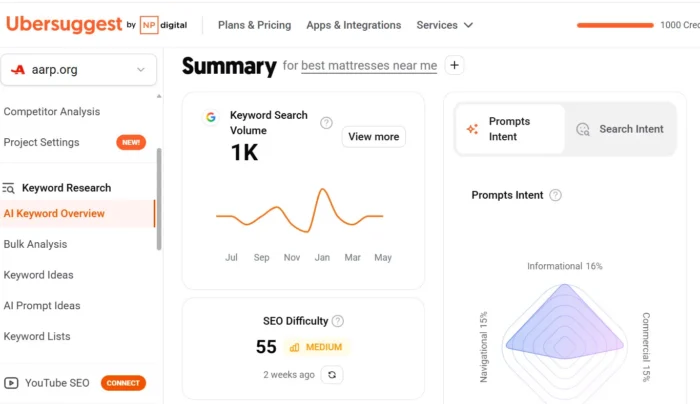
Ubersuggest, for instance, shows you what’s already working for others in your market, so you can borrow those ideas and refine them.
In the example below, the term “best mattresses near me” has an SEO difficulty of 55. This tells you that ranking highly is doable, but landing the top spot will take some work.
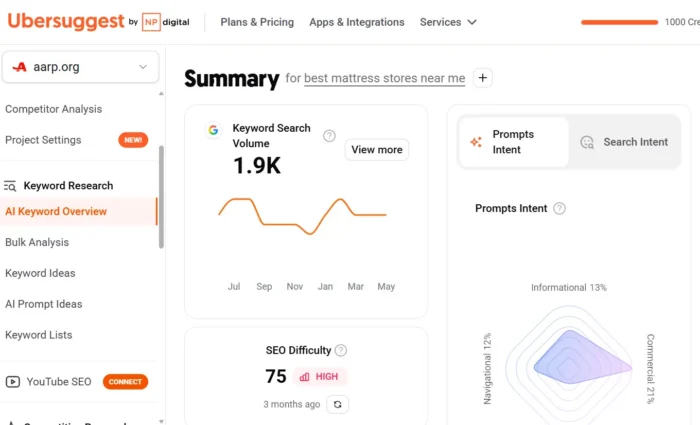
However, “best mattress stores near me” has an SEO difficulty of 75, meaning there’s much more competition and you’ll have a harder time clinching the top spot.
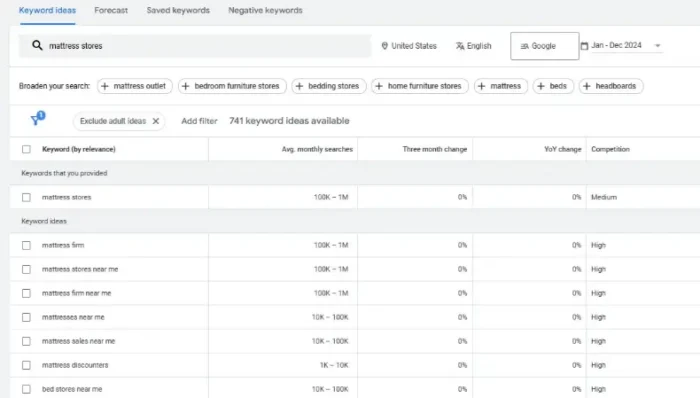
Another valuable free tool for franchise SEO is Google Keyword Planner.
While it’s designed for use with Google Ads, it can suggest a wealth of relevant keywords based on a seed phrase or your website URL.
2. Localize Your Keywords
Localizing your keywords makes sure you target the right customers in the right areas.
If you have multiple locations, it is especially important to localize your keywords to reach customers in each area.
Let’s say you run a car maintenance franchise in Broward County, Florida. Strong localized keywords might include:
Hyperlocal SEO takes it a step further, targeting specific geographic areas, like neighborhoods or streets, to maximize visibility. For example: “Car mechanic on Ocean Drive.”
3. Localize Your Website
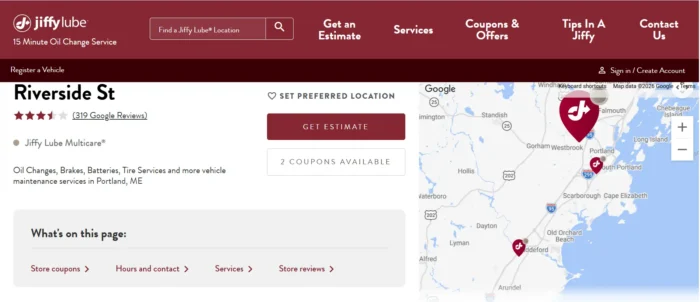
Localizing your website is a great way to optimize for local SEO and promote your individual franchise locations.
Create dedicated pages for each franchise location with a clear address, phone number, and other relevant information. You’ll also need to include unique content on each location page, as pages with thin content don’t compete in AI Overviews or Local Packs.
Creating a proper local page for each location helps you rank for local keywords and increases your NAP (name, address, phone number) citations, which I’ll discuss later.
It also helps to include a map of the area with each franchise’s location marked. This makes your website more search-engine-friendly and helps customers find the nearest location.
Franchises often use multiple domains. The main corporate domain serves as the central hub for the franchise brand, providing high-level information, while individual franchise locations use separate domains to target local audiences more effectively. In this case, linking all the domains together will help search engines understand that they are related.
4. Optimize Your Individual Businesses on Google Business Profile and Other Directories
One of the best ways to enhance your franchise’s search engine presence is to set up Google Business Profiles (GBPs) for each location.
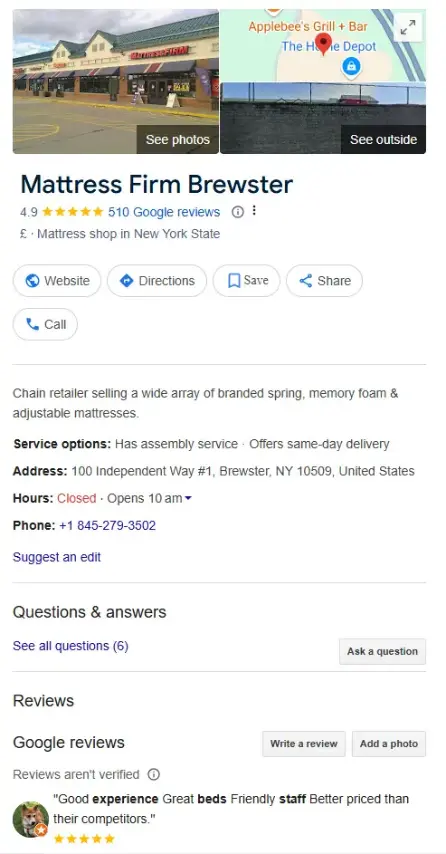
A GBP provides additional context about your franchise locations, including your address, phone number, hours, and products or services you provide.
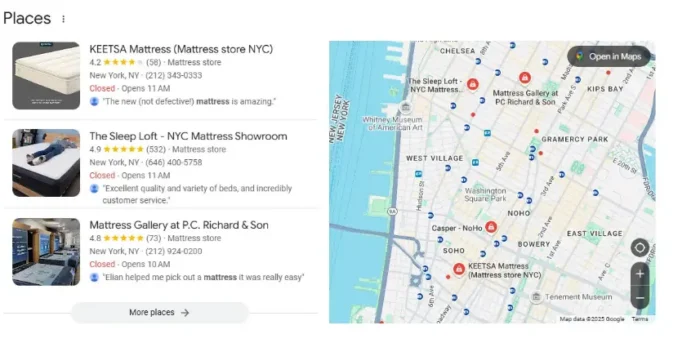
Having a Google Business Profile also increases the chance of your franchise appearing in the Local Pack map at the top of the search results.
Additionally, regularly publishing posts like offers, events, and updates, and actively managing the Q&A section, signals to Google that the profile is active and maintained. That can improve AI Overview and Local Pack eligibility.
Try to complete as many fields as possible and keep everything current, so searchers always get the most accurate information about your business.
Beyond Google, signing up for other directories can widen your franchise’s visibility, build additional NAP citations, and generate backlinks to your website. Just be sure to choose directories that are relevant and authoritative. Low-quality, spammy ones can hurt your online presence.
Sites like Yelp, Foursquare, and Yellow Pages (YP) are good starting points. I’d also suggest checking with your local chamber of commerce, which can often point you to directories worth listing on.
5. Make Sure Your Brand Is Consistent
McDonald’s is one of the largest franchised businesses in the world. It has a massive marketing “bible” that helps enforce brand consistency, telling franchisees everything from what colors to use to which words to avoid.

Source: https://www.itsnicethat.com/articles/turner-duckworth-redesign-mcdonalds-branding-visual-identity-graphic-design-250719
As a result, McDonald’s has remarkable brand uniformity, and customers can expect the same experience wherever they are in the world.
You don’t need a guide as extensive as McDonald’s, but you do need a cohesive look and brand voice. This helps customers trust you, and it helps search engines and AI systems recognize you as a legitimate business.
That means keeping your brand messaging, logo, visuals, and fonts consistent across all platforms, including your website, Google Business Profile, and social media accounts.
The easiest way to manage this is with a style guide and regular audits to keep all your digital marketing assets aligned.
6. Audit Your Technical SEO
Your franchise’s content can’t rank if search engines can’t properly access and understand your site. That’s where technical SEO comes in.
Here’s where to focus:
Mobile-friendliness: Google indexes mobile-first, so your franchise site needs to look and function well on smaller screens. Page speed: Slow-loading pages frustrate users and can hurt rankings. Use PageSpeed Insights to help pinpoint the culprits, whether that’s oversized images or a slow server response. Crawlability: Make sure search engines can easily navigate your site by maintaining a clean sitemap, fixing broken links, and reviewing your robots.txt file.Once you’ve reviewed those areas, run a site crawl using a tool like Screaming Frog or Semrush to uncover hidden issues with duplicate content or missing meta tags.
For larger franchise operations managing hundreds of locations, our guide to enterprise SEO digs deeper into scaling these technical fixes.
7. Target and Remove Duplicate Content
When you have a website with multiple location pages that are very similar, you risk confusing the search engines.
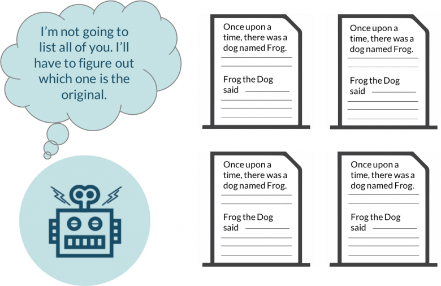
Source: https://moz.com/learn/seo/duplicate-content
If a search engine sees several pages with duplicate content, it has to decide which one to rank. It uses several factors to work this out, but there is a chance it gets the answer wrong.
Fortunately, you can see which pages are being indexed and which aren’t by using Google Search Console’s “Crawled – currently not indexed” filter. From there, you can take steps to make sure search engines aren’t showing the wrong location page to the wrong person.
Contrary to popular belief, duplicate content won’t automatically tank your search engine rankings, though it might if you’re using it deceptively. Either way, it’s best to minimize duplicate content across your site where you can.
Let’s say you operate a chain of restaurants and have the same menu at each. Rather than having an identical menu on each location page, use a stand-alone menu page and link to it instead.
You can also steer crawlbots toward what you want them to see and guide them away from pages you don’t. Implementing a “rel=canonical” tag makes sure you can consolidate rankings to the intended URL.
8. Have a Local Link-Building Strategy
Link building is the practice of getting other websites to link back to your site.
When you get links from relevant, high-quality sites, it shows search engines that your website is trustworthy and reliable, leading to a boost in search results.
Link building is one of the trickiest aspects of franchise SEO because the results are beyond your control. There’s no guarantee that other websites will link to you. Plus, you need backlinks for all your locations to optimize your search engine presence. However, get your strategy right, and it’s worth the effort.
Here are some ways you can get links for your franchises:
Befriend local journalists, and they’ll give you a heads-up when they need a quote for a story. Partner with related local businesses. For example, if you run a coffee shop, join forces with a bakery. Hold special events, sponsor local sports teams, or run a competition to get links in the local press. Use tools like Ubersuggest to identify the backlinks your competitors have. You can then approach the same websites to see if they’ll link to your franchise as well.9. Ensure NAP Consistency
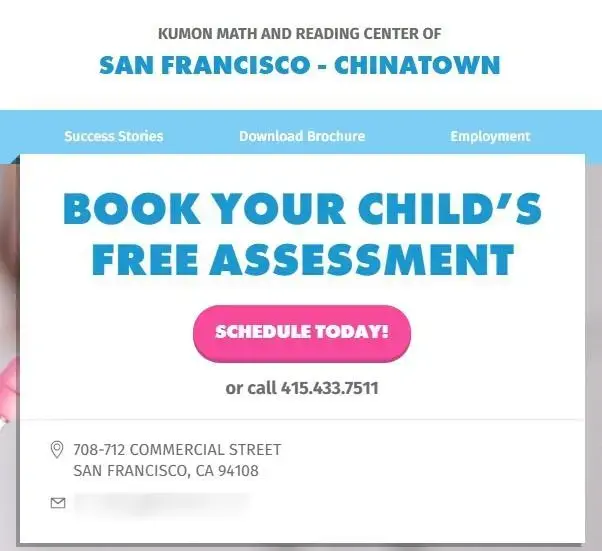
A NAP (or NAP citation) is a mention of your franchise’s name, address, and phone number on a website.
This can be your own website, a directory, a social media profile, or another company’s site.
NAP citations are significant to local SEO success. They show the search engines that your business is active and legitimate.
It’s important to make sure your franchise name, address, and phone number are accurate and consistent across all platforms to maximize visibility. Accurate citations across the internet increase your authority. Similarly, accurate information helps potential customers find you more easily.
10. Optimize E-E-A-T on Local Pages
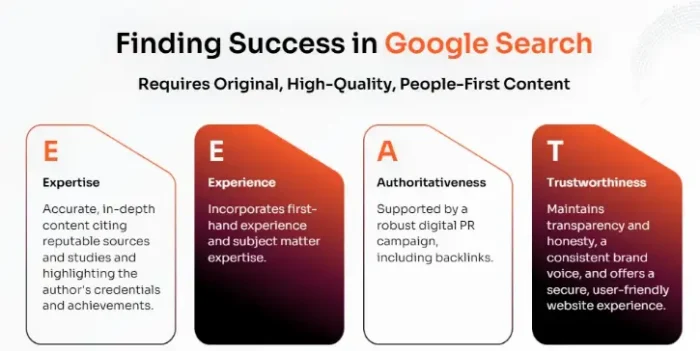
E-E-A-T stands for “experience, expertise, authoritativeness, and trustworthiness.”
Google wants to prioritize the most credible and reliable websites in the search engine results. It uses the E-E-A-T framework in its Search Quality Rater Guidelines to determine which content to promote.
E-E-A-T is especially important on your money or your life (YMYL) content. These are websites with subject matter that could affect someone’s future happiness, health, financial stability, or safety.
To optimize E-E-A-T on your franchise’s local pages, include a variety of content, such as customer reviews, product descriptions, contact information, FAQs, and informational articles.
Doing this will help build trust and credibility with search engines and customers. It can also help with AI visibility since Google’s AI Overviews strongly favor pages with visible E-E-A-T signals.
Another good way to enhance your franchise SEO is to showcase your credentials. For example, if you run a daycare franchise, telling customers about the qualifications and certifications of your employees can help build your credibility.
11. Develop a Great Content Strategy
When you operate a franchise, good content marketing is essential.
It encourages customers to stay on your website and convert while attracting backlinks and helping you rank.
The great thing about content marketing is how many forms it takes. Whatever you sell, wherever your franchise operates, and whatever your budget, you can create content that prospective customers want to engage with.
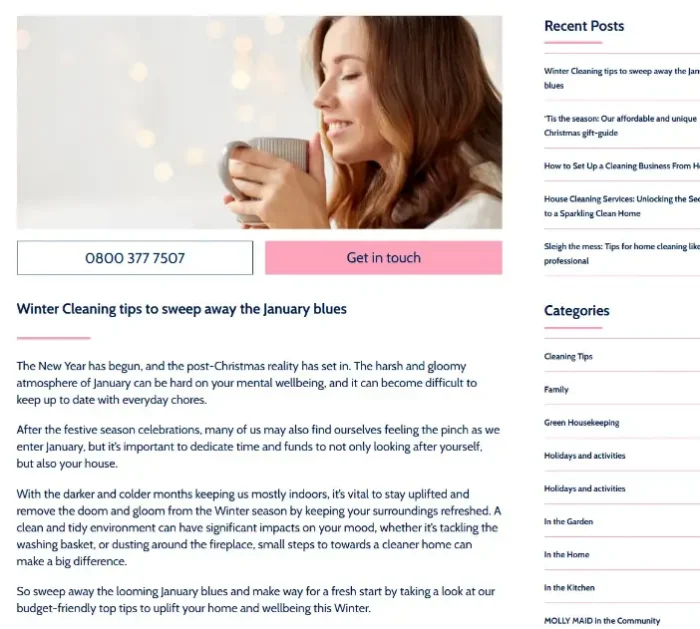
The blog above is from the Molly Maid website. It focuses on cleaning tips readers can use, so even if you end up not using their services, the content still has value.
These content types work especially well for franchise SEO, as you can focus on both local and national topics and trends:
Blog posts Podcasts Video content Infographics Social media postsTo get started with content marketing, get clear on your target market and their pain points. Then address those pain points with helpful, well-structured content. Each piece should follow an intuitive format of headings, subheadings, and short paragraphs that make the reading experience easy and informative.
From there, work in your keywords naturally, and you’ll have SEO-optimized content that answers your audience’s questions and encourages them to use your product or services.
12. Encourage Local and Online Content Reviews
More than 9 in 10 (93 percent) of customers say they read customer reviews before purchasing a product. The more positive reviews you can generate, the more likely prospective customers are to buy from you.
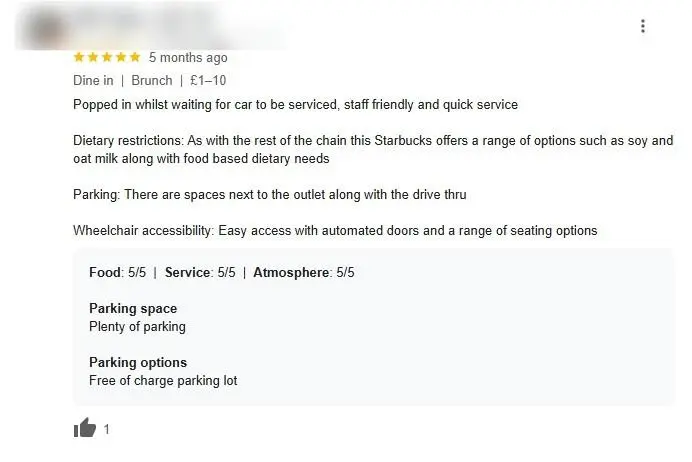
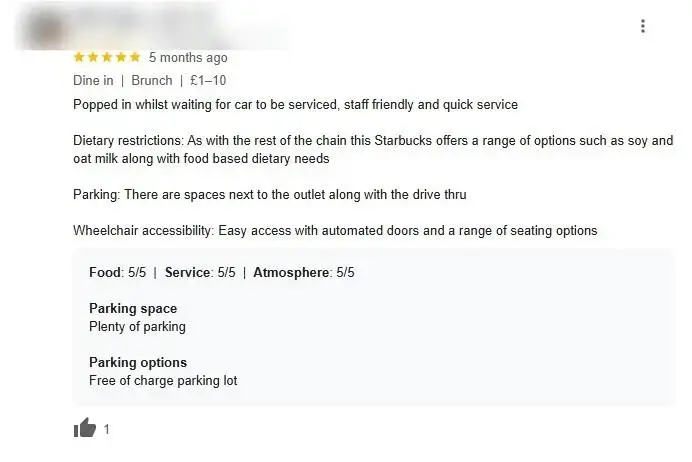
Having lots of reviews builds trust and entices customers to use your products or services, all while supporting local SEO. Reviews posted on platforms like Google Business Profile can include keywords customers naturally use, which helps improve your relevance in local search results.
While these keywords may not directly boost your website’s rankings, they can enhance visibility on the review platform itself, making it easier for potential customers to find your business. Additionally, positive reviews serve as powerful social proof, showing future customers that others trust and value your business, which can drive more conversions.
The easiest way to get reviews is just to ask. Send an email to customers after they use your services and ask them to leave a review, whether on your Google Business Profile, your Facebook page, or a review platform like Tripadvisor.
Be sure to respond to all reviews, whether they’re positive or negative.
According to BrightLocal, 80 percent of consumers say they’re likely to use a business that takes the time to respond to all its reviews.
13. Consider Franchise PPC to Complement Your SEO
SEO is a long game. It builds durable, compounding visibility, but it can take months for a new franchise location to start pulling meaningful organic traffic. That’s where paid advertising comes in.
Using franchise pay-per-click (PPC) tactics can put your franchise at the top of search results right away, which is especially useful when opening a new branch or trying to stay visible during high-competition seasons.
A few things to keep in mind:
Geographic targeting matters as much as it does for SEO. Structure your campaigns by location so individual branches aren’t bidding against each other and driving up costs. Protect your branded terms. Searches like “[Franchise Name] near me” signal high intent, and competitors can bid on your brand name even when your organic rankings are solid. Running paid ads on those keywords keeps that traffic where it belongs.Running franchise SEO without the right tools gets tough fast, especially as you add locations to your portfolio. These will help keep your campaigns effective, whether you manage one location or 100:
Ubersuggest: This is my go-to for keyword research, competitor backlink analysis, and surfacing the local search terms your franchise should be ranking for. It’s especially handy when you need to compare how individual locations stack up against nearby competitors. Google Business Profile Manager: If you’re managing more than a handful of GBP listings, the bulk location management features save serious time. You can update hours, services, and descriptions across multiple branches in one go. Screaming Frog or Ahrefs Site Audit: Both crawl your site at scale and flag duplicate content, canonical tag issues, and thin location pages. This is critical when you have dozens (or hundreds) of near-identical templated pages. BrightLocal or Whitespark: These are built specifically for local SEO. Use them to audit NAP citations and track rankings location by location. Google Search Console: It’s free, and it’s still one of the most powerful tools out there. Monitor indexation, Core Web Vitals, and per-location performance straight from the source.FAQs
What is franchise SEO?
SEO for franchises is the practice of optimizing your website (or websites) so you rank as high as possible in the search engine results for all locations you operate in.
How do start building an SEO program for a franchise?
Focus on three things: a strong corporate site, optimized local landing pages for each location, and a fully built-out Google Business Profile for every branch. Consistent NAP citations and local reviews do the heavy lifting from there.
Should franchises have separate URLs for local SEO?
Yes. Each location should live on its own URL, typically as a subfolder (yoursite.com/chicago). This lets you target city-specific keywords, build local backlinks, and rank in the right geographic SERPs without competing against your other branches.
How do you jumpstart local SEO for new franchise locations?
Claim the GBP listings, publish the location pages, and pursue local citations and reviews immediately. Prioritize getting your first 10 to 15 reviews within the opening month, since fresh listings with active engagement tend to climb the Local Pack faster.
How do local events and sponsorships boost franchise SEO?
They earn local backlinks and brand mentions from community sites. Sponsoring a youth sports team or charity 5K race often gets your franchise listed on organizer pages, news outlets, and event recaps, which are exactly the kinds of locally relevant signals Google rewards.
Conclusion
Franchise SEO is essential for driving web traffic, building trust, and building customer loyalty.
Plus, the best part is that it works whether you sell sandwiches, smoothies, or software solutions.
Remember that when it comes to SEO for franchises, you’ve got to be consistent.
Make sure your information appears the same across all platforms and that each of your location pages uses the same branding and tone of voice. This also means optimizing your content and online presence for AI Overviews, as they’re quickly becoming the new frontier for local visibility.
Get these moves right, and prospective customers are sure to fall in love with your franchise.























.jpg&h=630&w=1200&q=100&v=c0f97a310e&c=1)