Share of Voice Tools for Growing Companies
When tracking share of voice for marketing teams, it’s often assumed to be a vanity metric — a number executives like to include in board decks but one that rarely influences strategy. In practice, that assumption doesn’t hold up.
 ValVades

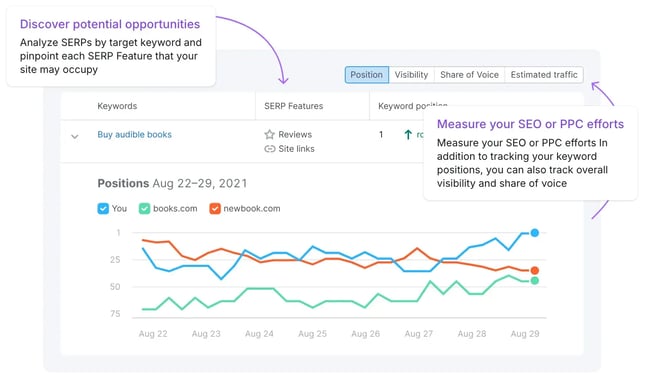
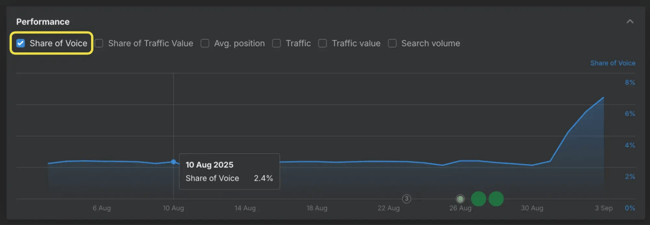
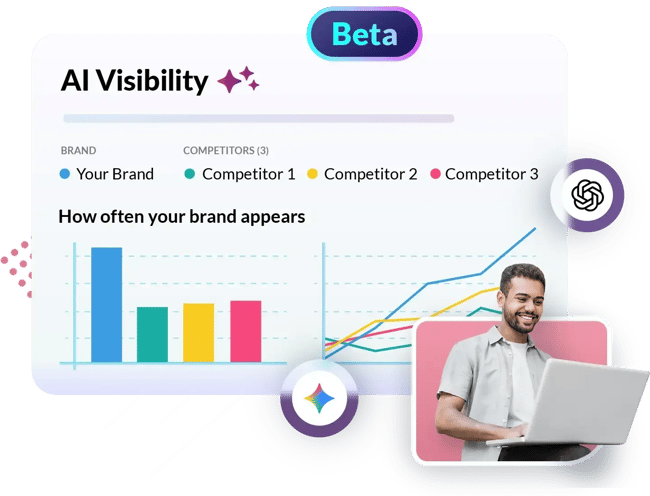
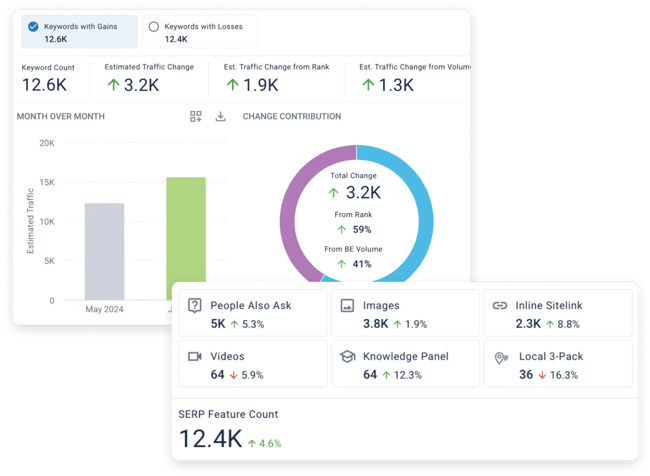
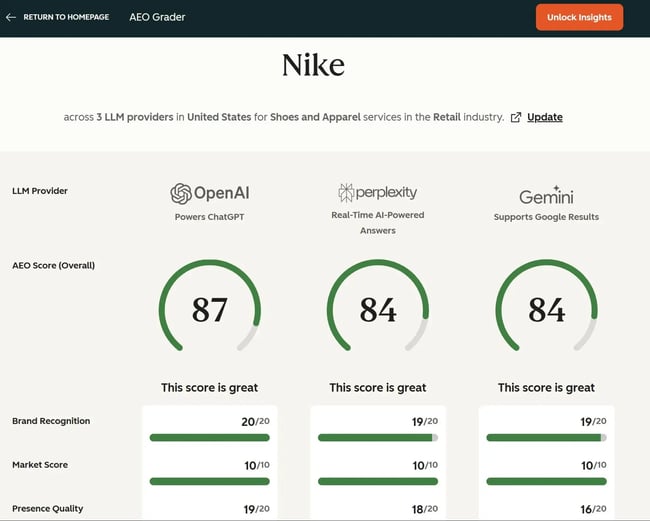
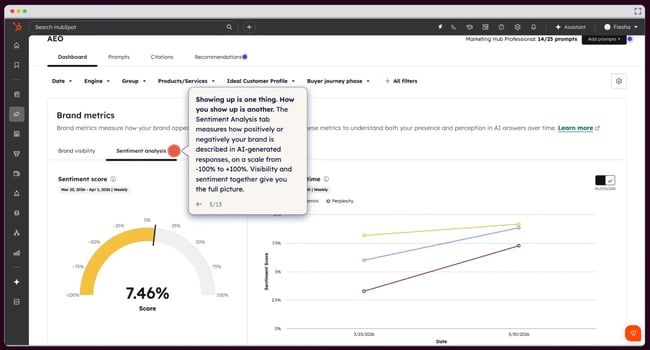
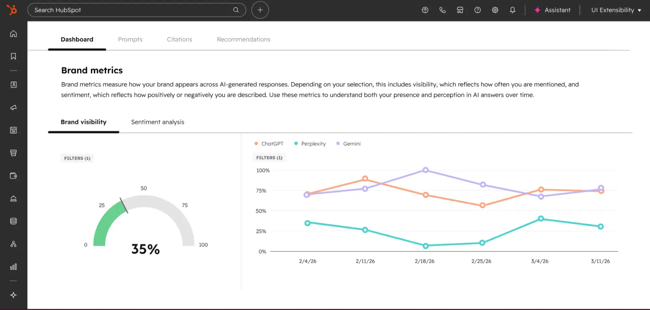
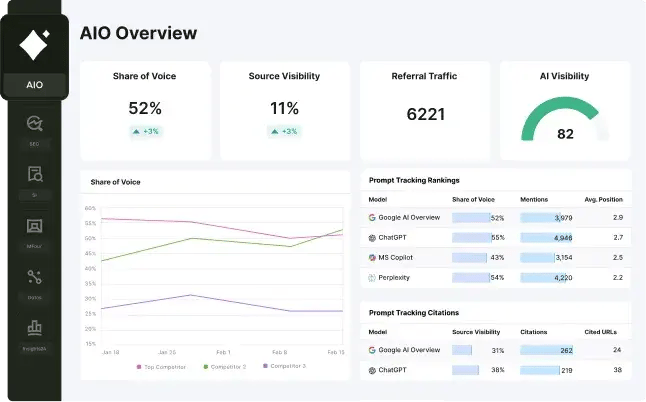
When tracking share of voice for marketing teams, it’s often assumed to be a vanity metric — a number executives like to include in board decks but one that rarely influences strategy. In practice, that assumption doesn’t hold up. Share of voice (SOV) is one of the clearest leading indicators of whether a brand is gaining or losing visibility long before it shows up in the pipeline. The problem is that most teams measure it inconsistently, compare apples to oranges across channels, and end up with dashboards that no one acts on. This guide is designed to change that. It breaks down what each type of SOV actually measures across SEO, social, paid, and emerging AI search, which tools are worth the investment at different stages of growth, and how to avoid common measurement pitfalls — including the growing issue of AI-driven share of voice bias. It also shows how to connect visibility metrics to CRM, attribution, and revenue outcomes that leadership actually cares about. Table of Contents Share of voice is the percentage of visibility a brand earns compared with competitors in a defined market or channel. In plain English: Out of all the conversations, impressions, and results happening in a business’s category, how much of that attention is going to it? Share of voice tools measure competitive visibility across channels such as search, social, PR, retail media, and answer engines. The definition sounds simple. The complexity lies in the fact that “visibility” means something fundamentally different across channels, which is exactly why so many SOV reports mislead rather than inform. Here’s a quick breakdown of the core SOV types and when they matter most: A note on growth stage relevance: Early-stage startups typically get the most signals from social SOV and SEO SOV — they’re the fastest to move and the easiest to act on. Mid-market teams often need to add PR SOV as a brand-building lever. Enterprise teams are now adding AI SOV to their measurement stack, and frankly, the mid-market teams that start tracking it now will have a meaningful head start. HubSpot AEO helps marketers quantify AI share of voice by showing how often their brand appears in AI-generated answers compared to competitors across a defined prompt set, making competitive gaps immediately visible. The core share of voice calculation is consistent across channels, even if the inputs vary: Share of Voice (%) = Your Brand Metrics ÷ Total Market Metrics × 100 For SEO, “your brand metrics” means estimated organic clicks or impressions for a tracked keyword set. For social, it means brand mentions. For PR, it means the volume of a brand’s media coverage. The formula is always the same; the data source changes. Teams get confused — and occasionally panicked — when two tools report different SOV numbers for the same brand. This happens for three main reasons: None of these discrepancies means the tool is wrong. They mean marketers need to standardize their measurements before benchmarking. It’s best to build a competitive analysis template before starting, so SOV measurements align with how a team is already thinking about the competitive landscape. Defining a brand’s competitive set upfront prevents one of the most common SOV reporting mistakes: comparing it to a different set of competitors each quarter and calling the change “progress.” SEO share of voice tracks a brand’s relative organic visibility for a target keyword set. Organic share of voice uses non-paid search visibility as its measurement base — meaning marketers and SEO strategists are measuring the percentage of organic clicks or impressions they capture versus all the organic clicks available for their tracked keywords. The formula in practice: SEO SOV = (Estimated organic traffic for keyword set ÷ Total possible organic traffic for keyword set) × 100 For example, if a company’s tracked keywords collectively receive 500,000 organic searches per month, and their site is estimated to capture 75,000 of those clicks based on its ranking positions and expected CTRs, its SEO share of voice is 15%. Aligning keywords to personas and funnel stages is non-negotiable. Marketing teams may track 1,000 keywords and celebrate a rising SOV score, only to discover they’re gaining visibility on informational queries at the top of the funnel while losing ground on high-intent, bottom-funnel terms their sales team actually cares about. Segment the keyword set by persona, funnel stage, and product line to provide actionable SEO SOV insights. Pro tip: HubSpot Marketing Hub users can pipe their SEO visibility data into their marketing analytics dashboard and correlate SOV trends with organic traffic and lead volume — making it much easier to show leadership the ROI of their organic investment. Semrush’s Position Tracking and Market Explorer features let marketers and SEO strategists track their keyword rankings against a defined competitor set and report on their share of market within organic search. It includes AI Overview detection, so teams can see when their keywords trigger Google’s AI-generated answers — and whether their brand is included. Pricing starts at approximately $208/month for small business plans. Best for: Teams wanting an all-in-one SEO platform with SOV built in. What I like: The ability to segment SOV by keyword group, tag sets by product line or persona, and get daily rank updates. Ahrefs Rank Tracker includes a dedicated share of voice metric that shows an organization’s visibility score as a percentage of the total available clicks for their tracked keywords. Its Brand Radar add-on (from $199/month) extends this into AI visibility tracking. Best for: Teams with a strong focus on link-based authority signals who want to connect organic SOV to citation strength. What I like: The interactive graphs that show SOV over time, making it easy to correlate visibility shifts with content launches or algorithm updates Moz Pro’s keyword tracking and Brand Authority features offer a slightly less complex entry point for teams newer to SEO SOV measurement, with solid competitor benchmarking and automated weekly reports. Best for: Smaller teams or those newer to SEO SOV who want a clean, guided experience. What I like: The straightforward reporting format, which makes it easier to build leadership-facing summaries. BrightEdge is the enterprise-grade choice. It was one of the first platforms to patent share of voice capabilities for organic search, and it has since added AI visibility tracking (AI Catalyst) that connects traditional SEO SOV with AI search citations. Best for: Enterprise teams managing thousands of keywords across multiple product lines who need both organic SOV and AI SOV in one platform. What I like: The DataMind engine, which surfaces SOV shifts in real time and ties them to content recommendations. AI share of voice measures how often a brand appears in AI-generated answers through entity mentions and citations. When someone asks ChatGPT, Gemini, or Perplexity for the best tool or service in your category, your brand is either mentioned or it isn’t. AI SOV quantifies, over time and across a large set of prompts, how a brand’s competitors compare to it. The formula is simple: AI SOV = (Number of AI responses mentioning your brand ÷ Total AI responses for your prompt set) × 100 The hard part isn’t the math. It’s building a prompt set that actually reflects how buyers think and avoiding the measurement traps that produce a number that looks meaningful but isn’t. AI share of voice accuracy depends on a prompt set that is balanced across personas, funnel stages, and platforms. AEO features in Marketing Hub Pro and Enterprise go further by suggesting prompt opportunities based on CRM data, campaign performance, and known customer behavior, helping teams build prompt sets that reflect real buyer questions rather than generic keyword lists. I’ve seen teams build prompt sets entirely from their top SEO keywords. The result is a high citation share (their blog posts are referenced) but near-zero entity mentions (their brand is never recommended). These are two different things, and they require different strategies to improve. Before anything else, marketers should define the categories in which they want to win. For a B2B SaaS company, this might range from “project management software” broadly down to “project management software for remote engineering teams under 50 people.” The specificity of the category definition determines the relevance of the prompts. Pull from sales call transcripts, demo recordings, support tickets, and win/loss interviews. The questions a company’s buyers ask before they convert are almost exactly what they’re now typing into ChatGPT — often more detailed and personalized than traditional search keywords. For HubSpot users, their CRM notes and conversation intelligence data are a goldmine here. Reddit, G2, Capterra review threads, and industry Slack communities surface the questions buyers ask before they know a brand exists. Look for comparison prompts (“Tool A vs. Tool B for use case X”), best-for prompts (“best [category] for [constraint]”), and problem-solution prompts (“struggling with [problem], what are people doing?”). Rewrite these as natural AI prompts. HubSpot AEO doesn’t just highlight gaps — it provides clear, prioritized recommendations for updating existing content or creating new assets to improve visibility in the prompts where competitors are currently winning. Use keyword research to validate and prioritize prompts. High-volume, commercial-intent keywords often map to high-value AI prompt categories. Build separate prompt clusters for: brand/category prompts (the core), persona-based prompts (by ICP), funnel-stage prompts (awareness, consideration, decision), and competitor comparison prompts. A balanced 100–200 prompt set is more reliable than an unbalanced set of 1,000. A word on entity mentions vs. citations: Entity-based SOV counts how often a brand is recommended as a named entity (“I’d suggest [Brand] for this use case”). Citation-based SOV counts how often a brand’s content is sourced in an AI answer. Both matter, but entity mentions are the more actionable metric for most growth teams because they directly map to brand recommendations. Pro tip: Refresh the AI SOV prompt set at least quarterly. AI model updates — like when Google integrated Gemini 3 into AI Overviews in February 2026 — can reshuffle which brands get cited, making a previous prompt set stale. Research suggests AI citations can fluctuate significantly month over month, so continuous tracking beats one-time audits. HubSpot AEO continuously tracks AI visibility over time and surfaces changes in share of voice, helping marketers stay on top of shifts in how their brand is being represented as AI models and competitive content evolve. The fastest way to establish a baseline is HubSpot’s AEO Grader. This free tool offers a snapshot of a brand’s current AI visibility across platforms and identifies gaps in how AI systems represent that brand. It’s a strong starting point before companies invest in a more comprehensive paid platform. Best for: Getting started, establishing a baseline, identifying quick-win content gaps. What I like: Free to use, fast to set up, and it frames the results in terms of the specific content and authority signals you need to address — not just a score. HubSpot AEO gives marketers a clear view of how their brand shows up across major answer engines like ChatGPT, Gemini, and Perplexity — along with a concrete plan to improve that visibility. It tracks share of voice at the prompt level, showing which buyer questions include a brand, where competitors are being recommended instead, and where a brand is not showing up at all. It also surfaces the sources and content types influencing AI answers, helping teams understand what actually drives inclusion. Rather than stopping at reporting, the tool translates visibility data into prioritized, plain-language recommendations, making it easy to move from insight to action without deep AEO expertise. Best for: Teams that want a fast, accessible way to understand and improve AI share of voice without committing to a full marketing platform. What I like: Clear, actionable recommendations tied directly to visibility gaps — not just another dashboard. AEO in Marketing Hub Pro and Enterprise takes AI share of voice a step further by connecting visibility insights to HubSpot’s complete marketing suite. Teams can track how a brand appears across answer engines and tie that data to the CRM, so prompt suggestions and recommendations are based on actual customers, not generic keywords. The key difference is execution: With AI visibility data sitting alongside campaign metrics, marketers can connect share of voice directly to demand generation. Best for: Growth, demand gen, and RevOps teams that want to connect AI share of voice to pipeline and revenue. What I like: Teams get AEO and SEO insights in the same platform. Semrush has expanded significantly into AI visibility. Their Enterprise AIO feature monitors brand presence across ChatGPT, Google AI Mode, and Perplexity, includes share-of-voice analysis, and surfaces “Prompt Volume” data to help teams prioritize high-intent AI queries over high-volume informational ones. Semrush customers should check what’s available in their plan before purchasing a standalone tool. Best for: Teams already on Semrush who want AI SOV without adding another vendor. What I like: Prompt Volume segmentation, which surfaces the difference between queries with high traffic and those with high commercial intent. Ahrefs’ Brand Radar module tracks brand mentions across AI-generated answers and connects them to the backlink and authority signals that tend to drive AI citations. Unlinked mention tracking across Reddit, TikTok, and YouTube is particularly valuable, since these “human-first” platforms heavily influence LLM training data. Best for: Teams that want to understand why they’re getting cited (or not) in AI answers — not just whether they are. What I like: The connection between link authority data and AI visibility, which makes prioritization decisions much clearer. Otterly.AI is a dedicated, purpose-built AI visibility platform that tracks brand mentions and share of voice across ChatGPT, Gemini, Perplexity, and other platforms. It offers prompt-level benchmarking and a free tier to get started. Best for: Teams that want a dedicated AI SOV tool without the overhead of an enterprise SEO suite. What I like: Free entry point and clean prompt-level reporting Profound is an enterprise-grade AI visibility platform with deep citation tracking, brand sentiment analysis, and attribution from AI-generated traffic to the pipeline. Best for teams that need to connect AI SOV to revenue. Best for: Mid-market to enterprise teams that need to demonstrate AI visibility ROI to leadership. What I like: The attribution layer — most AI SOV tools tell teams where they’re visible; Profound helps them connect that visibility to business outcomes. Social media share of voice measures the share of brand mentions and conversation volume across selected social platforms. The formula: Social SOV (%) = Your brand mentions ÷ Total market mentions × 100 For example, if there were 10,000 social mentions about a brand’s product category last month and it was mentioned 2,500 times, its social SOV is 25%. What social SOV actually captures: Social SOV is highly responsive — it moves within days of a campaign launch, a PR event, or a product release. That makes it a useful short-term campaign measurement tool. What it doesn’t capture well: Platform coverage gaps (a tool that monitors X, LinkedIn, and Facebook but not TikTok or Reddit will systematically undercount certain audiences), sentiment quality (volume isn’t value — a spike in negative mentions can inflate SOV while damaging brand equity), and owned versus earned distinction. Sprout Social’s Listening capabilities offer social SOV tracking with sentiment analysis, influencer scoring, and trend detection. Its 2026 capabilities include brand health monitoring that helps teams track not just volume but also the trajectory of sentiment over time. For more details on social analytics broadly, check out our guide to social media analytics tools. Best for: Teams running active social campaigns who need near-real-time SOV tracking with strong reporting. What I like: The sentiment matrix that shows whether SOV growth is coming from positive or negative conversations. Brandwatch provides advanced social and traditional media SOV tracking with AI-powered insights and custom dashboards. Strong for brands that want a single tool covering social media, news, and forums in one reporting layer. Best for: Teams that want cross-channel social and PR SOV in one platform. What I like: The demographic and geographic segmentation, which lets marketers see whether their SOV strength varies by region or audience segment. Brand24 offers real-time media monitoring across blogs, forums, news, and social channels with sentiment analysis and automated SOV reports. Pricing starts at $199/month for the Individual plan, with higher tiers for more mentions and advanced analytics. Best for: Growing companies that want solid social and media SOV without enterprise pricing. What I like: The influencer scoring feature, which helps marketers understand which voices are driving their category’s conversation. Hootsuite’s native social listening integrates directly with publishing and scheduling workflows, making it a strong choice for teams that manage social execution and measurement in one platform. Best for: Teams already on Hootsuite for social publishing who want to add SOV without another tool. What I like: The workflow integration — seeing SOV data alongside the publishing calendar changes how marketers plan content. PR and media share of voice measures earned media visibility by outlet, geography, message, and sentiment. It answers the question: Out of all the coverage happening in a brand’s category, how much is about it — and how does that compare to competitors? This type of SOV is, in my experience, the most underutilized by growth marketing teams. Content, demand gen, and SEO teams often operate with no visibility into the earned media landscape, which means they miss a key signal: When a competitor is getting significant PR traction, it often precedes increases in branded search volume, domain authority from press links, and category awareness — all of which affect SEO and social SOV downstream. Connecting PR SOV to traffic and demand: The workflow I recommend for growth teams is to use PR SOV data to identify when a competitor is getting outsized coverage on a specific topic, then run a branded search volume check in Google Trends or Search Console. If their media traction is driving branded search, it’s often worth responding with content, commentary, or your own PR push — before it shows up in your SEO SOV numbers six months later. Meltwater is a leading media intelligence platform with SOV tracking by outlet, geography, and message. Its journalist-and-outlet relationship features make it useful for comms teams looking to pair measurement with outreach. Best for: Comms-heavy teams that need both measurement and media relationship management. What I like: The geographic SOV breakdown, which is particularly useful for brands with regional PR strategies. Cision offers comprehensive PR monitoring, SOV tracking, and sentiment analysis across print, broadcast, and digital media. Strong for enterprise comms teams that need regulatory-grade coverage. Best for: Enterprise PR and comms teams with compliance requirements. What I like: The breadth of outlet coverage, including broadcast and print, that competitors sometimes miss. Beyond social, Brand24’s media monitoring extends to news sites, blogs, and forums, giving it a solid PR SOV use case for teams that don’t need a full enterprise PR platform. Best for: Growing companies that want PR + social SOV in a single, affordable tool. What I like: The real-time alerting, which is excellent for catching coverage spikes before they pass. Mention provides real-time media monitoring across the web and social channels, with SOV tracking and competitor benchmarking — a more accessible price point than enterprise media monitoring platforms. Best for: Startups and early-stage teams that need PR SOV without enterprise spend. What I like: Clean, fast interface and alert system. These three metrics are frequently conflated. They are not the same thing, and treating them interchangeably leads to bad decisions. It’s a leading indicator of future market share, and research from companies like Kantar has shown a strong correlation between share of search and eventual market share shifts — often with a 6–12 month lead time. HubSpot AEO and Marketing Hub AEO features complement traditional share of search analysis by showing not just how often a brand is searched, but how often it’s actually recommended in AI-generated answers — a critical layer as discovery shifts from search engines to answer engines. The most common mistake I see: Using SOV as a proxy for SOM without accounting for the lag. SOV tends to lead SOM by several months in growing categories. If SOV is rising but SOM isn’t (yet), that’s not a failure — it’s a pipeline. The fix is to track both metrics on a shared dashboard and set explicit expectations for when visibility gains are expected to convert to revenue. This is where most SOV measurement programs break down. Teams build solid channel-level SOV dashboards, present them in marketing reviews, and then wonder why leadership keeps asking “But what does this mean for the business?” The answer lies in building a measurement framework that connects SOV to leading indicators, then to pipeline, then to revenue — and making that chain visible in the CRM. AEO features in Marketing Hub Pro and Enterprise connect AI visibility data directly to CRM records and attribution reporting, allowing teams to analyze how improvements in AI share of voice influence traffic, lead generation, and pipeline over time. Target-setting and review cadence: I recommend setting annual SOV targets by channel (e.g., “grow SEO SOV from 12% to 18% in our core keyword cluster”) and reviewing progress monthly. For AI SOV, quarterly reviews are more realistic given how rapidly the landscape is shifting. For social and PR SOV, weekly pulse checks during campaigns, monthly for always-on. Pro tip: If a team is using HubSpot, they can build a SOV-to-revenue dashboard that pulls organic traffic data from their connected domain, CRM lead sources, and attribution reports — giving them a single view of the visibility-to-pipeline chain. This eliminates the manual spreadsheet work that makes SOV reporting unsustainable for most growth teams. If a team is starting from zero, here’s how to operationalize SOV measurement without building a research program that collapses under its own complexity. Quick-start SOV checklist: Teams can start with HubSpot AEO to benchmark and improve their AI visibility, then use AEO features in Marketing Hub to operationalize those insights — turning visibility gaps into content, campaigns, and measurable pipeline impact within a single platform. Share of voice measures a brand’s visibility within a channel or market — how often people see it relative to competitors. Share of market measures a brand’s portion of actual revenue within a defined category. The two are related but distinct: Research consistently shows that brands with SOV above their share of market tend to grow (because they’re “over-investing” in visibility relative to their current size), while brands with SOV below their SOM tend to shrink. But the connection isn’t immediate — SOV typically leads SOM by months, not weeks. The highest-leverage, lowest-cost SOV channels are SEO and PR. A well-executed content program targeting high-intent keywords with genuine informational depth will compound over time, generating SEO SOV gains that don’t require continuous ad spend. On the PR side, executive thought leadership (bylines, podcast appearances, speaking) earns media SOV at relatively low cost. For social, community building and consistent engagement outperform sporadic campaign pushes. The key is patience: Organic SOV channels take longer to move than paid, but the gains are more durable. Marketers can approximate SEO SOV manually if they’re tracking a small keyword set (under 50 keywords) and only monitoring one or two competitors — though it’s time-intensive. For social, PR, or AI SOV, manual tracking isn’t realistic at any meaningful scale. The better question is where to start with paid tools. I’d recommend beginning with a free baseline (HubSpot’s AEO Grader for AI SOV, Google Search Console for organic visibility) before committing to a paid platform. Use the baseline to identify which channel has the most competitive gap, then invest there first. At minimum, quarterly. In practice, refresh triggers include: major AI platform updates (new model releases, changes to Google AI Overviews behavior), significant product launches or repositioning by you or a key competitor, and any time your AI SOV score shifts more than 10 points between reviews. The rapid pace of AI model updates means that a prompt set built six months ago may no longer reflect how buyers are querying AI systems today. Startups: Start free or near-free. Consider the following tech stack: Mid-market: Add dedicated channel depth. Consider the following tech stack: Enterprise: Platform consolidation and revenue attribution become the priority. Consider the following tech stack: Share of voice is no longer a single-channel metric — it’s a multi-layered view of how a brand shows up across search, social, media, and increasingly, AI-driven discovery. As this guide has shown, the real value of SOV comes from consistency: defining a clear competitive set, standardizing measurement, and connecting visibility data to meaningful business outcomes like pipeline and revenue. AI share of voice, in particular, is quickly becoming a critical addition to that measurement stack. Unlike traditional channels, where visibility is often tied to rankings or impressions, AI visibility reflects whether a brand is actively recommended in the moments that shape buyer decisions. That shift makes prompt strategy, content authority, and entity recognition just as important as keyword rankings. Tools like HubSpot AEO make it easier to understand where a brand stands in this new landscape, while AEO features in Marketing Hub help teams act on those insights — connecting AI visibility directly to content execution, campaign performance, and CRM data. For growing companies, that combination turns share of voice from a static report into a system for continuous optimization. The next step is simple: Pick one channel, establish a baseline, and start measuring. From there, layer in additional SOV types — including AI — and build toward a unified view of visibility and growth.
What are share of voice tools and which SOV types matter?
How do share of voice tools calculate SOV?
Why Vendor Numbers Differ (and Why It Matters)
Standardization Checklist
Define a fixed keyword set or competitor set before measuring.
Lock your tracked competitor list (adding competitors mid-measurement skews trending data).
Use the same tool for the same channel consistently — don’t switch mid-year.
Document your methodology so new team members can replicate it.
Set a consistent cadence (weekly snapshots for volatile channels, monthly for SEO).
How to Use Share of Voice Tools for SEO
SEO SOV Tools
Semrush Position Tracking
Ahrefs Rank Tracker
Moz Pro
BrightEdge
How to Measure AI Share of Voice and Avoid Prompt Bias
Steps to Build a Reliable AI SOV Prompt Set
Step 1: Ground prompts in your competitive arena.
Step 2: Layer in first-party voice-of-customer data.
Step 3: Mine communities and forums.
Step 4: Triangulate against search data.
Step 5: Segment your prompt set.
Tools to Track AI Share of Voice
HubSpot AEO Grader
HubSpot AEO
HubSpot AEO in Marketing Hub
Semrush AI Visibility (Enterprise AIO)
Ahrefs Brand Radar
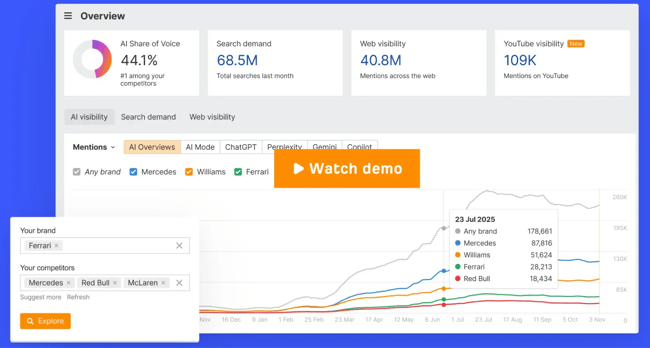
Otterly.AI
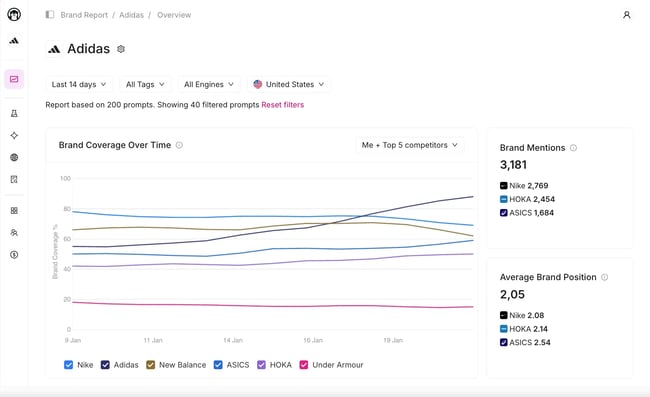
Profound
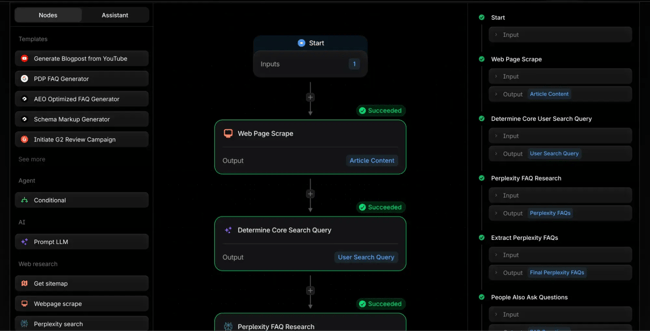
How to Use Share of Voice Tools for Social Media
Fast Setup Workflow
Define competitor set (3–6 competitors are manageable).
Create query groups: branded terms, product category terms, campaign hashtags, and executive names.
Set up sentiment filters and alerts for crisis thresholds.
Establish a reporting cadence — weekly during active campaigns, monthly for always-on measurement.
Segment SOV by platform to understand where each competitor wins and loses.
Social Media SOV Tools
Sprout Social
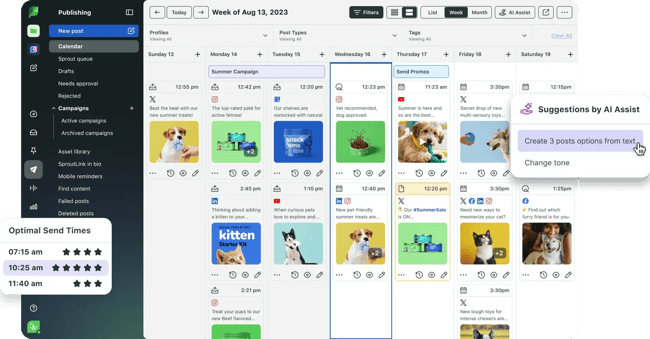
Brandwatch
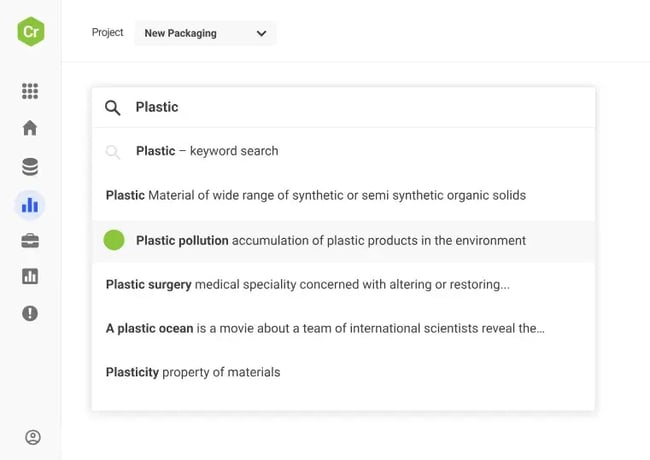
Brand24
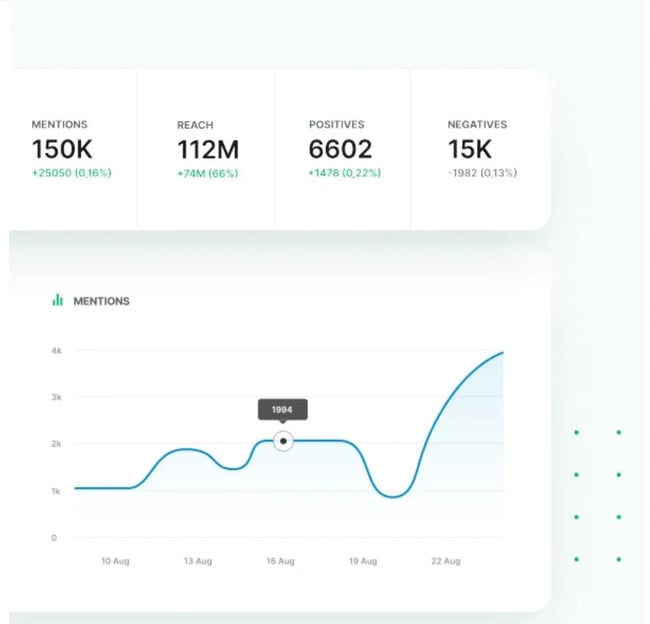
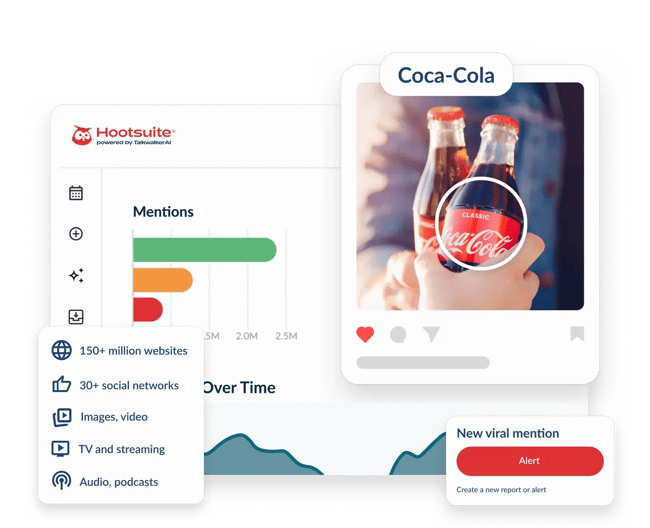
Hootsuite Listening
Which share of voice tools help with PR and media monitoring?
PR/Media SOV Tools
Meltwater
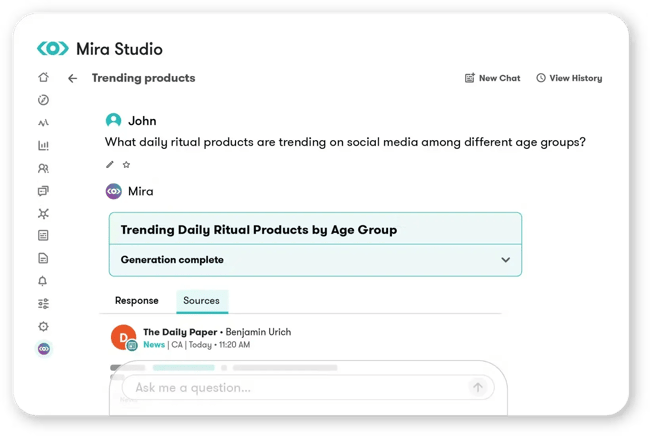
Cision
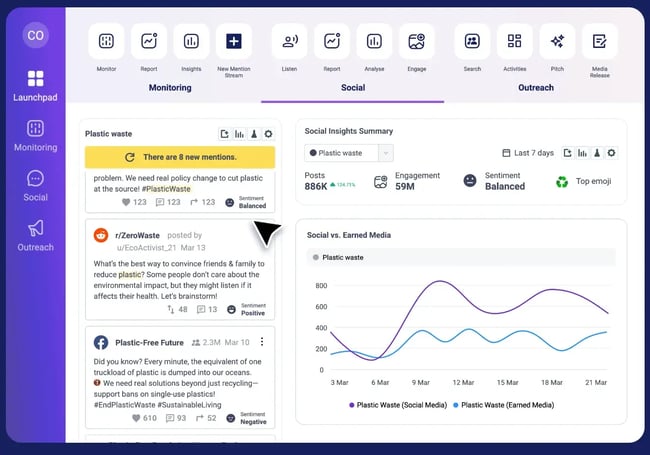
Brand24
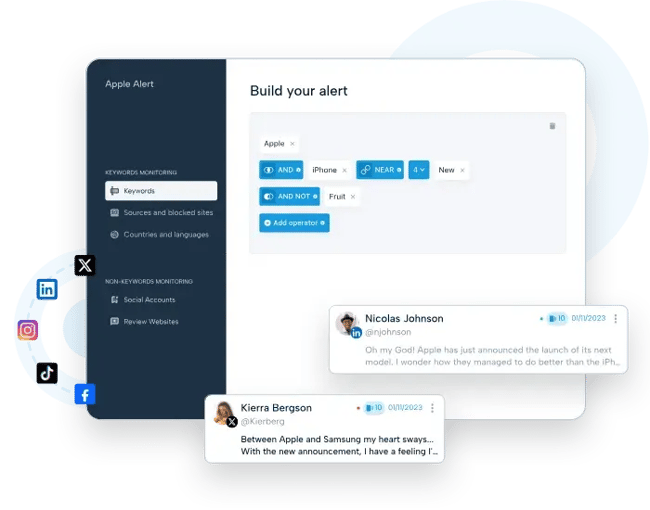
Mention
Share of Voice vs. Share of Market vs. Share of Search
A Simple Selection Framework
Use SOV when marketing teams need to measure campaign effectiveness, benchmark visibility, or track competitive positioning across a channel.
Use SOM when teams need to evaluate revenue performance or present business results to leadership.
Use SOS when teams want a leading indicator of brand momentum — it’s particularly useful for tracking whether a new campaign or content push is actually building category awareness.
Common Reporting Mix-ups and Fixes
How to Connect Share of Voice to Pipeline and Revenue
A Four-layer SOV-to-revenue Framework
Layer 1: Visibility (SOV). Track SOV by channel — SEO, social, PR, AI — against your defined competitor set. Set quarterly SOV targets by channel.
Layer 2: Leading indicators. Connect SOV shifts to branded search volume (via Google Search Console or Google Trends), direct traffic, and organic session growth. These are the signals that SOV gains are translating into awareness.
Layer 3: Pipeline inputs. Connect organic sessions and branded traffic to form fills, demo requests, and trial starts. If SEO SOV is growing but organic leads aren’t, a brand likely has a conversion problem — not a visibility problem.
Layer 4: Revenue. In the CRM, tag leads by acquisition channel and track them through to Closed Won. This is where marketing automation and attribution tools become essential. Without multi-touch attribution, marketers will struggle to accurately credit organic and earned channels.
How to Get Started and Improve Share of Voice
Frequently Asked Questions About Share of Voice Tools
What is the difference between share of voice and share of market?
How do I increase share of voice without overspending?
Do I need a SOV tool, or can I build this in a spreadsheet?
How often should I refresh my AI SOV prompt set?
Which share of voice tools fit startups vs. mid-market vs. enterprise?
From Visibility to Revenue: Turning Share of Voice Into a Growth System






















.jpg&h=630&w=1200&q=100&v=c0f97a310e&c=1)