This Vietnamese alternative to Phuket is a haven for island-hoppers
Siobhan Grogan discovers the temples, beaches and villages of this lesser-known South East Asian destination
 Koichiko
It’s lunchtime in Duong Dong’s main market and there’s not another tourist in sight. Motorcycles zip in every direction down the heavily potholed street. Some are piled high with crates of mangoes or squid; another has two toddlers squeezed between both parents on a seat meant for one. Everyone pulls up directly outside each stall to shop straight from the bike. Tables are laden with fresh cuttlefish and sea urchins, hauled off the boats that dock just behind the market. There are huge baskets of dragon fruit, spiky durians and mini bananas; one elderly man in a conical bamboo hat gestures at a tank of plump frogs at my feet wondering if I might want to take some home for dinner.
Just over the bridge, it’s a different story. Metres away, the town’s much-tidier night market is opening up for an influx of tourists, lined with street food stalls, coffee shops and souvenir stands. Streets are hung with silk lanterns and fairy lights; locally grown fruits can be whizzed into smoothies or drizzled with chocolate while you wait. Vietnam’s largest island, Phu Quoc, is having something of an identity crisis.
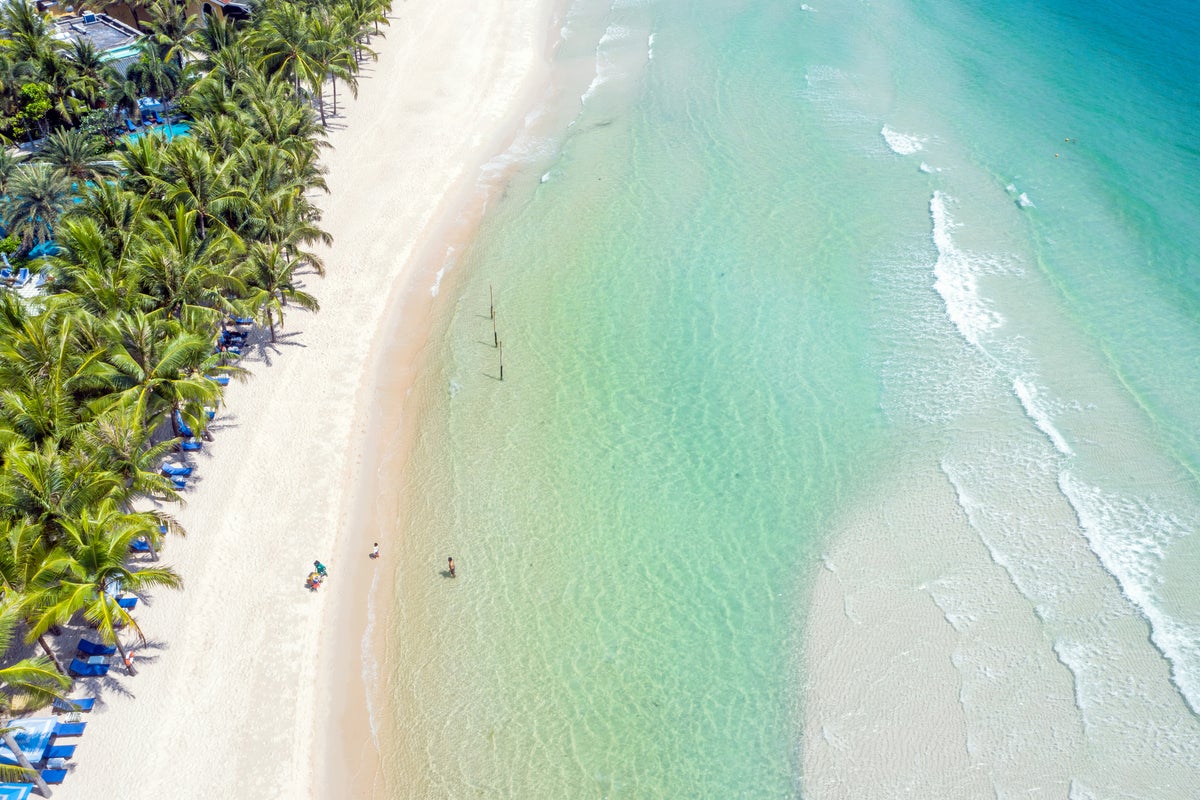
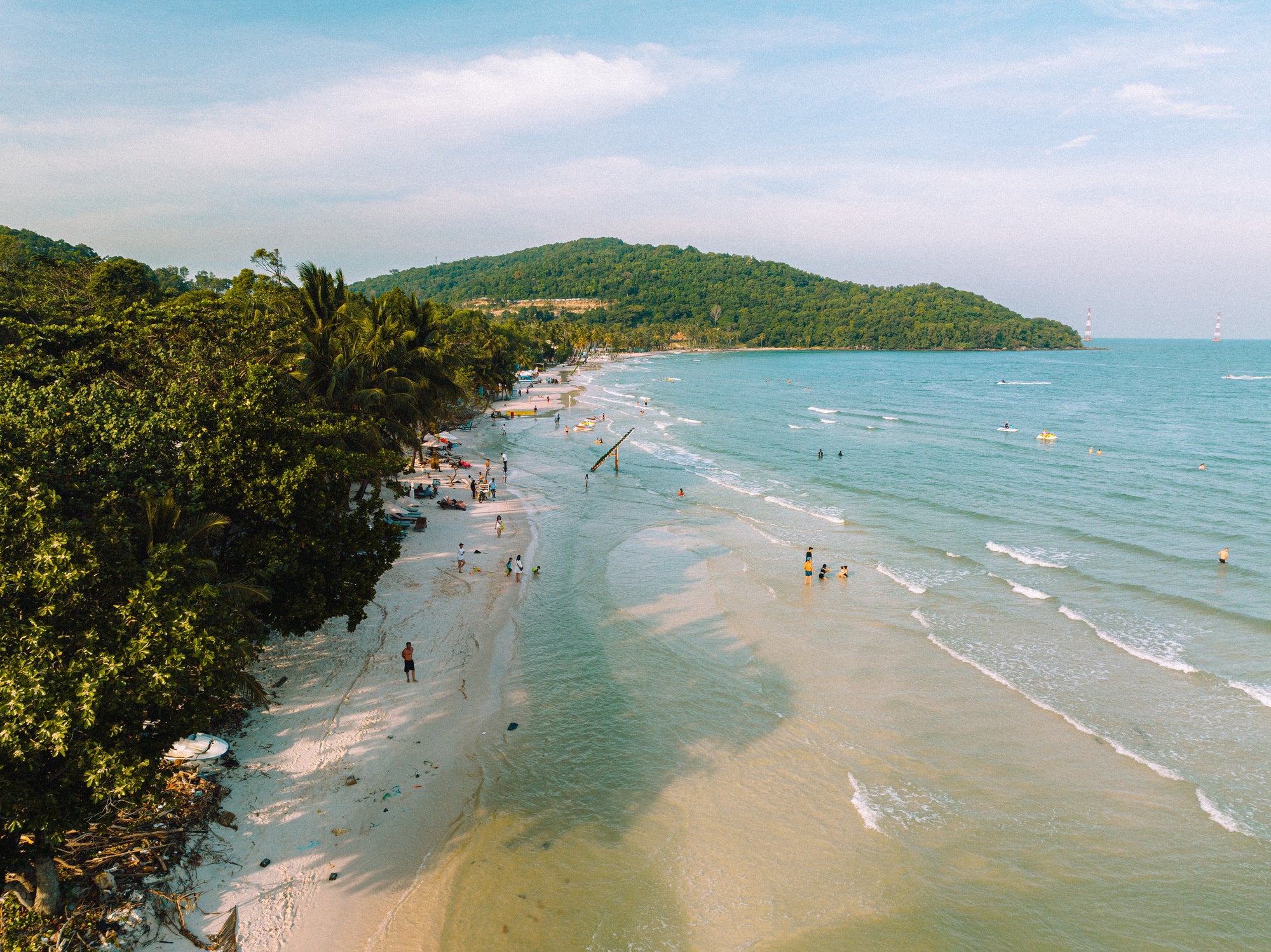
An hour’s flight from Ho Chi Minh City, the island is the largest in both Vietnam and its archipelago of 22 forest-blanketed specks in the Gulf of Thailand. Roughly the same size as the Isle of Man, more than half is covered in tropical jungle, designated as a World Biosphere Reserve by Unesco, with 93 miles of white sand beaches unfurling between tiny fishing villages.
Read more: This extraordinary Southeast Asian country is no longer just for backpackers
Phu Quoc didn’t get electricity from the mainland until 2013 and is best known for its bountiful pearls and locally-made pepper and fish sauce. Somehow, unlike its South East Asian lookalikes – Phuket and Bali – it’s yet to become a fixture on every British backpacker’s bucket list, partly as there’s no direct flight from the UK.
But change is afoot. The Vietnamese government have earmarked Phu Quoc as its tourism trump card. British visitors to the country overall have already increased 20 per cent in 2025 compared to the year before, in part because of new rules allowing visa-free entry for up to 45 days. The government now hopes to attract 15 million visitors to Phu Quoc by 2030, a 114 per cent increase from 2025. An international ferry terminal is being built; the international airport – which only opened in 2012 – is being expanded. A raft of new hotels is planned, including a W in 2027 and a Ritz-Carlton in 2028. On a boat trip along the coast, I cruised past Maldives-style over-water villas, part of the yet-to-open Park Hyatt resort.
Two major Vietnamese developers – VinGroup and Sun Group – have already moved in, taking dibs on either end of the 31-mile-long island and building a baffling array of attractions including a safari park and a theme park. Sun Group’s Sunset Town, on the southwest coast, is the most bewildering example; a coastal complex of pastel-coloured townhouses, sculptures, fountains and replicas of both Rome’s Colosseum and Venice’s St Mark’s Campanile.
I visited intending to ride five miles on the world’s longest oversea cable car to Pineapple Island, where turquoise coves sit incongruously next to a big-thrills waterpark. Instead, I found mostly deserted streets and was told tourists arrive in the early evening to watch the nightly Vegas-style water show and fireworks display. I don’t hang around to see them.
Luckily, the vast majority of Phu Quoc’s jungle, farms and beaches are still overlooked, even by the Korean, Taiwanese and Russian tourists already here. Stay centrally and you can largely avoid most development. Regent Phu Quoc, which opened in 2022, is a 20 minute drive south from the main town of Duong Dong, past tin-roofed shacks, endless palm trees, roadside carts selling 40p coconuts and banh mi and, inevitably, the odd building site.
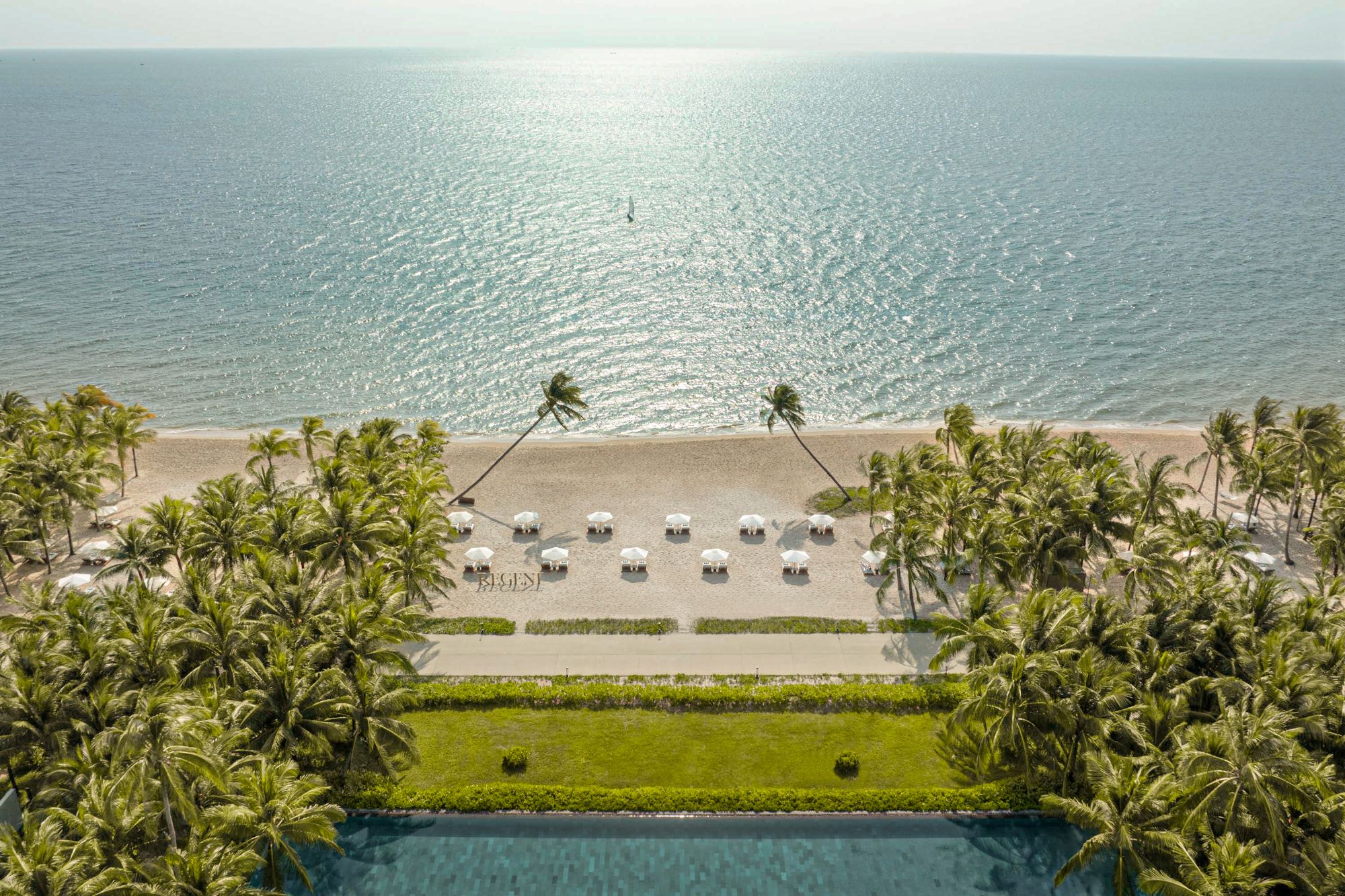
The hotel is certainly no backpacker bolthole. Vast and luxurious, most of its stylish suites and villas have huge private pools. There’s a chic spa and groomed stretch of icing sugar-soft beach dotted with hammocks. Four outstanding restaurants include Oku, where a former Nobu chef serves sushi omakase-style, and a Balearic-style beach club with a poolside Aperol trolley. It also has its own jetty and catamaran, which I hop on to go snorkelling at the An Thoi islands, a string of 15 islets scattered off Phu Quoc’s southern coast including Hon Mon Tay (Fingernail Island) and the coral reef-ringed Hon Kim Quy.
Read more: With a dark history and a troubled present, is Cambodia still a good tourist destination?
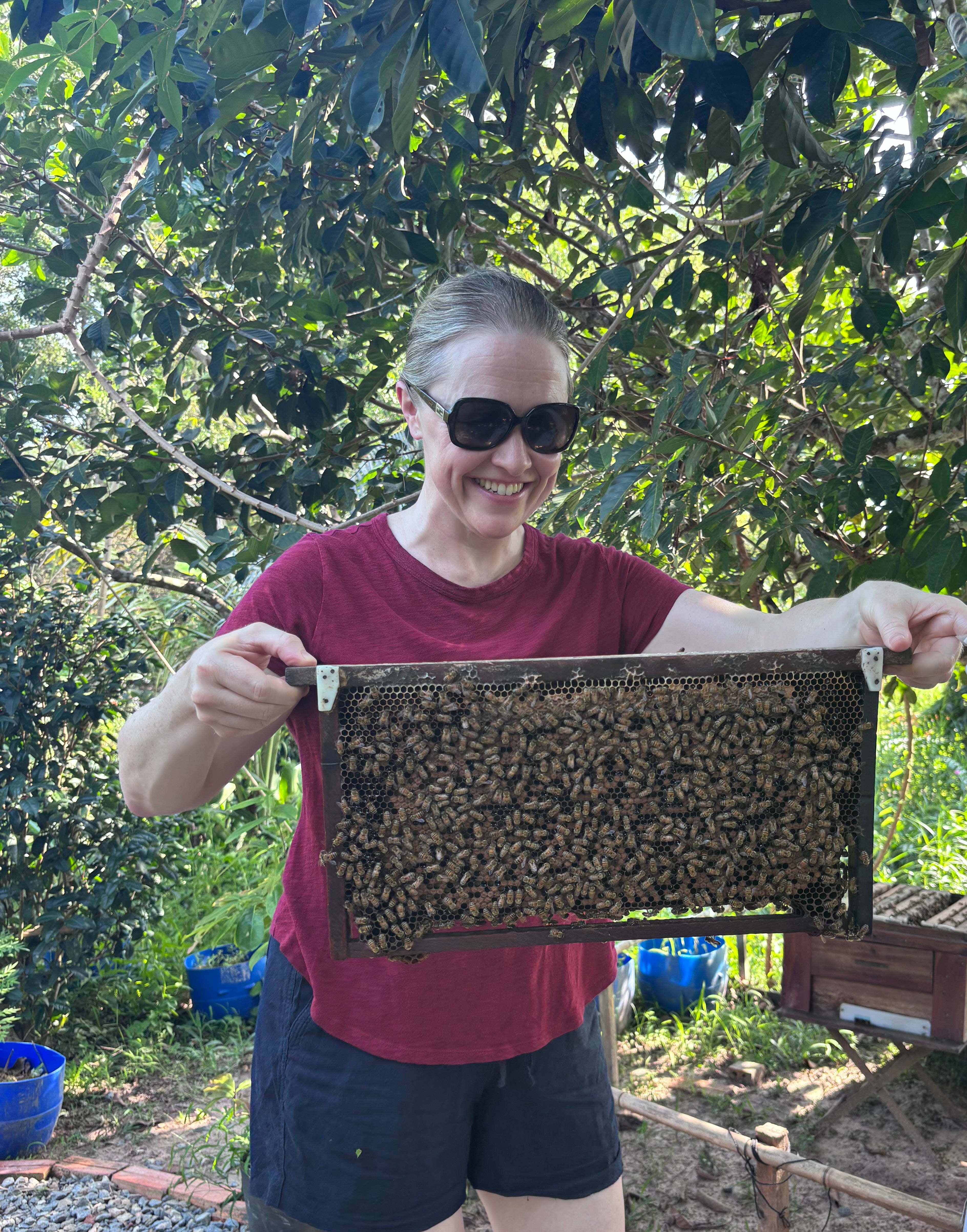
The next day, I travel north with island-born guide Sonny Nguyen. We pass miles of waterfall-dotted jungle before pulling into Vuon Tieu Phong Vy, a deserted roadside pepper farm where I wander through what appears to be someone’s back garden, full of peppercorn-heavy vines. We follow a dirt track alongside the sun-dappled Cua Can River, snaking past stilted villages on the shore, to a honey farm where one worker leads me through papaya, avocado and kumquat trees to the hives. He whips out a bee-covered frame for me to hold, even though I’m wearing just shorts and t-shirt, assuring me the bees are “friendly”. Astonishingly, neither place charges an entry fee.
I head back to Duong Dong to visit its pastel-coloured Caodaism temple, where two elderly women eating lunch wave me inside. The religion, which fuses principles from Confucianism, Taoism, Buddhism and Catholicism and has six million followers worldwide, is believed to have started on the island when a spirit appeared to governor Ngô Vãn Chiêu. “Nobody visits here,” Nguyen tells me. “Even though it’s just round the corner from the night market.”
Back at the Regent later, I dine on a platter of Phu Quoc lobster and oysters straight from the Gulf of Thailand. As the sun dips below the horizon, neon green lights blink on all over the bay from fishing boats hoping to lure squid closer. Traditional island life continues as it always has, no matter what changes shape Phu Quoc in future.
How to do it
Vietnam Airlines has flights from London Heathrow to Phu Quoc, stopping in either Ho Chi Minh City or Hanoi. Flight time is from 15 hours. Prices start at £855.
Where to stay
Ocean View Suites at Regent Phu Quoc cost from £414 per night, including breakfast. The all-suite and villas hotel has five pools, a spa with a rooftop yoga pavilion and meditation studio, a free kids’ club and a private catamaran. Water sports and bike rental are complimentary and daily activities include crystal bowl meditation, lantern making and guided jungle hikes.
Siobhan Grogan was a guest of Regent Phu Quoc