Tricycle’s Favorite Books of the Year
Some of our favorite Buddhist titles from 2025 The post Tricycle’s Favorite Books of the Year appeared first on Tricycle: The Buddhist Review.
 ShanonG
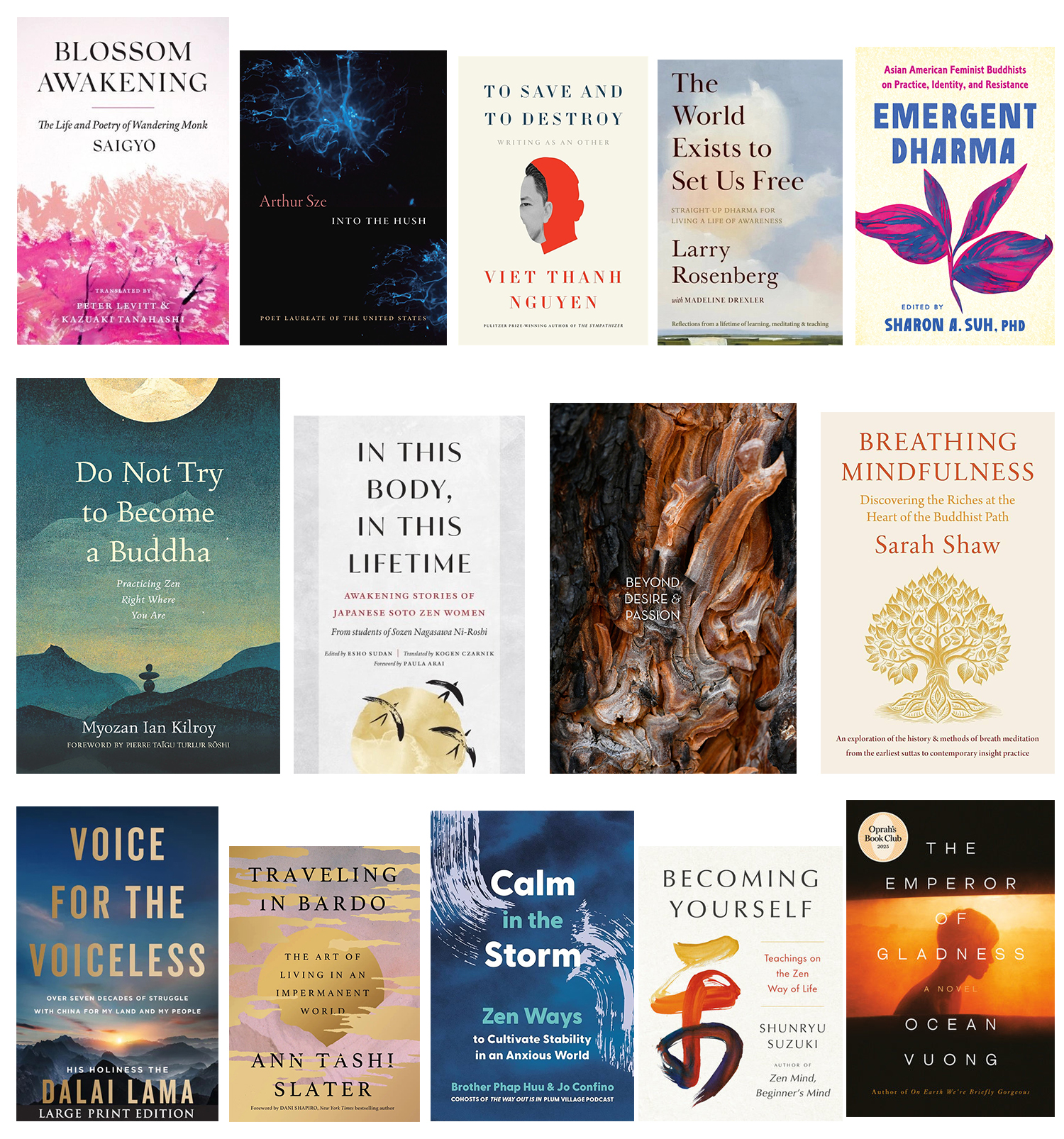
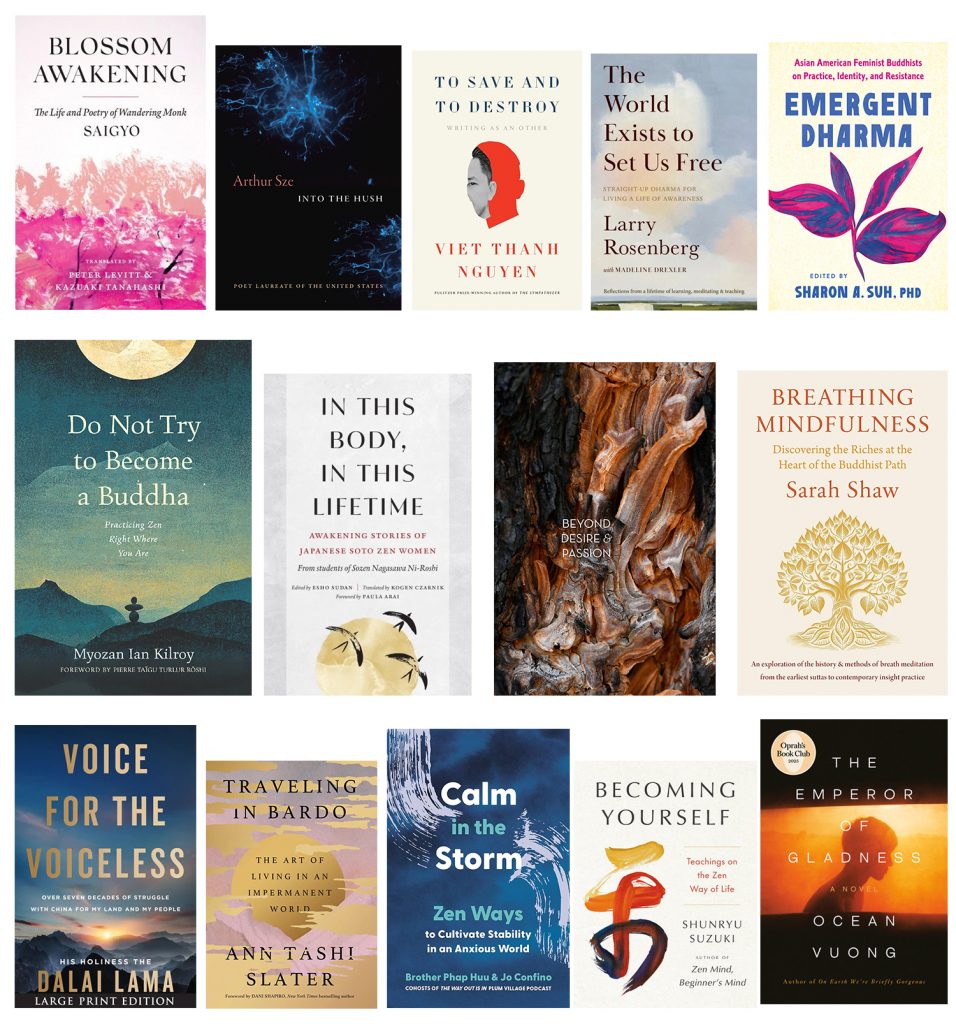
Some of our favorite Buddhist titles from 2025
In our recently published inaugural Substack essay, author Daisy Lin uses koans to investigate her anxieties about not knowing what the future has in store. And in fact, many of our favorite book titles of the year leaned into just that: the ineffable. This unknowability comes up in a myriad of ways, spanning verses on emptiness from a poet laureate, previously untranslated kensho stories written by nuns and laywomen during World War II–era Japan, and lyrical prose on the mysteries of dementia and addiction. Many of these titles were featured in our quarterly What We’re Reading column, which can be found online and in print, where we regularly share a collection of new books that we’re enjoying—as well as older ones we think are worth a second look. Others can be found among our bevy of magazine and Web offerings, whether in the form of author interviews, featured book passages, or reviews.
Whether providing essential teachings on finding a deathless happiness beyond desire or stitching together a panoply of different thinkers for a treatise on otherness and a more capacious kind of grief, these books stimulated our intellectual curiosity, brought us into connection with the lineages and people that got us on the path, and helped us to put down our efforts and, perhaps, to see the world a little more clearly.
Without any further ado, here are some of our favorite books from 2025.
Into the Hush by Arthur SzeFor poet and translator Arthur Sze, poetry offers a way to ask difficult questions without any expectation of an answer. His twelfth book of poetry, Into the Hush, experiments with the dance between sound and silence in presenting a startling portrait of the nuclear age, chronicling the plight of vanished languages and species and asking how to live fully in the face of catastrophe. In poems that push the boundaries of language, Sze—who was recently named United States Poet Laureate—conjures and inhabits the voices of jaguars, aspen leaves, and erasers, in turn, expanding our awareness—and, in the process, forcing us to reckon with the devastating impact of the Anthropocene. For more on Into the Hush, listen to Sze read and discuss several of its poems on a recent episode of Tricycle Talks. Becoming Yourself: Teachings on the Zen Way of Life by Shunryu Suzuki
In the long-awaited final installment from one of the most influential spiritual teachers of the last century—who is often credited with establishing Zen in the West—Shunryu Suzuki Roshi shares simple, warmhearted teachings on a practice that is fundamentally about becoming yourself. Compiled from “a trove of old recordings and rough transcripts” by the late Sojun Weitsman, an early student of Suzuki’s and the former abbot of Berkeley Zen Center, and Jiryu Rutschman-Byler, the current abbot at Green Gulch Farm, the first part of the book focuses on sitting practice; the second explores how to bring that spirit into our daily life; and the third centers on the Buddhist precepts as guidelines for living with integrity. Speaking about the book with Shoren Heather Iarusso, head of practice at Tassajara, Jiryu attests that, “Even though he gave these talks long ago, they still feel fresh and immediate to practitioners today.” Learn more about the book in Ryuko Laura Burges’s review in the Winter 2025 issue, plus read an excerpt from the book, “Taking Care of Yourself,” on Tricycle’s website. In This Body, In This Lifetime: Awakening Stories of Japanese Soto Zen Women by Sozen Nagasawa Roshi
The only independently teaching female Zen teacher of her time, Sozen Nagasawa Ni-Roshi (1888–1971) was a formidable figure in shaping Japanese Buddhism and advocating for equal rights for nuns and laywomen. As the founder and abbot of Kannon-ji, she trained generations of students with fierce compassion and relentless intensity. Whenever students had a kensho experience, she encouraged them to write down their story to empower others and to demonstrate women’s capacity for awakening. This collection gathers thirty of these stories, presented in English for the first time. Read one of these awakening stories, “Remembering My Child,” in an excerpt on Tricycle’s website. Beyond Desire & Passion: The Buddha’s Training for Freedom by Thānissaro Bhikkhu
With his characteristic precision and wit, Thai forest monk and Metta Forest Monastery abbot Thānissaro Bhikkhu challenges popular notions that Buddhist practice means accepting the way things are or returning to an imagined original nature. “There’s no good reason to want to go back there,” he writes, “and we won’t be able to go back there anyhow.” Thānissaro argues that liberation lies not in recovery or reversion but in developing dispassion—a sharp and comprehensive corrective for those seeking clarity on what Buddhism teaches about desire. For more from Thānissaro, read “Starting Out Right.” Emergent Dharma: Asian American Feminist Buddhists on Practice, Identity, and Resistance edited by Sharon A. Suh, PhD
The first anthology of its kind, Emergent Dharma brings together the voices of eleven Asian American feminist Buddhists to present a dynamic vision of Buddhist practice. Taking inspiration from feminist thinkers such as adrienne maree brown, Roxane Gay, and Sara Ahmed, the writers in the volume raise vital questions around identity, community, and resistance, including the dangers of equating Buddhism primarily with meditation, the importance of examining the histories of Buddhist-sanctioned violence, and the relationship between love and rage. Listen to Suh discuss the book on a recent episode of Tricycle Talks, and stay tuned for an excerpt from the book in the Spring 2026 issue of Tricycle. Blossom Awakening: The Life and Poetry of Wandering Monk Saigyo translated by Peter Levitt and Kazuaki Tanahashi
Saigyo (1118–1190) was one of Japan’s most celebrated poets. Born to a noble family in the Heian period, he spent his early life as a samurai, until he became disillusioned with political violence at the age of 23 and resigned from his position to become a wandering monk. As a monk, he composed more than 2,000 waka, or poems. Blossom Awakening presents 193 of these waka, both in the original Japanese and in new translations by Peter Levitt and Kazuaki Tanahashi, organized into eleven themes, including renunciation, love, loneliness, the moon, and the dreamlike world. For Saigyo, waka were the “true form of the Tathagata (Buddha),” and reading poetry was akin to chanting esoteric mantras. Read in this spirit, Saigyo’s poetry offers an opportunity to meditate on life’s ephemeral nature and on the awakening that can come from embracing impermanence. Read seven poems from the collection in an excerpt on Tricycle’s website. Breathing Mindfulness: Discovering the Riches at the Heart of the Buddhist Path by Sarah Shaw
Written by a scholar of early Buddhism, this history of breath meditation has much to offer practitioners and scholars alike. The narrative opens with a walk through the forest, “our planet’s lungs,” and a reminder that breath meditation began in the forest millennia ago. Shaw first takes readers through the Anapanasati Sutta, the “locus classicus” of breath meditation, and then details the later texts, practices, meditation schools, and teachers up through the present day, including the history of the suppression—and remarkable survival—of the tradition of samatha meditation. Listen to Shaw discuss the book on a recent episode of Tricycle Talks. The Emperor of Gladness by Ocean Vuong
In his new novel, The Emperor of Gladness, poet and writer Ocean Vuong turns his attention to our cultural avoidance of illness and death, as well as the small moments of care and kindness that are essential to survival. Tracing the unlikely friendship between a young writer and an elderly widow who’s succumbing to dementia, the novel reckons with themes of history and memory, loneliness and heartbreak, and failure and redemption. For more with Vuong, be sure to check out his recent episode of Tricycle Talks, where Tricycle’s editor-in-chief, James Shaheen, sits down with Vuong to discuss how he incorporates notions of emptiness and nothingness into his writing, the role of ghosts and the dead in his work, and what he’s learned from Buddhist understandings of redemption. Voice for the Voiceless: Over Seven Decades of Struggle with China for My Land and My People by His Holiness the Dalai Lama
In addition to winning a Nobel Peace Prize, becoming a globally recognized spiritual leader and symbol of nonviolence, and, perhaps most importantly, leading his displaced people of Tibet into a thriving diasporic community, His Holiness the Dalai Lama is also quite the accomplished author, having authored (or coauthored) nearly a hundred books, including two memoirs, numerous works on Buddhist philosophy, and books on science, ethics, and human well-being. Unlike his previous books, Voice for the Voiceless: Over Seven Decades of Struggle with China for My Land and My People provides a deeply political account of Tibet, his decades-long effort to resolve the crisis, and China’s intransigence. “This book is, primarily, an account of more than seven decades of my dealing with successive leaders of Communist China on behalf of Tibet and its people,” the Dalai Lama writes. “It is also an appeal to the conscience of the Chinese people . . . as well as the broader international community, to care for the plight of the Tibetan people. Ours is an existential crisis: The very survival of an ancient people and their culture, language, and religion is at stake.” For more on Voice for the Voiceless, read contributor Bhuchung D. Sonam’s review of the book in the Fall 2025 issue of the magazine. Traveling in Bardo: The Art of Living in an Impermanent World by Ann Tashi Slater
In Tibetan Buddhism, the bardo is a between-state. While the term is usually associated with the passage from death to rebirth, it can also refer to the journey from birth to death—as well as the various transitional states we encounter along the way. According to writer and Tricycle contributing editor Ann Tashi Slater, Tibetan bardo teachings can transform the way we live—and help us find lasting happiness in a world defined by impermanence. In her new book, Traveling in Bardo, Slater explores how bardo wisdom can help us navigate change and transition with greater acceptance and creativity. Listen to Slater discuss the book on a recent episode of Tricycle Talks, and check out some of the conversations that shaped the development of the book in her interview series for Tricycle’s website, “Between-States.” The World Exists to Set Us Free: Straight-Up Dharma for Living a Life of Awareness by Larry Rosenberg with Madeline Drexler
The World Exists to Set Us Free is the latest title by Cambridge Insight Meditation Center founder Larry Rosenberg. Drawing from his lifetime of experience living and teaching the dharma, the 93-year-old Rosenberg shares his most core teachings in this intimate yet accessible book, perfect for new and longtime practitioners alike. Madeline Drexler, his student of over twenty-five years, provides a vivid introduction that paints a picture of the beloved teacher’s life and beliefs. For more, read an excerpt from the book, “Relationship as a Mirror.” Do Not Try to Become a Buddha: Practicing Zen Right Where You Are by Myozan Ian Kilroy
Do Not Try to Become a Buddha is a collection of brief essays from Irish Soto Zen priest Myozan Ian Kilroy. A former journalist, Kilroy offers an engaging reflection on the challenges and surprises of establishing a Zen community in Catholic-dominated Ireland. His essays narrate his journey to the dharma and introduce the basics of Zen philosophy, demonstrating the ways it is brought to life in ritual and adapted to the culture and traditions of Ireland. Tricycle was fortunate to publish numerous excerpts from this collection online in 2025, including “Fear of Losing Oneself” and “On Shunning the Body.” To Save and to Destroy: Writing as an Other by Viet Thanh Nguyen
To Save and to Destroy: Writing as an Other is the latest book by Pulitzer Prize–winning author Viet Thanh Nguyen. Based on his Norton Lecture series of the same name, To Save and to Destroy provides the prolific wordsmith with ample ground to explore his many topics and areas of inquiry with playful flourishes and a conversational tone, tracing his life in a nonlinear fashion, freely jumping from Ralph Ellison to Thich Nhat Hanh with Olympic diver-esque fluidity and ease. Across these lectures, The Sympathizer novelist addresses his feelings of being an outsider and develops a theme calling for a wider politics of “capacious grief” that connects the struggles of different oppressed peoples. Tricycle excerpted his lecture “On the Joy of Otherness” last October. Calm in the Storm: Zen Ways to Cultivate Stability in an Anxious World by Brother Pháp Hữu and Jo Confino
Brother Phap Huu is a senior teacher in Thich Nhat Hanh’s international community and the abbot of Plum Village in southwest France. In his latest book, Calm in the Storm: Zen Ways to Cultivate Stability in an Anxious World, which he co-wrote with Jo Confino, he lays out a compassionate guide for coming home to ourselves and meeting the challenges of our time with greater presence and resilience. In November, Tricycle excerpted the chapter, “Healing Our Inner Child,” where Phap Huu writes about how we can recognize and transform the harmful behaviors we’re still holding onto and let go of the stories that no longer serve us. And for more, listen to Phap Huu discuss themes from the book in a recent episode of Life As It Is.

Thank you for subscribing to Tricycle! As a nonprofit, we depend on readers like you to keep Buddhist teachings and practices widely available.