Warning for French and Spanish beaches after Portuguese man o’ war spotted
Pyrénées-Atlantiques and San Sebastian have reported an increased number of the venomous creatures
 KickT
KickT
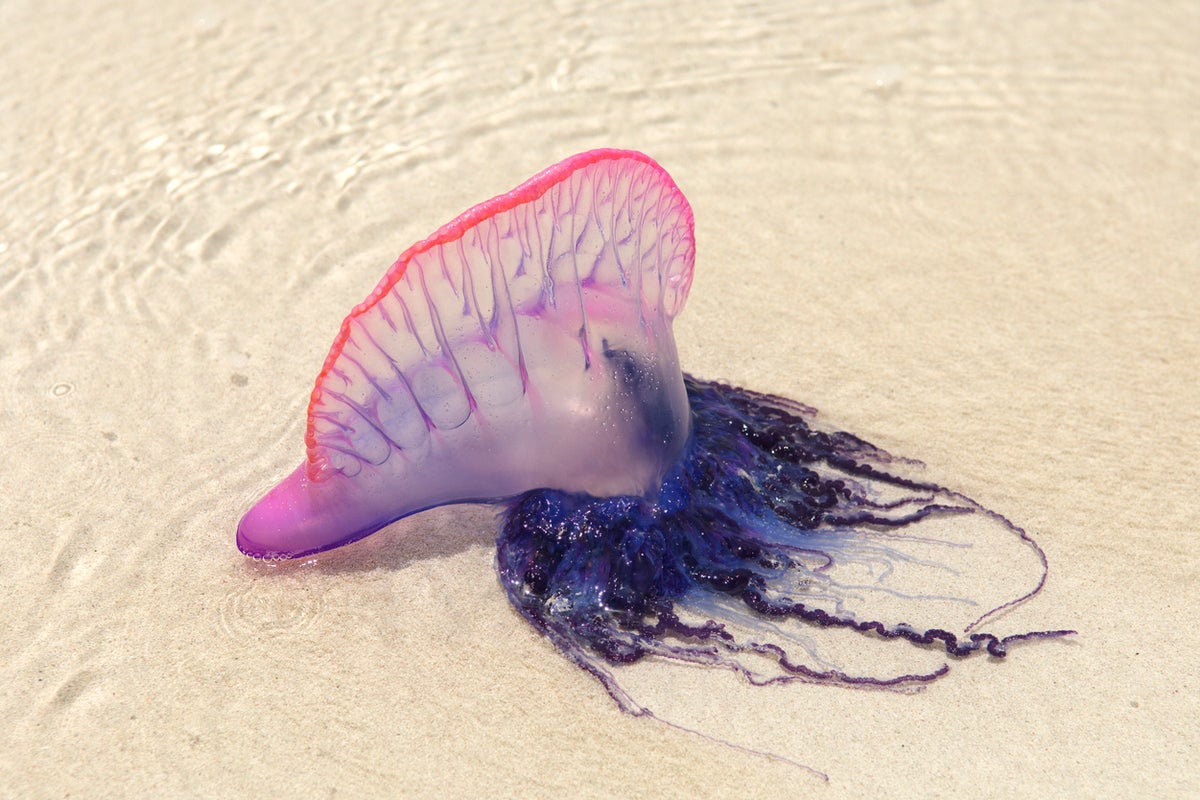
Beachgoers on Europe’s Atlantic coast have been warned due to increased sightings of a jellyfish-like sea creature with a nasty sting.
Pyrénées-Atlantiques, a southern department in France, has warned visitors about the presence of Portuguese man o’ war, which can leave painful skin burns if humans come into contact with them.
On the Cantabrian coast in Spain, the City Council of San Sebastian is using a flag system to warn visitors about the animal, with white flags signalling its presence and a red flag banning swimming. They have been spotted in increased numbers on the city’s beaches, such as Ondarreta.
Often mistaken for a jellyfish, the Portuguese man o’ war (Physalia physalis) is actually a “colonial hydrozoan”, made up of small animals called zooids, each with their own function such as feeding or breeding. They cannot live separately so function together as one being.
The UK’s Wildlife Trusts says the Portuguese man o’ war can be identified as a “large translucent purple float, the crest tipped with pink and long blueish-violet tentacles.”
They can be seen bobbing on the surface of the sea, sometimes caught in mats of seaweed, but lose their colour quickly after washing up and can appear translucent with just a tinge of purple.
The creature’s tentacles are most hazardous as they can sting long after the animal has died.
The Pyrénées-Atlantiques department advised anyone who may have come into contact with a Portuguese man o’ war to rinse their wound with seawater, or if available, one quarter of food vinegar and three quarters of seawater, preferably warm.
It said to never use fresh water, not to rub or scratch and to consult a doctor if the pain persists.
Over recent years, the beaches of Aquitaine along France’s Atlantic coast have seen an increased number of venomous marine animals.
The ARS Nouvelle-Aquitaine, a public health department in Bordeaux, says most of the lifeguards working in the rescue stations of Gironde, Landes and Pyrénées-Atlantiques can identify animals such as Portuguese man o' war and provide first aid to the victims.
Posters about Portuguese man o' war, pelagic jellyfish and weever fish can be found on notice boards at the entrance to beaches in the French department’s region.
San Sebastian said that the amount of Portuguese man-of-war can vary throughout the day and beaches are closed depending on the number and size of the specimens detected.
Read more: The European holiday destinations under threat from wildfires and heatwaves










.jpg?trim=0,0,0,0&width=1200&height=800&crop=1200:800)