
Who’s Actually Reading Your Emails in 2026?
Getting an email into someone’s inbox has never been easier. Getting them to do anything once it’s there is a different story entirely. Most teams still treat inboxing as the finish line. The email sends, it lands, the dashboard...
 Aliver
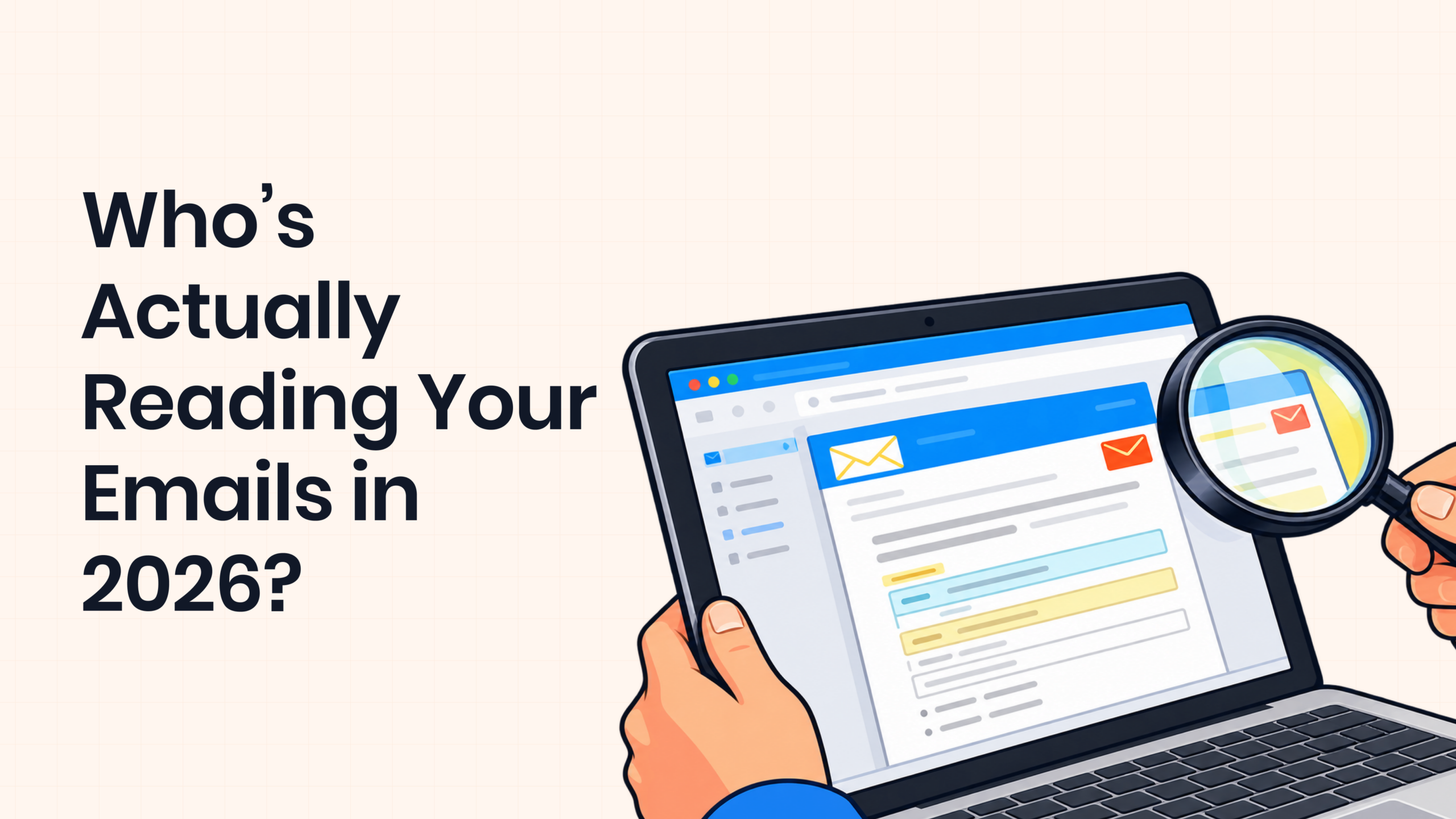
Getting an email into someone’s inbox has never been easier. Getting them to do anything once it’s there is a different story entirely.
Most teams still treat inboxing as the finish line. The email sends, it lands, the dashboard shows a green checkmark, and everyone moves on to the next campaign. But a delivered email and a read email are not the same thing, and by 2026, that gap has only gotten wider. Spam filters got smarter. Inboxes got noisier. And people got a lot better at scrolling past anything that smells like a template.
This is where email engagement comes in, and why it matters more than delivery alone. Deliverability gets you in the room. Engagement is what happens once you’re standing in front of someone.
In this piece, we’ll walk through what engagement actually means, what counts as a good rate today, how it is measured, and what to send.
What Is Email Engagement?
Email engagement is how recipients interact with a message after it lands in their inbox.This can include opening it, clicking a link, replying, forwarding it, or spending time reading it.
Different interactions tell you different things about how recipients respond to your emails. Some show initial attention, while others signal stronger interest or action.
A few examples of what engagement looks like in practice:
Opening the email and spending more than a few seconds on it Clicking a link, button, or image inside the body Replying, even with something as short as “not right now” Forwarding it to a colleague Taking the requested action after reading it like booking a callNotice that “opened” is the weakest signal on that list. It tells you the subject line worked. It doesn’t tell you the email did.
What Makes an Email Engaging?
An engaging email starts with relevance. The subject line, timing, and content should connect with something the recipient cares about or needs at that moment.
Subject lines get plenty of attention for good reason. They are often the first thing a recipient sees. A strong subject line should set a clear expectation for what follows. If the email itself feels generic or unrelated to that promise, interest can disappear quickly.
Timing also affects how people respond. An email that would have gotten a reply on Tuesday morning gets ignored entirely on Friday at 6 PM. Same content, completely different outcome.
A few elements can make an email easier to read and act on:
A subject line that accurately reflects the email A first line that gets to the point quickly Content built around something specific to the recipient A single, clear ask, not three different calls to action competing with each other Reasonable length that fits message and audience A sender name and email address that look like a real personThere’s also a basic etiquette layer worth mentioning. Don’t email people who never opted in. Make unsubscribing easy and immediate. And don’t disguise a sales pitch as a personal note, recipients can tell, and it burns trust fast.
How Do You Create Email Engagement?
Creating email engagement starts with three things: who you are sending to, when you reach them, and how relevant the content is to their needs.
Segmentation comes first. Dividing your list by factors such as industry, role, interests, or previous behavior gives you more room to create relevant messages for each group. A single message sent to everyone rarely offers the same level of relevance.
Send-time relevance is the second piece, and it’s more granular than “send it in the morning.” It means understanding when a specific segment tends to check email and act on it.
The content itself should reflect what you know about the recipient. Basic personalization, such as adding a first name, only goes so far. Their interests, previous interactions, role, or reason for joining your list can give you much more useful context.
Welcome emails are a good example. They arrive when someone has recently shown interest, so the first message can shape what they expect from future emails. A useful welcome email can introduce what you send, set expectations, and give the reader a clear next step.
Current information can also make a message more relevant, particularly in B2B outreach. Recent company news, changes in a prospect’s needs, or previous interactions can provide useful context for the message. The key is to use information that genuinely helps explain why the email is relevant to that recipient.
Different email marketing tools can help with different parts of email engagement, from building campaigns to finding prospects and monitoring deliverability.
1. Mailchimp supports email campaign creation, audience segmentation, automation, and performance tracking. It works well for teams managing newsletters, promotional emails, and other recurring campaigns.
2. Instantly focuses on cold email outreach, with features for sending, deliverability, lead management, and campaign analytics.
3. Apollo combines B2B contact data, prospecting, and sales engagement tools. Sales teams can use it to find contacts, build sequences, and manage outreach from one platform.
4. VitaMail uses real-time lead sourcing to find fresh prospects based on each campaign. It also supports email verification, email creation, and domain health checks in one workflow.
The right tool depends on what you need to improve. Campaign analytics can show how recipients respond, while prospecting and verification tools can help improve the quality of the audience you reach. The results still depend on the relevance of the message and the people receiving it.
What Is a Good Email Engagement Rate in 2026?
There is no single email engagement rate that works as a benchmark for every business. Results vary by industry, audience, list quality, and the type of email you send.
Mailchimp reports an average open rate of 35.63% and an average click rate of 2.62% across its users. For Business + Finance, those averages are 31.35% and 2.78%, respectively. Its benchmark data covers billions of emails, with campaigns sent to at least 1,000 subscribers.
That context is important when looking at commonly searched benchmarks:
Is a 2% engagement rate good? It depends on the metric. If you mean click rate, 2% is close to benchmarks reported for several industries. Compare it with similar campaigns and your own historical results. Is a 40% open rate good? It can be a strong result, but the answer depends on your industry and audience. Some current industry benchmarks sit below 40%, while others exceed it. Is a 70% open rate good? A 70% open rate is high compared with broad industry benchmarks, but open data needs context. Privacy features and bot activity can inflate recorded opens, so a high rate does not necessarily mean 70% of recipients read the email.Open rates also tell only part of the story. Someone who opens an email, clicks, and completes the intended action shows stronger engagement than someone who only registers an open. Looking at clicks, replies, and conversions alongside opens gives you a clearer picture of campaign performance.
How Is Email Engagement Measured?
There isn’t one universal engagement number. Most marketers track several metrics together because each one shows a different part of how recipients interact with an email.
| Metric | What It Tells You |
| Open rate | How often tracked emails appear to have been opened |
| Click-through rate | How many recipients clicked a link in the email |
| Click-to-open rate | How often a tracked open resulted in a click |
| Reply rate | How many recipients responded to the email |
| Conversion rate | How many recipients completed the intended action |
| Bounce rate | How many emails could not be delivered |
| Unsubscribe rate | How many recipients opted out of future emails |
| Spam complaint rate | How many recipients reported the email as spam |
No single metric can tell you exactly who is reading your emails. Each one captures a different stage of engagement. A campaign may have a high open rate but very few clicks or replies, while another may generate fewer opens but stronger action from the people who engage.
Looking at these metrics together gives you a clearer picture of how your email campaigns perform. Opens can indicate initial attention, while clicks, replies, and conversions show what recipients do after opening the message.
What Is an Email Campaign?
An email campaign is a coordinated series of emails sent to a specific audience with a defined goal, such as driving signups, booking meetings, or nurturing leads toward a purchase.
For example, a company launching a new feature might send an announcement email, a use-case email a few days later, and a final reminder before the promotion ends. Each message contributes to the overall goal of the campaign.
Creating an email campaign starts with defining the goal and identifying the audience. From there, you can plan the content, timing, subject lines, and segmentation around the action you want recipients to take.
What Are the Types of Emails You Can Send?
The main types of emails are welcome, newsletter, promotional, transactional, re-engagement, cold outreach, and nurture emails. Each serves a different purpose and requires different ways of measuring email engagement.
Welcome emails: Introduce new subscribers or users after they sign up Newsletter emails: Share regular updates, content, or company news Promotional emails: Promote offers, discounts, products, or launches Transactional emails: Deliver receipts, confirmations, or account updates Re-engagement emails: Reach subscribers who have become less active Cold outreach emails: Start conversations with new prospects Nurture emails: Guide leads toward an action over multiple messagesCold outreach also needs its own benchmarks. A 2026 Belkins study of more than 7.5 million cold emails found an average reply rate of 0.45% for messages sent during 2025.
Each type calls for a different approach to content, timing, and measurement. For example, replies may matter more for cold outreach, while clicks and conversions can be more useful for promotional email campaigns. Matching your engagement metrics to the purpose of the email gives you a clearer view of performance.
How Do You Send Emails at Scale Without Losing Engagement?
Sending emails at scale requires a healthy sending setup, a well-targeted list, and segmentation that continues as your audience grows. These factors help protect email engagement as sending volume increases.
If you need to send hundreds or thousands of emails, most email marketing tools can handle batching and scheduling. Before sending, check your list quality, segment recipients into relevant groups, and make sure your sending infrastructure is properly configured.
As volume grows, relevance becomes harder to maintain. Larger lists often contain people with different roles, needs, and levels of interest. Breaking them into smaller segments allows you to tailor your message more closely to each audience.
For larger email campaigns, monitor engagement and deliverability as you increase volume. Changes in clicks, replies, conversions, bounces, or complaints can help you identify problems early and adjust future sends.
Conclusion
Deliverability remains an important part of email marketing because recipients cannot engage with messages they never receive. Once an email reaches the inbox, what the recipient does next gives you a better picture of its performance.
In 2026, understanding email engagement means looking beyond delivery and considering opens alongside stronger signals such as clicks, replies, and conversions. Audience relevance, list quality, timing, and useful content all influence how people respond to your email marketing campaigns.
The most useful email marketing tips often come from your own campaign data. Pay attention to who engages, which messages prompt action, and where interest starts to drop. Those patterns can help you make each campaign more relevant to the people receiving it.
FAQ
What is the 3-3-3 rule for marketing?
It’s a rough guideline suggesting content should hook attention in the first 3 seconds, hold it for 3 sentences, and deliver value within the first 3 lines, a useful gut check for email openings specifically.
What are the 5 T’s of email marketing?
Commonly cited as Tease, Target, Teach, Test, and Track, a loose framework for structuring campaigns from creation through measurement.
What are the 5 steps of email marketing?
Generally: define your goal, build your list, create your content, send and automate, then measure and refine. It’s a cycle more than a one-time process.
What is the 40-40-20 rule in marketing?
A rule of thumb suggests 40% of a campaign’s success comes from the audience, 40% from the offer, and 20% from the creative execution. It’s a helpful reminder that a great subject line can’t fix a poorly targeted list.
What are the 7 P’s of marketing?
Product, Price, Place, Promotion, People, Process, and Physical Evidence, a broader marketing mix framework that applies to email as one channel among several, not a system built specifically for it.

















.jpg?trim=0,0,0,0&width=1200&height=800&crop=1200:800)