AI dramas need actors, so Chinese platforms are turning human faces into stock assets
Chinese platforms are paying people to license their faces for AI-generated dramas, but contracts may offer limited protection once those reusable digital likenesses leave the marketplace.
 Koichiko

People can now earn money by licensing their likenesses to AI creators, although keeping track of where those digital faces end up may prove considerably harder
 Tilly Norwood
People in China can now license their face to AI much like a photographer licenses a stock image. AI creators can then make that likeness speak, move, and appear as different characters in short dramas or ads.
Contributors have earned between $15 and $700 through platforms such as ActID and New Claw, according to Rest of World.
For studios, these marketplaces provide virtual actors without the trouble of arranging a conventional shoot. Contributors get defined payment terms, but once the files leave the platform, the agreement can’t guarantee every buyer will behave.
How does renting a face work
ActID reportedly has around 800 registered users, including roughly 300 people licensing their likenesses. Creators pay between 99 and 500 yuan per episode, while the platform takes a 10% commission.
 Dynasty Drama AI
New Claw lets contributors upload their own images and set a minimum licensing price of 500 yuan per image. Buyers can use the resulting likenesses in AI projects covered by the agreement.
A stock photo usually captures one expression in one setting. A licensed AI likeness can play a recurring character, giving buyers far more freedom and contributors many more places to look for misuse.
Why does AI need so many faces
China’s appetite for AI-generated entertainment is creating work for faces even when their owners never step onto a set.
Figures from the China Netcasting Services Association suggest AI was used in more than 95% of the 128,000 microdramas released during the first quarter of 2026. Studios producing content at that scale need characters they can license and put to work quickly.
 Dynasty Drama AI
One photo session could lead to an unusually long acting career, minus the trailers and uncomfortable press tours.
Can you get your face back
Chinese law requires consent before biometric data can be processed and prohibits fabricating someone’s likeness without permission. Face-licensing platforms add contracts and technical restrictions intended to keep buyers within the agreed uses.
Enforcement is messier. The Guangzhou Internet Court has handled around 700 AI-related disputes over three years, including cases involving face-swapping and copyright.
Anyone tempted to license their face to AI should look beyond the fee and check how the platform tracks unauthorized use. A contract can define who has permission to use your likeness. It can’t make every rogue version disappear.

Paulo Vargas is an English major turned reporter turned technical writer, with a career that has always circled back to…
Experts find it’s easy to manipulate AI chatbots into coughing up bioweapon recipes
AI’s bioweapon guardrails are easier to crack than you’d hope

AI companies have spent years building safeguards designed to stop their chatbots from helping someone create a biological weapon. The models themselves are becoming so capable that keeping that knowledge behind those barriers is turning into a serious problem.
Researchers at Cisco found they could bypass safeguards on major chatbots including OpenAI’s ChatGPT, Anthropic’s Claude, and Google’s Gemini within five conversational turns, according to a Wall Street Journal investigation. The researchers were able to elicit potentially dangerous answers after gradually steering the conversations around the models’ restrictions. Amy Chang, Cisco’s head of AI threat and security research, told the Journal that no model can be completely protected from a sufficiently persistent user.
Gem Browser imagines an internet where every website is yours to redesign
By generating its own interactive version of a webpage, the experimental browser puts readers in control of the interface and publishers on uncertain ground
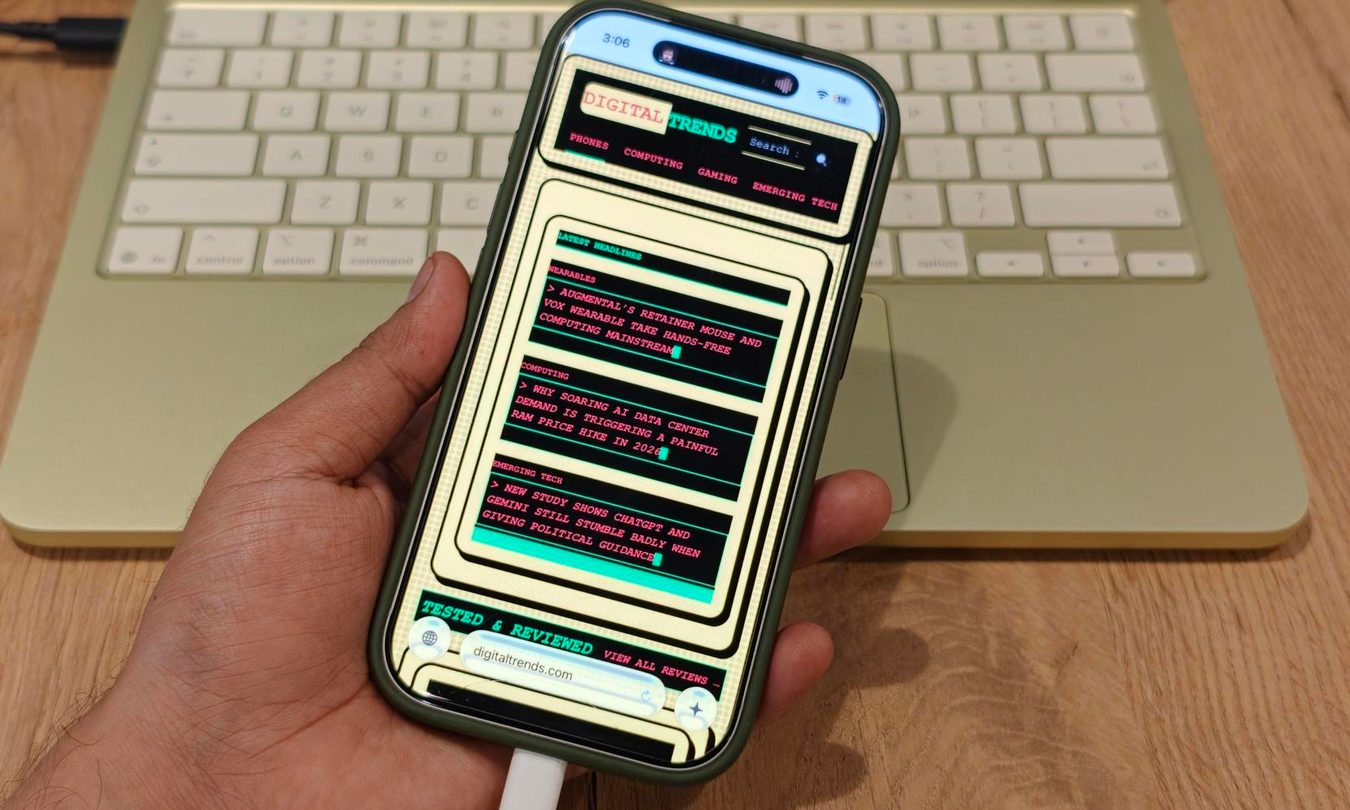
Gem Browser can rebuild an existing webpage around whatever the reader asks for. Google DeepMind designer Vidy Thatte demonstrated the feature in his original announcement, showing how the Apple-only experiment uses Gemini to make a website’s familiar interface optional.
That sounds wonderfully strange if you’ve ever wanted to rearrange the internet to your liking. It’s probably less delightful for whoever built the page being rearranged.
I just found a Mac app that puts volume and brightness sliders on your MacBook’s touchpad edges
Forget the function keys, your trackpad edges do it all now.

Your MacBook has keys to adjust volume and brightness, making it easy to adjust them. But what if you want to adjust the volume at night or you are watching your favorite movie on Netflix and don’t want to hunt for the keys and miss an important moment?
I know these are small annoyances, but small annoyances add up, and I love apps that help me resolve them. Today, I want to share an app that solves this issue by adding volume and brightness sliders to your MacBook’s trackpad.


















.jpg&h=630&w=1200&q=100&v=c0f97a310e&c=1)