Are AI Overviews Stealing Your Clicks? How Paid Search Teams Are Adapting to the Answer Engine Era
Key Takeaways Your impression numbers look healthy. Your click-through rate tells a different story. For many paid search teams, this is the new reality. AI Overviews now appear at the top of Google search results for millions of queries,...
 ValVades
Key Takeaways
AI Overviews can reduce paid search click-through rates by more than 50 percent for affected queries, making impression share a critical visibility metric. Informational queries are most vulnerable. AI answers resolve research intent directly in the SERP, reducing the number of users who scroll to ads. Transactional and brand queries hold up better. Teams reallocating budget toward high-intent searches see more consistent engagement. Measurement frameworks need to expand. Click-through rate alone no longer tells the full story when impressions rise but clicks fall. Search is no longer a single channel. Brands that extend paid strategy to YouTube, Pmax, Demand Gen, Reddit, TikTok, and AI platforms capture demand earlier and across more touchpoints.Your impression numbers look healthy. Your click-through rate tells a different story.
For many paid search teams, this is the new reality. AI Overviews now appear at the top of Google search results for millions of queries, answering user questions before they ever reach the ads. Impressions hold steady or climb. Clicks get harder to come by.
Research from Seer Interactive found that when AI Overviews appeared in search results, paid click-through rate dropped to 9.87 percent compared to 21.27 percent on the same queries without an overview. That translates to a 53.6 percent reduction in traffic.
Let’s look into why certain query types are more exposed than others and what paid search teams are doing right now to adapt their strategy, targeting, and measurement.
AI Overviews Are Reshaping the Search Results Page
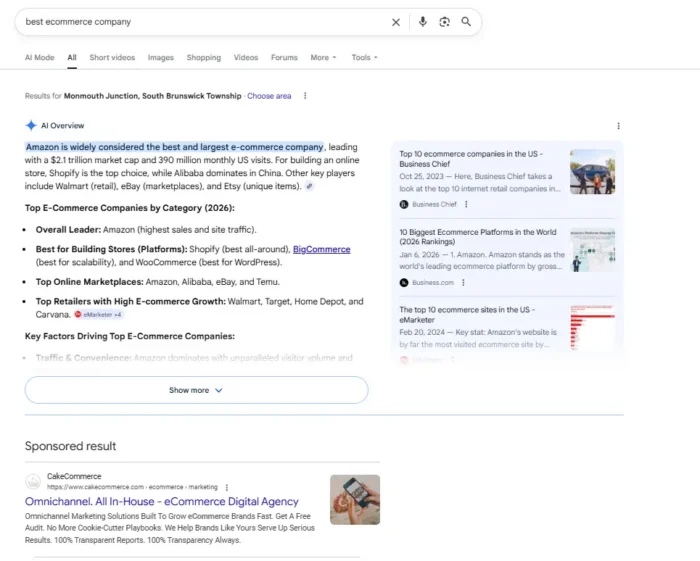
When Google introduced AI Overviews, it fundamentally changed the architecture of the SERP. The AI-generated summary now occupies the most visible real estate at the top of many search results, answering the user’s question before they interact with anything else on the page.
For paid search, the implications are significant. Ads that once appeared near the top of the page now often appear below the AI summary. Users scroll past a detailed AI-generated answer before they encounter a paid result.
This is not just a visual shift. Seer Interactive’s research found that the presence of an AI Overview correlates with a 12 percentage point decrease in paid click-through rate. Across a full dataset, that translated to a 53.6 percent reduction in traffic compared to searches where no AI Overview was shown.
The core issue: paid search visibility is no longer the same as paid search attention. An impression in a SERP dominated by an AI Overview does not carry the same weight as an impression on a traditional results page.
If teams assume all impressions carry equal value, their performance data will remain difficult to interpret. Impressions go up. Clicks stay flat. Revenue and ad costs become harder to predict.
Understanding this requires analyzing which query types most frequently trigger AI Overviews and the resulting implications for budget allocation.
Why Informational Queries Are Becoming Less Valuable for Paid Search
Not all queries are equally at risk. AI Overviews appear far more often on informational queries than on high-intent queries, and that distinction matters for budget allocation. This is closely tied to the broader trend of zero-click searches, where users get what they need from the SERP itself and never click through to a website.
Now the AI summary answers the question on the spot. The research phase that once sent users scrolling through several pages of results has been compressed into a single AI-generated box. Users read the answer, get what they need, and move on without clicking.
Transactional queries tell a different story. Searches with clear purchase intent, such as pricing inquiries, product comparisons, and demo requests, are less likely to trigger an AI Overview. When they do, ads still perform reasonably well. According to the same Seer research, brand queries with AI Overviews present still generated a 16.36 percent click-through rate, well above the average for informational query types.
The practical implication: budget allocated to queries that consistently trigger AI Overviews is at higher risk of generating impressions without clicks. Identifying which queries in your account fall into that category is a practical first step toward protecting performance.
10 Paid Search Pivots Teams Are Making Right Now
Paid search teams are not waiting for Google to solve this. The following pivots reflect what practitioners are already doing to protect performance and adapt to a more competitive SERP.
Shift Budget Toward Transactional Queries
Informational searches increasingly resolve in the SERP. Queries like “what is a CRM” or “how does ROAS work” are prime territory for AI Overviews, which means fewer users scroll to ads.
Transactional searches behave differently. “Best CRM for small business,” “Salesforce pricing,” and “schedule a demo” queries still generate strong ad engagement. Auditing your campaigns for intent and moving spend away from informational keywords toward conversion-ready queries is one of the most direct ways to protect revenue.
Structure Campaigns Around Intent, Not Just Keywords
Traditional keyword groupings by topic are giving way to segmentation by intent stage. Organizing campaigns into informational, commercial, and transactional buckets allows teams to allocate budget with more precision and adjust quickly as AI Overview coverage expands.
When informational campaigns are isolated from high-intent traffic, reducing or pausing them becomes a cleaner decision. You can act without disrupting the campaigns that are still driving results.
Defend and Expand Brand Search
Brand queries are among the most resilient in an AI-driven search environment. Users searching for your company by name carry strong purchase intent, and brand ads still convert at high rates even when AI Overviews appear.
Without an active brand campaign, competitors can bid on your brand terms and capture that traffic directly. Protecting brand terms is a baseline priority that pays off consistently.
Make Ads More Visually Competitive
Ads appearing below an AI summary need to work harder to earn attention. Every available asset matters. Sitelinks add navigation options. Callouts reinforce value propositions. Structured snippets give product category detail. Pricing extensions answer a buyer’s primary question before they click.
A well-extended ad standing out below an AI Overview will consistently outperform a barebones text ad in the same position.
Write Ad Copy That Moves the Decision Forward
The user who sees your ad has likely already read an AI-generated summary of the topic. Ad copy should not repeat what the AI already covered. It should move the decision forward.
“Get a free audit” does more work than “Learn more about SEO.” Specificity converts when users are already past the information-gathering stage. Copy focused on differentiation, pricing clarity, or a clear next action earns the click that a generic brand message will not.
Expand Competitor Conquesting
AI Overviews frequently name specific products and brands when summarizing a category. After reading a summary that lists top CRM tools, a user often searches immediately for a specific brand’s alternatives or pricing. That is a conquesting opportunity.
Bidding on “[Competitor] alternative” and “[Competitor] vs [Your Brand]” queries reaches users at the moment they are actively comparing options. These searches happen right after the AI Overview has done the initial filtering for them.
Invest More in Remarketing and Audience Targeting
AI Overviews compress the research phase, but they rarely close the decision entirely. Many users read the summary, step away, and return to search again before converting. Remarketing lets you reconnect with those users in that return window.
First-party data becomes more valuable here. Building audience segments from site visitors, email lists, and CRM data gives teams the targeting precision that broad keyword bidding alone cannot provide.
Use Broader Match to Capture Conversational Queries
AI-influenced searches tend to be longer and more natural in phrasing. Users accustomed to conversational AI tools bring that style to their search queries. Exact match lists built for shorter, traditional keyword patterns will miss a growing share of that traffic. Revisiting your paid search bidding strategies with this in mind is worth the time.
Performance Max campaigns and broader match types help capture the longer, less predictable queries that are becoming more common. The trade-off is less control, which makes ongoing performance monitoring more important.
Rethink How You Measure Search Performance
Click-through rate dropping while impressions hold is not necessarily a failure. In an AI Overview environment, it is often an expected outcome. The mistake is treating CTR as the primary health indicator when the SERP environment has fundamentally changed.
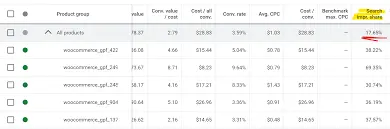
Teams shifting their measurement frameworks are tracking impression share, top-of-page visibility rate, branded search volume growth, and assisted conversions alongside traditional metrics. Together, those signals give a fuller picture of what search is actually contributing to business outcomes.
Source: The Media Captain
Diversify Beyond Search Ads
Zero-click trends reduce the available inventory of high-quality search clicks. As explored in the zero-click future of search, search still matters, but it cannot carry the same weight alone that it once did.
Demand Gen campaigns, YouTube, Display, and paid social all help reach users earlier in the funnel before they arrive at Google ready to buy. Search then becomes the capture mechanism for demand built elsewhere. The full paid media mix has to work together more tightly than before.
Paid Search Measurement Is Changing
The instinct to look at click-through rate when paid performance dips is understandable. It is one of the most visible metrics in any search account. In an AI Overview environment, though, it is an incomplete signal.
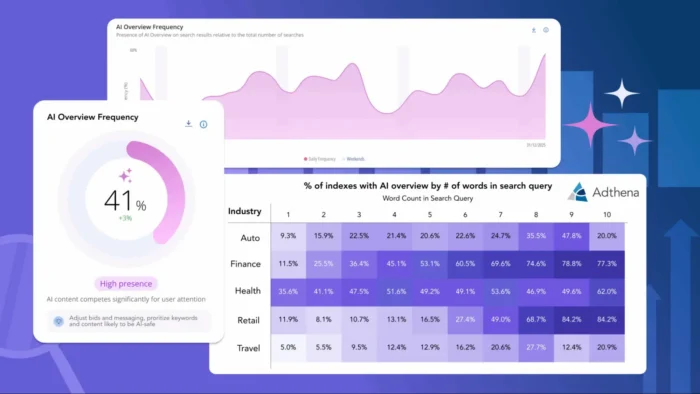
Rising impression counts with declining click-through rate is not always a campaign failure. It often reflects a change in SERP composition. Search Engine Land’s analysis of paid search teams confirms that AI Overviews are lowering CTR and raising CPCs simultaneously, compressing the buyer journey and requiring a measurement evolution rather than just a performance fix.
Source: Adthena
Impression share tracks how often ads appear for eligible queries. A high impression share with low CTR confirms visibility is strong but engagement is soft. That is a different problem than an impression share problem, and it calls for a different solution.
Branded search volume is a proxy for overall demand. If awareness campaigns and upper-funnel efforts are working, brand search volume should rise over time. It is one of the cleaner ways to confirm whether broader marketing spend is translating into search intent.
Assisted conversions show how search contributes to outcomes that close on a different channel or in a later session. Search often does awareness and consideration work that surfaces in the last-click data of another touchpoint entirely.
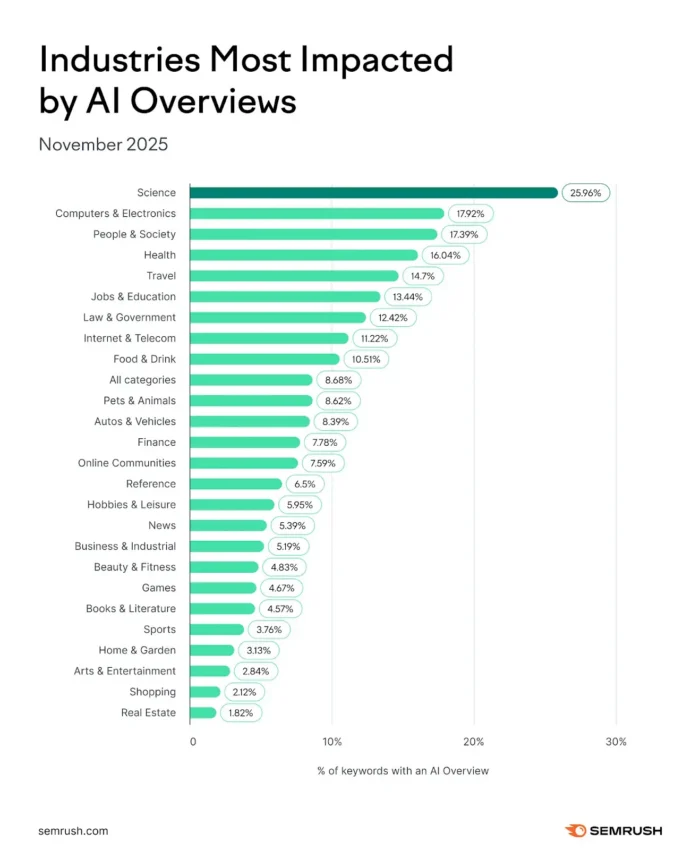
Top-of-page rate tracks the share of impressions appearing in the highest-visibility positions above organic results. In an AI Overview environment, that position matters more than it ever has. Semrush’s AI Overviews study found that AI Overview prevalence varies significantly by industry, which means teams with niche-specific data will have an advantage in calibrating how aggressively to adjust their measurement benchmarks.
Source: Semrush
The Bigger Shift: Search Is Becoming an Ecosystem
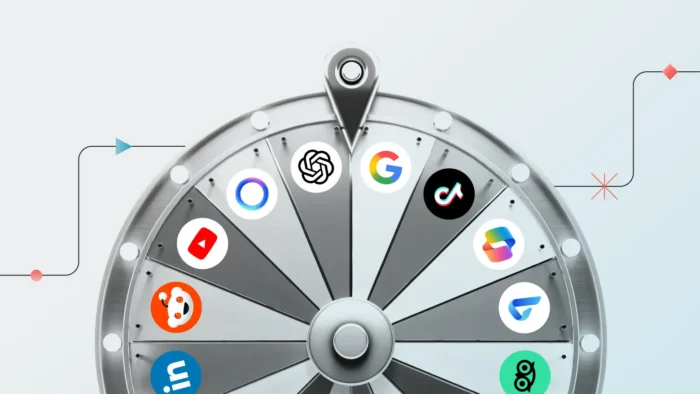
Google is still the dominant search platform. But as AI SEO continues to reshape how content gets discovered, search as a behavior now happens across a much wider set of surfaces.
Users looking for product reviews turn to Reddit. Short-form how-to content lives on YouTube and TikTok. AI tools like Perplexity and ChatGPT answer research queries directly. Younger audiences often bypass Google for discovery entirely, using social platforms as their primary search interface.
Source: Yewx
For paid teams, search advertising strategy has expanded to match. Visibility on Google still matters. So does presence on the platforms where users form opinions and compare options before they ever open a search bar.
Paid search budgets are increasingly being redistributed to reflect this. Teams that once concentrated the majority of digital spend in Google search are now testing YouTube, PMax, Demand Gen, Reddit Ads, and TikTok in parallel. The goal is not to abandon search but to meet demand at every point it forms.
FAQs
What Is the Impact of Generative AI on Paid Search and PPC?
Generative AI has compressed the buyer research journey and pushed ads lower on the page. Seer Interactive’s research found paid click-through rate drops by more than 53 percent on queries where an AI Overview appears. The effect is most pronounced on informational and question-based searches. Transactional queries with clear purchase intent remain more resilient.
How Will AI Mode Redefine Paid Search Advertising?
Google’s AI Mode delivers deeper, more conversational answers than standard AI Overviews, which may further compress informational search traffic. For paid teams, this reinforces the shift toward transactional keywords, stronger ad creative, and multi-channel investment. Teams monitoring how AI-powered search is evolving will be better positioned to adapt their bidding and targeting structures before the impact hits performance.
What Solutions Help Improve AI-Driven Search Visibility in Paid Search?
Focus on transactional keyword targeting, expand ad extensions to maximize SERP real estate, and invest in brand defense campaigns. Pairing paid strategy with SEO content that earns AI Overview citations also improves overall search presence. Impression share reporting and top-of-page rate data in Google Ads are the most direct indicators of where visibility is slipping.
What Tools Help Analyze Paid Search Ads in AI-First Search Environments?
Google Ads provides impression share, top-of-page rate, and CTR data needed to diagnose AI Overview impact. Platforms like Adthena track how AI search changes are affecting competitive ad positioning in real time. Tools like Semrush and Ahrefs are also useful for AI Overview keyword tracking, helping your team understand what keywords are triggering AIOs.
Conclusion
The teams that adapt their targeting, measurement, and channel strategy will find that paid search still delivers. The approach that worked in 2022 or 2024 just needs a serious audit.
AI Overviews have compressed the research phase, shifted where attention falls on the SERP, and exposed the limitations of click-through rate as a standalone KPI. Marketers who recognize those shifts early and adjust accordingly will stay competitive as Google’s search experience continues to evolve.
Search is not disappearing, but the way people use it is. The paid media strategies built for that evolution will outperform those still built for a world where clicking through to a website was the default outcome of every query.
For a deeper look at how paid and organic strategies work together in this environment, explore the complete guide to Google Ads and the SEO strategy guide to see how these channels can reinforce each other. Our Google Ads Grader will also help make sure the ads you do make are best positioned to succeed.