Arthur Russell’s Life in Images
In Travels Over Feeling, Richard King explores the mysteries and Buddhist breadcrumbs of the late musician. The post Arthur Russell’s Life in Images appeared first on Tricycle: The Buddhist Review.
 Konoly
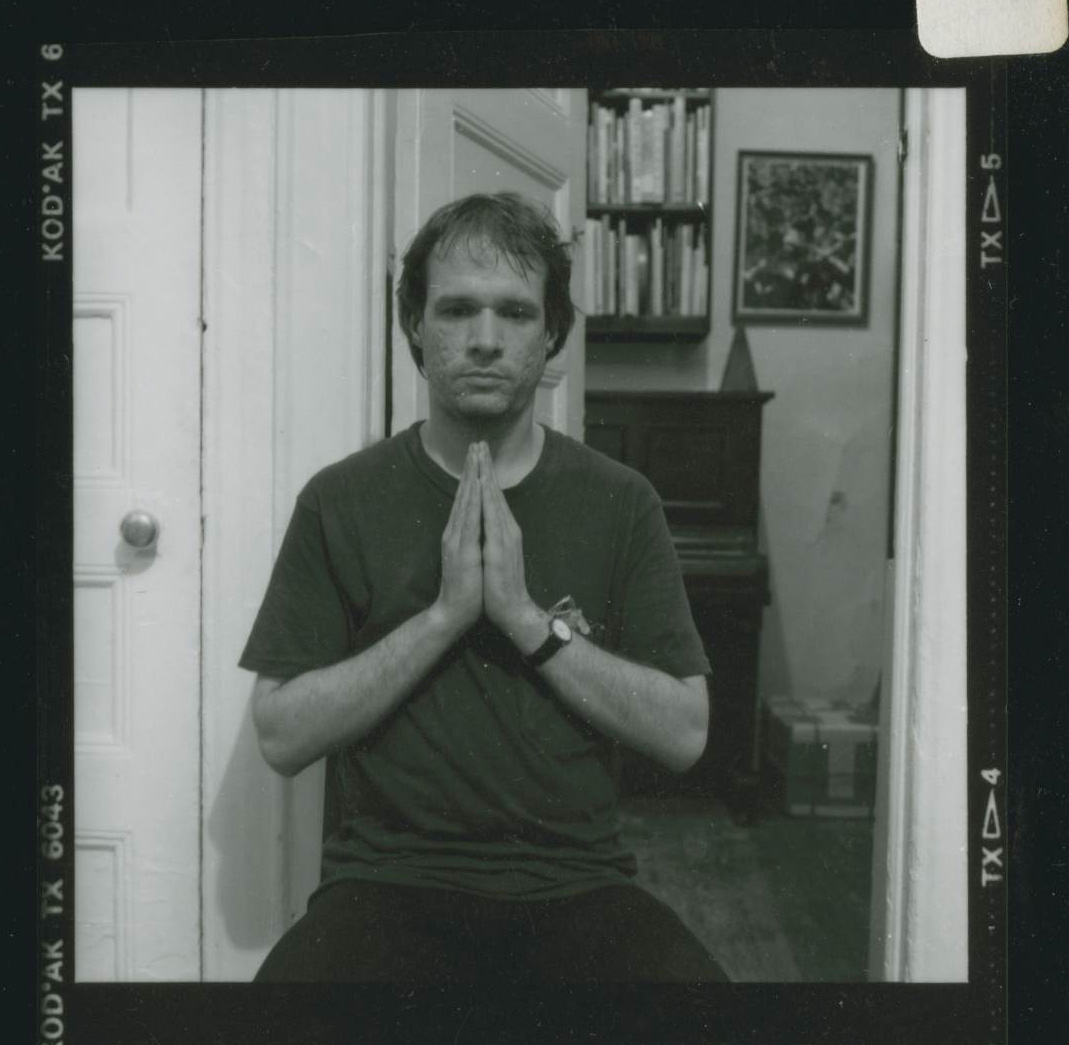
In the early 1970s, Allen Ginsberg was performing shows and poetry readings throughout San Francisco with accompaniment from the Kailas Shugendo Mantric Sun Band, an eccentric ensemble from a local Buddhist commune. Ginsberg formed a close friendship with the cellist of the band, a long-haired, acne-scarred 19-year-old who went by the name ‘Jigme.” Several years later, the two would relocate to New York City, where Jigme, whose real name was Arthur Russell (1951–1992), would enter the burgeoning New Music scene and become one of the era’s most pioneering and prolific artists. This fateful friendship—forged through shared Buddhist sensibilities—is highlighted in Travels Over Feeling: Arthur Russell, A Life by author and cultural historian Richard King. Published in 2024, Travels Over Feeling is the most recent project to explore Arthur’s life since the posthumous release of large portions of his discography sparked new interest in his music and background. Somewhere between visual biography, anthology, and coffee-table book, Travels Over Feeling tells Arthur’s story through the people who knew him best. King exhaustively interviewed Arthur’s friends, family, musical collaborators, and romantic partners, whose voices build a uniquely intimate portrait of Arthur with each turn of the page. Written material is paired with a vast collection of photographs, letters, show posters, song lyrics, and requests for grants and funding, dropping the reader into a paper trail illustrative of the predigital world, and adding a stunning visual component to Arthur’s biography.
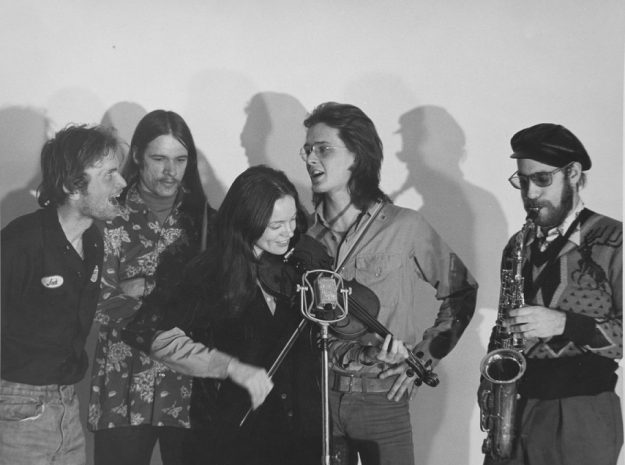 Left to right: Jack Majewski, Arthur Russell, Laurie Anderson, Scott Johnson, Peter Gordon—an ensemble in which Arthur played drums | Courtesy Laurie Anderson
Part I of Travels Over Feeling picks up with Arthur’s birth in 1951 and his childhood in the small town of Oskaloosa, Iowa. Despite a stable family dynamic and the general calm of the Eisenhower era, he was unhappy with life in Oskaloosa from a young age. At just 16 years old he dropped out of high school and fled first to Iowa City, then to San Francisco. Arthur arrived in the Bay Area amidst its famed “renaissance” (1940s–1960s), during which the activity of Beat poets, musicians, and artists alike had contributed to a robust counterculture. The popularity of New Age spirituality, Asian religions, and communal living grew proportionately among converts with the boom of the arts movement. A number of Buddhist groups emerged in the Bay, such as San Francisco Zen Center, Arya Maitreya Mandala, and Kailas Shugendo, the last of which became home to a young Arthur in 1969. While Travels Over Feeling takes care to stress the importance of Arthur’s Buddhist faith and its creation during this period of his life, King omits many of the interesting details surrounding Kailas Shugendo.

Travels Over Feeling: Arthur Russell, a Life
By Richard King
First published in the United States by Anthology Editions and originally published in Great Britain in a slightly different form by Faber & Faber Limited, 2024, 296 pp., $50.00, hardcover
Founded by a man named Pemchekov Warwick, also known as Neville G. Warwick, Dr. Ajari, or simply Ajari, Kailas Shugendo was a New Religious Movement based in San Francisco from 1968 to 1977. Claiming to be from Russia, though doubt has been cast on this in recent years, Dr. Ajari initially studied esoteric Tibetan Buddhism under German-born teacher Lama Anagarika Govinda (of Arya Maitreya Mandala) before forming a commune of his own. Kailas Shugendo combined a number of practices from the Tibetan tradition with practices from the Japanese mountain ascetic Shugendo tradition. The group could often be seen silently circumambulating nearby mountains (Jp: shugyo) or firewalking (Jp: hiwatari), during which a practitioner walks on burning coals in a meditative state. King asserts that Arthur joined Kailas Shugendo to escape time in a juvenile detention center after being arrested for possession of marijuana, though it is unclear how he found the commune in the first place. In any case, the group suited Arthur, in large part because it also had a popular band, the aforementioned Kailas Shugendo Mantric Sun Band, in which he played cello. Well-connected throughout the Bay Area, Dr. Ajari was reportedly friends with Jerry Garcia, Alan Watts, Shunryu Suzuki, Samuel L. Lewis, and Allen Ginsberg, to name a few. The band would later appear on Ginsberg’s 1971 recording “Pacific High Studio Mantras,” chanting the traditional Tibetan mantra “Om Ah Hum Vajra Guru Padma Siddhi Hum” to invoke Padmasambhava. Perhaps thanks to his teacher’s connections, Arthur was able to study cello at the Ali Akbar College of Music in San Rafael. He was also introduced to the Japanese Shingon priest Yuko Nonomura, who became his main teacher and mentor after he left the commune to join Ginsberg in New York City.
“Arthur’s interest was in experiencing the clarity and authority of the sound system and the effect it had on those blissfully congregated in abandon beneath the speakers, lost to its frequencies.”
Upon his relocation to Manhattan in late 1972 or early 1973, Arthur entered the local New Music scene with gusto. Within a year, he had enrolled at the Manhattan School of Music, formed the Flying Hearts with former Modern Lovers bassist Ernie Brooks, and become the musical director of the Kitchen, Manhattan’s famed nonprofit experimental arts space. Part II of Travels Over Feeling follows Arthur’s adventures around lower Manhattan during this early period of his career, outlining his new friendships with the likes of fellow musicians John Cage and Laurie Anderson, and detailing the evolution of his musical projects throughout the decade. In addition to the Flying Hearts, Arthur created music under his own name, including “Instrumentals,” an experimental, modular composition inspired by his teacher Yuko Nonomura’s photography. Here and throughout the book, King emphasizes Buddhism’s lingering influence on Arthur’s music and the way he approached the creative process.
 Flyers for Dinosaur L | Courtesy The Arthur Russell Papers
Much of Arthur’s early music had a soft, breeze-like effect that stood directly against the punk ethos of the time. “We were making this gentle sound with gentle lyrics, and we were definitely swimming against that tide,” said Ernie Brooks. And as Arthur settled in the city, he adopted a single-pointed method for work that his friends described as “monastic.” He moved into 437 East 12th Street—a rent-controlled tenement complex dubbed the “Poets’ Building”—that was also home to Ginsberg, Larry Fagin, John Godfrey, Lucy Sante, and punk legend Richard Hell, then playing bass in the band Television. A home studio took shape inside Arthur’s sixth-floor apartment, which would eventually amass thousands of hours of tape recorded on his eight-track and in local studios. King notes that Arthur was a well-known adherent to Chögyam Trungpa Rinpoche’s philosophy of “first thought, best thought,” and that he positioned himself to be ready to act whenever an idea struck. Arthur’s friends at the time note that when he wasn’t out playing gigs or recording, he could be spotted walking around the East Village with his Walkman and a notepad, constantly listening to his own tapes and seeking new inspiration. “I remember meeting him on St. Mark’s Place and thinking to myself, ‘My God, this guy never stops working,’ ” said friend and choreographer Alison Salzinger. “He had just come from hours in the studio and was heading home to start working on his tapes again, which he had been listening to on his way home. He never stopped working.” Unlike most of the artists below 14th Street making ends meet at the time, he did not work any part-time jobs to fund his projects. King explains quite frankly that Arthur depended on grants, public funding, and his father’s financial support for most of his life. Travels Over Feeling includes many letters of correspondence between Arthur and his parents, a game of reassuring them that he was working hard and putting their money to good use, and them sending checks. But for all of the information pertaining to Arthur’s finances and unemployment that King includes in the book, there is a unanimous consensus amongst his friends and family that he was simply a genius, and like many geniuses, he could not work at anything other than his art.
In the latter half of the 1970s, Arthur made a surprising turn from the soft, experimental work of “Instrumentals” and the Flying Hearts toward disco, a genre that had been booming in the NYC club scene. “I remember he was really obsessed with the handclap sound in the beats and tracks he was making. Maybe it was a Buddhist thing, but he talked about it so much. It was so minimal, but he absolutely obsessed about it,” Salzinger notes of Arthur’s work at the time. While he began frequenting spots like the Gallery, the Loft, and Paradise Garage, his friends attest that he never danced, instead opting for a space along the wall to observe. King explains that “Arthur’s interest was in experiencing the clarity and authority of the sound system and the effect it had on those blissfully congregated in abandon beneath the speakers, lost to its frequencies.” Much of Part II and III of Travels Over Feeling covers Arthur’s experiments in dance music idioms under the names Dinosaur L and Loose Joints. The closest he ever came to commercial success during his lifetime was with the singles “Is It All Over My Face?,” “Go Bang!,” and “Pop Your Funk” for Loose Joints, making their way into the regular rotation for funk radio stations and in predominantly Black and Latino gay nightclubs across the city. Arthur was subsequently invited to play public appearance concerts at said clubs. Though these “track dates” were intended for vocalists to sing along to their recorded songs, King notes that Arthur, ever dedicated to his craft, would show up and attempt to play the cello along to a backing track, receiving understandably mixed reactions from the crowd.
 A vinyl pressing of “Pop Your Funk” for Loose Joints | Courtesy Tom Lee / Arthur Russell Estate
King does not directly address Arthur’s romantic life and sexuality for much of the beginning of Travels Over Feeling, aside from incorporating quotes from Muriel Fuji, Arthur’s girlfriend when he lived in San Francisco, and from Tom Lee, who is not identified until about halfway through the book. Lee, a printmaker who lived in Arthur’s neighborhood at the time, recalls seeing Arthur walking on Avenue A and stopping in local spots like the Gem Spa, and becoming “smitten.” After the two began a relationship, Lee moved into Arthur’s apartment at 437 East 12th Street in 1980, where the couple resided until Arthur’s death in 1992. “The apartment would have been a slum if anyone else had lived there. . . . Tom [Lee] made it beautiful with all his artwork, and Arthur had all his tapes, rows and rows of tapes that he was endlessly splicing and editing,” says Salzinger. Lee was a stabilizing force in Arthur’s life in a multitude of ways. Financially, Lee’s job at the print shop provided a steady income and filled in gaps between the checks and grants that Arthur relied on. Emotionally, Lee’s grounded nature never wavered in the face of Arthur’s late nights in the studio, obsessive attitude toward work, and other eccentricities. “The problem with Arthur’s Buddhism was that he couldn’t kill any roaches or mice,” Lee says. “We lived in a sixth-floor walk-up, and if we caught any mice in the trap, we had to walk downstairs and release them into a lot across the way.”
 Arthur and Tom Lee | Courtesy Tom Lee / Arthur Russell Estate
As his career grew, Arthur caught the attention of the director and playwright Robert Wilson. Wilson asked Arthur to compose music for his upcoming opera Medea, based on the play by Euripides. Though excited by the opportunity, Arthur clashed creatively with Wilson and struggled to meet the deadlines required for the opera, resulting in a falling-out between the two. Only some of the music Arthur composed was used for Medea. The entire composition was released in 1983 by Philip Glass on his label Chatham Square, now under a new name: Tower of Meaning. “Philip Glass was one of Arthur’s lone supporters,” says Lee. “One of the dozen or so people who would show up at Arthur’s concerts, especially at Phill Niblock’s place [the Loft].” Putting the Medea/Tower of Meaning debacle behind him, Arthur recorded the albums Corn, World of Echo, and Another Thought. Arthur’s undefinable, syncretic conceptual style is on full display in each. Love songs such as “A Little Lost” sit alongside minimalist, distorted tracks like “Losing My Taste for the Night Life” and the noisy “Hiding Your Present from You.” By the mid-1980s he had reached a point of true prolificness. But all the while, the rapidly moving AIDS epidemic was sweeping its way through the New York City gay community. Arthur was diagnosed with HIV in 1986, and would live only six more years.
There is a unanimous consensus amongst his friends and family that he was simply a genius, and like many geniuses, he could not work at anything other than his art.
“Crack seemed to arrive all at once, even though it’s not true, but that’s the impression it gave,” says Lucy Sante, Arthur’s former neighbor and friend. “AIDS was more like a snowball rolling downhill.” The final section of Travels Over Feeling offers a glimpse into Arthur’s last years and into the devastation that AIDS wreaked on his community. King explains how Arthur hid his illness from many of the people in his life due to the stigma and misinformation swirling around it at the time. Embarrassment underlined his conversations with his friends and family. Even his long-cherished teacher Yuko Nonomura shunned Arthur after he traveled to San Francisco to see him one last time. Despite this painful rupture between student and teacher at such a crucial moment, Arthur leaned on his faith in Buddhism more heavily as his health deteriorated. He kept a mandala above his bed to look at when he was too sick to go out. And his longtime spiritual friend, mentor, and neighbor Allen Ginsberg came to his apartment every day to sit with him. “Allen lived downstairs at the time; Allen used to go up, I think probably almost every day, and just sit with Arthur. . .” says Steven Hall “. . . and Arthur probably either knew or didn’t know at that point that Allen was there, but in terms of Buddhist practice, in terms of being there and being in the moment, Allen definitely came through with that.”
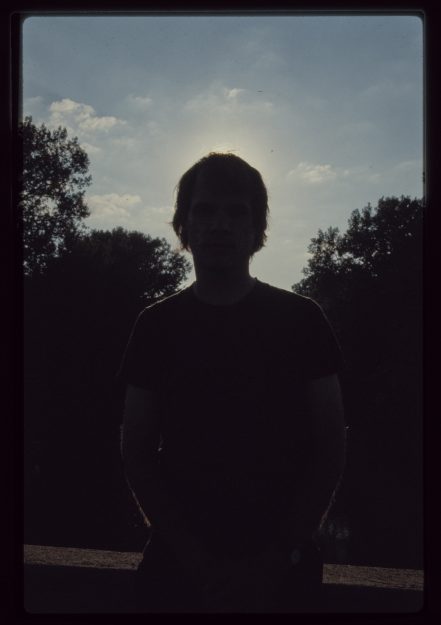
 Courtesy The Arthur Russell Papers
As Travels Over Feeling comes to a close, Arthur’s friends and family speak to the influence of terminal illness in his final recordings. Posthumously released in the compilation album Love is Overtaking Me, these songs were largely recorded on a two-track in Arthur and Lee’s apartment. In “Love Comes Back,” Arthur faces the unknowns of death while encouraging the living to take comfort in the mysteriously cyclical nature of this world. He sings:
Being sad is not a crime
Once you know that
Love is back
So put your little hand in mine
Love comes back
Skiing down, climbing down
Into the fog
Best of all worlds I know
But still afraid to look
Where do you go?
It’s where I go already
This sentiment is echoed in a handful of tracks created at the time, including “Close My Eyes,” “Time To Go Home Now,” and “Arm Around You.” Also present in these tracks is an appreciation for those he was closest to—those whose voices line the final pages of the book. This section of Travels Over Feeling is, on one hand, a poignant celebration of an artist who lived with an unceasing creative drive, and who left behind some of the most important contemporary music of the 20th century. On the other hand, it is a lament for his unfairly early departure from this life. Arthur died from complications of AIDS at Memorial Sloan Kettering Cancer Center on April 4, 1992. King fittingly closes Travels Over Feeling with a letter from Lee. He reflects: “Many people perceived Arthur as a mystery—by virtue of his demeanor, his acne-scarred face, his sometimes playful and often serious responses to others—but to me he was just Arthur, whom I loved.”
Bits of Arthur’s archive have been gradually released over the last thirty years, thus raising his profile significantly and inspiring a number of documentaries, books, dissertations, and sampling from major artists. A 2017 piece about Arthur in the New Yorker describes him as a “deity” for modern listeners. Indeed, his life’s work has granted him a form of immortality, a perennial yet multifaceted voice in a world of echo, reminding us that love comes back.
 Courtesy The Arthur Russell Papers


















.jpg&h=630&w=1200&q=100&v=1a56ad72fe&c=1)