Chasing the aurora in comfort: The private Northern Lights experience
Half past ten on a Tuesday night in late September, parked on a gravel pull-off by Kleifarvatn lake, engine... The post Chasing the aurora in comfort: The private Northern Lights experience appeared first on A Luxury Travel Blog.
 Hollif
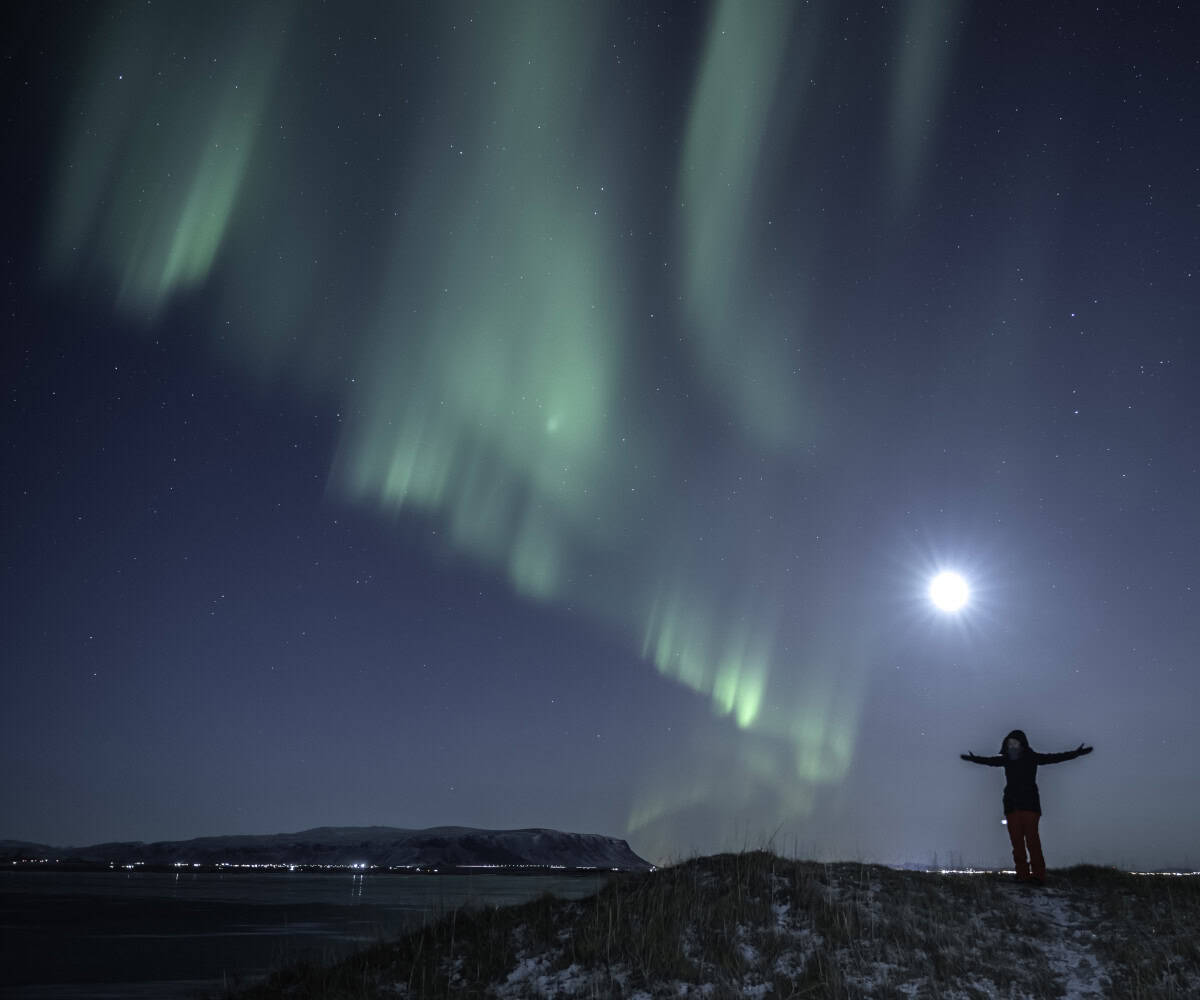
Half past ten on a Tuesday night in late September, parked on a gravel pull-off by Kleifarvatn lake, engine off. Our guests, a couple from Singapore celebrating twenty years of marriage, had been asleep in their Reykjavík hotel forty minutes earlier. Now they stood beside our van holding cups of hot chocolate, staring at what looked like a faint grey smudge above the ridge line. “Is that it?” the husband asked. Philippe, co-owner of Lilja Tours and the man who has guided more of our northern lights hunts than anyone, pointed his camera at the sky. The screen lit up green. Ten minutes later nobody needed a camera. The whole sky was moving.
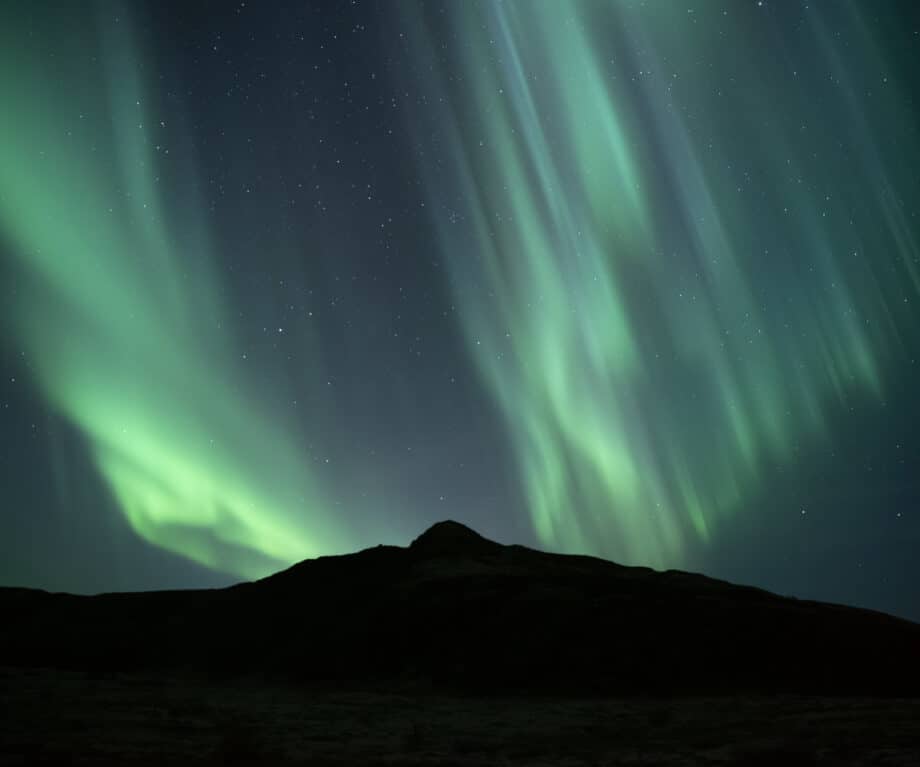
That grey smudge moment happens on almost every successful hunt, and it tells you something most aurora marketing leaves out. The northern lights rarely announce themselves. They build. And whether you’re standing there when they do depends far less on luck than people think.
It’s a hunt, not a show
I’ll be straight about my stake in this: we sell private northern lights tours, so of course I think the private version is better. But the reasons hold up regardless of who you book with, and they start with a basic fact about the aurora that surprises most first-time visitors.
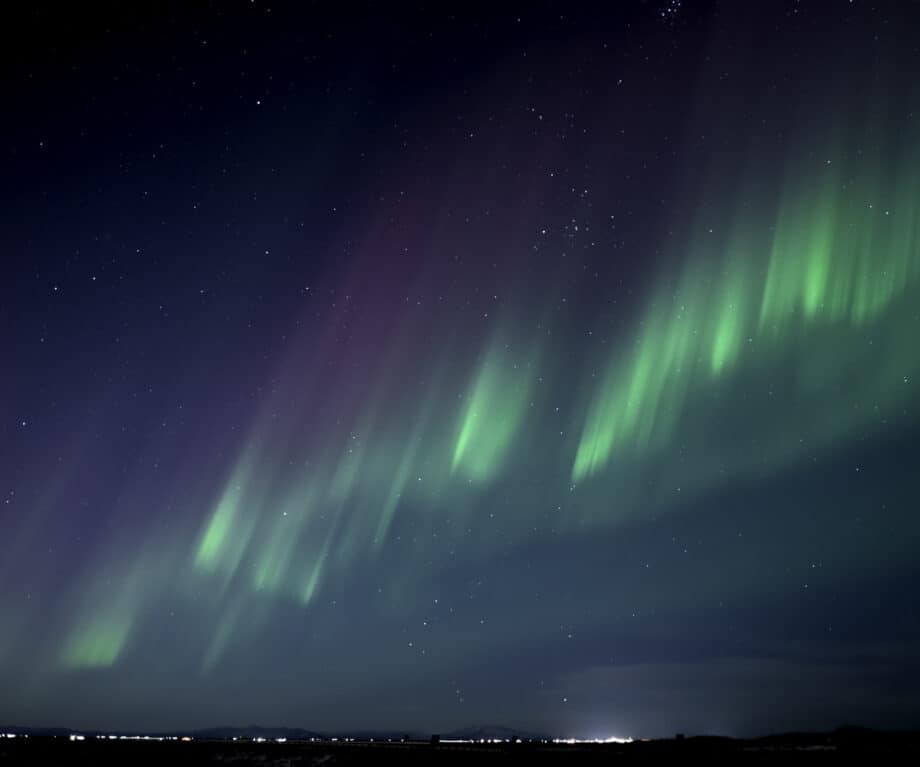
The lights don’t appear over Iceland on a schedule. They’re solar particles hitting the upper atmosphere, and on any given night between late August and mid-April they might be active for four hours or four minutes. They might flare at 9 pm or 2 am. They might be blazing over the Reykjanes peninsula while Þingvellir, forty minutes away, sits under solid cloud.
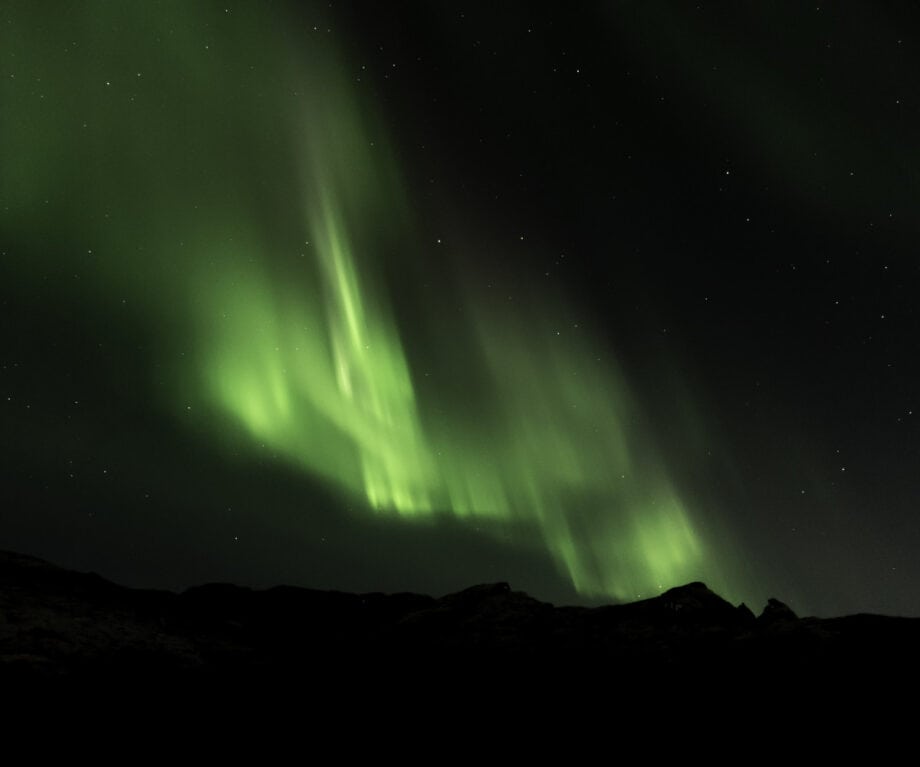
So the real skill isn’t spotting the aurora. It’s positioning. A good guide spends the afternoon reading the Icelandic Met Office cloud cover maps, cross-checking solar wind data, and deciding not whether to go out but where. Some nights the answer is a twenty-minute drive. Some nights it’s two hours east because that’s where the only gap in the clouds will open, and it will open at midnight, and you want to be parked under it at half past eleven.
A scheduled group tour can’t do this properly. The bus leaves at 9 pm, drives to one or two pre-planned stops, and turns around at a fixed hour because forty people need to be back and the driver’s shift ends. If the clouds shift, the bus mostly doesn’t.
What flexibility actually buys you
On a private hunt the itinerary is written that afternoon and rewritten all evening. A few real examples from our winters:
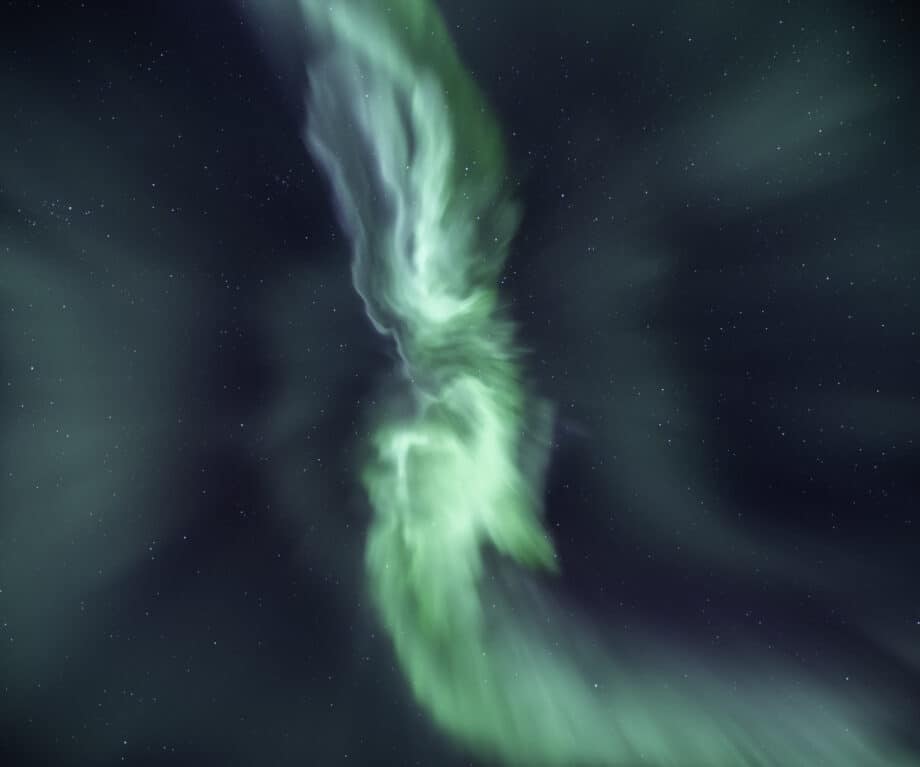
We’ve delayed departures until 11 pm because the forecast showed activity arriving late, letting guests have a proper dinner and a nap first instead of yawning in a parking lot for three hours. We’ve cut a hunt short at the first strong display and had guests back in bed by midnight, because the forecast said that was the peak and it was. And on one memorable night in November 2025, during a solar storm strong enough that we later published a photo report about it on our website, Philippe kept a family out until nearly 3 am because the sky simply refused to stop. Nobody voted on it. Nobody had to negotiate with thirty strangers about one more stop. The family wanted to stay, so they stayed.
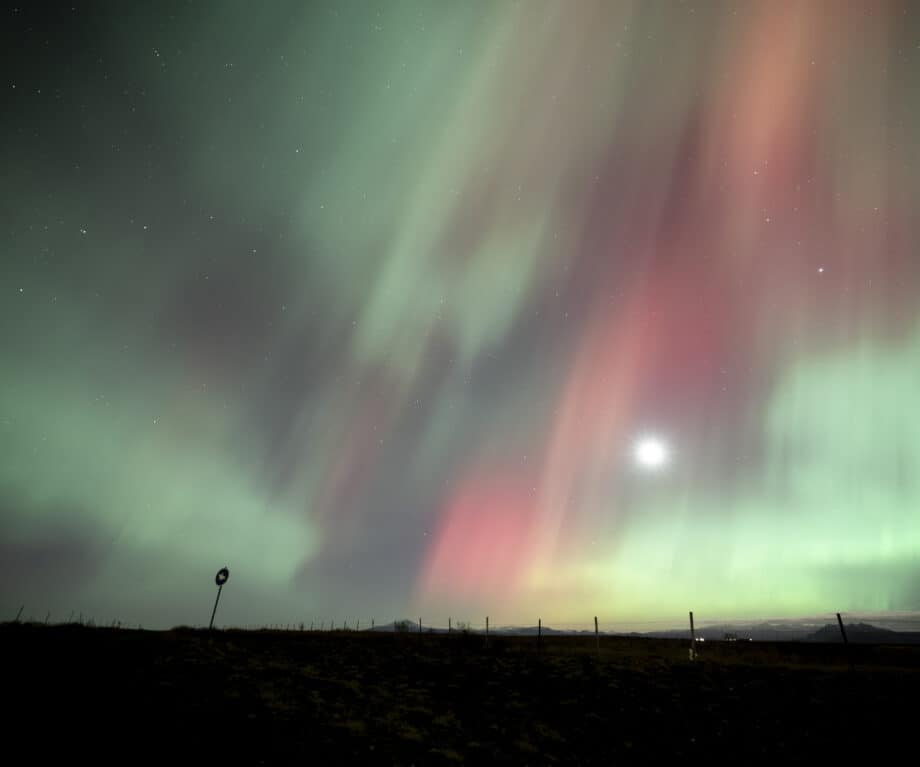
That last point matters more than the logistics. Chasing the aurora with only your own party changes the texture of the night. You stand in actual silence. No idling coach, no crowd shuffling for tripod positions, no flashlights sweeping across your long exposure. Just wind, sometimes the crack of lake ice, and the sky.
The comfort part, honestly
Aurora hunting is a cold-weather waiting game, and I’ve watched people in rented parkas endure it grimly on windswept viewpoints. There’s no prize for suffering. Our hunts run in a Mercedes V-Class or, when the forecast pushes us onto rougher roads, a Toyota Land Cruiser. Thermoses of hot chocolate and coffee. Blankets, because someone always underestimates an Icelandic night in February.
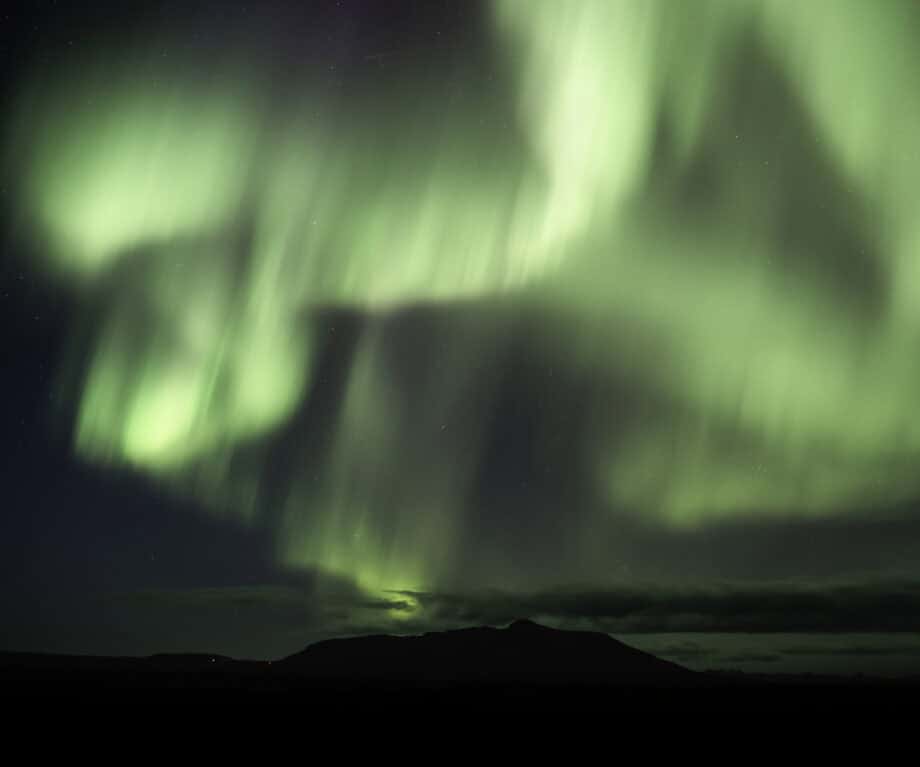
The waiting itself becomes part of the evening rather than an ordeal. Guests sit in warmth watching the sky through the windows while the guide stands outside checking for the first hints of activity. When something starts, you step out. When your fingers give up, you step back in. Repeat until the sky delivers or the forecast says move.
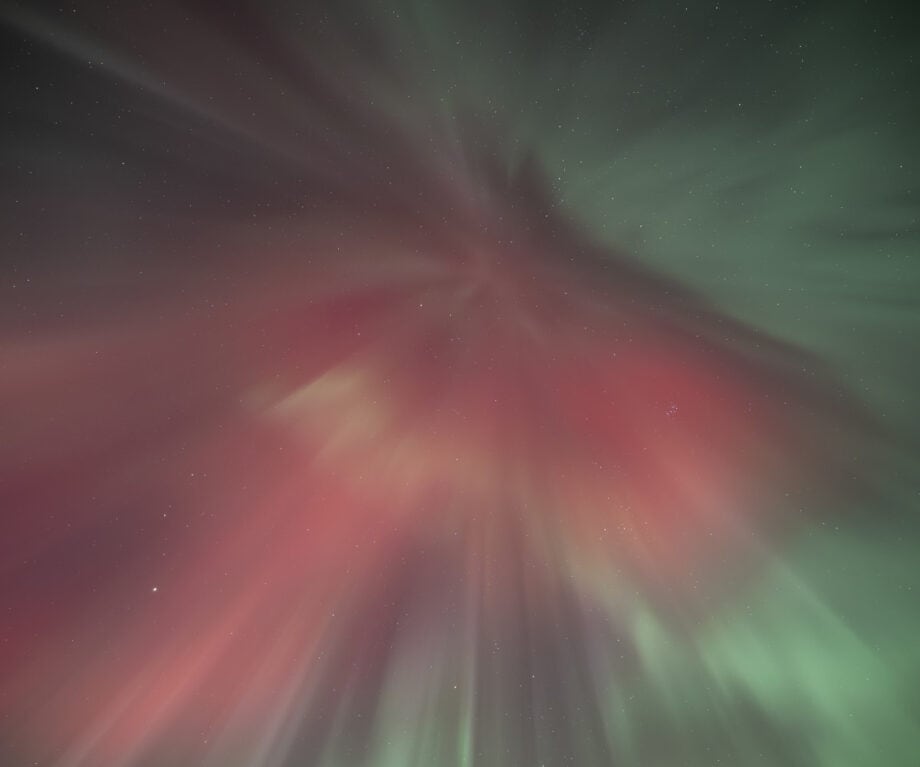
Then there’s the photography. Modern phones do surprisingly well on the aurora, but a guide with a proper camera, a tripod, and several hundred nights of practice does considerably better. Philippe shoots every hunt and sends guests the files afterwards. For most of our travelers those photos, with themselves standing under the lights rather than a generic postcard sky, end up being the thing they show everyone back home.
Everything you need to plan your trip in 2026
The hotel strategy nobody mentions
Here’s a piece of advice worth having even if you never book a tour: on a multiday winter trip, where you sleep matters as much as where you drive.
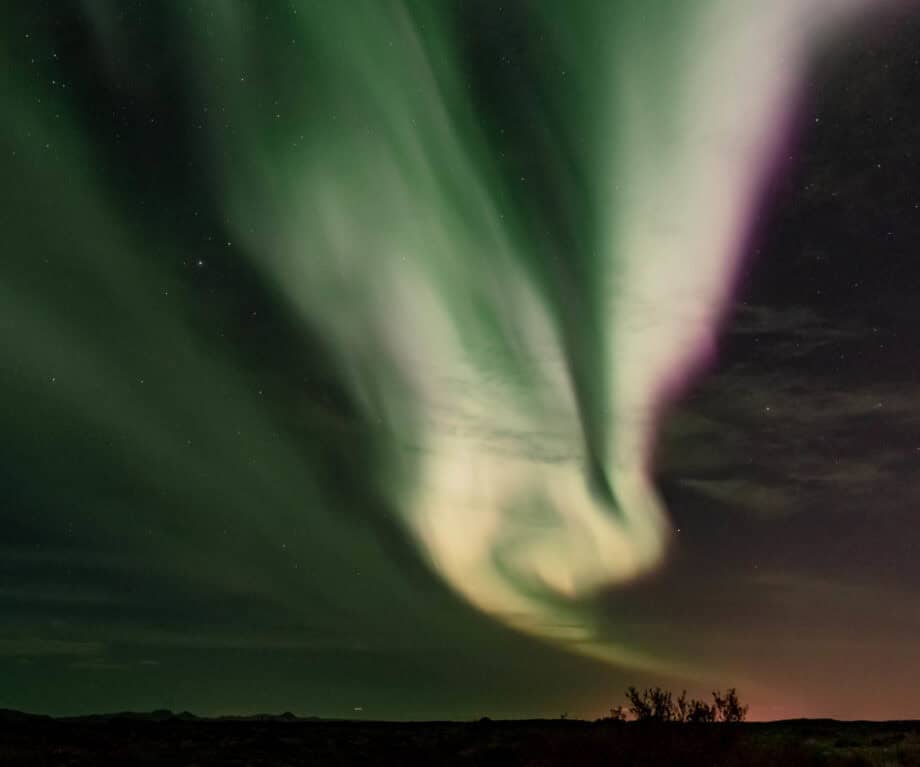
When we design private winter itineraries we deliberately place guests in remote countryside hotels, the kind sitting under dark sky with a north-facing view and nothing but farmland between the terrace and the horizon. The reason is simple. The aurora doesn’t keep business hours, and the best display of your trip might happen at 1 am while you’re in bed. At a rural hotel that’s a knock on your door from reception, a coat over your pyjamas, and thirty seconds to a front-row seat. In central Reykjavík it’s a missed night, because streetlight glare washes out all but the strongest storms.
Several of our favourite properties along the south coast and near Þingvellir run wake-up call lists for exactly this. Ask for it at check-in. Always.
On the nights it doesn’t happen
I’d be lying if I said every hunt ends under a green sky. Some nights Iceland is wrapped in cloud from coast to coast and no amount of driving fixes it. What separates a good operation from a disappointing one is what happens then.
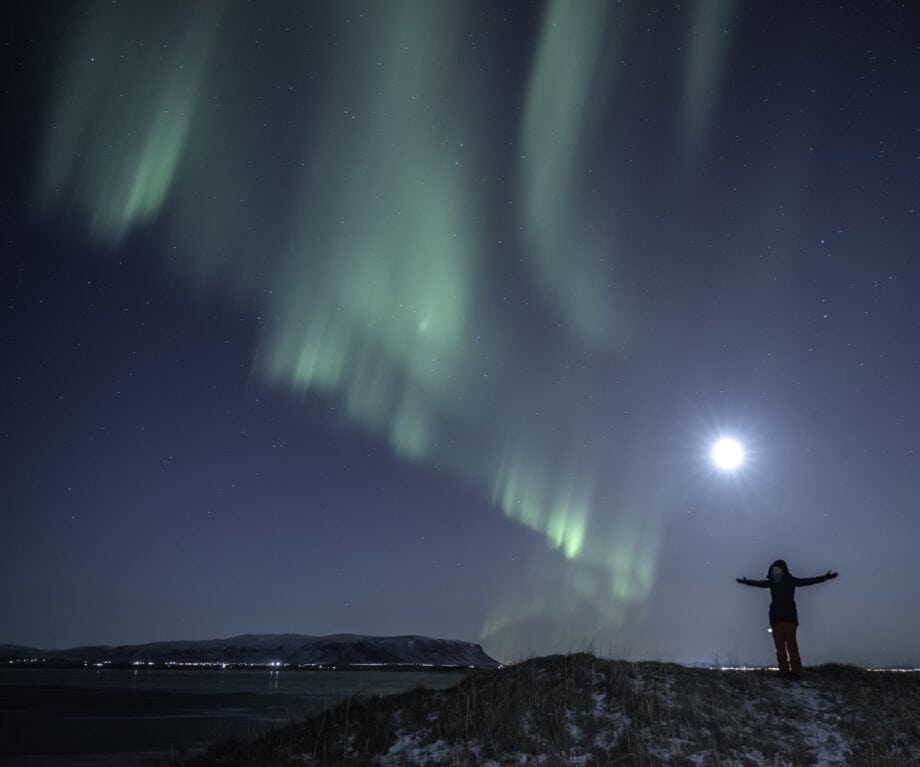
An honest guide tells you before departure when the odds are poor, and offers to move the hunt to a better night rather than collecting your money for a drive to nowhere. On a private multiday trip this is where flexibility pays off twice, because the hunt isn’t pinned to a single evening. If Tuesday is hopeless, you try Wednesday from a different part of the country. Across a five or six night itinerary in season, guests who follow the forecast with their guide see the lights far more often than not.
And even the cloudy nights out there have their compensations. Winter stars away from any town. A thermos going around. The peculiar pleasure of standing somewhere completely dark and completely quiet in a country that barely has either anymore.
The couple from Singapore, by the way, got forty minutes of full overhead corona that night at Kleifarvatn, the kind where the lights move too fast for a camera to do them justice. On the drive back the husband didn’t say much. Then, somewhere around Hafnarfjörður: “We’d have slept through that.”
Most people do.
Julien Achache
Julien Achache is Owner of Lilja Tours. Lilja Tours is a boutique private tour operator based in Reykjavík, Iceland, specializing in bespoke private tours with a perfect 5-star rating across platforms. If you would like to be a guest blogger on A Luxury Travel Blog in order to raise your profile, please contact us.
Did you enjoy this article?
Receive similar content direct to your inbox.




















.jpg&h=630&w=1200&q=100&v=c0f97a310e&c=1)