Fitbit is becoming Google Health, and it’s getting a bunch of wellness upgrades
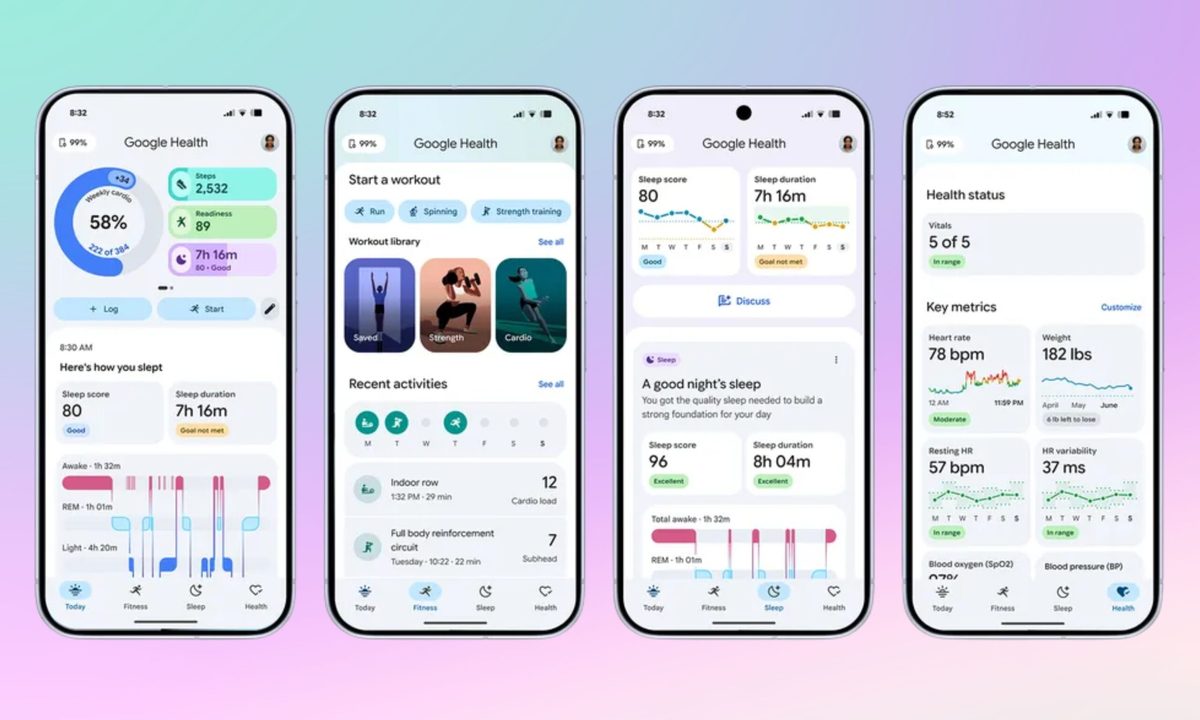
Google Health is getting photo-based food logging, medical records integration, Apple Health and Peloton compatibility, improved sleep tracking accuracy, and a Gemini-powered coach.
 JaneWalter

Google is finally treating health tracking as a platform play, pulling in medical records, third-party fitness data, and AI coaching in a way that Fitbit's standalone app was never built to handle.
 Google
Google is officially pulling the plug on the Fitbit app, replacing it with the new Google Health app on May 19, 2026. It is quite ironic, as the company just announced a new Fitbit Air screenless fitness tracker, but the change will take place via an OTA update.
This is happening after Fitbit’s fifteen-year run, wherein it gathered millions of fitness-focused users and provided them with various health trackers and meaningful insights via its software.
Should Fitbit users worry?
Google has already confirmed on X that the “Fitbit devices aren’t going anywhere,” so all the user data stays in place. In simpler words, all your workout logs from the Fitbit app will still show up in Google Health.
For now, the Fitbit brand stays alive on the hardware front, implying that all its devices will still be available and supported. However, it’s the Fitbit app that’s getting subsumed by Google, in its new Health app.
Google has not confirmed whether existing Fitbit Premium subscribers will be automatically migrated to Google Health Premium. What is confirmed is that the monthly price remains $9.99, while the annual subscription has been revised from $79.99 to $99.99.
What’s new in Google Health?
The most significant addition is multimodal logging. Google Health users can log food, workouts, and health data by typing, speaking, or taking a picture via their smartphone. The app uses AI to automatically recognise and log the nutritional content from the photo (a meaningful addition over the Fitbit app).
Users in the United States can directly upload their medical records to the app, and the Google Health Coach (a new version of the Fitbit Personal Health Coach available via the Health Premium membership) can reference that data while answering health-related questions. Sleep tracking accuracy improves by 15% over the previous Fitbit app’s models, thanks to upgraded machine learning.
The app can also pull data from Apple Health, Peloton, and MyFitnessPal, making it much more open than the Fitbit ecosystem. Rounding out the changes is a customisable dashboard, expanded social leaderboards for steps and cardio load, and improved cycle tracking.
This is a fundamental shift from a device-centric app that counted your steps and stored your workout details to a health platform that connects wearables, medical records, nutritional details, and AI-based coaching, all under one roof.

For more than five years, Shikhar has consistently simplified developments in the field of consumer tech and presented them…
Your coworker’s AI-built app might be leaking company secrets
Thousands of AI-built apps are spilling secrets online

AI coding tools have made it ridiculously easy to build a web app, and it only takes a few minutes to set up now. This ease has lowered the barrier to app development, which is causing a new set of issues. So what happens when these AI-made apps go live without anyone checking the locks? You get secrets spilling out all over the internet.
A WIRED report highlights a major security problem around so-called “vibe-coded” apps, which are built using AI development platforms such as Lovable, Replit, Base44, and Netlify.
A shocking study made me rethink how I use AI, and you should probably do that too
The problem isn't AI. It's what you're asking it to do for you.

I've always thought of myself as a light AI user. I don't have ChatGPT write my emails or draft my thoughts into a story. Mostly, I use it to quickly look things up or fill in something that's on the tip of my tongue. It felt like the responsible way to approach things. As a journalist, I am well aware of AI's hallucination problems and the "burden of truth verification" that comes with availing the services of an AI assistant. But a new study has me second-guessing whatever little utility I got from AI tools like Google's Gemini for real-life chores.
The findings are harder to dismiss than you'd expect
Google pulls the plug on Project Mariner, the AI agent that browsed the web like a human
The autonomous browser agent Google introduced at I/O 2025 is now more. Its technology is being absorbed into the Gemini API and Gemini Agent.
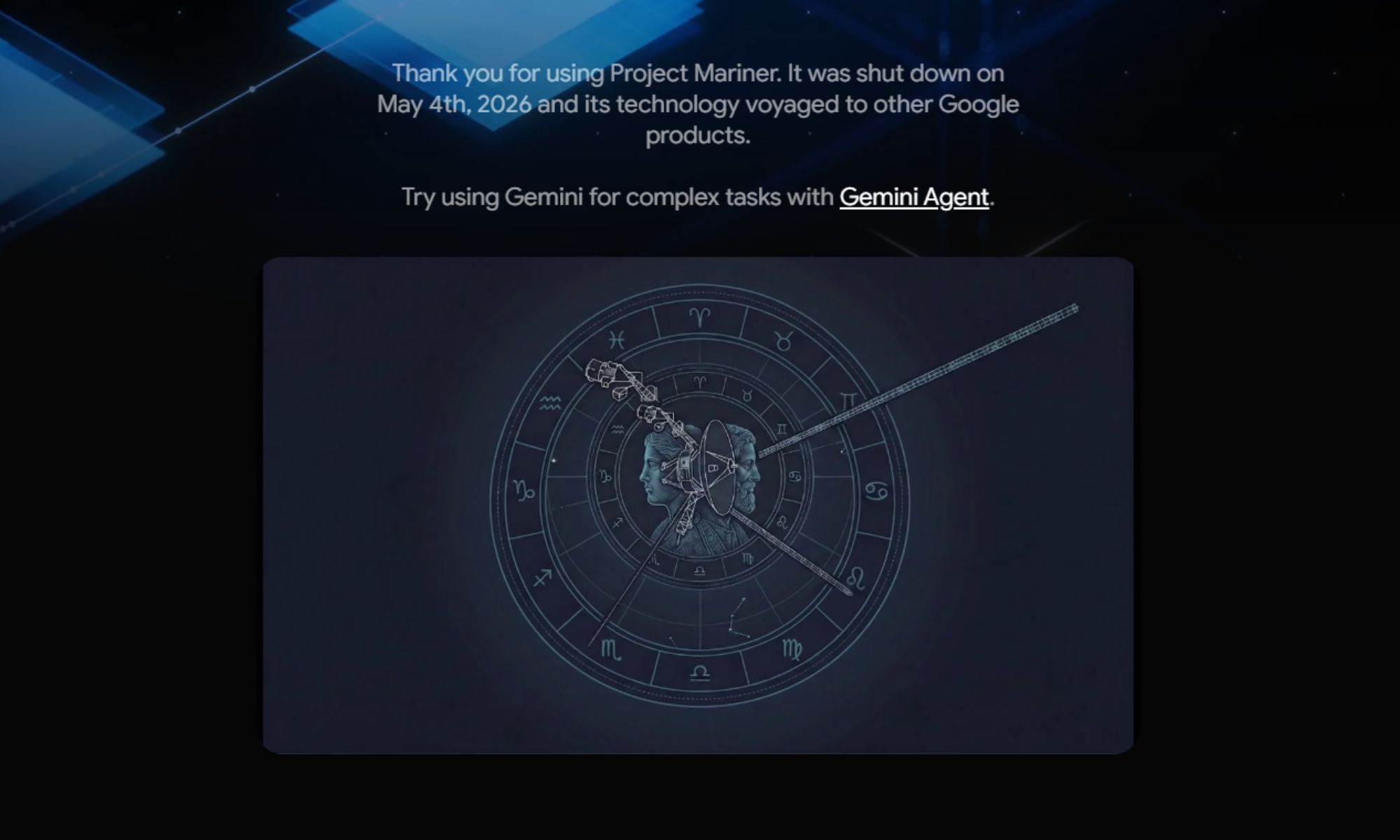
Google has shut down Project Mariner, the autonomous web browsing agent it debuted at I/O last year. The tool, which could navigate Chrome, fill out forms, search listings, and book travel by taking screenshots and visually recognizing page elements, is no longer available. Its landing page now shows a notice with the shutdown date listed as May 4, 2026.
A browser agent that saw what you saw











/cdn.vox-cdn.com/uploads/chorus_asset/file/24000090/acastro_STK075_02.jpg)