The Science of Attention: Creating Short-Form Videos People Won’t Skip
Do people stop and watch your short-form videos, or do they scroll right past them? Wonder how others consistently engineer short-form videos that get watched, shared, and remembered? In this article, you'll discover how to leverage three psychological principles...
 Kass
Kass
Do people stop and watch your short-form videos, or do they scroll right past them? Wonder how others consistently engineer short-form videos that get watched, shared, and remembered?
In this article, you'll discover how to leverage three psychological principles that make people stop scrolling to watch short-form videos.
This article was co-created by Hilary Billings and Michael Stelzner. For more about Hilary, scroll to the end of this article.
Why the Science of Attention Matters More Than Any Algorithm for Video Content
Most conversations about improving short-form video performance center on social media platform changes, algorithm updates, and the next trending format. According to Hilary Billings, a content strategist and expert in the science of attention, those elements are the last 10 percent of what actually drives results. The other 90 percent leverages the psychological fundamentals that explain why people stop and watch any video, regardless of the platform.
Understanding what compels most people to keep watching short videos, to swipe through a carousel, to follow along with you to the other side of a piece of content, serves you beyond any algorithm change, any platform change, any hashtag or AI strategy.
Billings describes this as a skill set that is deeply human, one that AI has not yet been able to replicate well. Marketers and creators who build this knowledge set now are positioning themselves for long-term career longevity in a way that nothing else can match.
How to Apply the Science of Attention to Your Short-Form Video Strategy
Using video in your marketing funnel isn’t about grabbing the attention span for a few seconds. It’s about engineering sustained engagement across an entire piece of short form content.
To figure out how to do that, Hilary and her partner watched and analyzed thousands of viral videos, tracking every factor that could possibly contribute to a video's success in a spreadsheet — what was happening at second one and second three, what they were wearing, the hand gestures, the edits, the cuts, whether there was trending audio, what platform it was on.
What they found was that posting frequency, trending audio, and popular challenges weren’t consistent predictors of performance. What was consistent were certain fundamentals of science and psychology.
Below, we cover a strategic, science-backed framework to help you apply those insights.
#1: Connection: The Two-Fold Foundation
Without connection, nothing else you apply will have the opportunity to do its work.
Connection operates on two levels simultaneously: the audience’s connection to your content and your connection to the content you're producing. Both matter.
Today's viewers are extraordinarily sophisticated. Because we're all consuming so much video, we've trained ourselves to make a judgment about whether we'll watch something in under two seconds, roughly the time it takes to swipe a thumb from the bottom to the top of a phone.
In that split second, people are reading facial cues, body language, energy, and alignment. If a creator isn't showing up in alignment with themselves or their brand, viewers will sense it immediately and move on to the next video, writing the creator off as inauthentic.
This is where the brain science becomes especially important for us as marketers or creators.
3 Days of World-Class Training—Zero Travel!

Couldn't make it to Social Media Marketing World and AI Business World this year? Get all of the great content at a fraction of the price with a Virtual ticket.
That’s full access to recordings of every keynote, workshop, and session—the ones people travel thousands of miles to see. Don't wait. Get your Virtual ticket and enjoy actionable content that you can watch anytime, anywhere.
🔥 Save $200 on Virtual tickets. Sale Ends Friday! 🔥
A creator who's disconnected from their content, making videos about topics or in styles that don't genuinely reflect who they are, produces content that transfers that disconnection to viewers, making them 25 to 40% less likely to share it.
#2: Reputation: The Authenticity Formula
Your brand, whether personal or company, is the what of your reputation. Authenticity is how that reputation is communicated in your content.
But how can you operationalize authenticity? Telling someone to “just be yourself” isn't actionable advice, especially if they’ve spent years adapting to different audiences or contexts.
Billings developed what she calls the Authenticity Formula to solve this problem: values multiplied by voice.
Your Brand’s Values
Research from Brand Builders Group's national personal brand study found that over 70% of people are willing to pay more for a product or service if the company's founder shares their same values. For marketers working for companies they don't own, this same logic applies. By surfacing values through content, you're building the kind of trust that directly accelerates buying decisions.
So, you need clarity on what your brand actually stands for. Why does it exist? What gap does it fill in the market? This isn't about crafting mission statement language; it's about identifying the real values that drove the brand into existence, because those values are what the formula amplifies.
Values in this context are the things that genuinely matter to you as a founder, marketer, or creator; things like family, faith, sustainability, disruption, access, or community.
Your values don't need to be stated explicitly in your content. In fact, Billings says they shouldn't be stated directly. Instead, they should be shown through the choices you make in your content.
A creator who values sustainability might regularly feature their favorite reusable products or share how they upcycle clothing. The audience picks this up unconsciously and begins to associate the creator with those values.
Billings recommends focusing on one value per video. Just as your brand or company is a complex entity made up of many things, each individual piece of content should capture one facet of that complexity. Over time, the full picture builds.
Your Brand’s Voice
Voice is how you would describe your brand’s personality if it were a person. Is it edgy? Funny? The best friend you never had? A no-stranger-to-controversy provocateur?
Values Multiplied by Voice
When values and voice operate together, they create a specific frequency that only certain people will connect with.
This is the opposite of operating from a scarcity mindset approach.
Billings often works with real estate agents, financial advisors, and lawyers who worry that showing their values and voice will cost them potential clients. Her response is that by leaning into your values and voice, you’re giving potential clients a chance to preview what it's like to work with you and accelerating the journey to yes for those who are genuinely aligned with you.

Want to Unlock AI Marketing Breakthroughs?
If you’re like most of us, you are trying to figure out how to use AI in your marketing. Here's the solution: The AI Business Society—from your friends at Social Media Examiner.
The AI Business Society is the place to discover how to apply AI in your work. When you join, you'll boost your productivity, unlock your creativity, and make connections with other marketers on a similar journey.
Consider Duolingo.
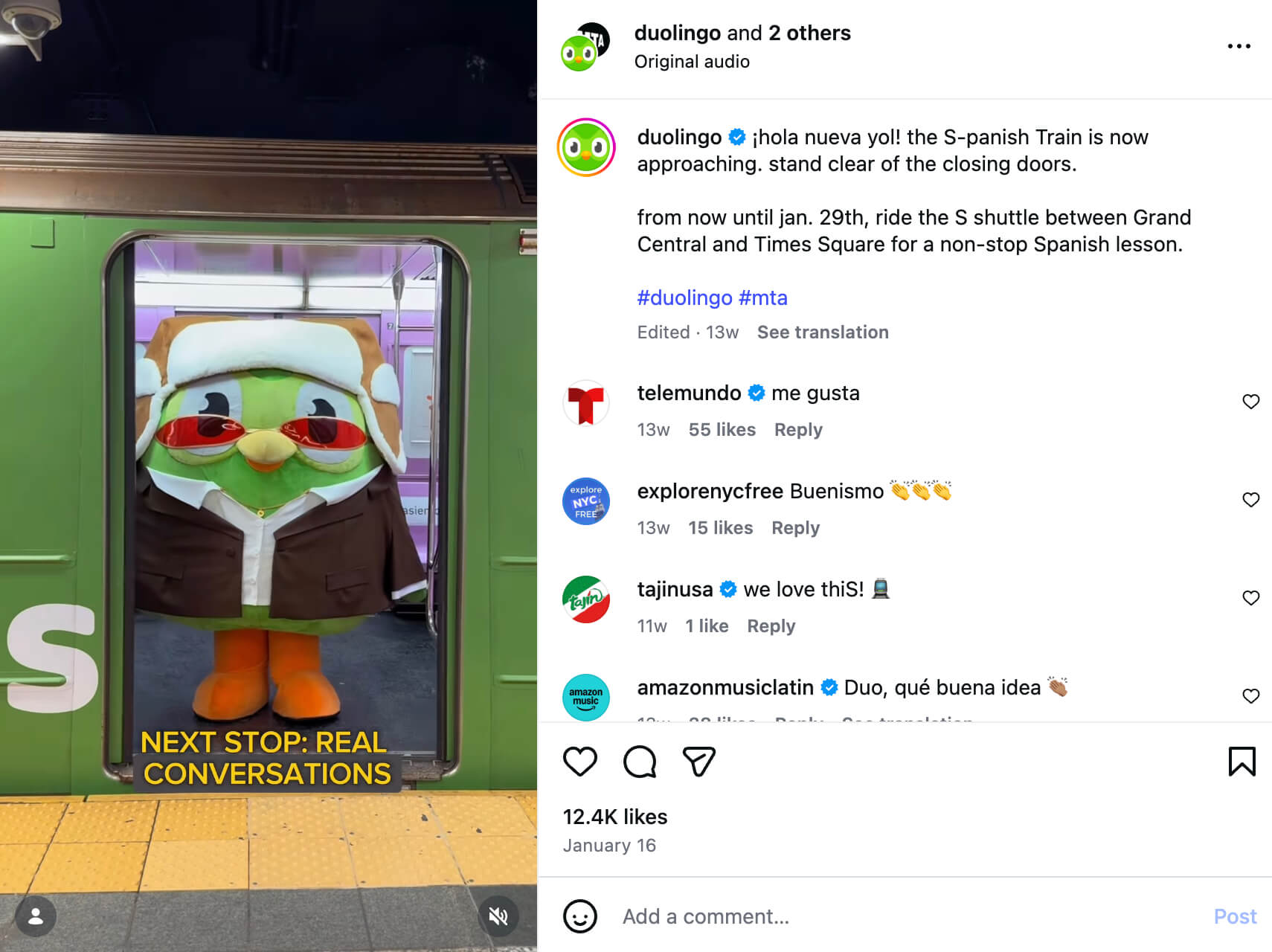
The brand made an early decision not to heavily promote its product in its content. Instead, it trusted that viewers who resonated with their values and voice would bridge the gap to the app themselves.
Their Value: Disruption: The brand aimed to turn the process of learning a new language from a dry academic prospect into a fun experience. Their Voice: Outlandish, Chaotic, Unpredictable: Videos have featured Duo, the owl mascot, wreaking havoc in the Duolingo office.It worked. Duolingo became the number-one language-learning platform by being radically clear about its values and voice from the start.
#3: Emotion: The Engine That Makes Content Spread
Connection and authenticity are what allow people to find and trust you. Emotion is what compels people to take action and share your content with others.
Here are two science-backed reasons for engineering emotion into your videos:
First, the amygdala, the brain's emotional processing center, handles emotions 80,000 times faster than the prefrontal cortex, which is where logic lives. This means that by the time any rational evaluation of your content occurs in your viewer's mind, an emotional decision has already been made.
If your content doesn't spark an emotion quickly, you've lost the viewer before logic ever gets involved.
Second, experiencing an emotion alongside someone else, even through a video on a screen, syncs brain activity and releases neurochemicals that reinforce bonding and the impulse to share.
Billings quips, “When people get emotional, they get promotional.”
The vehicle for engineering emotion into video is story and relatability. When someone can recognize themselves in your content, when it hits something in the shared human experience, that's when emotion fires.
When Lighthouse Immersive, a large-scale experiential art exhibit company that had collaborated with Disney and been featured on Emily in Paris was struggling with visibility on social media, they came to Billings for help.
The exhibits were visually stunning but felt flat on social media. People could see the experience but weren’t moved by it.
During discovery, Billings asked what made the exhibits special. Rather than describing the exhibits, the client began describing what happened inside: proposals, picnics, and multi-generational family visits with grandparents and grandchildren sharing the same moment in the same space.
The art was just the backdrop. The real product was the human experience unfolding within it.
That insight became the foundation of a new content strategy that captured those emotional moments on video. The exhibits stayed in frame, but the story was always focused on the people — what they were feeling, what they were sharing.
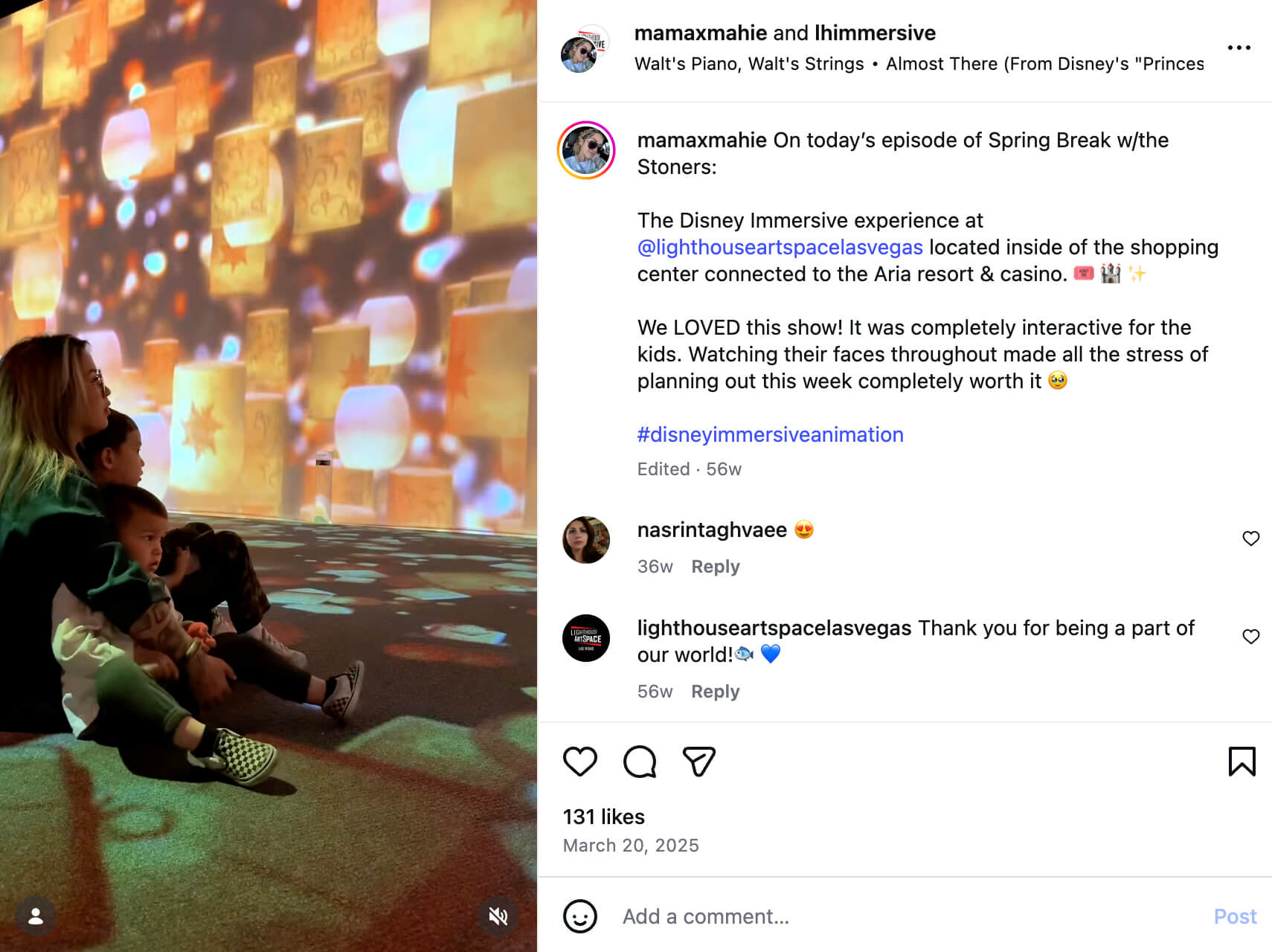
Viewers now felt something while watching the videos, and they wanted to feel it in person. That desire drove visits. And because the content resonated, it kept getting shared.
#4: How to Develop Each Short-Form Video
With connection, authenticity, and emotion established as the core framework, Billings offers a practical approach for applying them before a single frame is filmed.
Before you create any piece of content, ask yourself three questions:
What is the value I want to feature in this video? What voice trait do I want to feature in this video? What emotion am I trying to elicit from my audience?Once you identify the emotion you want to spark, let it shape every other production decision: how you film the video, the pace at which you speak, the camera angles you use, the music you select, and even the expression on your face in the opening frame.
Next, think through how to build a mini story around the answers to those three questions, one where your audience can see themselves in the content. The goal is for the viewer to recognize something of their own experience in what you're showing them, because that recognition is what drives sharing, commenting, and following.
Hilary Billings is a content strategist and the founder of Attentioneers, an agency that helps creators, entrepreneurs, and brands turn their reach into revenue. She has served on TikTok's agency advisory board. Explore her Viral Authority Framework course and the Rank My Reel tool. Email her at hilaryATattentioneers.com.
Other Notes From This Episode
Connect with Michael Stelzner @Stelzner on Instagram and @Mike_Stelzner on X. Watch this interview and other exclusive content from Social Media Examiner on YouTube.Where to subscribe: Apple Podcasts | Spotify | YouTube Music | YouTube | Amazon Music | RSS
✋🏽 If you enjoyed this episode of the Social Media Marketing podcast, please head over to Apple Podcasts, leave a rating, write a review, and subscribe.
Stay Up-to-Date: Get New Marketing Articles Delivered to You!
Don't miss out on upcoming social media marketing insights and strategies! Sign up to receive notifications when we publish new articles on Social Media Examiner. Our expertly crafted content will help you stay ahead of the curve and drive results for your business. Click the link below to sign up now and receive our annual report!

Curious About How to Use AI?
Our newest show, AI Explored, might be just what you're looking for. It's for marketers, creators, and entrepreneurs who want to understand how to use AI in their business.
It's hosted by Michael Stelzner and explores this exciting new frontier in easy-to-understand terms.
Pull up your favorite podcast app and search for AI Explored. Or click the button below for more information.