Gap’s Marketing Strategy and Campaigns Under the Spotlight: 4Ps to TikTok
Gap marketing strategy has become a study in restraint and precision as the retailer navigates a $1.79 trillion global apparel market that grew 3.47% in 2024. After years of aggressive discounting and a diluted brand identity, Gap Inc. integrated...
 Aliver
Gap marketing strategy has become a study in restraint and precision as the retailer navigates a $1.79 trillion global apparel market that grew 3.47% in 2024.
After years of aggressive discounting and a diluted brand identity, Gap Inc. integrated AI-driven personalization into its email campaigns, deployed a “ship-from-store” fulfillment model across its 3,600 locations, and foregrounded authentic user-generated content on social channels. These moves have turned heritage into a competitive advantage and delivered $8.4 billion in net sales for fiscal 2024, up 2 percent year-over-year.
I believe these figures set a powerful stage: as competition heats up, Gap’s strategic choices reveal both lessons and pitfalls for marketers and brand owners alike.
Inside GAP Marketing Campaigns & Strategy
Gap’s Marketing Mix SWOT Analysis of Gap Gap Target Audience Analysis Gap Marketing Strategies & Iconic Campaigns Around the World” with Daft Punk Everybody In Cords” (August 1999) Get Loose. Now Live Feels like Gap. Spring ’25 Better in Denim. Sweats like this. Gap Social Media Strategy & Campaigns Mother’s Day Tribute This or That: Summer Edition Backstage Beats Met Gala Prep Design Process Reveal GapStudio: Behind the Lens Gap × DÔEN Inclusivity Story Gamified Outfit Selector Key Takeaways & Tips for Marketers FAQ about GAP Marketing Strategy and CampaignsGap’s Marketing Mix
Gap’s marketing mix leverages the classic 4Ps but with modern twists tailored to today’s omnichannel shopper. Let’s see how:
Product
Gap’s product assortment spans core casualwear, denim, tees, and outerwear, while also experimenting with limited-edition collections (e.g., collaborations with designers like Zac Posen).

Image source: Vogue
I loved how these capsule drops generate hype and tap into nostalgia for 90s aesthetics, reigniting interest among millennials without alienating Gen Z.
Price
Positioned between fast-fashion and premium basics, Gap uses a value-based pricing strategy. Frequent promotions, holiday events that often escalate from 25% off to 40% or even 50%, help drive traffic and clearance sales without permanently eroding full-price integrity.
Place
Gap operates 3,569 store locations in about 40 countries, alongside a robust e-commerce platform. Its “ship-from-store” fulfillment model, first rolled out in 2012, lets nearby inventory serve online orders, speeding delivery and optimizing stock levels, especially during peak periods.
Promotion
Promotion blends heritage branding (“Iconic 1969 logo”) with digital innovations. Campaigns feature social media influencers posting user-generated content, while in-store events (e.g., styling workshops) foster community. Gap’s investment in data analytics ensures that email and display ads are hyper-targeted, reducing ad waste and boosting ROI.
Your Brand, Too, Can Define Modern Fashion Standards
We picked two agencies after analyzing top apparel case studies; they fuse creative storytelling with performance tactics to elevate brands.
SWOT Analysis of Gap
| • Iconic brand heritage and widespread recognition since 1969 | • Heavy reliance on promotional markdowns, which dilute margins |
| • Signature denim and classic essentials with enduring appeal | • Slower e-commerce growth and UX compared to digitally native rivals |
| • Established omni-channel network (stores, online, mobile) with integrated inventory and analytics | • Perceived as “old-school” by younger consumers seeking trend-driven styles |
| • Strong sourcing relationships enabling scale and cost efficiencies | • Store footprint underperformance in certain mature markets |
| • Limited-edition and nostalgia-driven capsule collections (e.g., heritage denim) | • Aggressive fast-fashion competitors (Zara, Shein) eroding market share |
| • Expansion of eco-friendly and sustainable product lines | • Economic headwinds reducing discretionary apparel spend |
| • Deeper investment in digital marketing and personalized customer experiences | • Supply-chain volatility and rising logistics costs |
| • Growth potential in under-served international and emerging markets | • Shifting consumer preferences toward athleisure and “streetwear” trends |
Gap Target Audience Analysis
Gap’s core target customer is the 25–34 age segment, who are urban professionals and young families seeking reliable, stylish basics at affordable prices.
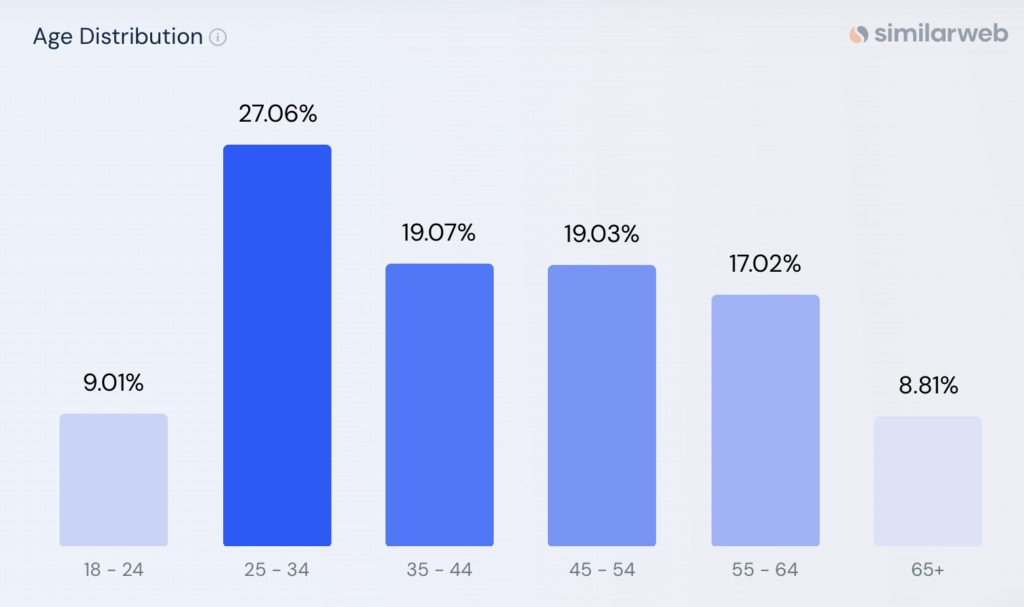
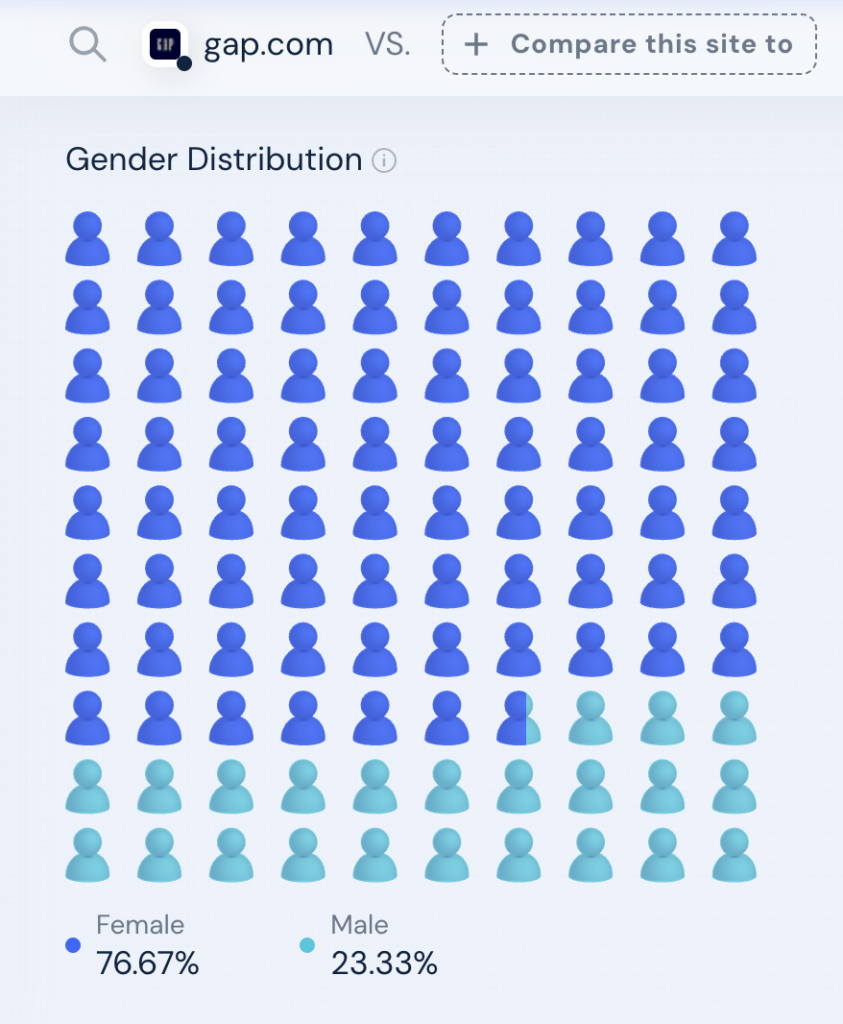
According to SimilarWeb, 76.7% of gap.com visitors are female, predominantly within this age bracket.
Beyond target demographics, psychographics drive purchase behavior:
Value-seekers who appreciate frequent promotionsDigital-first shoppers who expect seamless mobile experiences
Nostalgia seekers drawn to 90s-inspired collections
While I loved Gap’s nod to its heritage, the brand must deepen engagement with Gen Z through fresh storytelling and fashion marketing campaigns that emphasize inclusivity and purpose.
Gap Marketing Strategies & Iconic Campaigns
When you dive into their archives, you realize Gap’s biggest superpower has always been their ability to turn a blank, sterile white box into a high-energy stage for human expression. To give you the full picture, we split this guide into two distinct eras. First, we focused on their iconic marketing campaigns unearthing the definitive, star-studded 90s and Y2K television spots that rewrote the retail advertising playbook, alongside their massive, chart-topping 2025 and 2026 creative comebacks.
Second, we examined their current social media strategy, dissecting how the brand translates that legendary “white box” energy into highly interactive, unpolished, and community-driven content for TikTok and Instagram feeds.
Use of Traditional Marketing
Before diving into digital channels, Gap leans on time-tested, offline tactics that reinforce its heritage and drive brand recall.
Here’s how Gap keeps its classics front and center:
Print Advertising
In September 2024, Gap rolled out its “Classics Redefined” print series across Vogue, Vanity Fair, Elle, GQ, and Harper’s Bazaar.
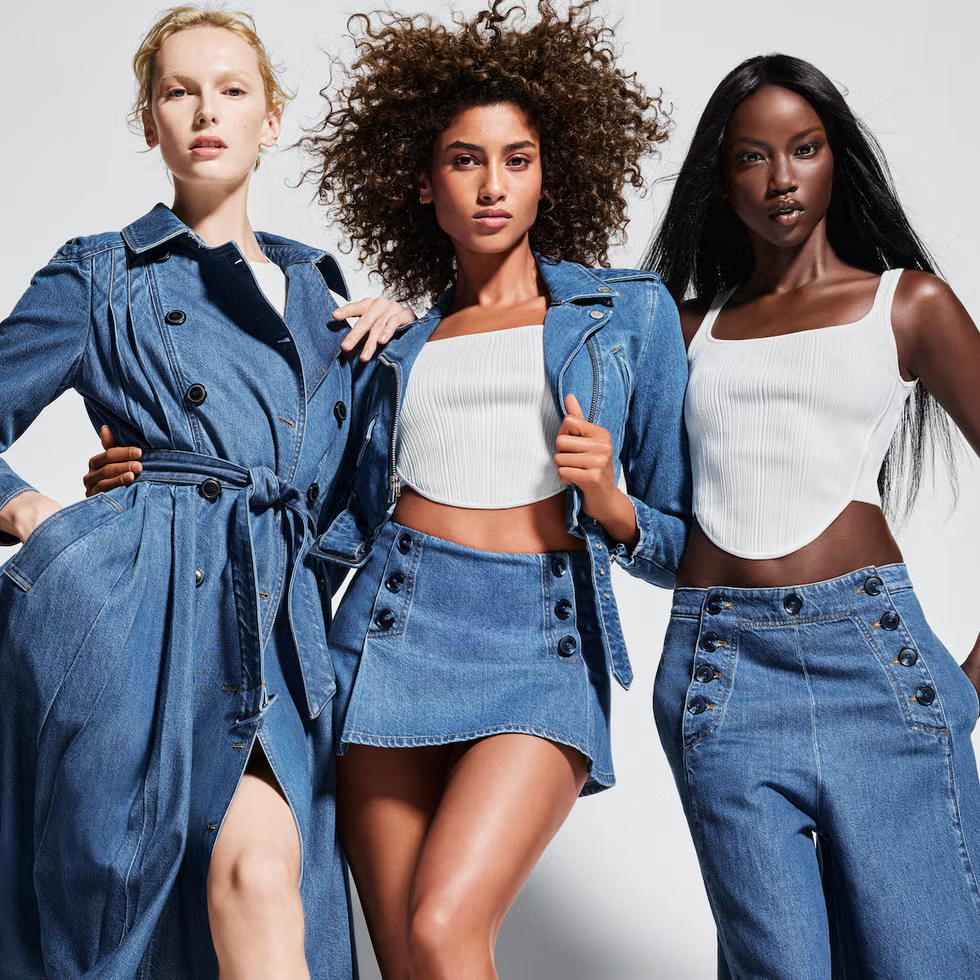
Image source: Gap
Each ad juxtaposed Gap’s staple pieces, like logo tees and denim jackets, with minimalist, high-contrast layouts to tap into both nostalgia and modern style.
I believe these art-directed spreads succeed in reminding consumers that Gap isn’t just basics—it’s a brand with runway-worthy pedigree.
TV Commercials
TV commercials play an important role in Gap marketing strategy. Each one is a crafted narrative that uses music, movement, and real-life moments to showcase how Gap staples fit into every story.
Around the World” with Daft Punk
Set to Daft Punk’s iconic “Around the World” beat, this spot unfolds like a hypnotic dance sequence. Models and dancers in Gap tees and denim move in perfect sync, transforming basics into a statement of unity and flow. No voice-over, no hard sell- just pure rhythm, proving that a classic tee and jeans can feel as fresh and innovative as the music itself.
Why It Worked:
At the time, electronic dance music was strictly an underground subculture. By pairing an edgy, anti-Hollywood actress with two mysterious French robots, Gap completely shattered the safe imagery of suburban malls and positioned their basic denim as the official uniform of the global cool-world. The commercial skipped voiceovers, price listings, or hard-sell slogans. It trusted the raw magnetism of the music and movement, proving that a basic jean jacket could feel as futuristic, rebellious, and artistic as the music itself.Everybody In Cords” (August 1999)
Corduroy takes center stage in this city-streets ad, where a diverse cast glides through urban landscapes and cozy interiors. Each beat spotlights how Gap’s clothes transition effortlessly from workday to weekend. This throwback commercial reminds viewers that true style endures—corduroy’s warm texture and versatile cut turn a retro favorite into a modern essential.
Why It Worked:
The campaign was a masterclass in making uniformity look incredibly desirable. It delivered a powerful psychological promise: if you wear these simple, affordable cords, you are instantly part of an elite hip community. The Gap ad forced the viewer to focus entirely on the texture of the fabric, the colors, and the sheer attitude of the people wearing it, defining the aesthetic peak of Y2K retail marketing.Get Loose. Now Live
An all-star, culturally inclusive cast dances through vibrant sets in Gap jeans and tees, moving to an unreleased track that feels made for the moment. Comments like “best GAP commercial I’ve seen” (3 K likes) and “can’t stop watching” (1.6 K likes) underscore its impact. This spot succeeds because it marries diversity, choreography, and comfort, turning a denim ad into a shared cultural moment.
Why It Worked:
This Gap campaign succeeded by celebrating the beautiful messiness of clothes in motion. Gap’s loose-fit denim line provided the ultimate comfort and durability for high-intensity movement. The rapid-fire editing style was structurally engineered to be sliced up into viral social clips; it seamlessly connected with a younger audience that values comfort over constriction.Feels like Gap. Spring ’25
Without a single line of dialogue, everyday people break into spontaneous dance in living rooms, subways, and backyards—jeans shining with just the right fit. The message is simple: when denim is this comfortable, movement becomes an expression of confidence. By focusing on the joy of motion, Gap reminds viewers that great jeans don’t just look good—they feel good, too.
After the campaign, the internet’s reaction was an instant, roaring “Gap is back.” The campaign generated massive cultural press, drove an 8% increase in new customers, and fueled Gap’s fifth consecutive quarter of positive comparable sales growth, proving that nostalgia backed by authentic self-expression is a massive revenue engine.
Why It Worked:
The campaign moved completely away from boring, copy-paste fashion models. By centering the story around Parker Posey, the marketing drove home a profound message: true style is simply being comfortable in your own skin.Better in Denim.
Directed by Bethany Vargas and choreographed by the legendary Robbie Blue, this absolute monster of a viral campaign paired Gap with the global Gen Z girl group sensation, KATSEYE.
Replicating an exact, modern replica of the iconic 90s white box soundstage, the campaign features the group and 30 diverse backing dancers performing an incredibly complex, high-power routine to a remixed version of Kelis’s Y2K anthem “Milkshake.” The group styled low-rise baggy jeans, racing denim jackets, and micro-pleated skirts.
Why It Worked:
It blended the rabid, digitally native fanbase of a rising global girl band, a nostalgic Y2K radio hit that was already trending on TikTok, and a flawless throwback to Gap’s golden broadcast era. The campaign didn’t just look cool; it completely blew up the internet. It racked up over 8 billion impressions and 500 million views in its initial rollout, driving immediate, double-digit revenue growth across Gap’s entire fall denim lineup.Sweats like this.
A beautifully minimalist, color-coordinated product campaign designed to elevate basic loungewear into high-tier fashion art.
The visual assets feature dancers and creators performing smooth, slow-motion contemporary movements against monochrome backdrops that perfectly match the hue of the hoodies, sweatpants, and crewnecks they are wearing—ranging from muted sage greens to deep heather grays.
Why It Worked:
The campaign successfully stripped away the lazy, “stay-at-home” stigma typically associated with fleece sweatpants. It spoke directly to the modern consumer’s obsession with minimalist, tone-on-tone dressing, positioning Gap’s affordable fleece ecosystem as a highly sophisticated wardrobe foundation for public streetwear.Gap’s social channels celebrate cultural moments and spark genuine connections—mixing warm storytelling with playful interactivity to bring Gap staples into every part of life.
From Mother’s Day warmth to gamified TikTok fun, each content uses real moments and trending formats to engage audiences and reinforce Gap’s inclusive heritage.
Let’s look at Gap’s marketing campaigns for social media one by one:
Mother’s Day Tribute
Customers and employees unwrap gifts, share styling tips, and swap family snapshots to a gentle acoustic track.
Moving completely away from polished commercial scripts, Gap’s social channels rolled out a raw, deeply intimate portrait series for Mother’s Day. The content featured candid, smartphone-shot video diaries and unedited polaroids of creative mothers—including designers, stylists, and internal team members—interacting with their children while wearing matching, lived-in Gap organic cotton tees and denim overalls.
This heartfelt reel leaned into emotion, tying cozy cardigans and tees to personal celebrations, and drove a 45 K comment lift as followers tagged the moms who inspire them.
Why It Worked:
It treated motherhood as an authentic, messy journey rather than a shallow marketing opportunity, building deep emotional equity with their core family demographic.
This or That: Summer Edition
Five creators—@sydtherockerkid, @emiliapaige.s, @salemmitchell, @analuisacorrigan, and @wordimagetext—debated denim versus linen and bucket hats versus caps in a quick-fire quiz format. With 150 K views and a flurry of duet responses, Gap turned style choices into a community conversation that showcased core pieces in real-world scenarios.
Why It Worked:
This activation turned shopping into a two-way conversation. It triggered massive algorithmic engagement via poll clicks and comments, while simultaneously serving as a goldmine of real-time consumer preference data for their merchandising teams.
Backstage Beats
A lively behind-the-scenes montage captures team members brewing coffee, prepping makeup, and sharing laughs—all set to upbeat editorial music. The candid vibe earned 80 K likes, humanizing Gap’s creative process and reminding viewers that great style often starts with simple, joyful moments.
Why It Worked:
Modern audiences love transparency. By giving credit to the hard-working community behind their “commercials,” Gap reinforced its identity as a brand that champions authentic artistic culture.
Met Gala Prep
Laura Harrier steps into her custom GapStudio Met Gala gown by Zac Posen, with fittings, fabric swatches, and final touches unfolding in real time. Drawing 200 K views in 24 hours, this exclusive peek elevated GapStudio’s craftsmanship and linked the brand to one of fashion’s biggest nights.
Why It Worked:
It successfully proved that a brand famous for selling $40 mall jeans possesses the ultimate design authority to craft historic haute couture for the most exclusive red carpet on earth. The behind-the-scenes access made a typically gatekept, elitist event feel incredibly inclusive and thrilling for everyday followers.
Design Process Reveal
In a fast-cut BTS reel, Zac Posen sketches, drapes, and sews a GapStudio piece, condensing hours of work into moments of inspired creativity. The educational snapshot pulled in 70 K views, spotlighting the artistry behind each garment and building anticipation for the next drop.
Why It Worked:
Today’s consumers are highly skeptical of generic “greenwashed” claims. By showing the literal physics, lab coats, and technical craftsmanship behind their garments, Gap proved that beneath their accessible retail price points lies responsible manufacturing expertise.
GapStudio: Behind the Lens
Supermodels Imaan Hammam, Alex Consani, and Anok Yai pose under Mario Sorrenti’s lens, styled by Alastair McKimm, while Zac Posen narrates his creative vision. With 120 K engagements, this reel underscored GapStudio’s elevated narrative and proved Gap can play at runway level.
Why It Worked:
By celebrating the behind-the-scenes cinematic craft, the content transformed standard commercial promotions into legitimate film-school inspiration.
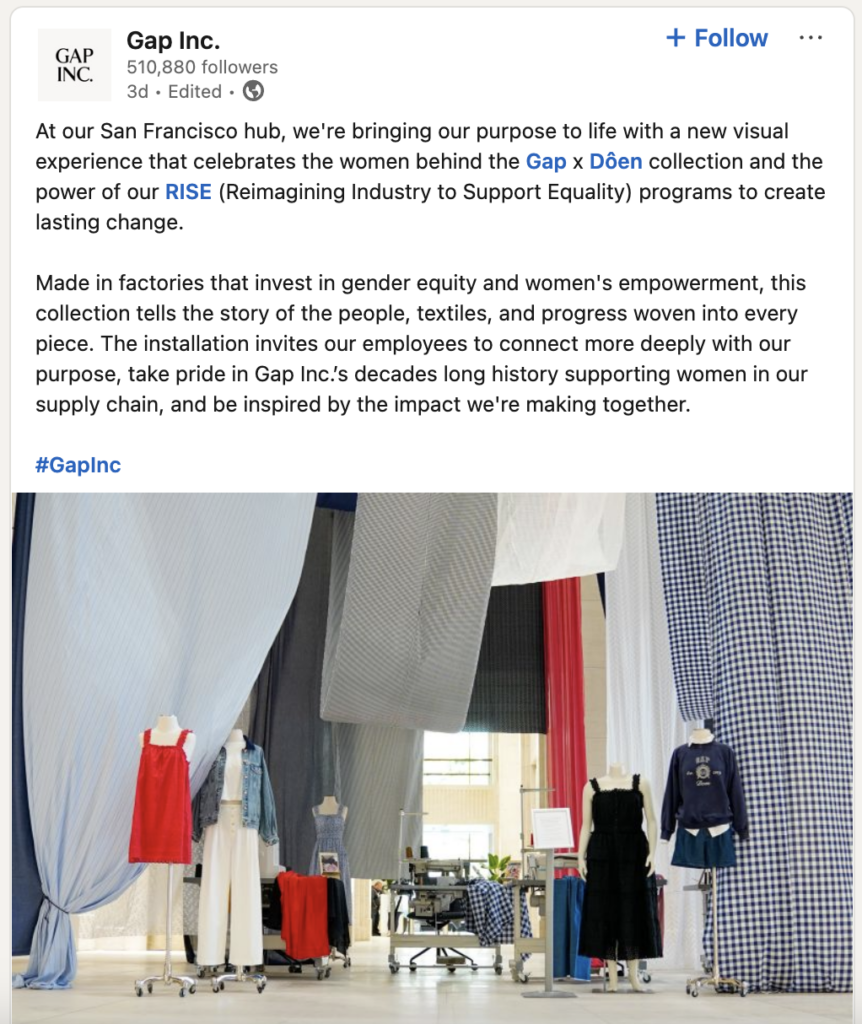
Gap × DÔEN Inclusivity Story
Model Veronica Ocampo shares how her mother’s mantra of inner confidence guided her journey from marketing student to campaign star, framed by the Gap × DÔEN collection’s pieces.
Celebrating body neutrality and community, this authentic story earned 60 K likes and drove traffic straight to the limited collection.
Why It Worked:
While most fashion collaborations rely on extreme artificial scarcity and cold, exclusionary aesthetics, this campaign succeeded by leaning into warm human bonds. It proved that premium design belongs to every generation, age, and body type.
Gamified Outfit Selector
In a playful reel that mimics a video-game character creator, viewers tap to choose shirts, pants, and accessories for their on-screen avatar
Get dressed in GapVintage. The next drop of hand-sourced vintage from our Global Vintage Curator Sean Wotherspoon is coming tomorrow. Each piece is one of one, so get them before you can’t. Available 4/22 at 12 p.m. ET / 9 a.m. PT. Online in the U.S. + on the Gap app. ___ Items will be held in your shopping cart for up to 30 minutes. Eyeing something that says “Sold”? Refresh in case it’s available again. And look for future drops all year.
♬ original sound – gap – GapGamification drove a 25% higher completion rate and doubled share rates versus standard demos, turning product exploration into interactive fun.
Why It Worked:
It gamified the e-commerce journey, taking the friction out of outfit coordination. Thousands of users recorded themselves letting the filter choose their daily outfits, creating an absolute flood of organic, user-generated content that linked directly back to product purchase pages.
Key Takeaways & Tips for Marketers
Honor Your Roots, Explore New Formats: Pair signature elements (logo, fabric) with fresh storytelling—think Daft Punk–style dance spots or TikTok challenges. Story > Specs: Evoke emotion with mini-films (road trips, Met Gala prep) instead of feature dumps. Co-Create with Your Fans: Launch UGC drives (#HowYouWearGap) and interactive quizzes to boost authenticity and reach. Show the Human Side: Share quick BTS peeks—design sketches, coffee runs—to deepen trust. Be Timely & Inclusive: Tie content to real moments (Mother’s Day, fashion weeks) and diverse voices to drive engagement.FAQ about GAP Marketing Strategy and Campaigns
What is Gap’s current marketing strategy and how has it evolved?
Gap’s marketing strategy centres on expressing its heritage while embracing digital-first tactics. The brand shifts from years of diluted identity into a more disciplined fashion marketing mix: selective collaborations (for example, its limited-edition drops), clear product focus, strong digital fulfilment, and content on nostalgia and culture. For example, the article notes that Gap achieved net sales of $8.4 billion in fiscal 2024, up 2 % year-over-year, which it attributes to more focused marketing and integration.
How does Gap integrate its 4Ps (Product, Price, Place, Promotion) in the modern retail environment?
Product: Gap offers its core casualwear and denim, while experimenting with limited-edition design collaborations (e.g., with designers like Zac Posen) to stir interest.
Price: Positioned between fast-fashion and premium basics, Gap uses value-based pricing with frequent promotions. The strategy now emphasizes maintaining full-price integrity while driving traffic through offers.
Place: Around the world, Gap operates thousands of physical stores (more than 40 countries) and has a strong e-commerce platform; the “ship-from-store” fulfilment model connects digital orders with local inventory.
Promotion: The brand uses a blend of heritage branding (e.g., its “Iconic 1969” logo), influencer/UGC campaigns, social media trends, and display advertising to modernise its promotion mix.
How does Gap leverage social media, UGC, and influencer marketing in its campaigns?
Gap’s social media strategy is based on real-world & relatable content, UGC, influencer partnerships, collaborative drops, and interactive formats that encourage participation. For example, the brand uses UGC tags such as #HowYouWearGap, interactive style quizzes, and campaign drops amplified by influencers and creators. Influencer strategy articles show Gap working with artists and creators who align with Gen Z values and culture, leveraging authenticity, not just celebrity.
What digital marketing channels does Gap still use and why?
Gap continues to use email marketing, traditional display advertising, and digital retail media. While doing that, the brand uses AI-driven personalisation in its email campaigns and targets display ads based on behaviour and segmentation. The continued reliance on these channels is because they allow Gap to personalise messaging, integrate commerce (e-commerce, mobile) and maintain fast-moving fashion retail environments.









![5 New Marketing Trends To Watch in 2025 [Backed by Data & a Dash of Expert Wisdom]](https://www.hubspot.com/hubfs/top%20marketing%20trends%20to%20watch.png)









.jpg&h=630&w=1200&q=100&v=c0f97a310e&c=1)