Multi-channel content distribution: How to scale content reach in the era of Loop Marketing
I’ll say the hard thing nobody wants to admit: Creating “great content” isn’t enough; it’s time for a change. And that change starts with multi-channel content distribution.
 FrankLin
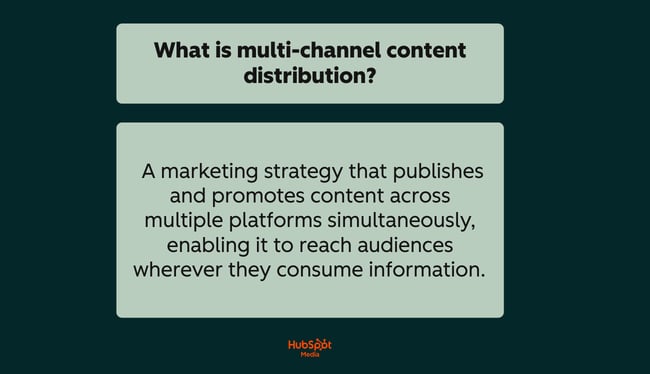
I’ll say the hard thing nobody wants to admit: Creating “great content” isn’t enough; it’s time for a change. And that change starts with multi-channel content distribution. This guide covers: You'll learn how to make the most of your content through modular repurposing, build an optimized distribution strategy using channel-specific adaptation, and measure which platforms drive pipeline. Multi-channel content distribution connects content to multiple channels using unified data and automation, transforming content distribution from a manual bottleneck into a scalable growth engine. Whether you’re exploring your first multichannel distribution strategy or refining an existing approach, the frameworks, metrics, and tactics ahead will help you amplify content reach, improve lead quality, and attribute revenue to the channels that matter most. Table of Contents Multi-channel content distribution is a marketing strategy that publishes and promotes content across multiple platforms simultaneously, enabling it to reach audiences wherever they consume information. Unlike single-channel approaches that limit visibility to a single platform, a multichannel distribution strategy places your content on multiple platforms simultaneously, including: Multi-channel content distribution enables seamless connection of your content across multiple channels through unified data and automation. This differs from omnichannel distribution, which focuses on creating seamless experiences across touch points. Multi-channel distribution prioritizes reach and channel-specific optimization, adapting content formats, lengths, and styles to match each platform’s requirements. How multi-channel content distribution works: All in all, automation and AI tools streamline content distribution workflows across channels, reducing the manual effort required to maintain presence on multiple platforms while ensuring consistent messaging. Within HubSpot’s Loop Marketing framework, multi-channel content distribution powers the Amplify stage, where teams diversify content across channels for both human audiences and AI-powered search engines. The goal? Get your brand recommended, not just ranked. The subsequent “Evolve” stage utilizes performance data from your multichannel distribution strategy to: All of this results in compound growth with each cycle. If you want a more in-depth breakdown of how Loop Marketing is changing the content landscape, definitely give this video a watch: Pro tip: To execute a multichannel distribution strategy efficiently, HubSpot’s Content Hub enables teams to create, remix, and publish content across formats from a single platform. Then, use HubSpot’s AEO Grader to ensure your content is optimized for visibility in AI-powered search results. Multi-channel content distribution drives revenue by placing your content in front of buyers at multiple touchpoints throughout their decision-making journey. Rather than relying on a single channel to carry the full weight of conversion, a multichannel distribution strategy creates numerous pathways to purchase. Effective multi-channel distribution improves lead quality, conversion rates, and revenue attribution by ensuring prospects encounter your brand repeatedly across the platforms they trust. B2B buyers interact with an average of 10+ pieces of content before making a purchase decision. Multi-channel content distribution ensures your content appears across all relevant touch points, rather than ceding them to competitors. Each channel serves a distinct role in the revenue cycle: Here’s a chart to help better understand the intersection between content types, channels, and buyer stages when it comes to multi-channel content distribution: Channel Awareness Consideration Decision Retention Organic search/AI search Blog posts Pillar pages Glossary content Comparison guides How-to articles Industry reports Product pages Pricing content Integration docs Knowledge base Help articles Social media Short-form video Infographics Industry news Carousels Broadcast channels Poll content Customer stories Demo clips User-generated content Tips & tricks Community highlights Product updates Email Newsletter Welcome series Content digests Nurture sequences Webinar invites Case study sends Product trials Consultation offers ROI calculators Feature adoption Renewal campaigns Video/podcasts Educational videos Podcast episodes Expert interviews Tutorials Webinars Product walkthroughs Demo videos Customer testimonials Implementation guides Advanced tutorials User spotlights Communities/forums Thought leadership Industry discussions Reddit AMAs Q&A responses Use case discussions Peer advice Review responses Comparison threads Success stories User forums Beta feedback Paid media Display ads Sponsored content Video ads Retargeting ads Lead magnets Gated content Demo ads Free trial offers Upsell campaigns Event promotions Loyalty offers Ultimately, when prospects encounter consistent messaging across multiple channels, trust compounds — and trust accelerates purchasing decisions. Measurement and attribution connect channel performance to pipeline and revenue outcomes. Without cross-channel visibility, marketing teams can't identify which content and platforms contribute to closed deals. A multichannel distribution strategy paired with unified analytics reveals: This data feeds directly into optimization, enabling teams to focus on high-performing channels and allocate resources more effectively to those that are underperforming. Automation and AI tools streamline content distribution workflows across channels, enabling small teams to maintain presence on 5, 10, or more platforms without proportional resource investment. HubSpot’s Breeze AI accelerates this process by helping teams repurpose core content into channel-specific formats, transforming a single blog post into: The result? Broader reach without bottlenecking content production. Multi-channel content distribution generates revenue not just through reach, but through learning. Here’s how it works: Pro tip: Use HubSpot’s Social Media Post Scheduler to coordinate publishing across platforms from a single dashboard, ensuring your multichannel distribution strategy stays consistent without requiring manual posting on each channel. A multi-channel distribution strategy is a repeatable framework for publishing content across multiple platforms to maximize reach, engagement, and revenue. Rather than creating separate content for each channel, this approach starts with a core asset and systematically adapts it for distribution across your entire channel mix. Multi-channel content distribution connects content to multiple channels using unified data and automation, turning one piece of content into dozens of touchpoints without requiring a proportional increase in resource investment. Below, take a look at the following steps that outline a simple framework for a repeatable multi-channel content distribution strategy: Before distributing content, identify where your audience actually spends time and how they consume information on each platform. This audit forms the foundation of your multichannel distribution strategy by ensuring that effort is directed toward channels with a proven audience fit. Effective multi-channel content distribution starts with a “pillar” asset — a comprehensive piece of content that can be broken into smaller, channel-specific formats. Strong pillar content characteristics: Examples include long-form blog posts, original research reports, webinars, and comprehensive guides. Not every piece of content is suitable for every channel. That said, map your pillar content derivatives to specific channels based on format fit and buyer stage alignment. Use this framework: This mapping ensures your multichannel distribution strategy delivers the right content to the right audience at the right time. Multi-channel content distribution differs from omnichannel by focusing on reach and channel-specific optimization. Each platform has distinct format requirements, audience expectations, and algorithm preferences. Adapt your pillar content accordingly: Pro Tip: HubSpot’s Content Hub streamlines this process by centralizing content creation and enabling teams to remix assets into multiple formats from a single platform. Consistent distribution requires a documented publishing schedule that coordinates timing across channels without overwhelming your audience. Build your cadence: Automation and AI tools streamline content distribution workflows across various channels, enabling consistent execution without the need for manual publishing on each platform. Key automation opportunities: HubSpot’s Breeze AI accelerates distribution by helping teams transform core content into platform-ready formats—generating social copy, email variations, and video scripts from a single source asset. This reduces production time while maintaining message consistency across your entire channel mix. Measurement and attribution connect channel performance to pipeline and revenue outcomes. Track results across channels, identify top performers, and feed insights back into your strategy to improve each distribution cycle. Content repurposing transforms a single asset into multiple channel-specific formats. Content personalization adapts messaging based on: Combined, these tactics make multi-channel content distribution scalable and effective. The key is modular packaging: structuring content as interchangeable components that can be assembled, reformatted, and personalized for different contexts without requiring a complete overhaul. Structure every pillar asset as a collection of standalone modules rather than a single monolithic piece. Each module can be extracted, reformatted, and distributed independently. A modular content structure includes: This approach enables a multichannel distribution strategy where one 2,000-word blog post yields: Document how each content module type translates to each distribution channel. This removes guesswork and speeds production. Here are some example transformations: Multi-channel content distribution connects content to multiple channels using unified data and automation. Your transformation matrix codifies this connection into a repeatable system. Effective multi-channel distribution improves lead quality, conversion rates, and revenue attribution by delivering relevant content to specific audience segments (not just broadcasting the same message everywhere). Personalization layers to apply: A single content module can generate 5 to 10 personalized variations by adjusting these layers, thereby multiplying the output of your multichannel distribution strategy without requiring the creation of new content. Dynamic content automatically swaps text, images, or CTAs based on viewer attributes, enabling personalization at scale across email, web, and ads. Implementation approaches: This automation ensures your multi-channel content distribution delivers tailored experiences without manual version management for each segment. Repurposing and personalization can fragment a brand’s voice if not executed with guardrails. Templatized frameworks ensure consistency while enabling variation. Build templates for: Pro tip: Again, HubSpot’s Content Hub supports this modular approach by enabling teams to create, store, and remix content components from a centralized platform, maintaining brand consistency while scaling production across channels. Measurement and attribution connect channel performance to pipeline and revenue outcomes. Apply this principle at the module level to identify which content components yield the best results. Track these metrics per module: Use these insights to prioritize high-performing modules in future repurposing cycles. It’ll help you double down on what works and retire what doesn’t Measurement and attribution connect channel performance to pipeline and revenue outcomes. Tracking the right metrics reveals: Effective multi-channel content distribution requires metrics across three categories: In the sections below, I’ve outlined each metric in detail, along with actionable tracking guidance. Take a look: Impressions measure how many times your content appeared on each platform. This metric establishes baseline visibility for your multi-channel content distribution efforts. Moreover, track impressions to: Deep impressions with low engagement signal content-audience mismatch or poor format fit for that channel. As buyers increasingly use AI-powered search tools, visibility in platforms like ChatGPT, Perplexity, and Google AI Overviews becomes a critical distribution metric. Thus, be sure to monitor: This metric directly reflects how well your multichannel distribution strategy reaches buyers before they ever visit your website. CTR measures the percentage of viewers who click through to your content from each distribution channel. This metric reveals which platforms drive active interest versus passive exposure. Additionally, benchmark CTRs vary by channel: Overall, low CTR on a high-impression channel suggests your hooks, headlines, or creative need optimization for that platform. Engagement rate measures interactions (likes, comments, shares, saves) relative to reach. Track this metric by content format to identify what resonates on each channel. Compare performance across: Multi-channel content distribution differs from omnichannel by focusing on reach and channel-specific optimization; engagement rate data tells you exactly how to optimize each channel. Conversion rate tracks the percentage of visitors from each channel who complete a desired action, such as: This metric answers critical questions, such as: Track conversion rate at both the channel level and the individual content level to pinpoint top performers. CPA measures the cost per acquisition (CPA) of acquiring a customer or lead from each distribution channel. This metric ensures your multichannel distribution strategy remains cost-efficient. Calculate CPA by channel types, such as: Lastly, compare CPA across channels to allocate budget toward the most efficient acquisition paths. Multi-touch attribution tracks how multiple channels contribute to a single conversion. Most B2B buyers interact with content across various platforms before making a purchase. However, single-touch models miss this complexity. Below are a few attribution models to consider: Pro tip: HubSpot’s CRM centralizes touchpoint data across channels, enabling accurate multi-touch attribution that connects your multi-channel content distribution efforts to closed revenue. Pipeline velocity measures how quickly leads from each channel move through your sales funnel. Fast-moving channels indicate strong content-audience fit and high buyer intent. Therefore, track the following: Channels with high volume but slow velocity may be generating low-quality leads. If this is the case, adjust targeting or content accordingly. Ultimately, effective multi-channel distribution enhances lead quality, conversion rates, and revenue attribution by optimizing based on these velocity insights. Multi-channel content distribution differs from omnichannel by focusing on reach and channel-specific optimization. Both approaches use multiple platforms, but the strategy and goals diverge: In practice, a multichannel distribution strategy might involve: Each would be optimized for its respective channel. An omnichannel approach would ensure all three touchpoints share context, so a user who reads the email sees related content on LinkedIn and a personalized blog experience. Channels with built-in discovery mechanisms drive the fastest new audience growth. These platforms surface content to users who don’t already follow your brand: Owned channels (email, blog, social followers) engage existing audiences effectively but rely on other channels to fuel new audience acquisition. Measurement and attribution connect channel performance to pipeline and revenue outcomes. However, the best attribution approach depends on your sales cycle length and data maturity: Overall, here’s the TDLR answer: For most B2B companies executing multi-channel content distribution, multi-touch attribution reveals how channels work together to drive results. Conversely, single-touch models overvalue either discovery or closing channels while ignoring the nurture content that moves buyers between stages. The frequency of content resurfacing depends on: Here’s how to approach each channel/content format: Effective multi-channel distribution improves: However, this is only true if the content remains current. Here’s my best piece of advice: Prioritize updating content that ranks well, drives conversions, or addresses fast-changing topics over blanket resurfacing schedules. In short: No. A multichannel CMS simplifies execution but isn't required to implement a multichannel distribution strategy. What matters is your ability to create, adapt, and publish content across platforms efficiently. You can execute multi-channel content distribution with: The right choice depends on factors such as: Small teams with 3 to 4 channels often succeed with standalone tools. Alternatively, teams managing six or more channels with a high publishing frequency benefit from consolidated platforms that reduce manual coordination. Pro tip: HubSpot’s Smart CRM unifies content, social, email, and analytics in one platform, giving teams a consolidated system to manage multi-channel distribution without juggling standalone tools. Ultimately, mastering multi-channel content distribution positions your brand to reach buyers wherever they consume information, not just where you prefer to publish. As audiences fragment across social platforms, AI-powered search engines, communities, email, and video, a multichannel distribution strategy ensures your content meets prospects at every stage of their journey (rather than waiting for them to find you). Although I mentioned this earlier in this post, I’ll (gladly) reiterate: Effective multi-channel distribution enhances lead quality, conversion rates, and revenue attribution, all by creating multiple pathways to purchase. Here’s a recap of how each channel reinforces the others: Plus, HubSpot’s Smart CRM unifies your multi-channel content distribution efforts by: Whether you’re repurposing pillar content into platform-specific formats or tracking which touchpoints influence closed deals, integrated data eliminates guesswork and accelerates optimization. Ready to scale your distribution strategy? Get started with HubSpot’s Content Hub, powered by Breeze AI, to create, remix, and publish content across channels from a single platform, turning one asset into dozens of touchpoints that drive measurable business growth.
What is multi-channel content distribution, and how does it work?
Multi-channel Content Distribution in the Loop Marketing Era
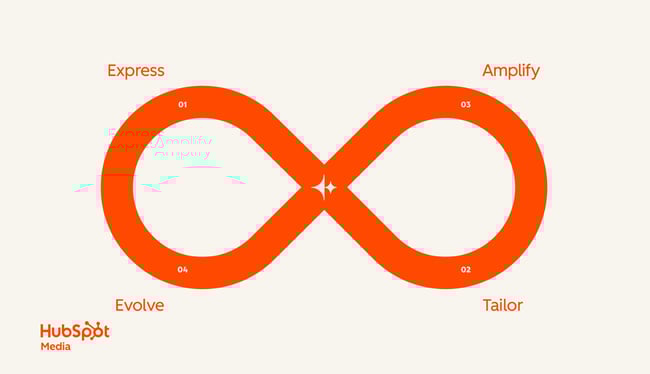
How multi-channel content distribution drives revenue?
1. More touch points create more conversion opportunities.
2. Attribution connects channel performance to the pipeline.
3. Automation scales distribution without scaling headcount.
4. Compound growth through continuous optimization.
Multi-channel Content Distribution Strategy
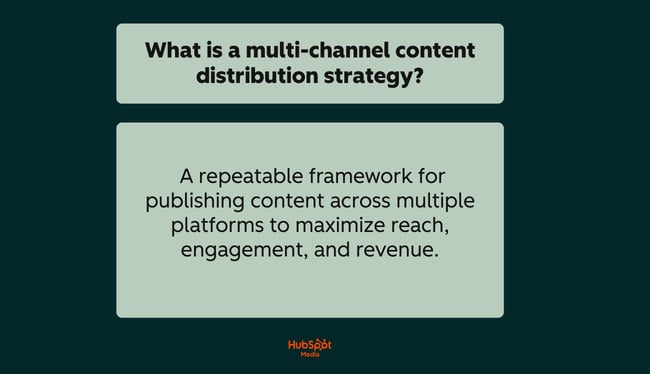
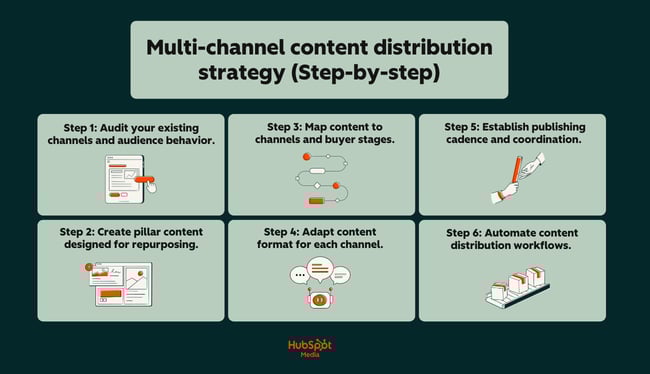
Step 1: Audit your existing channels and audience behavior.
Step 2: Create pillar content designed for repurposing.
Step 3: Map content to channels and buyer stages.
Step 4: Adapt content format for each channel.
Step 5: Establish publishing cadence and coordination.
Step 6: Automate content distribution workflows.
How to Repurpose and Personalize Content Across Channels
Tactic 1: Build content in modular blocks.
Tactic 2: Create a content-to-channel transformation matrix.
Tactic 3: Personalize by segment, not just channel.
Tactic 4: Use dynamic content for automated personalization.
Tactic 5: Maintain brand consistency with templatized frameworks.
Tactic 6: Track module performance to optimize future repurposing.
Multi-channel Content Distribution Metrics to Track
1. Reach Metrics
Impressions (by Channel)
Share of Voice in AI Search
2. Engagement Metrics
Click-through Rate (CTR) by Channel
Engagement Rate by Content Format
3. Conversion Metrics
Conversion Rate by Channel
Cost per Acquisition (CPA) by Channel
4. Attribution Metrics
Multi-touch Attribution
Pipeline Velocity by Channel
Frequently Asked Questions about Multi-channel Content Distribution
How is multi-channel different from omnichannel?
Which distribution channels help drive new audiences the fastest?
What is the best way to attribute multi-channel influence?
How often should we republish or resurface content?
Do we need a multichannel CMS to do this?
Multi-channel content distribution is the future of marketing.








![20 Predictions for Social Media in 2025 [Infographic]](https://imgproxy.divecdn.com/HMVhRh2JvYwAse_QsxNWdYtb_Of31-oCF2OnUe4eZqA/g:ce/rs:fit:770:435/Z3M6Ly9kaXZlc2l0ZS1zdG9yYWdlL2RpdmVpbWFnZS9zb2NpYWxfbWVkaWFfdHJlbmRzXzIwMjVfMi5wbmc=.webp)
.png)