Seven Mantras of the Seven Successive Buddhas: Removes All Obstacles, Negative Karma, Illness, Posession with FULL SUTRA and Mantra Commentary
Are you feeling overwhelmed by illness, nightmares, or the endless stresses of modern life? Which 7 mantras help remedy these problems, while clearing away your deepest karmic obstacles? Is this profound Mahayana practice — open to absolutely anyone —...
 ValVades
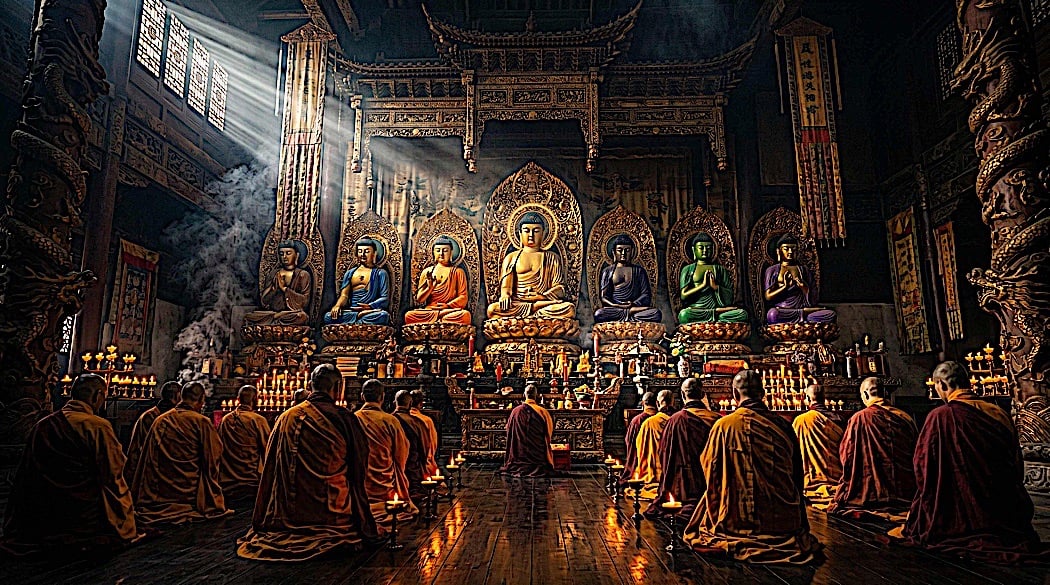 The Seven Successive Buddhas on an altar. See detailed images below, including with the mudras associated with each (Note: Buddhas can have their hand in any mudra, depending on the teaching.)
Are you feeling overwhelmed by illness, nightmares, or the endless stresses of modern life? Which 7 mantras help remedy these problems, while clearing away your deepest karmic obstacles? Is this profound Mahayana practice — open to absolutely anyone — who calls upon the power of not just one, but seven enlightened Buddhas?
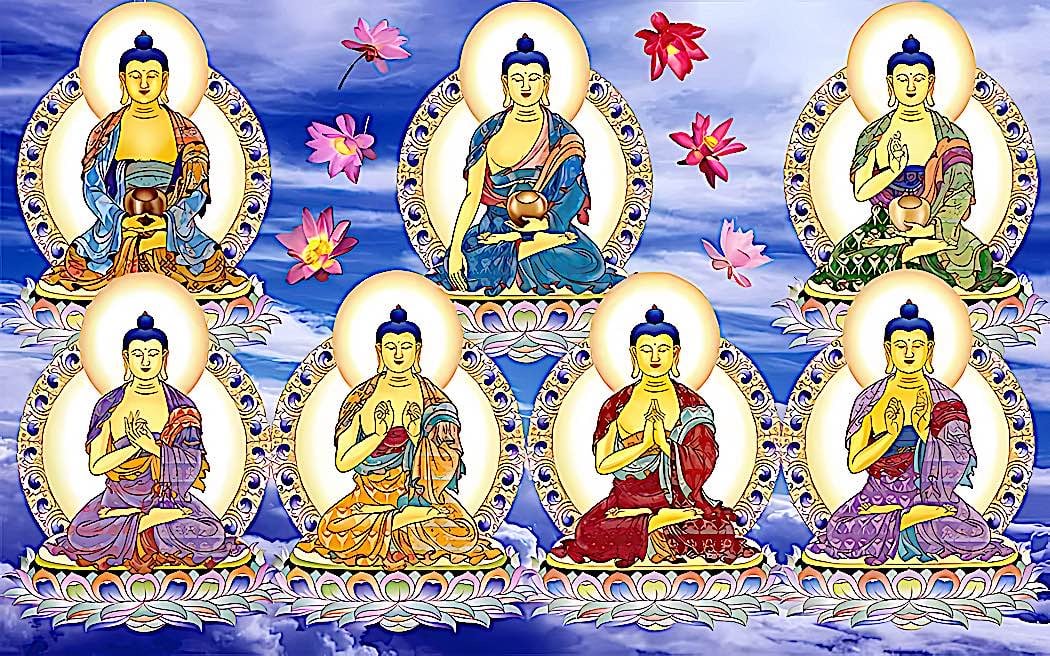 Seven Successive Buddhas depicted with their associated mudras.
In this feature
Introduction to the 7 Successive Buddhas Sing-along (chant along) 15-Minute practice of the 7 Buddhas for daily practice (anyone may practice) or whenever you feel threatened or are suffering Full Sutra of the Seven Successive Buddhas (translated to English) Benefits of each mantra and Buddha meditation 7 Mantras of the 7 Buddhas 7 Mudras of the 7 Buddhas (Original images in feature) Translation of Each Buddha’s mantra Instructions for Practice from the Sutra Infographic of the 7 Buddhas DedicationIntroduction to the 7 Successive Buddhas
There are ever 18 Sutra-stated benefits of the Saptabuddhaka, the Sutra of the Seven Successive Buddhas. Today, we are plunging deep into the still meditative waters of this powerful Sutra, exploring who these seven ancient Buddhas are, and breaking down the life-changing benefits of each of their mantras. To jump ahead to the Buddhas and their mantras, without the introduction, refer to the time code contents in the description.
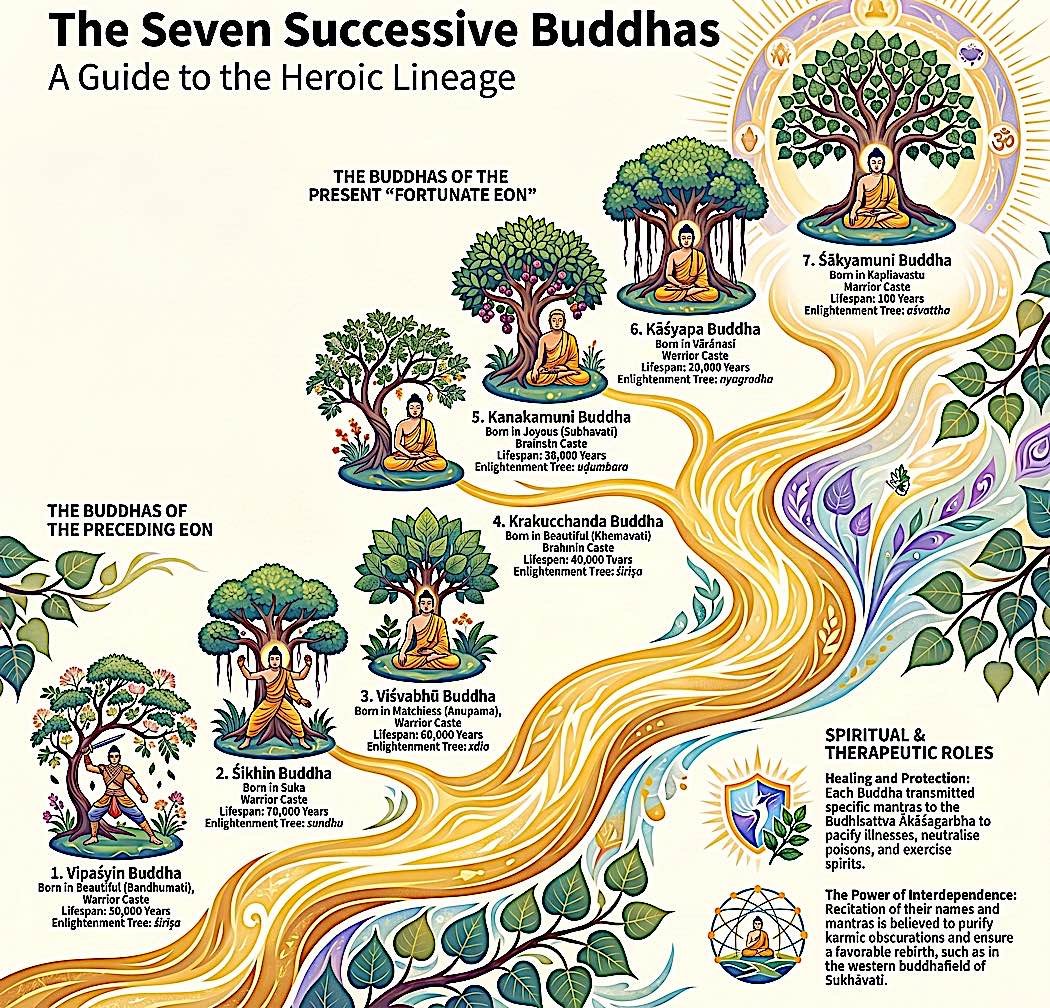 Seven Successive Buddhas Depicted as a Continuity “River of Enlightenment” through all the eons
Chanting the seven mantras of the 7 Successive Buddhas is a powerful daily practice that relieves us of negative karma, obstacles, illness, lack of success, and the many dangers of our Samsaric world. To help with your daily practice, 3 Gems band released audio streaming of these beautiful mantras of the 7 Successive Buddhas, the Saptabuddhaka. This daily practice, linked at the information icon, quickly purifies your karma and clears your obstacles by calling on the 7 Perfect Buddhas, including Shakyamuni Buddha.
Chant along audio
(Lyrics below) of the 7 Buddhas Mantras (No Permission Required, Sutra Transmitted):
Lyrics for Chant Along (no Permission required)
namo buddhāya | namo dharmāya | namaḥ saṅghāya |
Tathāgata Vipaśyin
tadyathā | oṃ hala hala | hili hilāya | namo jaga | namaśca nāya | namo namaḥ svāhā | (3 times)
namo buddhāya | namo dharmāya | namaḥ saṅghāya |
Tathāgata Śikhin
oṃ paca paca pācaya pācaya sarvabhūtānām | chindaya kīlaya paravidyānāṃ svāhā | (3 times)
namo buddhāya | namo dharmāya | namaḥ saṅghāya |
Tathāgata Viśvabhū
oṃ kala kala | kili kili | kulu kulu | kulotsādanaṃ kuru | sarva grahāṇāṃ svāhā | (3 times)
namo buddhāya | namo dharmāya | namaḥ saṅghāya |
Tathāgata Krakucchanda
namaḥ krakucchandāya | tathāgatāya | arhate samyaksaṃbuddhāya | oṃ kaṭa kaṭa | kaṭha kaṭha | kiṭi kiṭi | kiṭhi kiṭhi | kiṭāpaya namaḥ svāhā | (3 times)
namo buddhāya | namo dharmāya | namaḥ saṅghāya |
Tathāgata Kanakamuni
namaḥ kanakamunaye | tathāgatāya | arhate samyak sambuddhāya | tadyathā | oṃ sara sara sara sara | siri siri siri siri | sirāya | dhama dhama dhama dhama | dhuma dhuma dhuma dhuma | dhumāya | namo namaḥ | kanakamunaye | tathāgatāya arhate samyak- sambuddhāya svāhā | (3 times)
namo buddhāya | namo dharmāya | namaḥ saṅghāya |
Tathāgata Kāśyapa
oṃ hara hara hara hara | ha ha ha | namaḥ kāśyaspāya | tathāgatāya | arhate samyaksambuddhāya | sidhyantu mantrapada svāhā |
namo buddhāya | namo dharmāya | namaḥ saṅghāya |
Tathāgata Śākyamuni
tadyathā | ghume ghume mahāghume | tale tale mahātale | cale cale mahācale | dhure dhure mahādhure | tiri tiri mahātiri | kili kili mahākili | curu curu mahācuru | mili mili mahāmili | tili tili mahātili | dhume dhume mahādhume | cale cale mahācale | khiri khiri mahakhiri | cili cili mahācili svāhā | (3 times)
namo buddhāya | namo dharmāya | namaḥ saṅghāya |
namo Tathāgata Vipaśyin
namo Tathāgata Śikhin
namo Tathāgata Viśvabhū
namo Tathāgata Krakucchanda
namo Tathāgata Kanakamuni
namo Tathāgata Kāśyapa
namo Tathāgata Śākyamuni
(Song ends — Add your own dedication, being sure to dedicate the merit to the benefit of all sentient beings)
Sutra of the Seven Successive Buddhas
The story of the Sutra of the Seven Successive Buddhas begins in a breathtaking setting. The Buddha Śākyamuni was dwelling in an alpine forest on Mount Kailāsa, a sacred peak known as the abode of the gods. He was surrounded by a great gathering of monks and advanced bodhisattvas, including the great being Ākāśagarbha Bodhisattva.
Among the assembly was a monk in the forest who had been possessed by a spirit. The monk had collapsed, was lying on the ground, and was wailing in distress with his arms raised to the sky.
Seeing this suffering, the bodhisattva Ākāśagarbha approached the Buddha and asked a crucial question. Could the Buddha please teach a secret mantra — a vidyāmantra — capable of pacifying all illnesses and exorcising all possessing spirits to help not only the monk, but others with similar or different obstacles?
In response to this compassionate request, the Buddha performed a miracle. He emanated six buddhas of the past into the sky above them, with himself the seventh. Each Buddha, then one-by-one transmitted both the mantra and benefits to the assembly.
Who are these seven luminous beings? They are widely known in traditional texts as the “seven successive buddhas”.
The first three — Vipaśyin, Śikhin, and Viśvabhū — are the final three buddhas of the previous cosmic eon.
The next four—Krakucchanda, Kanakamuni, Kāśyapa, and our historical Buddha, Śākyamuni—are the first four buddhas of our current era, known as the “fortunate eon” or the Bhadrakalpa.
Each of these buddhas has a unique history. Ancient verses commemorate their distinct birthplaces, their castes, and the specific, sacred trees under which they each attained full enlightenment. For example, Vipaśyin awakened beneath a śirīṣa tree, Viśvabhū under a sāla tree, and Śākyamuni under the famous aśvattha, or Bodhi, tree.
But why is this ancient practice relevant to us today?
Because this Sutra was explicitly taught for everyone. In the text, the Buddhas make it clear that the mantras and rituals are meant to be practiced by “any monk, nun, or layperson”. You don’t need to be a secluded monastic to use them. The therapeutic scope of these mantras covers the exact worldly problems we face today: from sudden illness, anxiety, and nightmares, to strife and war, to interpersonal disputes and a lack of prosperity, or insecurity due to finances.
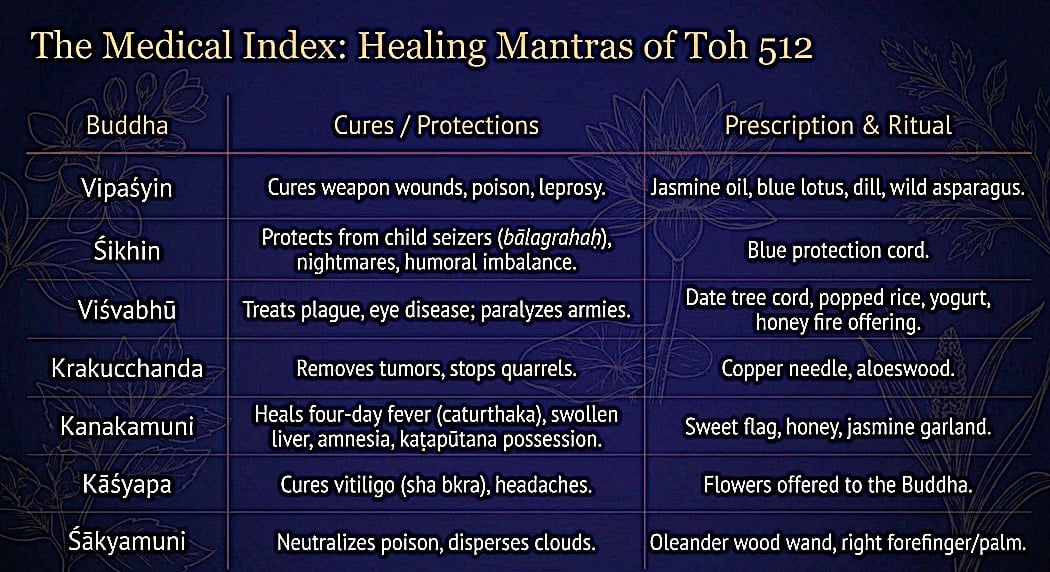 Benefits in Healing Terms of the Seven Buddhas Practices. Always seek professional medical advice for health issues first.
Requirements to Chant – No Permission Required
Let’s look at the specific, wondrous benefits each Buddha transmitted in this Sutra. It is important to note, that as always the standard requirements of mantrayana apply.
You must have Refuge and faith in the Three Jewels of Buddha, Dharma and Sangha. And, you must have Bodhichitta intention, or the intention to benefit all beings. And, you should accumulate merit. Someone who acts selfishly or from a position of negative karma, can’t expect full benefits, although the good news is that starting this practice helps to create that necessary merit.
In other words, even though the Sutra mentions benefits of healing illness, or protecting from weapons or from fire and disaster, you should still take normal mundane cautions first. If you are ill, consult your medical professional. If there is a tornado warning, seek shelter. You should not rely on mantra alone to protect you due to the variables of faith and merit in each practitioners. Common sense, along with the three requirements of mantrayana are still required.
The benefits of each mantra were stated in the Sutra (Full Sutra below translated to English). When reciting the mantra, always Take Refuge in Buddha Dharma and Sangha first, as demonstrated in 3 Gems Band performance with the recitations between mantras.
namo buddhāya | namo dharmāya | namaḥ saṅghāya |
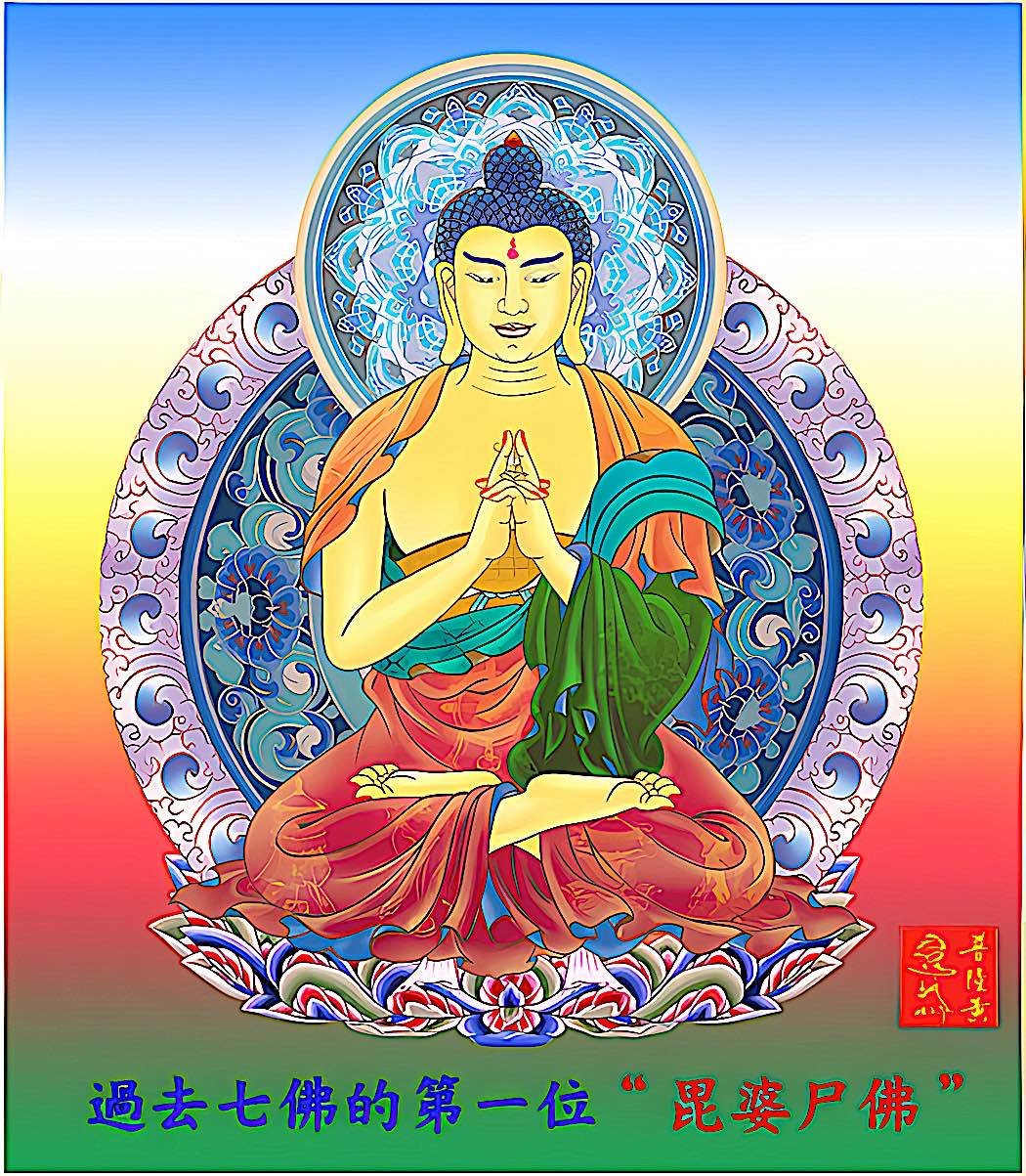 7 Buddhas: 1st Buddha Vipaśyin 毘婆尸佛
Tathāgata Vipaśyin
The first Buddha in this successive practice was Tathāgata Vipaśyin. Vipaśyin Buddha’s mantra is the ultimate shield. The Sutra states that whoever recites and masters it, with those three requirements of Refuge, Bodhichitta and Merit, will be protected from weapons, fire, storms, and unnatural or painful deaths. For those with faith, if you recite it seven times over your food and drink, no one can harm you, and you will enjoy a long life. It is also mentioned as effective for leprosy, and tumors. Again, the requirements are Faith in the 3 Jewels, Bodhichitta and Merit, and don’t forget to take normal precautions. In other words, if there’s weapons being fired, take shelter!
After taking Refuge, his mantra is:
tadyathā | oṃ hala hala | hili hilāya | namo jaga | namaśca nāya | namo namaḥ svāhā |
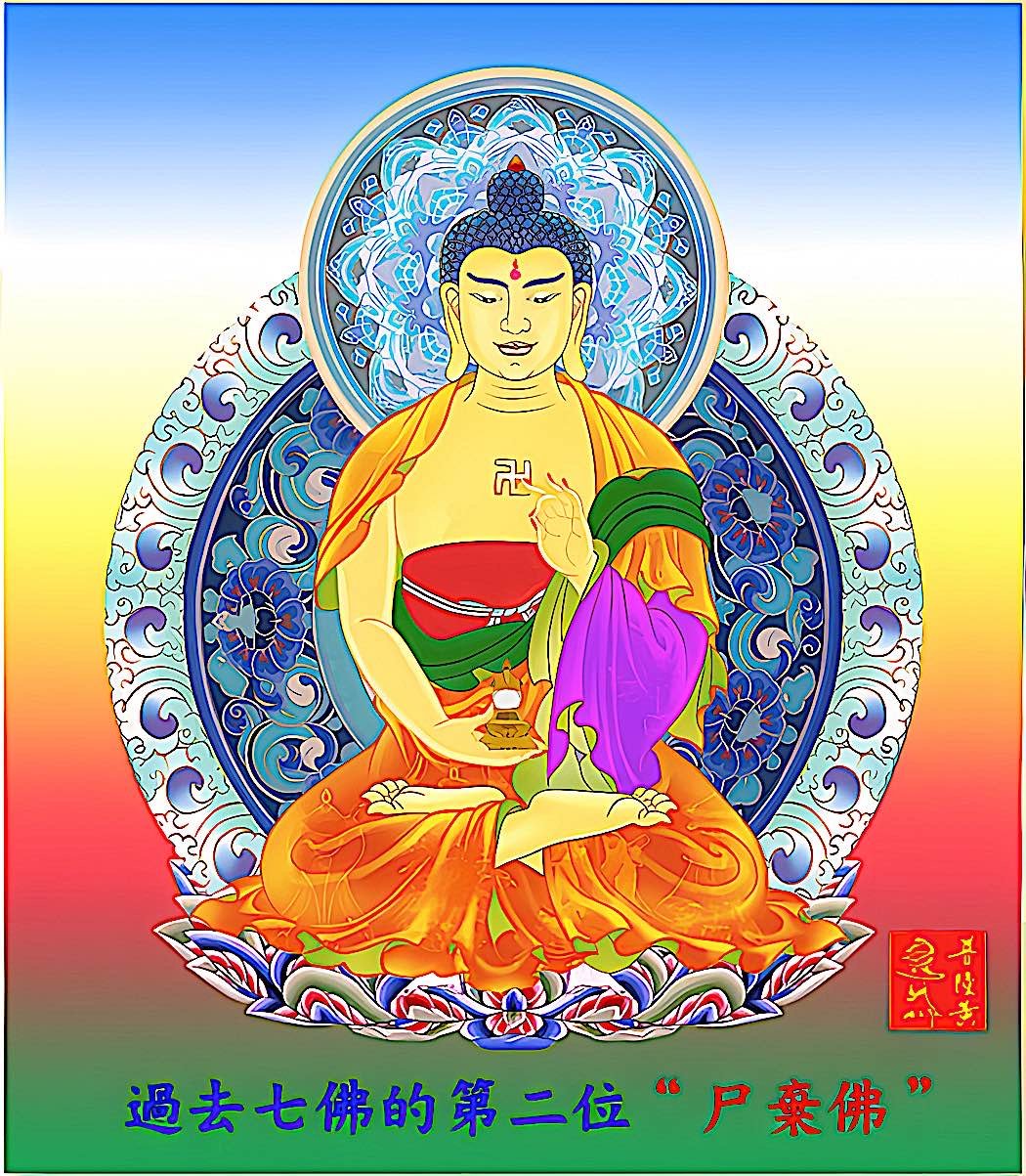 7 Buddhas: 2nd Buddha Śikhin 尸棄佛
Tathāgata Śikhin
The second Buddha, who was a Buddha of the previous eon, was Tathāgata Śikhin. Śikhin Buddha’s mantra pacifies illnesses and wards off negative spirits that cause nightmares or disrupt your meditation. The Sutra explains that by focusing on this heart mantra daily, you won’t suffer a horrible death, and you can even use it to bless a protection cord or a mala for a person to guard them against negative entities. To do this you chant the mantra 108 or more times and blow on the cord or mala. Then, have them wear it. As always, you must have faith, Bodhichitta and Merit, and also take normal mundane precautions.
After taking Refuge, his mantra is:
oṃ pacha pacha pāchaya pāchaya sarvabhūtānām | chindaya kī laya paravidyānāṃ svāhā.
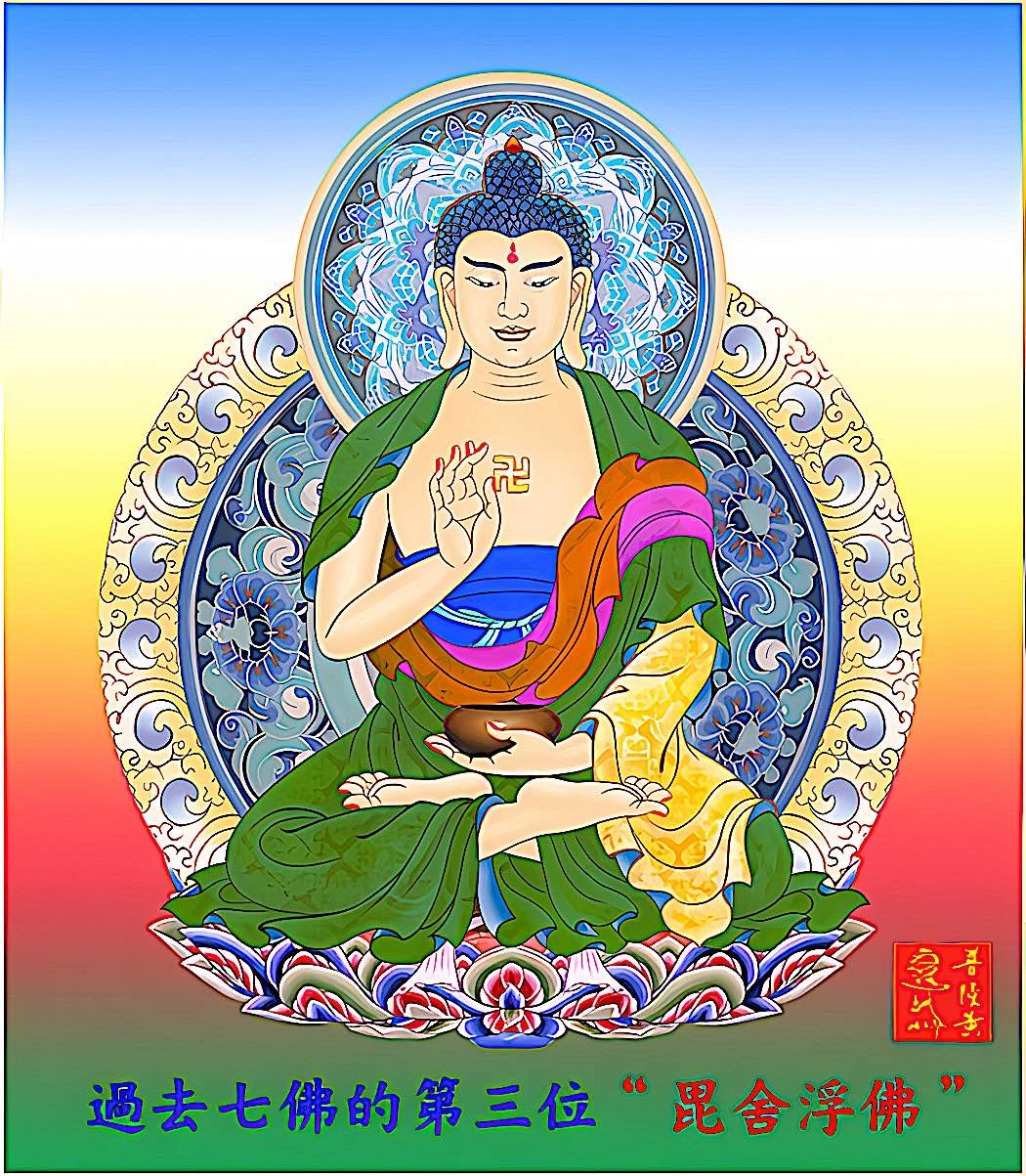 7 Buddhas: 3rd Buddha Viśvabhu 毘舍浮佛
Tathāgata Viśvabhū
The Third Buddha of this series was Tathāgata Viśvabhū. Viśvabhū Buddha’s mantra offers incredible purification of past karma and your obstacles. By washing your head in the morning and reciting his mantra 108 times, laypeople and monastics alike can purify their karmic obscurations. It also protects against poisons and plagues, and wearing a white protection cord or your mala blessed with this mantra guards against arguments and disputes.
After taking Refuge, his mantra is:
oṃ kala kala | kili kili | kulu kulu | kulotsādanaṃ kuru | sarva grahāṇāṃ svāhā |
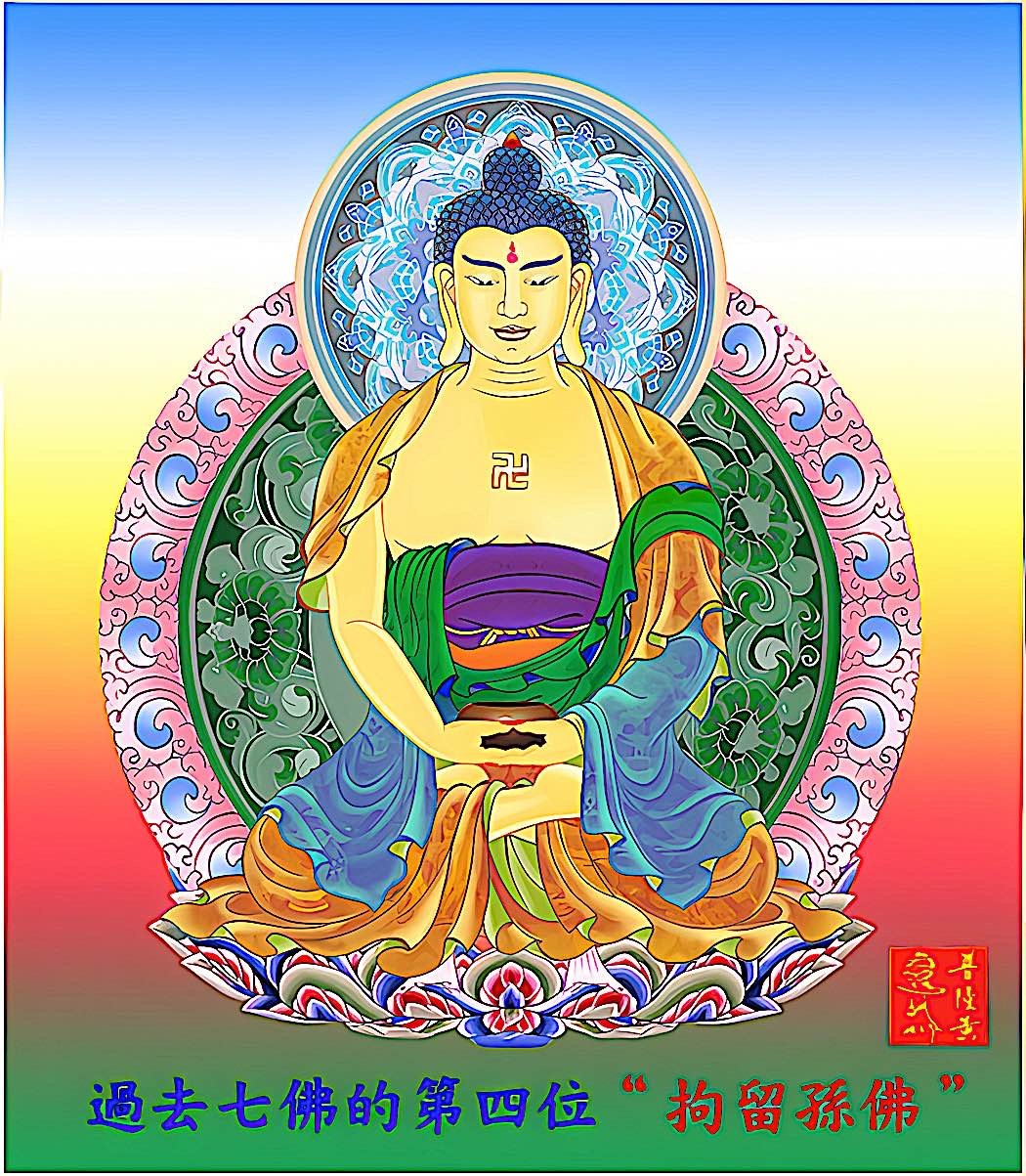 7 Buddhas 4th Buddha: Krakucchanda 拘留孫佛
Tathāgata Krakucchanda
The Fourth Buddha of this Sutra was Tathāgata Krakucchanda. Krakucchanda Buddha’s joyous root mantra brings both spiritual and material wealth. The text notes that reciting it with faith, Bodhichitta and merit, brings auspicious blessings and wealth, and also allows advanced practitioners to eventually recall their past lives. It also helps secure a future rebirth in the pure land of Sukhāvatī. In this life, reciting it frees you from quarrels, continually increases your wealth, and protects you from obstructing beings.
After taking Refuge, his mantra is:
namaḥ krakucchandāya | tathāgatāya | arhate samyaksaṃbuddhāya | oṃ kaṭa kaṭa | kaṭha kaṭha | kiṭi kiṭi | kiṭhi kiṭhi | kiṭāpaya namaḥ svāhā |
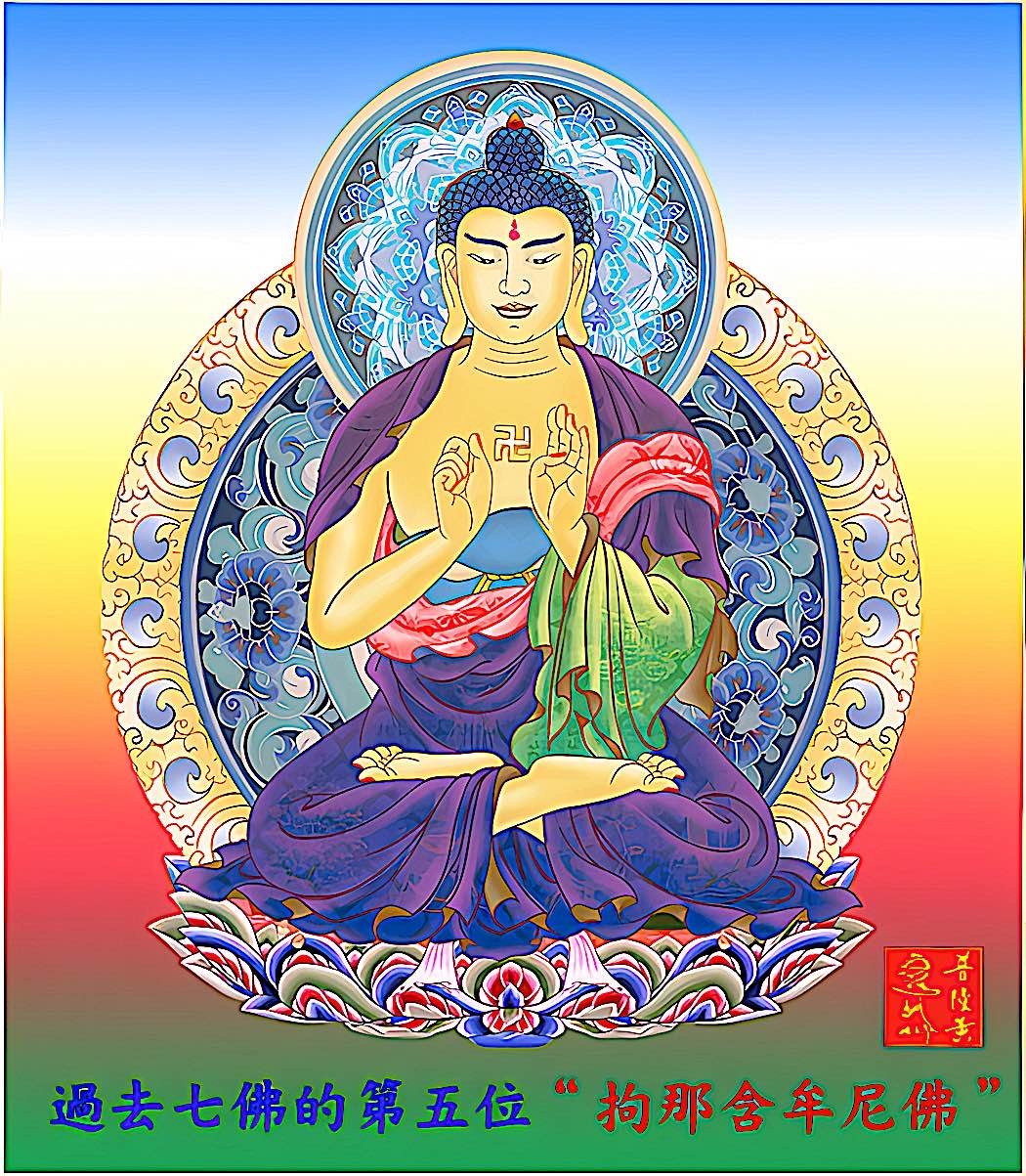
7 Buddhas 5th Buddha Kanakamuni 拘那含牟尼佛
Tathāgata Kanakamuni
The fifth Buddha in this practice, was Tathāgata Kanakamuni. Kanakamuni Buddha’s mantra grants fearlessness and protection from all danger. Those who hold it in mind with Faith, Bodhichitta and Merit, need not fear weapons, drowning, or lightning, and will experience great prosperity. The health benefits include helping with physical ailments like tumors, swollen livers, and recurring fevers.
After taking Refuge his mantra is:
namaḥ kanakamunaye | tathāgatāya | arhate samyak sambuddhāya | tadyathā | oṃ sara sara sara sara | siri siri siri siri | sirāya | dhama dhama dhama dhama | dhuma dhuma dhuma dhuma | dhumāya | namo namaḥ | kanakamunaye | tathāgatāya arhate samyak- sambuddhāya svāhā |
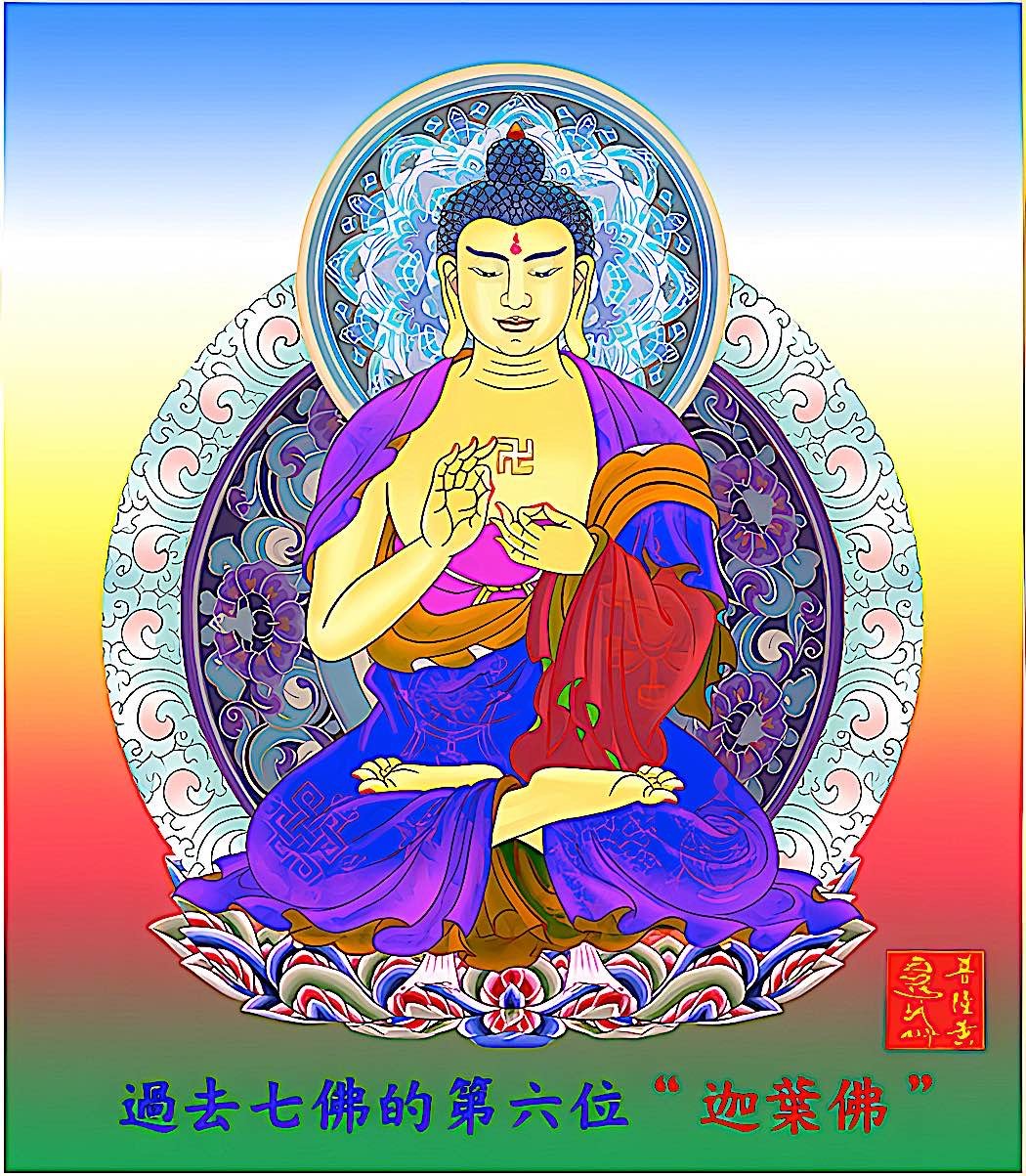 7 Buddhas 6th Buddha Kāśyapa 迦葉佛
Tathāgata Kāśyapa
The sixth was Tathāgata Kāśyapa. Kāśyapa Buddha teaches that by reciting his mantra three times a day and three times a night, you can purify your karmic obscurations and have visions of the Tathāgata in your dreams. It is also highly recommended for treating headaches and skin conditions by chanting it over flowers which are then placed on an altar in front of the Three Jewels.
After taking Refuge, his mantra is:
oṃ hara hara hara hara | ha ha ha | namaḥ kāśyaspāya | tathāgatāya | arhate samyaksambuddhāya | sidhyantu mantrapada svāhā |
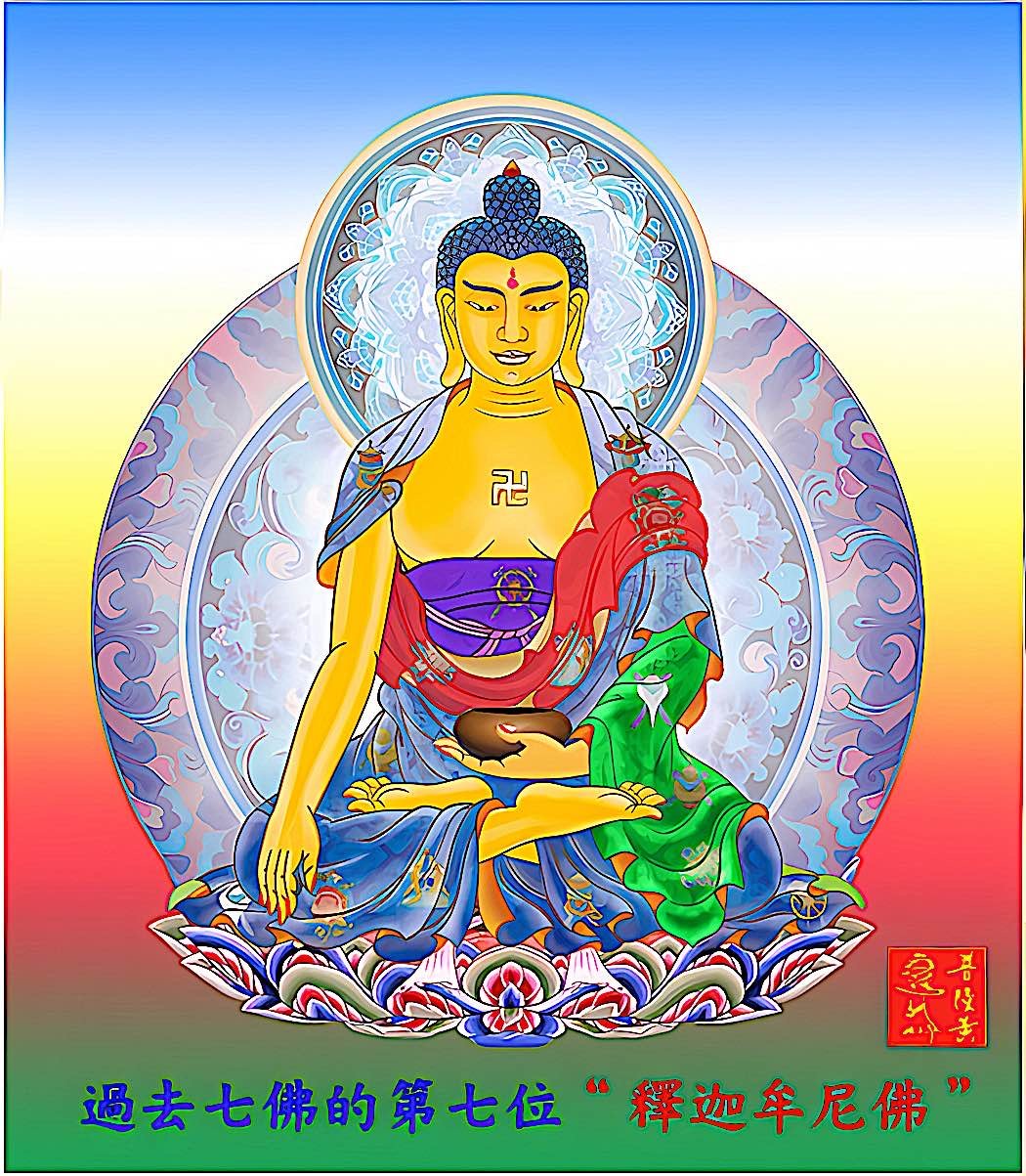 7 Buddhas 7th Buddha Sakyamuni 釋迦牟尼佛
Tathāgata Śākyamuni Gautama Buddha
The final was our own precious Buddha, Tathāgata Śākyamuni. Śākyamuni gave his own powerful mantra that can empower any virtuous intention and safeguards us on the noble Eightfold Path, and for this reason is the longest of the three mantras.
After taking Refuge, his mantra is:
tadyathā | ghume ghume mahāghume | tale tale mahātale | chale chale mahāchale | dhure dhure mahādhure | tiri tiri mahātiri | kili kili mahākili | curu churu mahāchuru | mili mili mahāmili | tili tili mahātili | dhume dhume mahādhume | chale chale mahāchale | khiri khiri mahakhiri | chili chili mahāchili svāhā |
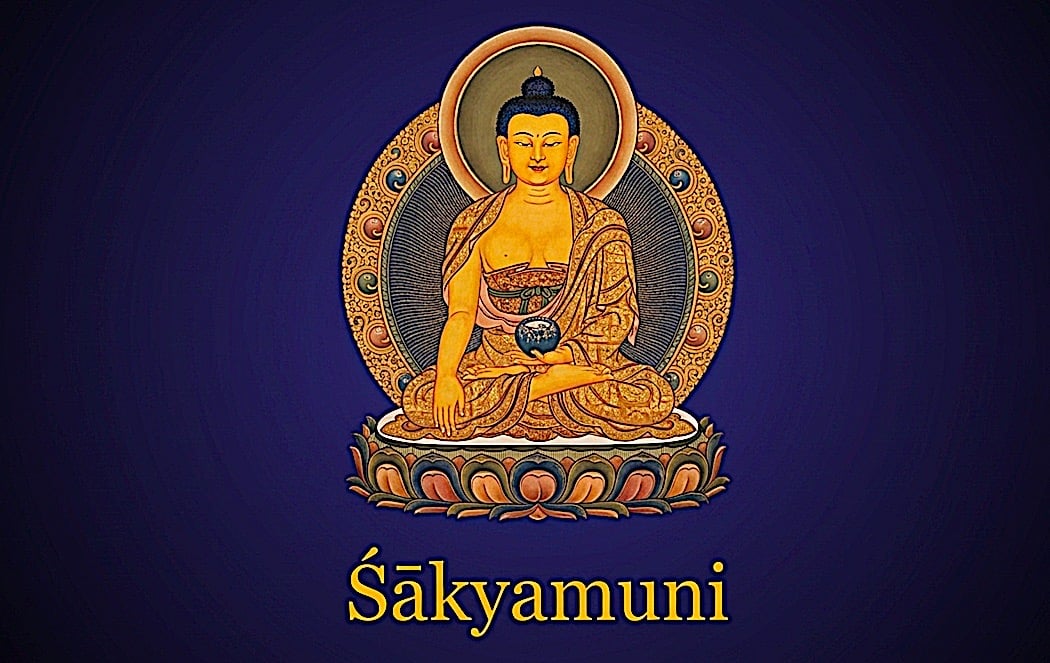 Shakyamuni Buddha.
Practice Suggestions
The Sutra of the Seven Successive Buddhas is a beautiful reminder that the Buddhist path isn’t just about philosophy; it’s deeply rooted in compassionate action, healing, and practical protection for our everyday lives.
You can embellish your practice and increase your devotion with the praise included below The Auspicious Verses of the Seven Successive Buddhas.
As a daily preventative practice in your Dharma life, chant 3 times each mantra with Refuge, and then Dedicate your merit, or sing-along with 3 Gems beautiful version. For a translation commentary of each of the 7 mantras, and more details on the Sutra and practice, see our detailed feature, linked at the information icon.
For serious issues, chant 108, 1008 or more mantras while meditating and focusing on your intention, then blow on your string, jewelry or mala and wear. Or, touch the mala to the top of your head.
Traditional texts assure us that actively reciting these root verses generates incredible merit and invokes profound healing, protective and auspicious blessing power.
May all beings benefit.
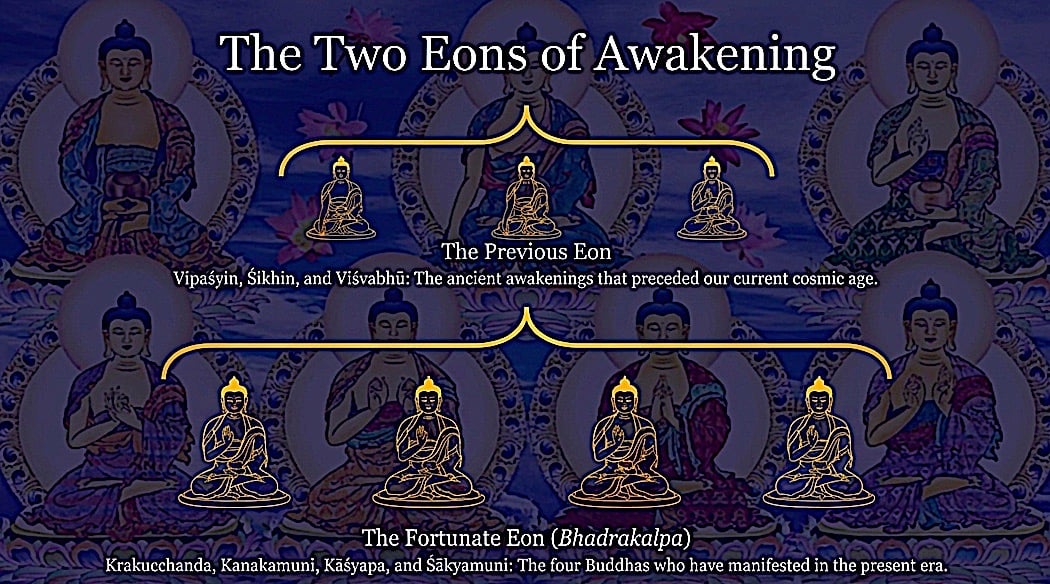 The Seven Buddhas of the last 2 Eons
Mantra Commentary – Translations or Interpretations of the Mantras
Bearing in mind that mantras don’t carry literal meanings in the sense of one word equates to one specific meaning, since Sanskrit is a complex and nuanced language with over 50 syllables. However, for the purpose of very basic commentary, here’s a simple explanation of the mantras. Please note, this is our “editors” plain english commentary. Various teachers and more detailed commentaries would be more nuanced.
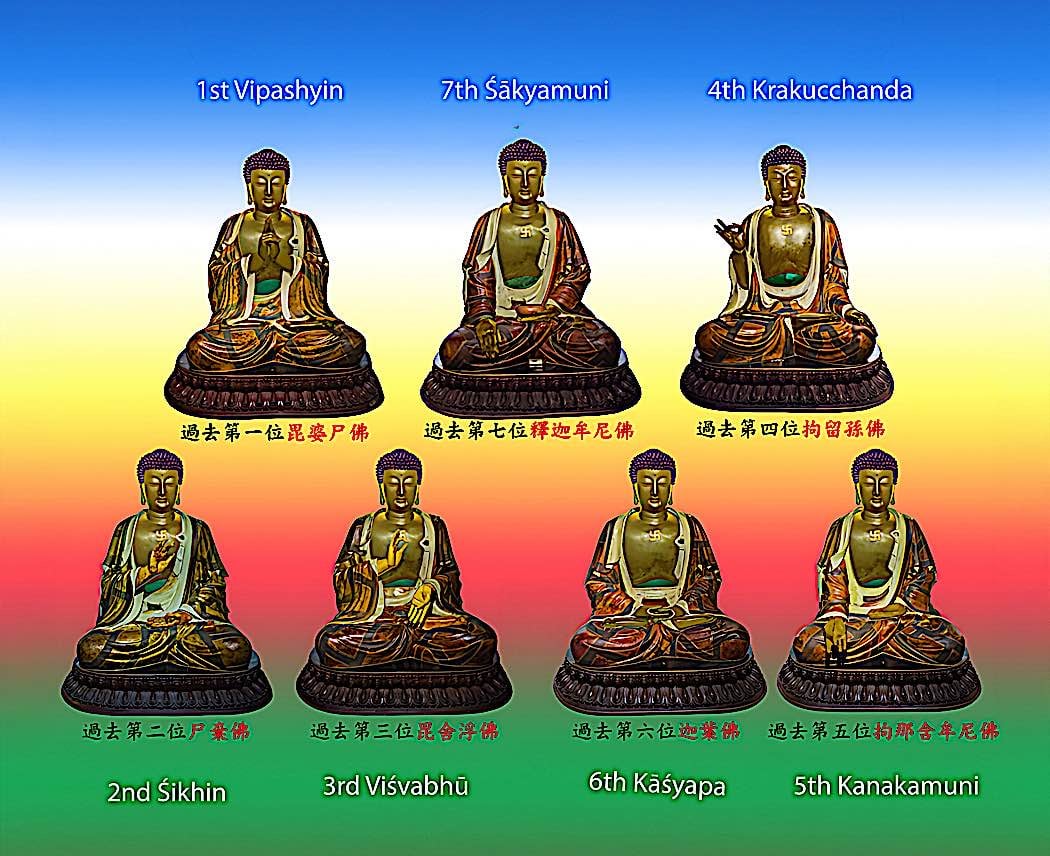 Seven Buddhas Reference at a Glance.
1. Tathāgata Vipaśyin (The Seer)
Mantra:
tadyathā | oṃ hala hala | hili hilāya | namo jaga | namas ca nāya | namo namaḥ svāhā |
English commentary:
“It begins like this: OM – the primordial sound. Then ‘hala hala’ – the sound of shaking things loose, like dust from a rug. ‘Hili hilāya’ – stirring what’s stuck. Then: ‘Homage to the moving world (jaga), homage to the leader (nāya), homage again and again. svāhā’ – an offering, a ‘so be it.’
Intent: Vipaśyin shakes off the lethargy of countless lifetimes. He wakes you up by vibration, not by force.”
2. Tathāgata Śikhin (The Flaming / Crested One)
1. Tathāgata Vipaśyin (The Seer)
Mantra:
tadyathā | oṃ hala hala | hili hilāya | namo jaga | namas ca nāya | namo namaḥ svāhā |
English commentary:
“It begins like this: OM – the primordial sound. Then ‘hala hala’ – the sound of shaking things loose, like dust from a rug. ‘Hili hilāya’ – stirring what’s stuck. Then: ‘Homage to the moving world (jaga), homage to the leader (nāya), homage again and again. svāhā’ – an offering, a ‘so be it.’
Intent: Vipaśyin shakes off the lethargy of countless lifetimes. He wakes you up by vibration, not by force.”
2. Tathāgata Śikhin (The Flaming / Crested One)
Mantra:
oṃ paca paca pācaya pācaya sarva bhūtānām | chindaya kīlaya para vidyānāṃ svāhā |
English commentary:
“Here the Buddha of fire says: ‘Burn, burn. Cook, cook – cook (as in ripen, not as in burn) (sarva bhūtānām). Not to destroy them, but to ripen them like a potter fires clay. Then: cut (chindaya) and pierce (kīlaya) all hostile knowledge (para vidyā) – the wisdom that separates. svāhā.’
Intent: Śikhin’s mantra is a transformative fire. It doesn’t annihilate – it ripens and severs wrong views.”
3. Tathāgata Viśvabhu (The All-Pervading One)
Mantra:
oṃ kala kala | kili kili | kulu kulu | kulotsādanam kuru | sarva grahāṇāṃ svāhā |
English commentary:
“Notice the three syllables: kala (hard), kili (piercing), kulu (circle). It sounds like a wheel turning on three axes. ‘Kulotsādanam kuru’ – ‘do the uprooting of all families (of grasping)’. Then ‘sarva grahāṇām’ – all seizers, all obsessions, all planets that hold you. svāhā.’
Intent: Viśvabhu pervades everything – and therefore loosens every grip, every planetary obsession, every ‘graha’ that says you are small.”
4. Tathāgata Krakucchanda (The Desire-Cutter )
Mantra:
namah krakucchandāya | tathāgatāya | arhate samyaksambuddhāya | oṃ kaṭa kaṭa | kaṭha kaṭha | kiṭi kiṭi | kiṭhi kiṭhi | kiṭāpaya namaḥ svāhā |
English commentary:
“First, full homage to Krakucchanda by name – the arhat, the fully awakened. Then the action syllables: ‘kaṭa kaṭa’ – break, break. ‘kaṭha kaṭha’ – tear, tear. ‘kiṭi kiṭi’ – crush, crush. ‘kiṭhi kiṭhi’ – scratch, scratch. Then ‘kiṭāpaya’ – cause to be cut. And again ‘namaḥ svāhā’.”
Intent: This is the surgical Buddha. He doesn’t politely ask desires to leave – he breaks the very knot of craving. It is fierce compassion.”
5. Tathāgata Kanakamuni (The Gold Sage)
Mantra:
namah kanakamunaye | tathāgatāya | arhate samyaksambuddhāya | tadyathā | oṃ sara sara (4x) | siri siri (4x) | sirāya | dhama dhama (4x) | dhuma dhuma (4x) | dhūmāya | namo namaḥ | kanakamunaye … svāhā |
English commentary:
“Gold here means unchangeable luminosity. After homage, we get a river of repeated syllables: ‘sara sara’ – flowing, flowing. ‘siri siri’ – radiance, radiance. Then ‘dhama dhama’ – blowing like a gentle wind. ‘dhuma dhuma’ – smoky, misty, like incense. The repetition is the point – each repetition polishes the mind like gold leaf. Finally: ‘namo namaḥ’ – bowing twice, to the sage of gold, svāhā.”
Intent: Not a fire mantra – a gold-panning mantra. Wash away the mud of distraction until only the gold of awareness remains.”
6. Tathāgata Kāśyapa (Effortless Remover)
Mantra:
oṃ hara hara (4x) | ha ha ha | namaḥ kāśyapāya | tathāgatāya | arhate samyaksambuddhāya | sidhyantu mantra padā svāhā |
English commentary:
“‘Hara hara’ – take, take, remove, remove. Then three laughing ‘ha ha ha’ – not laughter at anyone, but the exhale of release. ‘Sidhyantu mantra padā’ – ‘may the words of this mantra succeed, may they be accomplished.’ svāhā.’
Intent: Kāśyapa is the Buddha of effortless removal. He doesn’t fight – he carries away. The three ‘ha’s are the sound of the breath returning to stillness.”
7. Tathāgata Śākyamuni (The Sage of the Śākyas – our Buddha)
Mantra:
tadyathā | ghume ghume mahāghume | tale tale mahātale | cale cale mahācale | dhure dhure mahādhure | tiri tiri mahātiri | kili kili mahākili | curu curu mahācuru | mili mili mahāmili | tili tili mahātili | dhume dhume mahādhume | cale cale mahācale | khiri khiri mahākhiri | cili cili mahācili svāhā |
English commentary:
“This is a long, rolling river of sound. Each pair is a verb: ghume – ‘it whirls’. tale – ‘it is a surface’. cale – ‘it moves’. dhure – ‘it carries a burden’. tiri, kili, curu, mili, tili – all small, flickering movements. Then the prefix ‘mahā-’ (great) is added to each: great whirling, great moving, great carrying, great flickering. The mantra does not say ‘I am peaceful’ – it says ‘I am the entire dance of phenomena, from the smallest tili to the great cale.’ Svāhā.”
Intent: Śākyamuni’s mantra contains no ‘‘break’ syllables. It is the mantra of suchness – whatever arises, it names it with a sound and calls it great.”
 Auspicious Verses of the Seven Successive Buddhas
༄༅༅། །སངས་རྒྱས་རབས་བདུན་གྱི་བཀྲ་ཤིས་ཀྱི་ཚིགས་སུ་བཅད་པ།
The Auspicious Verses of the Seven Successive Buddhas
from The Words of the Buddha (Source *)
དཀོན་མཆོག་གསུམ་ལ་ཕྱག་འཚལ་ལོ། །
Homage to the Three Jewels!
བཅོམ་ལྡན་རྣམ་པར་གཟིགས་ནི་རྒྱལ་རིགས་གཟི་བརྗིད་ཅན། །
chomden nampar zik ni gyalrik ziji chen
The bhagavat Vipaśyin, majestic and of the warrior caste,
ཚེ་ལོ་བརྒྱད་ཁྲིའི་དུས་ན་གྲོང་ཁྱེར་མཛེས་ལྡན་དུ། །
tselo gyé tri dü na drongkhyer dzeden du
Was born in the city called Beautiful when humans lived for 80,000 years,
ཤི་རི་ཤ་ཡི་ཤིང་དྲུང་མངོན་པར་སངས་རྒྱས་པ། །
shi ri sha yi shingdrung ngönpar sangyé pa
And attained full enlightenment beneath a śirīṣa tree—
དེང་འདིར་བདེ་གཤེགས་བཀྲ་ཤིས་ཕུན་སུམ་ཚོགས་གྱུར་ཅིག །
dengdir deshek tashi pün sum tsok gyur chik
May the auspiciousness of this sugata abound here and now!
བདེ་གཤེགས་གཙུག་ཏོར་མངའ་བ་རྒྱལ་རིག་རྫུ་འཕྲུལ་ཅན། །
deshek tsuktor ngawa gyal rik dzutrul chen
The sugata Śikhin, a miracle-worker of the warrior caste,
ཚེ་ལོ་བདུན་ཁྲིའི་དུས་ན་སུ་ཀའི་གྲོང་ཁྱེར་དུ། །
tselo dün tri dü na su ké drongkhyer du
Was born in the city of Suka when humans lived for 70,000 years,
ཤིང་མཆོག་སུན་དྷའི་ཤིང་དྲུང་མངོན་པར་སངས་རྒྱས་པ། །
shing chok sün dhé shingdrung ngönpar sangyé pa
And attained full enlightenment beneath a sundha tree—
དེང་འདིར་བདེ་གཤེགས་བཀྲ་ཤིས་ཕུན་སུམ་ཚོགས་གྱུར་ཅིག །
dengdir deshek tashi pün sum tsok gyur chik
May the auspiciousness of this sugata abound here and now!
རྒྱལ་བ་ཐམས་ཅད་སྐྱོབ་པ་རྒྱལ་རིགས་བློ་གྲོས་ཅན། །
gyalwa tamché kyobpa gyalrik lodrö chen
The conqueror Viśvabhū, intelligent and of the warrior caste,
ཚེ་ལོ་དྲུག་ཁྲིའི་དུས་ན་གྲོང་ཁྱེར་མཉམ་མེད་དུ། །
tselo druk tri dü na drongkhyer nyammé du
Was born in the city called Matchless when humans lived for 60,000 years,
ཤིང་མཆོག་སཱ་ལའི་དྲུང་དུ་མངོན་པར་སངས་རྒྱས་པ། །
shing chok salé drung du ngönpar sangyé pa
And attained full enlightenment beneath a sāla tree—
དེང་འདིར་བདེ་གཤེགས་བཀྲ་ཤིས་ཕུན་སུམ་ཚོགས་གྱུར་ཅིག །
dengdir deshek tashi pün sum tsok gyur chik
May the auspiciousness of this sugata abound here and now!
ཐུབ་པ་འཁོར་བ་འཇིག་ནི་སྟོབས་ལྡན་བྲམ་ཟེའི་རིགས། །
tubpa khorwa jik ni tobden dramzé rik
The sage Krakucchandra, powerful and of the brahmin caste,
ཚེ་ལོ་བཞི་ཁྲིའི་དུས་ན་གྲོང་ཁྱེར་མཛེས་ལྡན་དུ། །
tselo zhi tri dü na drongkhyer dzeden du
Was born in the city called Beautiful when humans lived for 40,000 years,
ཤི་རི་ཤ་ཡི་ཤིང་དྲུང་མངོན་པར་སངས་རྒྱས་པ། །
shi ri sha yi shingdrung ngönpar sangyé pa
And attained full enlightenment beneath a śirīṣa tree—
དེང་འདིར་བདེ་གཤེགས་བཀྲ་ཤིས་ཕུན་སུམ་ཚོགས་གྱུར་ཅིག །
dengdir deshek tashi pün sum tsok gyur chik
May the auspiciousness of this sugata abound here and now!
འདྲེན་པ་གསེར་ཐུབ་བསླབ་པ་མཆོག་ལྡན་བྲམ་ཟེའི་རིགས། །
drenpa sertub labpa chokden dramzé rik
The guide Kanakamuni, powerful and of the brahmin caste,
ཚེ་ལོ་སུམ་ཁྲིའི་དུས་ན་གྲོང་ཁྱེར་བདེ་ལྡན་དུ། །
tselo sum tri dü na drongkhyer deden du
Was born in the city called Joyous when humans lived for 30,000 years,
ཨུ་དུམ་བཱ་རའི་ཤིང་དྲུང་མངོན་པར་སངས་རྒྱས་པ། །
u dum ba ré shingdrung ngönpar sangyé pa
And attained full enlightenment beneath an uḍumbara tree—
དེང་འདིར་བདེ་གཤེགས་བཀྲ་ཤིས་ཕུན་སུམ་ཚོགས་གྱུར་ཅིག །
dengdir deshek tashi pün sum tsok gyur chik
May the auspiciousness of this sugata abound here and now!
སྐྱོབ་པ་འོད་སྲུང་རྒྱལ་རིགས་བླ་མེད་ཡོན་ཏན་ཅན། །
kyobpa ösung gyalrik lamé yönten chen
The protector Kāśyapa, unsurpassed in qualities and of the warrior caste,
ཚེ་ལོ་ཉི་ཁྲིའི་དུས་ན་བཱ་རཱ་ཎ་སཱི་རུ། །
tselo nyitri dü na ba ra na si ru
Was born in the city called Vārāṇasī when humans lived for 20,000 years,
ནྱ་གྲོ་དྷ་ཡི་ཤིང་དྲུང་མངོན་པར་སངས་རྒྱས་པ། །
nya gro dha yi shing drung ngönpar sangyé pa
And attained full enlightenment beneath a nyagrodha tree—
དེང་འདིར་བདེ་གཤེགས་བཀྲ་ཤིས་ཕུན་སུམ་ཚོགས་གྱུར་ཅིག །
dengdir deshek tashi pün sum tsok gyur chik
May the auspiciousness of this sugata abound here and now!
འགྲོ་མགོན་ཤཱཀྱ་ཐུབ་པ་རྒྱལ་རིགས་བརྩོན་འགྲུས་ཅན། །
dro gön shakya tubpa gyalrik tsöndrü chen
The lord of living beings Śākyamuni, diligent and of the warrior caste,
ཚེ་ལོ་བརྒྱ་བའི་དུས་ན་སེར་སྐྱའི་གྲོང་ཁྱེར་དུ། །
tselo gyawé dü na serkyé drongkhyer du
Was born in the city called Kapilavastu when humans lived for 100 years,
ཨ་ཤྭཏྠ་ཡི་ཤིང་དྲུང་མངོན་པར་སངས་རྒྱས་པ། །
a shatta yi shingdrung ngönpar sangyé pa
And attained full enlightenment beneath an aśvattha tree—
དེང་འདིར་བདེ་གཤེགས་བཀྲ་ཤིས་ཕུན་སུམ་ཚོགས་གྱུར་ཅིག །
dengdir deshek tashi pün sum tsok gyur chik
May the auspiciousness of this sugata abound here and now!
སངས་རྒྱས་རབས་བདུན་བཀྲ་ཤིས་ཕུན་སུམ་ཚོགས་པ་གང་། །
sangye rab dün tashi pünsum tsokpa gang
The abundant auspiciousness of these seven successive buddhas,
ཕྱོགས་དུས་ཀུན་གྱི་བདེ་གཤེགས་བྱིན་བརླབས་རྨད་བྱུང་བ། །
chok dü kün gyi deshek jinlab mejung ba
Wondrous blessings of all the sugatas throughout space and time,
ཆོས་དབྱིངས་རྣམ་དག་རྟེན་འབྲེལ་སྟོབས་ལྡན་མི་འགྱུར་བ། །
chöying namdak tendrel tobden migyurwa
Utter purity of the dharmadhātu and the unchanging power of interdependence—
དེང་འདིར་བདེ་གཤེགས་བཀྲ་ཤིས་ཕུན་སུམ་ཚོགས་གྱུར་ཅིག །
dengdir deshek tashi pün sum tsok gyur chik
May the auspiciousness of these sugatas abound here and now!
སངས་རྒྱས་རབ་བདུན་གྱི་བཀྲ་ཤིས་ཀྱི་ཚིགས་སུ་བཅད་པ་རྫོགས་སོ།།
This concludes The Auspicious Verses of the Seven Successive Buddhas.
Sutra of the Seven Successive Buddhas
Homage to all buddhas and bodhisattvas.
Thus did I hear at one time. The Blessed One was dwelling on the summit of Kailāsa in the abode of the gods close to where the sages live. He was accompanied by a great monastic saṅgha of around five hundred monks and five hundred bodhisattvas, including the bodhisattva great being Maitreya, the bodhisattva great being Ākāśagarbha, Samantabhadra, Infinite Flowers, Samantakusuma, and others, all of whom were bodhisattvas who were just one birth away from awakening.
The Blessed One saw that a monk in that alpine forest had been possessed by a spirit, had collapsed, and was lying there naked and wailing with his arms raised up.
The bodhisattva great being Ākāśagarbha draped his upper robe over one shoulder, knelt on his right knee, bowed to the Blessed One with his hands joined, and addressed him. “Blessed One, what is this great lamenting that fills the sky, and who is this naked monk raising his arms in distress?”20
The Blessed One told the bodhisattva great being Ākāśagarbha, “Ākāśagarbha, this monk is ill. He has contracted an illness.”
The bodhisattva great being Ākāśagarbha then asked the Blessed One, [F.22.b] [F.39.b] “Will the Blessed One please teach a vidyāmantra that can pacify all manner of diseases and exorcise all manner of spirits?”
The Blessed One emanated the seven buddhas: six tathāgatas appeared in the sky, with the seventh being the Blessed One himself, the Tathāgata Śākyamuni.
The tathāgata Vipaśyin hovered in the sky above them and spoke these root verses of the secret mantra in order to benefit all beings, pacify all manner of illnesses, and exorcise all manner of spirits:
namo buddhāya | namo dharmāya | namaḥ saṅghāya | tadyathā | oṃ hala hala |21 hili hilāya |22 namo jaga | namaśca nāya | namo namaḥ svāhā |
The tathāgata Vipaśyin addressed the bodhisattva great being Ākāśagarbha, saying, “Ākāśagarbha, whoever bears this vidyāmantra in mind, recites it, or masters it will not be slain by a weapon, nor will they die from drowning, fire,24 or a painful illness. They will not suffer an unnatural death. Even poison they have eaten will become like food.
“If you recite the vidyāmantra seven times over your food and drink before consuming it, no one else can harm you, you will not contract any illnesses, and you will live for a long time, understand what you have studied, and have a vision of the seven tathāgatas.
“Recite this vidyāmantra in the ear of someone who has been wounded
with a weapon and anoint them with jasmine oil incanted with the vidyāmantra. If you anoint those who are afflicted with diseases such as
leprosy or tumors with incanted oil that contains a mixture of jasmine, blue lotus, dill, and wild asparagus, they will recover from all their illnesses. This mantra can be used for all rites.”
Then the tathāgata Śikhin hovered in the sky above them and spoke these root verses of the secret mantra in order to benefit all beings, pacify all manner of illnesses, and exorcise all manner of spirits:
namo buddhāya | namo dharmāya | namaḥ saṅghāya | oṃ paca paca pācaya pācaya sarvabhūtānām | chindaya26 kīlaya paravidyānāṃ svāhā |
“Ākāśagarbha, I and millions of Buddhas have taught this secret mantra in order to benefit all beings, to completely pacify all manner of illnesses, to ward off spirits that harm one’s meditation and cause nightmares, and to prevent untimely death. Now you must uphold it.
“Ākāśagarbha, if someone focuses on my heart mantra three times a day, they will not be harmed by others, they will meet the Tathāgata in their dreams, and they will not suffer a horrible death. When they die, they will meet with the tathāgatas and serve them.
“You can also use the rite to bind the patient with a protection cord against all manner of illnesses. In cases where an illness is the result of a humoral imbalance, you can incant jasmine oil with the mantra and give it to the patient. You can perform the rite of sealing off the directions with water incanted with the mantra, and you can use an incanted cord to protect yourself. You can tie a blue protection cord incanted with the mantra on a child to guard against seizers that possess children. You can whisper the mantra seven times in the ear of someone who has been struck down with a weapon, and you can use it to control others with your mind.”
Then the tathāgata Viśvabhū hovered in the sky above them and spoke these root verses of the secret mantra in order to benefit all beings, pacify all manner of illnesses, and exorcise all manner of spirits:
namo buddhāya | namo dharmāya | namaḥ saṅghāya | oṃ kala kala | kili kili | kulu kulu | kulotsādanaṃ29 kuru | sarva grahāṇāṃ svāhā |
“Ākāśagarbha, these root verses of the secret mantra are taught by all the past, future, and present tathāgatas of the fortunate eon, and now I have spoken them as well. Ākāśagarbha, you must uphold these root verses of the secret mantra.
“If someone bears in mind, recites, or masters them, they will not be harmed by a weapon, affected by poison, or affected by poisonous brews, nor will they become infected with plague. They will not drown, die of unnatural causes, or die from a weak constitution, unless these are karmic obscurations that result from a previous lifetime. Any monk, nun, or layperson who rises in the morning, washes their head, and recites this secret mantra one hundred and eight times before an image of the Tathāgata will be able to purify all their karmic obscurations.
“Once the dhāraṇī has been spoken to any hostile beings or kings, you will have power over all of them. You will master all fears. Wearing a white protection cord incanted with the mantra will guard against all manner of quarrelsome men and women, as well as any argument or dispute. An incanted protection cord made with fiber from a date tree can be used against diseases of the eye and hung on one’s ear. To paralyze an army, perform a fire offering one hundred and eight times with incanted popped rice that has been soaked in yogurt and honey while reciting the following mantra each time:
rājanāṃ rājāmātraṃ vā vaśī karotu kāmena |
“To purify all your own and all beings’ obscurations and misdeeds and to obtain great prosperity and wealth, recite the dhāraṇī while offering sesame seeds one thousand times into a fire altar34 that has been kindled with date palm branches. To purify all your misdeeds, master all vidyāmantras, or to ritually cleanse yourself you should wash with dill, spikenard, foxtail
millet, sirisa, valerian, saffron, nut grass, bitter gourd, bodhi tree, and mango flowers. Next, fast for an entire day in front of a buddha image, and then place these ingredients in a fresh vase. On the full moon, bathe in front of an image of the Buddha while reciting the heart mantra one thousand and eight times.
“To neutralize poison sit before an image of the Buddha and use a ladle made of teak to offer cow dung38 onto a ritual fire while reciting the victim’s name one hundred and eight times. The poison will then be neutralized. This mantra protects one from seizers39 and works for any rite associated with the spirits and the like. It will pacify them.”
“Then the blessed tathāgata Krakucchanda hovered in the sky above them and spoke the following root verses of the secret mantra in order to benefit all beings, pacify all manner of illnesses, and exorcise all manner of spirits:
namo buddhāya | namo dharmāya | namaḥ saṅghāya | namaḥ krakucchandāya | tathāgatāya | arhate samyaksaṃbuddhāya | oṃ kaṭa kaṭa | kaṭha kaṭha | kiṭi kiṭi | kiṭhi kiṭhi | kiṭāpaya40 namaḥ svāhā |
“Ākāśagarbha, this has been taught by tathāgata, arhat, perfect complete buddhas bearing the name Krakucchanda in numbers equal to the grains of sand in the Ganges river, and now you must maintain this joyous root mantra.
“If this is received, born in mind, and mastered, then in the future, when monks, nuns, and laypeople gain faith in the Three Jewels, perform the bathing rite, and make offerings of flowers, incense, and perfume to the Buddha while reciting this sacred mantra one hundred and eight times, they will be able to recall their past lives for seven lifetimes. They will become the greatest among gods or wheel-turning kings among humans. If they perform this rite correctly, this will be their final human birth. After they die, they will be born in Sukhāvatī.
“If they constantly recite the mantra, they will be free from all manner of illnesses in this lifetime and understand what they study. If they recite the mantra seven times over their food and drink and then consume it, they will be cured of any illness. Or, if they wish to quench their thirst, they should wash their food while reciting the mantra one thousand and eight times.
“A copper needle incanted with the mantra can be used to remove a tumor. If recited seven times, the mantra will free you from all manner of quarrels, disputes, and bondage. Your wealth will also continually increase, and you will be free from all manner of obstructing beings and corrupting beings.
“Or, if you wish to have a vision of the Tathāgata, draw a maṇḍala on a clean spot in the vicinity of a stūpa,43 fumigate it with aloeswood, recite the mantra one thousand and eight times, and then lie on a cushion in front of the maṇḍala’s eastern side. When you fall asleep you will have a vision of the Tathāgata. He will teach you whatever you ask44 and can tell you anything you wish such as your lifespan, your strength, and whether you will be defeated or victorious in battle.”
Then the tathāgata Kanakamuni hovered in the sky above them and spoke these root verses of the secret mantra to benefit all beings, pacify all manner of illnesses, and exorcise all manner of spirits:
namo buddhāya | namo dharmāya | namaḥ saṅghāya | namaḥ kanakamunaye | tathāgatāya | arhate samyak sambuddhāya | tadyathā | oṃ sara sara sara sara | siri siri siri siri | sirāya |45 dhama dhama dhama dhama | dhuma dhuma dhuma dhuma |46 dhumāya | namo namaḥ | kanakamunaye | tathāgatāya arhate samyak- sambuddhāya svāhā |
The tathāgata Kanakamuni addressed the bodhisattva great being Ākāśagarbha, saying, “Ākāśagarbha, whoever upholds this heart mantra and continuously recites it will not fear any weapon, nor will they die from fire, drowning, or lightning. They will be able to consume poisons as easily as food. They will not suffer an unnatural death or die due to a weak constitution. They will have a long life and be extremely prosperous. They will always be in the company of the Tathāgata and be blessed by him. If they recite the mantra at the three times of the day, they will purify all their karmic obscurations from previous lifetimes.
“If you want to cure another person’s illness, perform a cast offering according to your means, fumigate the room with incense or aloeswood, and wash all the food. For leprosy, tumors, and a swollen liver, pick some fresh sweet flag, mix it with honey, incant it with the mantra one thousand and eight times before an image of the Blessed Buddha, and rub the mixture on the affected area. The leprosy will fully heal.
“For a fever that returns every four days, recite the mantra one thousand and eight times over a garland of jasmine flowers before an image of the Blessed Buddha. Tie it around the patient’s head, and they will recover from the four-day fever.
“If you recite the mantra in the ear of someone who has been struck with a weapon, they will be cured of their amnesia.
“For those who have been possessed by a kaṭapūtana, fumigate the patient with flowers that have been offered to the Buddha. That and all other such rituals may be performed with this heart mantra, thus it is acceptable for any rite.”
Then the tathāgata Kāśyapa hovered in the sky above them and proclaimed these root verses of the secret mantra in order to benefit all beings, to pacify all manner of illnesses, and exorcise all manner of spirits:
namo buddhāya | namo dharmāya | namaḥ saṅghāya | oṃ hara hara hara hara |48 ha ha ha | namaḥ kāśyaspāya | tathāgatāya | arhate samyaksambuddhāya | sidhyantu mantrapada49 svāhā |
The tathāgata Kāśyapa addressed the bodhisattva great being Ākāśagarbha, saying, “Ākāśagarbha, blessed buddhas equal in number to the grains of sand in thirty-two Ganges rivers have taught this heart mantra in the past. Now, Ākāśagarbha, you must preserve this heart mantra. You must master it.
“If someone who has received, recited, and mastered it recites it three times per day and three times per night, then, in brief, they will have a vision of the Tathāgata in their dreams and purify all their karmic obscurations except for any karma from their past lives. This mantra can be used for any rite.
“For illnesses such as leprosy and vitiligo,51 offer flowers to the Buddha and recite the mantra one thousand and eight times over them before an image of the Buddha. After the patient has recited the mantra and bathed, they will recover. For a headache, one should place a flower offered to the Buddha before an image of the Buddha and recite the mantra before the image one thousand and eight times. This mantra can be used in any ritual.”
Then the Blessed One, the Tathāgata Śākyamuni, hovered in the sky above them and spoke this vidyāmantra for the benefit of all beings:
namo buddhāya | namo dharmāya | namaḥ saṅghāya | tadyathā | ghume ghume mahāghume | tale tale mahātale | cale cale mahācale | dhure dhure mahādhure | tiri tiri mahātiri | kili kili mahākili | curu curu mahācuru | mili mili mahāmili | tili tili mahātili | dhume dhume mahādhume | cale cale mahācale | khiri khiri mahakhiri | cili cili mahācili svāhā |
The Tathāgata Śākyamuni addressed the bodhisattva great being Ākāśagarbha, saying, “Ākāśagarbha, to treat a headache, you should recite the mantra using your forefinger and the palm of your hand. You can disperse clouds using an incanted wand made of oleander wood. You can use incanted water to overcome poisoning. You can also perform any other rituals using the mantra, and you can include a bathing rite. It can be used for any rite in any context.”
After the Blessed One had said this, the bodhisattva great being Ākāśagarbha was delighted and praised the Blessed One’s words.
This concludes the noble Mahāyāna sūtra “The Seven Buddhas.”
Source * Words of Sutra, the Buddha, quoted from Lotsawa House>>