Simon Calder’s 32 years on the road as travel correspondent for The Independent
Simon Calder signs off with a journey through the past three decades ‘working’ in the industry of human happiness
 Tfoso
Tfoso
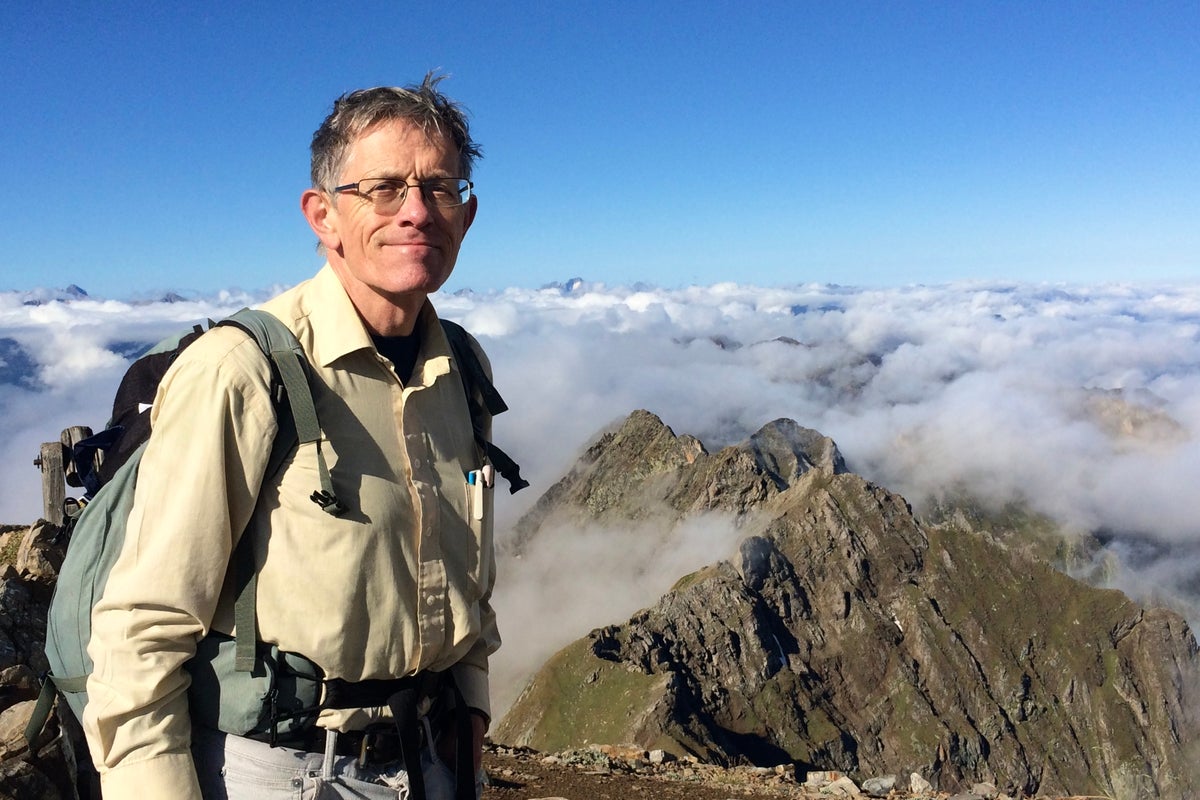
Spending 32 years (and 13 days) as travel correspondent for The Independent has been the privilege and pleasure of my life.
Today, 29 May 2026, is my final day. Do join me on a journey through the decades.
1994: First principles
When I joined the paper on 16 May 1994, The Independent was located in a former insurance office at 40 City Road in the City of London – just a few hundred metres from our present location.
Travel was more expensive, more complicated and significantly more dangerous than today. And so was communication.
The Independent was technically way ahead of most of Fleet Street. I was an early adopter of the laptop – about as rudimentary and bulky as a fridge. I soon found that writing an article was the relatively easy part: once finished, my problems were only just beginning.
In a bleak room of a Soviet-era hotel in Novosibirsk, central Siberia, I dismantled a Russian phone in order to file an article about a lively night in a bathhouse in the bleak wilderness of a Siberian midwinter. “The best bit is when the beating stops,” it began.
To get the precious prose to the mainframe computer back at The Independent, I needed to connect my laptop to the right terminals, tap in the right codes and hope for the best. When finally I heard a reassuring purr and squeak from the London end, I could send over the article – at the reading-out-loud speed of 180 words per minute. Perhaps, I reflected, I should have learnt Morse code.
1995: EasyJet? It’ll never catch on
The Independent had a strict “no freebies” policy prescribed by founding editor Andreas Whittam Smith. So I was acutely aware of the cost of travel. The mid-Nineties saw some undoubted bargains – £179 for a Virgin Atlantic flight outbound from Heathrow to Los Angeles and back from New York JFK.
Yet within Europe, fare were stubbornly high. A questionably obtained student card eased the financial pain, but even so London to Glasgow was a minimum of £100 return by air. Plenty of entrepreneurs had sought, unsuccessfully, to make flying affordable. So, when a fax arrived at the office of The Independent announcing a new carrier between Luton and Glasgow, beginning in November 1995, I paid it little heed.
The link between London and Scotland's biggest city was conveniently carved up by Air UK, British Airways and British Midland. While easyJet promised fares as low as £29 each way, the business model seemed fatally flawed. You couldn't buy through travel agents, only by phone – with the number emblazoned in orange on the plane.
There was no allocated seating – you grabbed a seat where you could. And the airline proposed charging passengers £1 for a cup of tea and a further 50p for a packet of shortbread, both of which were free on its frillier rivals. So, no thanks, I would not be going to Luton at 7am on 10 November to meet a 28-year-old shipping magnate named Stelios Haji-Ioannou.
Yet easyJet seems to have survived, along with what was, at the time, a small and struggling Irish airline named Ryanair.

1996: Railway break-up
Even without competition from budget airlines on intercity routes, the UK’s railways were struggling in the 1990s. John Major’s government had a solution: privatisation. The 1992 Conservative manifesto claimed: “The best way to produce profound and lasting improvements on the railways is to end BR’s state monopoly.”
On 4 February 1996 Britain’s first privatised rail service departed. Actually, it was a rail-replacement bus from Fishguard to Cardiff, due to engineering work. And it was late. The first actual privatised train was the 5.10am Twickenham to London Waterloo.
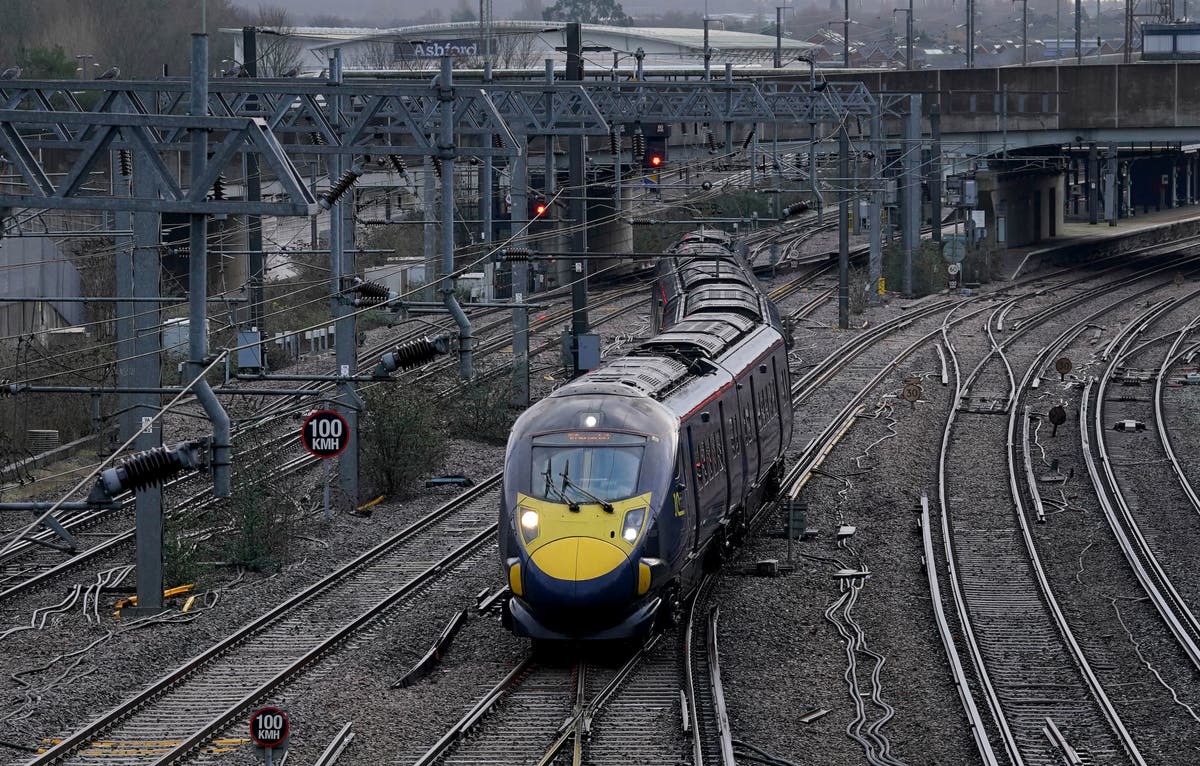
Three decades on, passenger numbers have roughly doubled. Labour is renationalising the train operators, with the biggest – Govia Thamelink – entering public ownership this weekend. The transport secretary, Heidi Alexander, said: “From this Sunday, millions of passengers across the South East and East of England will be travelling on rail services back in public hands – run for the public good, not private profit. Bringing Britain’s largest train operator into public ownership is a defining moment in our reform of the railway.”
The key problem now is capacity, particularly on north-south intercity routes. If only there were a plan for high-speed rail to connect Leeds and Manchester with Birmingham, continuing to London. Oh wait…
1997: Dubai on the map
On 7 July, the Jumeirah Hotel group was launched. The first property was the Jumeirah Beach Hotel in Dubai. Travellers could get there aboard a small airline called Emirates, which flew nearly 10,000 passengers a day to and from its base at “DXB” – including some from London Heathrow aboard the shiny new Boeing 777. Last year, the figure was almost 150,000 daily – making Dubai International airport the busiest global hub in the world. While Emirates still has plenty of 777s, its workhorse is the Airbus A380 “SuperJumbo”.
In November 1997, terrorists attacked tourists and guides at an archaeological site on the east bank of the Nile at Luxor. Sixty-two people died in the massacre.
1998: End of cheap booze foretold
Competition between ferry firms across the Channel became so intense that, in a newspaper promotion in January 1998, Hoverspeed started paying drivers £1 to take a day trip from Dover to Calais – hoping to make money back on the sale of duty-free alcohol and tobacco.
In February, the European Union announced duty-free sales would soon end on flights and ferries within the EU. Despite predictions from many airlines and airports, short-haul aviation did not shut down after they ceased to be able to sell cheap spirits and cigarettes. But cross-Channel services, including the hovercraft, were hard hit.
Duty free was to reemerge in 2021 after the final Brexit agreement took effect. Perhaps that is what the former Brexit secretary David Davies had in mind when he said: “There will be no downside to Brexit, only a considerable upside.”
In other 1998 news, Hong Kong’s exciting Kai Tak airport shut down. The first British tourists visited Saudi Arabia. AndThe Angel of the North, a giant winged structure south of Newcastle, became a landmark for travellers on the East Coast Main Line and A1 road.
1999: On the world’s longest road
December in the UK can be dismal, so I opted to disappear for most of it: following the central section of the Pan-American Highway from Texas to Panama City. It was a glorious three weeks on the road through northern Mexico when it was (relatively) safe; witnessing the cultural wonders of Oaxaca and western Guatemala, El Salvador’s version of Pompeii and hitching through Nicaragua and Costa Rica.
Being mugged (ineptly, thankfully) on Christmas Day in the Costa Rican capital, San Jose, was annoying. But the highlight? The cheerful madness of Panama City. Just outside, the Pan-American Highway crosses the Panama Canal: the world's longest road meets the planet's greatest short cut. This is, the passer-by is informed, the “Puente del Mundo – Corazon del Universo” Bridge of the World – Heart of the Universe. There are worse places to end a millennium.

2000: London comes alive
British Airways employees who had to work on the night of 31 December 1999 were given a special one-off payment of £400, or up to four free tickets anywhere in the world. One person who did not take advantage of the offer was BA’s then-chief executive, Bob Ayling, who at the turn of the year was officiating at the official opening of the British Airways Millennium Wheel.
The public were not allowed in until March due to technical problems. As with the Eiffel Tower, the giant Ferris wheel was intended only to be a temporary structure – but like the Paris icon, the London Eye (as it is now known) is part of the capital’s identity.
The first day of the new millennium saw the public opening of the Dome in North Greenwich, London. The venue had a difficult year as the UK’s cultural gift to the world, but has since thrived as the O2. And by May 2000, Tate Modern had opened in a former power station on London’s South Bank.
Two other openings of note: an online travel review site called TripAdvisor, and the Oresund Bridge between Denmark and Sweden. And a closedown: on 4 June 2000, smoking was banned on all flights to, from and within the US.
2001: Horror on 9/11
When airline passengers fall victim to terrorist outrages, the rest of us become acutely aware of what we should have feared. In 1988, no one worried that it was easy to check a bag on to a transatlantic flight without boarding the plane – until that bleak midwinter's night when a bomb hidden in a suitcase exploded aboard Pan Am 103 from Heathrow to New York. The Boeing 747 crashed at Lockerbie with the loss of 270 lives.
On 11 September 2001, our vulnerability to evil was exposed to another order of magnitude. Four hijacked planes were used as guided weapons to kill almost 3,000 people.
Yet passenger planes also symbolise the achievements and aspirations of a generation without frontiers. On 15 September 2001 I wrote: “Tuesday's tragedy would be amplified still further if it were allowed to crush travellers' spirit of adventure, and the power for good that aviation represents. Airlines bring people together. That is what they are for. And, as grief resonates around the world, unity is what we need more than ever.”
2002: Forget francs, lire and pesetas
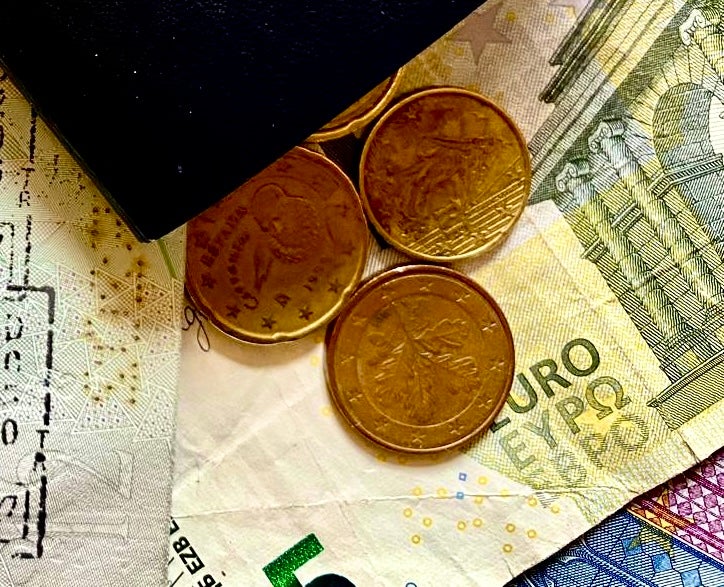
At the start of 2002, the euro replaced the French, Belgian and Luxembourg francs; Spain’s pesetas; Italian lire and even the mighty Deutschmark. “A sad moment for sad people like me, who get a cheap thrill from new currencies,” I wrote.
“The European travellers of tomorrow will never know the thrill of that first creased and torn Italian note with an unbelievable number of zeroes, nor the thin jangle of small change whose metal content is almost as low as its purchasing power.”
2003: It’ll never catch on (part 2)
Shortly after 7am on 12 February 2003, I settled into my seat aboard Jet2 flight 201 to Amsterdam. The plane was a secondhand Boeing 737 picked up cheap (with seven others) after the failure of Ansett of Australia in 2001, shortly after the 9/11 attacks.
My neighbour was Philip Meeson, the founder of the airline. He told me of his plans to unlock travel opportunities and improve lives.
To be honest, I was unconvinced. The arguments against Jet2 were powerful: easyJet and Ryanair had established bases in the London area, which was (and is) by far the biggest aviation market in Europe. No-frills flying was not proven in northern England, where the charter airlines were well established. And, whispered rivals, Leeds Bradford’s location was awkward and prone to bad weather. And there was clearly no future in package holidays.
Since then, Amsterdam has vanished from the Jet2 map – but dozens of other destinations have appeared, from Cyprus in the east to Madeira in the west.
Jet2 is now the biggest tour operator in the UK, offering top-class package holidays. Passengers are welcomed at the airport as though their journey is a cause for celebration – which it usually is.
As Jet2 was helping to democratise flying, the last flight of Concorde took off from New York JFK to Heathrow – ending a project that cost taxpayers billions and mainly benefited the super-rich.
2004: ‘Destination fatigue’ hits Spain’s Costa Brava
“This year, according to the tour operators, we've gone off sunny Spain. They blame 'destination fatigue’.”
The giant tour operator First Choice (now part of Tui) announced it would abandon the stretch of coast where the Spanish package holiday was pioneered in the 1950s.
Customers had apparently seen quite enough of north-east Catalonia. Lloret de Mar, Blanes and Tossa del Mar were erased from the brochures so First Choice could concentrate on more profitable locations for 21st-century package tourism – such as Bulgaria, where the appalling rooms and terrible food under communism have been superseded by excellent Spanish-run hotels. And Benidorm received the ultimate put-down from Club 18-30, which felt the resort too unsophisticated for its clients.
But the Costa Brava survived: Girona, the main airport for the region, was Ryanair's first destination in Spain. The Irish airline described it loosely as “Barcelona”.
2005: What do you mean, pay extra for baggage?
You may be shocked to learn that, two decades ago, it was normal for all airline passengers to be able to check in an item of baggage – between 15 and 23 kg – for free. In November 2005, though, Flybe announced plans to become the first airline to start charging for checked baggage. The initial charge was £2. Flybe is no longer with us. But baggage fees definitely are.
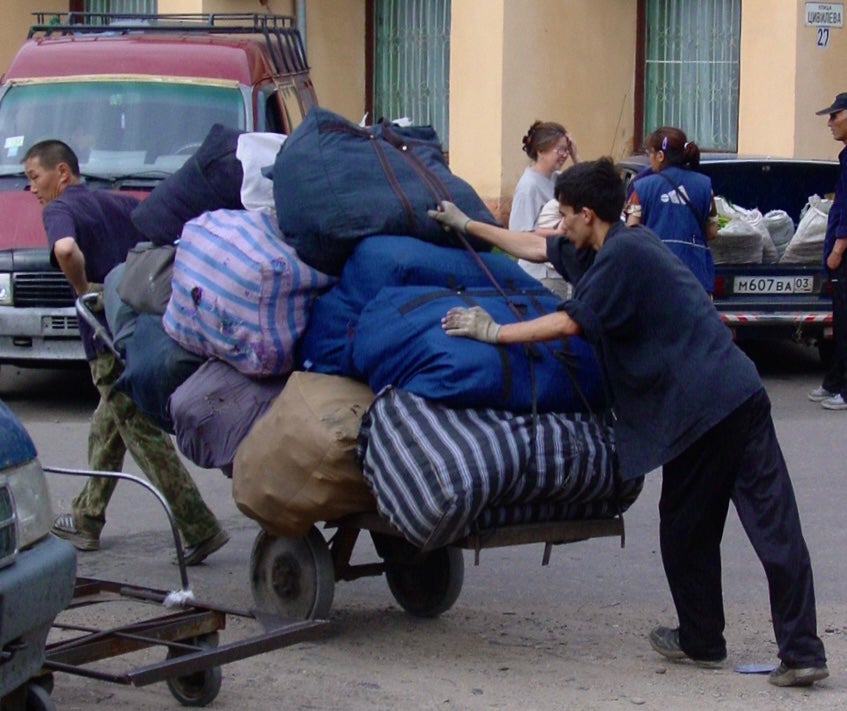
2006: Gap month around the world
This trip took my personal policy of being on holiday pretending to work to new extremes. I spent November on a circumnavigation that included Chowpatty Beach in Mumbai, Australia’s Outback, bungee jumping in Queenstown, New Zealand, and following Che Guevara’s tyre tracks across the Andes. This was the Gap Month, in which I sought to pack a year's worth of adventure.
I chose November because it is the optimum month for long-haul travel: the lowest of seasons in the northern hemisphere, late spring in the southern half of the globe, and with no school holidays to distort travel patterns, fill seats and beds or push up air fares.
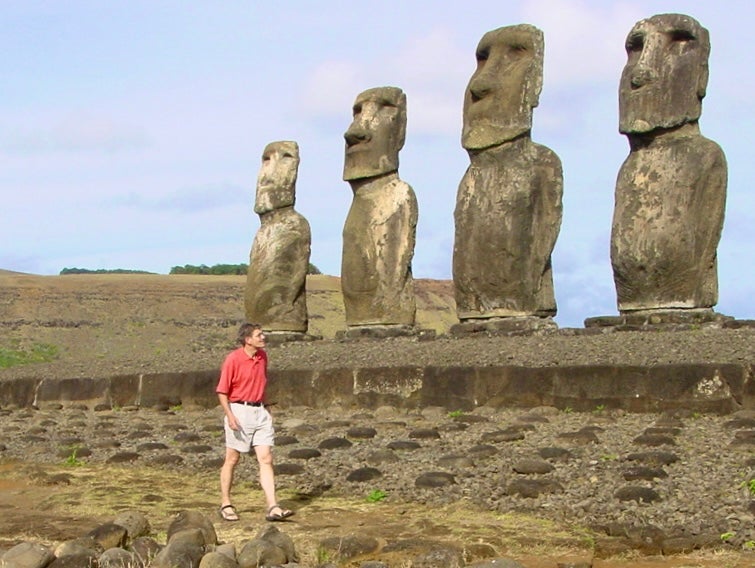
The highlight? Easter Island: the epitome of isolation in the South Pacific. This wild isle was settled by an enigmatic population who created hundreds of giant stone heads, known as moai. Yet these mysterious figures are only part of the attraction. Easter Island is the same size as the Channel isle of Jersey, but rather more scenically spectacular: especially in the shape of the crater of Rano Kau, created when a catastrophic eruption tore through the Pacific Ocean.
2007: No more Holiday
The final edition of the Holiday programme is broadcast on BBC1. It had launched on 2 January 1969 as “a series of programmes to help you choose your next holiday”, with the focus on low-price packages to Spain, Portugal and Morocco.
I had grown up with the programme, wide-eyed at the world (even in black-and-white), and still cannot believe my good fortune in presenting the last report: a river trip down the Mekong through Laos.
2008: Airbnb – meet Airbus
On 25 October, the Airbus A380 ”SuperJumbo” entered service between Singapore and Sydney. The specific aircraft used for the historic first flight was later dismantled for parts in southwest France. (Last year, Global Airlines reconfigured a used A380 for transatlantic trips. But for the past 12 months, the start-up has been silent.)
The QE2 began her final voyage from Southampton to Dubai, where she was due to become a floating hotel. The conversion took a decade. And as she arrived in the Gulf, on 21 November, Oasis of the Seas, then the biggest cruise ship in history, was launched. The Royal Caribbean vessel could carry more than 6,000 passengers.
Across in San Francisco, an accommodation website with the curious name of Airbedandbreakfast.com was founded in San Francisco. Nine months later, the site was relaunched as Airbnb.
2009: Uber and under
Start-ups in San Francisco were on something of a Pacific wave. In March, a company called UberCab was founded – later abbreviated to Uber. But in Europe things were closing down. On 12 December the Orient Express train ran for the last time.
Seventy-five years after the publication of Agatha Christie's bestselling crime novel, Murder on the Orient Express, the train that epitomised trans-European travel for more than a century was finally killed off. "Death by a thousand cuts" summed up the demise of the Orient Express: by the end it was reduced to running only between Strasbourg and Budapest.
Yet at the village of Appenweier in western Germany, you can still see a self-aggrandising plaque announcing this little halt to be the rail crossroads of Europe: where the line of the Orient Express crosses the line from Hamburg and Cologne south to Switzerland and Italy.
Who was to blame for the demise of Graham Greene's Stamboul Train? We travellers were, of course, abetted by low-cost airlines. London to Istanbul costs as little as £50 each way.
The Venice Simplon-Orient-Express, a luxury private train, continues.
2010: Planes grounded by volcanic ash – and striking cabin crew
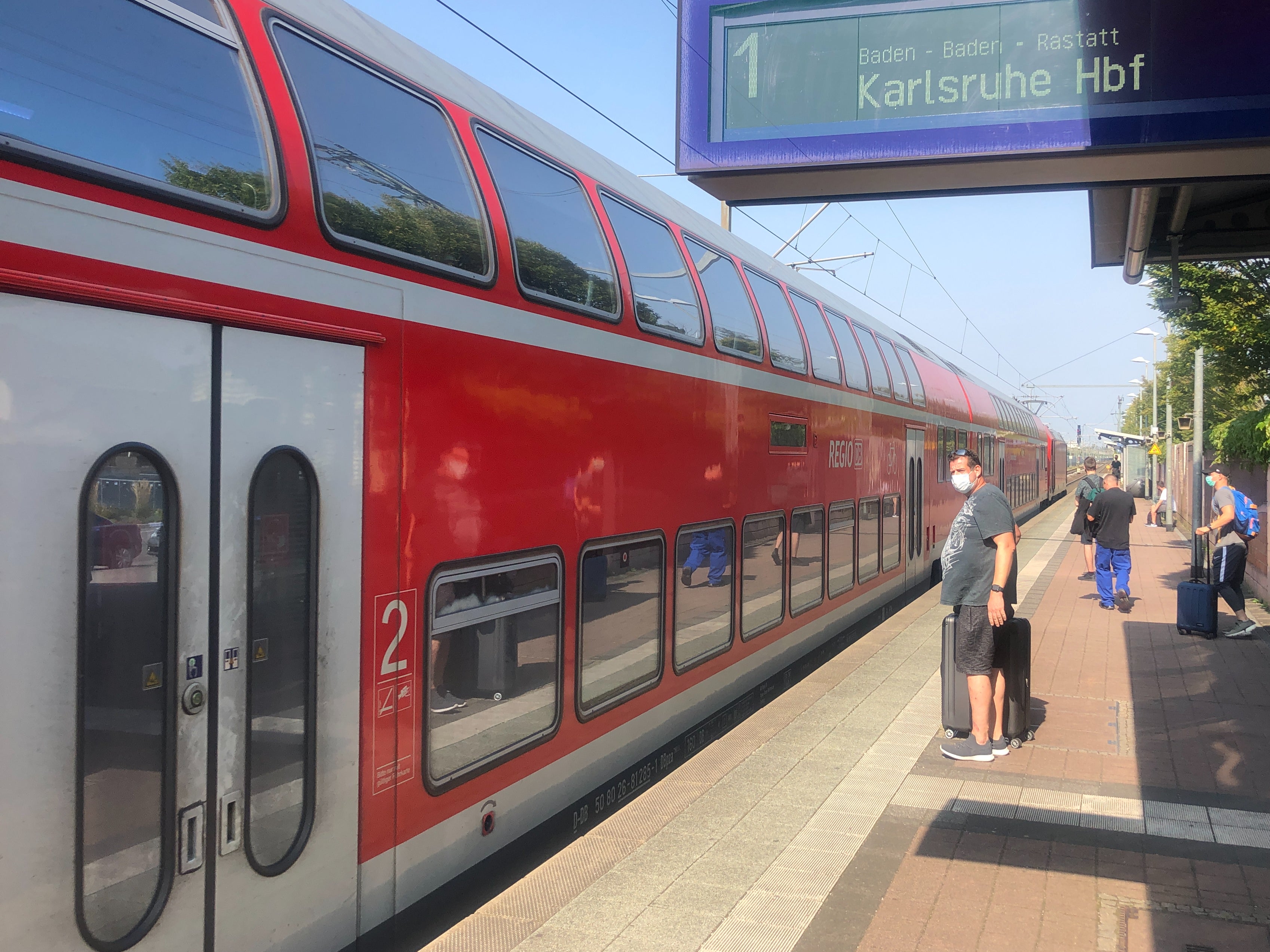
On 15 April 2010, I was in Trysil, Norway, on a skiing trip. I had flown in as a passenger on SAS, but went home as freight on a container ship.
You did not need a strong grasp of Norwegian to work out from the ski-resort newsstand that not all was well in the turbulent world of aviation. Vulkan Aske fra Island STOPPER FLY-NORGE yelled one tabloid front page headline, with a background of a billowing plume of Iceland's finest ash.
While there are numerous potential locations where volcanoes could erupt, Iceland is particularly seismically active. And following the eruption of Eyjafjallajökull in 2010, airspace across northern Europe was closed — wrecking the travel plans of 7 million passengers and costing airlines over £1bn. I was lucky to find a berth on a container ship to Immingham.
This was also the year of British Airways cabin crew strikes. A toxic tussle between BA management and the cabin-crew union over working conditions jeopardised millions of passengers' plans. The airline demanded more cost-effective arrangements as it was in a "fight for survival”, according to then-chief executive Willie Walsh.
As both sides dug in for an extended campaign, and Ryanair was brought in to cover some Heathrow flights for British Airways, I wrote: “The losers extend well beyond BA's shareholders and strikers. One notable casualty is Scotland – which, at the first sniff of trouble at Heathrow, is traditionally cut off by British Airways.
“Anglo-Scottish links are always the first to go, on the basis that terrestrial alternatives are available. But overseas business travellers heading for Edinburgh or Glasgow are unlikely to be impressed to learn, on landing at Heathrow, that they face an eight-hour coach trip instead of the expected 80-minute hop.”
2011: Sleep your way to Orkney
When the sun shines and the wind abates, Scotland’s islands are as close to heaven as you need to be. In 2011, the sky, sea and ancient history coalesced magically in Orkney. I travelled there on a sleeper train (plus a short flight).
Later the same year, I wrote about the possible demise of the Highland Sleeper serving Fort William, Inverness and Aberdeen from London Euston. “This is the UK's longest, stretching almost a quarter of a mile, and comprised of rolling stock four decades old. And the fear is that the day is not far off when it ceases to leave at all.”
Transport Scotland had just published a consultation document on future strategy. At its heart was a “focus on delivering customer outcomes at a lower subsidy cost”, which could have seen northern Scotland disconnected from London.
The options being considered included “removing the Highland or Lowland service, or by running the Lowland services to and from Edinburgh only”.
However, the full Scottish sleeper service continues – and the Highland train now pauses at Birmingham International.
2012: Olympian achievements
“How to scare away visitors” was the headline of a short article I wrote halfway through the London Olympic Games.
All the evidence from previous Olympiads, notably Sydney in 2000 and Athens in 2004, suggested that host cities are much quieter than usual while the Games are on, because tourists and business visitors stay away in their hundreds of thousands. But Transport for London was sure 2012 would be different.
"London will be very busy during the Games," was the organisation's mantra. That view was backed up by Britain's busiest airport, Heathrow, which at one stage claimed every seat on every inbound plane during the Games would be filled. (It fell well short.)
During the superbly organised sporting summit, Heathrow continued to warn passengers that "roads and public transport in and around London will be busier than normal during the Games" and that hotel rooms “are running out fast”. In fact, the exact opposite applies. Roads and public transport were quieter than normal, and by the second week hoteliers were almost giving rooms away.
The same applied at the Paris Olympics in 2024 and will probably do so again in Los Angeles in 2028.
2013: Skyfall
For many travellers in 2013, getting off the ground proved the big problem. Barely had the new year begun than the snow came down and exposed the lack of resilience at Heathrow. Hundreds of flights were cancelled and tens of thousands of passengers were grounded at Europe's busiest airport.
Then there was a pair of aircraft fire incidents at Heathrow. The first was on 24 May, when a British Airways Airbus took off, destination Oslo, with its engine cowls unlatched, precipitating a fire in the right engine and an emergency landing after the stricken jet flew back over London to return to the airport.
Less alarming, except for Boeing executives, was a fire aboard an Ethiopian Airlines 787 Dreamliner while it was parked, empty, on Heathrow's apron. The cause was traced to a faulty battery – but not the same lithium devices that had caused the entire 787 fleet to be grounded worldwide in January, after Japanese airlines suffered a series of fires. It took three months to find a fix, and delivery of the state-of-the-art jet to the first UK customers – Thomson (now Tui) and British Airways – was delayed.
Ryanair launched a charm offensive: Michael O'Leary, the chief executive, vowed to “eliminate things that piss people off”. Thirteen years on, the shareholders of Europe’s biggest budget airline seem cheerful enough.
2014: Mountain high
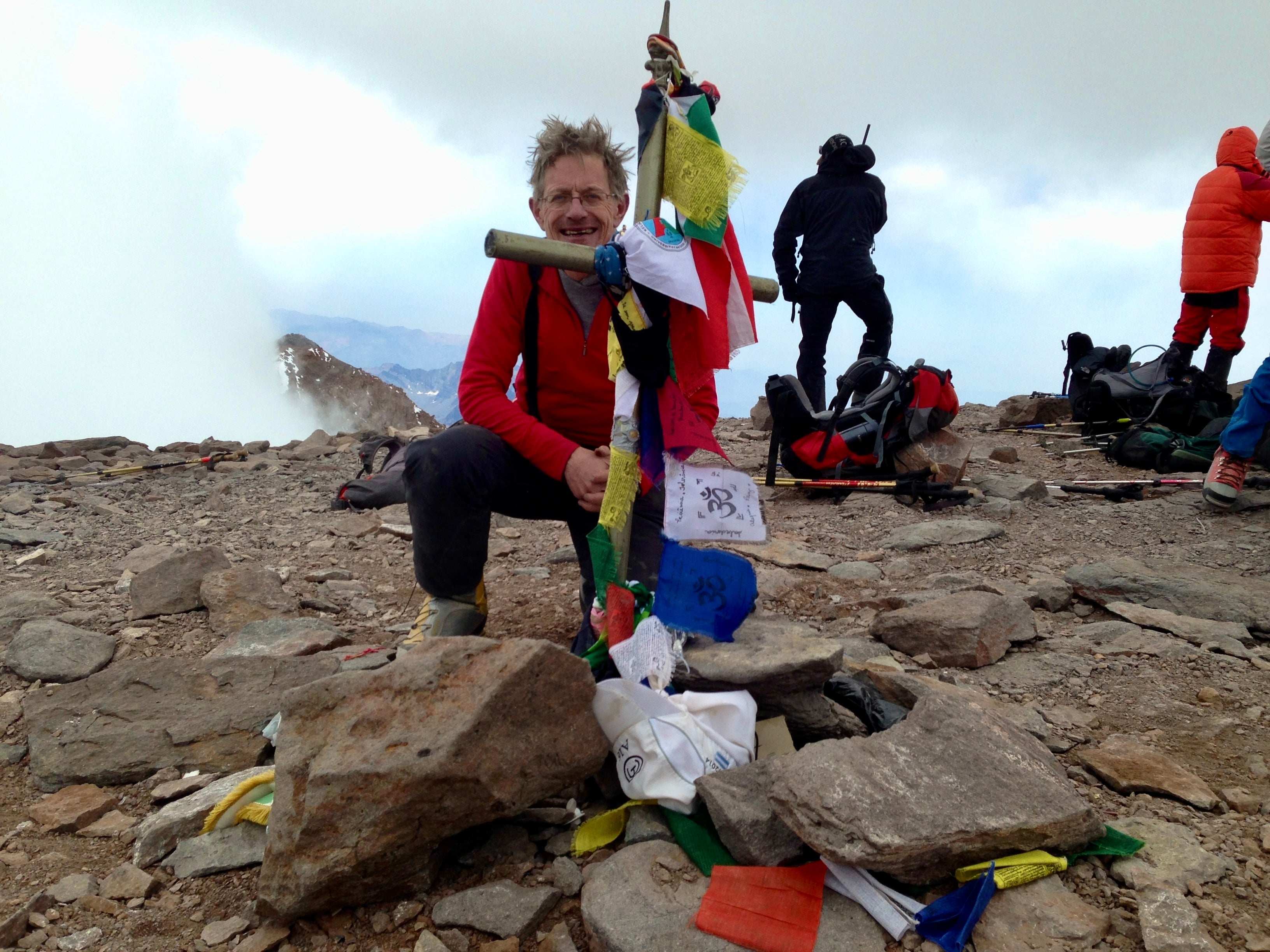
“Welcome to my world,” my friend Graham Hoyland said. “You feel rubbish. It’s cold, it’s windy. I can’t imagine getting to the summit.” We were trying to climb the highest mountain in the southern hemisphere, Aconcagua – just shy of 7,000 metres or 23,000 feet. For most climbers, the Argentinian peak turns out to be Mount Disappointment.
Of the 1,400 people who tackle the peak during the brief summer window between December and March, between two-thirds and three-quarters fail. And an average of nine of them die.
Summiting may be the theoretical aim, but the vast majority of time is spent not ascending. Even when you do climb, the chances are you will descend immediately, thanks to the convergence of two principles: “climb high, sleep low” and “carry and cache”. The best way to acclimatise to the depleted oxygen levels is to “tag” high points during the day, then return to a lesser altitude to rest. And then there is the practical business of needing to transport fuel, food and fixtures to progressively higher camps.
Yet, if you can inure yourself to the brutal surroundings, overcome the morale- and energy-sapping scree, accept that the mountain has squeezed every ounce of joy from your heart and yet still plod ever upwards, eventually the pain stops. As does the ascent.
Briefly, I stood at the summit. Local time of 3.15pm in Argentina corresponds to midnight in Nepal, in January, which made it unlikely that anyone was climbing a 23,000ft-plus peak. So, for a moment I was probably the highest person on Earth.
Then the clouds rolled in; urgent stacatto radio exchanges cut through the breeze and a guide ordered everyone to descend. We were led down through an Andean blizzard from the worst of times to the best: to soap and salad and traffic and plumbing and art and beer and laughter and the rest of the human race.
2015: The best of times ...
The stand-out trip began with a Los Angeles city break that including hiking through the Hollywood Hills – surely one of the greatest urban walks. It continued with a week in Baja California snorkelling with sea lions, scampering through desert landscapes and indulging at one of the world’s more appealing ends. And in between, the view from a plane.
“From 30,000 feet, Baja California looks utterly unforgiving: less a holiday destination than an unworldly crumple of bare rock. The spectrum of desolation you see from the aircraft window runs from rust to old leather, decorated by dried-up riverbeds that resemble sad, discarded ribbons of beige.
“Some people come to Baja in search of cosmic experiences. Well, on the flight down, you may undergo one yourself. The peninsula that marks the end of the western world looks as raw as Earth itself when first the planet coagulated from a cosmological cloud. Baja California: twinned with the Moon, Mars and other heavenly hell holes. Yet at sea level, beneath a benign blue sky, this lonely outcrop delivers enlightenment and enchantment.
“This 700-mile-long finger of land, the same area as England, jabs into the Pacific. The interesting bit, touristically speaking, is the last 100 miles or so – from the cuticle to the fingertip, if you will. At the very end lies Cabo San Lucas, Mexico’s Land’s End and the southern tip of what was initially believed to be the island of California.”
2016: … the worst of times
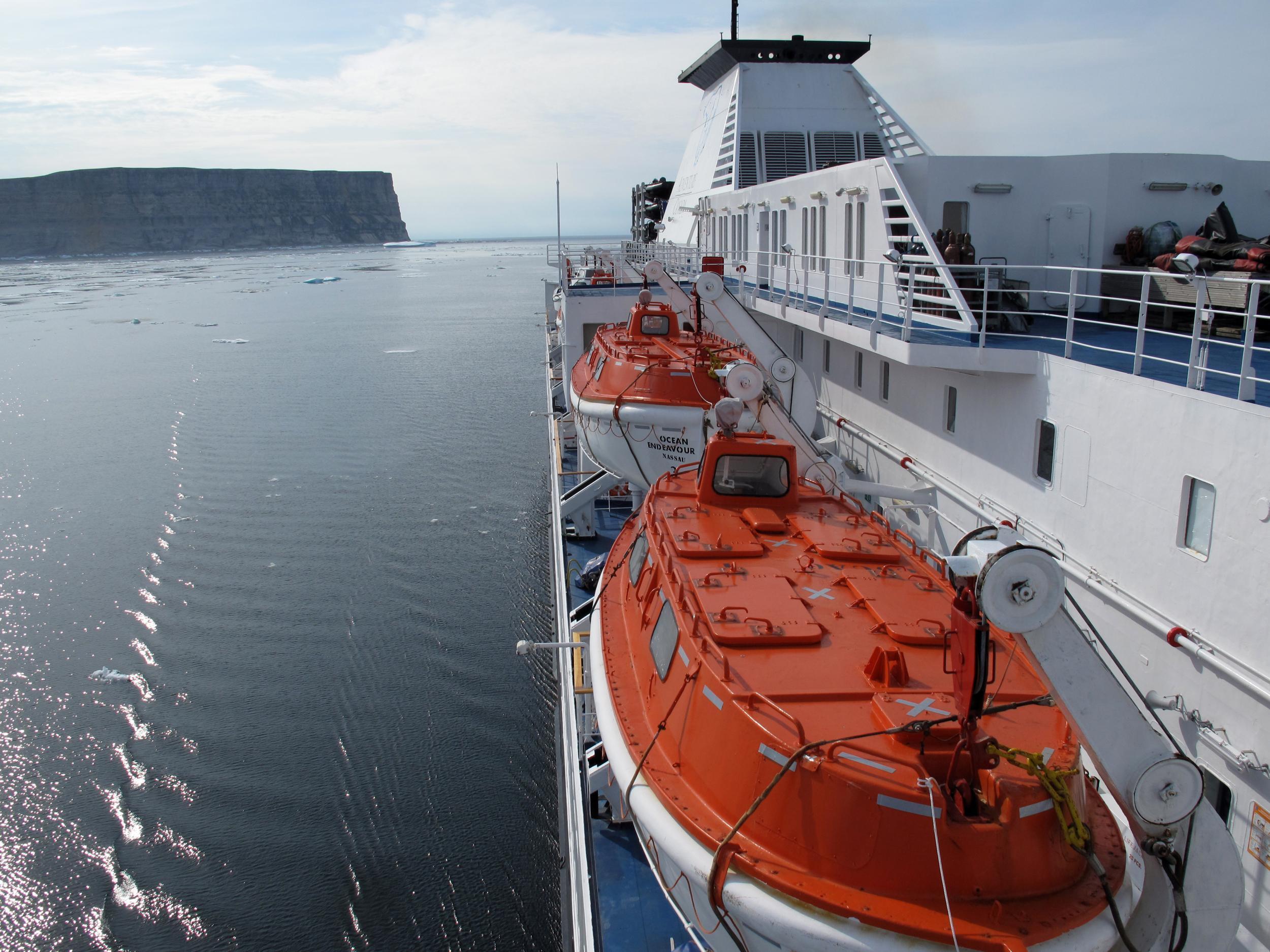
A year later, I took the family on a cruise to Greenland and Arctic Canada. It was by far our most expensive holiday ever. “North Korea on Sea” does not precisely sum up the profoundly disappointing Adventure Canada voyage: nobody was executed for dissent. But at a cost of £1 for every minute of a two-week holiday, I hoped the family would spend less time drifting around incarcerated in an old Polish ferry and enjoy more than about one-third of the promised itinerary.
I handed over many thousands of pounds for the 12-day trip because the itinerary looked enthralling. “This journey encompasses the heart of the Arctic from Greenland to Canada’s newest territory, Nunavut, and finally, Nunavik in Northern Quebec,” gushed the publicity. “The chances of seeing wildlife, including polar bears, walrus, and musk ox are excellent.”
I did see a polar bear – but it was painted on the funnel of the ship. I didn’t see Nunavik in Northern Quebec, one of several locations that fell off the itinerary. What the Calder family and 180 other fare-paying passengers mostly saw was the inside of a 34-year-old ferry. Except when we watch from the deck as the crew went off on their own adventures on Zodiacs (inflatable boats).
“We’re all trapped on board, and over half of the planned itinerary has been cancelled,” said a fellow passenger who was even more grumpy than me. “This isn’t a cruise for the crew. Why aren’t we out there?”
2017: Monarch deposed
“Heartbreak for Monarch staff and passengers after 4am airline collapse,” read the headline on 4 October 2017. “Biggest peacetime airlift under way to bring home 110,000 holidaymakers.”
Earlier that morning, passengers booked on the first wave of Monarch flights were already at five UK airports, baffled at being unable to check in, when a brief text arrived announcing their holidays had been wrecked: “Important! Monarch has stopped operating,” read the message sent out by the Civil Aviation Authority (CAA). “Please do not go to the airport.”
After 49 years of flying tens of millions of passengers to Europe and beyond, one of the proudest names in travel collapsed — costing the jobs of 2,750 staff and the holiday plans of hundreds of thousands of travellers.
Andrew Swaffield, Monarch’s chief executive, blamed the collapse on the effects of terrorism.
“The root cause is the closure, due to terrorism, of Sharm-El- Sheikh and Tunisia and the decimation of Turkey,” he said in a letter to staff. “Since 2015 we’ve seen yields collapse by a quarter, resulting in £160m less revenue. This has especially affected Spain and Portugal which is 80 per cent of our business.
“Many of you have spent years working for this company and I want to thank you again for your service and loyalty. I am truly sorry that it has ended like this.”
2018: To Russia, with love
Russia had a good World Cup in 2018. And so did the football fans. For the first time in living memory, westerners were allowed to enter Russia without visas – just the Fan ID showing we had match tickets.
Hours after France beat Croatia in the final, Vladimir Putin announced anyone carrying the identity card could return any time before the end of 2018.
I made a rewarding foray to Moscow, Nizhny Novgorod and Vladimir in November, then went back for a final trip in December. Due to a British Airways maintenance delay at Heathrow, I missed the connection for Volgograd (formerly Stalingrad) and arrived seven hours late.
I was certain the subsequent flight to Sochi could not take off because of the blizzard, but it did. A highly unusual snowstorm in the Black Sea city scuppered most of my plans there, but I did get to Stalin’s Villa.
I yearn to return to the world’s biggest nation – but heaven knows when it will be morally acceptable to do so.
2019: Thomas Cook fails
“Thomas Cook UK Plc and associated UK entities has ceased trading with immediate effect and all future flights and holidays are cancelled.”
So ended 178 years of the strongest brand in travel. Thomas Cook was the Victorian preacher and entrepreneur who set up the company in 1841. He was fundamental in transforming travel into the industry of human happiness. By harnessing technology and economies of scale, he bestowed wider horizons than many could ever have imagined.
But on 23 September 2019, at 52 resorts across Europe, the Caribbean and Mexico, 155,000 Thomas Cook holidaymakers awoke to discover their travel company had vanished overnight.
Operation Matterhorn, a pop-up airline, was created from an assortment of chartered planes to replicate the schedules of the defunct company. A triumph for consumer protection – but still a tragedy for the original package holiday company.
2020: Where’s Wuhan?
I forget the exact wording of the New Year social media message I popped out a few minutes after midnight on 1 January 2020, but it was something to the effect of: “This is going to be the best decade for travellers in human history.”
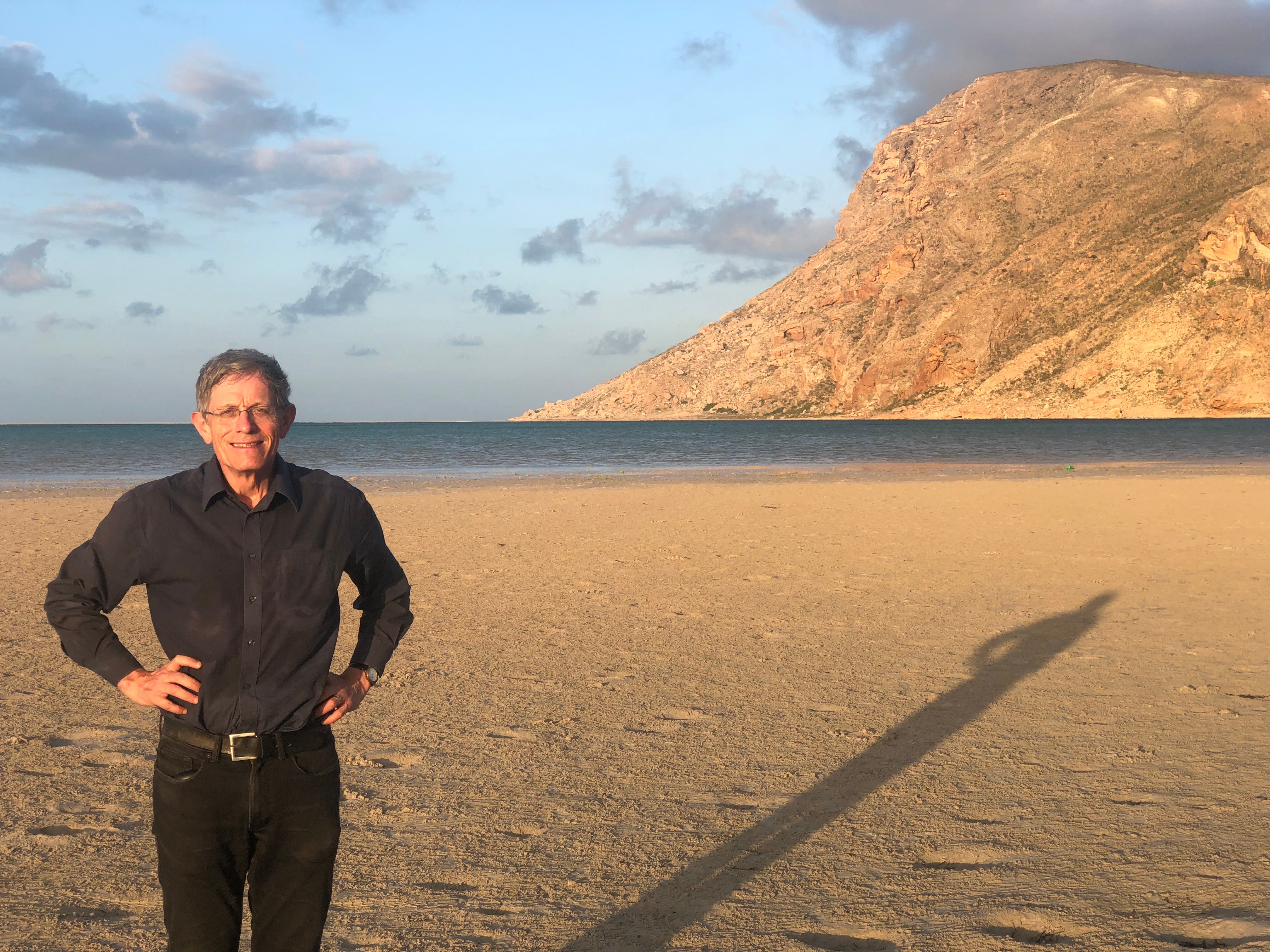
Eleven weeks later, I found myself being airlifted from the Yemeni island of Socotra in the company of other travellers who, like me, had scoffed at the possibility that the “Wuhan coronavirus” (as Covid 19 was then known) was anything more than a passing irritation. I touched down in Cairo on 17 March 2020, in time to hear the then-foreign secretary, Dominic Raab, ordering British travellers to stay at home.
The announcement was in response to the clattering shut of frontiers around the world; the UK remained open. But soon ministers began imposing a frequently changing tangle of travel restrictions that scuppered tens of millions of travel plans.
In July, “travel corridors” opened for British travellers, allowing quarantine-free trips to France, Italy and Spain. But two weeks later, at six hours’ notice, the government said: “People returning to the UK from Spain from midnight tonight will need to self-isolate for two weeks, with the country removed from the travel corridors list.”
By September, neighbouring Portugal had been put in the same risk category as central Kabul and parts of Somalia, with the Foreign Office saying: “[We] advise against all but essential travel to mainland Portugal.”
Come October, you could visit Germany without needing to quarantine on return to the UK. But all of the countries that bordered it were deemed too risky. I explored the “corona curtain” that wrapped around the Federal Republic, unable to take one more into Swiss, French or Belgian territory without needing to spend 10 days in a room on my return.
One certainty as the year ended: 2021 can’t possibly be as bad. Hold on...
2021: Testing, testing
On 6 January, in the single most punitive policy of the pandemic, all international leisure travel from the UK was banned until 17 May. Anyone at an airport, seaport or international railway station seeking to leave the UK without a reason for exemption faced a fine.
The then-transport secretary, Grant Shapps, said jail terms of up to 10 years for people who lie on their “passenger locator forms” were appropriate.
Later in January, the government warned in social media advertising: “Going on holiday is illegal.”
Hotel quarantine began, even though subsequently it was found to have been of no use in preventing the spread of infections. The Public Accounts Committee concluded taxpayers ended up subsidising hotel quarantine to the tune of £329m – representing over £1,500 for each arrival who spend two weeks in isolation.
Peak Covid travel nonsense was reached on 16 July 2021, when the UK government imposed an effective travel ban on France, at the start of the school summer holidays in England and Wales. The problem was a Covid variant on Reunion island, 5,800 miles away from Paris
Danny Callaghan, chief executive of the Latin American Travel Association, now says this episode “really highlighted how little the government understood what was happening in the world” and “caused a lot of despair in the industry as we realised what were were up against.”
2022: Oh look – Brexit
Given the extreme penalties for going abroad, nobody really noticed that at the start of 2021 British holidaymakers had become “third-country nationals” and therefore subject to more onerous rules than “please have a valid passport”.
To enter the European Union and wider Schengen area (including Iceland, Norway and Switzerland) your British passport has to meet two conditions. One is about the issue date, the other about the expiry date. The passport must be less than 10 years old on the day of entry to the EU. And, on the intended day of leaving the EU, at least three months’ validity must remain.
I spent months liaising with the European Commission in Brussels to establish these were the rules, and that they were independent of each other. So you can use a British passport to travel out to the EU up to the day before its 10th birthday, as long as it has at least three months before expiry.
This is handy, because millions of people have UK passports issued for longer than 10 years.
I passed the entire correspondence from senior European Commission officials to all the big airlines and holiday companies, as well as UK ministers. Astonishingly, though, Boris Johnson’s government started spouting misinformation. One official source claimed: “On the day you travel, you’ll need your passport to have at least six months left.” And a completely useless online passport checker deemed all UK passports to expire after 10 years.
Angela and Robert Kennedy from West Yorkshire were the first victims of the government issuing incorrect advice who sought my help. They were turned away from Leeds Bradford airport by Jet2. To the company’s considerable credit: when I intervened Jet2 changed its policy, apologised to the couple and flew them out to Ibiza on a rearranged holiday a couple of days later.
British Airways and Wizz Air, too, agreed with my interpretation of the rules. With rare exceptions, both have faithfully applied the Brussels doctrine.
Unfortunately, the UK government maintained that there was an element of confusion in the rules. To liven things up still further, the government’s online passport checker continued hallucinating – inventing a rule that children’s passports expired after exactly five months.
Finally, in April 2022 both the Foreign Office and easyJet conceded they had been, respectively, spreading fake news and wrongly denying boarding. Official travel advice finally aligned with the Schengen area rules, and Britain’s biggest budget airline started paying compensation to passengers it had wrongly turned away.
2023: Chaos from beginning to end
From the traveller’s point of view, each year begins full of hope and optimism – and the start of 2023 was expected to mark the great post-Covid reboot. With the vast majority of pandemic travel restrictions lifted, was it going to feel as though the 2020s were finally beginning?
But as the months rolled by, the range of hazards standing between you and your travel dreams multiplied. The year was bookended with rail strikes, with national walkouts in support of unions’ long and bitter disputes over pay and working arrangements.
On the last day of March, as the schools broke up for the Easter holidays, Dover’s processes seized up under the weight of arriving coaches – some of which had to wait for more than 12 hours to go through French passport control. The then-home secretary, Suella Braverman, insisted the queues at the UK’s main ferry port had nothing to do with Brexit.
British Airways’ IT systems have a habit of failing on bank holiday weekends, and so it proved on 25-27 May, at the start of half term. More than 200 flights, mainly domestic and European, were cancelled as a result of the systems failure.
Worst of all: on August bank holiday Monday, when passenger numbers were extremely high, the UK’s main air traffic control system and its back-up collapsed within 20 seconds of each other.
The “network-wide” failure left controllers having to enter flight details manually, leading to colossal delays and many passengers being stuck on grounded planes for hours on end. In the worst single day’s disruption to UK flying since the Icelandic volcano closed down airspace in 2010, at least 2,000 flights were cancelled as a result, with 300,000 passengers having their journeys wrecked.
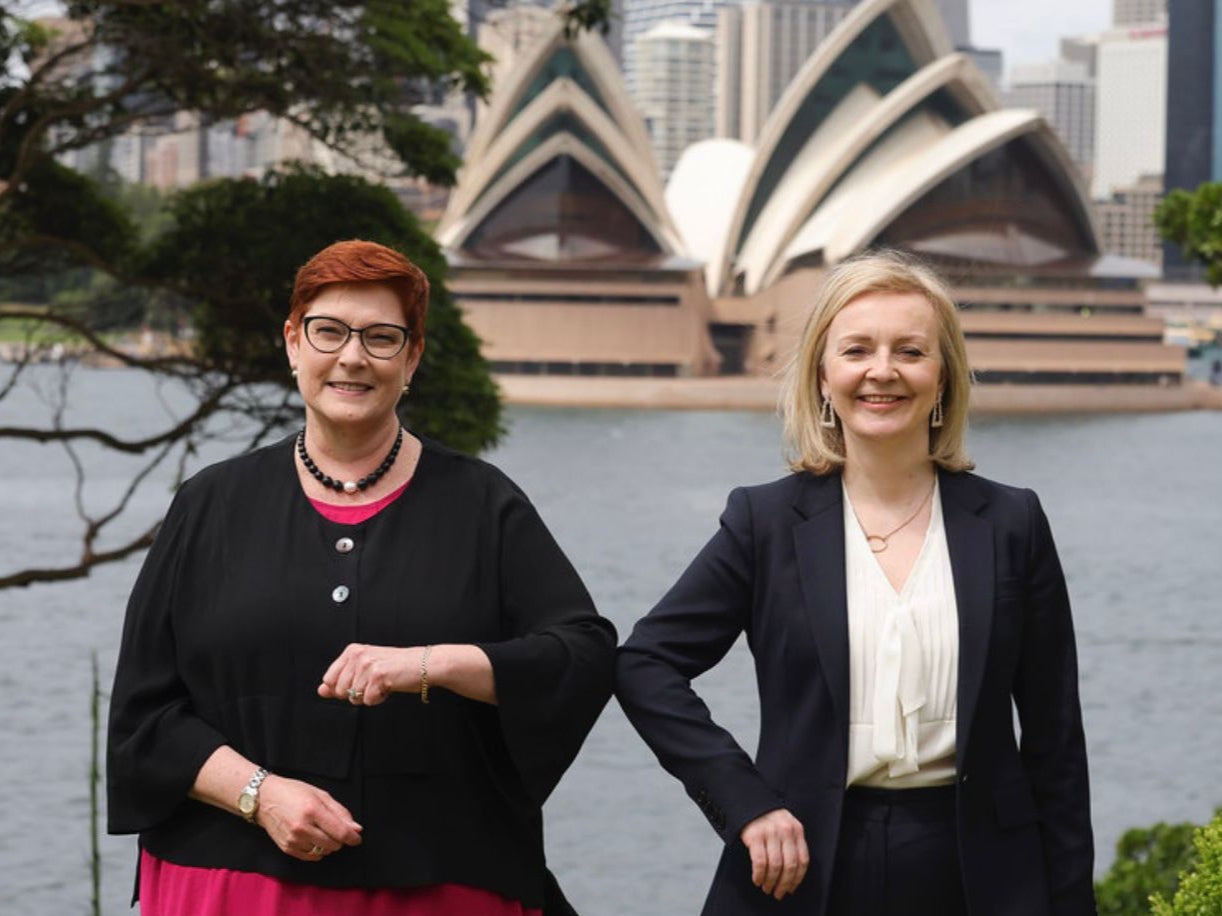
One person who was not at all inconvenienced by air travel was Liz Truss. I revealed that, while foreign secretary, she insisted on taking a private Airbus A321 plane to Australia rather than slumming it in business class on Qantas – even though scheduled flights would have been faster, reduced the environmental impact and cost a lot less than half-a-million pounds of taxpayers’ cash.
2024: The price of tourism
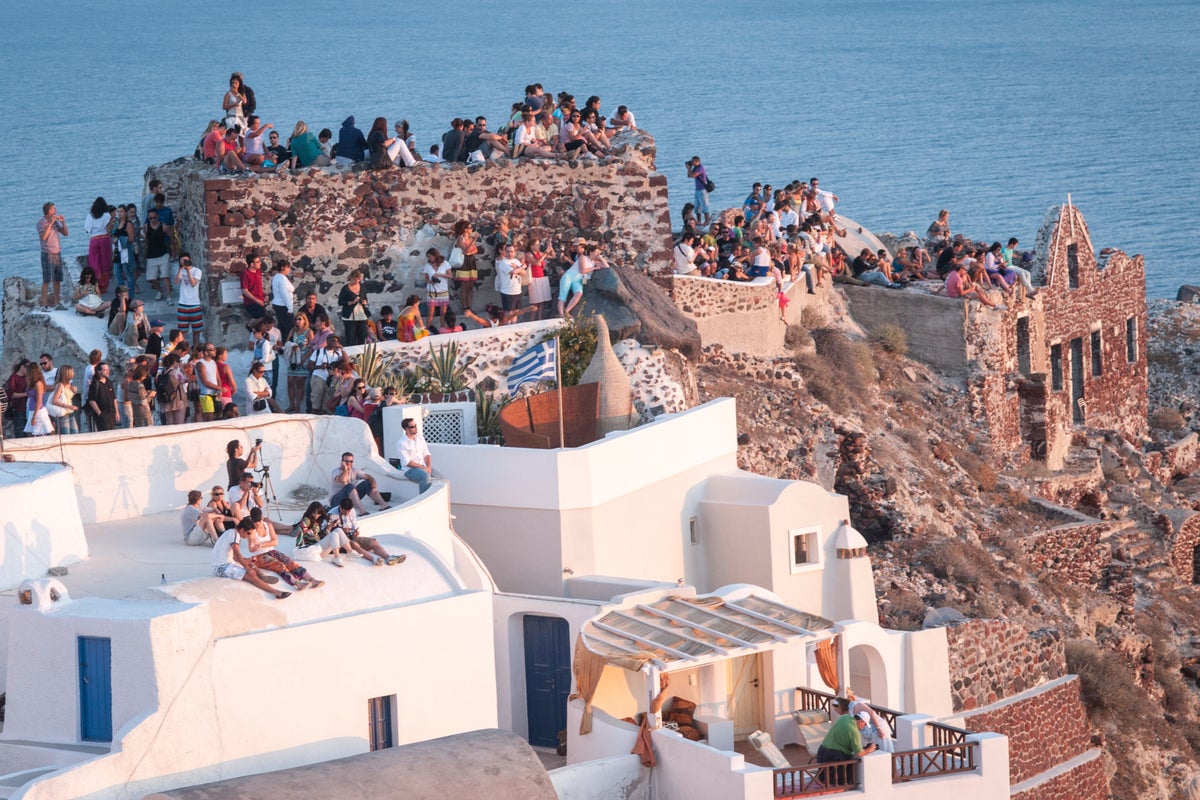
In April, Venice introduced a tourism tax. The man behind it, Simone Venturini, told me on the first day: “Today we are starting entry fees to find the new balance between the community and the daytrippers.”
This is the right approach to deal with overtourism – when the industry of human happiness overloads a location. Taxes help to strike a balance between the needs and rewards of visitors and residents.
Every enterprise knows inbound tourism is of huge financial benefit to a nation, region or city. Tourism works only when both sides feel enriched as a result of their encounter.
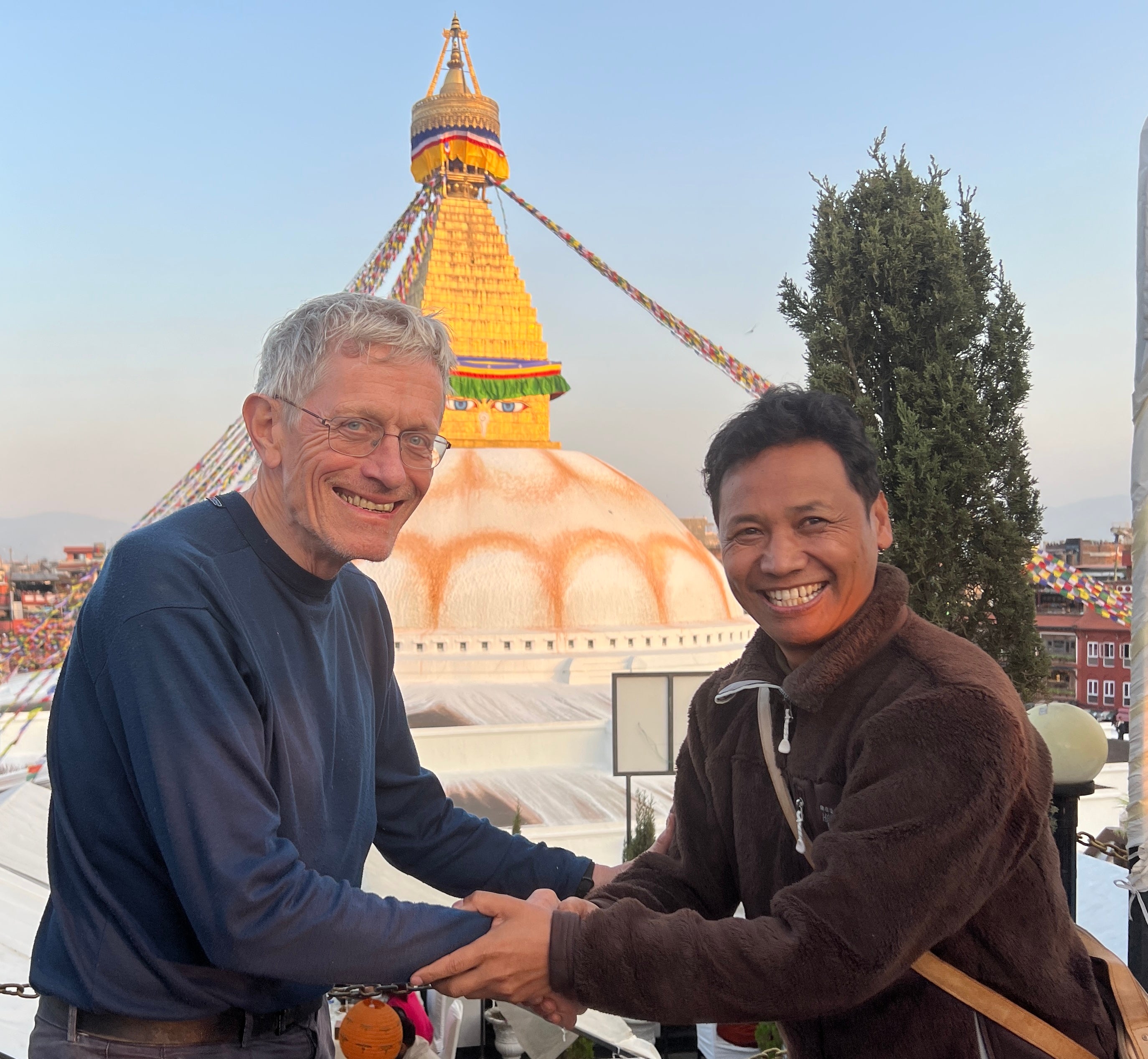
Later in the year, I finally reached Kathmandu – having spent three decades as travel correspondent failing to visit the Nepali capital. The hub of the city is Durber Square, a Unesco-listed congregation of temples and mansions. Overseas visitors must pay a 1,000 rupee (£6) admission fee. “Thank you for your contribution to heritage conservation,” the entry ticket reads. You are handed a Tourist Entry Pass the colour of a Kathmandu sunset to hang around their neck, showing you have paid: simple and effective.
2025: Lebanese calm
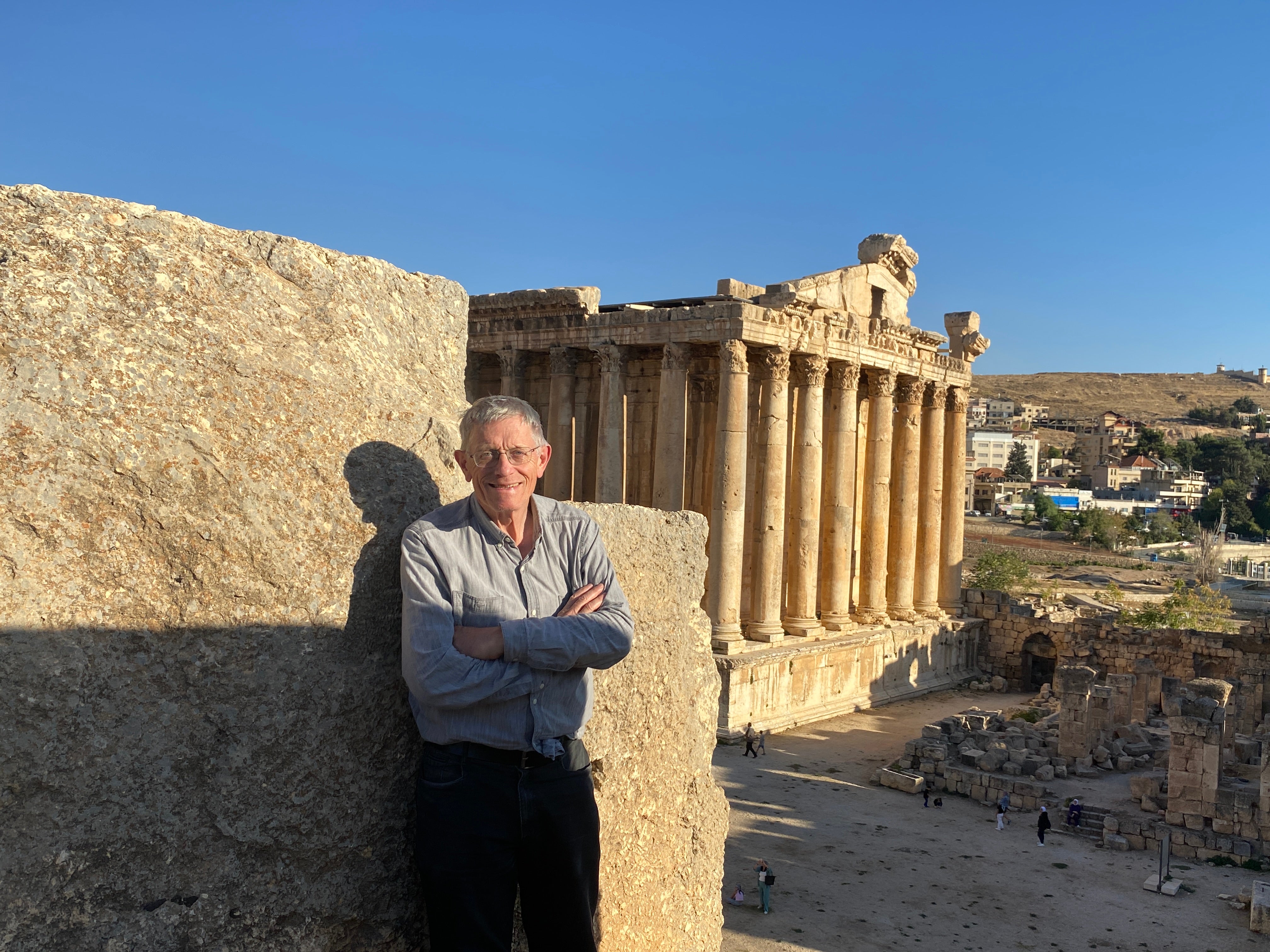
Travel is so often a matter of fortunate timing. In October 2022 I had booked a trip around Lebanon that proved to be a lifetime highlight, which I managed to visit some three years later.
The republic squeezed between Syria and Israel is just half the size of Wales but extraordinarily diverse. History reaching back well before the Christian era, with classical ruins you can enjoy in spectacular solitude.
The landscapes and shorelines are rarely short of spectacular. Delicious homegrown food and wine abounds. Above all, you meet generous and welcoming people who strive to keep you safe, and happy. With Israeli missiles now raining down on the nation, my heart goes out to them.
2026: Comfort zone
I started hitchhiking aged 12. Happily, I can report that thumbing lifts gets better and better. Last year I achieved a modest record of sorts by hitching a ride through three countries (France, Germany, Luxembourg) in four minutes, in the vicinity of Schengen – the pretty village by the Moselle, not the vast geopolitical area.
In February this year I was in Broken Hill, New South Wales, hoping to reach the ghost town of Silverton. The driver who picked me up was none other than Esther La Rovere, owner of the Palace Hotel – the central set for Priscilla, Queen of the Desert.
When I reached Silverton, the world looked as though it was rusting away: this was the raw and dangerous territory where Mad Max 2 was filmed. The cult 1981 movie depicts a post-apocalyptic world that has emerged from a global conflagration involving Iran, in which oil looms large. How absurdly far-fetched.
Just three weeks ago, I was definitely not intending to hitchhike from Rennes to Caen in northern France. I thought: “I’ll catch the train to Dol-de-Bretagne, which is on the main line, and there is bound to be a connection from there.” Turned out, there wasn’t. So I walked to the edge of town and hitched a ride with Morgan, a 21-year-old student of shoemaking. He implored me to include the Normandy resort of Granville in my plans. Nothing beats a personal recommendation.
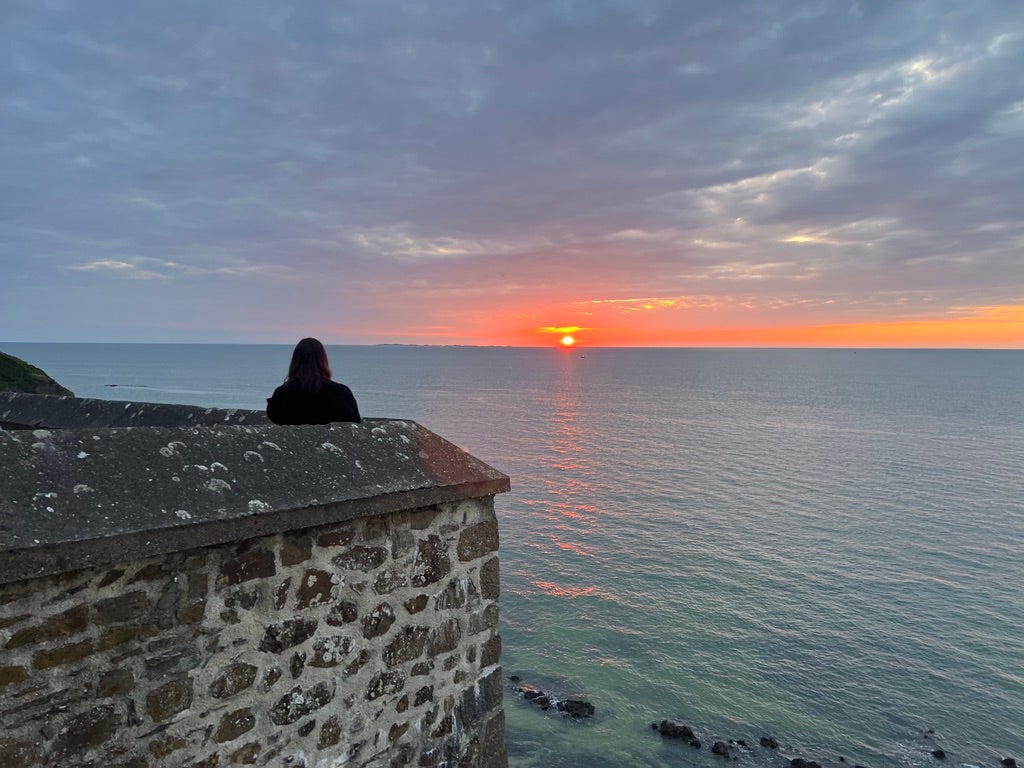
Morgan dropped me in Avranches, about 15 miles from Granville. I went to the railway station: the last one left at 7pm, and there were no buses. Marie picked me up, said she was going halfway, and told me some sad tales of her life. Then decided she would take me into Granville. I arrived in time for a spectacular sunset across the Channel from the cliffs. Glorious.
Simon Calder has written for The Independent for 32 years as The Man Who Pays His Way. His remarkable travel adventures, policy-changing campaigning and indefatigable advice can be found in his archive here.