The case for Cape Town when European winter sets in
There’s a specific day every November when it tips over. Not a date you can mark on a calendar –... The post The case for Cape Town when European winter sets in appeared first on A Luxury Travel Blog.
 Koichiko

There’s a specific day every November when it tips over. Not a date you can mark on a calendar – more a feeling. The clocks have gone back, the heating’s come on, and somewhere around the third consecutive grey afternoon you start doing the maths on how many more weeks of this there are. Quite a lot, as it turns out.

Cape Town, at exactly this moment, is doing the opposite. The city is roughly two hours behind UK time on the clock and a full season ahead of it on the calendar – summer arriving there just as Europe’s switches off. This isn’t a new discovery. People have been escaping to the Cape for years. What’s changed is how good the villa scene along its coastline has become, which makes the case for going considerably stronger than simply “it’s warm there.”
I’ll make that case anyway. Cape Town’s summer – November through to March – does something most winter-escape destinations can’t: it gives you scale. A mountain in the middle of the city. Ocean on three sides. Wine country twenty minutes from your front door. A coastal drive down the Peninsula that belongs on any list of the world’s best. The Maldives gives you a sublime beach and not much else to fill an afternoon with. Cape Town gives you the beach, then hands you a city, a wine region and a mountain range to go with it.
Why the Atlantic Seaboard is where all of this happens
Almost everyone serious about a Cape Town villa ends up looking at the same stretch of coast – down through Clifton and into Camps Bay, with the Twelve Apostles standing guard behind it. It isn’t just postcard scenery doing the work. Those mountains shelter this side of the peninsula from the worst of the wind, which means calmer water, longer golden hours, and views that, slightly annoyingly, really do look better in person than in the photos.

Clifton sits at the quieter end of it. Four coves, divided by huge granite boulders, sheltered enough that the water actually invites you in rather than just looking nice from a distance. It has never had to try particularly hard to feel exclusive – it simply is. The better properties here move fast over December and January, and “fast” rather undersells it; the good ones are often gone two months out, sometimes longer.
Camps Bay, just round the headland, is the more sociable cousin. Victoria Road fills every evening with restaurants and bars that spill onto the pavement, and the whole strip carries a buzzy, see-and-be-seen energy that Clifton deliberately doesn’t go in for. Neither is “better” – it depends entirely on what you want your evenings to look like, and that’s worth being honest about before you start villa-hunting. The two neighbourhoods reward genuinely different kinds of trips.
What a villa here gets you that a hotel never quite can
The properties along this coast range from the discreetly comfortable to architecture that wins awards, and the best of them are built almost entirely around the view – long decks, glass walls, baths positioned at windows for no obvious reason other than that the ocean happens to be right there. A private pool is standard rather than an upsell. Increasingly, so is a private chef, which on a trip like this is less an indulgence than plain common sense – nobody flies eleven hours to spend their evenings cooking dinner for eight people.
The properties that get this right tend to solve a problem most visitors don’t think about until they’re standing in front of it: parking and access. Clifton’s beachfront homes are squeezed onto a steep hillside, and a villa with its own garage, or a staircase straight onto the sand, is worth more in practice than an extra bedroom nobody ends up using.
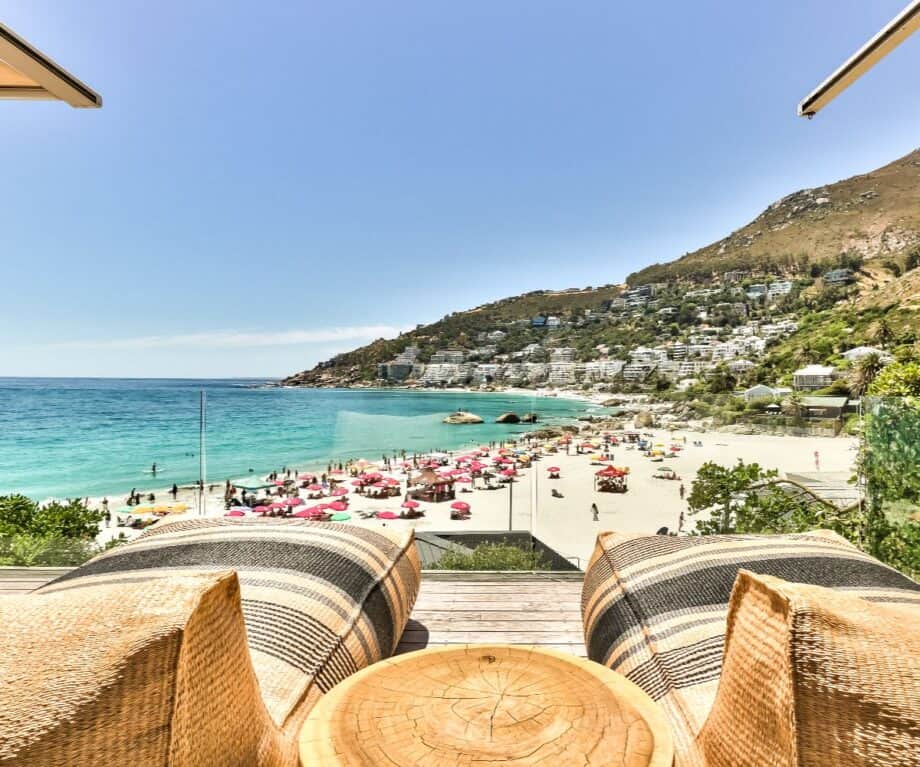
It’s also worth saying plainly: this is one of the better destinations going for multi-generational groups. Bedrooms with their own bathrooms, a layout that lets grandparents have a quiet corner while the children run riot in the garden, a pool that someone can actually supervise from the kitchen – Cape Town’s villa stock does this kind of thing unusually well, largely because the houses were built as houses, for South African families, long before anyone thought to rent them out.
There’s more to this than the coastline
It’s easy to get fixated on the Seaboard and forget the rest of what’s twenty minutes away. The Constantia vineyards sit just inland, old enough that they were producing wine before most of Europe’s famous estates existed, and an afternoon there – slow lunch, a few tastings, a view back towards the mountain – is the kind of thing that makes a week feel considerably longer than seven days. Table Mountain, in its summer mood, is at its most forgiving for hikers; the cable car runs reliably and the views from the top, on a clear day, are the sort that genuinely stop conversation.
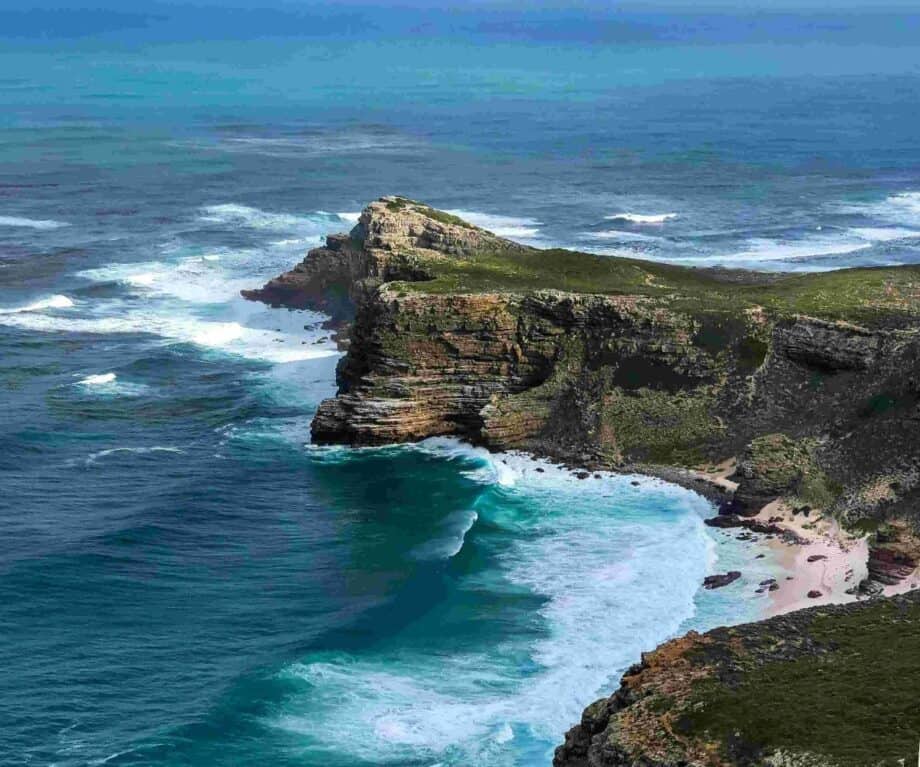
Then there’s the Peninsula drive south towards Cape Point – cliffs, penguins at Boulders Beach, fishing villages that haven’t quite been discovered yet. None of this requires leaving your base on the Atlantic Seaboard behind. It just means the villa is a starting point rather than the whole holiday.
Everything you need to plan your trip in 2026
When to actually go
December and January are peak season – warm, lively, and largely booked out well in advance if you want anything decent right on the Seaboard. Six to eight weeks ahead is the rough rule of thumb for securing a beachfront Clifton property at that time of year, and that’s a genuine constraint rather than something said purely to create urgency.
March is the month most people overlook, and I’d argue it’s the smarter call if your dates have any flexibility at all. The crowds thin, restaurants get their tables back, and the weather barely notices the calendar’s moved on – still comfortably in the high twenties, still plenty of sun. The sunsets, oddly, get better around then too. Something to do with the angle of light along this particular stretch of coast in early autumn, apparently. I’m no meteorologist, but everyone who’s been will tell you the same thing.
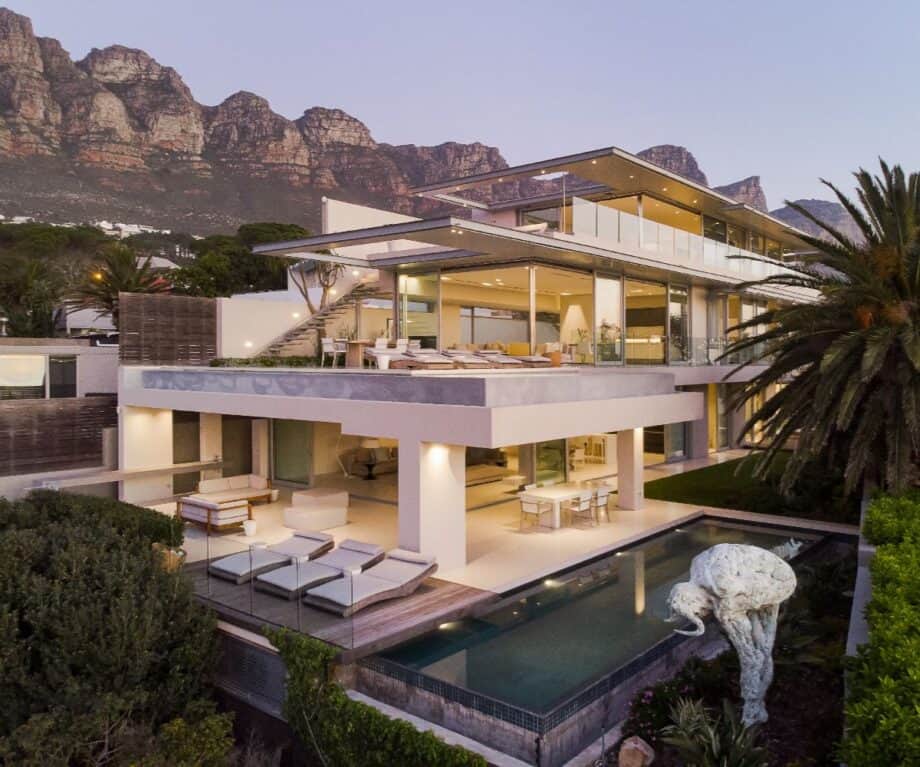
One quirk worth knowing about before you book: Cape Town’s summer comes with its own particular wind, a strong south-easterly that locals call the Cape Doctor. It can turn a still, golden afternoon breezy within the hour, often with very little warning. Clifton’s sheltered coves fare noticeably better against it than the more exposed stretch around Camps Bay – one more small but real reason the choice between the two areas matters more than it first appears.
The flight is the easy part
For a destination that delivers this much, the logistics are unusually forgiving. London to Cape Town runs around eleven to twelve hours, and there’s essentially no jet lag to speak of – the time difference is only an hour or two either way, so your body barely registers that it’s travelled at all. That alone puts Cape Town ahead of most long-haul winter escapes, where the destination is glorious but you spend the first two days recovering from getting there.
Book it properly, and book it early
If there’s one piece of advice worth repeating about a trip like this, it’s to go through someone who actually knows the properties rather than booking blind off a listings page. The gap between a “sea view” that’s genuinely uninterrupted and one that’s a sliver of ocean between two buildings isn’t something you can reliably judge from photographs – and a good specialist, the kind who’s actually stood on these terraces rather than just sold them, will steer you away from the second one before you’ve wasted an enquiry on it.

That matters most in December and January, when the best properties move quickly and a few days’ hesitation can be the difference between Clifton and “somewhere twenty minutes away that’s also nice”. Cape Town rewards a bit of forward planning. Everything else about it – the light, the wine, the mountain, the water – takes care of itself.

Jamie Marquis
Jamie Marquis is Director of The Luxury Travel Book. The Luxury Travel Book provides personally selected luxury villas and apartments in cities and towns, designed for guests who want to be at the heart of local culture, fine dining and wine experiences. If you would like to be a guest blogger on A Luxury Travel Blog in order to raise your profile, please contact us.
Did you enjoy this article?
Receive similar content direct to your inbox.