
Tourists warned after dozens of venomous jellyfish appear on Phuket beach
Moon jellyfish’s sting is likely to cause a mild reaction, but authorities warned tourists to avoid any direct contact, especially during marine activities
 Kass
Kass
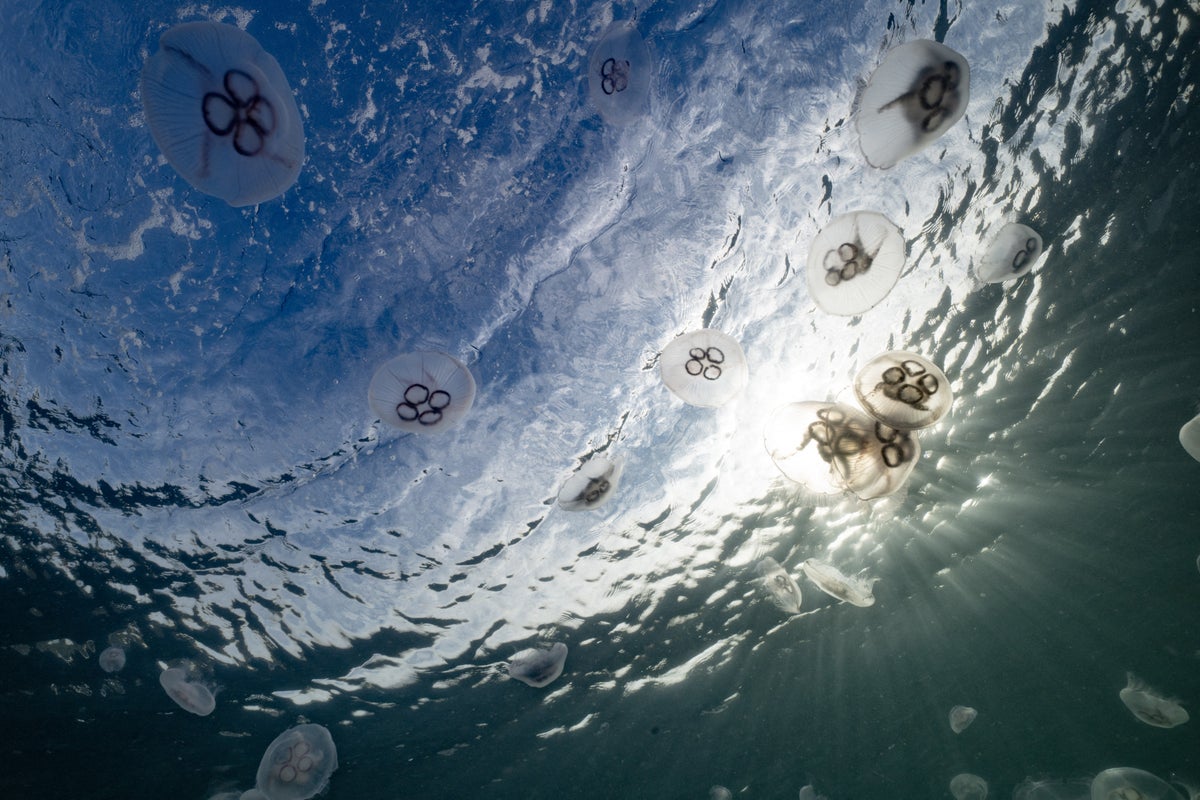
Tourists have been warned to remain vigilant after dozens of venomous jellyfish were spotted near a popular beach on Thailand’s island of Phuket.
Around 20 to 30 jellyfish were seen floating close to the surface and later washed ashore at Siam Bay in Racha Yai.
According to the Nation Thailand, the sighting was reported by officials managing the protected area, prompting an alert from marine research authorities.
The jellyfish were identified as moon jellyfish, or Aurelia sp, a species commonly found in local waters. While their venom is considered mild and not life-threatening, officials from the Department of Marine and Coastal Resources (DMCR) stressed that contact can trigger red rashes and skin irritation, particularly in people who are more sensitive to the sting.
Visitors have been urged to remain calm but avoid touching the moon jellyfish. Officials said that anyone who develops unusual symptoms after contact should seek immediate medical attention.
The warning comes during a busy travel period when thousands of tourists visit the island.
And it is just a week after Suchart Chomklin, who serves as deputy prime minister and minister of natural resources and environment, warned the public that large numbers of highly venomous fire jellyfish (Morbakka fenneri) were discovered around Koh Aeo in Phuket.
He said DMCR officials had detected fire jellyfish at a relatively high concentration of about 100 per square metre, floating near the surface at depths of around 3 to 5 metres off Koh Aeo. Tourists and locals were warned to exercise extra caution during marine activities and to avoid any direct contact with the jellyfish.
Moon jellyfish are different from many other species because they do not have long, powerful stinging tentacles. Instead, they are surrounded by hundreds of short, fine tentacles around the bell.
Phuket officials shared clear first-aid steps for anyone stung by jellyfish. People are advised to leave the water immediately in case of a severe allergic reaction. The guidelines also say that vinegar should be poured over the affected area, or seawater (not freshwater) if vinegar is not available.
The officials warned that the wound should not be rubbed or touched with bare hands, as stinging cells may remain on the skin.
Even if symptoms appear mild, individuals should be monitored for at least an hour as reactions can be delayed, authorities said.