Uncovering Our Inherent Wholeness: A Conversation with Janice Martellucci of Peace in Schools
Peace In Schools Executive Director Janice Martellucci discusses the benefits of incorporating intentional, evidence-based mindfulness training into regular school curriculum, and the far-reaching value of simply equipping kids to meet and love themselves. The post Uncovering Our Inherent Wholeness:...
 Hollif
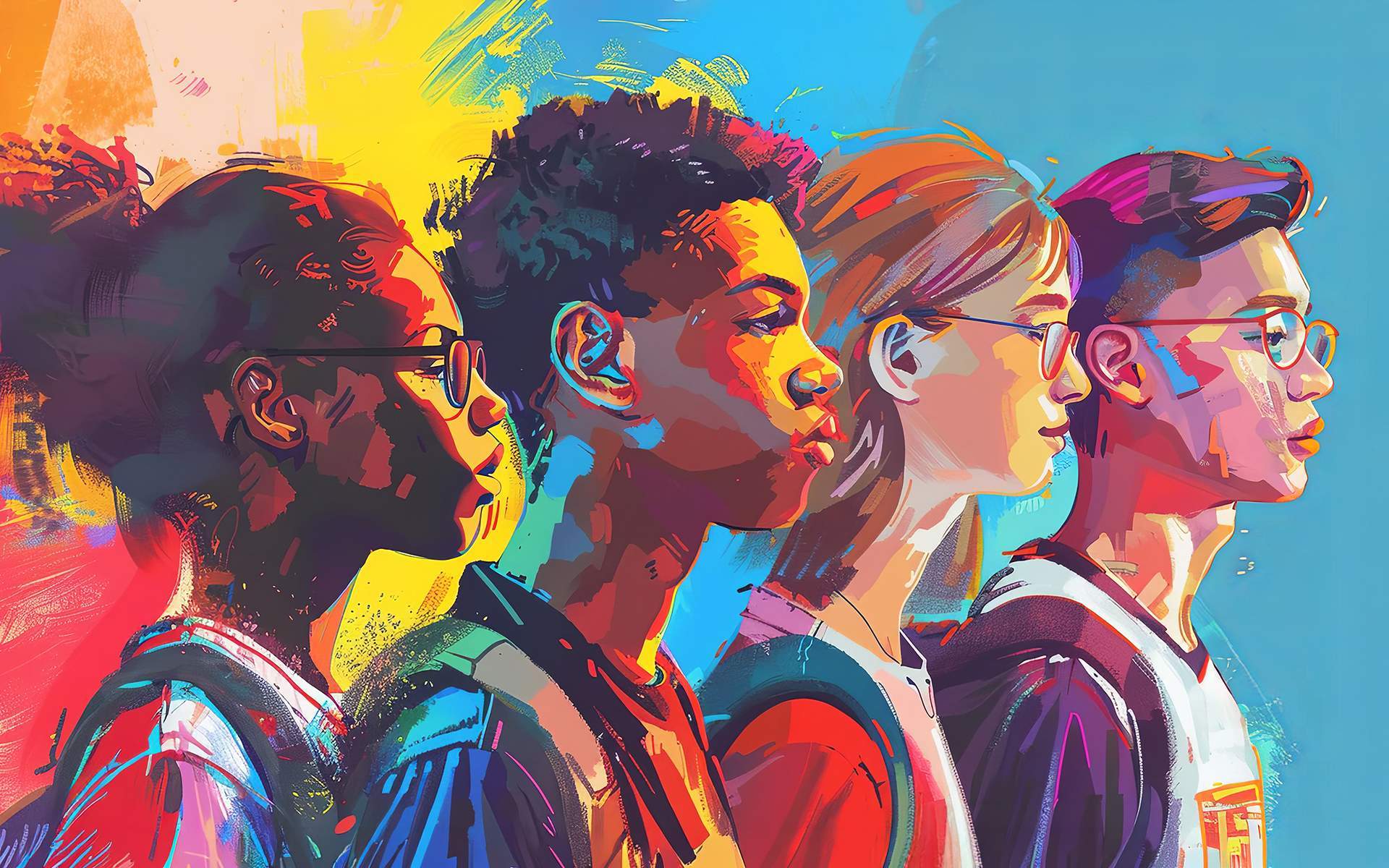
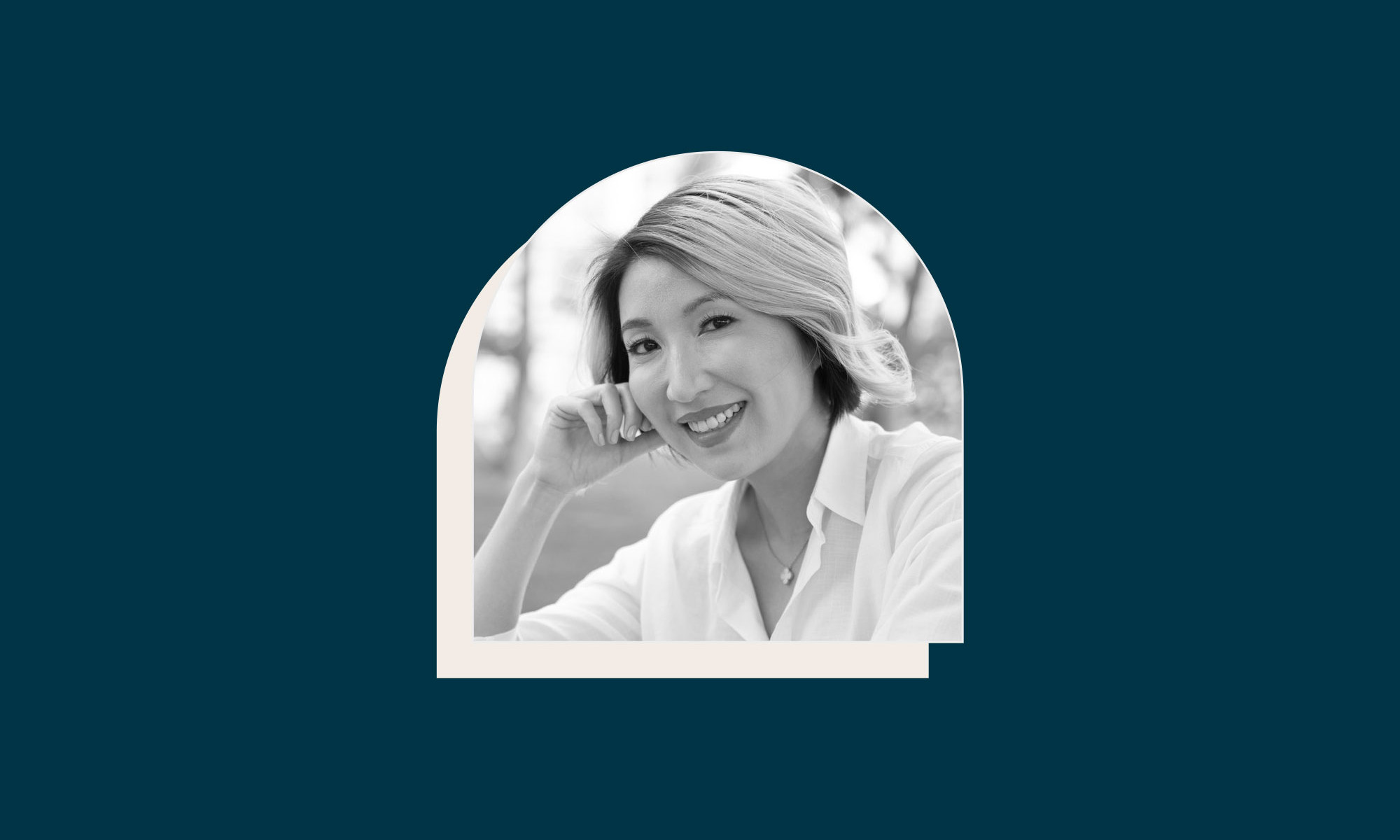
Janice Martellucci has spent more than a decade helping teenagers discover something that no algorithm can take away from them: a sense of who they really are, deep down. As Executive Director of Peace in Schools, a Portland-based nonprofit that brings mindfulness education into high schools as a for-credit class, she has watched thousands of young people find their footing in one of the most turbulent periods of human development. Mindful editor Siri Myhrom sat down with Janice to talk about how she found her way to mindfulness education, why teenagers need these skills now more than ever, and how Peace in Schools is helping to shape the next generation of thinkers, creators, and world-changers.
Siri Myhrom: Can you tell us a bit about how you found mindfulness in your personal life, and how that led you to this work?
Janice Martellucci: When I reflect back on my childhood, one thread is just a love of nature and a connection to the natural world. Both of my parents were botanists. On camping trips, they were just on their bellies, examining things. They were so present. I didn’t totally understand it as a child, but it felt very magical. There was something contemplative about it. I could tell it filled them up, grounded them, connected them.
My father was also a philosopher, and he was the one who introduced the idea of meditation to me. He waited until I was a teenager and came to him with my first heartbreak, and he brought in these teachings and practices that just opened up an alternative to how I was approaching things.
Then in my early twenties, my dad passed away. I had some health problems, just a lot of unexpected pain all at once. I was watching how I was dealing with it, and I knew it wasn’t sustainable. So I sought out meditation practice, and I pretty quickly fell in love and just dove head first. I went on as many retreats as I could. I spent a month on retreat in silence.
While I was doing that, I was also diving into education. Both my parents were educators and loved it. So today, my life is a total tapestry of those two beginnings.
SM: And how did you get interested in this specific application of mindfulness, bringing it into schools?
JM: I was working in outdoor education, taking kids into the woods to have transformative experiences. But I could just see that something was missing. I could see there was something that wasn’t getting to the root.
That’s when I got the call from Caverly Morgan, our founder, who had actually been my first meditation teacher. She really saw me through such a formative time. When she invited me to join Peace in Schools in 2015, it felt like: This is it. I want to try to do the root work.
The root word for mindfulness in the Pali language, sati, means “remembrance.”
SM: What is the “root work,” as you see it? What were you witnessing that was missing?
JM: We talk about how the root word for mindfulness in the Pali language, sati, means “remembrance.” I think about mindfulness in two ways. There’s the remembering to come back to the present moment. It’s a skill I can build, and it’s deeply empowering for young people who are struggling. But then there’s also the deeper meaning: getting in touch with and remembering who you authentically are.
It’s knowing something inside myself—and inside others—that’s inherently whole, that’s unbreakable, that can never be lost, that can see me through anything. That is the gift I want to give to every young person. That’s what I want to make sure my children are in touch with as they grow up. Especially now, because we have no idea what the world is going to be like for them. And it’s the one thing I really think is core to thriving and succeeding and being happy as a human.
“Remembering” is knowing something inside myself—and inside others—that’s inherently whole, that’s unbreakable, that can never be lost, that can see me through anything. That is the gift I want to give to every young person.
SM: Who are the students coming in? Do they have a sense of what mindfulness is, or is it brand new to them?
[33:14]
JM: There’s a whole diversity of reasons and backgrounds. Some have already experienced mindfulness in some way, which has really shifted since I started. Ten years ago, that was not true at all, but now there’s more mindfulness even in elementary schools. So there’s often some type of prior exposure, but it’s usually really light touch, more in the realm of “this is to help you stay calm and quiet.” Sometimes it’s used as a classroom management tool.
And then we always have a handful who have no idea what it is or why they signed up, and they just arrive. What’s cool is that we have over 7,000 alumni now, and no matter why or how a student joins the class, we’ve been able to see that this process leads to essentially the same benefits and outcomes.
SM: How are you tracking those outcomes?
JM: We do a formal survey at the end of every semester, and we do focus groups. We track increased resilience, compassion for self and others, the ability to respond rather than react. We also track belonging: Are your relationships feeling better? And we have our Johns Hopkins study to stand on as well, which basically confirms our own data collection. But what’s really meaningful about that study is it also showed that the class is particularly beneficial for marginalized students, LGBTQ+ students, and students who’ve experienced trauma.
So if you are struggling anyway, it’s extremely beneficial. But even if you aren’t, I think of it almost as a rite of passage. It’s beneficial for every young person because of the stage of development they’re in.
SM: Why are the teenage years such a critical window for this work?
JM: The neuroplasticity of a teenager is the highest it’s ever going to be. What we learn—and what we don’t learn—can really set us up for life.
Through this work, we arrive at inherent wholeness, but it’s not a destination. It’s more like an uncovering. And the teacher of the class is really reflecting their wholeness to them the entire time.
In the course of our class, we have a flow. First, we build community. The students learn how to direct their attention, like mindfulness skills 101. We get to go deeper into the conditioned mind, asking, What am I being taught to believe about who I am, and who you are? There’s a lot of self-compassion work.
So, we arrive at inherent wholeness, but it’s not a destination. It’s more like an uncovering. And the teacher of the class is really reflecting their wholeness to them the entire time.
I was talking to some of our alumni at a recent gathering, and they said there’s some seed that was planted in the class that has stayed with them. It’s been an anchor for them. They can see the differences in how their peers are navigating challenges—making it through the pandemic, dealing with life, just all these things.
SM: Speaking of challenges—you’ve talked about how hard it is to be a teenager right now. What are you seeing?
JM: It’s not even a slight uphill—it’s like a mountain peak. Facebook and Instagram were just found liable for producing products that are bad for young people’s mental health. And part of why they’re bad is the algorithm. Young minds are really sensitive to changes in norms.
You and I might have seen a thin white woman in a magazine a couple of different times at the doctor’s office. These young people are seeing thousands of images a day, curated specifically to make them feel other-than. There are more traps for our young people to lose their way than ever before. And there’s nothing fundamentally different developmentally about teenagers today. It’s all the layers on top of it. It’s never been harder to be a teen.
The trust I’m holding is that we’re not fixing kids. We just need to stop getting in their way.
SM: What gives you hope in all this?
JM: There’s a rebound happening, a kickback. I love that. I think the trust I’m holding is that we’re not fixing kids. We just need to stop getting in their way. We need to stop setting them up for failure and trust them to find their way with just a little bit of cleared road. It’s actually not rocket science. It’s just letting them thrive. They want to.
And what I’m seeing is that young people are starting to connect the dots. When I spend a lot of time on social media, I feel worse. And when they can see that—when they have a place to come back to—they can make different choices. We stray, we come back, we stray, we come back. That’s the practice.
SM: How does your program approach trauma? So many students are carrying things that go far beyond typical teen stress.
JM: Our work is deeply trauma-informed. Our director of training is a licensed social worker, and she’s really taken the lead on that. We work closely with school counselors. I was teaching during the MeToo movement, and there was a lot of that in my classroom. We’ve held space during active shooters on lockdowns.
We had a teacher come to one of our training retreats right out of a devastating community crisis in Minneapolis. She looked hollowed out. At the end of the retreat she said, “I came here broken and I’m leaving whole.” Now she’s part of a community she can always come back to and rest in. We need to rest in that in order to survive.
It’s not clinical work, so there’s an important distinction there. But there is a work of just being with what is, and that’s constantly happening in our classrooms. And then there’s the work we do with educators themselves. We had a teacher come to one of our training retreats right out of a devastating community crisis in Minneapolis. She looked hollowed out. She came to one of our instructors at the end of the retreat and said, “I came here broken and I’m leaving whole.”
That’s the whole reason I do this work. And now she’s part of a community she can always come back to and rest in. We need to rest in that in order to survive.
SM: Can you tell us about how the program actually gets into schools? What does that partnership look like?
JM: For the first decade of our work, we sent our own teachers in to teach the class. That model was great. We were able to create the class, refine it, prove it. But we want to reach more teens, so we evolved to an in-depth train-the-trainer model.
We partner with a high school, and we look for a supportive administrator, a passionate teacher, and a district that will approve the curriculum. Then we select a teacher or two to train, and we put them through our 150-hour Mindful Studies Teacher Certification.
This is not just a quick course; it requires a lot. The whole first part of the training is embodiment. We don’t even talk about how to do this with teens until they’ve already gone on a retreat and had the experience themselves. Every teacher also has a Peace in Schools mentor. You really learn how to teach Mindful Studies by teaching it.
And what’s remarkable is that when we got the first data set back from these trained teachers—we didn’t know if the outcomes would hold—their student outcomes were the same as what our own staff were doing. Actually a little bit better.
SM: What are the biggest barriers to growing the work of Peace in Schools?
[51:27]
JM: Scarcity of time, space, and money are the big ones.
We also sit right between behavioural mental health and traditional education, which makes funding tricky. We’re not clinical or therapeutic, and we’re an elective—so not mandatory for graduation—so we miss out on both those funding streams. We offer programming at low to no fee to remove financial barriers for schools, so we depend on philanthropic support.
There’s a dissonance between the increased awareness around mental health and the structural and financial changes that need to follow.
In a high school setting, it really takes administrators who prioritize the mental health and wellbeing of their students. High school has way less room for social-emotional learning than the younger grades, and there’s a real dissonance between the increased awareness around mental health and the structural and financial changes that need to follow. We’ve been able to overcome some of these funding barriers through an absolutely incredible community of supporters.
SM: What does the growth plan look like from here?
JM: We’re currently in 10 high schools in Oregon and California, serving about 500 teens this school year. Our goal is to add five schools each year, so that by 2030, we’ll be in 30 schools and serving more than 1,200 youth annually.
We also launched our Training Institute, which offers two additional certification pathways beyond our core high school program. One is called The Power of You, for youth-serving or mental health professionals working with youth 15-to-24-years-olds, and one is called the Embodied Educator, which any educator can weave into whatever they’re doing with young people in any setting. We launched that last year with 15 educators from across the country. We didn’t even realize how national it would be, and it was a huge success.
Physical Education classes didn’t exist until they did. Now PE is in every school. I feel like well-being could be treated the same way. We could be giving this to our children as a standard part of their education.
Our four-year plan is to reach 3,000 educators, 9,000 youth, and 23,000 total community members by 2030. We are setting another ambitious $4 million dollar goal to drive this work forward, and I’m so happy to report that we already have a million dollar match to kick us off.
SM: What’s the big vision? Where do you see Peace in Schools in five, 10 years?
JM: Physical Education classes didn’t exist until they did. Now PE is in every school. I feel like well-being could be treated the same way. We could be giving this to our children as a standard part of their education. That’s the vision, that it’s like any other class on their schedule: you’re going to math, you’re going to biology, you’re going to Mindful Studies. That’s why it’s so powerful. They just have access to it, during the school day, for credit.
And every young person, regardless of why or how they come to it, deserves access to the knowing of something inside themselves that is whole, that is unbreakable, that is always there.
We stray. We come back. That’s the whole thing, really. And if we can plant that seed while they’re young—that’s the strategy. That alone can change everything.
To learn more about Peace in Schools and its programs, or to sign up for their newsletter, visit peaceinschools.org.
Educators interested in the Mindful Studies Partnerships program or Training Institute: Certification Pathways can find more information and apply on the website.
Janice also hosts a weekly online meditation that’s open to all.
Explore a guided meditation on transitions that Janice led for our 12 Minute Meditation podcast.
About The Author

Siri Myhrom
Siri Liv Myhrom is a writer, editor, and certified spiritual director from Minneapolis, MN, where she has lived with her husband and two young daughters for 20 years. Her meditation practices include cycling, cold dipping in the nearby lake, and playing the ukulele (low skill but lots of gusto). She is the Editor at Mindful.