What does Wizz Air offer that we can’t get from easyJet and Ryanair?
Plane Talk: Europe’s third-largest budget airline offers essential extra choice for British travellers
 BigThink
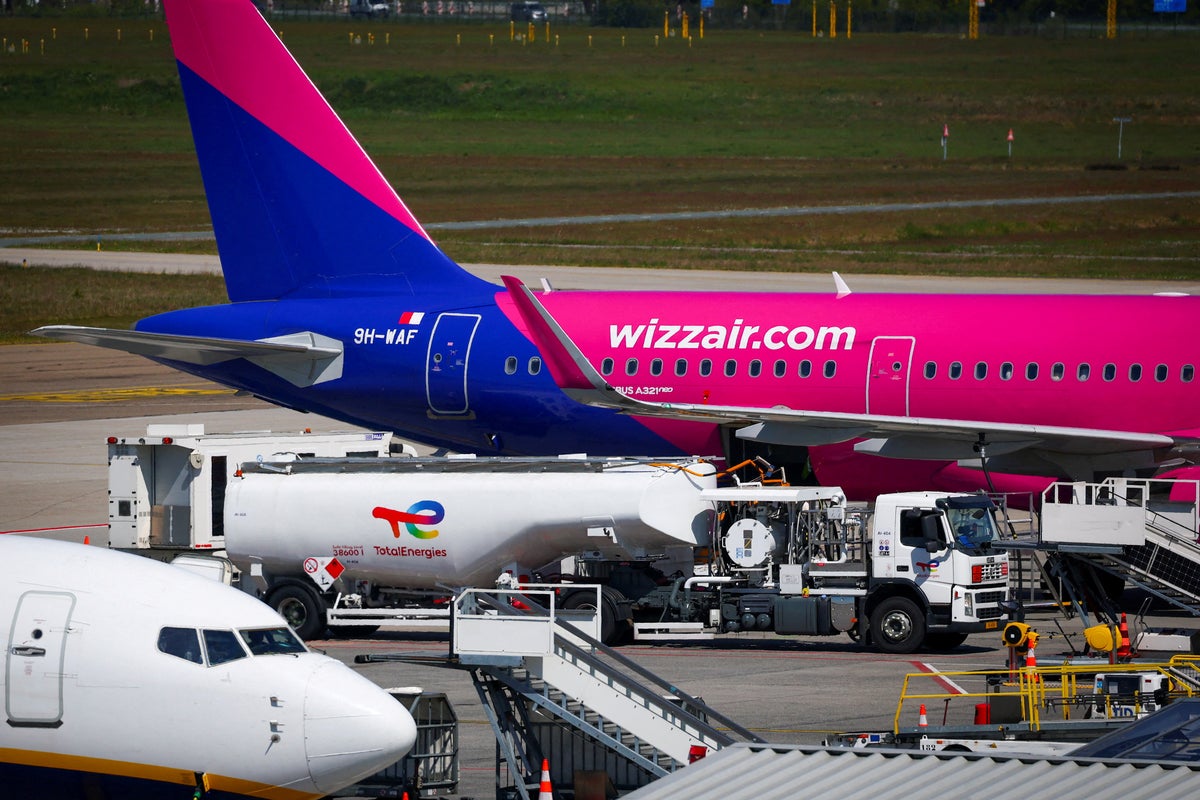
One airline has made it easy and affordable to travel to three cities in the Caucasus: Baku, Kutaisi and Yerevan. Wizz Air has previously taken me from Budapest to the Azeri capital and from Luton to the main city in central Georgia. Next month I shall fly on the carrier from Milan to the Armenian capital. Wait until June and Wizz Air will fly you to Yerevan nonstop from Luton.
The Bedfordshire airport was the destination for the very first Wizz Air flight in 2004, from Katowice in southern Poland. Luton quickly became Wizz territory. While the airport is the location of easyJet’s HQ, by then Gatwick had supplanted Luton as its biggest base. Ryanair were always around, but with a far smaller operation than from Stansted airport. So Luton made sense for a home in London, the biggest aviation market in Europe.
Other airports have proved less successful. Cardiff, Doncaster and the Maldives are not locations that often feature in the same sentence. But they are among the many destinations that have fallen off the Wizz Air route map. The Hungarian carrier has taken plenty of throws of the network dice, and by no means all of the configurations have worked.
I wish I had taken the flight from Abu Dhabi to Male in the Maldives before the experiment was abandoned. Mid-haul routes of around five or six hours are, in my experience, perfectly tolerable on budget airlines – especially on Wizz Air’s fresh new Airbus A321neo aircraft. These are kitted out with 239 seats: significantly more than on some of British Airways’ wide-bodies. Flying from Gatwick to Jeddah – a journey of almost 3,000 miles, further than from London to Halifax in Canada – was a comfortable and calm experience, with friendly and professional cabin crew. The plane has the lowest emissions and, these difficult days, fuel burn per passenger. The long legs set Wizz Air apart from easyJet and Ryanair – as does the ever-changing but always interesting route network.
Before many parts of the Middle East became a battleground, Wizz Air flew me from Warsaw to Eilat in southern Israel. More recently I have also enjoyed flights from Larnaca to Bucharest and Tirana to Beauvais in northern France. Right now you could book on perhaps the most niche flight of all, from Maastricht in the southeast Netherlands to Tuzla in northeast Bosnia. On May Day, the fare is a mere €25 (£22). Terrific for travellers, less so for airline bean-counters.
“I’ve had a lot of luck,” a retiring travel CEO once told me. “All of it bad.” Wizz Air may feel a similar lament. Brexit hit particularly hard: not just adding cost and complexity (such as the need for a standalone airline, Wizz Air UK) but also reducing demand on one the bread-and-butter flows between the UK and eastern Europe as work and family trips dwindled.
The carrier had an enthusiastic post-Covid expansion into Ukraine planned for March 2022; in February, Russia invaded and closed the skies. A year later, the carrier committed strongly to Israel and Jordan. Then on 7 October 2023, Hamas attacked Israel. The Middle East erupted.
Some damage has been self-inflicted, such as the Norwegian domestic network that came and went in less than a year; passengers could fly the length of the nation for less that the price of a pint (in bars in Oslo, at least). Not everything Wizz touches turns to gold.
Wizz Air is an excellent airline, but so too are the rivals it is stuck with. In terms of millions of passengers flown in 2025, this is how they stack up (in round numbers):
(A comforting average of one million passengers per day, flown safely by these three airlines alone – they each have a flawless safety record.)
One reason Wizz Air remains well behind is that part of its fleet of Airbus A320 aircraft is grounded due to a problem with the Pratt & Whitney engines that is taking forever to fix. But the summer that may turn out to be a blessing in disguise.
Demand is not what it should be: on the new link from Luton to Mykonos, the one-way fare on most dates in July and August is just £55. Normally the fare during the summer peak should be about three times as much. I have duly bought a July trip to the Greek island. On the walk through Luton airport, I will savour the benefits that Wizz Air brings as an eager competitor. Travellers should be grateful for those pink planes.
Read more: Wizz Air boss says jet fuel shortages are unlikely despite EU warning