What It Means to Hold a Dying Parent
Through illness, fear, and spiritual uncertainty, Chokey Tsering finds a new understanding of presence and compassion. The post What It Means to Hold a Dying Parent appeared first on Lion’s Roar.
 AbJimroe
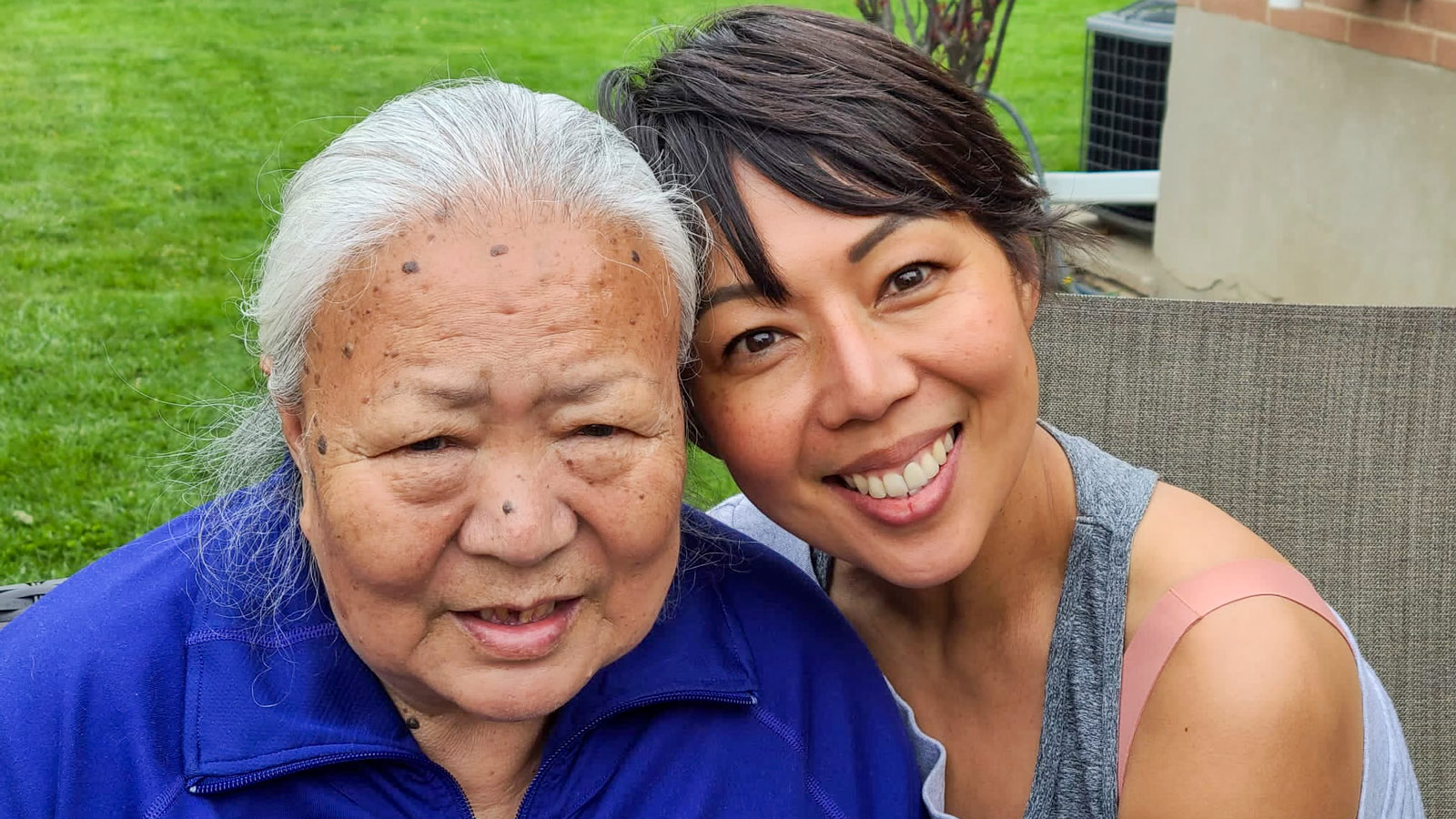
My eighty-year-old mother has lung cancer and congestive heart failure. After the cancer diagnosis, there followed numerous visits to the hospital. She cried each time, imploring me to let her stay home. I didn’t listen. Determined to fix her, we pushed through what felt like endless scans, biopsies, and needles. But, as her protests grew and she became frailer, I eventually relented and the tests abruptly ended. I knew it was the right thing to do when I saw her crumpled face relax. I sobbed for days afterward, feeling like I’d given up on my mom. I didn’t know then that the real work of helping her had only just begun.
Once the Do Not Resuscitate form was signed, a palliative care team materialized. A care coordinator, a doctor, a nurse, a personal support worker, and an occupational therapist slipped into our lives, like a blended family. They formed a web that absorbed the heaviness that had been slowly pressing down on me. As a single mother and a Tibetan, the role of caregiver and filial duty were second nature to me, a biological and cultural imperative. But looking after a sick and dying parent demanded far more rigorous physical care than I was accustomed to.
While her body shrank, so did my mom’s inner world. I watched her sink into fear and negativity. Old wounds and slights seemed to loop through her mind on replay. Bitterness seeped into her, threatening to drown her, like the rising fluid in her lungs. How could she not turn to the dharma at such a critical time? How could she so readily succumb to nonvirtuous ways?
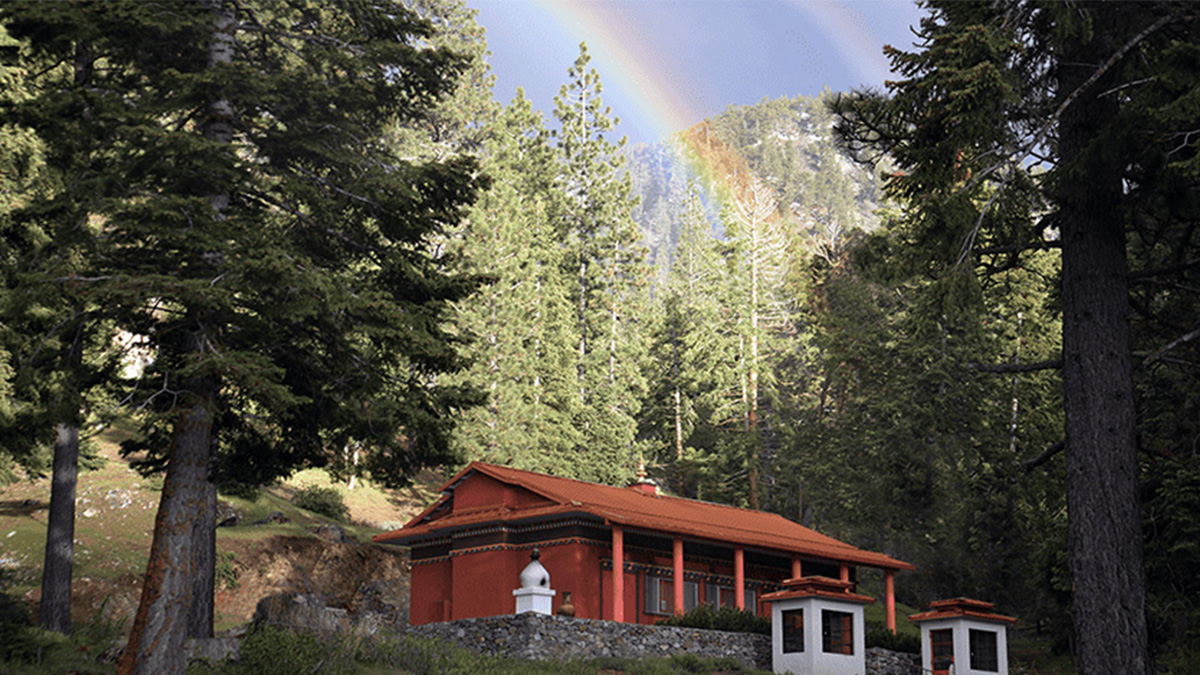
I had the abbot from my mom’s local Buddhist temple visit us. We discussed death and the dying process. I glanced at her surreptitiously as he talked about powa, a Tibetan Buddhist tradition to help the dying make the transition with ease and confidence. While his visit served the practical purpose of getting ready for what was to come, I was also hoping that it would be the start of a spiritual preparation for her. After the visit, I broached the topic of meditation and impermanence a few times, and I encouraged reflection and gratitude. I wanted her to feel how fortunate she was to be in her home, to have loved ones caring for her, and to have free healthcare. But none of it seemed to fully land. She only nodded absently, retreating further into the dark folds of her suffering.
Agony became her reality. It made her shut down from her body and prevented her from opening to what was present. But the pain was not the only reason for this. It was also the nature of her relationship with the dharma. I began to understand that my mom was turning to her familiar mind-states. She’s always been an anxious woman and prone to depression. But she was a good Buddhist. She prayed regularly in our shrine and was always kind to people. Sitting meditation, however, was an elusive part of her devotional practice.
The violent invasion of Tibet in 1950 and the ensuing upheaval had reverberated throughout my mom’s life, and she lived her years in the shadow of unprocessed grief and loss. Buddhism connected her to fragments of an identity that was taken from her. Her faith was strong, but her wisdom-flame was weak.
Since she could not create the necessary shift in her thinking, I was determined to do what I could to help her. I engaged in tonglen meditation, “sending and taking.” I visualized sending her love and equanimity and taking in her mental and physical suffering. I dedicated my daily purification practice to my mom, reciting the Vajrasattva mantra on her behalf. Buddhism teaches us that we alone are ultimately responsible for our liberation. There is no savior. This notion of human agency appealed to me in my twenties, a time when my faith really took root and Buddhism became more than cultural inheritance. It is ironic that what pulled me toward the dharma is the very thing that I struggle with today.
As the cancer metastasizes, my mom’s face is forever contorted. Her body visibly contracts with each angry wave of breakthrough pain. In these moments, I hold her hand, kiss her, and whisper in her ear. I want to anchor her and soften her resistance to what is there in the moment. One night, I rubbed her feet and legs. As a child, I used to admire the milky complexion and sinewy build of her legs that peeked out from under her flowy skirt. It was hard to connect that feminine silhouette to the flaccid figure before me. As my hands glided over the bumpy, mottled skin, mild revulsion floated up. I recognized this for what it was—an attachment to ideal states.
Even when it is beautiful, our bodies are rotting. This can teach us the profound truth of nonself and impermanence. But my mom will soon be leaving her vessel, with its ineffable wisdom untapped. I suddenly experienced the visceral ache she must feel in leaving behind her children and loved ones. Letting the cruel weight of this understanding sink into me, I pressed my hands more firmly onto her. Can the touch of my skin on hers help her inhabit her body more fully? Can it help her move toward acceptance?
Like the cancer inside her, I cannot uproot my mom’s karmic imprints—the ones that stretch from eons before and those she brings onto herself today in her state of confusion and pain. But I remain unflinchingly present for her and witness and hold her suffering, fervently willing the old karma to finally ripen. In this way, I show up for her where she cannot. And I am grateful for the grace of each new day.

Chokey Tsering was born in Montreal, Quebec, where she completed a master’s degree in sociology and a bachelor’s in journalism. For many years, she was an active member of the Canada Tibet Committee in Montreal, and today she volunteers at Machik Canada, a nonprofit organization dedicated to supporting Tibetan communities and the future of Tibet. Chokey Tsering currently lives in Toronto, Ontario, with her teenage daughter.