A Closer Look at Dove Marketing Strategy & Campaigns (Focusing on Digital Channels)
In a fast-paced digital marketing landscape, how can marketing specialists find a way to influence purchasing decisions? Dove’s digital marketing strategies demonstrate how you can do it. With the efforts of major corporations such as Dove, they are using...
 Troov
Troov

In a fast-paced digital marketing landscape, how can marketing specialists find a way to influence purchasing decisions? Dove’s digital marketing strategies demonstrate how you can do it.
With the efforts of major corporations such as Dove, they are using integrated marketing communication to contribute versatile marketing campaigns. Dove has built up an ultimate integrated marketing campaign model that includes multiple elements of advertising, such as print, TVC, social media, and so on. Through this communication, Dove can create a consistent and strong brand message that spreads awareness of its brand while expanding its consumer base and target audience.
Inside Dove Marketing Campaigns
Dove Marketing Mix Dove SWOT Analysis Dove Marketing Strategy: Traditional to Digital Marketing Dove Brand Marketing Strategy Dove Advertising Strategy Dove Social Media Marketing Strategy Dove Marketing Campaigns: Iconic to Latest Beauty on Your Own Terms #MyBeautyMySay (2017) Social Media’s Impact on Kids’ Mental Health: A Dove Film (2023) Dove vs. AI Beauty Standards: Keeping It Real With The Code (2024) Dove Toxic Influence: Mothers & Daughters Confront Toxic Social Media (2022) Under Pressure? Find Postpartum Support with Baby Dove (2022) The Game is Ours (2026)Dove Marketing Mix
How has Dove managed to stay close to people in a beauty market that changes almost every week?
For brands, marketers, and agencies, Dove is a strong example of emotional positioning done with care. The brand sells confidence, self-acceptance, and a more human view of beauty.
Dove’s long-running focus on “real beauty” gives the brand a clear emotional space in the market and determines what its marketing mix will be like. While many beauty brands lean into perfection, aspiration, and polished imagery, Dove speaks to everyday people. It also gives Dove a strong advantage: customers do not only recognize the product; they recognize the belief behind it.
So, here are the 4Ps of Dove:
👉🏻Dove’s product strategy is built around accessible self-care. Its portfolio includes beauty bars, body washes, lotions, deodorants, hair care, men’s care, and baby care products. The key here is that Dove keeps its core promise visible across categories: gentle care, moisturization, and skin-friendly formulas. This gives the brand room to expand without losing its identity. And that is similar to NIVEA marketing strategy.
👉🏻Its price strategy sits in the affordable-premium space. Dove is not usually positioned as the cheapest option, but it is still accessible for mass-market shoppers. That balance works well because customers see Dove as a brand with added emotional and functional value. People feel they are paying for quality, care, and a brand they can trust.
👉🏻Its place strategy is broad and practical. Dove is available in supermarkets, pharmacies, beauty retailers, convenience stores, and major e-commerce platforms. This wide distribution supports everyday visibility. For marketers, this matters because Dove’s brand message is not limited to campaigns; it is reinforced every time the customer sees the product in familiar shopping environments.
👉🏻Its promotion strategy is where Dove truly leads. The brand uses purpose-led campaigns, social media storytelling, influencer partnerships, educational content, and emotional advertising to keep its message alive. Campaigns like “Real Beauty” (and others we’ll be mentioning below) helped Dove move from product advertising into cultural conversation. As we stated above, the product matters, but the message gives the brand its deeper strength.
Dove SWOT Analysis
| Strengths Dove owns a clear space in the beauty and personal care market through its message of real beauty, confidence, and self-acceptance. The brand feels familiar, accessible, and reliable across different product categories, from beauty bars to body wash, deodorants, hair care, and baby care. Dove’s inclusive beauty message helps it stand apart from brands that still rely heavily on idealized beauty standards. Dove can reach different customer needs while keeping one central promise: gentle, caring, skin-focused personal care. | Opportunities Dove can grow by offering more tailored solutions for different skin types, hair textures, body needs, and life stages. Stronger moves in packaging, refill systems, and responsible sourcing can deepen trust with value-driven customers. Dove can use social platforms, creator partnerships, and educational content to build deeper conversations around confidence, body image, and self-care. There is room for Dove to strengthen its presence in men’s care, baby care, sensitive skin, and culturally specific beauty needs. |
| Weaknesses Because Dove is built around purpose, customers expect the brand to act with care across campaigns, product choices, packaging, and parent-company behavior. The “real beauty” platform is powerful, but Dove needs to keep refreshing it so the message does not feel predictable. Dove’s wide availability is a strength, but it can also make the brand feel less specialized compared with niche or premium beauty brands. | Threats Dove faces pressure from legacy personal care brands, indie beauty labels, natural beauty challengers, and social-first brands. Many beauty brands now use inclusivity and self-care themes, making it harder for Dove to stand out on message alone. Audiences are more alert to purpose-driven marketing that feels performative, so Dove must prove its values through action. Social media can shift customer expectations quickly, especially around ingredients, sustainability, representation, and brand transparency. |
Dove Marketing Strategy: Traditional to Digital Marketing
Dove’s digital marketing strategy is built on the notion of being inclusive and promoting body positivity. The brand aims to understand and declare that beauty comes in all shapes, sizes, and colors, and its focus is to celebrate the diversity of real people and real beauty.
We’ll analyze Dove’s digital marketing strategy in three parts, brand marketing, social media marketing, and advertising, which all circle around the main focus of the brand: promoting real beauty.
Let’s explore together and see how Dove’s digital marketing strategy is developed and what the appreciated and criticized parts of it are.
Dove Brand Marketing Strategy
Dove’s brand marketing strategy revolves around the concept of body positivity and celebrating the beauty of all individuals. It promotes the idea that beauty should not be limited to a specific standard but should encompass the uniqueness of each person.
One of the most remarkable examples of this body positivity strategy is Dove’s Real Beauty Sketches campaign, which connected and well-resonated with millions of viewers.
In this campaign, we see an FBI-trained forensic artist who sketches women, based on their descriptions of themselves. Then these sketches are compared to ones made by strangers who have seen the women for a short time. The emotional revelation is that the strangers’ perception of the women is more beautiful than their self-perception.
In short, Dove aims to boost women’s self-esteem and challenge the unrealistic beauty standards imposed by society with this campaign, which basically summarizes and demonstrates the main aspects of Dove’s branding strategy. And this branding strategy is actually what we can call Dove’s content strategy, as all the content Dove produces focuses on the same point.
Dove Advertising Strategy
Dove’s advertising strategy is directly related to its brand marketing strategy, which is all about promoting body positivity, as any other marketing endeavor of the brand does.
Dove focuses on evoking emotions and challenging societal beauty norms. The brand’s thought-provoking advertisements spark conversations and encourage viewers to question their perception of beauty. However, it is crucial to acknowledge that despite the positive responses and increased awareness, some controversies have surrounded Dove’s campaign for finding and highlighting real beauty. The public has accused the Real Beauty campaigns of being hypocritical and sneaky, claiming that they are merely a marketing ploy to boost sales.
There are also more serious negative responses to certain Dove advertisements, especially those insensitive to races. They have damaged Dove’s reputation and raised doubts about the brand’s authenticity and trustworthiness.
While controversies can be detrimental, it is essential to address them openly, learn from mistakes, and ensure that future campaigns align with Dove’s core values of inclusivity and empowerment.
And for now, it does not seem like Dove has learned from its mistakes.
In 2011, the company released an advertisement that sparked criticism since it featured three women with different skin tones. The black woman represented the “before” image, while the white woman represented the “after” image in this ad.
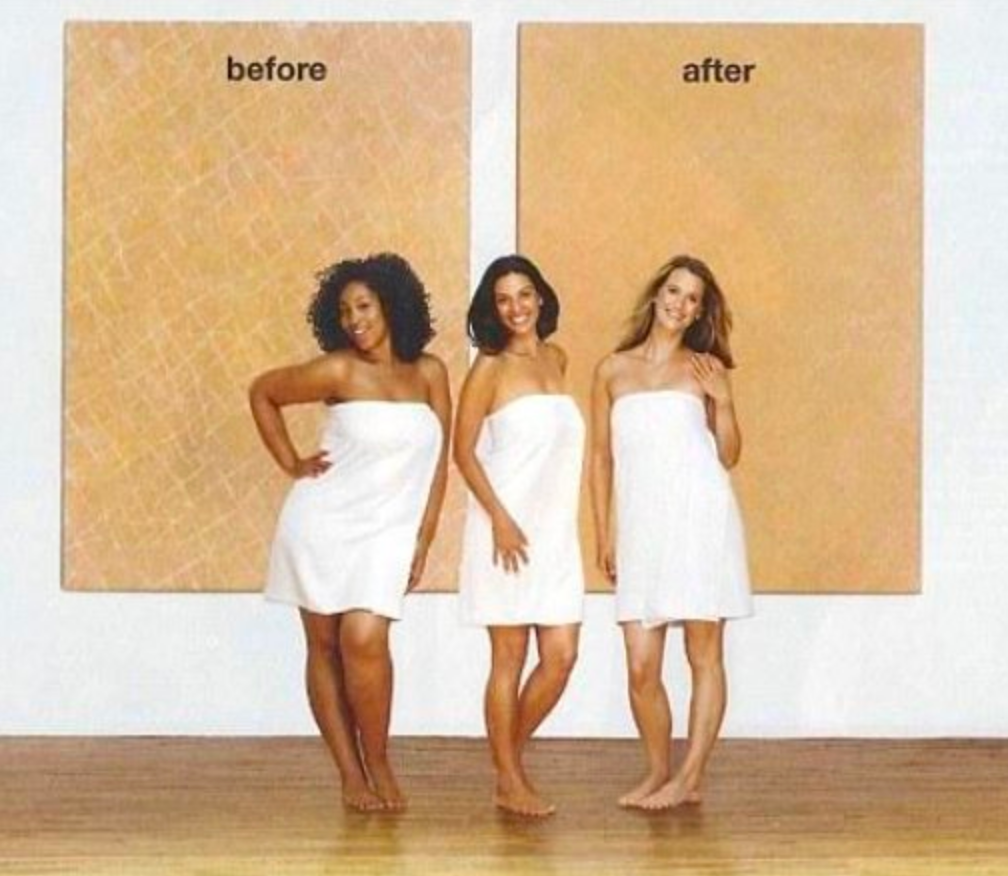
Of course, this portrayal was heavily criticized for perpetuating racial stereotypes and insinuating that lighter skin is more desirable.
A few years later, in 2017, Dove was once again embroiled in a racially insensitive campaign. The racist connotations of the three-second body wash commercial aroused anger.
The commercial featured multiple black women removing their tops to reveal a white woman below.
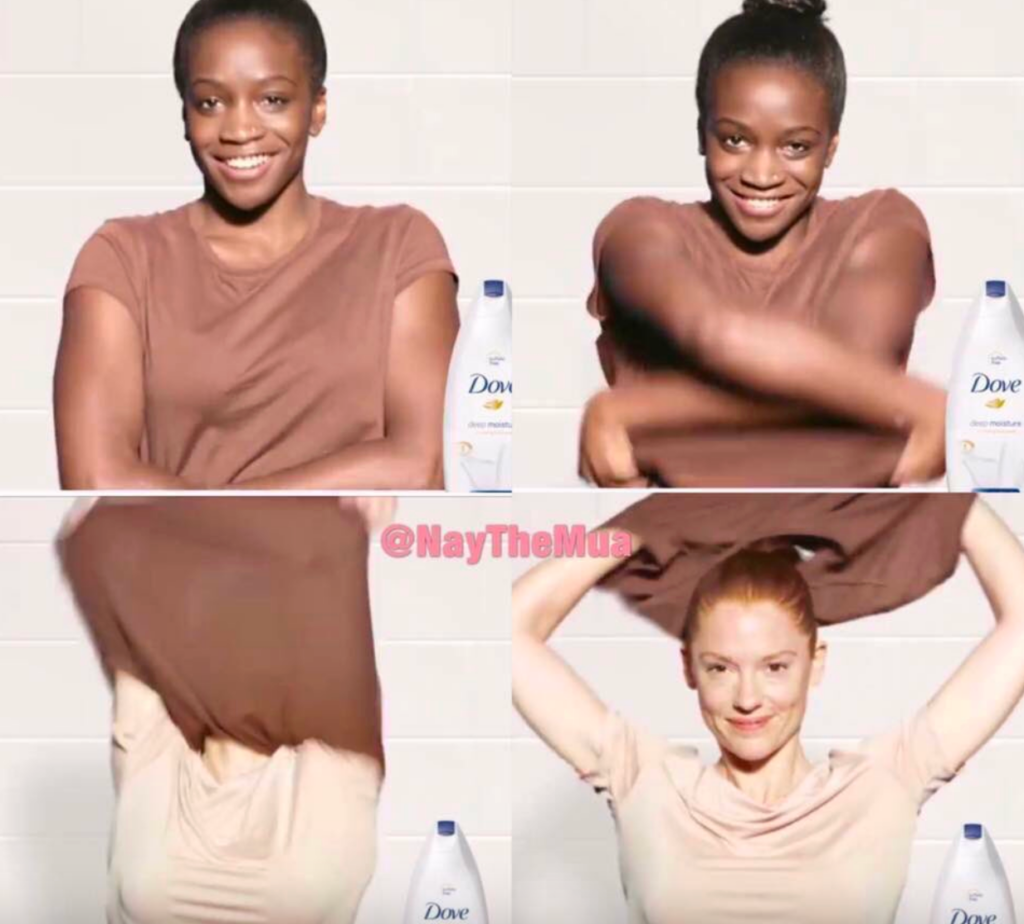
This sequence made the exceedingly offensive and racially charged claim that using Dove’s body wash might turn black skin white. The advertising sparked international outrage, with some accusing Dove of supporting racial ideology and upholding unflattering aesthetic standards.
Some people are asking what's wrong with @Dove new campaign. pic.twitter.com/JHOzwXwjgT
— Alma Har'el🌪 עלמה (@Almaharel) October 8, 2017What is especially disappointing is that Dove appears to have made the same mistake by introducing racially insensitive advertising despite public criticism and the opportunity to learn from their previous missteps. These incidents throw doubt on the company’s commitment to true diversity and cultural sensitivity. The public believes that Dove’s repeated gaffes indicate a lack of knowledge and empathy for the experiences and concerns of underrepresented people.
It is vital to understand that organizations have a responsibility to support diversity, combat harmful beauty standards, and avoid propagating stereotypes. To foster an inclusive culture, brands should listen to customer feedback and learn from past mistakes.
Dove’s social media marketing strategy plays a critical role in amplifying the messages they aim to spread: self-acceptance and body-positivity, and it has successfully connected with its target audience and created a community of individuals who share their values.
For example, Dove has been working to boost self-esteem and body confidence in people through their #DoveSelfEsteemProject, encouraging them to appreciate their natural beauty and offer assistance in overcoming cultural pressures. And the social media campaign below sheds awareness on the concerning number of adolescent girls from Canada who use cosmetic injections, underscoring the detrimental influence of toxic beauty trends on their self-esteem.
Let’s see another social media campaign from Dove:
Dove Marketing Campaigns: Iconic to Latest
Most personal care brands sell a “toxic premise:” “You are imperfect, but our product can fix you.” Dove inverted this industry norm. We selected these particular campaigns because each one represents a definitive moment where the brand stopped acting like a product salesman and started acting like a fierce cultural advocate.
When we sat down to figure out which Dove marketing campaigns to analyze, we didn’t just look for the flashiest videos or the ones that got the most views. We wanted to look past the surface level. We skipped the standard product commercials, the routine coupon rollouts, and the basic seasonal promotions that every drugstore brand does. Instead, we hunted for the specific instances:
First, we chose moments where the brand was brave enough to talk openly about painful, messy realities that most corporate legal teams would deem “too risky” to mention. We wanted to see them tackle the exact things people are actually whispering about or crying over behind closed doors.
Second, we looked for genuine backup & specifically selected initiatives where the company put its money and its power where its mouth was. If they were going to speak up about an issue, they had to be actively funding solutions, releasing open-source tools to fix it, or driving real-world petitions to change actual laws.
Finally, we looked for cultural foresight. The modern world moves fast, and we wanted to highlight instances where the brand anticipated a major societal threat before everyone else was even talking about it.
Ultimately, we chose these examples:
Beauty on Your Own Terms #MyBeautyMySay (2017)
This groundbreaking Dove campaign functioned as a direct pushback against the systemic pigeonholing of women based purely on their physical appearance.
The campaign, actually, highlighted the real-life stories of diverse, remarkable women who had faced intense scrutiny or career barriers because they didn’t fit a standard mold. The profiles included a female boxer told she was “too pretty to fight,” an unconventional plus-size fashion blogger, and a corporate executive with visible tattoos and a shaved head, all standing firmly in their identity.
So, for that campaign, the brand did not soften the women’s stories to fit a traditional corporate narrative; but, challenged the media, employers, and society at large for trying to reduce a woman’s worth to her external styling. It gave women a literal microphone to state that their appearance belonged entirely to them.
Why It Worked
By the late 2010s, women were experiencing collective burnout over the constant, contradictory beauty standards enforced by corporate environments and traditional media outlets. By focusing on real women who actively defied these rules to achieve elite success in their respective fields, Dove moved past the role of a passive brand.
Also, it moved away from standard “feel good” body positivity and shifted toward a message of radical autonomy. The best part, consumers actively used the #MyBeautyMySay hashtag to share their own experiences of professional and societal defiance, turning a commercial campaign into a sprawling, user-generated manifesto.
Social Media’s Impact on Kids’ Mental Health: A Dove Film (2023)
Here is a campaign featuring an emotional short film titled Mary’s Journey, tracking a young girl’s descent into severe mental health struggles driven by toxic online content.
The piece begins with real home videos of a joyful, healthy childhood, but pivots drastically as Mary receives her first smartphone. As the timeline progresses, the imagery turns increasingly dark, showing her isolated in her bedroom, scrolling through feeds, and eventually ending up in a treatment facility for an eating disorder.
The creative execution was deliberately designed to feel like a devastating documentary, not a traditional commercial. In other words, the film didn’t shy away from the horrific realities of self-harm and clinical depression.
Why It Worked
It avoided corporate fluff and bravely addressed a terrifying reality that millions of parents were privately dealing with. By moving the spotlight entirely off of product sales and focusing squarely on a major societal emergency, Dove established ethical authority. It was a public safety announcement that unmasked the hidden dangers lurking inside everyday household technology.
So, parents and educators didn’t just watch the film; they shared it as a tool for raising awareness. This brilliant alignment of intense human tragedy with an actionable path forward elevated Dove far above its competition; it invested in the physical and mental well-being of its audience.
Dove vs. AI Beauty Standards: Keeping It Real With The Code (2024)
Launched exactly two decades after their original “Real Beauty” push, this Dove campaign served as a defensive line drawn against the rapid rise of generative artificial intelligence.
The campaign’s core creative element was an eye-opening film that demonstrated what happens when prompts like “a beautiful woman” are entered into prominent AI image generators. The results yielded physically impossible, plastic-looking women with homogenous features—essentially creating a digital loop of outdated, toxic beauty ideals.
To counter this, the campaign introduced The Real Beauty Prompt Guidelines, an open-source tool designed to teach users how to prompt AI systems to output realistic representations of human beings.
Visually, the campaign contrasted these fake AI avatars against raw, untouched photographs of real women with authentic skin textures, wrinkles, and unique body shapes.
Is AI creating unrealistic beauty standards? Dove is taking a stand. Twenty years ago, Dove took a stand against false beauty standards. Now, as AI-generated content is predicted to make up 90% of media by 2025*, our mission remains clear: keep beauty real. With 1 in 3 women feeling pressured to alter their appearance due to unrealistic online images, the rise of AI poses a new challenge to authentic beauty. In honor of the 20th anniversary of the Campaign for Real Beauty, Dove is renewing its commitment: we will never use AI to create or distort women’s images. Our new campaign, The Code, addresses the impact of AI on beauty while celebrating Dove’s lasting legacy of championing real, authentic beauty.
Why It Worked
With millions of women and young girls interacting with heavily altered AI filters and synthetically generated influencers daily, the campaign tapped into a societal fear of losing touch with what is real. Dove stood out by issuing a bold, permanent pledge.
Furthermore, the initiative succeeded because it didn’t just complain about technology; it provided a functional, practical alternative. This stance strongly resonated with Gen Z and Millennial consumers who value corporate transparency and are deeply skeptical of the overly polished realities dominating their digital feeds.
Dove Toxic Influence: Mothers & Daughters Confront Toxic Social Media (2022)
Here is another confrontational and experimental campaign!
The brand brought real mothers and their teenage daughters into a studio to discuss the types of beauty and wellness advice the girls consumed online. The mothers initially expressed confidence that their daughters were smart enough to filter out bad advice, but the mood shifted when they were shown custom video clips on a large screen.
Using advanced visual effects, Dove mapped the toxic advice of popular social media influencers directly onto the faces and voices of the mothers themselves. Suddenly, the daughters had to watch deepfake videos of their own moms telling them to use Botox, fast for days, or try extreme chemical skin peeling. The horror and deep discomfort on the faces of both the mothers and daughters as they watched these altered videos formed the entire emotional backbone of the campaign.
Why It Worked
Parents frequently normalize the bad advice their children consume online because it comes from strangers on a small screen. By mapping those identical, toxic words onto a mother’s face, Dove forced the parents to see exactly how damaging that content would sound if it came from the person their child trusted most.
What’s more, it made the invisible danger of algorithmic feeds feel localized and intensely urgent and Dove created a highly shareable piece of content that forced families to sit down and have real conversations about online safety.
Under Pressure? Find Postpartum Support with Baby Dove (2022)
Launched under the Baby Dove line, the campaign discarded the cliché imagery of perfectly rested, glowing mothers holding smiling babies in immaculate nurseries.
The advertising copy spoke directly to the extreme pressure new mothers face to keep up a perfect facade for the outside world. Rather than positioning their baby soap as a magical cure-all, the campaign utilized its ad space to direct struggling parents to real-world resources. Dove partnered with leading mental health organizations to provide direct links to maternal support hotlines, free counseling services, and localized support groups.
Why It Worked
Most baby brands capitalize on a sanitized, romanticized version of motherhood to sell products. By admitting that early motherhood is often messy, overwhelming, and emotionally draining, Dove built an authentic, unshakeable bond of trust with its target audience.
The campaign worked also because it put practical, real-world utility ahead of a traditional sales pitch. Baby Dove proved it cared about the survival and well-being of the entire family unit. This empathy transformed a routine hygiene line into a trusted partner for new parents during their most vulnerable moments.
The Game is Ours (2026)
Timed alongside their sponsorship of the FIFA World Cup 2026, this integrated campaign focused on the drop-out rates of young female athletes due to body image insecurities.
The 30-second commercial features a diverse collective of over 90 real young athletes participating in high-intensity sports, ranging from competitive swimming and track to mixed martial arts and football.
The audio track for the film completely ditches generic background music or voiceover narration. Instead, the entire soundtrack is constructed from the raw, organic sounds of the girls’ bodies in motion. As the commercial progresses, these sounds of athletic power swell to literally drown out a faint background track of critical, negative social commentary regarding female body shapes.
Why It Worked
This campaign worked brilliantly because it successfully hijacked the male-dominated global sporting stage to advocate for young girls who are systematically pushed out of athletics.
By launching “The Game is Ours” during the World Cup, Dove brought their long-standing body confidence mission into a space where body scrutiny is at an all-time high. It directly addressed a staggering statistic: research shows that 1 in 2 girls quit sports by age 14 simply due to body criticism and appearance-based pressure.
Wrapping Up
Dove’s digital marketing strategies have redefined beauty standards and promoted inclusivity through integrated campaigns. However, racially insensitive advertisements have raised doubts about Dove’s commitment to diversity.
To avoid such mistakes, it is crucial to work with beauty marketing agencies that can guide you in creating authentic and inclusive campaigns. We suggest you learn from Dove’s experiences, address concerns transparently, and demonstrate a genuine commitment to diversity to build a reputable and inclusive brand in the beauty industry. And before reaching out to professionals or doing some marketing magic, we suggest you learn about the top marketing strategies for beauty first.








![13 YouTube Description Templates That Have Helped Our Videos Go Viral [+ Examples]](https://www.hubspot.com/hubfs/youtube-description-template_8.webp)















.jpg?trim=0,0,0,0&width=1200&height=800&crop=1200:800)