Gucci’s Marketing Strategy and Campaign Examples Through Years
Since it’s humble beginnings as a leather goods importer in 1921 by Guccio Gucci, the Italian brand went on to conquer the luxury fashion industry thanks to some progressive, or even disruptive marketing strategies. Among countless other fashion houses...
 BigThink
Since it’s humble beginnings as a leather goods importer in 1921 by Guccio Gucci, the Italian brand went on to conquer the luxury fashion industry thanks to some progressive, or even disruptive marketing strategies.
Among countless other fashion houses that claim exclusivity and sophistication, Gucci’s marketing strategy takes all that and goes against the grain to put the brand’s uniqueness forward. It’s secret to success is, doing what many luxury marketing agencies would advise the brand not to.
From capitalizing on icons of the age to sailing on progressive currents, let’s see what Gucci got right.
Inside Gucci Marketing Campaigns
Gucci Marketing Strategy Through the Years The Jackie Bag and Grace Kelly’s “Flora” The Tom Ford Era that Shook the Fashion Industry Familiar Faces, Familiar Patterns Meme Marketing and a Progressive Spirit Gucci Digital Marketing + Social Media Strategy Most Talked About Gucci Marketing Campaigns Wild Days and Nights in Rome (2017) Gucci Guilty Campaign (2017) A$AP Rocky, Iggy Pop and Tyler, The Creator in the New Gucci Tailoring Campaign (2021) #TheNorthFacexGucci Campaign (2021) Ryan Gosling for Gucci Valigeria (2023) The Exquisite (2023)Gucci Mastered Luxury—Has Your Marketing?
Handpicked for their excellence in luxury fashion marketing, these agencies embody the prestige that defines Gucci’s world of style and advanced marketing.
Gucci Marketing Strategy Through the Years
Initially, the Gucci brand’s marketing strategy was to rely on word-of-mouth to promote its high-quality, hand-made leather goods. In the 1950’s, the brand expanded its product range to include ready to wear clothing and accessories around the time it also started to employ celebrities and actresses to promote the luxury lifestyle of Gucci.
The Jackie Bag and Grace Kelly’s “Flora”
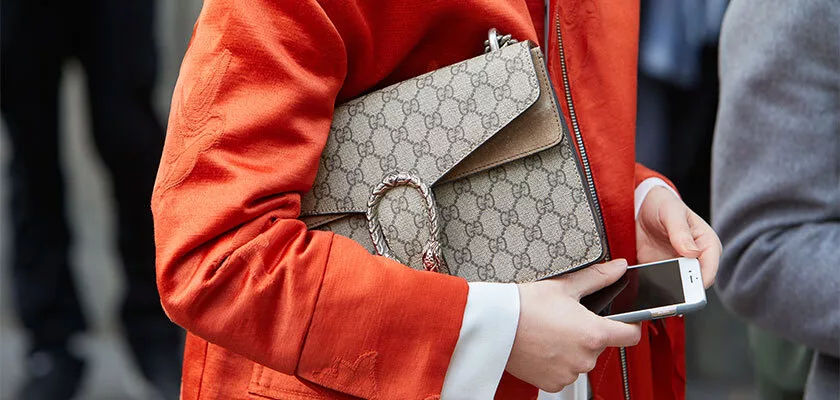
Gucci’s international marketing strategy focused on celebrity endorsements from early on. Documented by numerous paparazzi photographs, Jackie Kennedy’s fondness of the Gucci bag “Fifties Constance” resulted in an organic global marketing opportunity for the brand to capitalize on. The old name was forgotten, it was now called the Jackie Bag. Gucci’s efforts to broaden their target markets to include the US gathered momentum through magazine ads with glamorous models and actresses fashioning the Jackie Bag.
As much as the Jackie Bag represented its namesake’s refined and luxurious style, Gucci’s global marketing strategy matched another American sweetheart with a unique product. When Grace Kelly, or Princess Grace of Monaco at the time, visited the luxury fashion brand’s flagship store in Milan, Rodolfo Gucci wished to present her with a gift befitting her elegant and restrained femininity.
So, the “Flora” print containing 43 varieties flowers, plants and insects was born to encapsulate the Princess’s elegance. The print endured and became a staple in the future collections of the fashion house.
Gucci’s marketing strategy was realistically one of the first to leverage celebrity endorsement to expand their reach to a global target audience. Prestigious reputations of icons like Jackie Kennedy and Grace Kelly meshed well with the brand’s identity and their customer base.
Renowned celebrities marketed the Gucci spirit of elegance, but now the brand needed a recognizable signature. Creation of the now-iconic double-G logo around the same time encapsulated the brand’s image in the print ads, but most prominently the symbol of luxury and status was featured in the GG canvas, a fabric patterned with the brand’s logo used in many of Gucci’s products.
The Tom Ford Era that Shook the Fashion Industry
Throughout the 60s and 70s, Gucci’s marketing strategy of celebrity endorsements and promotion of a luxurious lifestyle propelled the brand into distinguishing itself among the luxury brands in the world. In the 1980s, Gucci enjoyed a period of high revenue but in later years the brand fell out of vogue. The fashion house then hired Tom Ford as Creative Director to break out of this slump. Under his vision, Gucci’s marketing strategy took a truly daring turn.
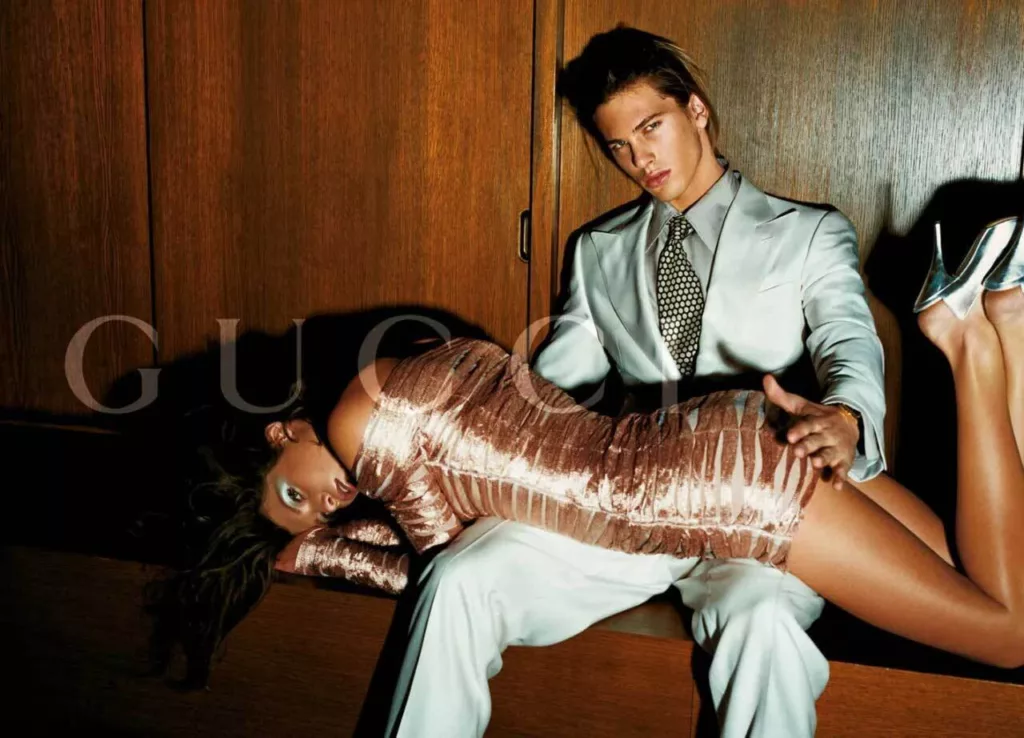
In addition to expanding the product range to include fragrance and eyewear, the new designer intended to make what was seen as old school luxury, sexy. From then on, Gucci’s marketing material purposefully disrupted the social norms with provocative imagery. In defiance to the traditional, restrained beauty luxury brands wrapped themselves in, Gucci was not afraid of playing into customers’ more primal desires. So, Tom Ford’s creative vision took ‘sex sells’ to a whole other level. The modernized Gucci clothing items were promoted with models in sexually suggestive poses. Tom Ford intentionally raised controversy and promoted the brand’s transformation through shock value. It was a gamble well played. Gucci solidified its image as cutting-edge in the saturated fashion industry through 1990s and 2000s.
Familiar Faces, Familiar Patterns
After celebrating the 40th anniversary of the Flora print with a revival, Gucci leaned into its tried and true marketing strategy of matching beloved faces and classical products in promoting the Flora fragrance with Miley Cyrus. The campaign was announced via a colorful video on the official Instagram page which the brand’s designer says was inspired by the singer’s funky spirit and the anime world.
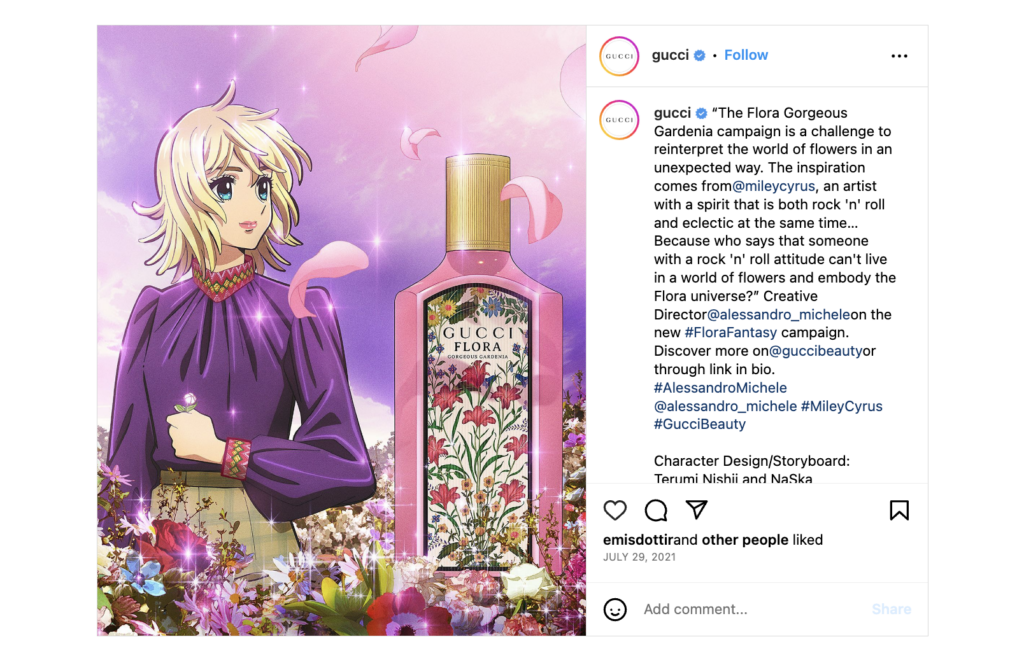
Especially adept at sniffing out stars, Gucci paired up with Dakota Johnson to promote the Jackie 1961 in an homage to the classic. Undergoing a bohemian, inclusive, and gender-neutral revival, the brand brought in Harry Styles, among others, to do a talk show called “The Beloved Show” with James Corden. The fashion house is not just in it for a famous face, rather they are set on teaming up with the right celebrity that reflects the brand’s message and identity appropriately.
Meme Marketing and a Progressive Spirit
How Gucci reaches its target audience on Instagram and other social media is another thing the brand goes against conventional logic. While other luxury brands prefer to keep a distance from fans, Gucci’s social media marketing strategy embraces the current culture, even going as far as using memes to promote its watches. The campaign “That Feeling When Gucci” uses the brand name as an adjective meaning luxurious and engages with younger fans via the quirkiness of the internet age.
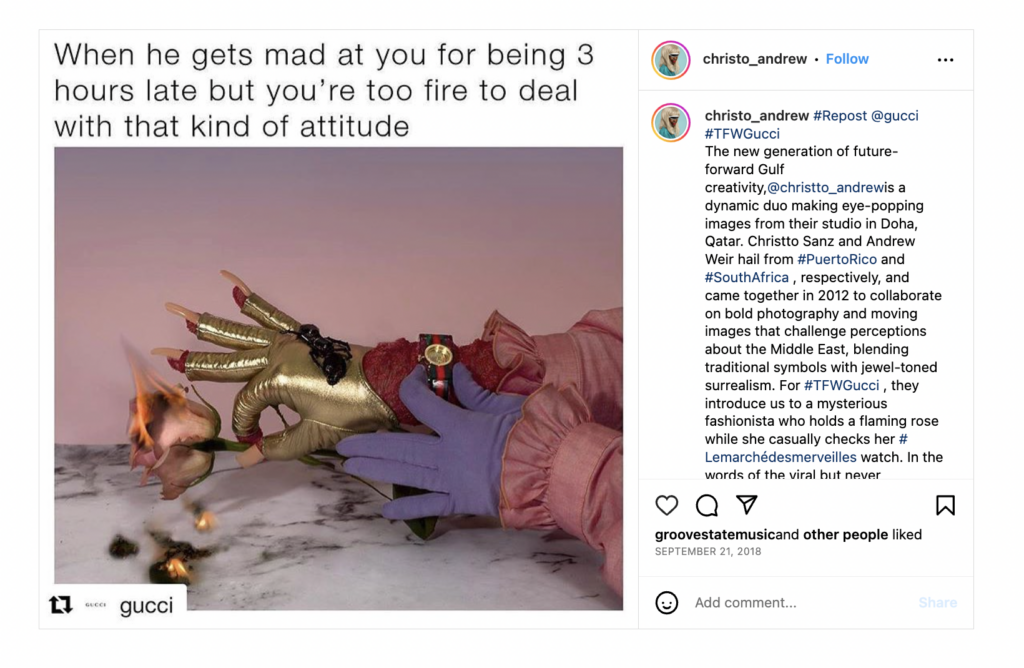
The unconventional luxury brand is not afraid of taking risks if it means reaching a wider audience and putting its own name forward. Many other luxury brands embrace an almost unreachable image, but Gucci is a maverick. The brand simply sets its own rules. Strategy of Gucci has always been to stand out. The fashion house is not interested in being unreachable, it is busy being irreplaceable.
Gucci Digital Marketing + Social Media Strategy
As we mentioned above, Gucci uses social media to build a recognizable visual world. However, it is time to focus on the wider system: the digital marketing activity that turns attention into product discovery & client relationships.
For Gucci, social media is only one part of the customer journey. A campaign may begin with a striking image, a film clip, or a celebrity-led post, but the real objective is to move people deeper into the Gucci universe: the website, digital experiences, product pages, the MY GUCCI account, and eventually the boutique.
Gucci’s strongest social media strategy is its ability to make campaigns feel like luxury moments. The House places each item inside a character, a setting, and a distinct visual mood.
The Gucci: La Famiglia campaign is a strong example. Gucci expanded the collection into a wider digital story through a virtual wardrobe, a lookbook, campaign imagery, and The Tiger, a short film directed by Spike Jonze and Halina Reijn. That gives the brand multiple assets for Instagram, TikTok, YouTube, editorial coverage, paid media, and owned web content without making every post feel identical.
For brands and agencies, this is an important lesson. One hero campaign should not end as a single launch film. It should create a full content system:
A visual identity for short-form video and social posts, Product close-ups that retain the campaign mood, Ambassador and cast-led content, Editorial stories that explain the collection’s references, Interactive digital formats that give audiences a reason to stay longer, Clear links into product pages, wishlists, and client services.Gucci website now positions digital experiences alongside fashion shows, stories, products, and store services. The La Famiglia virtual wardrobe and Generation Gucci lookbook show how the House uses owned platforms to extend a social idea into something more interactive.
Gucci’s digital marketing strategy is commercially important, no doubt.
In 2025, Gucci generated €6.0 billion in revenue. Sales from its directly operated retail network, including e-commerce, accounted for 92% of total revenue. That means Gucci has a major incentive to move audiences away from rented platforms and into channels it controls: Gucci.com, its app, CRM activity, clienteling, and boutiques.
The digital ecosystem supports this in a few practical ways.
First, MY GUCCI creates a first-party relationship. Account holders can save products, receive personalised recommendations, manage orders and returns, access curated collections early, and request an in-store appointment. Gucci also connects account holders to styling advice, video chat, phone orders, and dedicated Client Advisors. This is a much stronger relationship than a simple email sign-up.
Second, Gucci removes friction between online discovery and physical retail. Its Collect In Store service lets people shop online, select a boutique, receive collection notifications, and meet a Client Advisor at the store. For luxury brands, this matters because the sale does not need to end at checkout. Digital can open the door to a higher-value, more personal in-store conversation.
Third, Gucci uses digital tools to strengthen confidence after purchase. Its Authenticity Tag can be scanned through the Gucci app, helping customers access product authentication through an NFC-enabled item. This is useful in a luxury market where trust, provenance, resale, and counterfeiting all affect brand value.
What Gucci can Learn from Hermes, Acne Studios, and Diesel
Hermes offers a useful contrast. Its strategy is built around creation, craftsmanship, and an exclusive distribution model. Gucci should not copy Hermes’ tone, but it can take one clear lesson from it: digital marketing must protect scarcity and product meaning. A luxury website cannot feel like an endless promotional catalogue.
Acne Studios takes a more culture-led route. Its digital presence connects commerce with Acne Paper, a permanent Paris gallery, lookbooks, runway coverage, newsletters, live chat, and collect-in-store services. Gucci already has the scale to create this kind of ecosystem; the opportunity is to keep its content world sharp enough that every platform still feels unmistakably Gucci.
Diesel shows the commercial value of direct-channel investment. In 2024, OTB reported that Diesel revenue increased 3.2% at constant exchange rates, while the group’s direct channels grew 7.4%. The brand also added 16 stores during the year. The point is not that Gucci needs more stores. It is that bold creative work needs a direct route into customer experience, data, and sales.
Gucci’s next digital challenge is clear: social media must keep generating desire, but the wider digital strategy has to capture that desire through stronger product storytelling, clienteling, personalised experiences, and owned customer relationships. In luxury, attention has value. A relationship has far more.
Most Talked About Gucci Marketing Campaigns
Gucci has produced plenty of advertising campaigns people still talk about years after launch.
For this list, we focused on the work that showed the House at its most imaginative: campaigns that built a world around the collection, sparked conversation outside fashion media, or brought a new cultural reference into Gucci’s visual language.
We also chose examples from different sides of the brand.
Wild Days and Nights in Rome captures Gucci’s surreal, maximalist period under Alessandro Michele. The Gucci Guilty work shows how fragrance can become a character-driven film. The North Face collaboration proves that a partnership can create a whole new setting for a luxury brand. Ryan Gosling’s Valigeria campaign brings the focus back to Gucci’s travel heritage, while Exquisite Gucci places the collection inside the visual universe of Stanley Kubrick.The point was to avoid repeating the same type of fashion ad. These Gucci campaigns show the brand using comedy, music, celebrity, travel, outdoor culture, and cinema to make the clothes feel part of a bigger story.
Wild Days and Nights in Rome (2017)
Gucci’s Spring/Summer 2017 campaign drops a group of sharply dressed characters into a strange version of Rome.
Evening gowns meet fast food, tigers appear beside party guests, and a marble fountain becomes the setting for a late-night celebration. The city is not presented as a polished postcard.
Glamorous, funny, and unreal….
Why it worked:
It gave Gucci a visual world that people could recognise immediately.
The campaign had pushed luxury away from stiff poses and perfect settings. Every image carried enough detail to invite a second look, which made the work shareable across fashion press and social media.
Gucci Guilty Campaign (2017)
The Gucci Guilty campaign uses fragrance to tell a story with its own mood and characters. It draws on retro Americana, rock-and-roll references, diners, Hollywood imagery, and a sense of glamour. Jared Leto and Lana Del Rey bring a familiar cinematic and musical energy to the work, while the wider #ForeverGuilty platform frames the story around freedom.
Starring Jared Leto, the story unfolds in Venice, a city that in the past allowed its people to transgress society’s norms, its liberated aura still circling its streets today. Filmed as a set of flashbacks by Glen Luchford, the campaign builds sensual intrigue around an intimate experience between three people.
Why it worked:
The Gucci campaign used celebrities with strong personal identities, then placed them inside a setting that felt closer to a music video or short film. That approach gave the scent a distinct personality and helped the campaign stand apart from conventional luxury-beauty imagery.
A$AP Rocky, Iggy Pop and Tyler, The Creator in the New Gucci Tailoring Campaign (2021)
Gucci brings A$AP Rocky, Iggy Pop, and Tyler, The Creator together in a sunlit Californian home for its tailoring campaign.
The three artists wear sharply cut suits while relaxing on sofas, sharing spaghetti, spending time with pets, and moving through the house with the ease of old friends. The campaign treats tailoring as expressive and lived-in.
Why it worked:
It took suits out of the boardroom and placed them inside a relaxed setting. The casting created a mix of generations and musical identities, giving the campaign instant cultural reach.
Gucci also made the clothes feel personal: the tailoring supported the personalities on screen instead of overwhelming them.
#TheNorthFacexGucci Campaign (2021)
The North Face x Gucci campaign moves Gucci into forests, mountains, lakesides, and camping sites.
It follows groups of friends travelling outdoors in technical outerwear, bold prints, luggage, and accessories from the collaboration. The campaign creates a colourful version of exploration, one that feels more playful and fashion-led than a typical outdoor advert.
Set in the Alps, the collaboration collection is worn by a group of hikers, who camp by the lakes in a trip to the great outdoors. The forests and peaks of the region form a vast and breathtaking scenic backdrop to the imagery, capturing colorful, candid moments of group activity reminiscent of holiday snaps.
Why it worked:
It had brought together two brands with very different but complementary strengths. The North Face gave the project outdoor credibility, while Gucci added color, fashion popularity, and a stronger sense of fantasy.
The collaboration also created a fresh reason for both audiences to engage: outdoor fans discovered Gucci in a new context, and luxury consumers saw familiar Gucci codes in an unexpected environment.
Ryan Gosling for Gucci Valigeria (2023)
After Jared Leto, this time Ryan Gosling appears in Gucci Valigeria’s travel campaign. Surrounded by trunks, bags, and luggage that connect the House to its early roots in travel goods.
The film treats travel as something more emotional than a journey from one place to another. It becomes a space for discovery and quiet reflection.
Why it worked:
It had used Gosling with restraint. He brought film-star appeal, but the campaign still kept the luggage and travel story at its center.
That kind of advertising approach gave Gucci a way to revisit its heritage without making the work feel historical. The cinematic tone also helped the campaign feel distinctive in a crowded celebrity-fashion landscape.
The Exquisite (2023)
Here is our favorite!
Exquisite Gucci places the collection inside scenes inspired by Stanley Kubrick’s films, drawing from the visual language of works such as The Shining, A Clockwork Orange, A Space Odyssey, and Barry Lyndon. Alessandro Michele treats the campaign as a meeting point between fashion and cinema, using recognisable film references to create a dramatic new context for the clothes.
Why it worked:
It turned the campaign into a cultural reference point (not a seasonal fashion film!)
Kubrick’s visual vocabulary gave audiences something recognisable, while Gucci’s styling transformed those references into a new creative world. The Gucci campaign reinforced Michele’s wider view of fashion as storytelling, costume, character, and transformation.









![Which LLM Should You Use for Your Business? [Pros and Cons]](https://www.hubspot.com/hubfs/which%20llm%20to%20use.png)