How to Start a Franchise Business (2026 Guide)
Key Takeaways Learning how to start a franchise can be a great way to become a business owner. To launch a business, you need to perform market research, file for a license, create a marketing plan, and build your...
 Astrong
Key Takeaways
Franchise costs range widely. A home-based franchise starts at around $10,000, while a McDonald’s franchise ranges from $1.47 million to $2.73 million per its 2026 FDD. Every franchisor must provide a Franchise Disclosure Document (FDD). Use it to compare key factors such as fee structures and available support and financing across brands. Marketing is critical from day one. Brand awareness gets customers searching, but the franchise location with the strongest local marketing presence wins. Local SEO and geo-targeted paid ads are the two highest-ROI channels for new franchisees, closely followed by social media that stays within brand guidelines. Franchise earnings vary widely. Franchisees in the food and beverage space can earn anywhere from under $50,000 to over $250,000.Learning how to start a franchise can be a great way to become a business owner. To launch a business, you need to perform market research, file for a license, create a marketing plan, and build your brand. Buying a franchise location within a corporation that’s already taken all those steps is one way to shorten that learning curve.
Becoming a franchise business owner also enables you to tap into a large brand’s resources and branding, but that doesn’t mean you should leave the marketing completely up to them.
Savvy entrepreneurs who start a franchise business understand the importance of taking all the right steps from start to finish. That’s exactly what I’m here to show you in this guide.
We’ll cover the basics, like how to start a franchise and the initial costs. Then we’ll move on to the engine that makes your franchise a success: learning how to market it once it’s open.
How Does a Franchise Business Work?
In a franchise business, a franchise owner pays a fee to essentially “rent” a brand name. The franchisee runs the business themselves (or hires someone to do so) and must follow the rules and regulations governing brand use.
For example, many McDonald’s restaurants are franchises, meaning an owner (or group of owners, in some cases) pays McDonald’s to use their brand name, menus, logos, and other business assets.
They run their location, pay McDonald’s to use the name, and keep the remaining profits.
A franchise business is a popular business model because it offers owners the best of both worlds: the support of a large brand and the benefits of owning a business.
A few businesses that offer franchising options include:
7-Eleven Taco Bell Great Clips Ace HardwareStarting a franchise business should not be taken lightly. There are pros and cons to consider before deciding whether to become a franchisee.
Benefits of Starting a Franchise Business
Starting a business gives you more control over your life and income. Unlike starting your own business, however, buying into a franchise offers specific benefits.
More Support
Starting a franchise business is sort of like playing video games on easy mode. The franchisor offers support through training, materials, process flows, and branding to help you get your business off the ground.
For example, starting a taco shop could require months of menu development, taste testing, logo design, and product sourcing. As a Taco Bell franchise owner, however, much of that work is already completed.
Lower Failure Rate
Franchise businesses may offer you a better chance of success than going it alone. When you buy into a franchise, you join a proven business model that works. You also have additional support and business resources that can make a difference in your success.
Built-In Brand Awareness
Building a brand is one of the best things you can do for your business. However, it often takes time and resources.
When you buy into a franchise, the branding is already complete. People already know who your brand is and what it represents. This saves you time and creates a built-in customer base you can tap into.
Better Buying Power
In some cases, you may purchase goods at a lower rate. Many franchisors negotiate contracts with vendors for the entire network, allowing you to spend less on goods and services by purchasing in bulk. However, the flip side of these benefits is that you may not be able to choose your vendors, and costs may be higher.
Drawbacks of Owning a Franchise
While there are many benefits to starting a franchise business, there are some drawbacks to keep in mind. You’ll pay licensing fees to corporations, which can eat into profits. You’ll also have less control over some aspects of your business. For example, if you own a franchise restaurant, you may have little to say on the menu or which vendors you use.
How to Start a Franchise Business: 7 Steps
Now that you understand the pros and cons, the next question is: how do you start a franchise business? This seven-step plan will walk you through everything you need to know.
1. Identify a Business Opportunity
The first step in starting a franchise business is choosing a franchise to invest in. Hundreds of companies offer franchise opportunities: which one is right for you?
Here are a few questions to ask yourself:
Do you want an online or in-person business? What industry are you interested in? There are franchise businesses in travel, restaurants, convenience stores, websites, health and wellness, business, and much more. How much money do you have to invest? Before selecting a business, consider the cost.Once you answer those questions, start looking for franchise opportunities. For example, if I am interested in a restaurant franchise and like sports bars, I might Google “best sports bar franchises.”
As you can see, there are plenty of options.
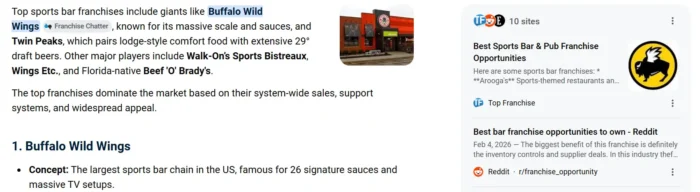
Here are a few other searches you can try. Feel free to swap out key terms to find an opportunity that works for you:
online franchise businesses travel franchise businesses senior care franchise cheap franchise businessesMake a list of your top five franchise businesses, then compare what they offer in these key areas:
Fee structure: Confirm whether the franchisor charges a flat licensing fee or an ongoing percentage of your sales, since that choice shapes your margins for the life of the agreement. Support and resources: Review what training, operational tools, and marketing assets come with the license, and whether that support continues after your launch. Financing options: Ask whether the franchisor offers in-house financing, preferred lender relationships, or SBA-backed loan eligibiliy, since your funding path affects how quickly you can open. Exit terms: Understand the process for selling, transferring, or closing your franchise, including any fees, approval requirements, or non-compete clauses.Fortunately, the Federal Trade Commission (FTC) requires every franchisor to provide you a FDD before purchasing, which should clearly cover these four key points.
2. Research Current Owners and Potential Competitors
Speaking of the FDD, it’s also your best starting point for step two.
With your search narrowed to one or two top franchise choices, it’s time to dig deeper into how existing owners are actually performing and what competition you’ll face locally.
Start with Item 20 of the FDD, which lists current and former franchisees along with their contact information: call a handful to ask about revenue, profitability, and franchisor support. Cross-reference what you hear with independent franchisee satisfaction surveys from Franchise Business Review for an outside perspective.
From there, look at the competition you’ll face. Consider both online and in-person players. If you want to franchise a tax company, for example, you’ll need to figure out how you’ll stand out from online competitors like TurboTax and local accounting firms in your area. A quick Google Maps search for similar businesses in your target territory shows you exactly who’s already there, like this one showing the competition a 7-Eleven or Dunkin’ franchisee might face.
3. Determine Market Interest
Sometimes buying into a franchise provides a false sense of security. You see how much other franchise owners make and think that is the norm.
Keep in mind that markets can vary by location, and the franchisor has a vested interest in highlighting its most successful franchisees.
You also need to make sure there is enough room in the market for additional businesses, regardless of whether your business is in-person or online. If the market is saturated, you may struggle to make sales, no matter how much people trust the brand.
4. Research Startup Costs
The cost to start a franchise business varies widely, from around $10,000 for a home-based or mobile concept up to $1 million for a full-service restaurant. Franchisors will typically list the estimated total investment on their websites, and every franchisor is required to disclose these costs in items five through seven of the FDD.
However, sometimes there are hidden fees you’ll need to keep in mind:
Travel costs: Most companies require you to come to their headquarters and learn more about their brand and company culture. Generally, you’ll foot this bill. Training costs: You may be required to train on location in a store for several weeks. This can cost time and money, since you won’t have a paycheck. Local fees and taxes: Your city or state might charge fees to start a business, get approvals, acquire building permits, etc. The initial fee: Most franchisees pay a yearly fee (called the royalty fee) based on sales. However, there is likely a one-time initial fee that might range from $20,000 to $50,000, or upwards of $100,000 if you buy into a Master Franchise (purchasing rights to a geographical area where you can sell multiple franchises). Marketing Fee: Franchisees pay this fee (typically one to four percent of gross sales) to support a regional or national brand fund that offsets the costs of corporate advertising or brand placement efforts. Legal Fees: It’s important to consult an attorney and accountant specializing in franchises before you sign any contracts. These fees can range from $2,000 to $5,000, but talking with someone who understands the financial aspects and a legal professional who understands the FDD is critical to protecting your investment and ensuring you understand what you’re getting into.Here’s what all of these costs might look like in Item Seven of your FDD:
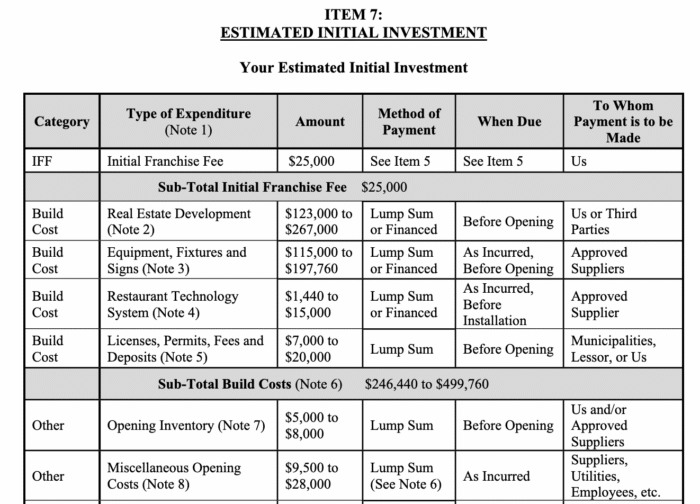
Source: https://sharpsheets.io/blog/item-7-franchise-disclosure-document/
5. Create a Business Plan
You’ve researched all your options and have decided on a business to join. Congrats! Now it’s time to create a business plan. This is one of the most crucial steps, so take the time to create a solid business plan that covers all the bases.
According to the Small Business Administration (SBA), a business plan should include:
Executive summary: What your company is and what makes it different. Company description: Provide detailed information about the problem your company solves and who you plan to serve. Market analysis: Who your target audience is and how your business stands out from the competition. Management plan: How your business will be structured and who will be in charge of what facets of the business. What you offer: Are you offering products or services? What is your product life cycle, and how will you handle things like intellectual property? Funding: How will you pay for the franchise fees, labor costs, and the equipment or products you need to get started? Financial projections: Estimate the revenue for your business. Include a prospective outlook for the next five years. If you plan to take out loans, how will you pay them off? Marketing and sales plans: How will you market your business? We’ll cover some of the most successful strategies in the marketing section below.6. Form an LLC or Corporation
The next step is to create your business entity. The type of business you create might depend on the franchisor you work with. Some might require an LLC or corporation. An LLC protects your personal assets from liability, while a corporation is a separate legal entity.
You might also choose sole proprietorship; however, that can leave your home and other assets at risk. This guide will walk you through the different options, but I suggest meeting with a tax or legal professional to decide if the structure is right for you.
Keep in mind that city and state laws may impact which structure is right for you.
7. Choose an Initial Location
The final step is to find a location for your franchise business. If you are online, the location will likely be a website, but you might also elect to have office space. If your franchise business has a physical location, the corporation may select a site for you. If they leave it up to you, make sure to compare sites to find an affordable one that gets plenty of foot traffic.
Don’t just consider the location’s current pros and cons. Research future developments as well. An ideal location today might not be if a bypass is installed right next to you, directing traffic away.
On the other hand, a location that is just okay today might gain attention if a large shopping center is built next door. (Just remember that sometimes development plans fall through, so don’t choose a terrible location based on possible plans.)
With your location locked in, the only thing left is getting customers through the door.
How to Market Your New Franchise
When you start a franchise, you inherit brand awareness that independent business owners spend years building. That’s a real advantage, but you can’t rely on that alone.
Franchisees still compete locally, including against other locations of the same brand in nearby markets. Customers deciding between two nearby options often pick the one with a stronger local presence.
I’m going to help you create that local presence by showing you what I think are the three highest-leverage channels for franchisees.
Local SEO for Franchise Locations
For any business tied to a physical location, local search drives most customer discovery. Recent data from BrightLocal found that 45 percent of consumers default to Google for local searches, and two in five customers estimate that at least 41 percent of their searches focus on local businesses. That’s traffic you can realistically get walking through your franchise’s doors.
The first step is your Google Business Profile.
Claim your listing by logging into your Google profile and searching for your business on Google Maps. Once you find it, you can claim your profile by clicking “Claim this Business.” From there, add complete business contact information (like the example below), services, and photos to give consumers all the information they need to choose your location.
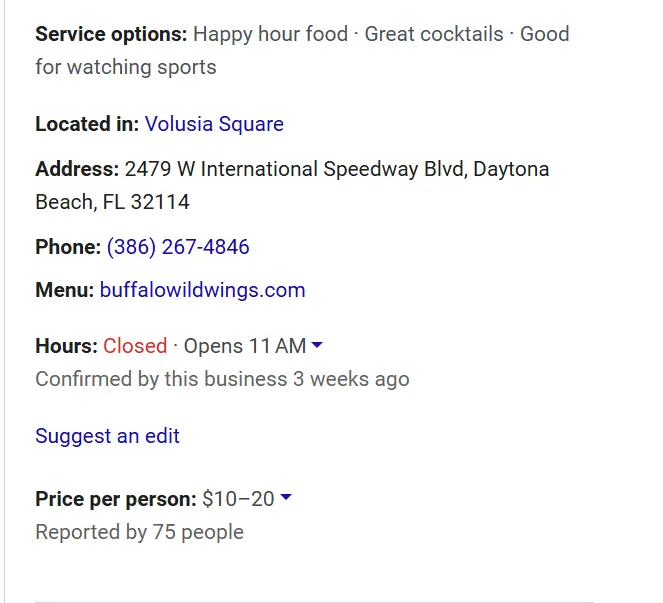
You’ll also want to make sure your profile is optimized on other platforms, such as Bing Places and Apple Business Connect, to maximize your visibility in local map-based searches.
Reviews are the next lever.
Another BrightLocal survey focused solely on customer reviews found that 68 percent of consumers will only use a business rated 4 stars or higher, 74 percent only value reviews from the last three months, and 80 percent are more likely to use a business that responds to all reviews.
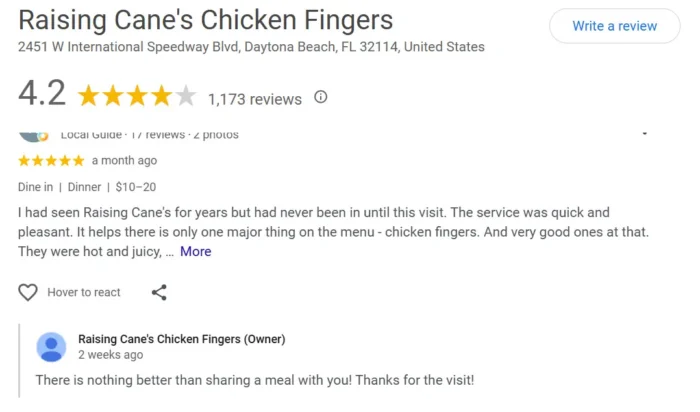
Remember, it’s not just other brands you’re competing against. Other nearby franchisees may be optimizing for the same searches, so the location with the strongest local presence wins. Once you’re getting found in local search, staying sharp means keeping your presence positive with good reviews and good engagement.
Paid Advertising on a Local Budget
Most franchisees aren’t running national ad campaigns. They’re running geo-targeted ads on a smaller, location-level budget. Google Ads lets you target down to specific zip codes or a radius around your location, so you only pay to reach customers who could walk through your door.
Before spending a dollar, check your franchise agreement. Item Six of the FDD lists ongoing advertising fees you’re required to pay, while Item 11 covers the franchisor’s advertising obligations, such as co-funding or restricting local advertising. These items will also tell you whether you have to contribute to a national or regional ad fund, both of which are important to know when you’re running paid ads on a small budget.
Social Media and Brand Consistency Under a Franchisor
Franchisees inherit their brand voice from the corporate office, which presents a unique challenge when promoting your business on Facebook or other social media: franchisors want control, while franchisees need flexibility to engage their local communities.
Most franchisors provide a social media style guide that covers:
Tone of voice Visual identity Logo usage Approved hashtags Crisis communicationWork within that framework, then lean on content specific to your location, such as local employee and customer stories or community events. You can also do the same with regional offers or partnerships, and geotagged posts.
Tacala Companies’ (the nation’s largest Taco Bell franchisee) Instagram is a great example of mixing corporate and local content:
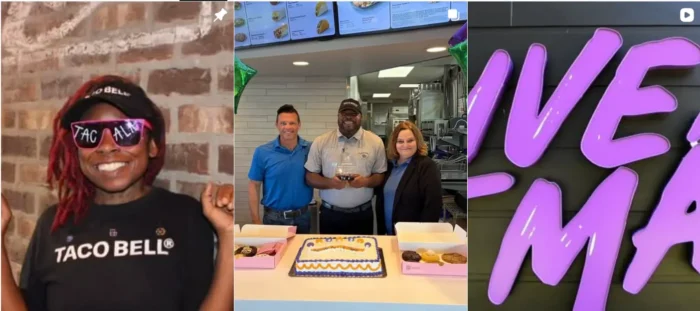
Source: https://www.instagram.com/tacalacompanies/
You’re a representative of the brand, so franchisors are there to help. They should have a content library of seasonal campaigns and general creative that you can adapt for local use while staying in compliance with corporate guidelines.
The same logic applies to content marketing for a small business. Blog posts and videos support the same goals and follow the same rules as social, just on a longer timeline.
Common Mistakes to Avoid When Starting a Franchise
Even with the support of an established brand, franchisees run into predictable traps. Here are the most common mistakes and how to avoid them:
Trusting franchisor-reported revenue figures at face value. Use Item 20 of the FDD to contact current and former franchisees directly, and cross-reference what you hear with independent surveys from Franchise Business Review. Underestimating hidden startup costs. The initial franchise fee is only part of the picture. Budget for things you may not think of, such as travel and training, or legal and professional fees. Skipping the business plan because the model feels “already proven.” A proven concept doesn’t guarantee success in your specific market. The SBA business plan components in step 5 still apply, particularly around market analysis and financial projections tied to your location. Choosing a location based on convenience rather than data. A short commute doesn’t drive foot traffic. Evaluate true performance drivers, such as current traffic patterns and competition density (see the Google Maps example in Step 2), before signing a lease. Treating marketing as optional because the brand is already established. Brand awareness gets consumers to search, so set your marketing plan in motion before opening day. Don’t just rely on your brand’s notoriety.Franchise Marketing in Action: An NP Digital Case Study
The marketing tactics above work. NP Digital’s work with Discovery Senior Living (DSL), a senior living operator with communities across the country, shows what’s possible for a franchisee who moves past learning how to start a franchise and starts building one via a strong local marketing plan.
Situation: Discovery Senior Living needed to grow non-branded local search visibility across community pages while competing with established national brands like Brookdale, Sunrise, and A Place for Mom.
Strategy: Local SEO tactics like Google Business Profile optimization and community-level homepage content, combined with content-driven backlink building across all priority locations.
Results:
146 percent growth in the top-three keyword rankings across the portfolio in 12 months. Traffic share up from 7% to 12% in eight months, while Brookdale and Sunrise both declined. 85 percent month-over-month click growth on priority assisted living pages after homepage content optimization. 47 percent of May 2026 organic leads scored warm, hot, or move-in, with 84% converting via direct phone call.All of this success doesn’t even scratch the surface. DSL’s improvements in keyword and AI performance continued in other areas:
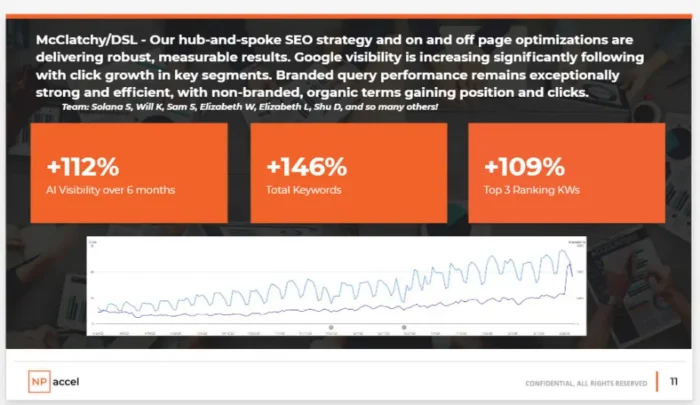
These numbers show the kind of growth that’s possible for a business when the right local strategies are put to work.
FAQs
How much money do I need to start a franchise business?
Costs range widely. A home-based franchise may start at $10,000, while a McDonald’s franchise requires $1.47 million to $2.73 million.
How much do franchise owners make per year?
Earnings vary by brand and industry. Franchise Business Review reports food and beverage franchisees range from under $50,000 (41% of owners) to over $250,000 for top performers.
Can I start a franchise business for free?
No. Franchisors require an initial fee. If you lack capital, consider financing or an investment partner.
How do you start a franchise business?
Starting a franchise boils down to these steps:
Choose a location
Identify a business opportunity
Research current owners and competitors
Determine market interest
Research and budget for startup costs
Create a business plan
Form your legal entity
After that, you’ll need to implement a marketing plan for your franchise, which I cover in the marketing section above.
What is the most profitable franchise?
Profitability varies by owner and market, but Entrepreneur currently ranks Jersey Mike’s, Taco Bell, and Dunkin’ as the top three franchise opportunities.
How do I purchase a franchise business?
After choosing a franchise, review the FDD and secure financing if necessary. Then, locate an attorney you trust to help you understand and sign the agreement. Once you pay the initial franchise fee, you’ll be ready to open your doors.
How do I run a franchise business successfully?
Follow the franchisor’s operating standards, and maintain a strong local reputation through customer reviews and an effective local marketing plan.
How do I establish a franchise business?
Form your legal entity and complete any necessary franchisor training. After that, you’ll need to secure your location, unless the corporation does it for you. Finally, work with the franchisor to understand the marketing guidelines and launch local SEO and paid ads before opening, so you have traffic on day one.
Conclusion
Knowing how to start a franchise is one thing. Actually building one comes with real risks, but the built-in support and customer base make it a tempting model for many owners. If you appreciate the support and other benefits of franchise ownership, it can be an ideal way to build your own business.
If you decide to take the leap, marketing will be key to your success. Corporate brand recognition helps, but customers ultimately choose the location that shows up when they search. Start by claiming your Google Business Profile, then launch geo-targeted paid ads and use reviews, so your community can find you on day one and beyond.
If you don’t have the time or expertise to handle all of that yourself, don’t be afraid to hire a professional to handle your marketing. We can put our expertise to work behind the scenes, while you focus on being the face of your new franchise.








![How to Analyze a Sudden Drop in Website Traffic [With Template]](https://ahrefs.com/blog/wp-content/uploads/2025/02/how-to-analyze-a-sudden-drop-by-despina-gavoyannis-general-seo.jpg)