I travelled to Ireland’s remote islands for a wild weekend away
In search of a truly secluded getaway, Daniel Gayne explored the Blasket Islands – and met the couple selected to take care of their rugged shores
 AbJimroe

Watching the waves thrash the jagged coastline and the sea rock and spit, it's not hard to see how the islands across the three-mile sound got their name.
The Blaskets. “Dangerous place” in Old Norse, so I’m told. And so it appears today, as I stand on the edge of the Dingle Peninsula, having left the islands a day earlier to avoid this rough weather.
Perched just off the coast of Ireland’s County Kerry, the Blasket Islands are about as far west as you can go and still be in Western Europe (America is the next parish over, people joke) and wilder than anything on the Wild Atlantic Way.
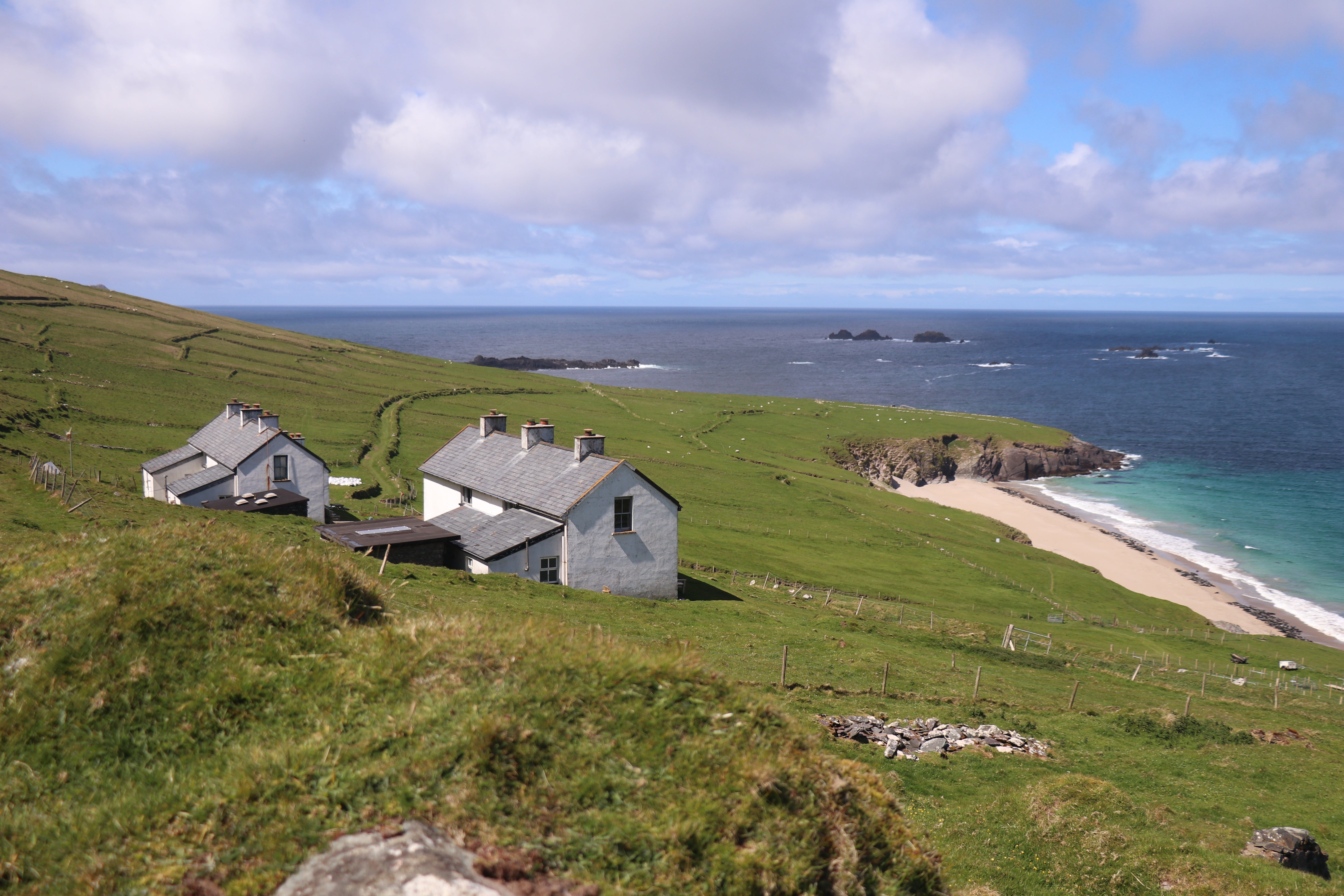
And yet people have been drawn over and over to this place, despite its harshness. The Vikings who named it were followed by monks seeking closeness to God in what they believed was the edge of the world. More recently, an Irish-speaking fishing community beat out a tough life here for centuries, before evacuating in the middle of the last one.
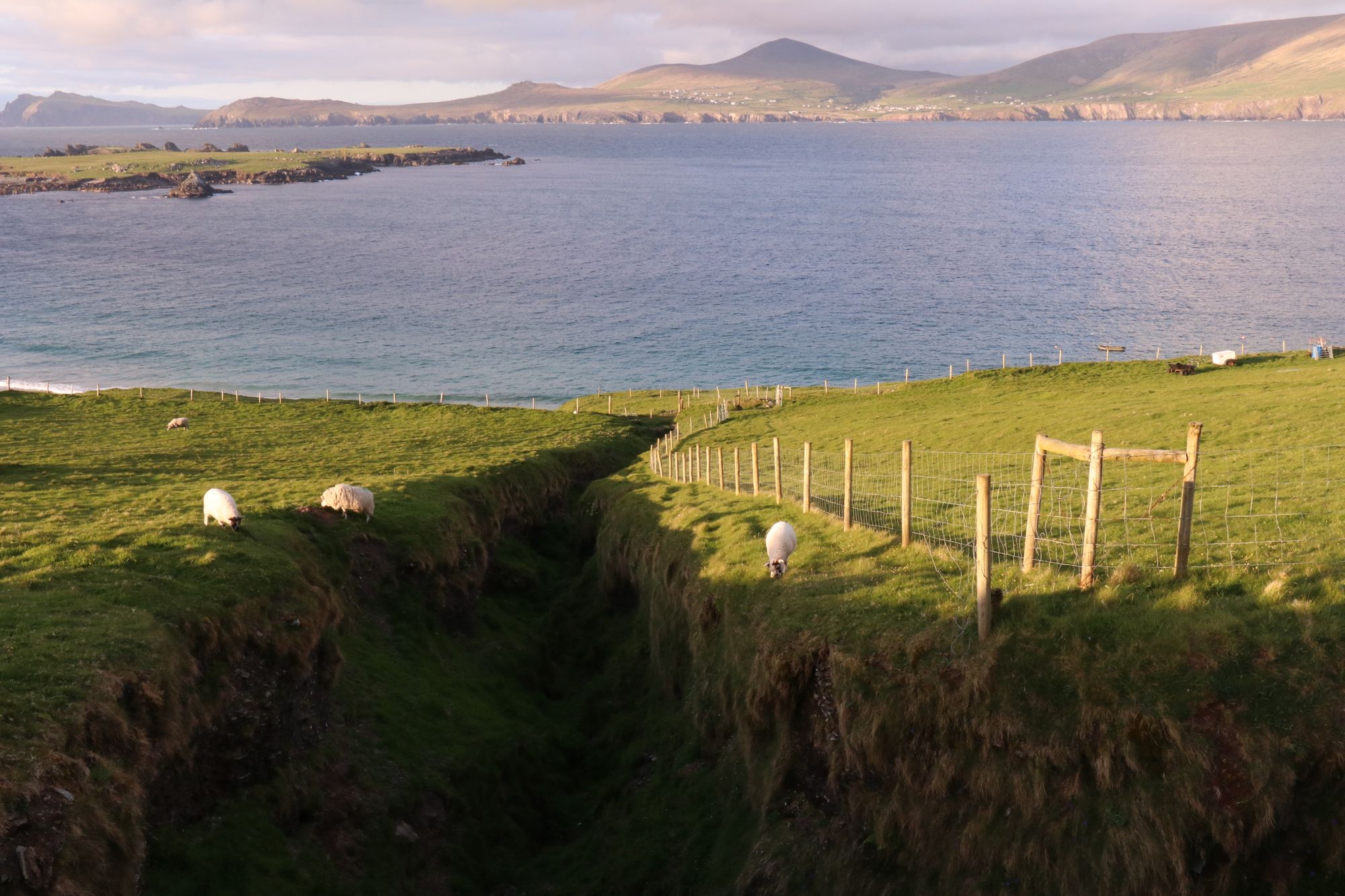
On a fair day, it’s clear why they stayed for so long. Walking around Great Blasket, the biggest of the six islands, I spot Irish hares frolicking in the heather, watch a colony of grey seals spar and snooze, and see chaffinches and chiffchaffs swoop across hillsides as smooth and sculptural as a Henry Moore. If I didn’t have clothes on, I’d think I was in Eden.
From An Cró Mór, the island’s high point, you can survey the whole of this incredible landscape and see as far as the distinctive outer islands. You’re not likely to set foot on these, but you can get pretty close on a boat trip, which will also introduce you to a further bounty of natural wonders.
Puffins, Manx shearwater and innumerable other seabirds skim the choppy waters or crowd the craggy finials of the Cathedral Rocks, a great Gothic formation rising improbably out of the Atlantic. As our boat forays further into the sound, I see dolphins capering at the bow and even catch a glimpse of a spouting Minke whale.
“We’re very much living in tandem with the wildlife here,” Aisling tells me when I return to the small settlement on the sheltered east side of Great Blasket, the biggest of six islands. “We’re in their house,” adds her partner Conor.
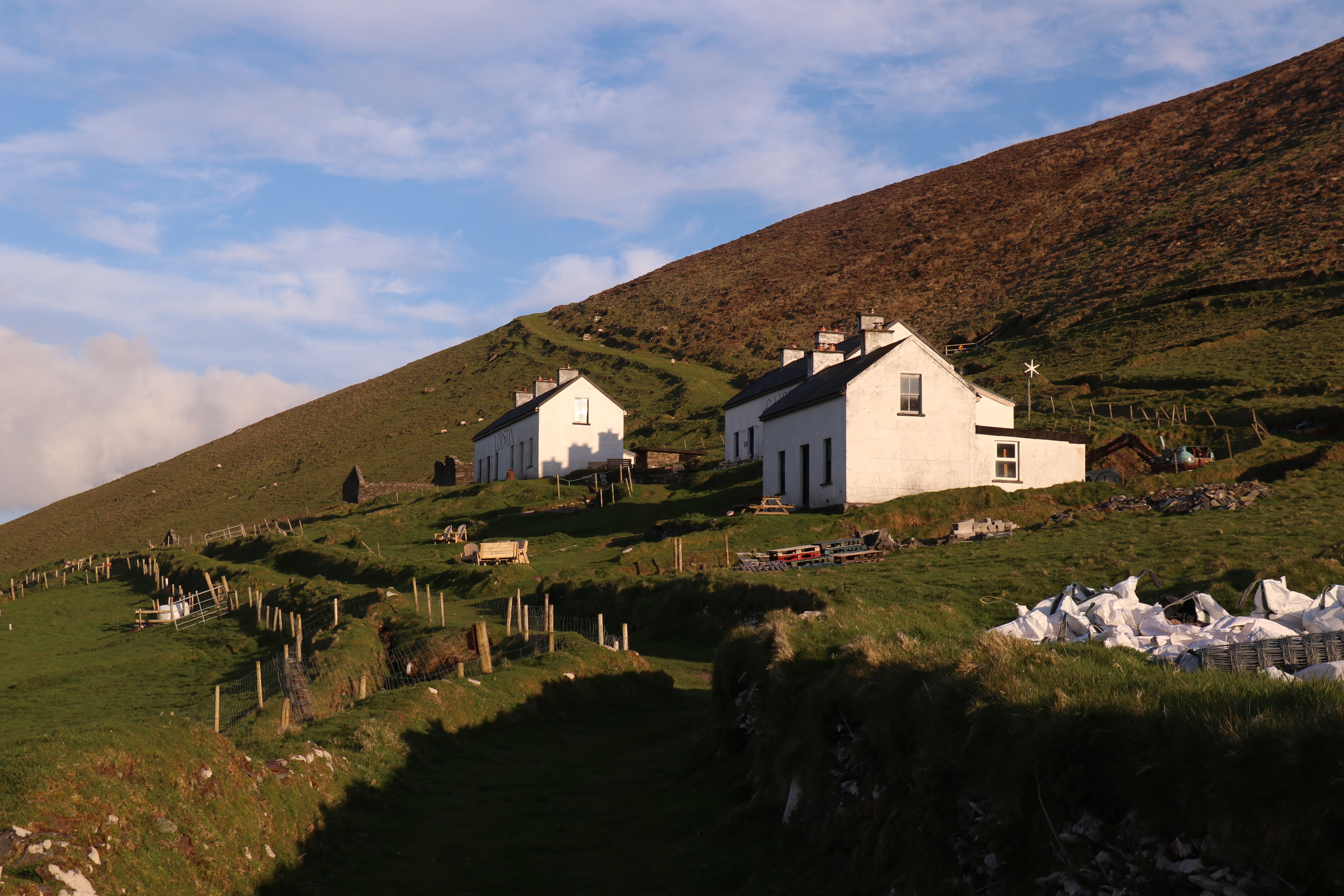
These two are the closest thing the islands have to permanent residents today. Selected from hundreds of candidates for a six-month residency here, they are charged with looking after the islands’ cafe, as well as three rental cottages, one of which is my home for the night.
It's a pretty basic fare: no hot water or mains electricity, with the power from the Conor and Aisling’s small turbine only sufficient to keep a phone charged. But settling in for the night, I discover that I have everything I need. There’s a gas stove and oven to cook dinner, a coal fire and blanket to keep me warm, and a window overlooking the bay, through which I watch the evening sun give way to the shivering glow of tealights.
In the morning, I’m surprised to find myself waking up in a house still warm from last night’s fire.
Some people have no idea they can stay on the island, Aisling tells me. Others might wonder why they would need to. At a brisk clip, you can walk around Great Blasket in a matter of hours. But to do so would be to miss the point. Better to let time melt away and let the rhythms of the place guide you.
“I don't want to sound like I'm a bit cuckoo-bananas, like, but there is a real sense of magic on the island,” says Aisling. “There's something so special about it. It's in the air, it's in the grass. I couldn't actually put a finger on exactly what it is, but it's magical. Everything is beautiful all the time. You just have to let yourself enjoy it”.
Read more: The little-known island off the coast of Ireland that’s filled with puffins and wildflowers
It's culture as much as nature that sets the Blaskets apart. Exploring the derelict remains of Great Blasket’s lower village gives a ghostly sense of the community that made its home here, but for a sense of its life and history, I head to the Blasket Centre in Dunquin. The museum records the traditions of boatbuilding, fishing and foraging that sustained island life, and tells the story of how scholars came to the island at the turn of the 20th century to study its language and oral culture.
With their encouragement, island storytellers like Tomás Ó Criomhthain and Peig Sayers – well known to secondary school students of a certain vintage in Ireland – put their stories to paper. “They knew this was coming to an end, this kind of life separated from the mainland, the purity of the language that they’re speaking,” Tommy, my guide around the centre, tells me.
The beginning of this literary renaissance came just after the island's population peaked at nearly 200 people, with Great Blasket’s young folk gradually ebbing away to America – a process documented in the final room of the museum, with letters from their new homes in places such as Springfield, Massachusetts. The small and increasingly elderly community struggled to man the fishing boats that provided their sustenance and in 1953, the last Blasket islanders were evacuated.
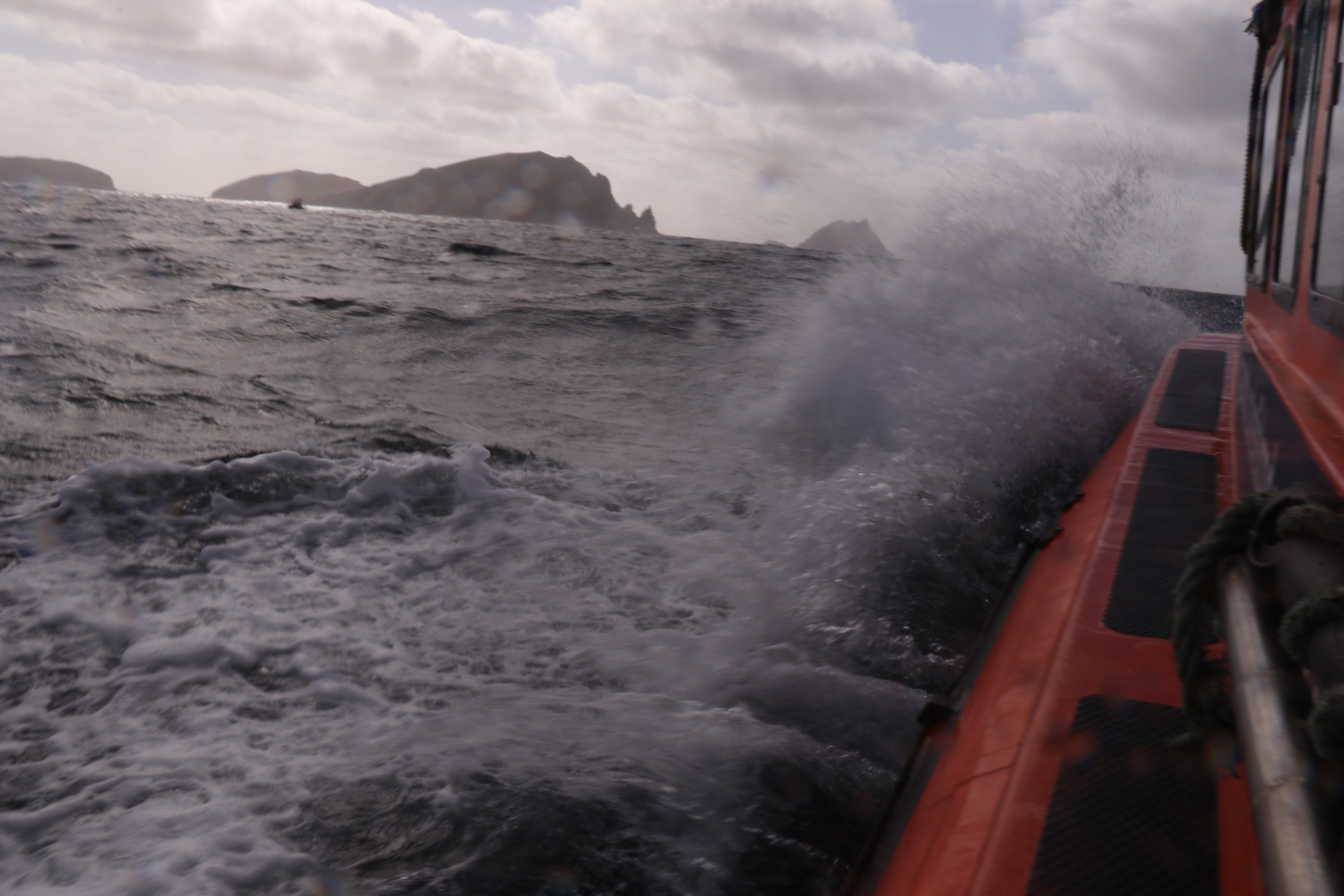
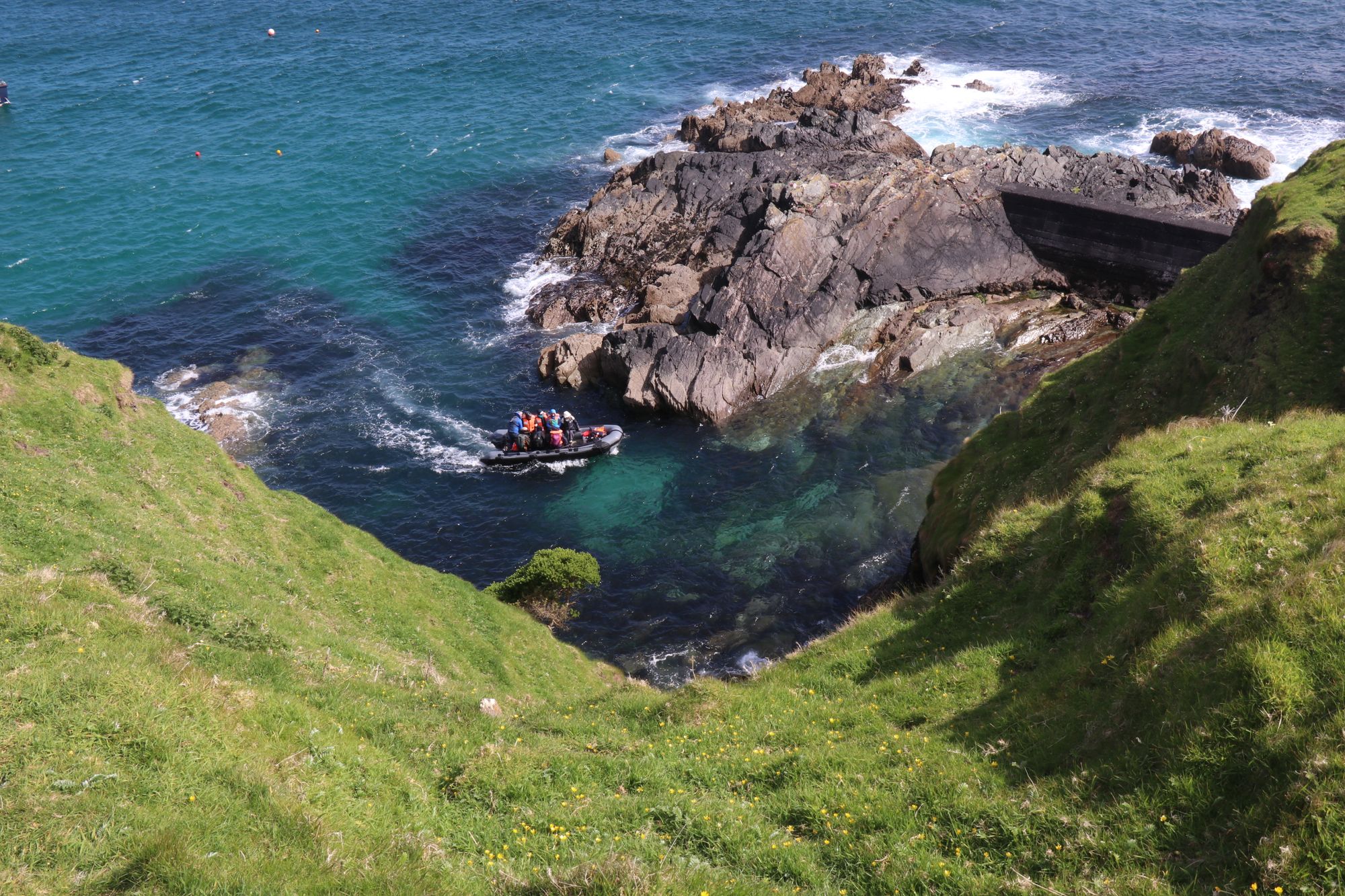
My exit from the island was less desperate, but nonetheless premature, with a forecasted shift in the weather making my scheduled departure impossible. Ferry services run from Dunquin, Dingle and Ventry, but there’s only one place to land on Great Blasket and it requires swapping into a dinghy to navigate the narrow passages. Not worth the risk in heavy weather.
So I departed, and found myself bouncing between bars in Dingle, soaking up folk tunes and stout in equal measures among crowds of pilchard-packed Americans. It is more well known as a destination for travellers, but quirky venues such as hardware store-cum-bar Fox John’s, where airs and reels are performed before shelves of slug killer, keep things interesting. The fishing town’s food offering is impressive too. Roasted puffin chick – once an islander speciality – is not on anyone’s menu, but the Dingle Benners Hotel does a delightful fried prawn starter, and a salad pairing black pudding and nduja.
But while I enjoy these entertainments, I find myself thinking Aisling and Conor. During their first two weeks on the island, isolated by Storm Dave, they received food deliveries in a bag thrown from a boat. They remember it as a magical time, exploring the island alone, waiting out the storm in their cottage refuge. “I couldn't take my eyes away from the waves crashing off the rocks. It was like watching TV,” remembers Conor.
“We were very lucky,” Aisling adds. “It felt like a gift from the island”.
Fiddling with the single-use milk pots in my climate-controlled hotel room, I find myself longing to be back on Great Blasket. No doubt I’ll return.
A quote on the wall at the Blasket Centre sums it up. “Once contact is made with the island and its culture you can’t escape from it,” says Irish journalist Muris Mac Conghai. “Touch the place once and it sticks to your hand forever”.
How to get there
Ryanair offers return fares from several UK airports (including Manchester, Stansted and Luton) to Kerry, starting at £26 one way.
Weather permitting, there are multiple ferry services every day to Great Blasket from Dunquin, Dingle and Ventry. They are run by numerous firms, including Blasket Ferry, Blasket Island Eco Marine Tours, Dingle Boat Tours and The Great Blasket Experience (who also runs the island accommodation). Typical adult prices ranging from £43 and £70, with cheaper rates available for children.
Where to stay
Daniel stayed in self-catering cottage run by The Great Blasket Experience on Great Blasket. Most sleep up to seven guests across two bedrooms, starting at £215 per night.
The Dingle Benners Hotel, in the heart of the town, offer brightly-decorated double rooms from £103 per night.
Daniel was a guest of Fáilte Ireland