I’m an expert in underrated Britain – and this surprising county is perfect for the summer
Writer Chris Moss discovers the breathtaking landscapes, singular cities and contested history of his home county
 AbJimroe
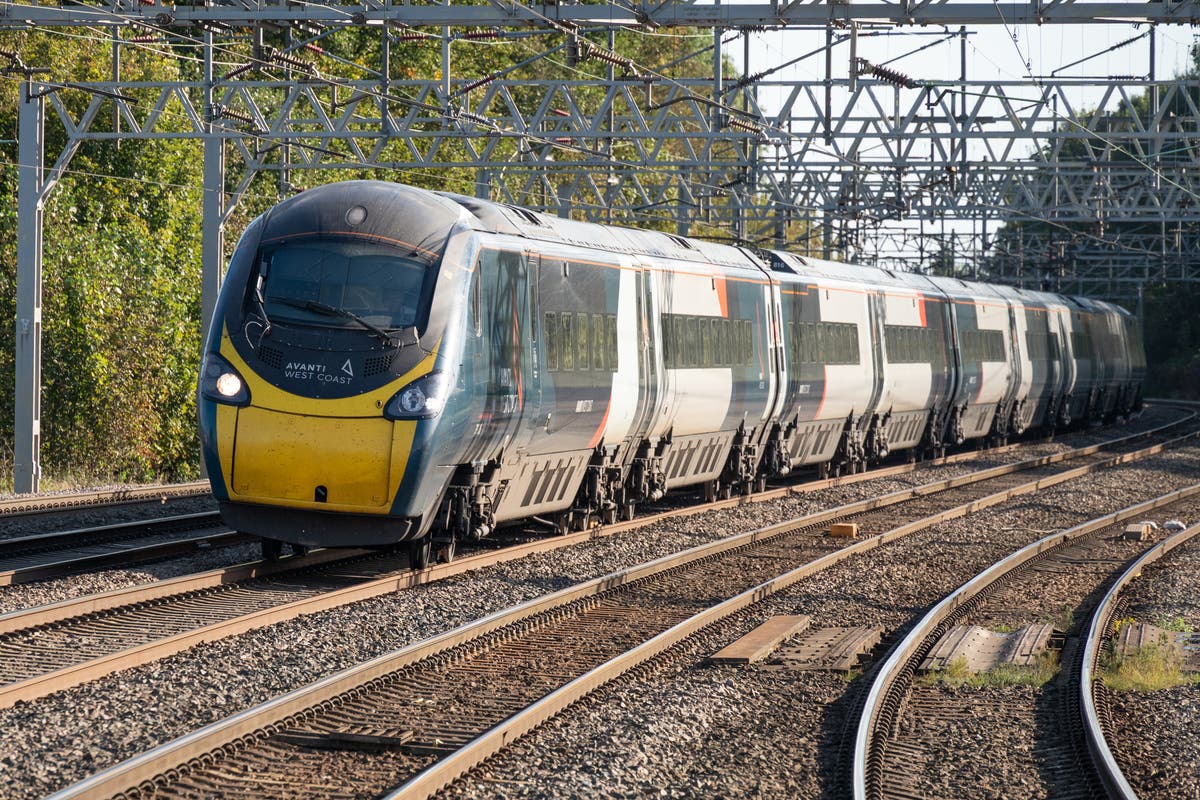
Something strange happens when you catch the train from Preston to Barrow-in-Furness. Somewhere north of Carnforth you start feeling a bit posher, more rural, even slightly twee or fey (no, it’s not the Brief Encounter effect). You might also sense you’re a shade less humorous, a tiny bit less working class perhaps. For, on crossing the River Kent, you enter what since 1974 has been a Twilight Zone of geography and identity. Though the towns on the other side – including Grange-over-Sands and Stan Laurel’s Ulverston – are still in the Historic County of Lancashire, they are, for many people, in a place called Cumbria, near the Lake District, “up there” where nothing is quite certain.
The borders of Historic Lancashire started to really matter to me when I began to do research for a book about my home county. Writing a combined work of history, travelogue and memoir – I wanted a bit of all three – about this great territory, minus Liverpool and Manchester, especially, was unthinkable. Proper Lancashire has more than five million, mainly urban residents; the current county council area, which is largely rural, has less than a third of that. I couldn’t give away all those readers – or those two amazing cities.
Read more: The best spa hotels in the UK
Moreover, the bit of Lancashire I come from – the village of Burtonwood – was hoofed, along with nearby Warrington, into a dubious, newly enlarged “Cheshire” in 1974. No way was I sacrificing my birthplace. So I set off to beat the bounds there first, walking the Sankey Canal – England’s first true canal – from St Helens to Widnes, doing long hikes along the Mersey and Manchester Ship Canal (I am waiting anxiously for the cruises to restart), taking in the World of Glass and the Warrington Academy, which once made the town the “Athens of the North”. Then I got busy re-exploring, from all angles, our two big cities.
Many of Liverpool’s key heritage sites – and tourist sights – underline its symbiotic, synergistic relationship with Lancashire. The docks where coal and cotton were loaded and unloaded; the beginning of the Leeds-Liverpool Canal, which sweeps through Wigan and Burnley; the East Lancs road, in some respects the only truly new one built since Roman Times. Ditto Manchester, which couldn’t have become Cottonopolis, with its magnificent mills and warehouses, without the string of textile-manufacturing towns that zigzag up from the city through Bolton and Rochdale to Nelson, Colne and Blackburn; and which tapped the talents of Lancastrians to become the world’s greatest post-punk music mecca. The original Station Agent’s House, built beside the epoch-making Liverpool and Manchester railway – opened in 1830 – is now an upmarket holiday let. There are red roses, the symbol of the county, on the doorway of the Salford Lads Club, a pilgrimage destination for Smiths fans.
I live near Clitheroe, a town where there’s never been a question of where it belongs – well, not since about the 12th century when Scotland had an eye on it. But even close to here, frontiers become tenuous. The north side of the River Ribble was split between the West Riding (of Yorkshire) and Lancashire, and after 1974, the latter was theoretically enlarged. In fact, the Forest of Bowland is shared by the neighbouring counties; when the Tour de France powers through next July, the most dramatic parts of the route will be along the famous glacial cleft known as the Trough. A late Victorian boundary marker called the Grey Stone of Trough marks the historic border.
But it’s that southern slice of the Lakes that sometimes seems in danger of accepting it is now Westmorland rather than Lancashire. This is sad and wrong, as Coniston Water and the Old Man of Coniston, as well as the Esthwaite Water and the west bank of Lake Windermere are historically in Lancashire. Counties should never have to give up their highest peaks or biggest bodies of water.
Read more: The 10 UK beaches that look like they’re abroad
Also, if you stay on that train from Preston all the way to Barrow, on alighting you are left in no doubt that this is a Lancashire town. There is industry, living as well as historical (the excellent Dock Museum recounts the gritty story of iron, shipbuilding and submarines) and leisure is sought mainly on the seaside rather than up on the Fells. From Piel Island I was looking back towards Morecambe’s art deco Midland Hotel and Blackpool Tower, not to Wordsworthian pasturelands – though Lancashire has these, too.
What people call a place really matters. When I agreed to start my book tour at the community-owned Book Stop in St Helens, the manager – with no prompting from me – titled the event “Don’t Call us Merseyside”. A show of hands, from an audience made up of different ages, indicated Lancastrian identity was alive and well. All I can do is implore you to explore the fought-over fringes and blurred edges of Britain’s greatest county.
Chris Moss is the author of Lancashire: Exploring the Historic County that Made the Modern World, published by Old Street.
How to do it
East Coast Main Line trains from Glasgow, Edinburgh and London stop in Preston, while trains to Manchester operate from across the country.
Where to stay
The Assheton Arms in quaint Downham has repeatedly been listed as one of the best gastropubs in the country. Aside from its remarkable food (and bucolic setting), it offers well-furnished rooms from £89 per night.

















.jpg&h=630&w=1200&q=100&v=c0f97a310e&c=1)