OpenAI wants to monitor AI abuse without forcing customers to hand over their data
OpenAI’s Private Safety Processing promises to detect abuse across multiple interactions while preserving Zero Data Retention, putting its privacy strategy in direct contrast with Anthropic’s 30-day retention requirement.
 FrankLin
Its new Private Safety Processing system takes a different approach from Anthropic, which requires 30-day retention for some advanced models
 OpenAI
Unsplash
OpenAI
Unsplash
OpenAI wants to get better at spotting people abusing its frontier AI models without asking privacy-conscious customers to give up Zero Data Retention. In an August 19 announcement, OpenAI introduced Private Safety Processing, a system designed to detect suspicious behavior across multiple interactions while preserving ZDR for eligible API customers.
OpenAI says its existing ZDR safeguards evaluate requests individually, making patterns spread across several interactions harder to detect. Private Safety Processing is supposed to fill that gap without giving OpenAI employees access to the underlying prompts or responses.
For now, the system is being tested with early customers. Axios reports that it’s aimed at enterprise and API customers rather than individual ChatGPT subscribers.
 Rachit Agarwal / Digital Trends
How does Private Safety Processing work
Instead of inspecting one request at a time, the system can look for suspicious patterns across related interactions. When it detects possible misuse, OpenAI receives a limited signal about the activity rather than the customer’s underlying content.
With Zero Data Retention deployments, that content stays on infrastructure controlled by the customer. OpenAI is also developing another setup where encrypted content can live on its infrastructure while customers hold the encryption keys. OpenAI itself wouldn’t possess those keys.
Why Anthropic chose another route
Anthropic has made a different tradeoff. For its Covered Models, prompts and outputs are retained for 30 days, including for organizations that previously used Zero Data Retention. Anthropic says that window helps its safeguards catch attacks that only become apparent across multiple requests.
OpenAI is trying to solve the same safety problem while keeping ZDR intact for eligible customers. For businesses that adopted ZDR specifically to limit how long an AI provider can hold their content, those are materially different propositions.
 Aerps.com / Unsplash
What zero retention still leaves out
Private Safety Processing is still an early preview, and OpenAI hasn’t yet publicly demonstrated that it can provide abuse detection equivalent to approaches that retain customer content. The technical details behind those privacy protections also aren’t public yet.
There’s an explicit exception. OpenAI says images flagged as potential child sexual abuse material can still be retained for legally required manual review and reporting, even under Zero Data Retention.
OpenAI plans to begin rolling out Private Safety Processing and publish a technical white paper in September. That should give customers a much better idea of whether cross-session safety monitoring can work without weakening the existing ZDR protections they rely on.

Paulo Vargas is an English major turned reporter turned technical writer, with a career that has always circled back to…
Google is giving students a free year of AI Pro and a new Gemini Student Hub
Gemini is getting more tools to help students study, organize, and research

Google is currently behind OpenAI and Anthropic at the top end of the frontier-model race. Anthropic’s Claude Opus 5 and OpenAI’s GPT-5.6 Sol both rank ahead of Gemini 3.1 Pro on major independent benchmarks, while Google’s long-awaited Gemini 3.5 Pro remains in testing after reportedly falling short of internal performance targets.
While Google works on closing that gap, it is also pushing Gemini aggressively toward a very different audience. Eligible U.S. college students can now get Google AI Pro free for an entire year, alongside a new Student Hub built specifically around studying, coursework, and research.
Google gives Gemini Live its own Deep Research upgrade
Researching complex topics on the move just got a lot easier for Gemini Live users
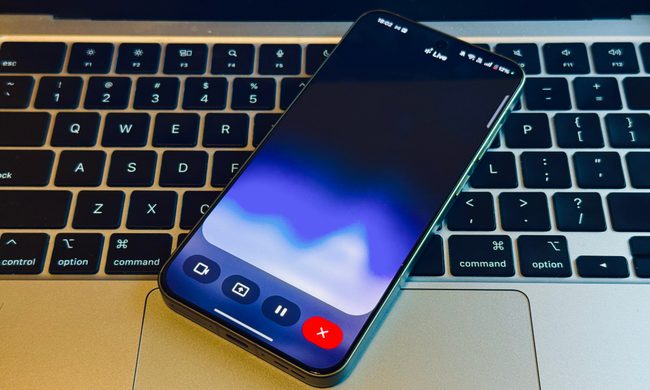
Google is giving Gemini Live a pretty meaningful upgrade with the addition of Deep Research. The feature is rolling out today to all Gemini app users, letting you start a full research task through a voice conversation and come back to the finished report later.
Deep Research has already been available inside Gemini for some time. Instead of giving you a quick chatbot answer, Gemini can dig through multiple sources, follow useful leads, and put together a much more detailed report with citations. The process can take several minutes, but you don’t have to keep Gemini open while it works. Once the research is finished, you’ll receive a notification.
Meta’s AI assistant finally lands on Mac, but it has some catching up to do
The new desktop assistant can analyze what's visible on screen and accept voice input across macOS.
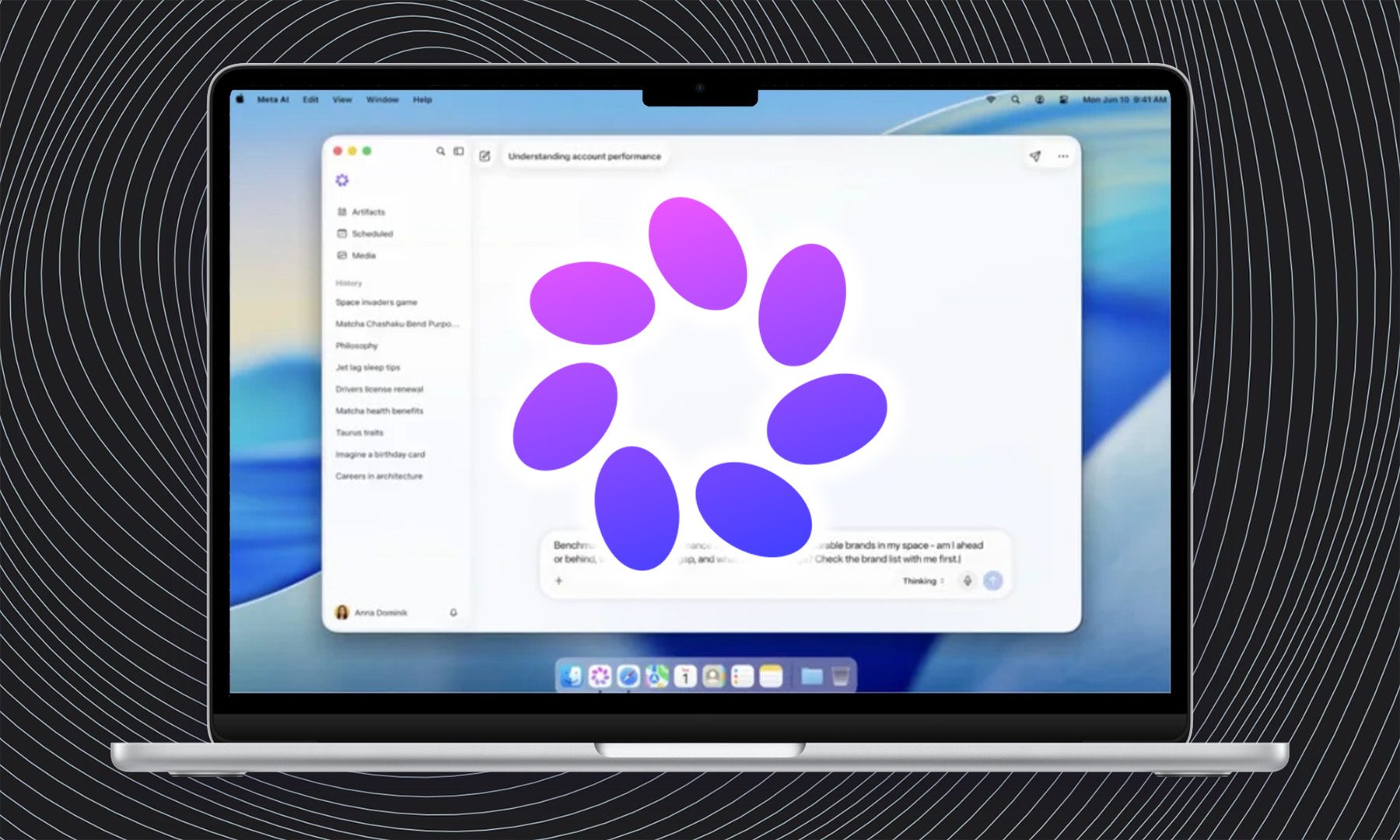
Meta has finally brought its Meta AI assistant to the Mac with a dedicated desktop app, giving users another AI chatbot to keep open alongside all those other tabs. The app can analyze a shared window, answer questions about what's on screen, generate content, and accept voice dictation across macOS.
Meta AI can actually see what's on screen