Stories of Ancesteral Healing
In this heartfelt and intimate sharing, Brother Dinh Tuc reflects on his journey of ancestral healing, and on how taking refuge in the Sangha have supported and held him and his family throughout the five-year monastic training programme he...
 MikeTyes
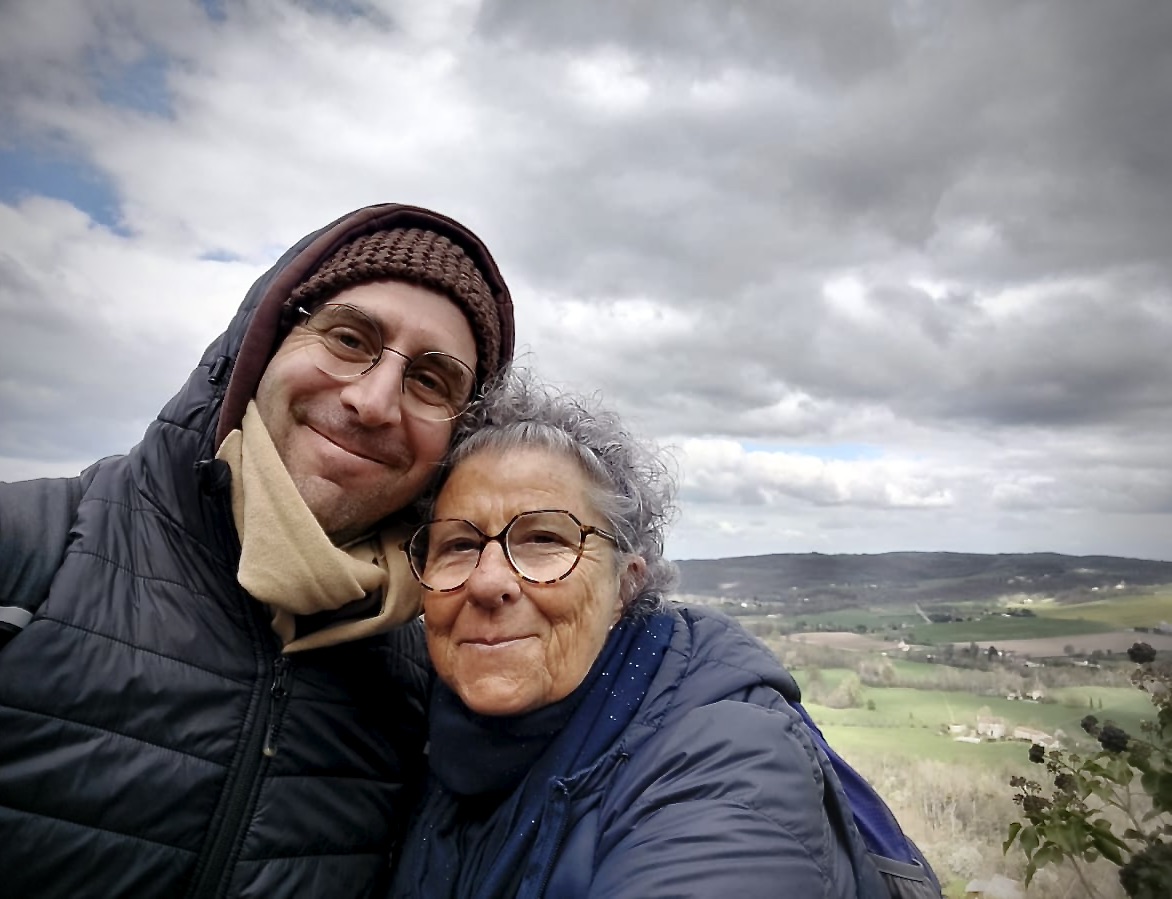
In this heartfelt and intimate sharing, Brother Dinh Tuc reflects on his journey of ancestral healing, and on how taking refuge in the Sangha has supported and held him and his family throughout the five-year monastic training program he completed this year. Through mindfulness, deep looking, and the loving embrace of the Sangha, he shares stories of healing, reconciliation, and gratitude.
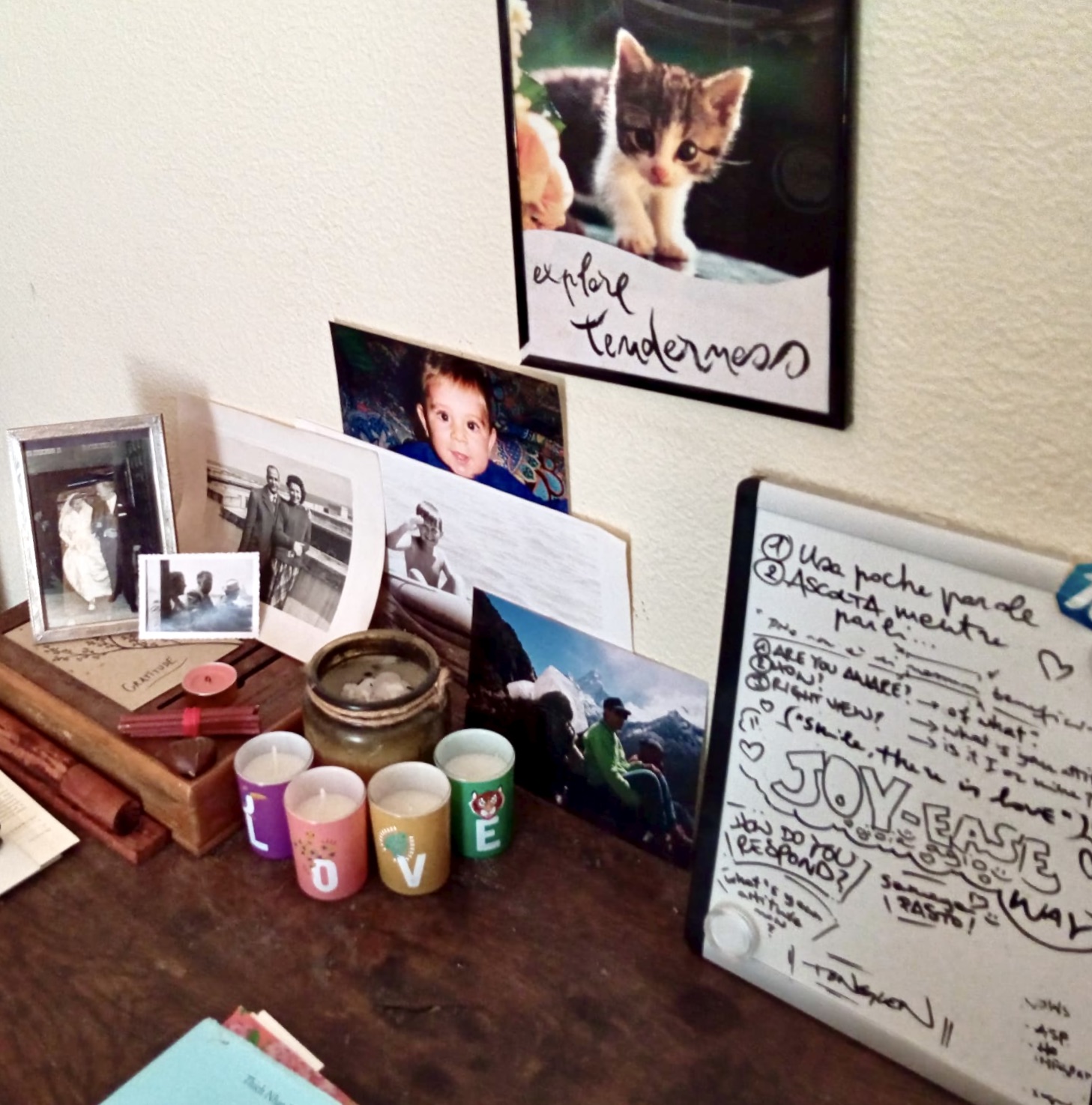 Brother Dinh Tuc’s desk during his time as a monastic in Plum Village France. (Photo courtesy of Br. Dinh Tuc)
During the past years I was invited a few times by some of my mentors to share about stories [of ancestral healing], but I have always avoided doing it. Why? Breathing and feeling my body, I would say for shyness, and below it, because of fear.
Stories are very interesting events, like memories. They are clearly so fluid and unreliable, a kind of chain of habitual running thoughts, images, and often unconscious mental activities, and yet there is a great power in them. They can easily affect our body and mind and those around us. Sharing them makes them even more powerful, more real. I can see how taking ownership of some of them is easy for me, as if I and them were somehow separated from life and from each other, instead of looking at them as simply many conditions coming together. If I don’t speak about my stories, I can experience them in a much lighter and inconsistent way, limiting the “identity luggage” that I have the tendency to nourish and carry around.
This description is about understanding my stories and how they operate within my mind. True understanding is not separate from love. So if I take refuge in the aspiration to love, to connect and to offer something beautiful, even the power of a story and my attachment to it can become a skillful way to expose my vulnerabilities and to connect with others’ hearts.
This is what I am learning and that’s why during this period of changes, while this five year program is approaching its end I have asked my heart “what would you like to express now?” This sharing is my heart’s response.
I’ve also written the following letter for the Son Ha Sangha during the last days before the Great Ordination [in March 2025]. During that period the Sangha kindly supported some extra time out of the daily activities for us ordinees. This silent time has allowed me to be fully present for my heart. One morning, in a burst of gratitude and trust, this sharing naturally came up and I wrote it down straight away. It was something very intimate, so I was not sure if it was appropriate [to share it], so I checked with my mentors. They were pretty happy with it. So, here it is…
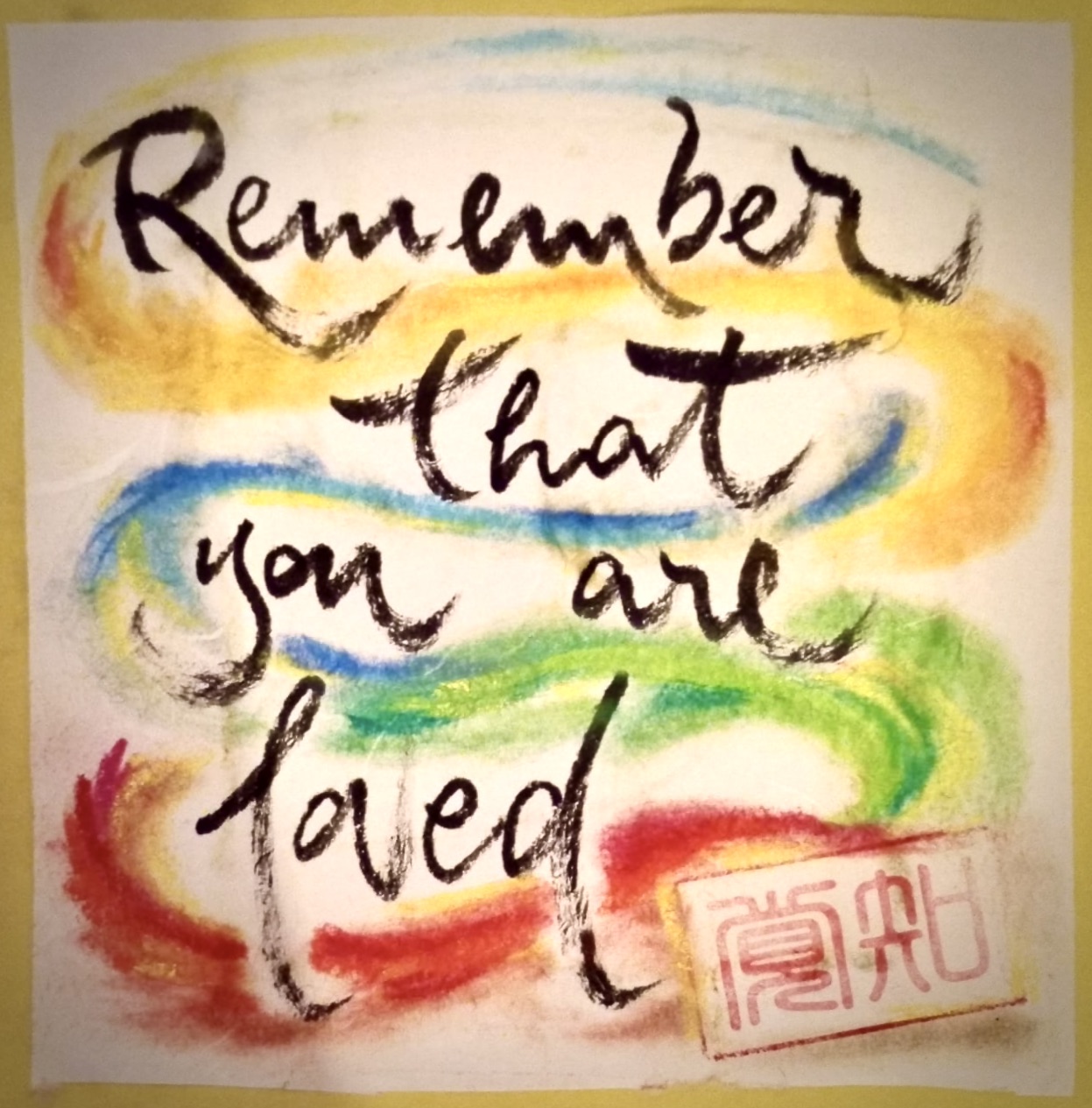 Original calligraphy by Brother Dinh Tuc
Dear respected Thay, dear Brothers, dear Sangha
Thank you for being there for me and for so many others.
This morning, during my meditation in Thay’s hut, I touched a great deal of gratitude for you and for the opportunity to have some time and space slightly withdrawn from the schedule during these days. I also felt inspired to share a little more about my inner journey in order to cultivate understanding, love, emotional intimacy and spiritual intimacy, which seem to me to be the essence of true siblinghood.
During these past sixteen years of healing, sustained by the practice of mindfulness applied to daily life, retreats, and a couple of years of therapy, the story of my family naturally unfolded within the loving awareness of breath and body.
When my mom became pregnant with me, my father tried to convince her to have an abortion because he did not feel ready to start a family at that time. Luckily, my mom strongly refused and that’s why my dad became part of my life only years later, as he wanted to offer me the best possible education during my teenage and adult years.
At that time, my mother’s dad also had recently died, and my mother’s mom was so overwhelmed by grief that she gradually lost her will to live and eventually died just a few months after my birth. During this difficult period, my mother decided to leave behind her city in southern Italy and move north. She was a single parent, alone in a new place, and she immersed herself in many kinds of duties and responsibilities.
I do not remember spending much time together with her. I was mostly in front of the television. I was very spoiled. Every time I wanted something and could not get it, I would cry intensely until my exhausted mother would eventually give me what I wanted.
Sometimes, however, my mother would become so furious because of this behavior that she would beat me repeatedly until I could no longer cry and would freeze.
In my meditation, I could clearly see the beliefs that these repeated episodes developed within my young psyche, which could not make sense of them: “The most important person in my life loves me very much, but sometimes she can deliver an unbearable amount of violence. She cannot be wrong. Therefore, there must be something deeply wrong within me.” Every time this physical and verbal violence penetrated my body and mind, this message was deeply absorbed.
This process divided a basic part of my psyche into three main elements that still manifest from time to time: a wounded child, a punisher (or inner critic), and a soother (or sensual indulgence). The strange thing is that this painful process was somehow very functional. The “punisher” pushed me intensely and allowed me to achieve many successes in education, career, and community building. The “soother” tried to balance the system through various unhealthy coping mechanisms. Meanwhile, the inner child cried unattended.
This is why, during a retreat in 2011, when one of my mentors guided Thay’s meditation on the five-year-old child, it was so profoundly healing for me. Since then, I have continued nourishing this healing process within myself and around me.
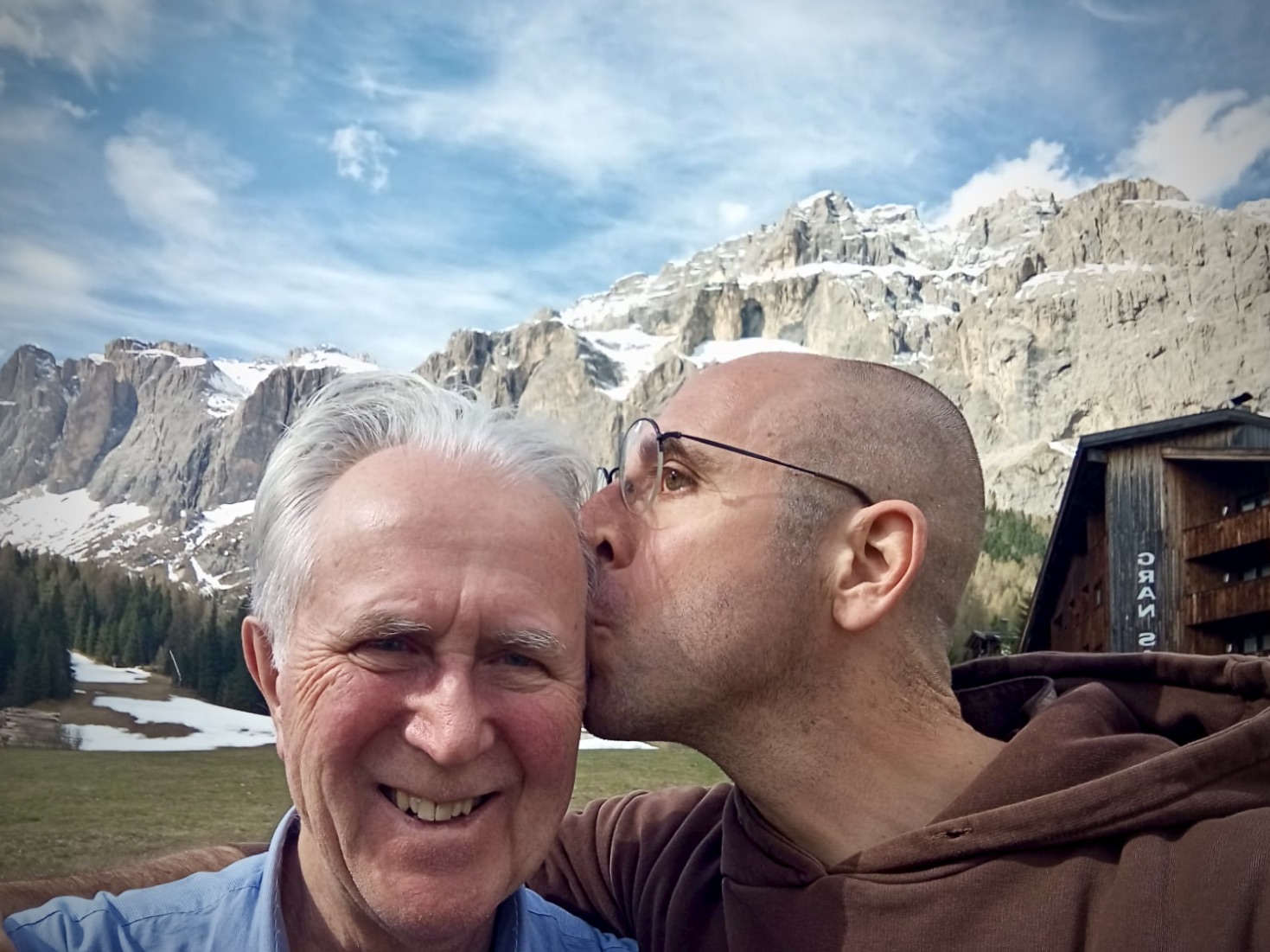 Brother Dinh Tuc sharing a moment of affection with his father. (Photo courtesy of Br. Dinh Tuc)
Today, my relationship with both my mother and my father is one of the greatest sources of happiness in my life and in theirs.
Still, caring for the inner child remains a very sensitive and vulnerable process within me. Each time I feel that I am not meeting other people’s expectations, the “punisher” becomes activated and creates toxic judgments about myself and others. If this process is not fully recognized, these judgments are projected outward and generate suffering. This builds up emotional stress that the soother then attempts to suppress through compulsive activities or consumption.
Through the practice of gathas, sitting meditation, and walking meditation, I am able to generate enough energy of mindfulness to become fully aware of this process and free enough from it. This is why service meditation and taking on responsibilities can be especially challenging for me. During work or other social activities, this process can manifest in its full power, and my capacity to care for it properly is limited.
During these six years of living in Plum Village, I have developed daily routines that nourish this loving healing process, no matter what happens.
Year after year, I witness more stability and flexibility manifesting during service time, especially during children’s programs and tours. This is why I have such trust in the practice. It allows joy and true compassion to flow wherever they are needed, within me and around me. I cannot imagine anything more meaningful than that.
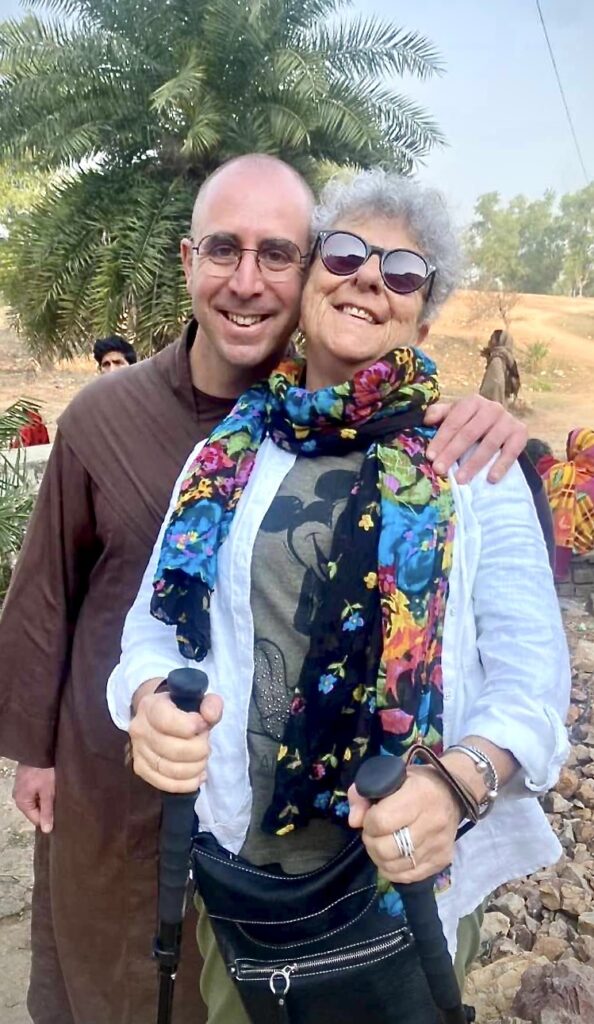 Brother Dinh Tuc with his mother in India.
 (Photo courtesy of Br. Dinh Tuc)
In 2024, my mother saw an article on the Plum Village website and had a crazy idea: “Why don’t we go to India together?” She is interested neither in the practice nor in Buddhist holy places, so I asked, “Why?” Her response was “So that we can spend time together while we still have the opportunity to do so.” I remembered when she told me that the last thing she shared with her dying mother was her mother’s regret about not having traveled enough. “Okay, let me see,” I answered.
I checked with my mentors and elder brothers. The Bhikshu Council approved, so we did it. My mother was very respectful of Sangha activities and yet remained very untamed and independent.
Each time my mother visited me in Plum Village, I witnessed a growing intimacy emerging from our hearts’ capacity to accept each other as we are.
The first three or four visits were quite scary and exhausting for me. It felt as though a repressed part of my heart was running around, doing and saying anything to anyone. Slowly, I learned to own this projection: feeling it in the body, allowing it to be there, feeling all the shame and fear, breathing and smiling with them, and lovingly letting go with the trust that everything was fine and that the Sangha was capable of taking care of itself without me trying to make my mother follow the schedule or practice the mindful manners.
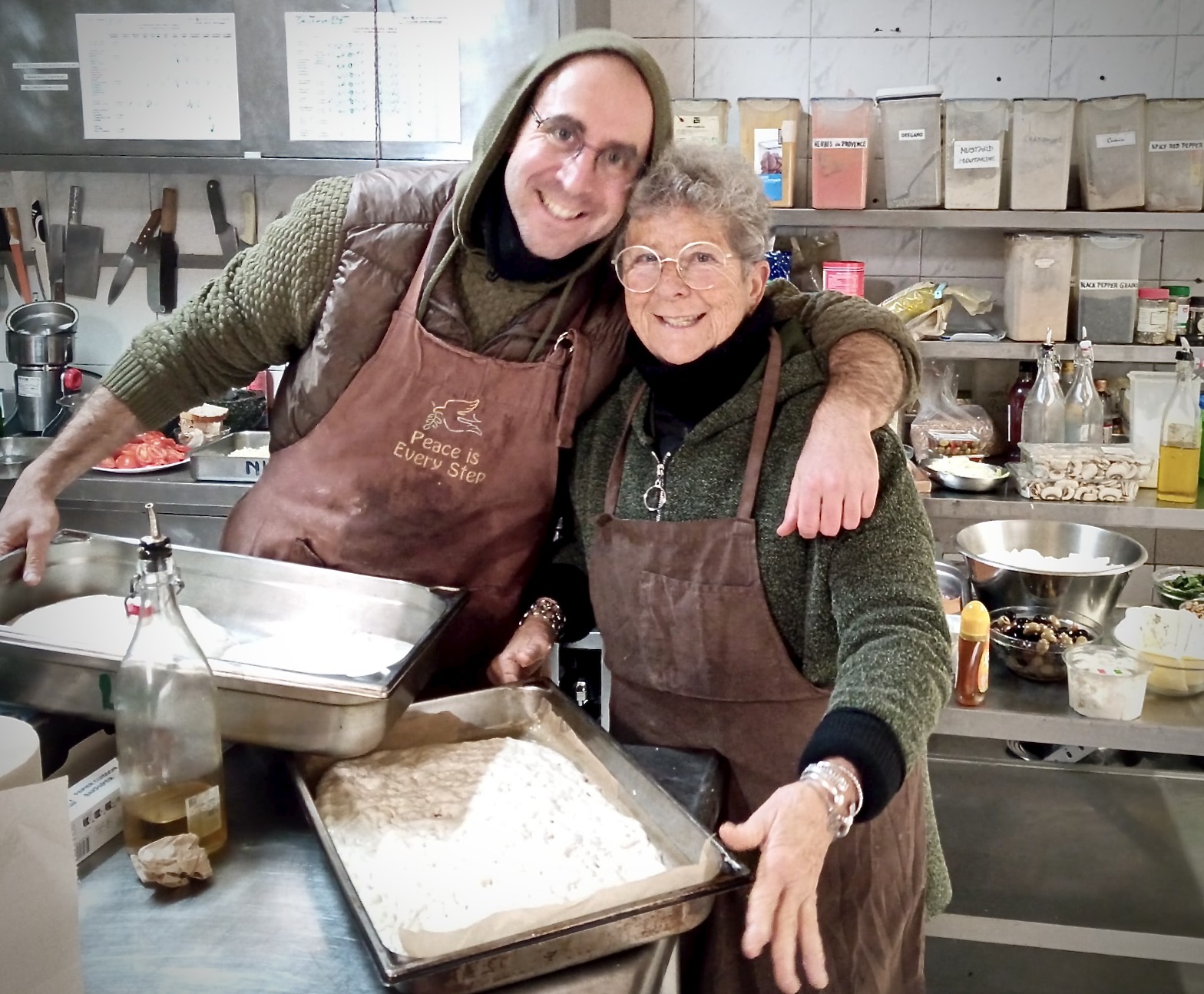 Brother Dinh Tuc and his mother making focaccia together In Upper Hamlet. (Photo courtesy of Br. Dinh Tuc)
The result was so beautiful. The Sangha allowed her simply to be a mother: offering food (focaccia and chocolate), sewing hats, and distributing candies into brothers’ pockets. In this way, she grew more and more confident in her own capacity to love the Sangha. Through this, we could even offer songs, rap performances, and sketches for the Sangha during the New Year’s Eve Be-Ins.
What a wonderful process for both our hearts. They are truly not separate.
I hope this sharing may cultivate some trust, love, and understanding.
With gratitude, love, and trust,
Brother Dinh Tuc
For those interested in becoming a monastic in the Plum Village tradition, you may find more information here.
For those interested in monastic life or who already have monastic aspiration in the Plum Village tradition, you are encouraged to attend the 90 days Rains Retreat in order to experience deep, continuous practice with the sangha.




















.jpg&h=630&w=1200&q=100&v=7abd35f457&c=1)



![Scrunch AI alternatives compared: Features, pricing, and fit [2026]](https://53.fs1.hubspotusercontent-na1.net/hubfs/53/scrunch-alternatives-1-20260812-5006620.webp)