The best towns and cities for a holiday in Brazil 2026, from Rio to Recife
Discover Brazil through its diverse selection of towns and cities on your next trip
 Troov
Troov
It does not come as a shock to find that the largest country in South America, and the fifth largest in the world, has natural beauty that rivals almost any other nation – but travellers shouldn’t overlook the towns and cities that complement Brazil’s landscapes.
Aside from its 7,500 kilometres of coastline and the Amazon rainforest that’s home to millions of species, Brazil also has diverse urban spaces, with a plethora of cultures, historical attractions and cuisine all built upon its indigenous roots and its history of Portuguese colonisation.
The best places to visit may be the ones you have never heard of. Rio will continue to grab headlines due to its Carnival celebrations and world-famous landmarks like Christ the Redeemer, but other major cities like São Paulo and Salvador are catching up, with visitors becoming wise to their wealth of architecture, arts and historic sites.
The capital, Brasilia, is a unique destination due to its avant-garde design, while places like Paraty and Florianópolis welcome those tourists who prefer tropical relaxation over ticking off museums.
Meanwhile, destinations such as Ouro Preto and Olinda are akin to living monuments, giving an insight into the country’s fascinating history.
Whether you’re a history buff, beach lover or partygoer, there’s likely somewhere for you in Brazil; we’ve rounded up a list of the best cities and towns to visit.
The best towns and cities in Brazil to visit in 2026
1. São Paulo
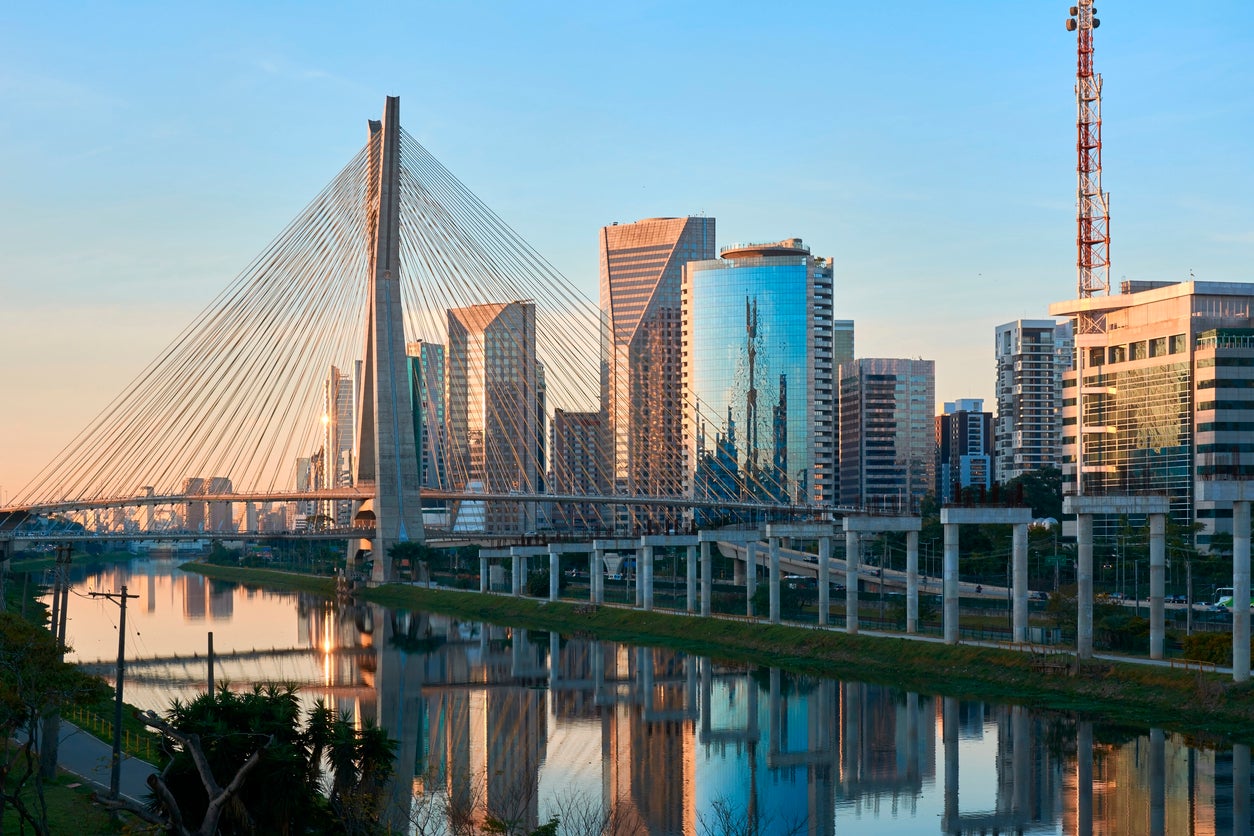
Brazil’s largest city is home to around 11.9 million people, and in recent times has become one of the continent’s most important cities.
There are some green spaces, including the Ibirapuera Park, a 400-acre oasis that is São Paulo’s answer to Central Park, but the only jungle here is a concrete one, with the city characterised by an abundance of skyscrapers. For some of the best views, head to the 161 metre-high Farol Santander building or the 46-storey Edificio Italia.
São Paulo is fiercely proud of its past yet is also cosmopolitan, likely helped by its role as the economic heart of the country. It has a variety of museums and cultural centres – focusing on everything from football at Museu do Futebol to the development of Brazilian history at the Museu do Ipiranga – as well as art galleries containing both modern and historical works at the Museum of Art of São Paulo.
Where to stay
Situated in the safest part of the city in the Jardins neighbourhood, the Tivoli Mofarrej offers quiet luxury in a modern setting. Rooms are spacious and contemporary, and are complemented by an award-winning Anantara spa, outdoor pool area and a Franco-Portuguese restaurant.
Read more: This Brazilian wildlife hotspot is cheaper than an African safari
2. Rio de Janeiro
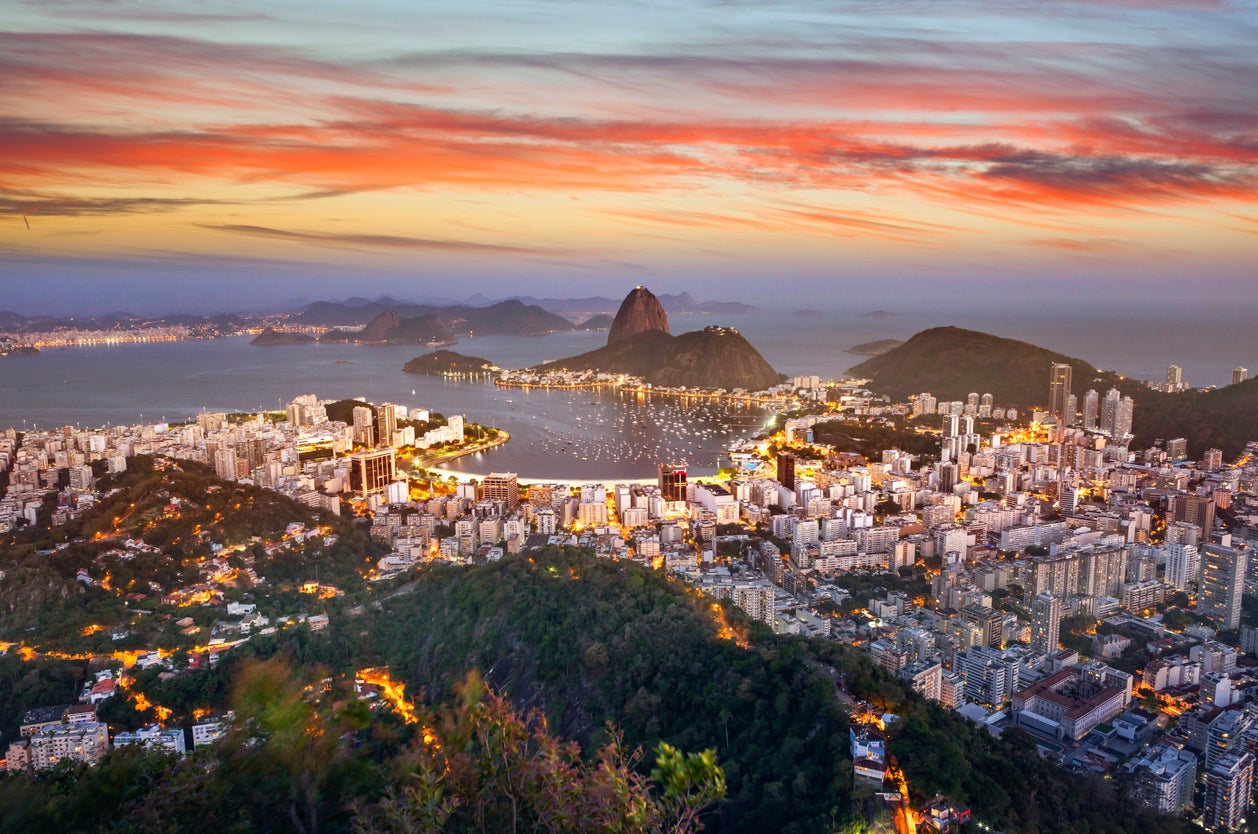
The country’s capital until 1960, Rio de Janeiro is often seen as the face of tourism in Brazil. It has become a hugely popular destination, as famed for its welcoming atmosphere as it is for its magnificent natural sites and long stretches of beach.
One of the world’s most picturesque cities, Rio sits on a large bay flanked by golden sands and towering hills. The city has three particularly well-known landmarks: the Christ the Redeemer statue and Sugarloaf Mountain are a must for panoramic views over the city, while an afternoon spent sipping cocktails on Copacabana beach is a great way to get acquainted with the city and its locals.
Away from nature, Rio has plenty more to entice tourists. February’s Carnival celebration is one of the world’s largest parties, while the nightlife of Lapa remains buzzing year-round. The best of the city’s museums include Museu do Amanhã (Museum of Tomorrow), which showcases futuristic science exhibits, and Centro Cultural Banco do Brasil (CCBB), where you can catch live performances or browse the art galleries. The city also attracts football fanatics looking to catch a Campeonato Brasileiro league match at the legendary Maracanã Stadium.
Where to stay
For a conveniently located stay on Copacabana, choose the Hotel Astoria Palace. Located near the centre of the famed beach, this modern hotel benefits from a rooftop terrace and pool, with rooms that are minimalist yet stylish.
Read more: How to spend two days in Rio de Janeiro’s coolest neighbourhood
3. Brasilia
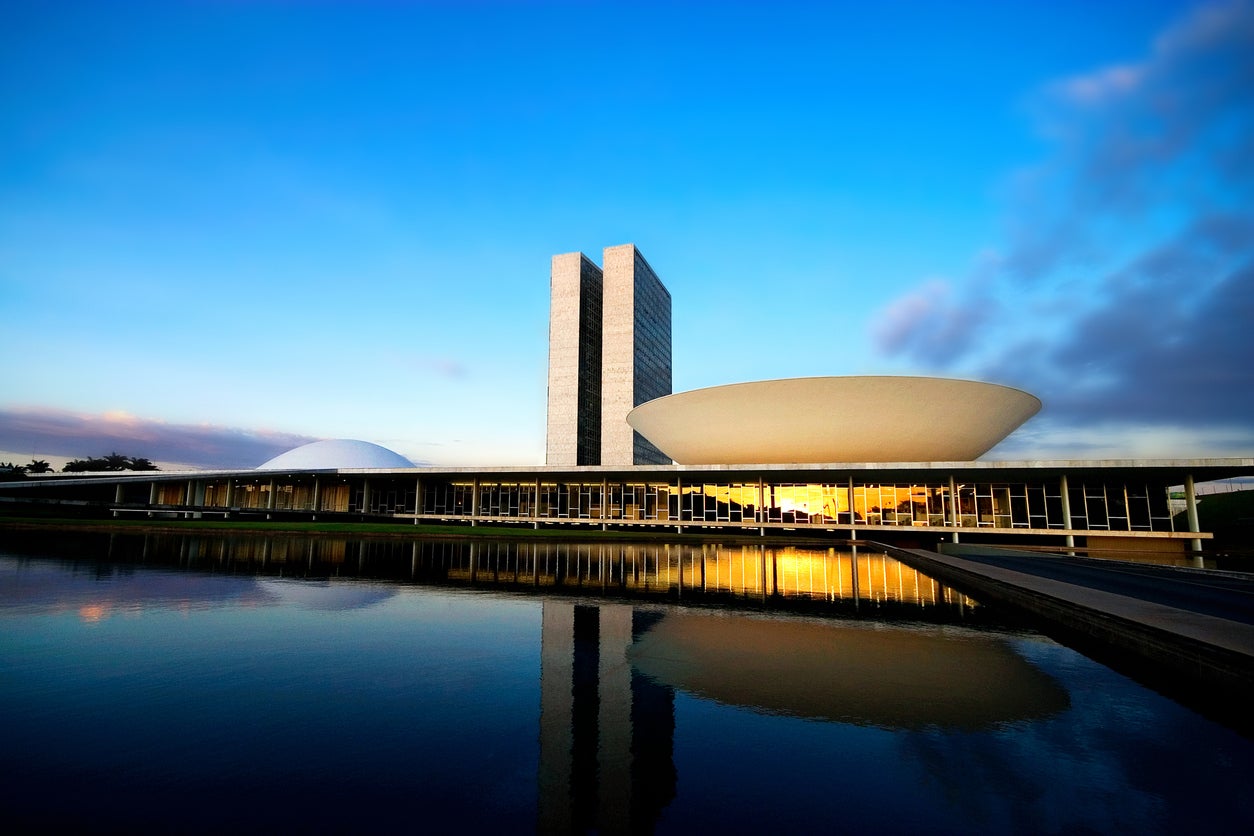
Brazil’s capital was conceived as part of a nationwide modernisation project, and has been labelled by Unesco as a “landmark in the history of town planning”.
This purpose-built city is replete with forward-thinking design elements, and several of the most impressive sites are government buildings, from the towers of the National Congress to the Itamaraty Palace, home to the Foreign Ministry.
The city’s cathedral and the Dom Bosco Sanctuary have become two of Brazil’s most well-known religious structures, while the Praça dos Tres Poderes is perhaps the most dramatic location in the city, a plaza lined with various monuments and governmental buildings.
Brasilia also has a branch of the Centro Cultural Banco do Brasil (CCBB), with a varied events programme and galleries for temporary exhibitions, while the Museu Nacional contains the city’s best art exhibitions. Zonal laws mean most of the green spaces (and more lively nightlife areas) are outside the centre, so visit Paranoa Lake park or the Itiquira municipal park to get back to nature during a visit.
Where to stay
The Melia Brasil 21 is a trendy hotel in the city’s well-developed South Wing area, under two miles from most of Brasilia’s main attractions. Rooms are spacious and functional, with the highlight of the hotel being a large rooftop and pool area with amazing views.
Read more: The best beaches in Brazil for surfing and sunbathing
4. Salvador
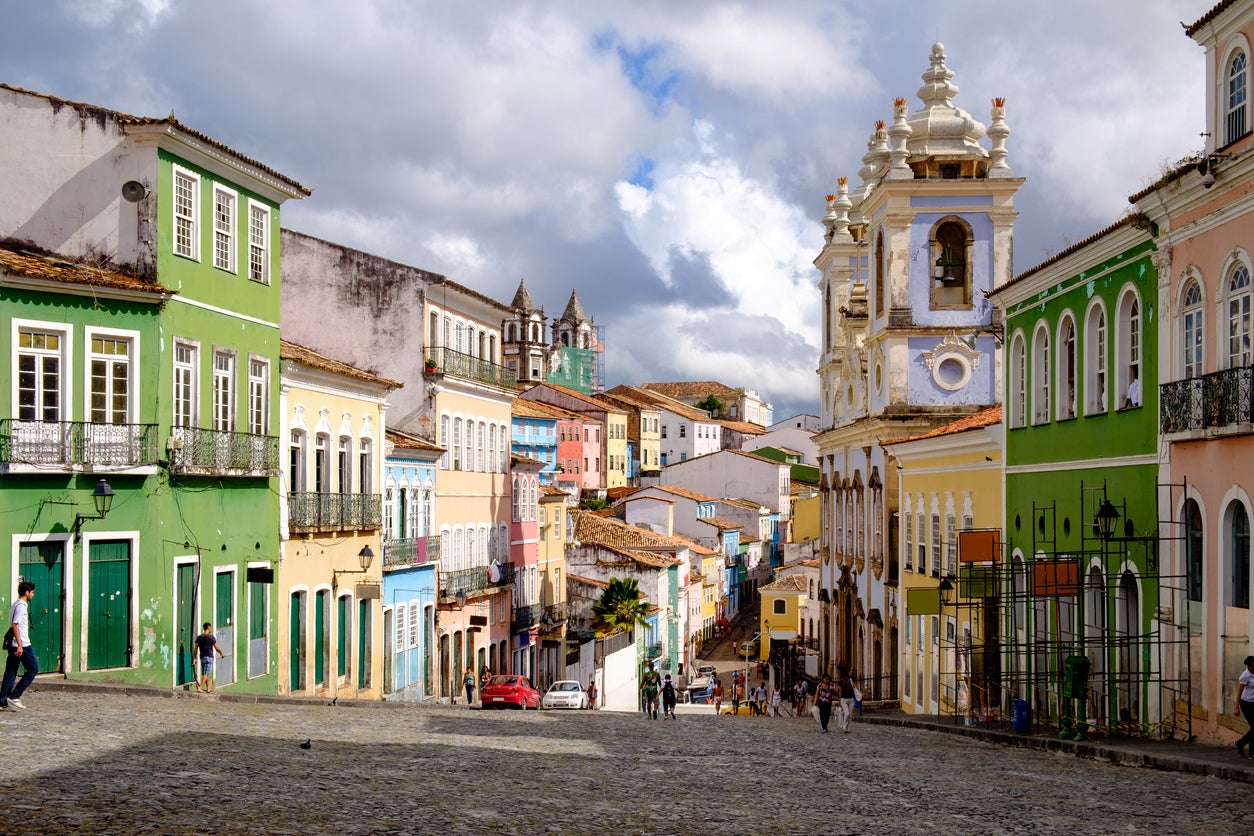
Salvador was once Portugal’s colonial capital, which is reflected in both the colonial architecture and the vibrant Afro-Brazilian culture. Its beaches and temperate climate make the city a popular tourist destination among Brazilians, with many also visiting for Carnival parties that rival Rio’s.
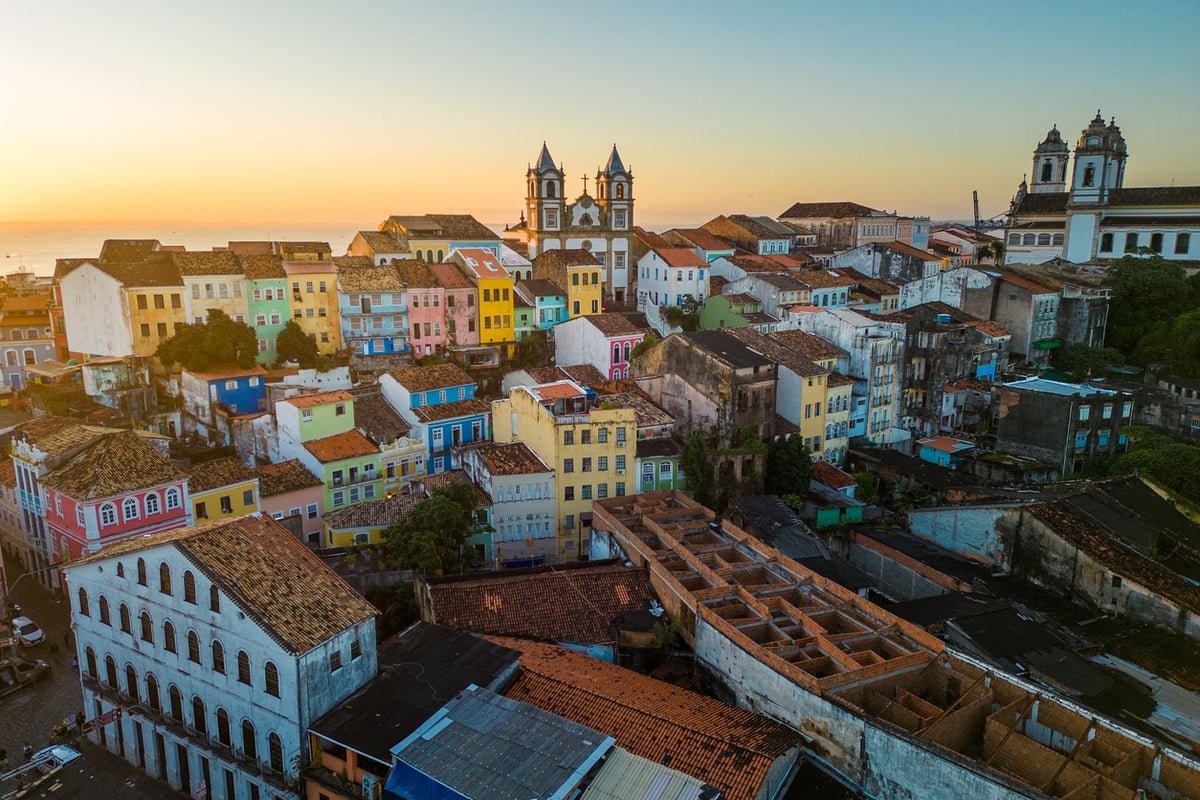
The city’s architecture is a mix of skyscrapers and colonial buildings, the majority of which are in the historic centre. Known as Pelourinho, this mazy area of cobbled streets is lined with dozens of pastel-coloured structures, and has become Brazil’s centre of Afro-Brazilian culture, home to dance schools, capoeira classes and museums on Afro-Brazilian history, local archaeology and ethnology, including Museu Afro-Brasileiro. The Largo do Pelourinho square, near the centre of the neighbourhood, is one of the city’s most lively nightlife spots.
Where to stay
The Fera Palace hotel sits close to the coast next to the Pelourinho district, offering easy access to some of the most exciting parts of the city. Its rooms are large, sleek and sophisticated, while the decor throughout the hotel is exceedingly stylish, from the bar to the rooftop terrace (which comes with panoramic views over the sea).
5. Manaus
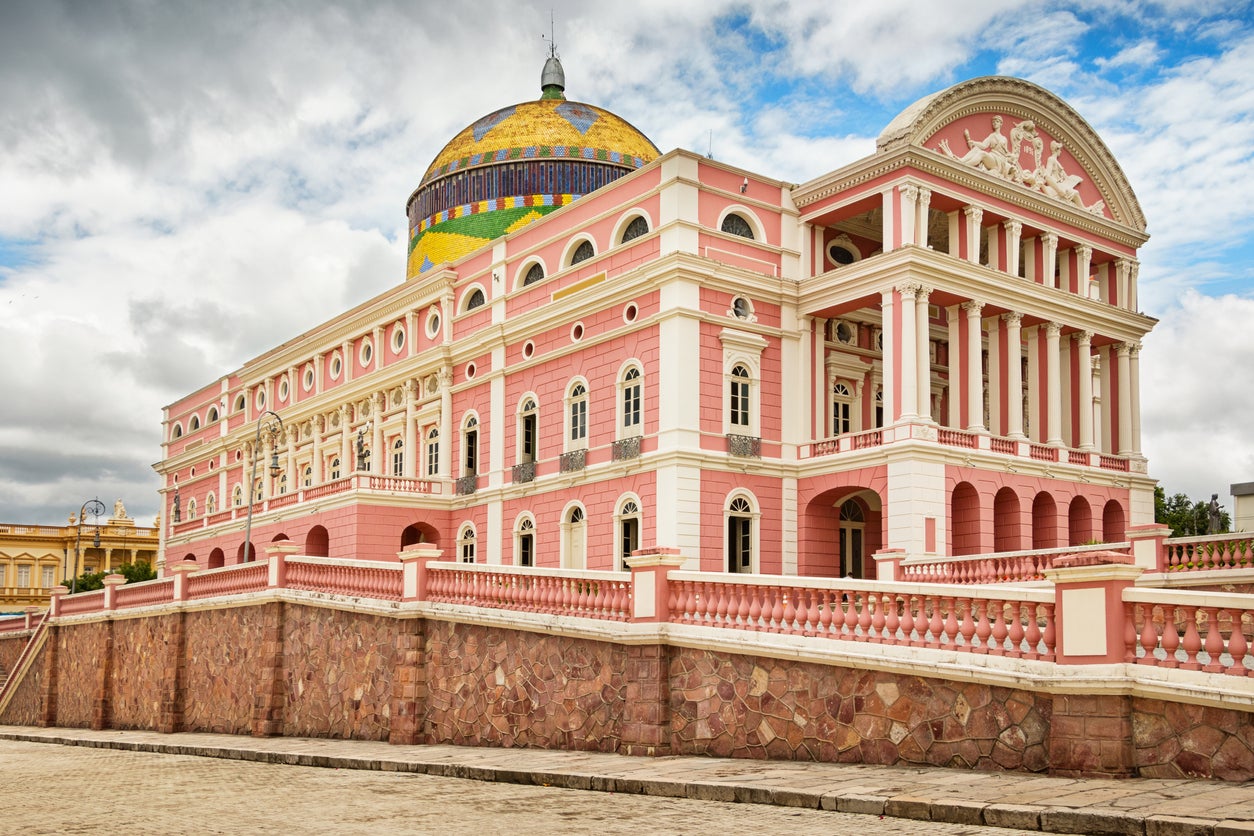
Manaus is just one of two cities in the Amazon, along with Belem, that is home to over one million people. The city is the gateway to the river and rainforest, close to where many tours set off and providing a final bit of civilisation before setting off on an Amazonian adventure.
Unsurprisingly considering its location, Manaus is home to natural beauty such as the nearby “Meeting of the Waters” where the almost black water of the Rio Negro meets the khaki-coloured Rio Solimoes. The 9,000 acres of the Januari Ecological Park offer an intriguing day trip into the Amazon, but for something on the edge of the city, the Adolpho Ducke botanical gardens provide an urban forest that spans over 100 square kilometres.
Manaus itself has plenty more to keep you occupied away from nature. The 19th-century theatre Teatro Amazonas is one of the city’s most impressive landmarks (and hosts several regular theatre and opera shows), while the Museu da Amazonia houses artefacts from around the state and the rainforest area. Take a tour of the Adolfo Lisboa market for the opportunity to buy a souvenir, or relax on an Amazonian beach at Praia da Lua.
Where to stay
The Juma Opera Boutique Hotel is the best option for staying in a central location in Manaus, and includes a terrace overlooking the theatre, a large outdoor pool and elegant interiors.
Read more: Will a controversial new airport ruin Machu Picchu?
6. Recife and Olinda
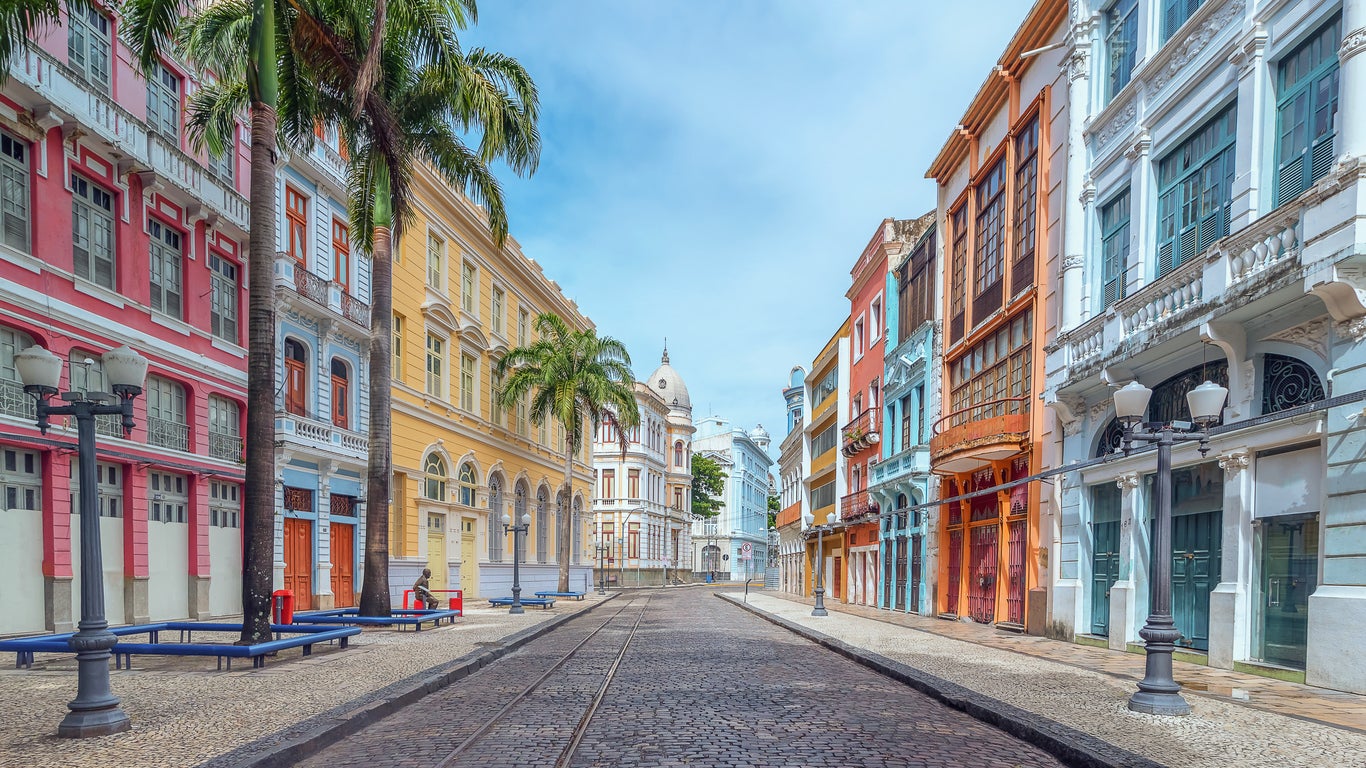
Recife is one of the northeast’s major tourism hubs, blending a beautiful coastline with a captivating historic centre and a sprawling urban setting. The city’s museums cover modern art, the city’s history and some of the culture of the state (at the Cais do Sertao), while the coast around the city and to the south has some of the best beaches in the state, including Pina, Carneiros and Boa Viagem.
Recife’s old town, known as Recife Antigo, is one of the most picturesque neighbourhoods of any city in Brazil. Like a grander version of Salvador’s Pelourinho, it is filled with wide cobbled streets, colourful colonial architecture and a slew of bars and restaurants that have made it the city’s socialising centre.
Olinda, which lies around six miles from Recife, is another colonial-era marvel. Almost like a smaller version of Recife Antigo mixed with the white-washed structures of Ouro Preto, it is home to a network of convents, chapels and Baroque churches dotted among the gardens and hillsides.
Where to stay
The three-star Hotel Luzeiros offers guests affordable luxury not far from the beach and major attractions of the city. Rooms are pared-back but stylish – and come with city views – while a terrace and pool offer opportunities to relax when the beach seems too far away.
Read more: I trekked through the Andes to a crowd-free Inca city
7. Ouro Preto
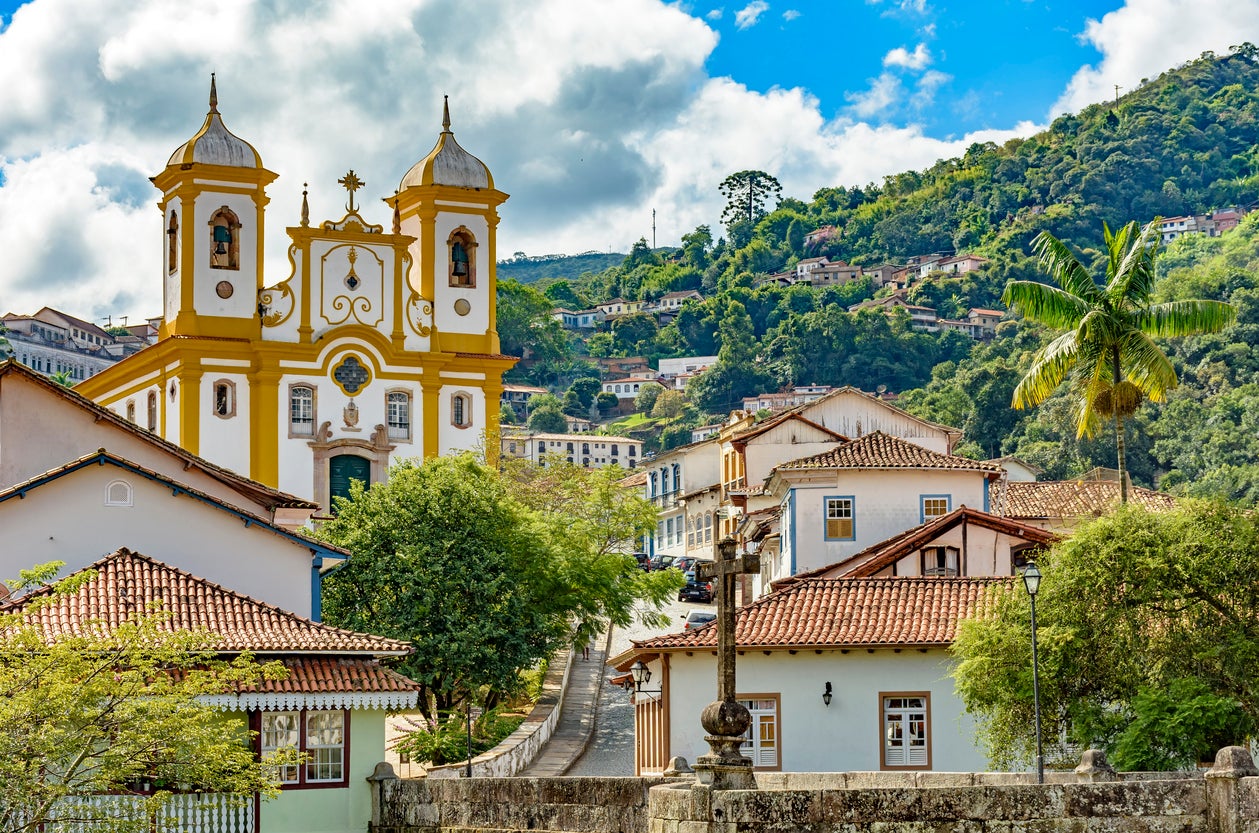
Ouro Preto is located in Minas Gerais, a state known for its mining history and a variety of natural beauty. The city was the state capital until it was replaced by nearby Belo Horizonte in 1897.
Once the largest city in South America during the continent’s gold rush, Ouro Preto’s expansion was limited by the hills and creeks surrounding the town. Nowadays, these hills provide beautiful scenery, while the lack of expansion means that the town has retained a large amount of its colonial architecture. In the Old Town, splashes of pastel-hued facades are dotted among a sea of russet-roofed, white-washed buildings.
Ouro Preto is less of a tourist town than other places on this list, but it still has enough to keep even intrepid travellers busy. Several of the gold mines that once made it so famous are still open, including Veloso, Chico Rei and Passagem, one of the largest in the world open to the public. Several churches and religious buildings still stand too, such as the grand Church of São Francisco de Assis, as well as fascinating museums like Museu da Inconfidência, which tells the story of the Minas Gerais Conspiracy revolt in the late 1700s.
Where to stay
Situated just outside of the centre of Ouro Preto, the Hotel Recanto do Ouro provides idyllic surroundings for a comfortable stay in this former mining town. It sits among verdant hills and tropical trees, with lodge-style rooms and outdoor areas that provide incredible views.
Read more: The best countries to visit in South America, from Brazil to Argentina
8. Paraty
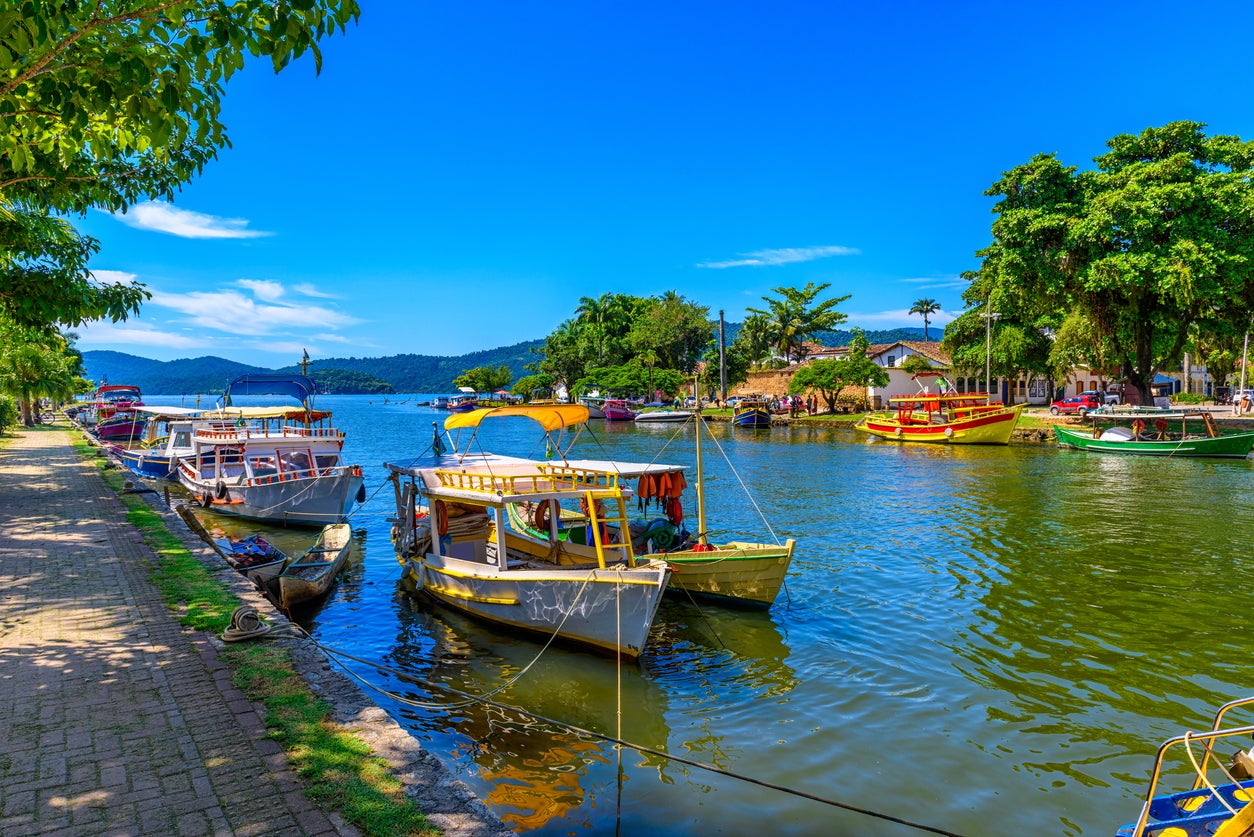
Located around four hours west of Rio de Janeiro, Paraty is a smaller town that has popped up on the tourism radar thanks to a mix of its striking natural setting and well-preserved colonial architecture. It is surrounded by dense jungle, rising hills and tropical islets, and fronted by a series of bays and beaches including Praia do Jabaquara and the nearby Paraty-Marin.
The town is a haven for nature lovers, with the nature reserve of Fazenda Bananal and the magnificent Mamangua Bay two of the most distinguished sites. Water sports are popular too, with the potential to kayak around nearby mangroves, alongside tours of cachaca distilleries.
Where to stay
The Pousada Villaggio is a true jungle retreat, set in a colourful villa with pleasant outdoor and pool areas. Rooms are simple and functional, and the location gives you easy access to the centre and beaches.
Read more: I travelled to Kingston to discover my Jamaican roots – this is what I found
9. Florianopolis
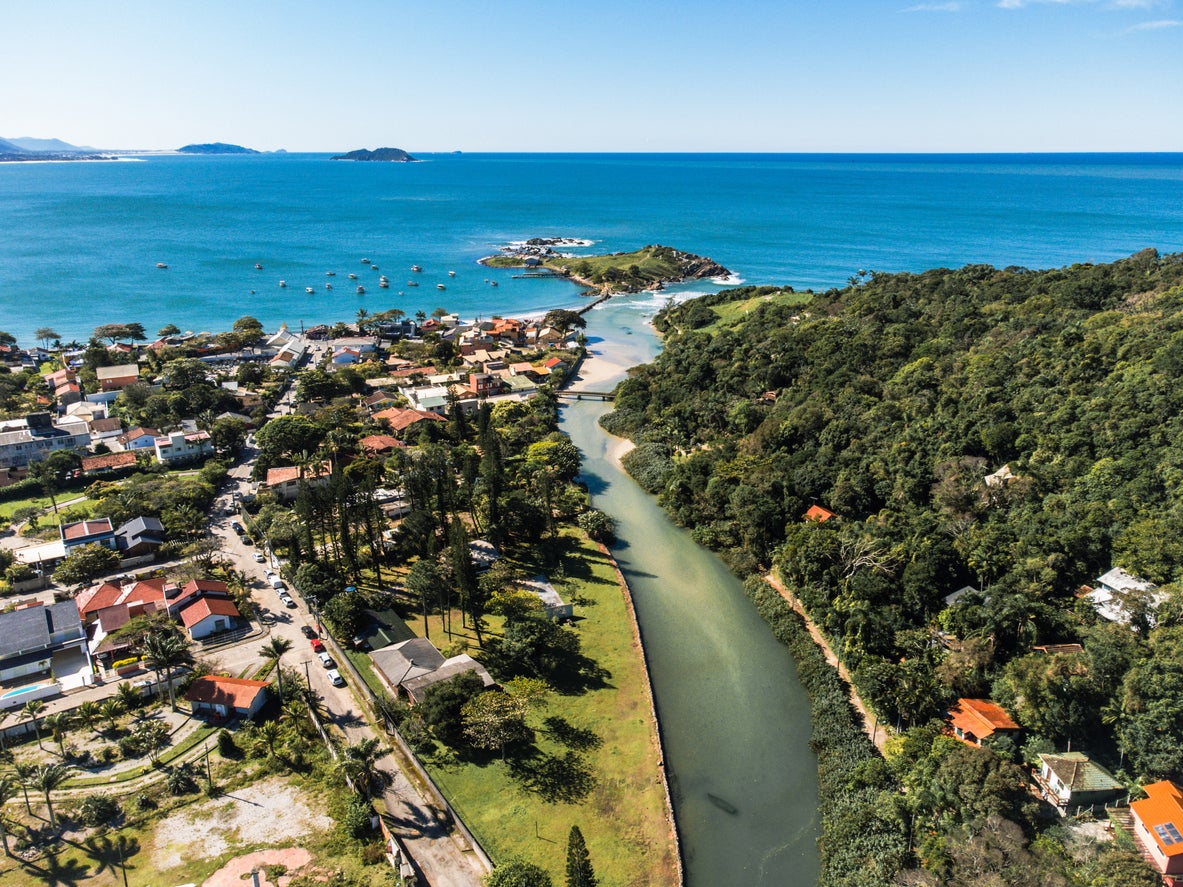
A city that is divided between the Brazilian mainland and the island of Santa Caterina, Florianopolis is a place where the setting welcomes relaxation and exploration. It lies on the coast in front of verdant hills, with the two different parts linked by the grandiose Hercilio Luz bridge, which is the longest suspension bridge in the country and one of the architectural highlights, along with the Metropolitan Cathedral.
Many will spend the majority of their time relaxing, exploring the surrounding natural beauty, from panoramic hikes around Morro das Aranhas (Spider Hill) to surfing and kicking back on beaches like the lively Praia Mole, the wild and isolated Lagoinha da Leste or Joaquina, known for its huge waves and giant sand dunes.
Don’t leave Florianópolis before visiting the sprawling 150-year-old fig tree planted in the Praça XV de Novembro public square.
Where to stay
The LK Design Hotel stands out for its location and a fantastic outdoor pool area. It lies across the bridge in the central district, close to several attractions, and provides modern rooms with sweeping views over the coast.
Read more: I’ve been visiting Mexico City for 25 years – this is why it’s the greatest city in North America
10. Bonito
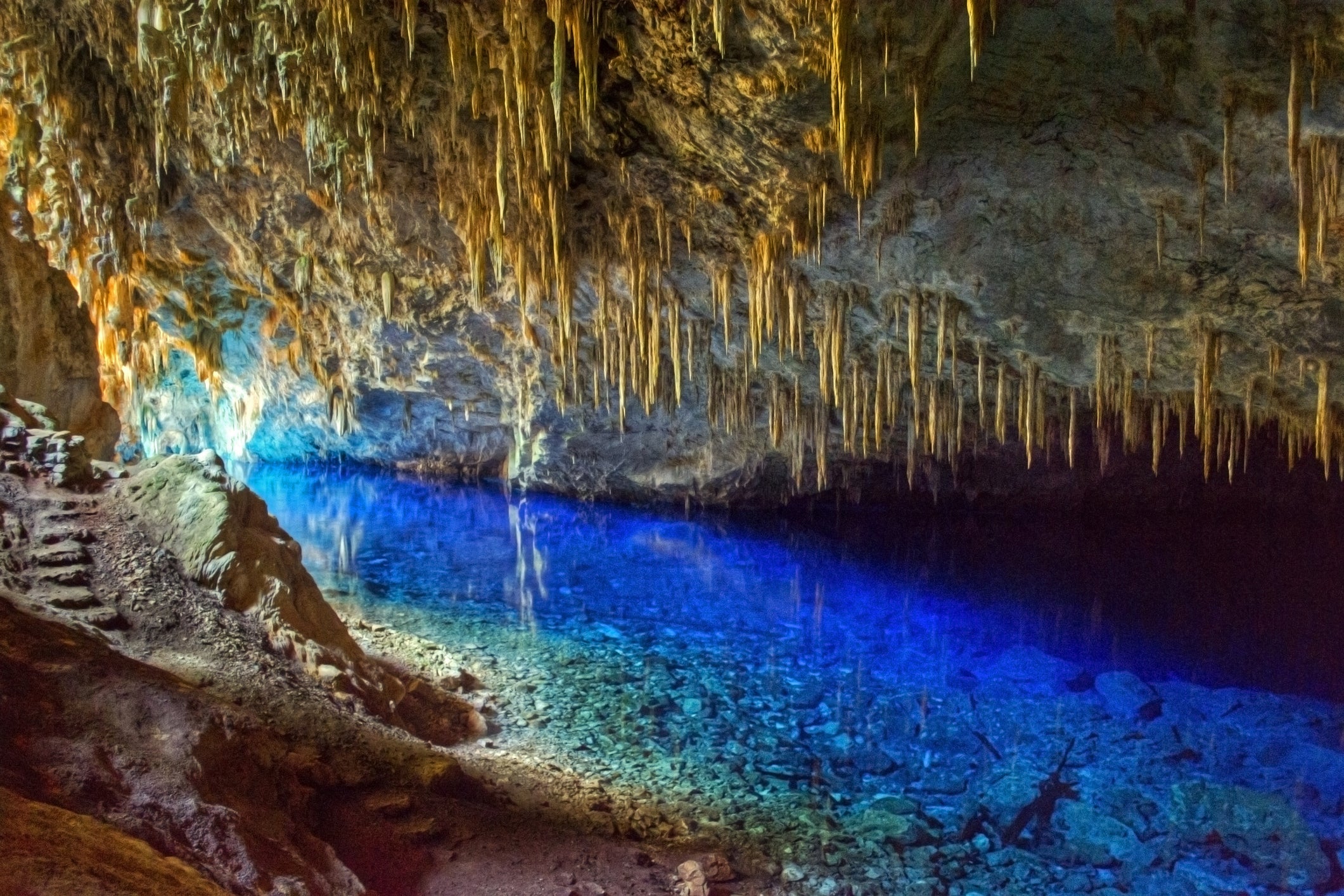
Bonito is known as Brazil’s “ecotourism capital” for good reason as visitors flock to this town for its famous translucent rivers, mineral-covered caves and a chance to get up close to freshwater fish during snorkelling tours in natural aquariums. Most tourist attractions in Bonito require you to book as part of a tour to visit and there are plenty of options if you arrange in advance, from trips to the submerged Mimoso Cave and its impressive rock formations, to swimming in natural baths next to eight different waterfalls on a Boca da Onca Ecotour. One of the most impressive caves worth visiting is the Gruta do Lago Azul, which is filled with astonishingly crystal-clear water. Lagoa Misteriosa is one of the most popular places to dive, with transparent waters in one of Brazil’s largest flooded caves at 220 metres deep.
When not spending their time snorkelling and cave diving, visitors can also admire the wildlife above the water surface. At 156 metres high, visitors can also brave the highest rappel platform in the country at Boca da Onça, with a chance to abseil close to a waterfall and through the native vegetation.
Where to stay
The three-star Nature Bonito Hotel is an affordable place to stay in the city’s centre. The hotel caters for families, couples and groups, and has a swimming pool a breakfast area and free parking. Rooms are basic, but some come with a private balcony to take in the views.
Read more: Exploring Mexico City in the footsteps of Frida Kahlo
11. Foz do Iguaçu
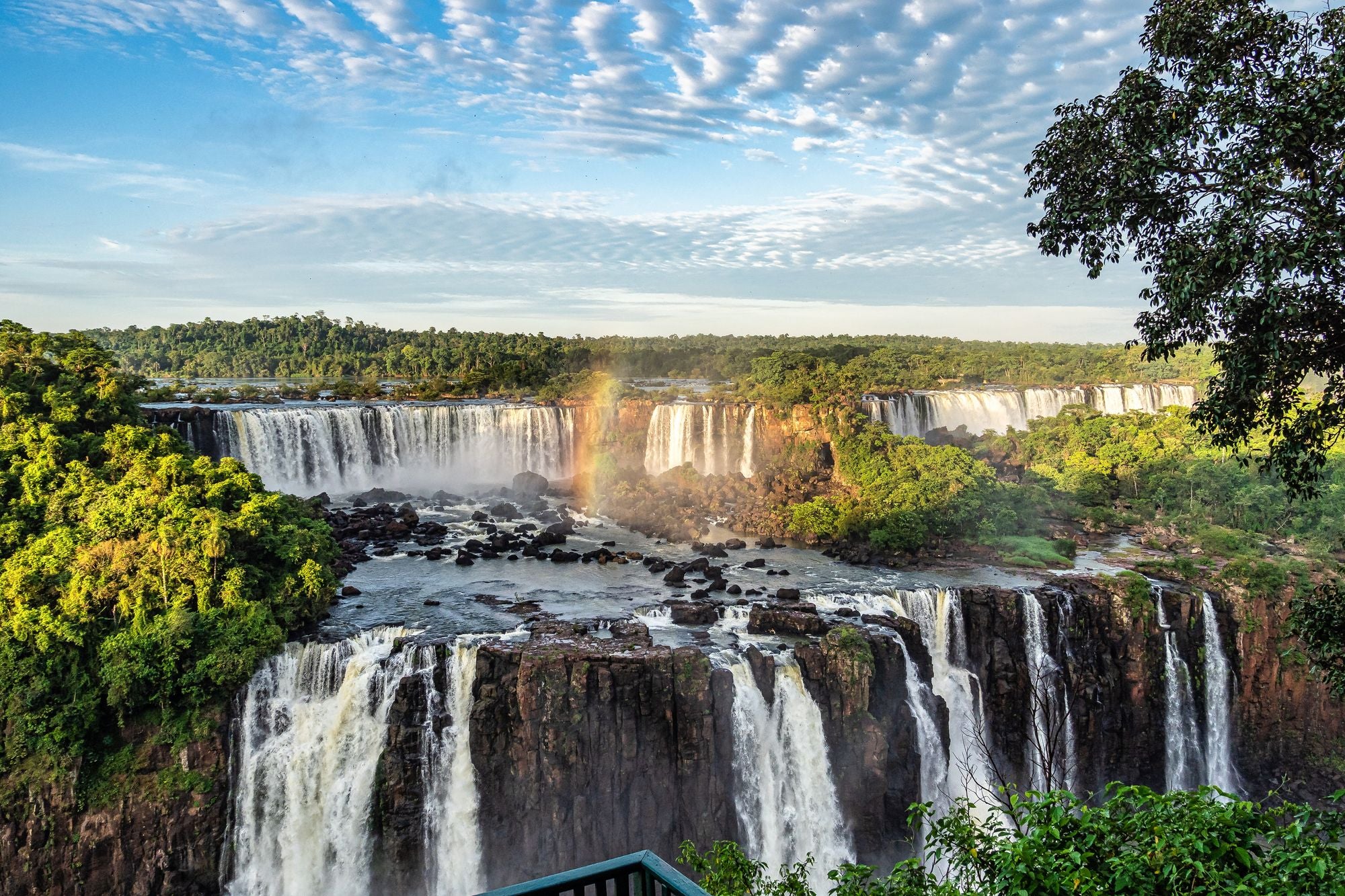
Brazil is part-home to the largest waterfall system on Earth, with about 275 individual cascades across nearly three kilometres, found near Foz do Iguaçu. Straddling the border of Argentina and Brazil, the Iguaçu Falls is one of South America’s ultimate days out, with plenty of viewpoints and a boardwalk along the river to snap pictures of the waterfalls. One of the most popular viewpoints is the Three Borders Landmark, where Argentina, Brazil and Paraguay meet at the confluence of the Iguaçu and Paraná rivers.
Close by is the city of Foz do Iguaçu, where many people base themselves while visiting Iguaçu Falls. It is home to several other points of interest, including Chen Tien Buddhist Temple, one of the largest in Latin America, founded in 1996 by the local Chinese community, where you can admire several statues in its manicured gardens. The Parque das Aves bird sanctuary in the city is also open every day to visitors, with a focus on the conservation of Atlantic Forest species such as parakeets, macaws and toucans.
Where to stay
Luxury lovers will enjoy a stay at Hotel das Cataratas, part of the opulent hotel group Belmond. This hotel is situated right next to the falls, rather than in Foz do Iguaçu itself, but this means that guests have some of the most unrivalled views of the waterfalls. Aside from lavish suites with old-world elegance, the hotel also has a fine dining restaurant, a pool, tennis courts and exclusive early and late access to the falls.
Read more: Beautiful Mexico beach towns away from the mega resorts