5 Fitness App Marketing Strategies That Guarantee Downloads (+Campaigns from Famous Brands)
Embarking on the right fitness app marketing strategy can be your golden ticket to standing out, captivating users, and guiding them toward your app as their ultimate fitness companion. With the fitness app market projected to reach $14.7 billion...
 Aliver

Embarking on the right fitness app marketing strategy can be your golden ticket to standing out, captivating users, and guiding them toward your app as their ultimate fitness companion.
With the fitness app market projected to reach $14.7 billion by 2026, according to Grand View Research, the opportunity for apps to make a significant impact is clear. Yet, the vast number of options available to consumers makes being unique and special a considerable challenge.
How can your app not only attract attention but also retain it in such a competitive environment?
This blog post is designed to answer this critical question. We are ready to guide you through the maze of digital marketing strategies essential for your fitness app’s success.
With users spending over 3 hours per day on their smartphones, as reported by eMarketer, the potential to engage and convert is at an all-time high. The focus here is on leveraging this potential through a mix of targeted fitness marketing tactics that speak directly to the needs and desires of your audience, ensuring your app becomes their go-to choice for fitness.
Inside Fitness App Marketing Strategies & Campaigns
Spot and Define Your Target Audience Master App Store Optimization (ASO) Invest in Influencer Marketing & Fitness Influencers Use Social Media Platforms Optimize Your Fitness Content Strategy Top Fitness App Marketing Campaigns from Famous Brands Strava – Your Goals Start Here Nike Run Club – Eliud Kipchoge | Ready to Run NYC Fitbod – Start You Strength Journey Peloton App – Lift Up, Take Off Apple Fitness+ – Welcome to the ClubSpot and Define Your Target Audience
Success in the fitness app market starts with a strategic dive into the psychographics, motivations, and goals of your target audience.
Understanding what drives your potential users allows you to craft messages that resonate on a deeper level. By pinpointing the nuances that make your audience unique and tailoring your marketing to match, you can encourage them to explore and engage with your app.
Take MyFitnessPal as an example. They have mastered the art of appealing to individuals focused on tracking their nutrition and exercise.
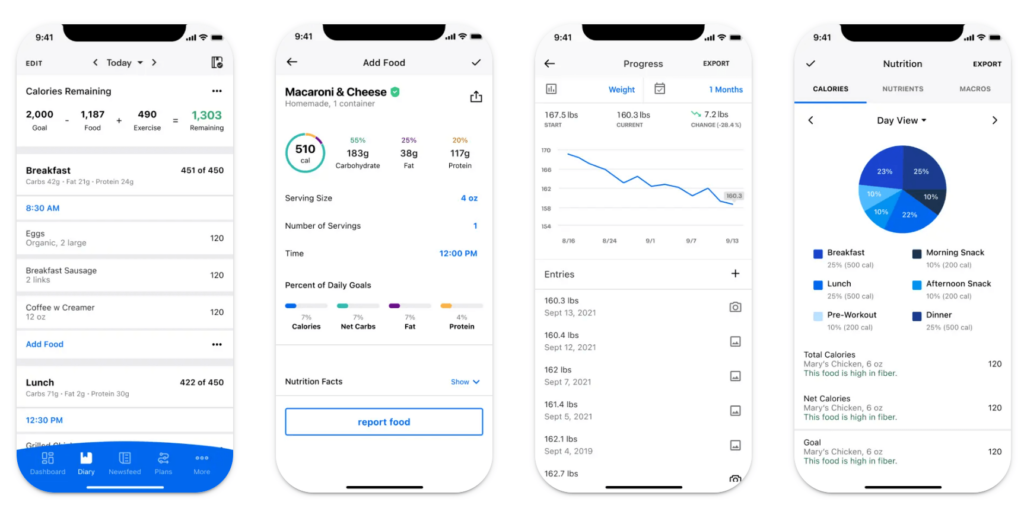
By honing in on the motivations of users who aim to maintain a healthy lifestyle or lose weight, MyFitnessPal has built a robust community around wellness. Their success lies in their ability to communicate directly with users’ desires to improve their health through better eating habits and regular physical activity.
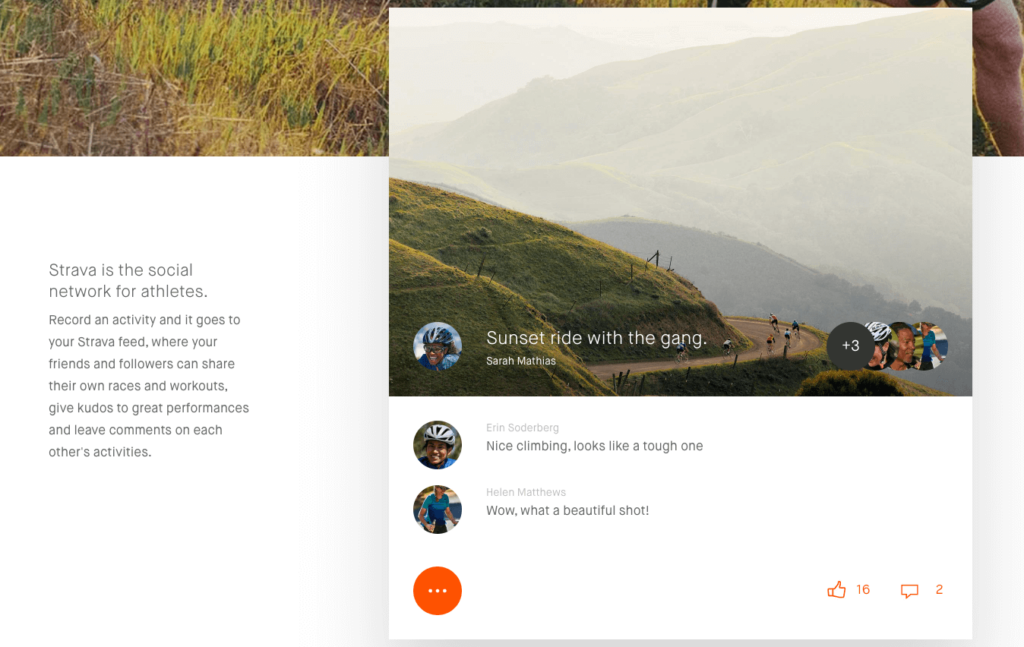
Similarly, Strava distinguishes itself by targeting competitive athletes and fitness enthusiasts who thrive on community and competition. The app’s features, such as segment challenges and leaderboards, are specifically designed to engage users motivated by setting and beating personal records, as well as comparing their achievements with others in the Strava community.
Master App Store Optimization (ASO)
With half of app discoveries happening through searches in the Apple App Store and Google Play Store, getting your app to stand out with App Store Optimization (ASO) is crucial for success through fitness app marketing.
Starting with keyword optimization, integrating relevant keywords into your metadata is essential. Consider the approach taken by Leap Fitness Group, which cleverly uses a variety of fitness-related keywords in its app store listing.
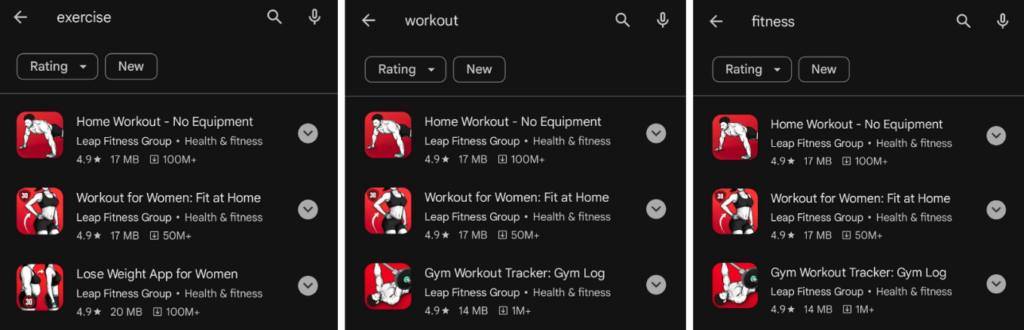
This strategic placement ensures that when potential users search for fitness solutions, Leap Fitness Group’s apps rank prominently in the results. (Tools like Sensor Tower or App Annie can be invaluable for identifying effective keywords that can drive your target audience to your app.)
Equally important is the management of user reviews and feedback. Again, Leap Fitness Group provides an excellent example of how to do this right.
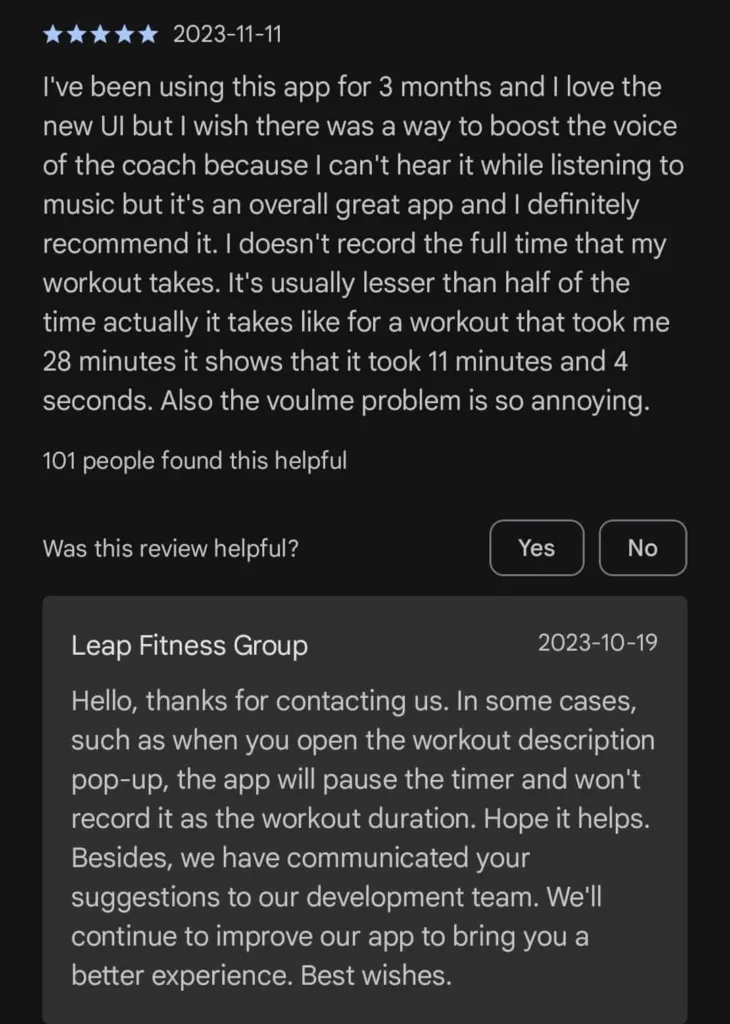
By actively encouraging user reviews and responding thoughtfully to feedback, they not only boost its app store rating but also demonstrate a commitment to user satisfaction. This engagement helps improve the app’s credibility and ranking, showing potential users that the developers are attentive and dedicated to quality.
Here’s an excellent example:
Through strategic app marketing techniques, Moburst played an important role in enhancing the Calm app’s visibility and user engagement. The agency focused on optimizing Calm’s presence on the App Store, which was crucial for standing out in the competitive health and fitness category. Moburst crafted new creatives to effectively communicate what the Calm app offers, telling a compelling story that resonates with potential users.
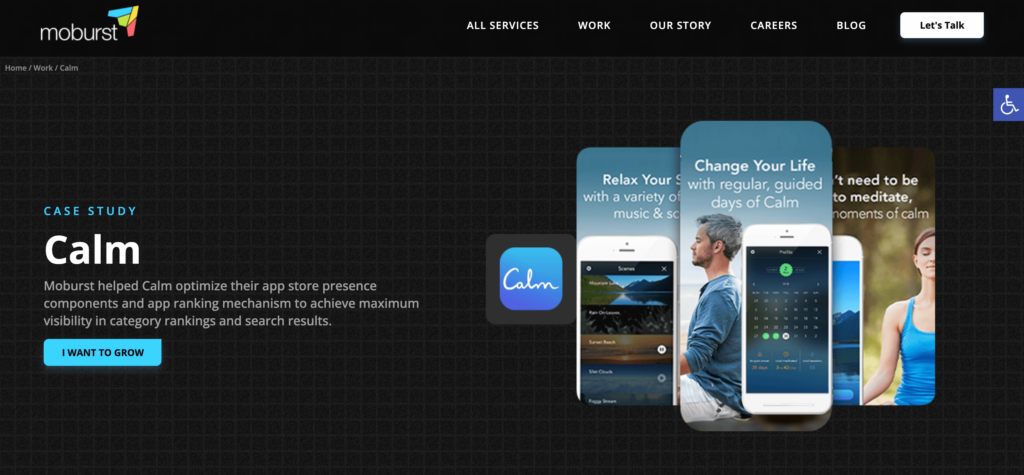
They created a clear, concise title and description for the app using relevant keywords after conducting extensive keyword research. While highlighting Calm’s unique selling points, this also improved its discoverability.
Moburst also recognized the impact of user reviews on App Store discoverability, so they refined Calm’s 5-star rating mechanism. The agency analyzed user behavior to identify the optimal timing for prompting review pop-ups, significantly boosting the app’s 5-star ratings.
These strategies yielded remarkable results:
Calm entered the top 10 in the Health and Fitness category on the App Store. The number of keywords for which Calm ranked in the top 15 positions increased by 684%. Organic installs of the Calm app grew by 36% within six months, and cumulative traffic surged by 521%.To have a successful ASO strategy, get in touch with the best mobile app development agencies that we carefully curated.
Invest in Influencer Marketing & Fitness Influencers
Influencer marketing leverages trust; it is a powerful tool for fitness apps aiming to connect with new audiences. A study by Influencer Marketing Hub highlights that influencer marketing yields a $5.78 ROI for every dollar spent, underscoring its effectiveness in engaging potential users and driving app downloads.
Having a successful fitness app lies in partnering with influencers whose values and audience align with your app. This alignment ensures that endorsements feel authentic and resonate with the influencer’s followers. For example, the fitness app “Sweat” co-founded by Kayla Itsines, a fitness influencer. This way, they leverage Itsines’ large following and credibility in the fitness world to significantly boost app visibility and downloads, showcasing the app’s features to her community.
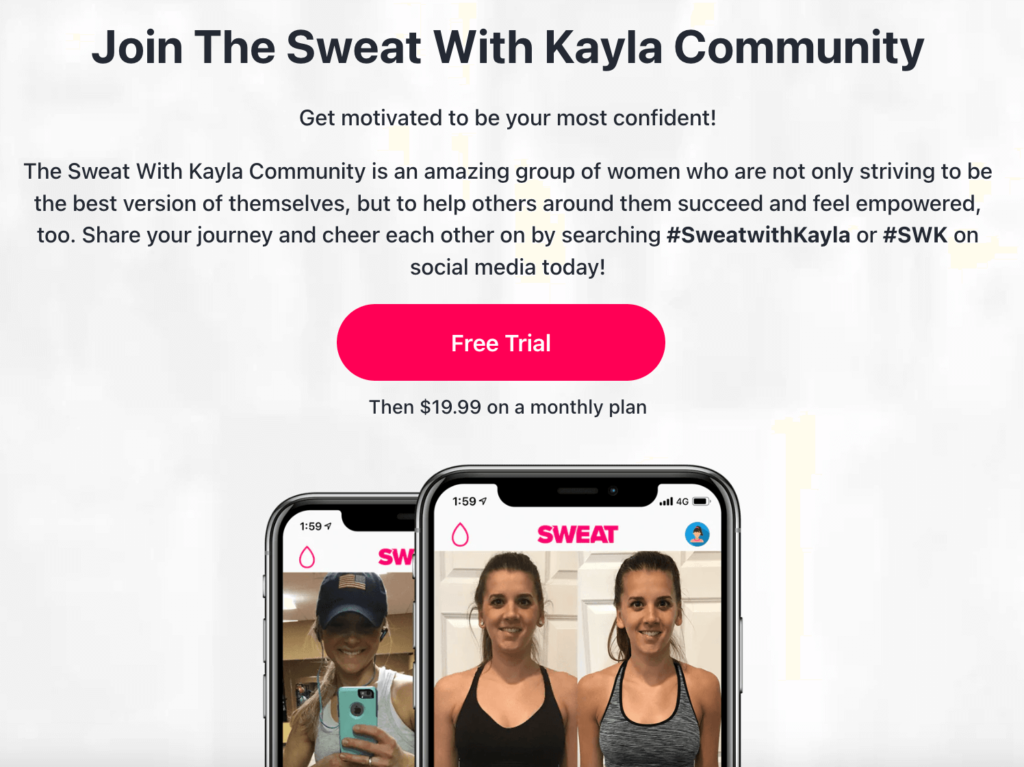
Measuring the impact of these collaborations is crucial for optimizing your influencer marketing strategy. Engagement rates, conversion metrics, and overall reach provide insights into how effectively an influencer’s endorsement motivates their followers to download and engage with your app. Tools like Google Analytics and social media analytics platforms can track these metrics, offering a clear view of an influencer campaign’s performance.
Adidas, for instance, has mastered the art of influencer marketing with its Adidas Women Instagram account, collaborating with athletes, trainers, and fitness influencers to showcase their products in action.
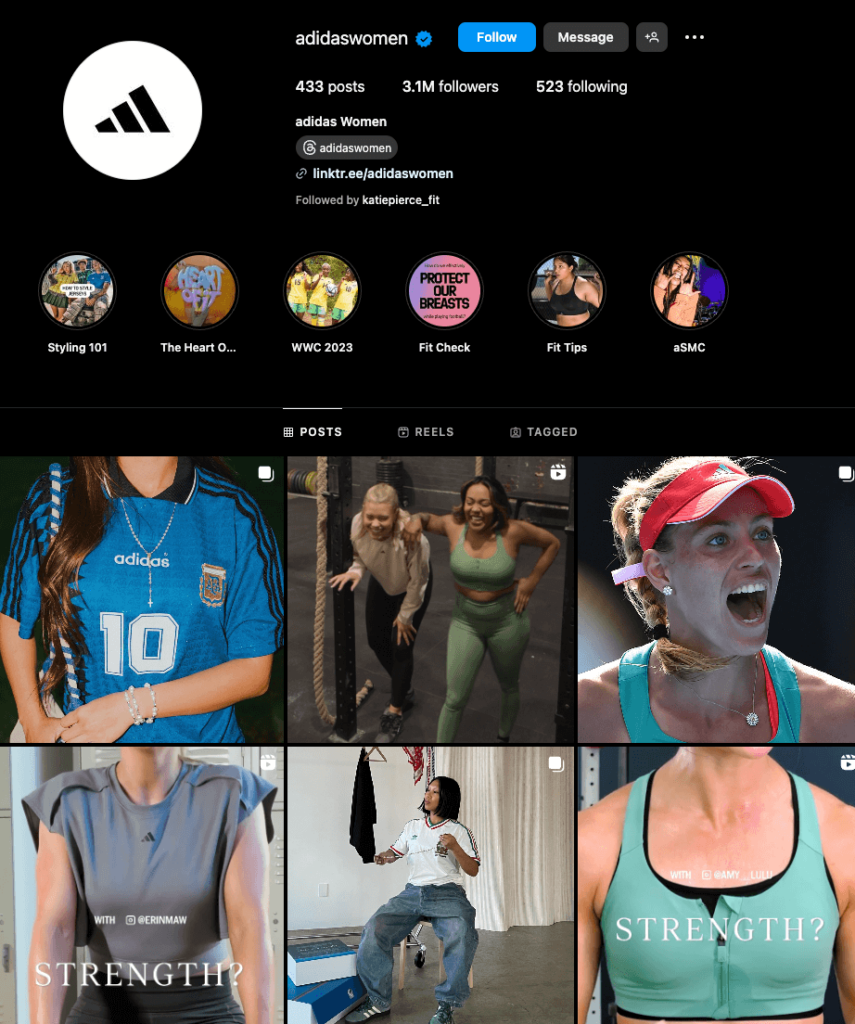
This strategy not only enhances brand visibility but also builds a community around the brand, driving both app downloads and product sales. By analyzing the engagement and conversion rates from these campaigns, Adidas continuously refines its approach, ensuring each partnership maximizes ROI.
With over 4.8 billion people using social media worldwide—a number projected to increase to almost 5.85 billion by 2027—the potential reach for your fitness app is vast. But, success in this space isn’t just about showing up; it’s about strategic engagement that resonates with your audience.
Focus your efforts on platforms where your target audience is most active. Instagram, with its visually driven content, is a powerhouse for fitness-related inspiration and motivation, attracting a significant portion of health-conscious individuals.
Facebook’s broad demographic appeal allows for targeted advertising and community-building opportunities, while TikTok has emerged as a go-to platform for younger audiences seeking quick, entertaining fitness challenges and tips.
But being present on these platforms isn’t enough. To truly captivate your audience, you should go beyond basic posting. Instagram stories and reels, Facebook live sessions, and TikTok’s short-form videos offer unique ways to present dynamic, engaging content.
For instance, the Nike Training Club app leverages Instagram stories to share workout routines, success stories, and live Q&A sessions, fostering a strong community feel. This approach both entertains and engages users, encouraging them to interact with and become advocates for the app.
Creating a sense of community is another powerful strategy. Contests that challenge users to share their progress, polls to decide on new app features, and Q&A sessions that address user queries in real time are effective in encouraging active engagement.
Optimize Your Fitness Content Strategy
In crafting a comprehensive content strategy for your fitness app, integrating real-world examples directly into your approach can provide a clear roadmap for success. For instance, consider the SEO strategies employed by fitness and wellness platforms. They ensure their fitness website designs and content are optimized for search engines, thereby improving visibility and attracting more visitors. This mirrors the approach suggested by fitness marketing experts, emphasizing the importance of on-page and off-page SEO practices to rank well on Google.
Diversifying your content types plays a crucial role in reaching a broader target market for fitness apps. Trainerize, a platform dedicated to fitness professionals, demonstrates this through its varied content offerings, including educational webinars, insightful blog posts, and practical resources for business growth. This variety not only caters to different learning styles but also keeps content fresh and engaging.
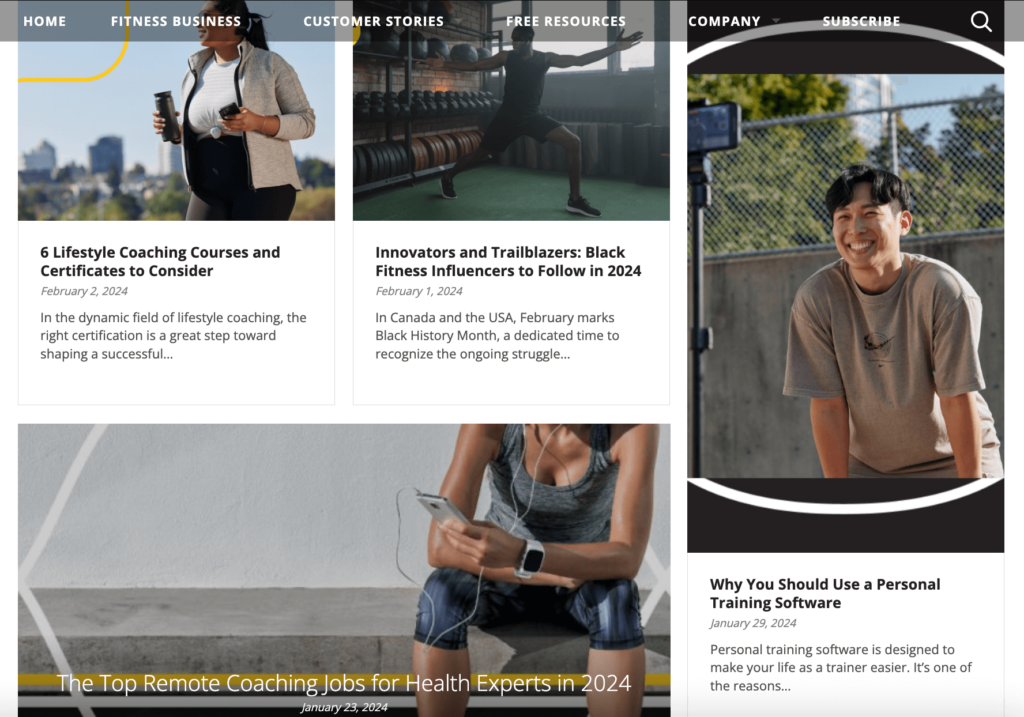
Creating content that fosters engagement and loyalty is another pillar of a solid content strategy. For example, fitness blogs that share client success stories or offer in-depth guides on specific workouts build credibility and support customer retention. Incorporating interactive elements like quizzes or infographics can further enhance engagement, as these formats are more likely to be shared, extending your reach on social media.
When it comes to content creation and promotion, understanding your audience’s preferences and challenges is key. Engaging with current fitness trends and answering frequently asked questions can make your content more relevant and useful. For instance, discussing the latest in fitness gear or sharing healthy recipes addresses common interests and needs within the fitness community. Promoting this content across various channels, including social media and email newsletters, ensures it reaches the widest possible audience.
Top Fitness App Marketing Campaigns from Famous Brands
What makes a fitness app campaign stand out in a market full of workout plans, progress trackers, and motivational content?
We chose these campaigns because:
They represent different types of fitness motivation:
Strava focuses on goals, progress, and community. Nike Run Club connects everyday runners with elite guidance. Fitbod speaks to people who need a clearer entry point into strength training. Peloton builds momentum through instructor-led energy and training variety. Apple Fitness+ makes exercise feel accessible through the devices and services people already use.We selected these campaigns because they do not rely on one universal promise. Each brand speaks to a specific reason people start exercising.
What’s more, the strongest fitness app campaigns do more than talk about features:
Strava turns activity into shared progress through challenges and group goals. Nike Run Club gives runners access to guided sessions with athletes and coaches, including Eliud Kipchoge. Fitbod positions personalised strength training as a way to remove uncertainty for beginners. Peloton and Apple Fitness+ make large fitness libraries easier to enter by framing movement as something that can fit into everyday life.That practical value is why these campaigns deserve attention. They show people what the app can help them do next.
Let’s see these fitness app campaigns one by one:
Strava – Your Goals Start Here
Strava’s message works because it starts with a simple truth: people join fitness apps to make progress toward something.
Every 19 seconds, someone on Strava hits a goal. Start chasing yours today with the world’s biggest team!
The brand has built tools around that motivation, including individual and group challenges that let users work toward time, distance, or elevation goals together.
Why it worked: The campaign fit Strava’s wider platform model. Its sponsored challenges let brands reward users for getting active, turning goal-setting into participation and community engagement.
Nike Run Club – Eliud Kipchoge | Ready to Run NYC
Here is a fitness app campaign that makes running feel aspirational without making it feel exclusive.
Nike Run Club paired one of the world’s best-known marathon runners with a city and event that carry huge emotional weight for runners. Eliud Kipchoge gives the campaign credibility, but the deeper strength comes from making elite guidance feel available through the app.
Why it worked: Nike Run Club’s Guided Runs include sessions with Kipchoge, Shalane Flanagan, and Mo Farah, helping users adapt training around their own needs and goals.
Fitbod – Start You Strength Journey
Fitbod’s campaign focuses on one of the biggest barriers in strength training: uncertainty. Many people know they want to get stronger, but do not know which exercises to choose, how much weight to use, or how to structure a session.
The messaging makes the starting point feel manageable.
Why it worked: Fitbod’s own training content reinforced that beginners can focus on core movement patterns, gradual progression, and recovery instead of feeling pressured to master everything at once.
That was why the campaign landed. It spoke to a real confidence gap and positions the app as a practical guide.
Peloton App – Lift Up, Take Off
Peloton’s strength-focused messaging builds on the brand’s strongest asset; “instructor-led motivation.”
The campaign, watched by millions just on YouTube, presents strength training as energising and achievable, while the product experience gives users guidance through classes, tracking, and structured plans.
Peloton has continued to expand this value through features such as personalised workout plans and strength tools that help users choose workouts based on their goals, available time, and preferences.
Why it worked: The campaign succeeded because it made the promise of lifting feel less technical and more emotionally rewarding.
Apple Fitness+ – Welcome to the Club
Apple Fitness+ benefits from a clear brand advantage that allows it to integrate fitness into an existing Apple routine. The “Welcome to the Club” idea makes exercise feel social, modern, and accessible to people at different fitness levels.
Its strongest point is simplicity. Apple does not need to convince audiences to enter an unfamiliar digital world; Fitness+ sits inside an ecosystem many users already know through Apple Watch, iPhone, iPad, and Apple TV.
Why it worked: The campaign worked because it framed fitness as belonging. You are not joining a hard-core training culture. You are joining a space designed to move feel more approachable.
To ensure your fitness app stands out, focus on understanding your audience and optimizing your app’s visibility. Partner with influencers who align with your brand and maintain an engaging social media presence to build a community. Additionally, collaborating with fitness marketing agencies can provide specialized strategies to further enhance your app’s reach and appeal. By combining these efforts, you’re more likely to create a successful and lasting impact in the competitive fitness app market.