The Healing Power of Generosity
Inspired by her 3-year-old, an author and meditation teacher provides a timeless lesson on the transformative impact of small acts of service. The post The Healing Power of Generosity appeared first on Tricycle: The Buddhist Review.
 Aliver
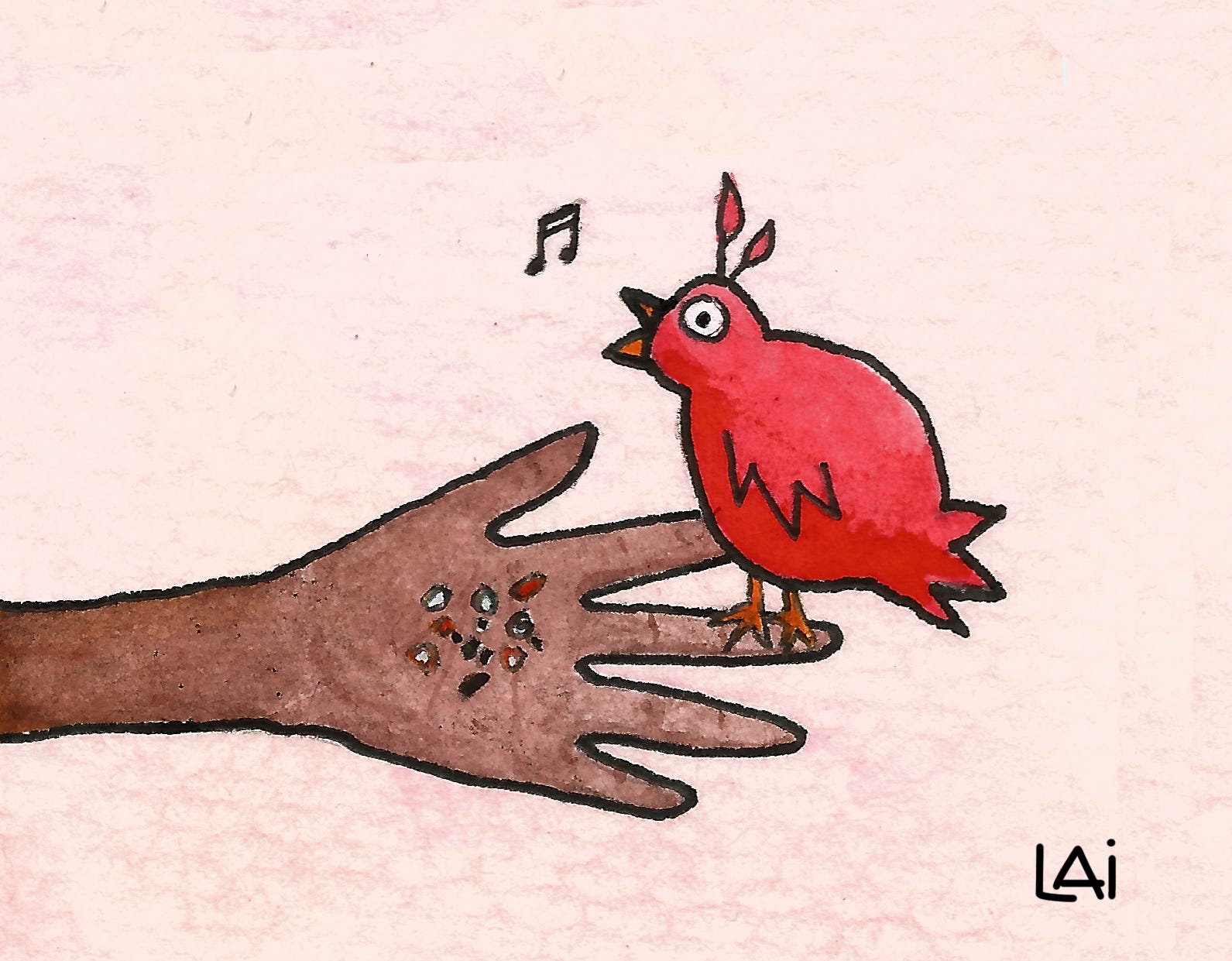
Inspired by her 3-year-old, an author and meditation teacher provides a timeless lesson on the transformative impact of small acts of service.
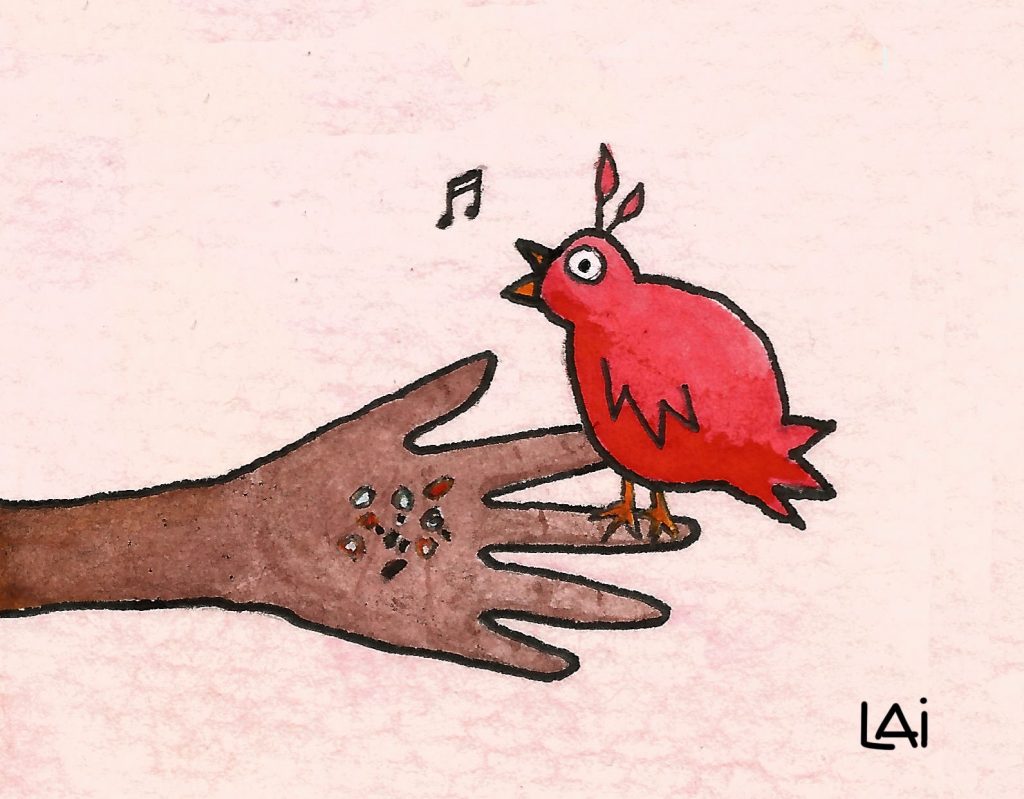 Illustration by Cara Lai
A few days ago, I picked my son Huck up from nursery school. When we arrived at home, he had a complete meltdown. Nearby birds cried out in alarm and took flight as he screamed and flailed in my arms, demanding snacks, to watch a show, to go to a playground. He’s 3, so this is normal, but still painful to witness. I sat outside with him and his baby sister in the grass, waiting for things to calm down. But after ten minutes, the storm was showing no signs of passing. I brought him into the house for a change of scenery, and there he spotted a pair of toddler-size rubber cleaning gloves I had bought for him. “Are those my size?” he asked, his tears evaporating. He proceeded to clean two toilets, the shower, and the kitchen sink with extreme delight, asking, “What else can I clean?”
There’s a parenting book that I love called Hunt, Gather, Parent by Michaeleen Doucleff about how to raise helpful kids. A main point of the book is that children have an innate drive to feel useful and belong. They naturally want to be functional members of their family team, and Western parenting tends to inadvertently suppress that drive by excluding kids from real work, underestimating their capabilities, and intervening too much with their contributions. I believe everyone has this innate drive to belong and to help. I might even argue that our purpose in life is to help each other.
If we’re not serving this purpose, we become depressed, sick, or have our own version of a toddler meltdown. Doucleff says if a child is misbehaving, give them a job: “When a child breaks rules, acts demanding, or seems ‘willful,’ their parents need to put them to work. The child is saying, ‘Hey, Mom, I’m underemployed over here and it doesn’t feel good.’ ” If your mind is misbehaving—feeling selfish, demanding, or mean: Look for ways to be generous.
I believe everyone has this innate drive to belong and to help. I might even argue that our purpose in life is to help each other.
In Buddhism, generosity is not just a side practice. It’s the main event. The Buddha typically taught generosity to people before he taught them how to meditate. That’s because it’s the most palpable way of letting go—letting go being the key to dissolving attachment, which is the cause of suffering. If you consider what it is to cling—to hold on tightly, to keep for oneself, to feel insecure, separate, to believe that what you’re clinging to is required for your safety and well-being—to be generous is the exact opposite of that. It’s connection instead of separation, the relief of letting go. It comes from trust and a sense of safety, of having enough. Generosity is really just another word that means “the end of suffering.”
Huck was “misbehaving,” but his misbehavior was just a manifestation of some kind of anxiety. Maybe he needed more love after being put in school for a few hours and then coming home to a mom whose arms were full with his sister and dad gone for the week. Maybe he was having withdrawal from the stimulation of school. Whatever it was, there was some kind of contraction in his heart. What made him feel better was feeling helpful, having a purpose. Generosity softened everything.
Generosity is also physically healing. After years of chronic Lyme disease that was only getting worse, trying endless healing protocols that never seemed to help in the slightest, there was one thing that finally began to shift the dial dramatically for me. It was taking care of a baby. Focusing on the welfare of someone else did something to shake everything up for me, to shift the hyperfocus of attention from me and my ailing body to someone else, to give me a purpose.
I’m very aware that most people have the opposite postpartum experience than I did, and the last thing I want is for anyone to blame themselves if they went through postpartum depression. Maybe postpartum depression is a manifestation of the rigorous transformation that tears through our soul as the person we once were dies and we are reborn into parenthood. But that’s for another post.
And I can’t quite explain why things went the way they did for me. What I can say is this: I have endless things to do for other people at this stage in my life, far more than any one person can handle skillfully. And sometimes I do find myself holding it with aversion, focusing on the unfairness of it all, seeing it as a trap that I’m caught in, and letting that fuel a sense of inadequacy, bitterness, and hopelessness.
But I can also realize I’m feeding my demons, feel how it’s impacting my heart, my body, sickening me further, and then choose a different way. Every time I wash the dishes, clean up a poop accident, and listen to my partner’s struggles after having my own chaotic day of toddler and baby meltdowns, I can do it while connecting with a sense of love, compassion, purpose, and joy. In a moment of chaos, instead of languishing in the feelings of inadequacy, overwhelm, and resentment, I can feel for where letting go is ready to happen. I can feel for what’s mine to do, draw from the love that wants to be shared, and give.
To practice this, don’t look towards the ways you feel obligated to give. Look for where you naturally feel called to give, even in the tiniest ways. You don’t have to give anyone a smile if you don’t feel like smiling, but maybe it does feel good to give your dog some scratches behind the ears. You don’t have to sign up to make food for that meal train if it’s just too much, but maybe you feel like folding some laundry with love, Marie Kondo style. Keep finding tiny acts of generosity that feel good to do, and let them pepper your day. Not only will this be healing for your body and mind, it will guide you into your purpose.
If you’re in a moment of overwhelm, unstick your mind from ideas about what you could or should be doing, and just pause for a few beats. Give yourself permission to do absolutely nothing. Then notice if any inspiration arises for what might be yours to do in that moment. It might be as simple as being a calm presence in the room.
The human heart wants to give, and when we let it, it opens up and heals us, body, mind, and spirit.
♦
This article originally appeared on Cara Lai’s Substack, Meditate Your Face Off.

Thank you for subscribing to Tricycle! As a nonprofit, we depend on readers like you to keep Buddhist teachings and practices widely available.
This article is only for Subscribers!
Subscribe now to read this article and get immediate access to everything else.
Already a subscriber? Log in.